
Specs are compiled from manufacturer listings and verified buyer reviews and can change over time — please confirm the key details on the product page before buying.
Rabbits are persistent. They squeeze through gaps your eye barely registers, chew through thin wire, and dig under anything that isn’t buried. The standard green chicken wire from the hardware store? A rabbit sees that as an open door. To stop a rabbit, you need a mesh with openings 1 inch or smaller — preferably 1/2-inch — made from steel thick enough that a determined jaw cannot bend it. That is the starting line. The buying decision after that is about budget, coverage area, and how much work you want the fence to do on its own before you anchor it.
I’m Rikta — the founder and writer behind Lawn Gear Lab. This guide is built by comparing the manufacturers’ published specifications and the patterns across verified customer reviews, so you get each pick’s real strengths and trade-offs instead of marketing spin.
Below, you will find nine rolls of fencing, each with a legitimate reason to be in your cart — from a 4.5-star budget giant that covers 50 feet for under daily-coffee money, to a 48-inch-tall premium roll that keeps deer out of hostas and rabbits out of raised beds. This is the definitive guide to the best garden fencing for rabbits available right now.
Our Picks at a Glance
How To Choose The Best Garden Fencing For Rabbits
Rabbits are surprisingly strong. A 19-gauge wire can be bent by hand, but a 16-gauge or 17-gauge roll is much harder to push through. Your first decision is the mesh opening: 1/2-inch stops baby rabbits and even small rodents like mice; 1-inch stops adult rabbits but lets smaller critters through. The second decision is coverage: a 100-foot roll costs more upfront but is cheaper per foot than two 50-foot rolls. The third is the coating — bare galvanized steel lasts decades above ground; vinyl coating adds rust protection if the fence touches wet soil regularly.
Mesh Size: 1/2-Inch vs 1-Inch
The 1/2-inch opening is the gold standard for rabbit exclusion. It blocks everything from a weaning cottontail to a full-grown jackrabbit. A 1-inch opening blocks most adult rabbits but does not stop a determined juvenile or a rat. If rabbits are your only target, 1-inch is acceptable; if you also have mice, voles, or snakes, go straight to 1/2-inch.
Gauge: What the Number Really Means
Gauge is counterintuitive — a lower number means thicker wire. A 16-gauge wire (used on the YARDGARD roll) is noticeably stiffer and harder to cut than a 19-gauge wire (used on most of the other rolls on this list). The trade-off is weight and flexibility: a 16-gauge 25-foot roll weighs 18.66 pounds; a 19-gauge 50-foot roll can weigh as little as 12 pounds. Thicker wire resists bending from animal pressure and holds its shape better against weather and kids leaning on it.
Coating: Galvanized vs Vinyl
Hot-dip galvanized steel (the kind that looks like raw silver metal) is welded, then dunked in molten zinc. This seals every weld and edge. It resists rust for decades in the open air and many years underground. Vinyl-coated wire (usually black or green) has a layer of plastic over a galvanized core. The vinyl layer makes the fence less visible at a distance (a plus in a garden) and adds a barrier against moisture, but if the coating chips, the steel underneath can rust faster than a fully galvanized piece. Choose vinyl for aesthetics and a little extra moisture resistance; choose bare galvanized for long-term, low-maintenance durability.
Quick Comparison
| Model | Best For | Mesh Size (in) | Gauge | Roll Size (H x L) | Amazon |
|---|---|---|---|---|---|
| Black Hardware Cloth★ Best Overall | Versatile garden barrier | 1/2 | 19 | 36″ x 50′ | Amazon |
| VEVOR Hardware ClothBudget Champion | Budget-minded buyers | 1/2 | 19 | 24″ x 50′ | Amazon |
| YARDGARD Welded WireToughest Wire | Heavy-duty small enclosures | 1/2 x 1 | 16 | 24″ x 25′ | Amazon |
| 24″ x 100′ Hardware Cloth | Underground gopher barrier | 1/4 | 23 | 24″ x 100′ | Amazon |
| SANZEUS Hardware Cloth | Tall roll for big gardens | 1/2 | 19 | 48″ x 100′ | Amazon |
| GoldPeak Hardware Cloth | Low-visibility garden edging | 1 x 1 | 17 | 36″ x 100′ | Amazon |
| Hardware Cloth 1/4″ 36″x100′ | Maximum exclusion of tiny pests | 1/4 | 23 | 36″ x 100′ | Amazon |
| Salmut Hardware Cloth | Tall, premium garden barrier | 1/2 | 19 | 48″ x 100′ | Amazon |
| Thinkahead Hardware Cloth | Massive coverage, heavy gauge | 1/2 | 19 | 48″ x 100′ | Amazon |
In‑Depth Reviews
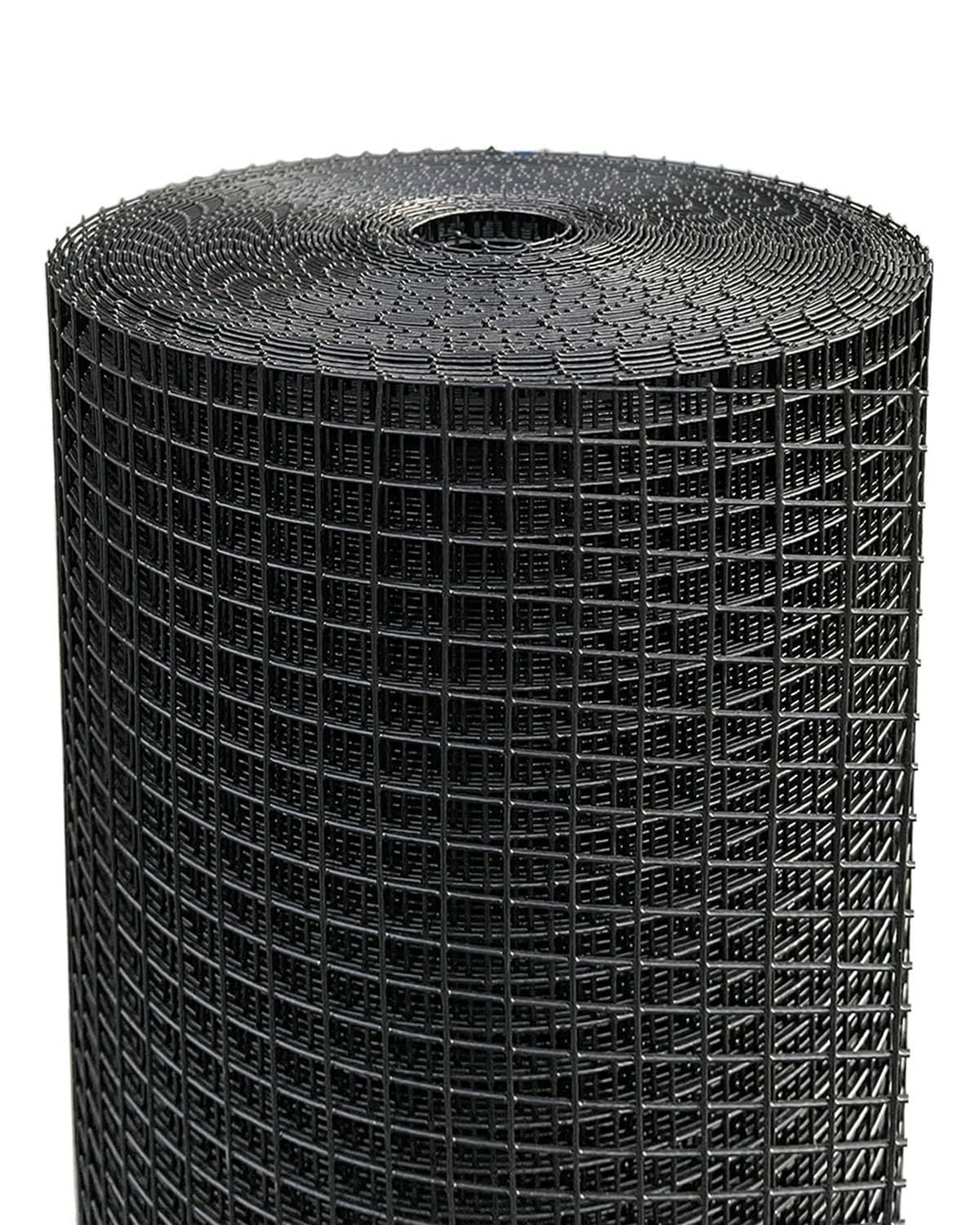
1. Black Hardware Cloth 1/2 inch 36” x 50′ 19 Gauge
Our pick — over 4.5★ from 500+ verified ratings; the strongest balance of quality and price.
The crowd favorite that blends strength, visibility, and a 36-inch height into one roll.
Most gardeners underestimate how much height a rabbit fence needs. A rabbit can jump about 24 inches, so a 36-inch tall roll like this one gives you a real margin of safety — you can bury six inches underground and still have a 30-inch barrier above the soil. The mesh is 1/2-inch, which stops not just adult rabbits but also baby rabbits, voles, and the occasional curious snake.
The wire uses a double-layer protection: a galvanized steel core (the same 19-gauge you find on mid-range rolls) with a black vinyl coating on top. That coating does two things — it makes the mesh nearly invisible from 30 to 50 feet away (so your flowers, not the fence, are what visitors see), and it adds a barrier against moisture that plain galvanized wire lacks. Owners building chicken coops and garden fences report it is “sturdy” and easy to staple into wooden frames. The roll ships in a reinforced carton specifically to prevent the dents and unspooling that frustrate buyers of cheaper, loosely-packed wire.
At 17.81 pounds for a 50-foot by 36-inch roll, this is heavy enough to feel substantial but light enough that one person can maneuver it. The price-to-coverage ratio is the tightest on this list for a coated roll of this height, making it the obvious first choice for anyone fencing a medium-sized garden or building a single chicken coop.
Why owners keep buying it
- 36-inch height is tall enough to bury 6 inches and still clear a rabbit’s jump — no need for a second roll to extend height
- Black vinyl finish fades into the background in a flower garden; owners call it “attractive” and “low visibility”
- Quality and durability are the two most-discussed positives, with 63 and 35 mentions respectively — consistent with a well-reviewed product
One honest note
- The 19-gauge wire is workable with standard wire cutters, but it is not as stiff as the 16-gauge YARDGARD roll below — if dogs or livestock will push against it, you may want a heavier gauge
The fit: Ideal for the gardener who wants one roll, one cut, and one installation that covers a medium garden bed or a chicken run with a neat, near-invisible finish.
Look elsewhere if: You need to fence a half-acre or more — the 50-foot length means you will need multiple rolls, and the per-foot cost is higher on the coated wire than on bare galvanized bulk rolls.
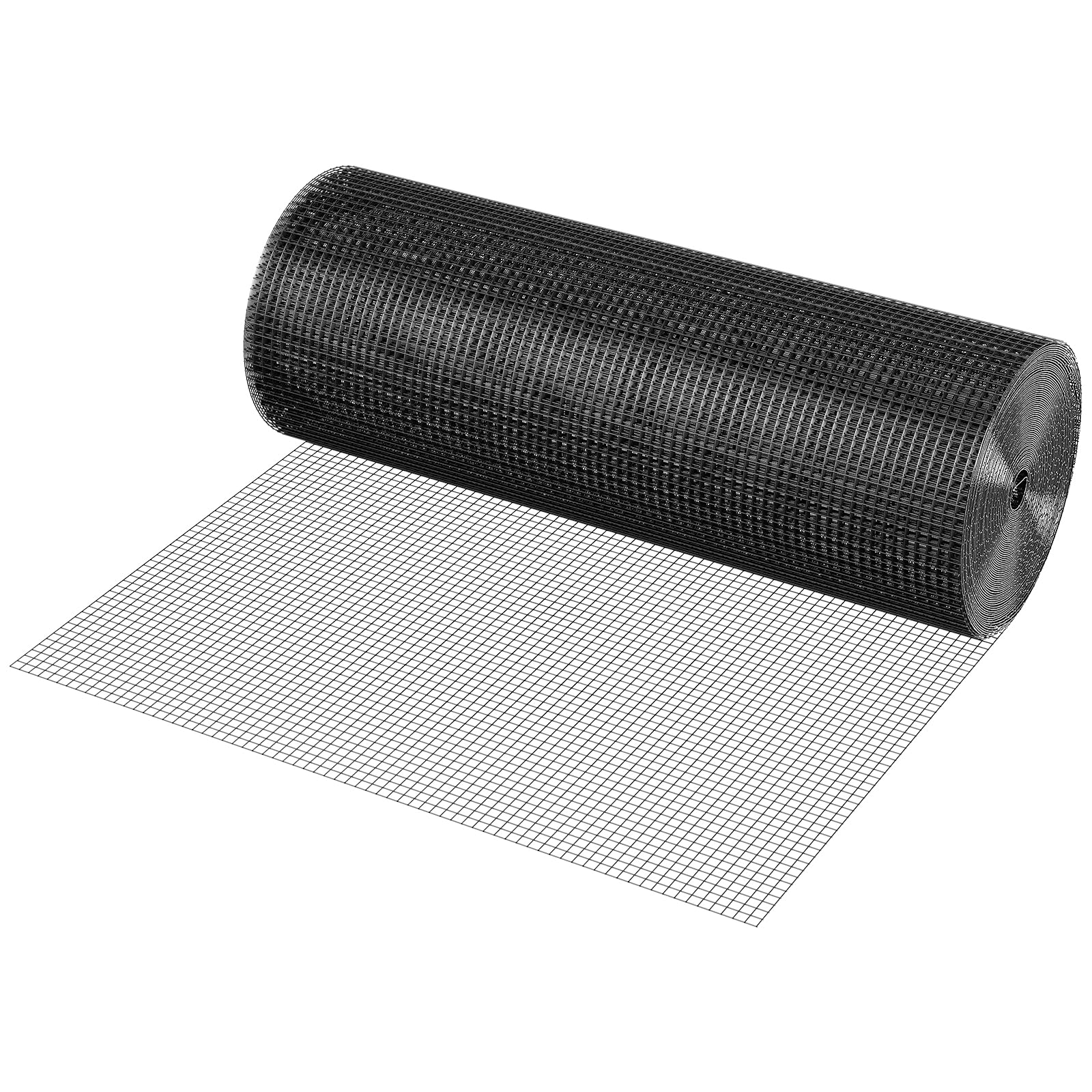
2. VEVOR Hardware Cloth 24 in x 50 ft, 1/2 in 19 Gauge
The aggressive budget play that comes with tools in the box and a 24-inch height.
VEVOR’s pitch is simple: give you a complete short-fence kit at a price that undercuts almost every other 50-foot roll. The mesh is the correct 1/2-inch size, the wire is 19-gauge galvanized steel with a black vinyl coat, and the roll ships with a pair of cut-resistant gloves and a set of steel wire pliers — so you do not have to buy tools separately. The manufacturer claims a 15-minute setup time for an experienced person.
The catch is the height. At 24 inches, you cannot bury any of this in the ground and still have a rabbit-proof barrier above it — a determined adult rabbit can easily jump a 24-inch fence. The practical workaround is to stake it tight to the soil surface (use landscape staples every 6-8 inches) and rely on the fact that rabbits prefer digging under rather than jumping over. If you use this as a perimeter around a raised bed that already sits 12 inches off the ground, the effective height is fine.
Owner reports are split in the way you expect on a budget entry: the crowd that gets a perfect roll is thrilled (owners call it “sturdy, great quality” and “strong wire mesh”). A smaller group reports the roll arrived with damaged or missing PVC coating and rust already visible from the start — a QC risk that is higher on value-priced wire. At 12.06 pounds, this is the lightest 50-foot roll here, which makes it very easy to handle but also means the wire is more susceptible to bending under pressure.
What you get for the price
- Gloves and pliers are included — saves a trip to the hardware store and at least -15 in tool cost
- PVC coating resists moisture and sun damage on the surface (assuming the coating arrives intact)
- Pound-for-pound the cheapest 1/2-inch mesh on this list
The known risk
- 24-inch height is too short to bury in the ground for a rabbit barrier — you need to surface-mount it and stake it tight
- An occasional roll arrives with coating damage; if you get a clean roll, you are set
Grab it for: A tight budget project where the fence sits on top of a raised bed or deck, so the 24-inch height is enough and the tools-included value is unbeatable.
Skip it for: In-ground garden perimeter fencing for active rabbits — the height and QC variability make it a gamble.
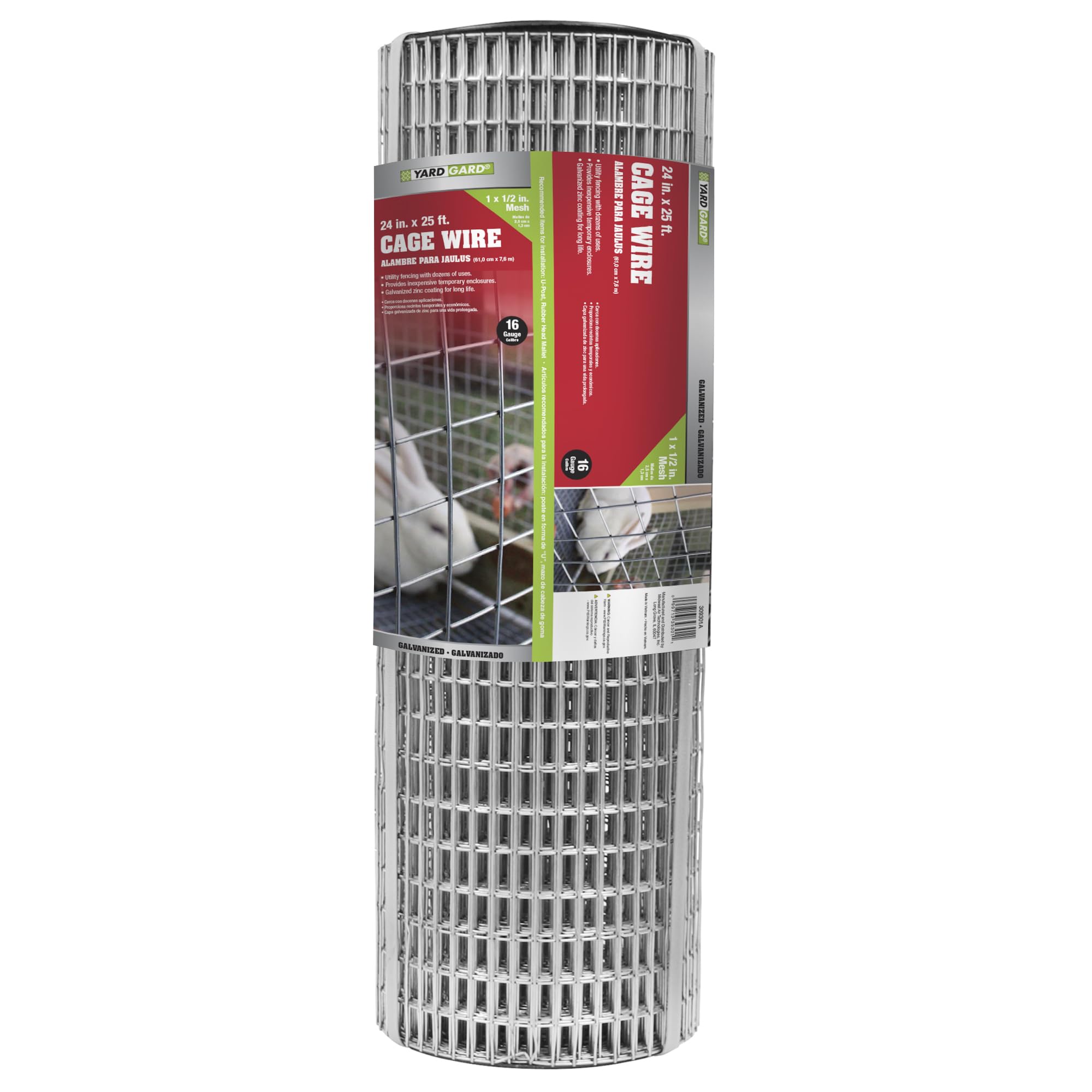
3. YARDGARD 1/2 in. x 1 in. Mesh Welded Wire, 24 in. x 25 ft., 16-Gauge
The stiffest wire on the list — a 16-gauge roll built for heavy-duty rabbit cages and hutch floors.
Most of the rolls here use 19-gauge wire. At 16-gauge, the YARDGARD is meaningfully thicker — thicker than the 19-gauge wire used on most other rolls. That has a real consequence: the wire does not bend under a rabbit’s weight, does not sag when stretched between posts, and resists rust through a standard galvanized coating (no vinyl layer). Mesh size is 1/2-inch by 1-inch — slightly rectangular slots instead of perfect squares — but the critical dimension (the 1/2-inch side) still blocks a rabbit’s head.
The trade-off is weight. At 18.66 pounds for a 25-foot roll, this roll is heavier than the VEVOR 50-foot roll (12.06 pounds) despite being half the length. Stiff 16-gauge wire is harder to cut and shape; you need a good pair of wire cutters or aviation snips, and bending it around corners requires more force. Owners note that the welds can pop loose if you flex the same joint repeatedly, so careful bending is important — “not for perfectionists,” as one practical review put it.
Where this roll earns its keep is on the floor of a rabbit hutch. The 16-gauge wire does not bow under the weight of a litter tray, and the 1-hour spacing means rabbit droppings fall through cleanly. If you primarily need a cage floor or a small, high-stress enclosure, this is the right pick.
Why choose this one
- 16-gauge wire is visibly thicker than 19-gauge — stops determined chewing and holds its shape under constant pressure
- Galvanized coating resists rust after months of outdoor exposure; buyers report it stays clean through rain
- 1/2-inch by 1-inch rectangular mesh is ideal for hutch floors (droppings pass through, toes stay on the wire)
The work you will do
- 25-foot length covers a smaller area than the 50-foot and 100-foot rolls; you may need more than one roll for a garden perimeter
- Wire is stiff enough that bending requires real effort and the occasional popped weld — work slowly and avoid repeated flexing
Best suited to: A rabbit hutch floor or a small, high-traffic enclosure where wire strength matters more than total coverage area.
Think twice for: A large garden perimeter — the 25-foot length and higher weight per foot make it expensive and labor-intensive to cover a big area.
4. 24″ x 100′ Hardware Cloth 1/4″ Mesh, 23 Gauge, Hot Dip Galvanized

The only 1/4-inch mesh on the list — stops gophers, moles, and baby rabbits that squeeze through 1/2-inch.
This is the roll you buy if you are tired of patching holes in your garden fence after a determined rodent finds a weakness. The 1/4-inch square opening is small enough to block a newborn cottontail, a full-grown gopher, and even most snakes. The wire is 23-gauge — noticeably thinner than the 19-gauge rolls — but the trade-off is that the mesh is so fine that there is no leverage point for an animal to push through. It is a “stop everything” barrier.
The manufacturing process here is hot-dip galvanized after welding, which means the entire roll (including every weld point) is immersed in molten zinc. This seals the metal against rust significantly better than an electro-galvanized (zinc-plated) sheet. The manufacturer backs it with an 8-year quality guarantee, which is more generous than the 5-year warranty on the top-ranked Black Hardware Cloth. The 24-inch height by 100-foot length gives you abundant coverage for low-profile barriers, ground-level liners under raised beds, or wrapping tree trunks to stop rabbits from gnawing the bark in winter.
The 23-gauge wire is easy to cut with household scissors — you do not need heavy-duty cutters. Owners praise its quality and predator resistance in equal measure. The roll ships in a standard carton; because the wire is thin and light, it is less likely to arrive dented than the heavier 19-gauge rolls.
Where it shines
- 1/4-inch mesh is the tightest opening here — blocks gophers, moles, baby rabbits, snakes, and even some voles
- 8-year guarantee is the longest warranty on this list; the manufacturer claims it “can work underground for many years”
- 100 feet of coverage at 24 inches tall gives you an enormous barrier for a very competitive per-foot price
What to know
- 23-gauge wire is thinner and less rigid than 19-gauge or 16-gauge — it will not stand up on its own; it needs a wooden frame or tight tension wire to stay flat
- 24-inch height is too short for a standalone rabbit jump barrier unless staked to the ground tight
Reach for this if: You are lining a raised bed to stop burrowing animals, or you need a fine-mesh wrap for tree trunks where 1/2-inch gaps would let a mouse squeeze through.
Consider your frame: This mesh will not support its own weight in a tall fence — plan to attach it to a rigid structure like a wooden frame or a chain-link fence.
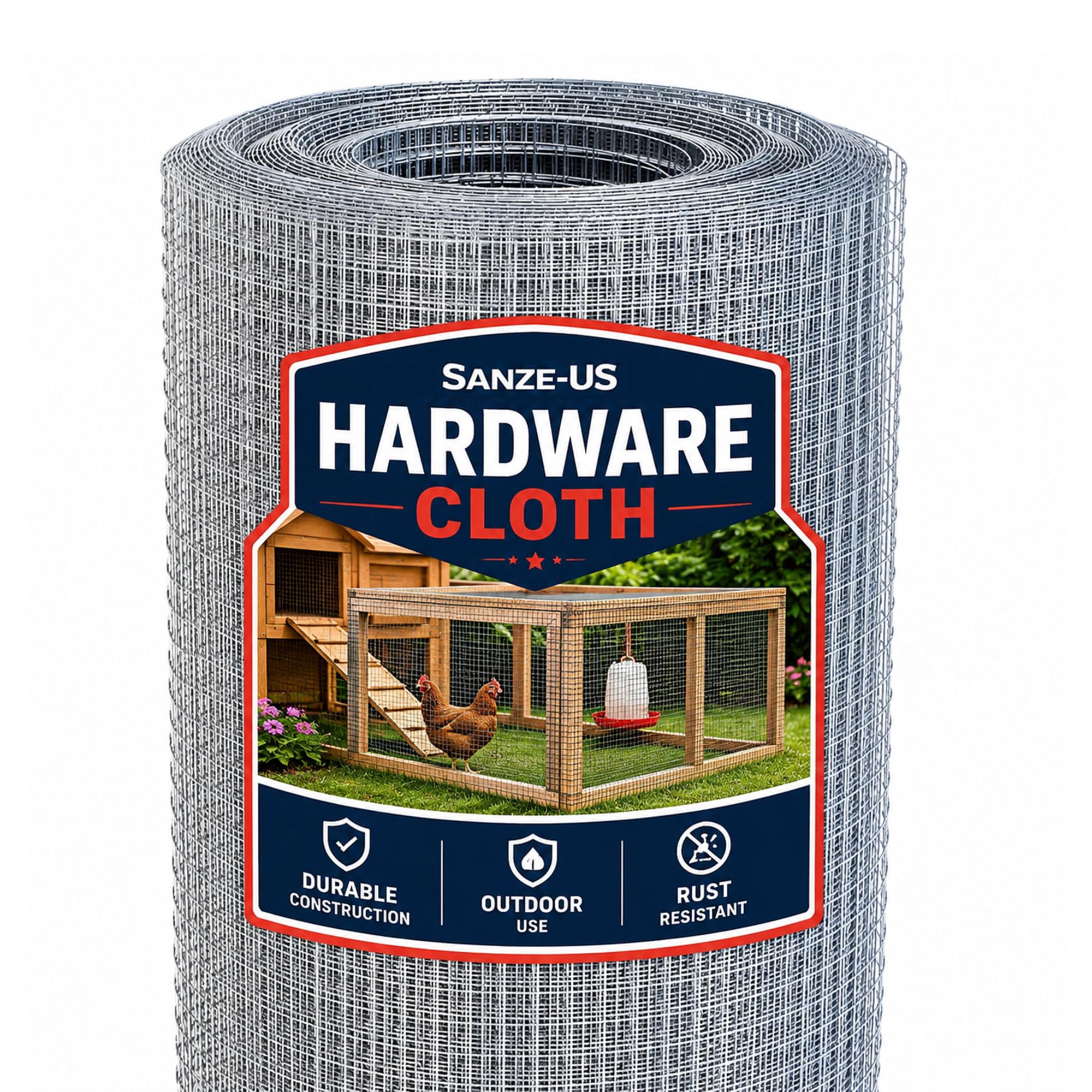
5. SANZEUS Hardware Cloth, 48in x 100ft, 1/2in Mesh, 19-Gauge
Double the height of a standard budget roll — 48 inches means one roll fences a tall perimeter.
The SANZEUS roll solves a specific problem: when you have a garden bed with active rabbits, you need enough height that the rabbit cannot jump over it and enough wire that the rabbit cannot chew through it. At 48 inches, you can bury eight inches in the ground (which stops digging) and still have a 40-inch vertical barrier — more than enough to clear any rabbit jump. Combined with the 100-foot length, one roll fences a roughly 25-foot by 25-foot perimeter.
This is a bare galvanized wire (silver color), not a vinyl-coated roll. The galvanizing process here is “double galvanized after welding” — every weld point gets a fresh zinc coating, which is the main weak point in cheaper wire where the weld rusts before the straight sections. The 19-gauge wire is rigid enough to hold its shape when stretched between posts but flexible enough that owners say it is “easy to cut with wire cutters or scissors.”
One owner’s note is worth passing on directly: “Perfect to keep out bunnies.” They used it with 30-inch garden posts wrapped in individual circles around plants — a more targeted approach than a full perimeter fence. The roll does not come with gloves or tools, but at 48 pounds it is clearly industrial-grade and not something you carry casually.
The standout specs
- 48-inch height is the tallest on this list — stops jumping rabbits without stacking a second roll
- 100-foot length covers nearly a quarter-acre perimeter in one purchase; fewer splices means fewer weak points
- Double galvanized after welding means every joint is sealed against rust — no bare steel at the weld point
One honest trade-off
- 48 pounds is heavy; you need two people or a wheeled dolly to move the box from the delivery truck to the garden
- Bare galvanized finish is more visible in a garden setting than the black vinyl rolls — it reflects light and stands out against green leaves
Go for this if: Your garden has determined rabbits, you want to fence the whole perimeter in one go, and you are comfortable handling a heavy, large-format roll.
Pass on it for: A small raised bed or a single flower patch — the 100-foot length is overkill, and the 48-inch height is unnecessary for a 2-foot-high bed.
6. GoldPeak Black Hardware Cloth 1-Inch Mesh 36” x 100′ 17-Gauge
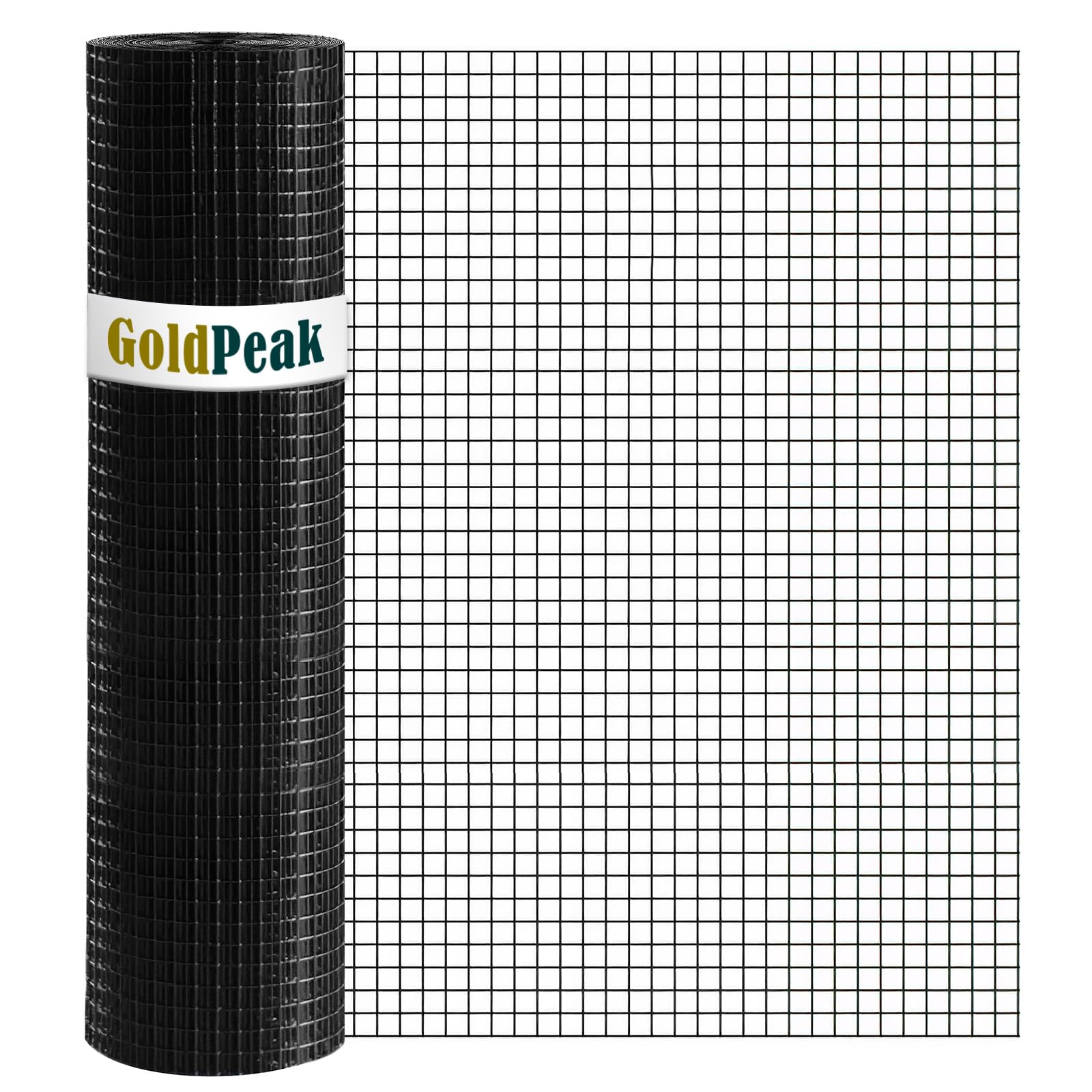
The 1-inch mesh keeps adult rabbits out while the black coating keeps the fence nearly invisible.
GoldPeak takes a different approach than the 1/2-inch mesh rolls. The opening here is 1-inch square, which stops a full-grown adult rabbit but allows a small juvenile or a rat to slip through. If large rabbits are your primary target — and you do not have a rat or mouse problem — the 1-inch opening is sufficient, and the 17-gauge wire is thicker than the 19-gauge standard. At 17 gauge, the wire is stiff enough that a rabbit cannot bend it with its teeth.
The coating is a black vinyl layer over an inside galvanized steel core, identical in construction to the top-ranked Black Hardware Cloth but with the larger mesh opening. The black finish is popular among gardeners who want the fence to disappear against dark soil and nighttime shadows; one owner used it inside a deer fence liner and reported it “finally foiled those deer.” The roll is 100 feet long and 36 inches tall, which is a versatile middle ground — tall enough to bury six inches and still stand 30 inches high.
One practical note from owners: the black coating can leave a residue on your hands when you handle it, and the edges are sharp enough that gloves are mandatory. The 33.4-pound weight is manageable for one person to lift onto a table for unrolling.
What it does well
- 17-gauge wire is thicker than 19-gauge — you feel the difference when you pick up the roll; it resists bending and denting
- Black coating makes the fence nearly invisible at a distance; owners describe it as “not noticeable” in garden settings
- 100-foot length gives generous coverage for the price; the per-foot cost is very competitive for a 36-inch tall coated roll
What to know before buying
- 1-inch mesh stops adult rabbits but lets through juveniles, rats, and mice — not a “stop everything” barrier
- The coating can feel tacky fresh from the start and leaves a black residue on hands (wear gloves)
Reach for this if: Your rabbit problem is specifically adult rabbits (not baby bunnies or rodents) and you want the fence to be as visually unobtrusive as possible in a decorative garden.
Look elsewhere if: You have rats, mice, or voles in the area — the 1-inch opening is an invitation for them to pass through.
7. Hardware Cloth 1/4 inch 36 in x 100 ft, 23 Gauge, Hot Dip Galvanized

A 36-inch tall, 1/4-inch ultra-fine mesh that blocks everything from rabbits to the smallest mice.
This is the big brother to product 4 on this list. Where that roll was 24 inches tall, this one stands 36 inches — tall enough to bury 6 inches in the ground and still clear a rabbit’s maximum jump height. The mesh is 1/4-inch, which is the finest opening on any tall roll here. The 23-gauge wire is thin, but the tiny square pattern means an animal cannot get enough purchase to push through.
The manufacturing is hot-dip galvanized after welding (the same premium process as product 4). The manufacturer, Hunka, uses a “new hot dip galvanized” process that produces a bright, smooth surface. The roll is 35 pounds and 100 feet long, giving you enormous coverage for a single price. It is designed for “wind and rain protection” as much as animal exclusion, which means the mesh is engineered to not sag when wet.
Owners call it “favorite hardware cloth for chicken runs” and note that it “keeps predators out with good ventilation.” The 1/4-inch mesh does not block airflow like solid sheeting would, which matters if your fence also encloses a coop or a greenhouse. The sharp edges are a real hazard — the listing itself includes a specific unrolling technique: press your hand in the middle of the mesh (avoiding the ends) and let it loosen naturally.
Why choose the 36-inch version
- 36-inch height is the functional balance — tall enough for a buried barrier and a rabbit-proof above-ground wall, all from one roll
- 1/4-inch mesh is a “stop everything” barrier: rabbits, voles, mice, snakes, and even shrews cannot squeeze through
- Hot-dip galvanizing seals every weld; the matching 8-year guarantee (similar to product 4) backs the long-term rust claim
Handling tips
- 23-gauge wire is easy to cut but floppy like fabric — you must attach it to a rigid frame or tension wire to keep it taught
- Sharp edges are aggressive; the manufacturer gives explicit safety instructions, and you should wear heavy leather gloves
Perfect for: A high-security chicken run, a greenhouse enclosure, or a garden perimeter where you want absolutely no small animal penetration.
Not ideal for: A standalone fence without a frame — the thin wire will sag and wave without a wooden or metal support system.
8. Hardware Cloth 1/2 in. x 4 ft. x 100 ft. 19-Gauge, Salmut
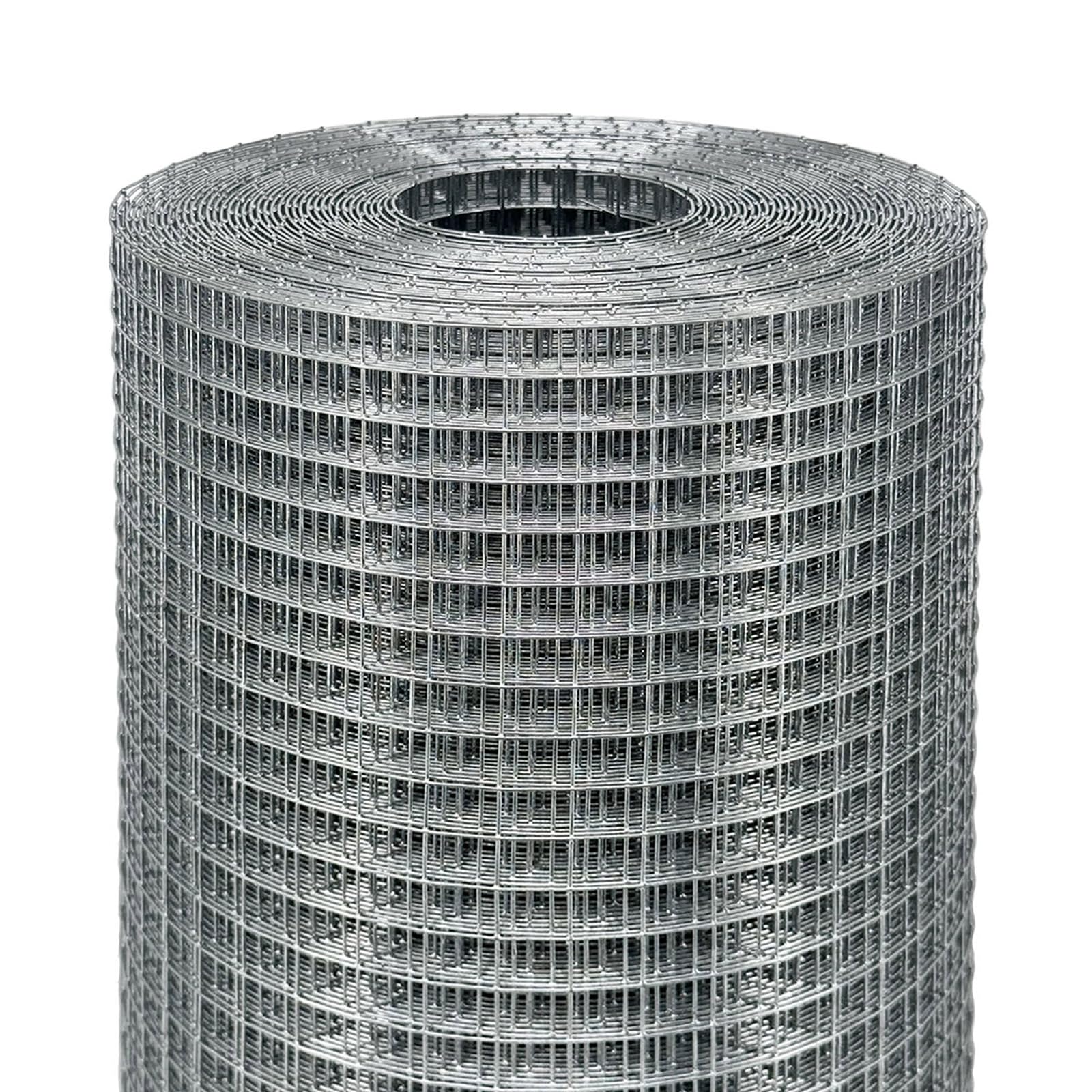
A 4-foot tall, 100-foot long roll that comes with gloves and a reputation for clean, uniform welding.
This is the kind of roll you buy when you know exactly what you need: 4 feet of height, 100 feet of length, and a 1/2-inch mesh that blocks rabbits without the complexity of a vinyl coating. The Salmut roll is bare hot-dip galvanized steel, and the owner reviews consistently note the absence of “surprise jagged edges” — the wire is cut cleanly and the welding is even. One buyer used it to keep “deer, rabbits, and other creatures out of my garden and off my young fruit trees” and called it “excellent fencing, better than chicken wire.”
The added value here is the pair of gloves included in the box. That is a small detail, but for a 19-gauge wire roll, handling the edges without protection will cut your hands within minutes. The roll is 19-gauge, which is the most common hardware cloth thickness — rigid enough to hold its shape against wind and light animal pressure, but flexible enough to cut with basic tools. The manufacturer lists this as suitable for both outdoor and underground applications, and the eco-friendly manufacturing note aligns with the hot-dip process.
At 4 feet tall, this is functionally the same height as the SANZEUS roll earlier in this list. The difference is that the Salmut is a newer brand with a smaller review count but a perfect 5-star rating streak on the quality and value aspects — owners consistently praise its quality and value.
Why it stands out
- Clean, uniform welds and edges — owners specifically note no jagged surprises, which is rare for hardware cloth
- Includes a pair of gloves in the box; a practical touch that saves a trip to the hardware store and a few dollars
- Hot-dip galvanized for long-term rust resistance; the maker claims it is suitable for underground use
One thing to note
- The galvanized finish is highly reflective; if the fence is in a front yard or a visible garden, the silver sheen may be more noticeable than a black vinyl fence
Best for: The property owner who wants a large-format, no-nonsense barrier with proven quality and a fresh, well-manufactured roll — no coating to chip, no gimmicks.
9. Thinkahead Hardware Cloth 1/2 Inch 48 X 100 ft 19 Gauge
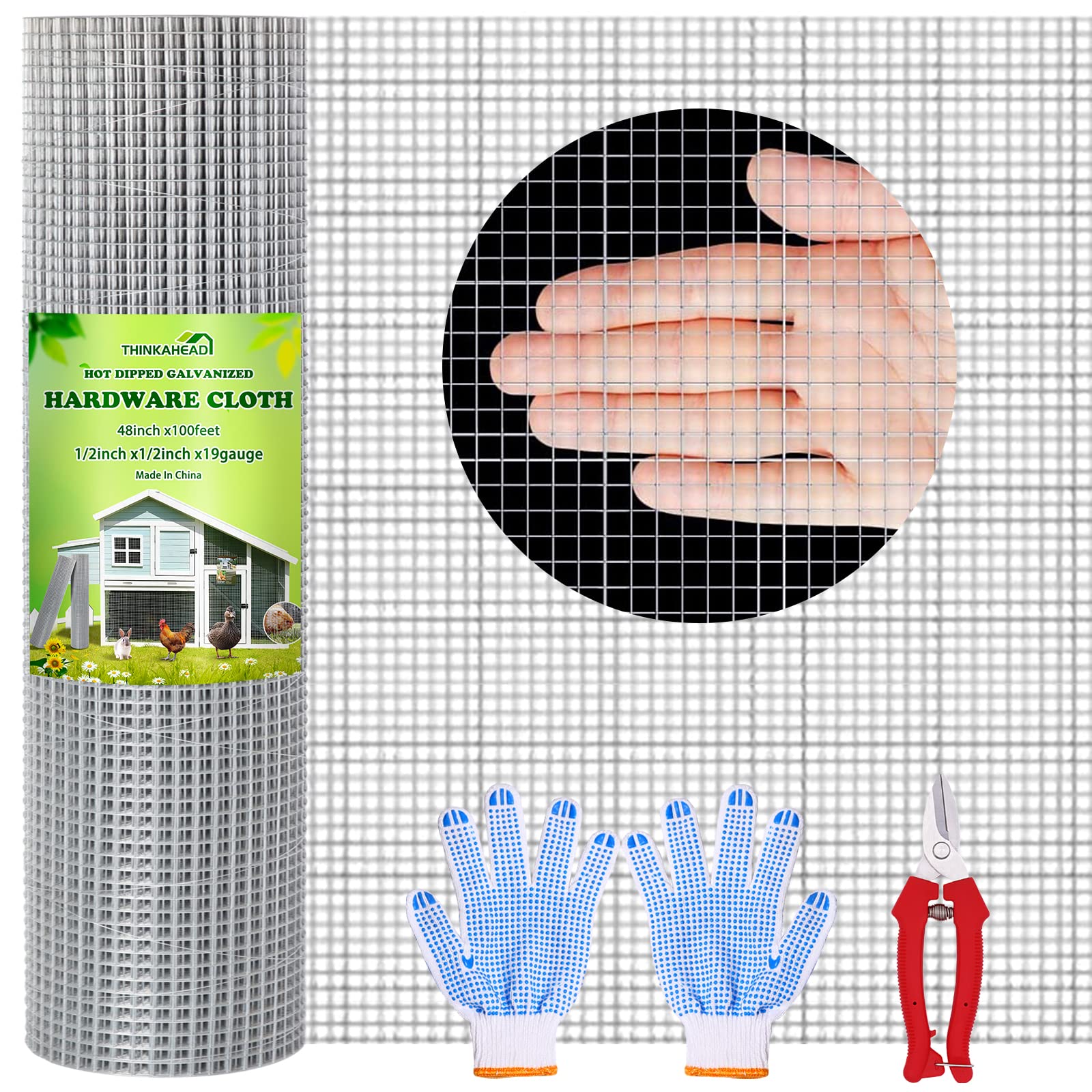
The heavyweight champion — 53.5 pounds of 19-gauge, 4-foot tall wire that covers an entire garden in one drop.
If you are fencing a large property or a commercial-grade garden, the Thinkahead roll is the end of the search. At 48 inches tall by 100 feet long, it matches the dimensions of the SANZEUS roll but adds nearly 5 pounds of additional wire weight — evidence of a denser weld schedule or thicker galvanizing. The wire is 19-gauge, hot-dip galvanized after welding, which is the same construction as the Salmut and SANZEUS rolls. The distinguishing factor is the included accessories: the box comes with a pair of pliers and a set of work gloves, so you have everything you need to start cutting and stapling immediately.
The owner consensus is that this is a “great quality” roll that beats buying from Tractor Supply or other local hardware stores at their prices. One buyer used it to replace a plastic fence that was being destroyed by groundhogs and rabbits, installing 150 feet in a single hour with the included tools — proof of both the product’s workability and the utility of the included accessories. A minority note that the gloves and cutters advertised in the listing do not always arrive in the box (two rolls, no tools).
At 53.5 pounds, this is the heaviest roll on the list. You will need a second person or a hand truck to move the box from the delivery point. The silver finish is standard hot-dip galvanized — durable and rust-resistant, but reflective and visually prominent in a garden setting.
The big picture
- 48-inch x 100-foot coverage is the maximum single-roll area on this list — one roll covers a full 25×25 foot garden perimeter
- Included pliers and gloves mean no trip to the hardware store before you start cutting
- Hot-dip galvanizing ensures all welds are sealed against rust; the double galvanizing process matches the premium standard
Logistics to plan for
- 53.5 pounds is heavy — do not order this unless you can receive and move a package this size
- The included tools occasionally go missing from the box; if that matters to you, check the package immediately on arrival
Go with this if: You are covering a large garden, a community plot, or a farm enclosure and want the maximum coverage from a single roll with no need to splice or buy extra tools.
Choose a lighter roll if: You cannot lift 53.5 pounds easily, or your garden is small enough that a 50-foot roll is all you need.
Understanding the Specs
Mesh Size (Opening)
This is the distance from one wire to the next wire, measured in inches. A 1/2-inch mesh means a 1/2-inch square hole. Rabbits can squeeze through any opening bigger than about 1 inch. For rabbit fencing, 1/2-inch is the safe standard — it blocks adults, juveniles, and even most mice. A 1/4-inch mesh adds gopher-proofing but is harder to see through and requires a frame because the thin 23-gauge wire does not hold its own shape. A 1-inch mesh stops adult rabbits but lets baby rabbits and rodents through — acceptable only if you already have rats under control.
Gauge (Wire Thickness)
Gauge is a reverse scale: lower number = thicker wire. A 19-gauge wire (used on most rolls here) is about 0.04 inches thick. It is strong enough to resist a rabbit’s teeth and rigid enough to hold its shape between posts spaced 4 to 6 feet apart, but pliable enough to cut with standard wire cutters. A 16-gauge wire (used on the YARDGARD roll) is noticeably thicker and twice as hard to cut by hand — great for cage floors and high-pressure areas, but the stiffness makes it harder to wrap around corners. A 23-gauge wire is thin and floppy, easier to cut but requiring a frame or tension wire to stay taut.
FAQ
Will 1-inch mesh keep rabbits out of my garden?
Can I bury hardware cloth to stop rabbits from digging under?
How high should a rabbit fence be?
What is the difference between chicken wire and hardware cloth?
How do I cut hardware cloth to size?
How do I attach hardware cloth to wooden posts?
Will hardware cloth rust if it sits in the rain?
How long does hardware cloth last underground?
Can I use hardware cloth as a fence around a vegetable garden?
What is the difference between 19-gauge and 16-gauge for rabbit fencing?
Final Thoughts: The Verdict
Across the board, the best garden fencing for rabbits is the Black Hardware Cloth 1/2 inch 36” x 50′ because it combines the right mesh size, a useful 36-inch height, a near-invisible black vinyl coating, and a strong owner consensus on quality and durability — all at a per-foot price that beats most coated alternatives. If you want maximum coverage from a single roll and do not mind a bare galvanized finish, grab the SANZEUS 48-inch by 100-foot roll. And for a tight budget where 24 inches of height is enough, the VEVOR 24-inch roll gives you the essential 1/2-inch mesh at the lowest entry price — just be prepared to inspect the coating on arrival.
How We Picked
We do not accept paid placement. Every pick is matched to a real buyer and a real use-case; we do not hands-on test units.
Sources & Methodology
Specifications: manufacturer listings and product documentation. Review insights: verified customer reviews, as of July 2026. Pricing: not shown on this page (it changes often); check the current price via the retailer link.
As an Amazon Associate, Lawn Gear Lab earns from qualifying purchases. This does not affect which products we feature.