
Specs are compiled from manufacturer listings and verified buyer reviews and can change over time — please confirm the key details on the product page before buying.
A garden enclosure kit is the fastest way to turn a season of frustration — watching birds peck your tomatoes or deer trample your sprouts — into a season of actually eating what you grow. The goal is simple: a ready-made frame and cover in one box that you assemble in under an hour and that stays standing through wind, rain, and hungry wildlife.
I’m Rikta — the founder and writer behind Lawn Gear Lab. This guide is built by comparing the manufacturers’ published specifications and the patterns across verified customer reviews, so you get each pick’s real strengths and trade-offs instead of marketing spin.
if you need to shield a single raised bed or a row of crops, the best garden enclosure kits share three traits: a wind-resistant frame, durable netting, and an easy way to access your plants without letting critters slip in.
Our Picks at a Glance
How To Choose The Best Garden Enclosure Kits
Every garden enclosure kit balances frame strength, mesh quality, and ease of assembly. Before you pick one, match these three factors to your garden setup and the pests you deal with most.
Netting Density and Material
The mesh is your only real barrier. Lightweight netting (40 g/m² or less) lets in full sun and water but won’t stop a determined squirrel. Heavier netting (96 g/m²) holds up for years and resists tearing if a branch pokes through. Polyester mesh resists UV rot better than standard plastic, while HDPE netting (a tough but lightweight type of polyethylene) stays lightweight but tough. The opening size also matters — a 1 cm aperture (hole) stops most birds but still lets pollinators through.
Frame Construction and Wind Anchoring
A powder-coated steel tube frame (steel with a baked-on paint finish that resists rust) resists rust; plastic connectors lower the cost but can crack in very cold weather. Look for U-shaped ground stakes and guy ropes (tension cords that anchor to the ground) if you live in a windy area — these double the enclosure’s survival odds in a storm. Some kits rely on the weight of a raised bed to hold the frame down; others come with stakes that penetrate the soil. Match your soil type (sandy or clay) to the anchoring system.
Access and Ventilation
A single zippered door is fine for a small bed, but a larger enclosure feels cramped if you cannot reach the back plants. Kits with zippers on two sides — or a roll-up door — make watering and harvesting much easier. Mesh-covered windows on the sides let heat escape on summer afternoons, which keeps your plants from cooking under plastic sheeting.
Quick Comparison
| Model | Best For | Mesh Density | Frame Material | Dimensions | Amazon |
|---|---|---|---|---|---|
| VEVOR Crop Cage★ Best Overall | Wind-prone gardens | — | Powder-coated steel | 3.9 x 3.9 x 5.9 ft | Amazon |
| Ohuhu Raised Garden Bed with CoverBest 3-in-1 Design | Small-space 3-in-1 use | — | Galvanized metal | 4 x 2 x 1 ft bed | Amazon |
| Quictent Raised Garden Bed | Large growing space | — | Extra-thick galvanized metal | 6 x 3 x 1 ft bed | Amazon |
| Ohuhu Crop Cage | Wind-busting bug barrier | 40 g/m² HDPE | Steel tubes + plastic connectors | 6.6 x 3.9 x 5.3 ft | Amazon |
| Large Tunnel Plant Netting Cover | Extra-large row coverage | 96 g/m² polyester | 16 mm round steel tube | 8.2 x 4 x 4 ft | Amazon |
| KING BIRD Raised Garden Bed | Ergonomic improve gardening | — | Galvanized metal with legs | 48 x 24 x 56 in | Amazon |
| Lifetime Raised Garden Bed Kit | Tool-free quick setup | — | High-density polyethylene | 4 x 4 x 0.75 ft each bed | Amazon |
In‑Depth Reviews
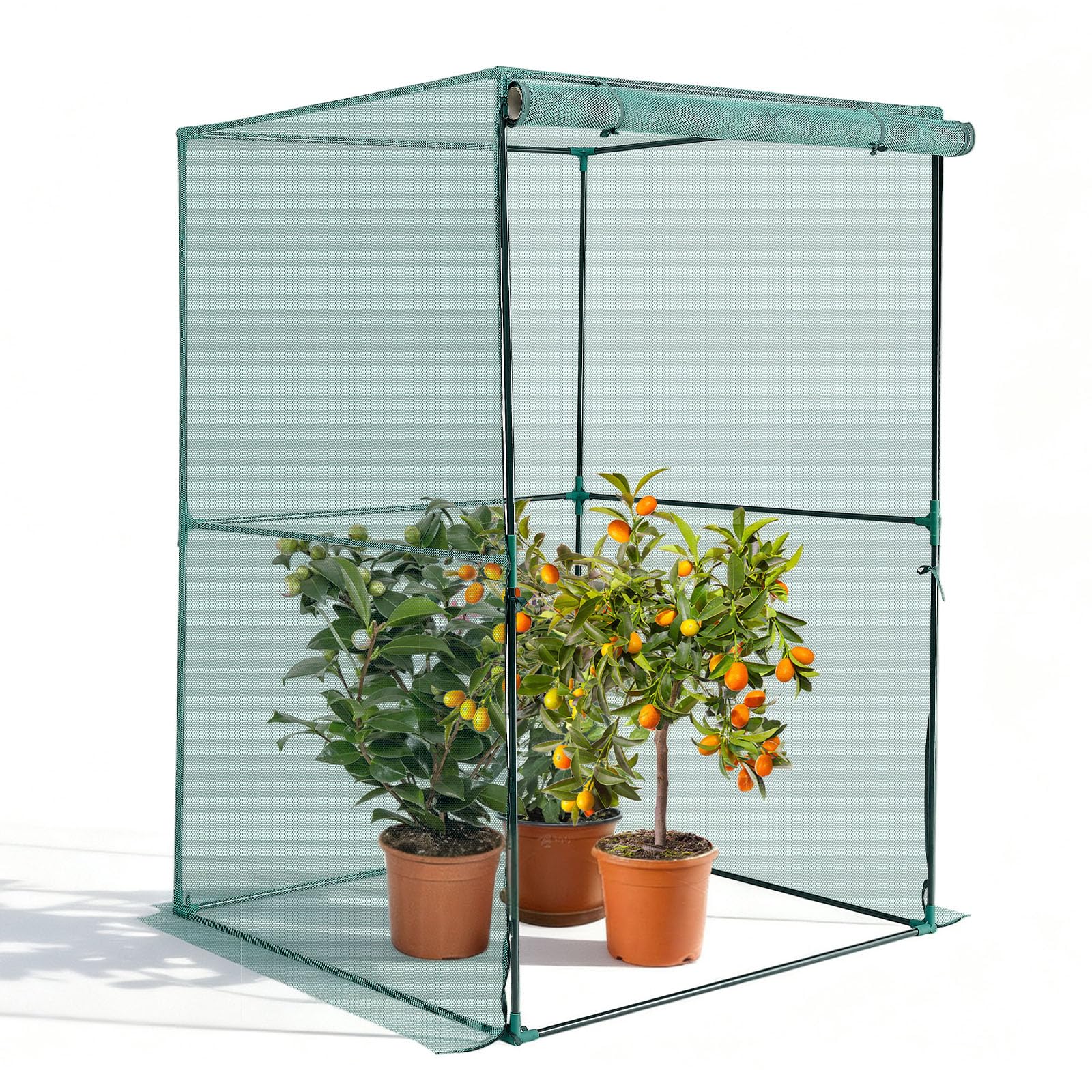
1. VEVOR Crop Cage, 3.9 x 3.9 x 5.9 ft Plant Protection Tent
Our pick — over 4.5★ from 100+ verified ratings; the strongest balance of quality and price.
A 9.9-pound cage that rode out storms and still kept the bugs out
The standout feature here is the powder-coated steel frame (steel with a baked-on paint finish that resists rust) paired with reinforced plastic joints and side support rods — it does not wobble the way cheaper cages do. The mesh is a 0.16 inch (4 mm) tear-resistant polyester that lets in air, sunlight, and rain while locking out birds and mammals. Buyers report that the “accurate size” and sturdiness meant it “survived windy storms,” which is the real test for any enclosure that stays in the ground all season.
Assembly takes under 10 minutes without tools, according to multiple owners. The roll-up zipper door is wide enough to reach your plants, though a few owners wished for a second zipper on the opposite side for easier access to a raised planter box. The 9.9-pound total weight means one person can carry it into position, and the U-shaped stakes handle most soil types — sandy ground may need an extra anchor, as one Florida reviewer noted.
The crowd rating is strong, with nearly 130 owners giving it a 4.6 average. What wins people over is the sheer assembly speed combined with proven storm resistance at this price tier.
Why Owners Stick With It
- Powder-coated steel frame survives rust and repeated wind
- No-tool assembly in about 10 minutes
- Mesh openings large enough for light but small enough to block pests
The One Recurring Caveat
- Single zipper door makes reaching the back awkward on a wide planter
- Metal stakes struggle in loose sand without additional stone weight
Who it works for: Any gardener who wants ready-made, storm-ready protection for a 4×4 raised bed without paying for premium branding.
Where it falls short: If your garden sits in loose or sandy soil, budget extra time to reinforce the stakes — the included pegs may not hold alone.
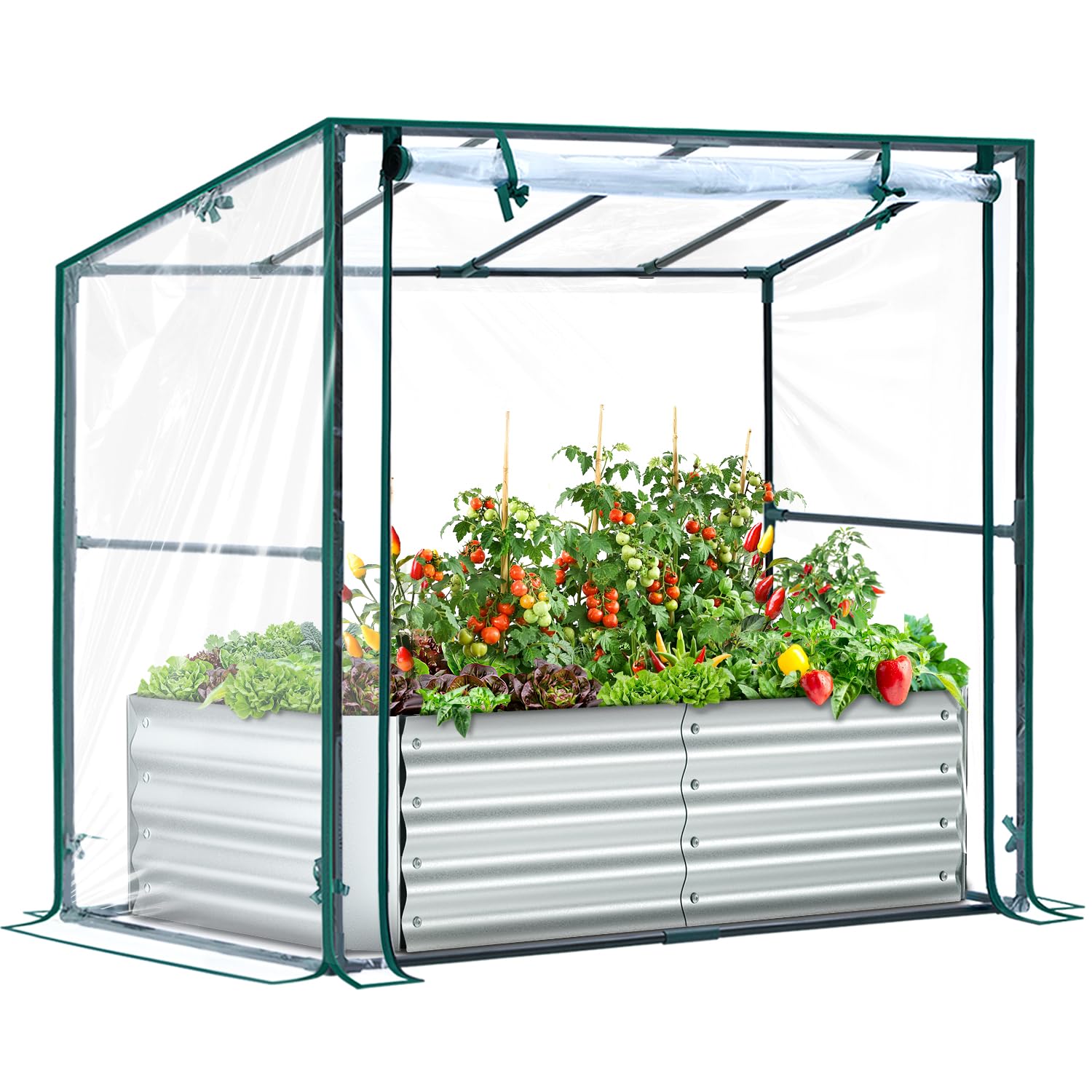
2. Ohuhu Raised Garden Bed with Cover Outdoor, 4x2x1 FT Galvanized Metal Planter Box
Three functions — bare bed, greenhouse, and cover — all in one 4-foot kit
This Ohuhu set splits into a standalone 4x2x1 ft galvanized metal planter box and a detachable PVC greenhouse top with a sloped roof. The greenhouse cover measures 49.6 x 26 x 45 inches — meaning you get frost protection in early spring and an open bed in summer. A front-high, rear-low design sheds rain and snow rather than pooling it.
The 810 owners who rated it 4.2 stars mostly praise the value and appearance. Owners mention the planter is “sturdy, easy to maintain, and attractive,” while the greenhouse cover adds genuine season-extension capability. On the downside, some owners find the beds measure 2 inches shorter in length and width than advertised, which frustrates anyone doing precise square-foot gardening. The sharp corners can also cause cuts during assembly — a pair of gloves is a smart addition to your setup.
What You Get
- 3-in-1 flexibility: grow bed, mini greenhouse, or combined protection
- Sloped PVC roof prevents snow and rain buildup
- Butterfly nut assembly requires no tools
What to Watch For
- Beds run 2 inches short on each side — not ideal for modular soil grids
- Sharp metal edges during assembly; wear gloves
Best for: The gardener who wants one tidy system that transitions from a cold-frame (a low, unheated greenhouse that protects plants from frost) in March to an open bed by June.
Better to skip if: You rely on precise 4×2 dimensions for square-foot planning — the actual size may throw off your grid.
3. Quictent Raised Garden Bed with Cover Outdoor Galvanized Metal Planter Box Kit
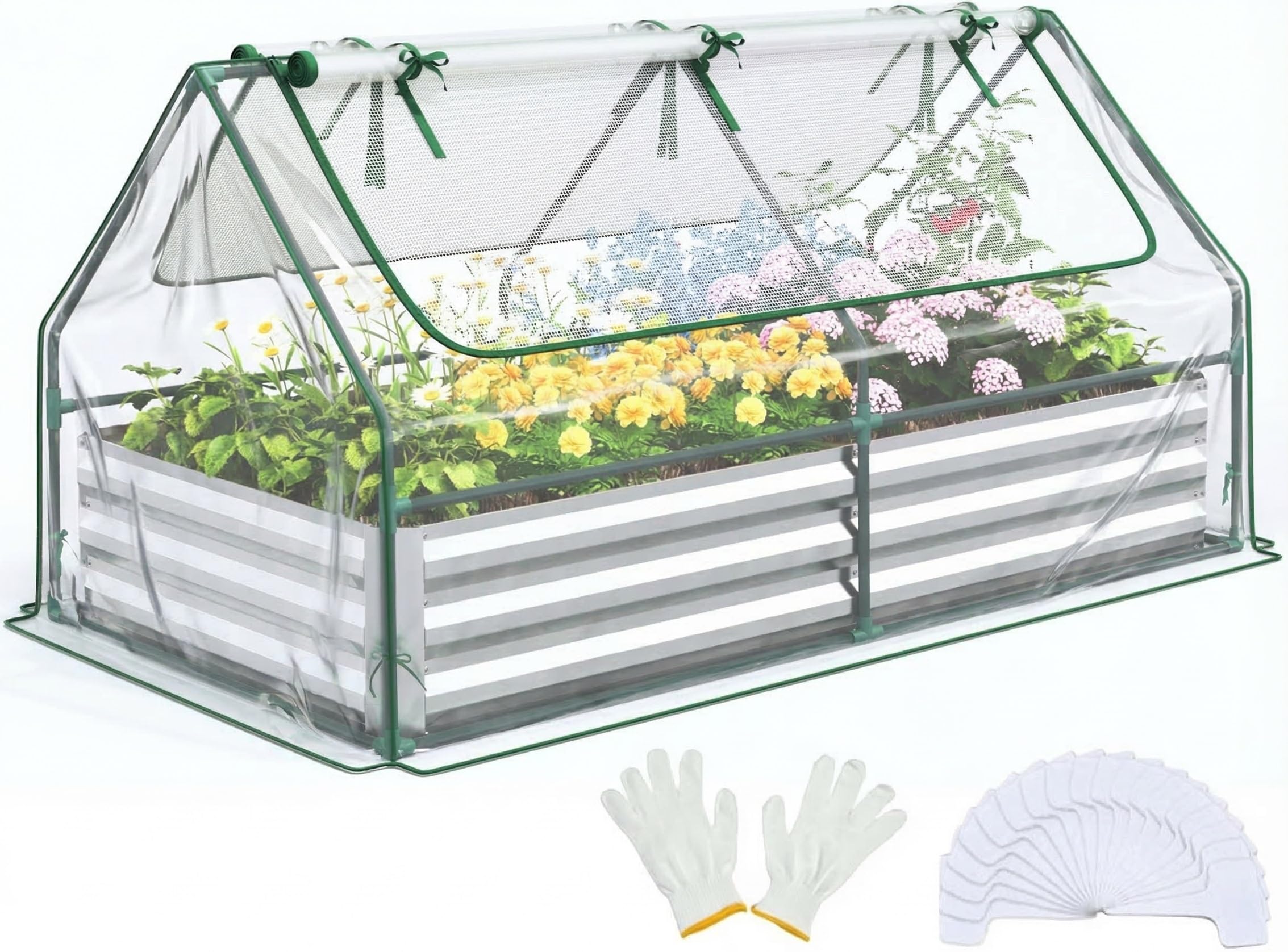
Six feet long, a full three feet wide, with two screen windows for airflow
This is the kit for serious volume. The raised bed measures 6 x 3 x 1 ft and holds about 18 cubic feet of soil — enough for a full vegetable patch. The extra-thick galvanized metal wall (0.08 inches nominal thickness) combined with two stronger middle poles stops the long sides from bowing outward, a problem the Quictent team says they designed specifically to fix compared to thinner aluminum competitors.
Assembly is the aspect owners praise most — rated positive by 130 of them. The clear PVC greenhouse cover comes with two zippered screen windows that let you control temperature by opening or closing them. The honest trade-off is plastic durability: a small number of arrivals show 2-3 inch tears in the greenhouse cover, though the brand says customer service replaced those quickly. The 725 total ratings average 4.3 stars, and the manufacturer backs the metal bed part with 5 years of support, the cover with 1 year, and the frame connectors for life.
Why It Holds Up
- Double middle poles prevent the long sides from bulging
- Two zippered screen windows manage temperature and humidity
- 5-year support on the raised bed portion
Cover Caution
- PVC greenhouse cover is thin; small tears can arrive from shipping
- Some units have missing wing nuts or support rods — check the box promptly
Reach for this if: You need the biggest single-bed footprint available and want a manufacturer who has clearly reinforced the weakest points of typical kits.
Look elsewhere if: A thin plastic top worries you for winters — this is a warmer-climate or grow-season enclosure unless you reinforce the cover.
4. Ohuhu Crop Cages for Garden Plant: 6.6×3.9×5.3 Ft Plant Protection Tent

Survived 80 mph wind reports — not a typo, actual customer testimony
This Ohuhu cage uses 40 g/m² HDPE netting (a lightweight but tough type of polyethylene) with roughly 1 cm apertures (holes) on a steel tube frame connected by plastic joints. The netting is described as “UV and ROT resistant,” which means it is designed to handle full-sun exposure without degrading in a single season. Owners describe its assembly as under 30 minutes, and one reviewer noted testing it against 80 mph winds — the brand says the frame held while keeping squirrels and birds out.
At 6.6 feet long by 3.9 feet wide by 5.3 feet tall, it is tall enough to walk into comfortably for tomato plants and large potted arrangements — one user reportedly fits 8 grow bags inside with room to spare. Zippers on two sides solve the access problem that the VEVOR cage faces with its single door. The mesh is so fine that plants get full sunlight while the netting itself is “nearly invisible,” as one long-term owner put it. The primary longevity note: after roughly 2 years of sun exposure, the mesh cover may start to degrade and need replacement.
What Wins People Over
- Dual side zippers for easy reach to every plant
- 40 g/m² HDPE netting with 1 cm opening is designed to resist UV and rot
- Steel frame reportedly survived verified 80 mph winds with proper staking
The Trade-Off
- Mesh cover typically lasts about 2 years in direct sun before degrading
- Slightly overpriced for the materials compared to competing cages
Choose this if: You live in a zone with strong gusts or need to protect a 6×3 raised bed plus a ring of potted plants at the same time.
Think twice if: You want permanent 5-year-plus protection without replacing any mesh cover — this is a “replace the netting every couple seasons” proposition.
5. Large Tunnel 8.2’x4′ Plant Netting Cover 4FT Tall Crop Cage

The heaviest mesh in the list — 96 g/m² means nothing small is getting through
This tunnel-shaped enclosure prioritizes density over flexibility. The mesh netting weighs 96 g/m² — 96 g/m² compared to the Ohuhu cage above at 40 g/m² — and each strand is under 3 mm thick, making it extremely tear-resistant. The 16 mm round steel tube frame gives the structure a rigid backbone, and at 8.2 feet long, it covers a full row of raised beds that the smaller cube cages cannot span. Compared to the VEVOR cage’s 3.9-foot length, this covers 8.2 feet of row in one go, while the VEVOR cage covers 3.9 feet.
The buyer consensus among 622 ratings (4.3 stars) is that assembly is straightforward, pest resistance is excellent, and the zippers move smoothly without snagging. The mesh lets in sun and rain while keeping deer, squirrels, and groundhogs out. A few owners note that the net tore when a dog ran into it, and that rain only partially penetrates — so you may need to water by hand during dry spells. The zipper openings on the top allow you to change water and food without unzipping the entire side, which is clever if you also use this as a chicken coop or pet run.
Densest Protection
- 96 g/m² polyester mesh — the heaviest gauge on this list
- Covers 8 ft of growing space in one tunnel shape
- Top zipper openings for watering without full access
The Limits
- Net can tear under a heavy impact from a pet or a falling branch
- Rain passes through partially; dry-weather gardens need manual watering
Perfect for: A row-covered veggie patch where you want near-bulletproof netting that stops deer and groundhogs on day one.
Not ideal for: Anyone who needs a rain-tight greenhouse top — this is netting only, so your plants stay exposed to the elements.
6. KING BIRD Large Raised Garden Bed with Cover & Netting Galvanized improve Planter Box with Legs
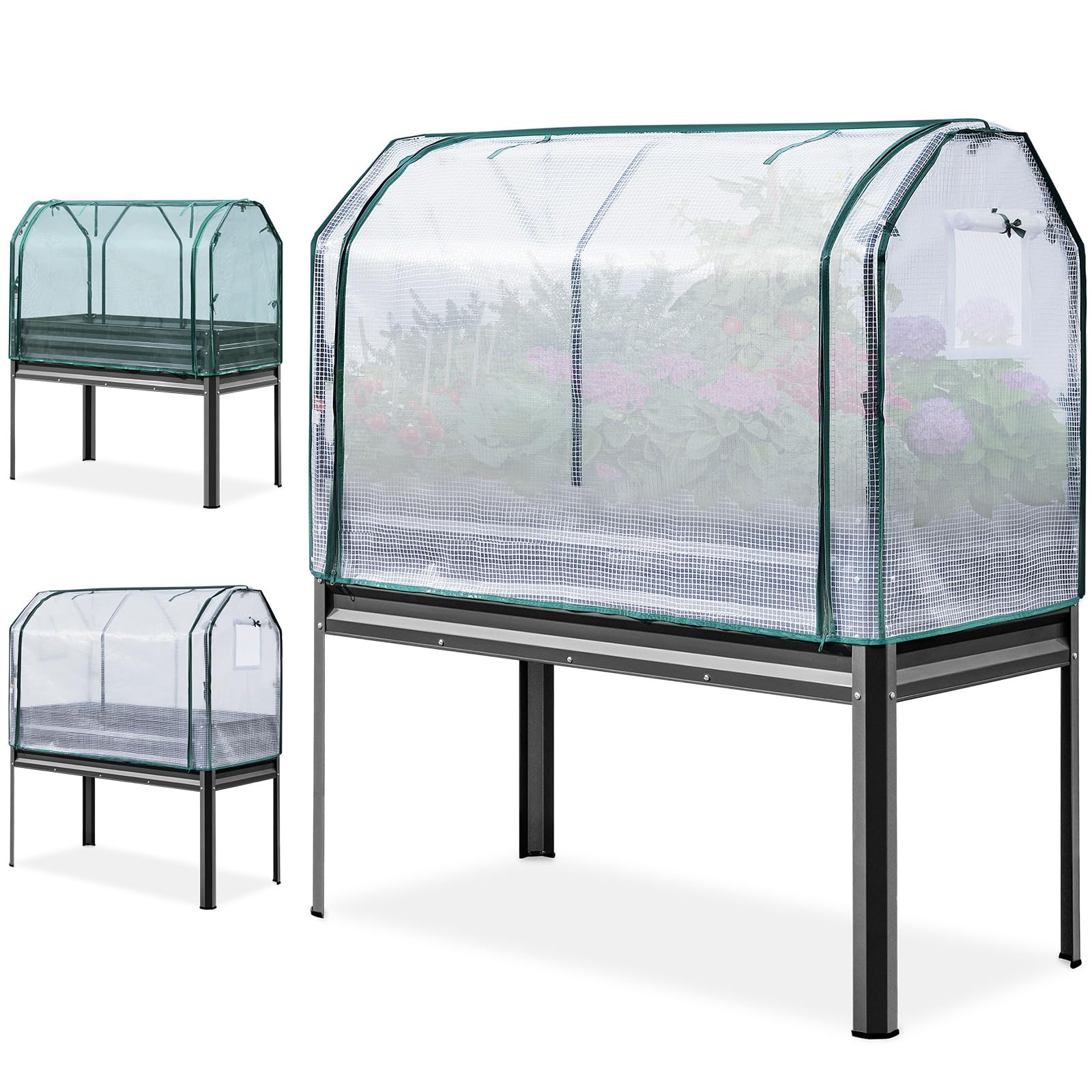
No bending, no kneeling — the bed surface sits 30 inches off the ground
This is a fully different category of enclosure. Rather than a mesh cage that sits on the ground, the KING BIRD uses four legs to lift the planter box to 30 inches high, with a top frame reaching 56 inches total. The 11.8-inch deep box holds up to 50 gallons of soil — far beyond the standard 8-inch raised bed depth — which means root vegetables get the room they need to grow deep.
The kit ships with both bird netting and a greenhouse cover, so you swap them by season. The galvanized metal frame is built to last while staying light enough for one person to assemble using butterfly nuts. Buyers remark that the 400-pound capacity when filled feels solid, though a few mention missing wing nuts in the package. Overall, the 598 owners give it 4.3 stars, praising the elimination of back strain and the generous planting space.
Ergonomic Advantage
- 30-inch standing height saves your back and knees during daily care
- Includes both netting and greenhouse cover for season swapping
- 50-gallon soil capacity supports deep-rooted vegetables
Assembly Note
- Some units arrive short a nut or two — check hardware before you start
- Wing nut tightening can blister fingers without a tool
Best for: Gardeners with back or knee pain who refuse to give up fresh vegetables — the standing height is transformative.
Better to pass on if: You need ground-level enclosure for a large in-ground plot; this is a contained improve planter, not a full-row cage.
7. Lifetime 60053 Raised Garden Bed Kit, 2 Beds and 1 Early Start Vinyl Enclosure

Two complete 4×4 beds that snap together — no tools required
This Lifetime kit comes as two 4×4 foot beds made of high-density polyethylene (HDPE) — a UV-resistant plastic that will not rot, chip, crack, or peel, unlike wood beds that degrade over time. The walls are 9 inches high, and you can stack both beds on top of each other to make a single 18-inch-high box, which is enough for deep root crops and also works as a child’s sandbox off-season.
The “Early Start” clear vinyl tent enclosure fits over one of the beds (not both, so you get two beds but one cover). Buyers consistently report assembly takes around a minute per bed — the panels clip together with no tools. The 235 owners give it 4.5 stars, with many using it for years: one owner in Texas heat reported zero damage after three summers, and another said the beds lasted over 12 years. The simulated wood grain finish looks better than bare plastic.
Why It Lasts
- HDPE plastic is immune to rot, chips, and cracking
- Stackable design lets you go from 9 inches to 18 inches deep
- True tool-less assembly — panels snap together in minutes
The One Limitation
- Only one vinyl enclosure included for two beds
- Walls can bow slightly under heavy soil pressure; reinforcing with stakes helps
Grab this if: You are new to raised beds and want the lowest-friction setup possible — two beds with one enclosure, zero tools, and a 5-year warranty.
Hold off if: You need each bed covered independently; you would need to buy a second enclosure separately.
Understanding the Specs
Mesh Density (g/m²)
This number tells you how tightly woven the netting is. Lighter mesh (around 40 g/m²) traps birds but lets full light through; heavier mesh (96 g/m²) resists tearing from branches and animal impacts but may cast a faint shadow. For most home gardens, the priority is blocking birds and squirrels, so even 40 g/m² HDPE mesh works well — just expect to replace it after 2-3 seasons if exposed to constant sun.
Frame Material and Connectors
Powder-coated steel (steel with a baked-on paint finish) resists rust best, galvanized metal (steel coated with a protective layer of zinc) is nearly equal, and high-density polyethylene is lightweight and immune to corrosion. The plastic connectors that join the tubes are often the weakest link — look for reinforced joints or side support rods if you live in a windy area. Kits that use U-shaped ground stakes plus guy ropes (tension cords that anchor to the ground) add enough stability to survive gusts that would tip a stakeless frame.
FAQ
Will a garden enclosure kit keep deer out?
Can I use a crop cage as a chicken run?
How long does the mesh cover last before it needs replacing?
Do I need to stake the enclosure into the ground?
Can the enclosure stay up during winter?
Will a garden enclosure kit work on a balcony or deck?
How much soil does a 6x3x1 ft raised bed need?
What is the difference between a crop cage and a raised bed with cover?
Final Thoughts: The Verdict
If you want one dependable pick, the right garden enclosure kits winner is the VEVOR Crop Cage because it delivers 10-minute assembly, a powder-coated steel frame that survives storms, and 4.6-star approval from real owners — all at a mid-range cost that undercuts most competition. If you want the longest single-row coverage with the densest pest netting, grab the Large Tunnel Plant Netting Cover. And for a standing-height setup that saves your back and still offers both netting and a greenhouse cover, the KING BIRD Raised Garden Bed is the one to reach for.
How We Picked
We do not accept paid placement. Every pick is matched to a real buyer and a real use-case; we do not hands-on test units.
Sources & Methodology
Specifications: manufacturer listings and product documentation. Review insights: verified customer reviews, as of July 2026. Pricing: not shown on this page (it changes often); check the current price via the retailer link.
As an Amazon Associate, Lawn Gear Lab earns from qualifying purchases. This does not affect which products we feature.