
Specs are compiled from manufacturer listings and verified buyer reviews and can change over time — please confirm the key details on the product page before buying.
You want a clean, sharp line between your flower bed and your lawn — something that holds back mulch, stops grass from creeping in, and actually looks good doing it. The problem is most garden edging either bends out of shape, fades in the sun, or takes a whole weekend to install. This guide cuts through that noise, covering nine of the best options built to keep your garden neat season after season.
I’m Rikta — the founder and writer behind Lawn Gear Lab. This guide is built by comparing the manufacturers’ published specifications and the patterns across verified customer reviews, so you get each pick’s real strengths and trade-offs instead of marketing spin.
if you want the stone-like look of interlocking resin bricks or the invisible strength of galvanized steel, this breakdown of the best garden blocks for edging will help you pick the one that fits your yard and your weekend.
Our Picks at a Glance


How To Choose The Best Garden Blocks For Edging
Picking the right edging depends on three things: the look you want, how much work you want to put into installation, and what the edging has to hold back. A lightweight plastic coil works fine for a gentle curve around a mulch bed, but if you are trying to stop aggressive Bermuda grass or heavy gravel from spilling onto a path, you need something sturdier. Here is what to look for.
Material Matters: The Trade-Off Between Flexibility and Strength
Your edging will live in the ground year-round, so the material has to handle sun, frost, rain, and the occasional bump from a lawn mower. Resin and polypropylene (PP) plastic offer a realistic stone or wood look without the weight, but they can become brittle in extreme cold over many years. Galvanized steel is the gold standard for a permanent, rust-resistant barrier that you can bend into curves. High-density polyethylene (HDPE) strikes a middle ground — it is durable and flexible but can get wavy if not installed carefully. Recycled rubber edging is heavy, forgiving, and perfect for straight runs, though it demands a bit more care during installation to avoid breaking the stakes.
Installation: No-Dig vs. Hammer-In vs. Stake-Down
Some edging systems use spikes that drive into the ground — ideal for soft soil and a quick Saturday morning project. Others require digging a narrow trench, setting the edging, and backfilling, which gives a more permanent result. Interlocking resin bricks and faux stone blocks use a no-dig approach where you lay the pieces on the ground and hammer spikes through pre-drilled holes. If your soil is rocky or full of clay, the hammer-in style can be a real workout, and you may need to pre-drill pilot holes or soften the ground with water first.
Height and Weed Blocking
A tall edging (5 inches or more) does a better job of blocking rhizome-spreading weeds like Bermuda grass because it reaches below the root zone. Shorter edging (around 2 to 3 inches high) is mainly for keeping mulch and gravel contained and defining a visual border. If your main goal is stopping grass from invading your flower bed, look for something that sits at least 4 to 5 inches tall.
Quick Comparison
| Model | Best For | Material | Height | Total Length | Amazon |
|---|---|---|---|---|---|
| Beuta Polyrock Bricks★ Best Overall | Realistic stone look, easy install | Resin | 2.25 in | 16 ft | Amazon |
| Master Mark Terrace BoardBest for Curves | Budget-friendly, flexible curves | HDPE Plastic | 5 in | 40 ft | Amazon |
| GTSABWAY Corrugated SteelPro Grade Steel | Long-lasting metal barrier | Galvanized Steel | 5.5 in | 80 ft | Amazon |
| Evelyne Wooden Fence Panels | Decorative picket-fence look | Polypropylene (PP) | 7 in | 10 ft | Amazon |
| MIXC HDPE Edging Kit | Quick no-dig borders | HDPE Plastic | 1.5 in | 100 ft | Amazon |
| Worth Garden Steel Strips | Low-profile metal divider | Alloy Steel | 4.5 in | 33 ft | Amazon |
| STIRLINGEAR Steel Edging | Low-profile metal curve | Galvanized Steel | 5 in | 33 ft | Amazon |
| VEVOR Faux Stone Blocks | Faux stone border, no dig | Polyethylene (PE) | 2.2 in | 16 ft | Amazon |
| EcoBorder Recycled Rubber | Heavy-duty straight borders | Rubber | 2.75 in | 24 ft | Amazon |
In‑Depth Reviews
1. Beuta Polyrock Garden Edging Bricks
Our pick — over 4.5★ from 900+ verified ratings; the strongest balance of quality and price.
The smarter take on stone that you can install in minutes, not hours.
This is the pick that wins over the most owners — a 4.6-star average across a huge number of buyers who almost all come back to say the same thing: it looks like real stone, and it stays put. Each kit gives you four sections, each section holding six interlocking resin bricks for a total of 16 feet of finished border. The bricks measure 47.5 inches long by 2.25 inches tall, with a 3.75-inch width that gives them a chunky, solid feel.
The look is the star here — a greystone finish that buyers keep saying looks better in person than in the photos. One owner pulled the pins from the zip ties, shaped the bricks into a gentle curve around an 18-inch raised bed, and had the whole thing done in what felt like minutes. The landscape transforms fast, and the bricks survive every season without cracking, fading, or heaving.
Each section gets three spikes, and the whole thing snaps together without tools. The honest trade-off is the price — a few buyers found it more expensive than they expected, but almost everyone who bought it agreed it was worth the extra cash for how finished and clean the result looks.
What Wins People Over
- Appearance that mimics real stone — the most-praised feature by a wide margin across hundreds of owners.
- Interlocking sections with spikes make installation fast; owners mention it transforms a flower bed in minutes.
- Made in the USA and built to hold its integrity through all four seasons without warping.
The Honest Caveat
- Pricier than basic plastic or steel edging, though most buyers feel the realistic finish justifies the cost.
- At 2.25 inches tall, it is a fairly low profile — good for shallow beds, less effective if you need to block deep-rooted weeds.
Reach for this if: you want a border that looks like real stone without the back-breaking labor of laying actual masonry. The snap-together design means you save an entire day compared to digging and mortaring real blocks.
Think twice if: you need a tall barrier to stop aggressive Bermuda grass or you are covering a very large area on a strict budget. The shorter height means this is more about looks and light containment than heavy-duty weed blocking.
2. Master Mark Terrace Board Edging
The flexible, affordable classic that shapes to any bed.
For decades, this coiled HDPE edging has been the go-to for gardeners who need a quick, clean border that can snake around trees and curve through flower beds. A single roll gives you 40 feet of black edging at 5 inches tall, with 10 stakes included. It is made from high-density polyethylene, which resists rotting, fading, and peeling — a material the brand has been making since 1966.
Installation is straightforward: you dig the edging about 1.5 inches into the ground, then pound the stakes through the pre-drilled holes. Owners find it easy to work with, especially if you lay it flat in the sun first to soften the plastic and reduce the inherent waviness. One buyer who has used these boards for years noted that the material is thinner than it was seven years ago — a recurring observation that explains the mixed feedback on sturdiness. Still, for the price and the coverage, it is tough to top for casual borders where absolute straightness is not the top priority.
The main knock is that the roll can look wavy when installed, especially in direct sunlight. A few owners recommend ordering extra stakes because the included ones may not be enough for a truly stable line, particularly in loose soil. The wood-grain texture gives a nice natural look from a distance, and for the money, you get a lot of feet-per-dollar compared to the interlocking brick systems.
The bottom line: If you want a long, flexible border that follows your garden’s natural shape and you are okay with spending a little time pre-warming the plastic to get a straighter line, this coil delivers excellent value. It is 40 feet of edging for a fraction of the cost of the interlocking brick kits, and the quality of the HDPE is well-established.
Ideal for: large-scale garden borders, serpentine flower beds, and budget-conscious projects where coverage length matters more than a perfectly straight line.
Not ideal for: anyone who demands a razor-straight edge or needs a tall barrier for deep-rooted weed control. The 5-inch height is good, but the waviness may bother perfectionists.
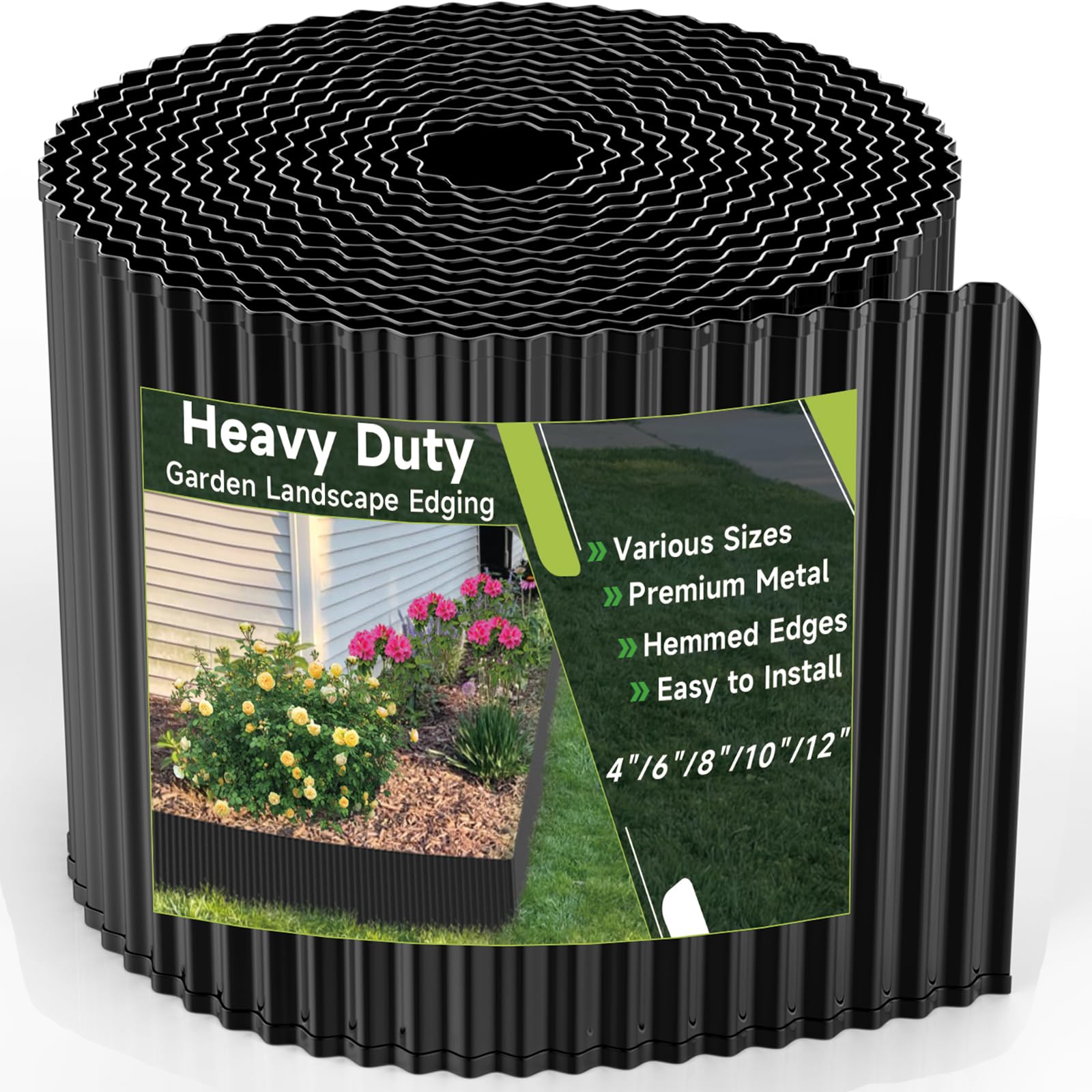
3. GTSABWAY Corrugated Galvanized Steel Edging
The 80-foot steel roll that handles weather, roots, and mower bumps.
This is for the person who is done replacing plastic edging every few years. The GTSABWAY roll gives you 80 feet of galvanized steel that stands 5.5 inches tall — a serious barrier against wandering roots and spreading mulch. The corrugated design gives it structural strength while still allowing you to shape gentle curves, circles, or sharp angles by hand or with a rubber mallet.
Owners who installed it in flower beds to block Bermuda grass found that the 5.5-inch height, combined with the rigid steel, effectively stopped the roots when combined with regular weeding along the outside edge. The steel has a clean black powder-coated finish, and the top and bottom edges are rolled smooth to prevent cuts, though buyers still recommend wearing gloves during installation because the cut ends can be sharp. You cut it to custom lengths with metal snips — a detail owners appreciate when working around trees or odd-shaped beds.
The trade-off is that installation takes more effort than a no-dig system. You typically dig a narrow trench, set the edging, and backfill. For very hard or rocky soil, a few owners found they needed to pre-wet the ground or use a rubber mallet and a 2×4 block to drive it down. The 80-foot length is a lot of coverage for the money, making it a premium-tier performer without the premium-tier price per foot.
One line verdict: The best choice for anyone who wants a permanent, heavy-duty metal border that will not rot, crack, or fade. It takes a bit more work to install, but the result is a professional-looking barrier that plastic simply cannot match.
Reach for this if: you are fighting invasive grass, need a tall barrier for a pathway or gravel bed, or want a single roll to cover a huge area.
Think twice if: you need a decorative, above-ground look. This is a low-profile metal strip designed to disappear into the landscape, not a showy border.
4. Evelyne Wooden Fence Garden Edging
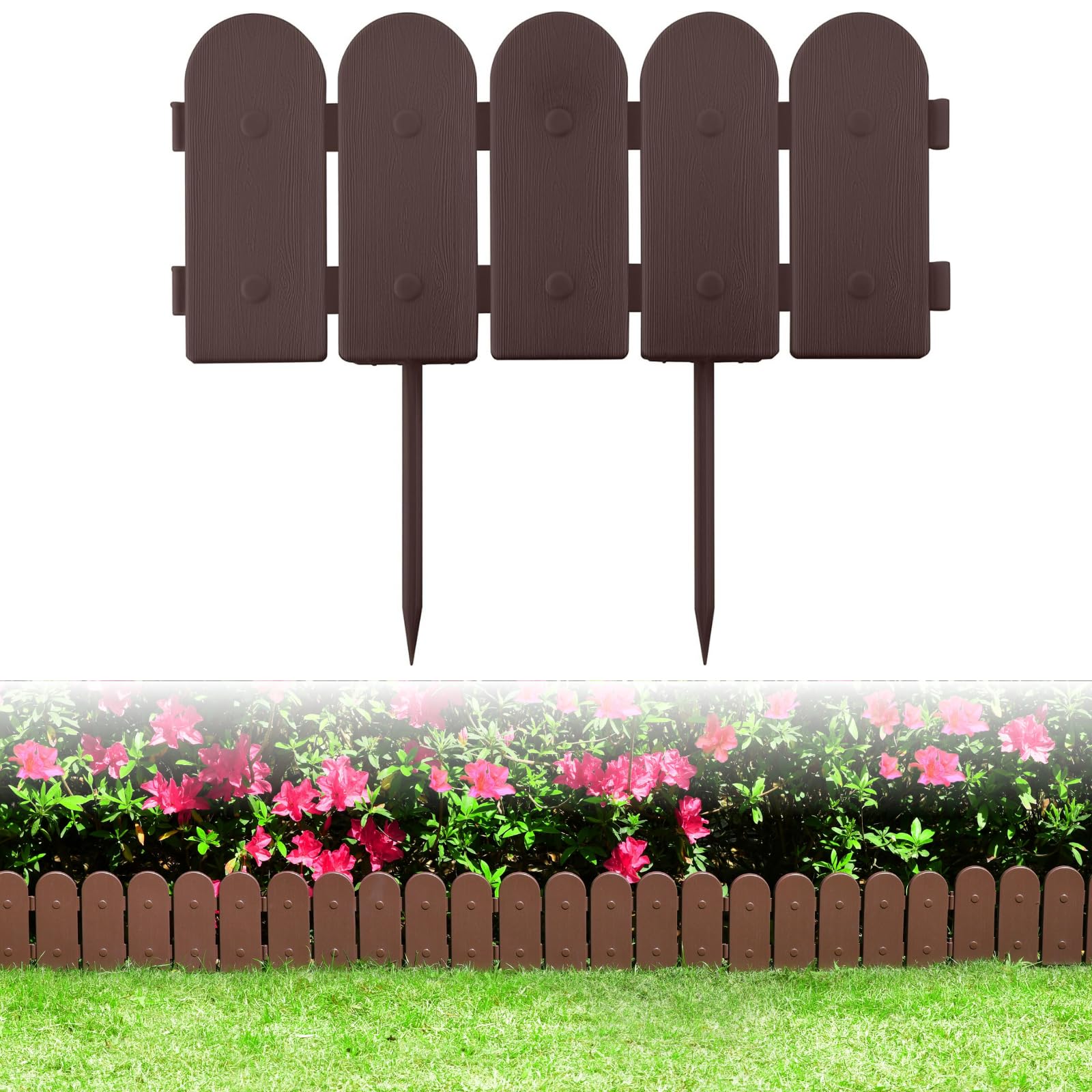
The charming picket fence look without the rot or splinters.
If you want edging that draws the eye, this is it. Each panel is 16 inches wide and 7 inches tall, with a realistic wood grain texture molded into durable polypropylene (PP) plastic. You get eight panels in a kit, covering 10 feet of border total. The panels are brown, and the faux-wood texture is convincing enough that visitors will do a double-take — until they realize it will not rot, warp, or need painting.
Installation is simple: push the two spikes at the bottom of each panel into the soil. For hard ground, a soft-faced hammer does the trick. The panels link together at the ends to form straight runs, and you can turn them 90 degrees to make clean corners. One owner bought multiple sets to create a barrier between their yard and a neighbor’s property, specifically to stop drifting leaves. Another uses them to keep dogs away from potted plants. The 7-inch height is enough to create a distinct visual boundary while still being low enough to see over.
The honest catch is that the color can fade faster than expected in direct sun. A few owners who used it in full-sun locations noticed the brown lightening over a summer. Shadier spots seem to preserve the color much longer. Cutting the panels to fit tight spaces is also a bit more difficult than expected — a hacksaw or heavy-duty shears are your best bet. Still, the charm factor and the quick install make this a favorite for gardens where appearance matters most.
Final read: A fantastic choice for small garden beds, pathway borders, and anyone who wants an attractive picket-fence look without the maintenance of real wood. Just plan to use it in partial shade if color retention is important to you.
Ideal for: decorative borders around flower beds, vegetable patches, and defining a “garden room” feel with a clear visual barrier. The easy install makes it a one-person job in under an hour.
Not ideal for: long, straight runs where a single continuous edge looks cleaner, or full-sun locations where you want the color to stay dark for many years.
5. MIXC 100ft HDPE Landscape Edging Kit

100 feet of HDPE edging with 150 spikes — the big-area budget king.
When you have a large yard, a long driveway, or a sprawling flower bed, you do not want to piece together short segments. The MIXC kit gives you three separate rolls of edging, each 33 feet long, plus a staggering 150 spikes to anchor them. The height is only 1.5 inches — this is not a weed-blocking barrier, it is a clean, low-profile divider meant to keep mulch and gravel in place and create a crisp edge between lawn and bed.
Made from HDPE, the plastic resists UV damage and extreme temperatures. The manufacturer claims 3-5 years of reliable use, and owners who have put it through harsh Vermont winters report it holds up well without cracking or crumbling. The L-dual-layer design adds a small soil barrier and a root blocker, which helps control grass spread along the edge. Installation is a breeze — no digging required. You just stake it down into relatively soft soil. The pre-drilled holes and included spikes make it a solo job.
The main issue some owners hit is that the plastic stakes can bend if you hit rocks or very hard clay. For truly straight lines, you may need to experiment a bit with tension. But if you are looking for a simple, affordable way to separate your lawn from your garden beds for a clean look, this kit is tough to top on value. The 100-foot total length alone covers most standard suburban front yards.
Why It’s a Smart Buy
- Massive coverage — 100 feet total across three rolls, enough for most whole-yard projects.
- Included 150 spikes mean you never need to buy extra hardware; just unroll, position, and stake.
- Flexible enough to curve around tight flower beds but sturdy enough to survive snow and rain without shifting.
The Main Trade-Off
- At only 1.5 inches tall, this is purely a visual and containment edge — it will not stop deep-rooted weeds or hold back large amounts of gravel.
- The plastic stakes bend when hammered into rocky ground; you may need to switch to metal stakes in tough soil.
Reach for this if: you need to edge a huge area on a modest budget and you value quick installation over heavy-duty performance. Perfect for defining pathways, playground borders, and low-traffic garden beds.
Think twice if: you need a tall barrier to stop Bermuda grass or you want a decorative, visible edging that stands out above the grass line.
6. Worth Garden Galvanized Steel Hammer-In Edging

The sturdy steel strip that hammers in fast and disappears into the landscape.
This kit gives you 10 individual strips of powder-coated galvanized steel, each 40 inches long, for a total of 33 feet of installed edging. The height is 4.5 inches, with 2 inches sitting above ground and 2.5 inches of jagged “saw teeth” spikes driving into the soil. It is a low-profile system — the black powder coating helps it blend into dark soil and mulch, so you notice the clean line, not the edging itself.
Installation is where this edging shines. The hammer-in design means you do not dig a trench. You simply align the strip, place a 2×4 on top to protect it, and pound it in with a rubber mallet. The spikes hold well in sandy and loamy soil, and the strips are flexible enough to create rounded corners. If you need to shorten a strip, a hacksaw cuts through it cleanly. Owners repeatedly mention that it is easy to install and looks great once in place, with one noting it blends in so well it looks natural rather than industrial.
The catch is that these spikes can be extremely hard to drive into dense, rocky, or hard-packed soil. A few owners found they had to pre-drill holes or switch to a heavier hammer. The set includes 11 connecting clips and a pair of gloves, but if your ground is tough, budget time for a more strenuous install. It is also note that the steel finish is powder-coated black, and some buyers experienced rust spots over time — though this is cosmetic and does not affect the structural integrity.
The short version: A great middle-ground option between flexible plastic and thick professional steel. It gives you the durability of metal with a straightforward hammer-in install. Best for well-prepared, relatively soft soil.
Ideal for: creating a clean, low-visibility barrier around flower beds, walkways, and driveways where you want a crisp line without a tall, obvious border.
Not ideal for: hard clay or gravelly soil where the spikes may bend or refuse to penetrate. In those conditions, consider a trench-style steel edging instead.
7. STIRLINGEAR 33ft Galvanized Steel Landscape Edging

Thick steel, a powder-coated black finish, and enough flexibility for clean curves.
This 10-pack from STIRLINGEAR covers 33 feet with individual 40-inch-long panels that stand 5 inches tall. The design leaves 2 inches visible above the ground, with a 3-inch spike section that anchors into the soil for a low, professional profile. The black powder-coated finish resists rust and weather, and the galvanized steel core gives it heft — the whole package weighs 17 pounds, a sign of the material’s thickness compared to thinner options on the market.
Owners praise the installation process: you use a wood block and a mallet to drive the panels in, and the steel is thick enough to stay straight but flexible enough to follow a curve. A buyer with a mid-century modern xeriscape noted the rusted color that developed over time added a beautiful patina that perfectly fit their landscape. The 11 included stakes and the pair of gloves in the box are appreciated touches. The clips that connect the panels look clean and professional, though a couple of buyers wished there were two more clips for extra stability.
The main honest observation from owners is that while this edging is sturdy and well-made, it is not the thickest professional-grade steel on the market. It is flexible enough for garden-to-sidewalk edging and works well for most residential applications, but if you need a barrier that can stop heavy machinery or extremely aggressive roots, you might want to look at a thicker gauge. For the vast majority of homeowners, though, this strikes a great balance between ease of install, durability, and appearance.
The core verdict: A well-balanced metal edging kit that is easy to install, looks high-end, and offers good rust resistance. The black finish blends smoothly into dark soil and mulch, ideal for minimalist landscapes.
Reach for this if: you want a clean, modern metal border that sits low and does not argue with you during installation. The included gloves and sturdy stakes make it a smoother experience than budget steel kits.
Think twice if: you need a taller above-ground profile. At only 2 inches visible, this is designed to be discreet.
8. VEVOR Faux Stone Landscape Edging Kit
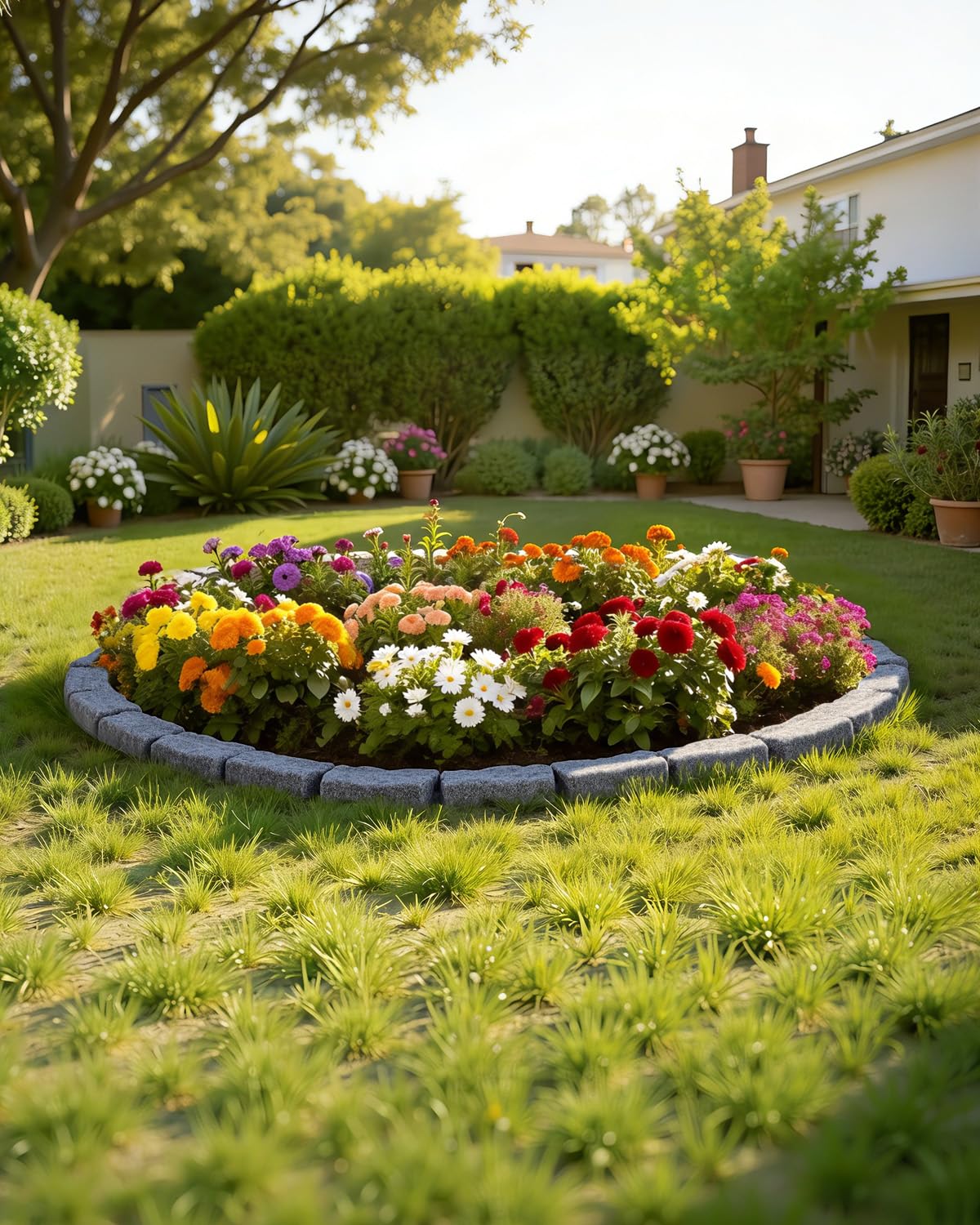
The hollow-core stone blocks that look heavy but are easy to move.
VEVOR’s take on faux stone edging uses rotomolded polyethylene (PE) plastic to create a convincing sandstone-gray texture that mimics natural stone. Each piece measures 46.46 inches long by 3.74 inches wide by 2.24 inches tall, and the kit comes with four sections (24 bricks total) to cover 16 feet of border. The hollow underside prevents the blocks from sinking into soft soil over time, and 12 spikes are included to lock everything in place.
Buyers consistently say the stone texture looks authentic and that installation is straightforward. The sections are flexible enough for gentle curves, though tight corners require a bit more maneuvering. One owner used it to create a barrier around a tree by bending the pieces into a circle, calling it a “sturdy landscaping border” that holds back rock and mulch from mower tracks. The raised surface patterns add depth and dimension that flat plastic edging cannot match.
The drawbacks are worth knowing. The kit only covers 16 feet, so you will need to measure carefully — one owner ended up needing four packs to complete their project. The extra stakes are not sold separately, which limits your ability to secure the line further in loose soil. A few owners also found connecting the pieces required some patience and muscle. The price per foot is higher than basic plastic coils, but the realistic stone look is the main reason to buy this over cheaper alternatives.
The Best Parts
- Lifelike stone texture that looks authentic and adds depth to garden borders — easily the most-praised feature.
- Hollow bottom prevents sinking into soft ground, keeping the border level year after year.
- Rotomolded PE plastic resists fading, rust, and weather damage without needing paint or sealant.
The Honest Drawbacks
- Covers only 16 feet per kit; larger projects require multiple purchases, which adds up.
- Extra ground stakes are not sold separately, so you cannot add more anchors if the soil is loose.
- Connecting the pieces takes some force; do not expect a perfect one-click snap every time.
Ideal for: small to medium garden beds, tree surrounds, and poolside borders where the aesthetic of real stone is the priority. The 16-foot kit is perfect for a single raised bed or a short pathway edge.
Not ideal for: large-scale projects on a strict per-foot budget, or if your soil is very loose and you need extra stakes to keep the line straight.
9. EcoBorder Recycled Rubber Lawn Edging

The recycled rubber beast that keeps mulch in and mowers away.
If you are tired of plastic edging that cracks or metal edging that bends, this recycled rubber border from EcoBorder is a different animal entirely. Each piece is 48 inches long and 2.75 inches wide, made from heavy, flexible recycled rubber. The box contains six pieces for a total of 24 feet of edging. The rubber has an L-shape profile that is specifically designed to be driven over by a lawn mower — a detail owners love because it eliminates the hours spent trimming grass along the edge with a weed whacker.
Durability is the headline here. The rubber is dense and flexible, surviving everything from a tractor snow plow to kids running over it on bikes. Owners describe it as “well-made” and note that it gives a “polished look” to foundation beds, keeping mulch firmly in place and creating a line so clean that you stop needing weed killer between the grass and the bed. Installation involves stakes that go through pre-drilled holes, though the included plastic stakes are the weak link — several buyers found they broke on the final hammer hit in tough soil. The fix is simple: replace them with hook-end rebar painted black, or pre-drill the holes slightly deeper.
The real trade-off is the effort. Getting a perfectly straight line takes patience and a string guide. Owners with rocky ground found the stakes challenging, and the rubber itself is heavy to move around (6.8 pounds per six-piece box). The cost is also on the higher side per foot compared to simple plastic coils. But for a permanent, low-maintenance border that a lawn mower can run over without damage, this is a category of its own.
Why Owners Love It
- Extremely durable recycled rubber that handles lawn mower traffic, tractor plowing, and harsh weather without cracking.
- L-shape design sits flush with the turf, creating a clean transition that makes trimming nearly unnecessary.
- Eco-friendly material that looks tidy and professional, earning high marks for both function and appearance.
The Honest Challenges
- Plastic stakes included in the kit are prone to breaking on the final hammer stroke; many owners swap them for custom metal pins.
- Getting a dead-straight line during installation requires prep work — a string line and a 2×4 guide are highly recommended.
- Price per foot is higher than most plastic or thin metal options; you pay a premium for the long-lasting rubber material.
Reach for this if: you want a low-maintenance border that keeps mulch in the bed, grass out of the mower, and does not need replacing in a few years. The mower-over design eliminates the need for string trimming along the edge.
Think twice if: you have very hard, rocky soil that will make the stakes weep, or you need a quick, tool-free install. This one rewards patience and a little DIY stake modification.
Understanding the Specs
Material — Resin vs. Steel vs. HDPE vs. Rubber
The material dictates how long your edging lasts and how it behaves in weather. Resin (used in the Beuta bricks) gives a realistic stone look but can be brittle after many freeze-thaw cycles. Galvanized steel (like the GTSABWAY or STIRLINGEAR options) resists rust and stays rigid for decades, but it requires a trench or serious hammering to install. HDPE plastic (Master Mark and MIXC) is the middle ground — flexible, UV-resistant, and affordable, but prone to waviness if not staked properly. Recycled rubber (EcoBorder) is the most forgiving on the mower blade, heavy enough to stay put, and lasts nearly forever, but demands careful install to avoid broken stakes.
Height — How Tall Is Tall Enough
Height determines whether your edging is purely decorative or a functional weed barrier. Edging under 3 inches tall (like the MIXC at 1.5 inches or Beuta at 2.25 inches) is good for containing mulch and gravel and defining a visual line. Edging from 4.5 to 5.5 inches tall (like the Master Mark, Worth Garden, and STIRLINGEAR options) reaches below the root zone of most surface weeds, making it effective at blocking grass and root spread. The 7-inch Evelyne panels are the tallest here, providing a visible fence-like barrier that small pets and leaves cannot easily cross.
FAQ
Do I need to dig a trench for garden edging blocks?
How do I keep flexible plastic edging from looking wavy?
Will galvanized steel edging rust over time?
Which edging is best for blocking Bermuda grass or other invasive weeds?
Can garden edging blocks be used on a slope?
How much garden edging do I need to buy?
What is the difference between polypropylene (PP) and polyethylene (PE) edging?
Can I drive a lawn mower over garden edging?
How do I cut garden edging to fit tight spaces?
Is it better to have a continuous coil edging or individual interlocking blocks?
Final Thoughts: The Verdict
For most buyers, the garden blocks for edging winner is the Beuta Polyrock Bricks because it combines a realistic stone appearance with tool-free snap-together installation, backed by the highest owner satisfaction in this list. If you want a long, flexible coil that can follow any curve for a lower price per foot, grab the Master Mark Terrace Board. And for a permanent, heavy-duty metal barrier that will outlast every plastic option, the GTSABWAY Corrugated Steel Edging is the one to reach for.
How We Picked
We do not accept paid placement. Every pick is matched to a real buyer and a real use-case; we do not hands-on test units.
Sources & Methodology
Specifications: manufacturer listings and product documentation. Review insights: verified customer reviews, as of July 2026. Pricing: not shown on this page (it changes often); check the current price via the retailer link.
As an Amazon Associate, Lawn Gear Lab earns from qualifying purchases. This does not affect which products we feature.