
Specs are compiled from manufacturer listings and verified buyer reviews and can change over time — please confirm the key details on the product page before buying.
A garden bed liner has one job that matters more than any other: it must stop weeds from below while letting water and air reach your plants from above. The best ones do this for years, not just one season, and they hold up to sun, rain, and your boots when you step on them. The other thing you will quickly learn is that not all liners are the same — the cheap woven plastic from the big-box store often shreds at the cut line, while a properly made fabric stays intact and keeps working season after season.
I’m Rikta — the founder and writer behind Lawn Gear Lab. This guide is built by comparing the manufacturers’ published specifications and the patterns across verified customer reviews, so you get each pick’s real strengths and trade-offs instead of marketing spin.
You will find the right garden bed liner by matching the fabric weight to your project size, the weave type to your drainage needs, and the roll length to your planting area.
Our Picks at a Glance

How To Choose The Best Garden Bed Liner
The single most important choice you will make is between a woven and a non-woven liner. Woven fabric, made by weaving polypropylene strips together, is what most home gardeners use — it is strong, resists tearing, and lets water pass through the gaps in the weave. Non-woven fabric, made by needle-punching fibers together into a felt-like sheet, drains even faster and is often the first choice for French drains and gravel projects where water flow matters more than weed blocking.
Fabric weight tells you how long it will last
The number on the package — 3.2 oz, 5 oz, 8 oz — is the weight of the fabric per square yard, and it is the fastest shorthand for durability. A 3.2 oz liner is the everyday standard for garden beds and paths, typically lasting several years. A 5 oz liner is noticeably thicker and tougher, the kind you can walk on every day without worrying. An 8 oz non-woven fabric is the heaviest category here, built for drainage work and heavy-duty ground cover where you need serious puncture resistance.
Water permeability is about your plants, not just drainage
A liner that traps water can drown your plants and turn your beds into a puddle. A liner that lets water through too fast can dry the soil out. The good news is most quality liners are designed to let both air and moisture pass through while still blocking sunlight — which is what stops weed seeds from sprouting. If you garden in a rainy climate, look for a fabric with a high permeability rating, because it will keep mulch from washing away in a storm.
UV resistance decides how long it survives the sun
Ordinary fabric breaks down after a season or two of full sun exposure. UV-stabilized polypropylene resists harsh sunlight, so the best liners last five or more years. If your beds are in an open, sun-baked area with no shade, you want a liner that is explicitly UV-stabilized, not just heavy.
Quick Comparison
| Model | Best For | Weight | Dimensions | Roll Weight | Amazon |
|---|---|---|---|---|---|
| VIVOSUN Premium 5oz★ Best Overall | High-traffic beds & durability | 5 oz | 3 ft x 100 ft | 10.3 lb | Amazon |
| Weed Barrier Landscape FabricBest Value | Budget-friendly value | 3.2 oz | 4 ft x 100 ft | 6.96 lb | Amazon |
| Winisok 4FT x 100FTWide Coverage | Long runs & wide coverage | 3.2 oz | 4 ft x 100 ft | 7.67 lb | Amazon |
| Winisok 3FT x 100FT | Narrower beds & paths | 3.2 oz | 3 ft x 100 ft | 5.35 lb | Amazon |
| VEVOR Geotextile 8oz | Drainage & French drains | 8 oz | 3 ft x 100 ft | 8.37 lb | Amazon |
| Agfabric 3oz | Raised garden beds | 3 oz | 3 ft x 100 ft | 6.29 lb | Amazon |
| TUFFIOM 125gsm | Extra-long coverage | 3.7 oz | 3 ft x 300 ft | — | Amazon |
| HOOPLE 3×150 | Large landscaping projects | Woven | 3 ft x 150 ft | 9.73 lb | Amazon |
| Dewitt Sunbelt | Rows & greenhouse floors | 3.2 oz | 3 ft x 200 ft | — | Amazon |
In-Depth Reviews
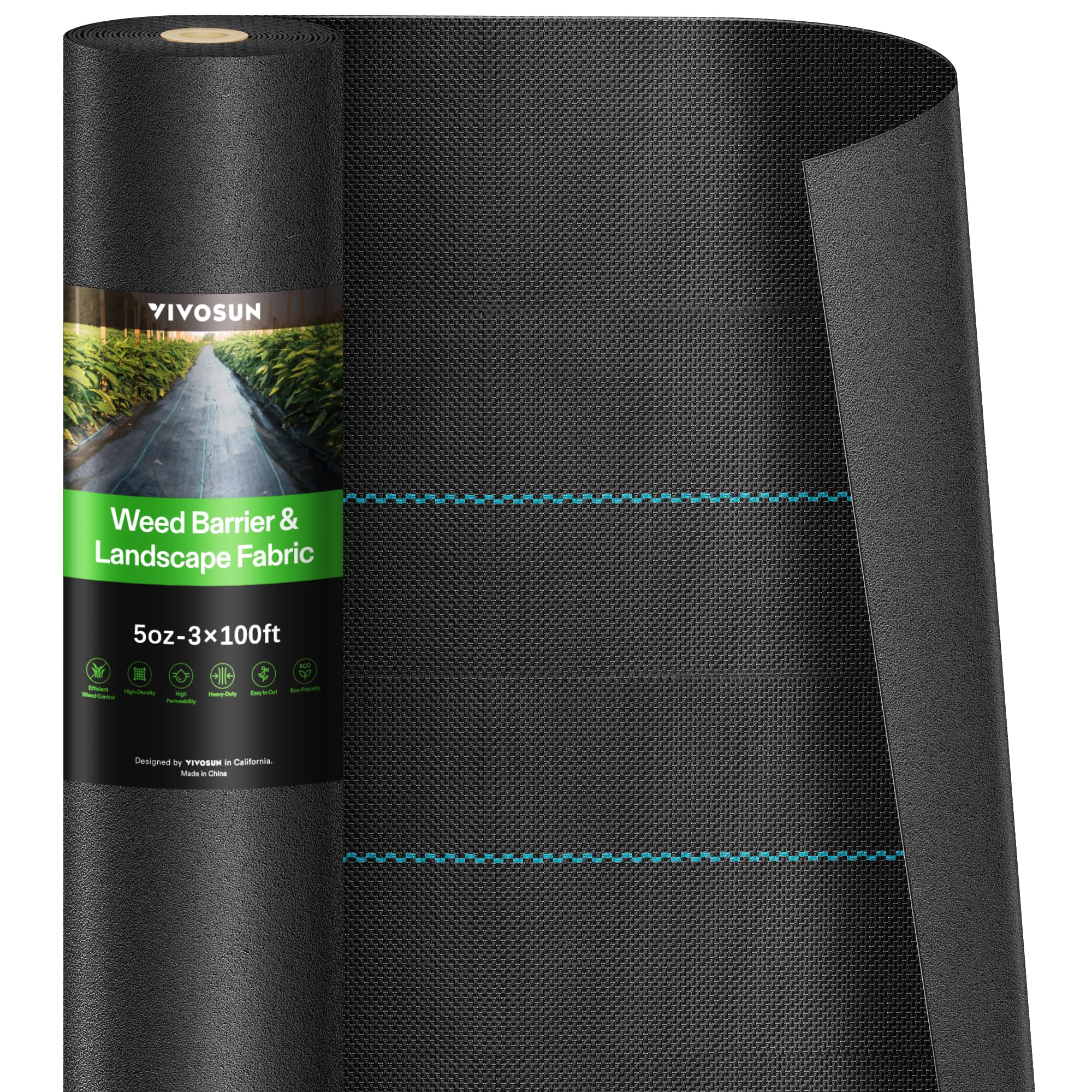
1. VIVOSUN Premium Weed Barrier Landscape Fabric
Our pick — over 4.5★ from 900+ verified ratings; the strongest balance of quality and price.
The heavy-duty liner you can walk on every day and forget it is there
The standout number here is the 5 oz fabric weight, which puts this liner in a tougher class than the standard 3.2 oz rolls most people pick up. It uses a dual-layer construction — a needle-punched non-woven layer fused with a woven layer — so it blocks sunlight and UV rays while still drawing water down through the fabric. That means your roots get air and your beds drain fast, even with this much material between the soil and the sky.
The quality is what owners praise most, and the durability follows close behind; buyers report it as “excellent quality working great around garden beds, we walk on everyday holding up great.” It comes on a 3 ft by 100 ft roll weighing 10.3 pounds, while the comparable 4 ft x 100 ft liner weighs 6.96 pounds — that extra mass is exactly why it shrugs off foot traffic. A green line guide runs every foot across the roll, so you can line up plants in straight rows without measuring.
The one honest trade-off is cutting: this fabric can unravel a bit at the cut edges, so use a sharp blade and expect some fraying. Reviewers who have used it before say it keeps weeds from growing through and expect it to outlast cheaper rolls that fail in a single season. It is also a woven material, which some owners mention is essentially a woven plastic — perfectly fine for weed blocking, just not a natural fiber.
What wins people over
- 5 oz double-layered build shrugs off daily foot traffic
- Green line guides every foot for straight planting rows
- 10.3 lb roll signals serious, durable material
The trade-offs
- Cut edges can unravel, so a sharp blade is essential
- Material is woven plastic, not a natural fiber
- Some buyers feel the price is high for what it is
Best for: gardeners who want a liner that survives years of walking, watering, and weeding without replacement.
Think twice if: you hate any fraying at cut lines — this one needs a clean cut and careful handling.
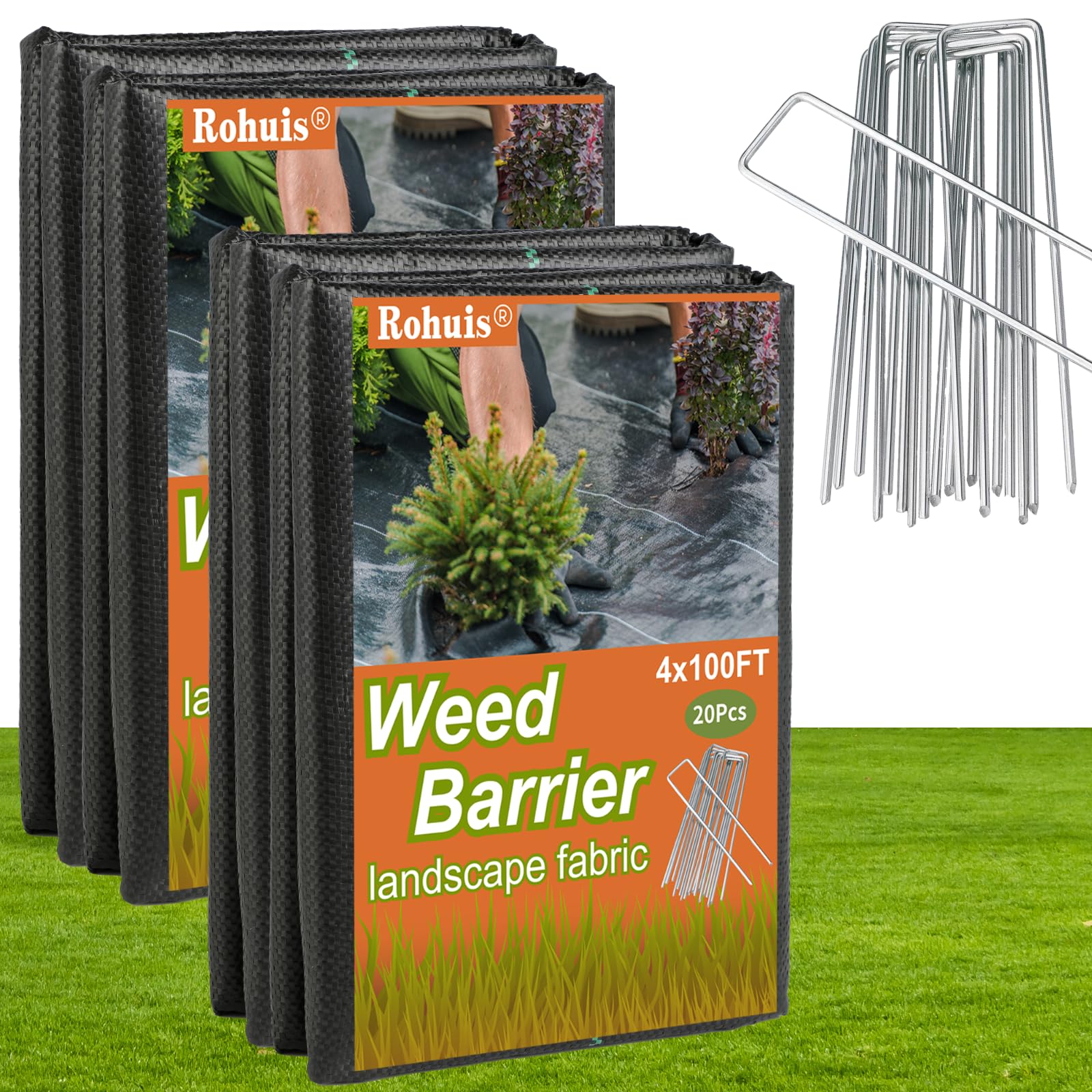
2. Weed Barrier Landscape Fabric 4ft x 100ft
A two-year-proven liner that stretches four feet wide for bigger coverage
This is the liner buyers come back to for a second order, and the reason is simple: the first roll has been in the ground for over two years and still holds back almost all foliage. It is made from 3.2 oz UV-stabilized woven polypropylene, which is the everyday workhorse weight that stands up to sun, foot traffic, and rough ground without degrading. The manufacturer rates it for 5+ years of reliable service.
At 4 ft wide and 100 ft long, it covers a wider swath than a 3 ft roll, making it a smart pick for paths, driveways, and side yards. It ships with 20 U-shaped pegs so you can cut, lay, and pin it down in one session. The water permeability rate is listed at 10-20 L/m²/s, which means rain soaks through to your soil while the fabric keeps mulch from washing away in a storm.
The recurring note from buyers is that it is thinner than some expected, and cutting can cause some shredding at the edges — a common trait of woven fabric. On the other hand, it is a clear step up from typical home-store rolls, with owners calling the quality superior and noting no weeds have pushed through. A few wished for more included pins, so budget for extra staples on a big install.
Proven track record: a repeat-purchase liner that has already survived two full years in the ground and is expected to keep working for years more.
Watch for: shredding at cut lines and a thinner feel than heavier 5 oz rolls.
3. Winisok 4FT x 100FT Weed Barrier
Thick woven fabric that arrives as two manageable sheets for easy handling
This 3.2 oz liner comes as 2 separate sheets of 4FT x 50FT rather than one giant roll, which makes it noticeably easier to unroll, pin down, and stretch across your garden without wrestling a heavy cylinder. The material is tightly woven polypropylene with tear-resistant properties, and the maker rates it for more than 5 years of effective weed control. Owners describe it as “really tuff stuff,” noting that water still gets through while the fabric stays strong.
The green stripes on the surface help you align plants and keep rows straight, and the fabric is permeable and breathable so your plants can thrive while it blocks sunlight from reaching weed seeds. It handles a wide range of jobs — landscaping, retaining walls, French drains, erosion control, and pond underlayment all make the list. Customers note covering three separate areas and still having nearly a full sheet left over.
The honest downside is that this fabric is genuinely thick, so you will need a sharp blade or razor to cut it — one owner’s blade dulled mid-job. A few buyers also note it can shred and release plastic strands into the soil, which makes it better suited to permanent installs than seasonal gardening where you dig things up often.
Thick and tough: a dense 3.2 oz woven liner that blocks weeds and stands up to abuse, delivered in two easy-to-handle sheets.
Plan for: sharp cutting tools and a permanent install, since cutting can shed plastic fibers.
4. Winisok 3FT x 100FT Weed Barrier
The 3-foot width that fits raised beds and walkways without wasted material
If your beds are on the narrower side, this 3 ft wide version of the Winisok liner saves you from trimming away a foot of excess fabric. It uses the same 3.2 oz tightly woven polypropylene as its 4 ft sibling, rated for long-term use and effective weed suppression. The green stripes return here too, giving you straight lines for laying out plants and trimming edges without a tape measure.
A new gardener used it to eliminate hours of weeding and was pleased overall. It also works as a base layer for rock gardens, with one buyer purchasing it twice after it performed perfectly for many months.
The caution from reviewers is to avoid scissors when cutting this one — a sharp blade gives cleaner lines. There is also some disagreement on thickness, with a few finding it super thin while others praise its durability, which tells you this is a standard-weight liner rather than a heavy-duty one. Water passes through fine, though one owner initially worried it did not until they watched it work.
What makes it easy
- 3 ft width fits standard raised beds with little waste
- Green stripes make alignment and trimming simple
- Proven as a rock garden base layer, bought twice
Keep in mind
- Scissors can tear it — use a sharp blade instead
- Thickness reads standard, not heavy-duty, to some owners
Reach for this if: you want an easy-to-lay, straight-lined liner for beds and paths at a 3 ft width.
Look elsewhere if: you need maximum puncture resistance — this is a standard 3.2 oz, not a 5 oz or 8 oz fabric.
5. VEVOR Geotextile Landscape Fabric 8oz

The 8 oz non-woven heavyweight built for drainage, not just weed blocking
This is the different animal of the group: an 8 oz non-woven, needle-punched fabric rather than a woven liner, with a 350N tensile strength and a 440 N load capacity. All that engineering translates to a felt-like sheet that filters gravel, drains water fast, and stops soil from clogging your drainage — which is why owners use it behind retaining walls and in drainage ditches before laying larger stones. It is erosion-proof, damp-proof, and tear-proof, according to the maker.
Quality is what owners mention most, with durability close behind — buyers call it strong, durable, and easy to work with, praising the good thickness for drainage projects and weed prevention. It is super easy to carry, unroll, and cut to exact dimensions, and it stays put long enough to staple down even in wind. One owner used it to keep the gravel drainage behind a retaining wall clean by preventing soil and debris from clogging it.
The mixed note here is thickness: some find it nice and thick, while others expected more heft for an 8 oz product. It is also a non-woven felt, so it does not have the crisp woven look of a traditional weed barrier. If your project is mostly about water flow — French drains, gravel paths, retaining walls — this is the right tool; if you just want to stop weeds in a flower bed, a woven liner is simpler.
Built for water: an 8 oz non-woven fabric with 350N tensile strength that filters gravel and drains freely in hardscape projects.
Not for everyone: gardeners who just need weed blocking in soft beds will find a woven liner easier and cheaper.
6. Agfabric 3×100 Ft Landscape Fabric

A chemical-free liner that keeps raised beds weed-free without harming the soil
This 3 oz liner is made from heavy-duty polypropylene and controls weeds without chemicals that can dry out the soil and rob plants of nutrients. Owners have used it to cover entire front yards and side yards, reporting very few weeds push through — and when they do, it is usually at the overlap between sheets. It lets the soil breathe and keeps moisture and air reaching plant roots, which also means you water less often.
The install trick that works here is cutting an X into the fabric with scissors where you want a new plant, digging a hole underneath, and dropping the roots in — the fabric then hugs the stem and keeps the rest of the bed covered. One owner used it as an under-liner for a raised horticultural test bed and found it permeable to water yet strong enough to block root growth from nearby maple trees. It also holds down well with staples, even in wind.
The recurring warning is fraying at cut edges — a fresh razor knife minimizes the unraveling, but you will get some. A few owners also note it is not as thick as other rolls they normally use, so it may last a few seasons rather than many. And because it is a woven fabric, it can be slick on slopes, so anchor it well if your ground is angled.
Why gardeners like it
- Chemical-free weed control that protects soil health
- X-cut install makes planting through it simple
- Holds moisture so you water less often
The catches
- Edges fray when cut, so use a fresh razor knife
- Thinner feel than heavier rolls, so expect a few seasons not many
- Slick surface needs solid stapling on slopes
Choose this for: raised beds and vegetable gardens where you want chemical-free weed control and easy plant-through installation.
skip it if: you need a thick, fray-resistant fabric for years of heavy traffic.
7. TUFFIOM 3 x 300 FT Weed Barrier

One 300-foot roll that covers an entire property without a single splice
The headline number here is the length: 3 ft x 300 ft of woven polypropylene in a single roll, which is enough to cover a very large yard, a long driveway border, or an extensive vegetable patch without joining sheets. At 125gsm (about 3.7 oz), it sits slightly above the standard 3.2 oz weight, and owners describe it as thick, tear-resistant fabric that feels almost like a tarp. It is UV-resistant material that has survived months of brutal Gulf Coast sun with no fading or degradation.
This is the liner owners come back to and reorder, with one describing it as saving so much weeding they love it. It blocks weeds and grass from below while draining water well, and it can be laid with no ground prep. The cutting guide lines on the back make trimming straightforward, and it covers a large area quickly. One owner put it down last year and has had nothing grow through or around it since.
The main thing to know is that this fabric is not self-anchoring — it needs sturdy staples to stay put, and weeds can appear where it shifts. Top growth can also root through the fabric, so pull surface weeds promptly. For the money, buyers consistently call it high value, but that value only holds if you stake it down properly.
Massive coverage: a 300 ft UV-resistant woven roll that shrugs off harsh sun and covers huge areas in one go.
Remember to: stake it firmly and pull surface weeds early, since shifting fabric lets weeds sneak in.
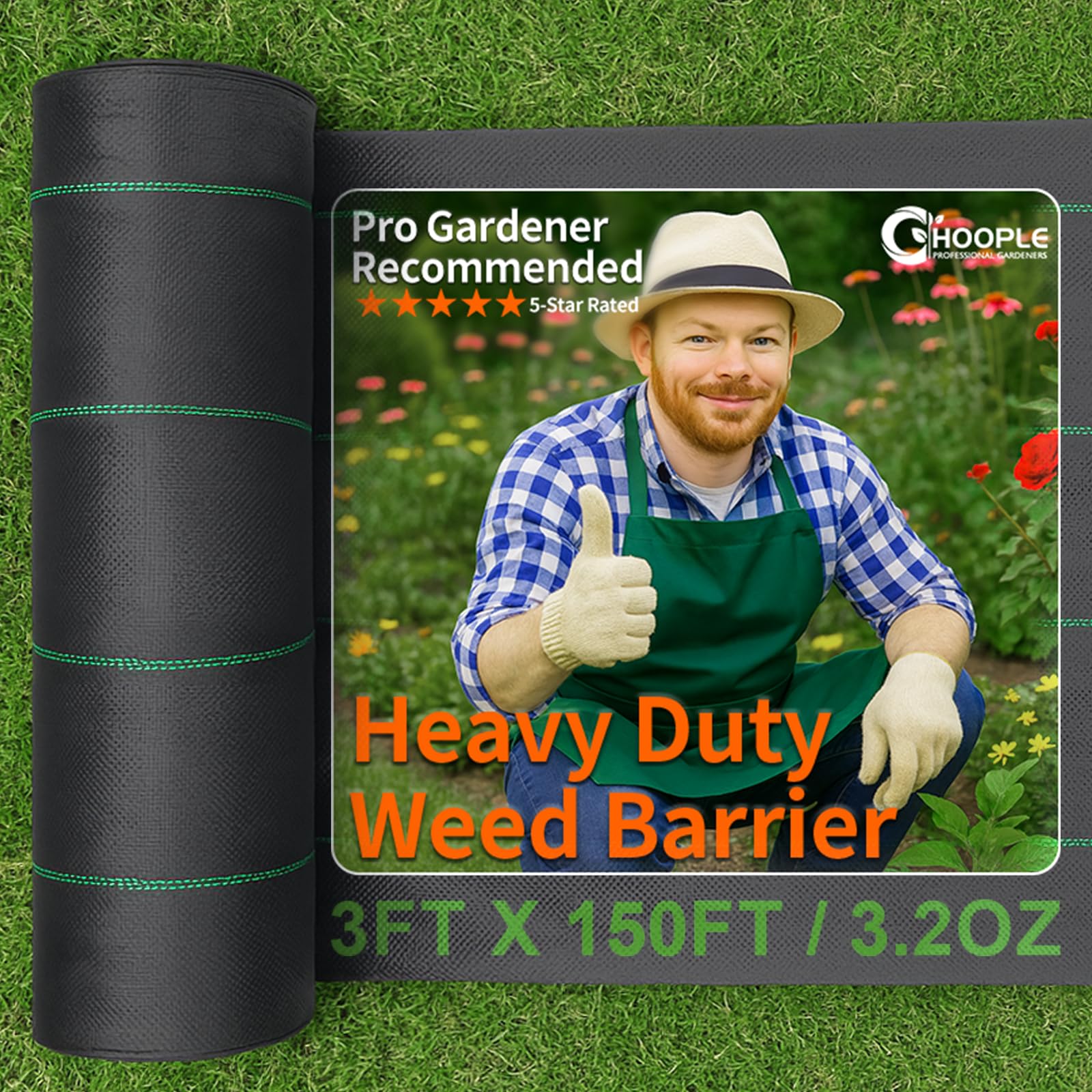
8. HOOPLE 3 ft x 150 ft Weed Barrier
The thick woven roll repeat buyers install year after year with minimal weeding
Owners are genuinely surprised by how thick this woven polypropylene liner is, calling it a repeat purchase they love as much the second time. The 3 ft x 150 ft roll gives you a solid 450 square feet of coverage for garden beds, flower beds, vegetable gardens, walkways, gravel paths, and driveway base layers. It is dense enough to limit sunlight exposure to weeds while still letting water and air pass through to support soil moisture and root respiration.
A clever install trick from the feedback: one owner uses a torch after laying it to burn open holes for planting, a method that worked so well they installed the product again the next season, adding cardboard and straw on pathways to stop weeds crawling in. Others find it easy to cut with scissors and simple to place over prepared soil. The fabric is heavy-duty with good tear resistance and tensile strength for outdoor use.
The recurring downside is shredding at the cut ends — it is like a tarp that shreds when cut, in one owner’s words. Some also note it feels like woven plastic, which is accurate for this category. It handles weeding reduction well, but expect to deal with frayed edges at every cut line, so factor that into your install plan.
Thick and proven: a dense woven liner that surprised owners with its thickness and earned repeat installs year after year.
Expect: shredded ends at cut lines — a torch or sharp blade helps, but fraying is part of the deal.
9. Dewitt Sunbelt Weed Barrier Fabric
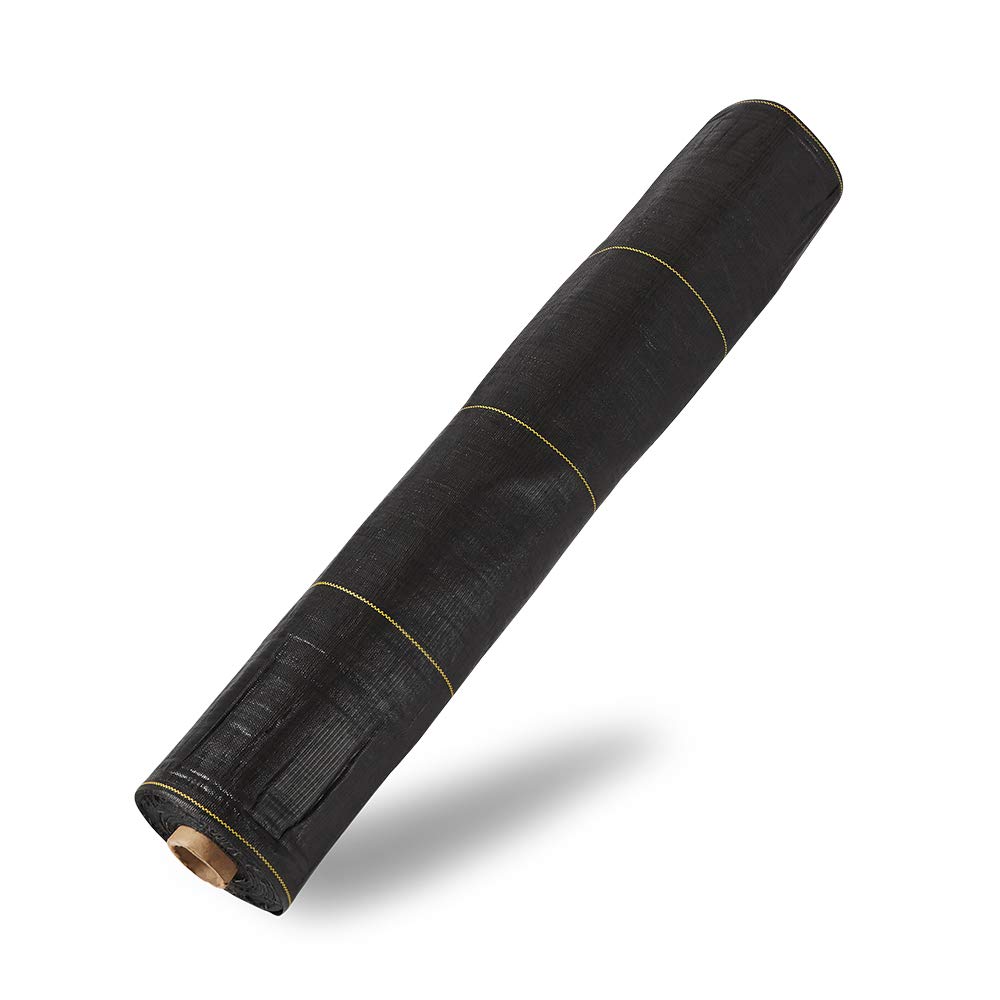
The row-laying liner with golden stripes every 12 inches for perfect plant spacing
This 3.2 oz woven liner is built for serious row planting — the golden colored stripes every 12 inches help you line up straight rows in a nursery, farm, orchard, shade house, or high tunnel. It is UV-stabilized woven polypropylene that stands up to foot traffic, tools, and repositioning, making it suitable for greenhouse floors, raised beds, and long planting runs. Owners describe it as lasting multiple years and effectively keeping weeds away while allowing water through without puddling.
The reusable nature is a favorite detail: one owner lays it down, burns holes, grows crops, and rolls it up for winter to make it last longer every year. Others note it retains moisture and reduces watering, and that no mulch is needed at all. It is a favorite durable weed cloth for gardening, with the right thickness that drains water and holds up to heavy density.
The honest notes here are that Johnson grass can still penetrate, and surface weeds may root on top of the fabric. It also frays at the ends, though owners recommend sealing cut edges with a soldering iron or lighter to stop that. For the length, a 3 ft x 200 ft roll covers a lot of ground, making it a sensible buy for anyone running long planting rows.
What makes it special
- Golden stripes every 12 inches simplify straight-row planting
- Roll it up each winter and reuse it year after year
- UV-stabilized for open, sun-exposed sites
What to expect
- Johnson grass can still push through the weave
- Edges fray unless you seal them with heat
Ideal for: row-crop gardeners and nursery setups where straight lines and reusable fabric save real time each season.
Pass on it if: you battle aggressive grasses like Johnson grass, which can work through the weave.
Understanding the Specs
Fabric Weight (oz per square yard)
The ounces listed on a liner — 3 oz, 3.2 oz, 5 oz, 8 oz — tell you how much material sits in each square yard. Heavier means thicker, tougher, and longer-lasting, but it also means harder to cut and more expensive per roll. A 3.2 oz liner is the everyday standard for beds and paths. A 5 oz liner is the step-up for areas you walk on often. An 8 oz fabric is the heavyweight built for drainage and heavy ground cover.
Woven vs Non-Woven
Woven liners are made by weaving polypropylene strips together, giving them a crisp, grid-like look; they are strong, resist tearing, and are the usual choice for weed blocking in beds. Non-woven liners are needle-punched into a felt-like sheet; they drain water faster and filter soil better, which makes them the pick for French drains and gravel work. Woven blocks weeds better in soft soil; non-woven moves water better in hardscape.
Water Permeability
This is the rate at which water passes through the fabric, often shown as a number like 10-20 L/m²/s. Higher permeability means rain soaks through faster to reach your soil, which your plants need. It also means the fabric will not flood away your mulch in a heavy storm. If you garden in a rainy climate, prioritize a liner with a high, clearly stated permeability rate.
UV Stabilization
UV-stabilized polypropylene is formulated to survive harsh sunlight without breaking down, which is the difference between a liner that lasts one season and one that lasts five or more. If your beds sit in full, open sun all day, a UV-stabilized liner is not optional — it is the feature that stops the fabric from turning brittle and cracking under your mulch.
FAQ
How long does a garden bed liner actually last?
Should I use a woven or non-woven liner for my raised garden beds?
Will water and nutrients still reach my plants through the liner?
Why does my liner fray and unravel when I cut it?
How do I plant through a liner once it is installed?
Do I need to remove existing weeds before laying the liner?
Is a heavier 5 oz liner worth the extra cost over a 3.2 oz one?
Can I reuse a garden bed liner season after season?
Does the liner color or stripe pattern matter for planting?
Final Thoughts: The Verdict
For most gardeners, the garden bed liner winner is the VIVOSUN Premium 5oz because its double-layered build handles daily foot traffic while letting water through. If you want proven value on a budget, the Weed Barrier Landscape Fabric has already survived two full years in the ground for repeat buyers. And for drainage-heavy hardscape projects, the VEVOR 8oz is the one to reach for, with its 350N tensile strength built to filter gravel and keep retaining walls clean.
How We Picked
We do not accept paid placement. Every pick is matched to a real buyer and a real use-case; we do not hands-on test units.
Sources & Methodology
Specifications: manufacturer listings and product documentation. Review insights: verified customer reviews, as of July 2026. Pricing: not shown on this page (it changes often); check the current price via the retailer link.
As an Amazon Associate, Lawn Gear Lab earns from qualifying purchases. This does not affect which products we feature.