
Specs are compiled from manufacturer listings and verified buyer reviews and can change over time — please confirm the key details on the product page before buying.
If you have ever spent a weekend hunched over a patch of dirt, fighting weeds and sore knees, you already know the real pain a garden bed kit solves. The whole purpose of a raised bed is to bring the soil up to you, so gardening stays a pleasure instead of a chore that punishes your back. The hard part is choosing between wood that rots, metal that dents, and plastic that fades — all promising things they cannot always deliver. This guide cuts through those claims with real owner experience and hard specs.
I’m Rikta — the founder and writer behind Lawn Gear Lab. This guide is built by comparing the manufacturers’ published specifications and the patterns across verified customer reviews, so you get each pick’s real strengths and trade-offs instead of marketing spin.
Whether you are planting your first tomato or expanding a serious vegetable patch, the right garden bed kit saves you time, money, and years of frustration — here is how to pick the one that fits your garden and your body.
Our Picks at a Glance


How To Choose The Best Garden Bed Kit
Every garden bed kit makes a simple promise: it holds dirt so plants can grow above ground level. But different materials, depths, and assembly methods make each one a different tool for a different gardener. Focus on three things first, and the right choice becomes obvious.
Material: Wood, Metal, or Composite
Cedar is the classic choice — it resists insects and looks beautiful, but it eventually weathers and can split if you over-tighten screws. Galvanized steel lasts much longer outdoors without rotting, though cheaply-made panels can have sharp edges. Resin composite (like Keter’s Evotech material) is lightweight and never rots, but it can look plastic up close. Your climate and aesthetic preference decide this one.
Depth: Why Height Is Your Most Important Measurement
The depth of your bed (how tall the walls are) dictates what you can grow. A short 12-inch bed is fine for lettuce and herbs, but root vegetables like carrots and potatoes need at least 18 inches of soil. Taller beds — around 24 to 30 inches — are the secret to a pain-free back, because you never have to bend over to reach the plants. If you have bad knees or a bad back, prioritize height above everything else.
Assembly: What to Expect
Most kits advertise 5 to 30 minutes of assembly. That might be true for a simple metal oval bed with a few wing nuts, but a cedar bed with multiple panels and screws will take closer to an hour. The key is pre-drilled holes and a hex tool included in the box — anything that requires you to drill or cut is a project, not a kit. Look for the phrase “tool-free” or look for wing nuts if you want to be gardening the same afternoon.
Quick Comparison
| Model | Best For | Material | Dimensions | Weight | Amazon |
|---|---|---|---|---|---|
| SoliWood improve★ Best Overall | Best Overall | Cedar Wood | 48 x 24 x 30 in | 38.9 lbs | Amazon |
| SnugNiture 2-PackBest Value | Best Value | Galvanized Steel | 23.6 x 23.6 x 17 in (each) | 18.3 lbs | Amazon |
| Keter Wood LookLightest Setup | Lightest Setup | Resin Composite | 48 x 48 x 12.6 in | 14.3 lbs | Amazon |
| Pattiumo Oval | Long & Narrow | Galvanized Steel | 96 x 24 x 18 in | — | Amazon |
| AHEONLAR 2-Pack | Best Value Large | Galvanized Steel | 96 x 48 x 12 in (each) | — | Amazon |
| Ohuhu Deep Root | Deep Soil Height | Galvanized Steel | 94.5 x 35.4 x 23.6 in | 29.5 lbs | Amazon |
| Maple99 improve | Natural Cedar | Cedar / Fir Wood | 48 x 24 x 30 in | 33.3 lbs | Amazon |
| Land Guard 8x4x2 | Large Volume | Galvanized Steel | 96 x 48 x 24 in | — | Amazon |
| Anleolife Quartz Grey | Premium Deep Root | Galvanized Steel | 96 x 48 x 24 in | 48.4 lbs | Amazon |
In‑Depth Reviews
1. SoliWood Raised Garden Bed with Legs, 48x24x30
Our pick — over 4.5★ from 850+ verified ratings; the strongest balance of quality and price.
The cedar improve bed that bends gardening back to eye level.
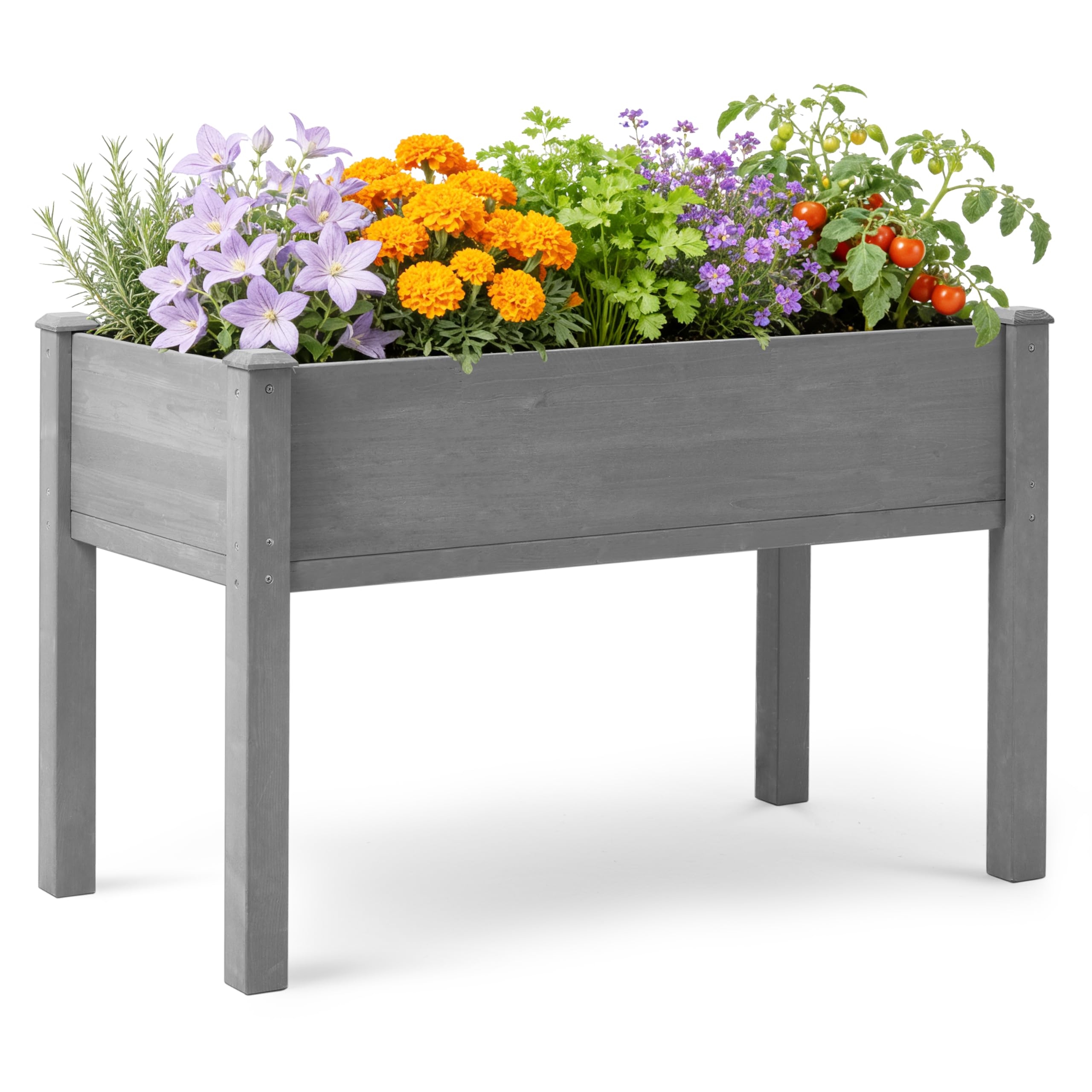
Standing 30 inches off the ground, this planter puts the soil at hip height — you tend your tomatoes and herbs without a single stoop. The cedar frame uses a water-based eco finish (no toxic paints leaching into your produce) and the included liner keeps moisture where it belongs. Owners consistently call the assembly “easy” with pre-drilled holes that align cleanly; buyers report “spend about 30 minutes to assemble the outdoor planter box by connecting legs and frame panels.” The 2.4-inch thick legs and 0.7-inch frame panels support up to 300 pounds of soil and plants, making it a rock-solid workstation rather than a flimsy box.
The 48 x 24 x 30-inch footprint offers ample soil volume — enough for a serious collection of peppers, salad greens, and herbs without overwhelming a small patio. At 38.9 pounds it is the heaviest kit here by a wide margin (the Keter composite bed weighs just 14.3 pounds for comparison), but that heft is exactly what gives it the planted-on-bedrock feel owners love. The grey water-based paint gives a modern furniture look that several reviewers said looks “better in person.”
Why It Wins
- Ergonomic 30-inch height eliminates back strain completely
- Cedar naturally resists rot and insects without chemical treatment
- Pre-drilled holes and clear instructions mean a straightforward build
- 300-pound capacity handles heavy, saturated soil without wobble
The Trade-Off
- Wood can split if you over-tighten screws — go slow and hand-drive final turns
- Not portable once filled; moving it empty is doable but best to position before filling
Reach for this if: you want real cedar that looks and feels like furniture, not a temporary garden box, and the tallest available height is your top priority for back-friendly gardening.
Look elsewhere if: you need multiple beds on a tight budget — the SnugNiture 2-pack gives you two planters for less money.
2. SnugNiture Raised Garden Bed, 2 PCS 2×2×1.5ft Round Galvanized
Two sturdy round planters that prove metal can look classy.
Each 23.6 x 23.6 x 17-inch bed gives you enough room for zucchini or a couple of tomato plants, and the pair lets you attempt crop rotation or separate herbs from flowers from day one. The galvanized steel carries a rust-resistant coating that holds up through seasons of rain and sun, while a safety rubber edging (a feature owners specifically mention as giving it a “high-quality look”) protects both your hands and the planter’s structure. As buyers put it: “The planters (2) went together smoothly.” Assembly is a recurring high point in the reviews — one owner said an 11-year-old built one alone.
The open-base design prevents water pooling at the bottom, which means healthier roots and no surprise rot. Some owners note the protective plastic layer requires a bit of patience to peel off, but they also say they would not change the packaging that keeps the panels pristine during shipping. At this value point, you get two proper galvanized beds for roughly what some brands charge for a single wooden one.
Smart splurge for: the gardener who wants two planters right now — one for salad greens, one for flowers — and prefers rust-proof metal to wood that weathers.
3. Keter 48″ X 48″ inches Wood Look Raised Garden Bed
A 48-inch square bed you can assemble in five minutes with zero tools.
Keter’s Evotech composite material is the closest thing to maintenance-free outdoor furniture — it resists UV fading, never rots, and weighs just 14.3 pounds, making this the lightest large bed on the list. The wood-look texture is convincing enough that several owners mention surprise at how realistic the embossed boards appear. Assembly involves tightening four screws per corner; one owner timed it at 10 minutes and another reported using it as a play pit with rubber mulch before converting it back to a garden bed.
The 12.6-inch depth is the shallowest here, so root vegetables are off the table. But for herbs, flowers, and shallow-root veggies like lettuce and peppers, the 48 x 48-inch footprint gives you a vast growing area. Owners consistently say it holds up well through the first season, though the sturdiness reviews carry a mixed note — it feels more solid once filled with soil, and some note the corners can feel a bit wobbly when empty. The BPA-free material means no worries about contaminants leaching into your vegetables.
Who it fits: the gardener who values instant gratification — five-minute assembly, no drill, no mess — and wants the largest possible footprint at the lightest weight.
4. Pattiumo Galvanized Raised Garden Bed 8x2x1.5 FT Oval
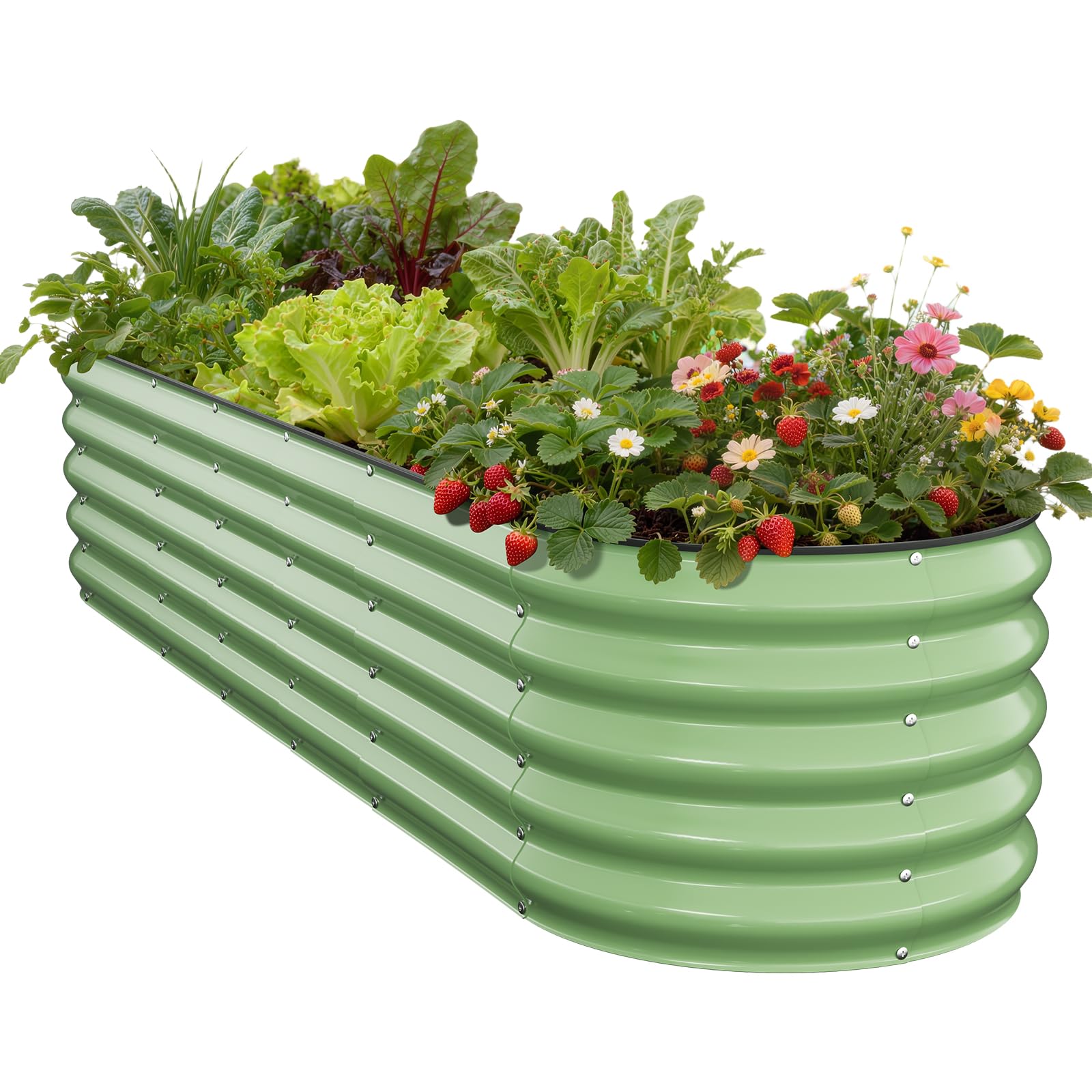
An 8-foot-long oval bed that hugs fence lines and fits tight spaces.
At 96 x 24 x 18 inches, this planter is built for narrow side yards, raised against a patio, or fitting perfectly between existing cedar beds — owners specifically call out that versatility. The heavy-duty galvanized steel and protective edging keep sharp edges covered during setup, and the open-bottom design lets roots stretch into native soil for stronger plants. Owners mention that after two years and a harsh winter the unit looked “new” with no scratches.
The 18-inch height is a middle ground — deep enough for most root vegetables but not so tall that it feels like a raised table. Some owners mention the color is more almond than white and may need painting to match a specific aesthetic, but the general verdict is that it looks expensive for the price. One caveat: over-tightening the bolts can cause the panel connectors to break, so hand-tighten normally rather than cranking with tools.
The narrow niche: if you have a long, straight run along a fence or walkway, this oval shape beats a rectangular box hands-down for visual flow and reachable planting width.
5. AHEONLAR 2pack 8×4×1ft Raised Garden Bed

Two massive 8×4 beds per package for the biggest growing area per dollar.
Each 96 x 48 x 12-inch oval bed gives you an enormous 32 square feet of planting space, and the kit delivers two of them. The galvanized metal uses double-layer anti-corrosion treatment, and owners confirm the beds stay “completely rust-free” even after two years of snow, intense heat, and re-soiling. At 0.8mm thickness, these panels are noticeably more substantial than the thinnest budget beds, and the two central support bars prevent bulging when filled.
The 12-inch depth is ideal for shallow-root gardens — lettuce, strawberries, peppers, and most flowers thrive here. One owner assembled four of these kits plus three others in under two hours solo, calling it a “great value.” The most common practical tip: wear gloves during assembly because the metal edges are sharp. The silver color is utilitarian; if blending into a landscaped yard matters, you may prefer the darker finishes of the Ohuhu or Anleolife options.
Perfect for: the serious vegetable gardener who wants the most square footage for the money and does not need deep soil for root crops.
6. Ohuhu 8x3x1.9 FT Metal Raised Garden Bed Outdoor
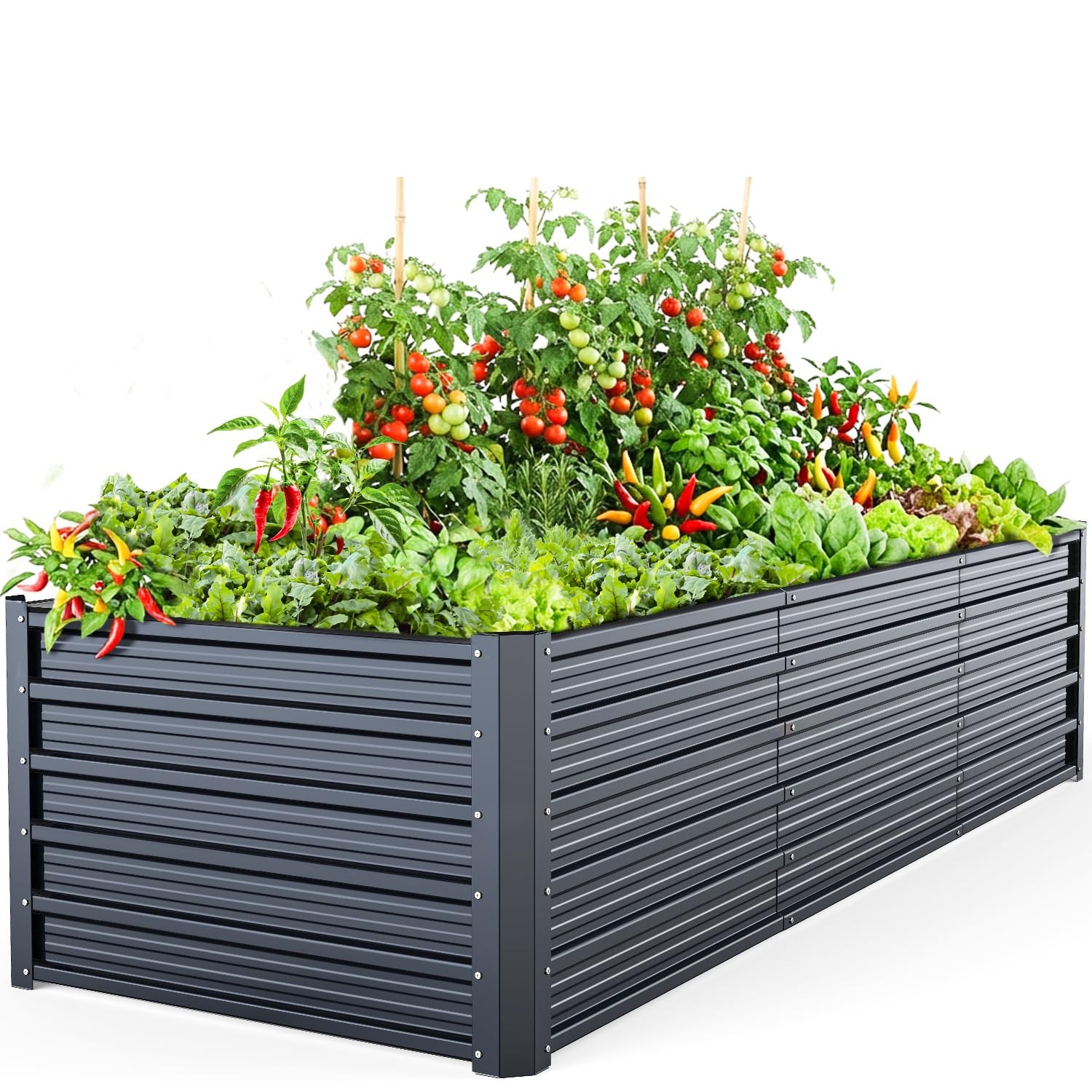
Deep enough for carrots and potatoes, wide enough for a full rotation.
At 94.5 x 35.4 x 23.6 inches, the Ohuhu holds a massive 45.6 cubic feet (341 gallons) of soil — giving plants 0.9 feet more rooting depth than standard shallow beds. That extra depth transforms what you can grow: potatoes, carrots, parsnips, and other deep-root vegetables thrive here, and the 8 stable bracing rods with 4 thickened corner brackets keep the walls from bowing under the weight of saturated soil. The charcoal grey powder-coated finish looks more modern than raw galvanized, and the eco-coating is fully CA65 and REACH certified, meaning no toxic leaching into your organic produce.
The tool-free assembly uses pre-drilled panels and wing nuts, which owners find straightforward, though the metal is on the thinner side and sharp edges are a real concern — one long-term reviewer noted it is “easily the hardest assembly of the five beds I own” and recommends a two-person approach. The upside is that after two years, the same owner upgraded their rating from 3 to 5 stars because the paint looked like new and the bed held up perfectly.
Why It Stands Out
- Deep soil capability for serious root vegetables without a separate grow bag
- Certified non-toxic coatings for organic gardeners
- Tool-free wing nut assembly saves time on setup
Watch For
- Thinner metal panels can flex; bracing rods are essential — do not skip them
- Assembly is easier with a helper due to sharp edges and panel alignment
Best for: the grow-your-own gardener who wants to harvest root vegetables from a single, deep, certified-safe bed without needing to bend.
7. Maple99 Raised Garden Bed with Legs 48x24x30

Natural cedar with the same height as the top pick, at a slightly lower weight.
This 48 x 24 x 30-inch improve planter matches the SoliWood in height but uses a mix of cedar and fir wood at 33.3 pounds — about 5.5 pounds lighter. The frame is paintable for personal customization, and the included bed liner protects the wood from direct soil contact, extending the life of the planter. Assembly draws heavy praise: “Very happy; easy assembly under 30 min. Fresh cedar smell.” The 200-pound capacity rating is lower than the SoliWood’s 300-pound limit, so heavy wet soil loads require some care.
The main durability caveat comes from an owner who noted the cedar is relatively low-density (MOE 7.66 GPa) and suggested adding a steel bar support under the bottom to prevent sagging under more than 200 pounds of soil. Another owner reported their bed “started to fall apart” after a year, though they also mentioned not applying any protective finish. For the price, this works best if you seal or stain it immediately upon assembly — many owners who did so report excellent results with rain beading right off the tung oil treatment.
Best suited for: the DIY-minded gardener who plans to treat the wood with a protective stain and wants the look of natural cedar at a lower entry price than premium brands.
8. Land Guard Galvanized Raised Garden Bed, 8x4x2ft

A massive 8×4 rectangle with 24-inch walls for the most soil volume in this list.
Holding 478 gallons of soil, the Land Guard bed is a backyard farm in a single box. The thickened galvanized metal and reinforced corners handle the pressure of that much wet soil without bulging — one owner specifically noted “with the 4 internal supports it did not bulge when I filled it with soil.” The open-bottom design provides natural drainage and allows roots to access nutrients from the ground below, and the assembly, while a bit time-consuming with “lots of screws,” is described as straightforward with all parts included.
At 24 inches deep, this bed rivals the tallest options here for root crop potential. But the sheer size means you will need a lot of soil — one owner calculated needing three bags of 3 cubic feet each just to fill it, and that is on the low side. The support braces draw mixed feedback: some say they are tedious to install and the supplied rods are thin, but the end result is a rigid, durable bed that owners say “will last a long time.”
Who this is for: the committed gardener with a dedicated plot who wants the largest possible single bed — ideal for seasonal crop rotation with deep root vegetables.
9. Anleolife 8x4x2ft Oval Deep Root Galvanized Raised Garden Bed
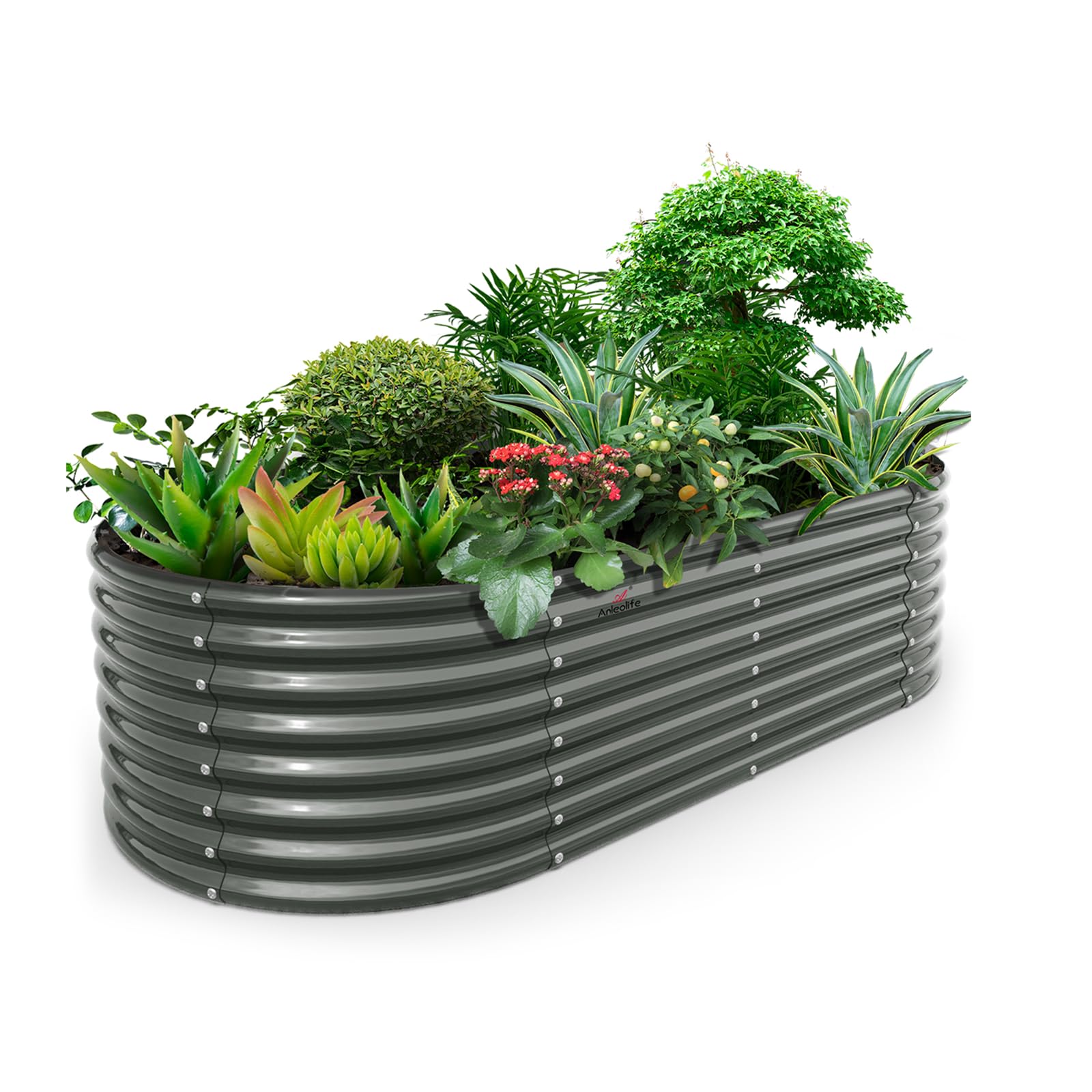
A 478-gallon oval bed with automotive-quality paint and rolled edges.
This 48 x 96 x 24-inch galvanized steel bed is built like a piece of outdoor infrastructure. The 22-gauge 0.8mm corrugated steel is one of the thickest options in this roundup, and the multi-layer eco-friendly powder coating gives a quartz grey finish that owners describe as “automotive-quality.” The oval shape reduces sharp corners and the rolled edges keep handling safe — the kit even includes garden gloves as a thoughtful extra. Owners who replaced rotting wooden beds with this unit bought four more after assembling the first one.
The 478-gallon capacity matches the Land Guard, but the Anleolife differentiates itself with noticeably better hardware: clear instructions, extra screws, a screwdriver, and gloves all in the box. The center reinforcement rods are not the sturdiest, but the planter walls lock together tightly enough that the whole structure feels solid once filled. One experienced owner combined multiple kits to create custom configurations — a sign of how much people trust the build quality. The premium price reflects the thicker steel and better finish, and most owners say it is worth the money.
The Premium Advantage
- Thick 0.8mm corrugated steel resists dents and corrosion over decades
- Rolled safe edges and included gloves for low-maintenance assembly
- Oval shape with smooth curves looks more like a landscape feature than a farm box
The Real Cost
- Premium price point means this is for the committed long-term gardener
- Center support rods could be sturdier; consider purchasing extras for total confidence
The final call: this is the bed to buy if you want one and done — thick steel, gorgeous finish, and a build experience that owners call “easy” and “impressive.” It is a multi-decade garden investment.
Understanding the Specs
Soil Depth (Wall Height)
This is the single most important number on the box. Shallow beds of 12 inches work fine for lettuce, herbs, and strawberries. At 17 to 18 inches you open up peppers, tomatoes, and bush beans. At 24 inches and above, root vegetables like carrots, potatoes, and parsnips have enough space to develop fully. Taller beds also save your back — the less you bend, the longer you can garden each session.
Material: Galvanized Steel vs Cedar vs Resin
Galvanized steel with a powder coating is the modern standard — it resists rust, holds heavy soil without bowing, and can last decades. Cedar is naturally rot-resistant but needs occasional sealing and is vulnerable to splitting from over-tightened screws. Resin composite (like Keter’s Evotech) is the lightest option and never rots, but it can feel less solid and the thinner walls may flex under heavy wet soil. Each has a trade-off between longevity, weight, and maintenance.
Open Bottom vs Solid Base
An open-bottom bed sits directly on the ground, allowing plant roots to stretch down into native soil for extra nutrients and water. It also provides natural drainage so water never pools at the bottom — critical for preventing root rot. Solid-bottom beds are easier to place on patios or decks, but you must manage drainage manually or drill holes. For in-ground gardens, always choose open-bottom.
Assembly Method
Kits use either screws with a hex tool or wing nuts with pre-drilled panels. Wing nut assemblies are genuinely tool-free and can be done in 5 to 15 minutes. Screw-based kits are sturdier but take 30 to 90 minutes. Pre-drilled holes are a must — if a kit requires you to drill pilot holes, factor in an extra hour of work. Look for “tool-free” in the description if weekend speed is your priority.
FAQ
How deep should a raised garden bed be for vegetables?
Is galvanized steel safe for growing vegetables?
How long does a cedar raised garden bed last?
Can I put a raised garden bed on concrete or a patio?
What size raised garden bed is best for a beginner?
How much soil do I need to fill a raised bed?
Do I need to line the bottom of a raised garden bed?
What is the difference between oval and rectangular raised beds?
How do I keep animals out of a raised bed?
Will a metal raised bed get too hot in summer for plants?
Final Thoughts: The Verdict
For most buyers, the garden bed kit winner is the SoliWood Raised Garden Bed because it combines the back-saving 30-inch height with genuine cedar construction and a 300-pound capacity that feels permanent, not temporary. If you want to boost growing space on a budget, grab the AHEONLAR 2-pack — two giant 8×4 beds for less than a single premium model. And for deep-root vegetable gardeners who want the best-built metal bed available, the Anleolife Quartz Grey is the long-term investment that owners keep coming back to buy more of.
How We Picked
We do not accept paid placement. Every pick is matched to a real buyer and a real use-case; we do not hands-on test units.
Sources & Methodology
Specifications: manufacturer listings and product documentation. Review insights: verified customer reviews, as of July 2026. Pricing: not shown on this page (it changes often); check the current price via the retailer link.
As an Amazon Associate, Lawn Gear Lab earns from qualifying purchases. This does not affect which products we feature.