
Specs are compiled from manufacturer listings and verified buyer reviews and can change over time — please confirm the key details on the product page before buying.
Your prize tomatoes look dusted with flour, or your rose bushes have black spots. The panic is real. Saving your garden versus watching it fade depends on picking the right fungicide for the specific problem. The best product here is a targeted one that tackles the disease without wrecking your soil life or leaving harsh residues on your produce. Your choice hinges on if you need a preventative spray, a rescue treatment, or an organic option safe until harvest.
I’m Rikta — the founder and writer behind Lawn Gear Lab. This guide is built by comparing the manufacturers’ published specifications and the patterns across verified customer reviews, so you get each pick’s real strengths and trade-offs instead of marketing spin.
Whether you tend a backyard vegetable patch or a houseplant collection, the best fungicides for plants combine effective disease control with a formulation that fits how you actually garden — whether that means protecting edibles with organic options or stopping lawn dollar spot (a fungal disease that makes circular dead patches in turf) in its tracks.
Our Picks at a Glance

How To Choose The Best Fungicides For Plants
Choosing a fungicide shouldn’t require a chemistry degree—focus on what matters. Simplify your choice by focusing on the active ingredient’s target, edible safety, and reapplication frequency.
Match the Active Ingredient to the Disease
Not all fungicides kill the same fungi. Neem oil works well as a preventative against powdery mildew and rust. Chlorothalonil is a broad-spectrum synthetic option that stops blight and leaf spot. Propiconazole is a systemic treatment (it moves inside the plant’s tissue) for longer protection. Copper-based sprays tackle both bacterial and fungal diseases. Choosing the wrong active ingredient wastes time and leaves plants vulnerable.
Organic vs Synthetic — It Matters for Edibles
If you grow vegetables, fruits, or herbs, check the label for the pre-harvest interval (the number of days you must wait between spraying and picking). Organic options like Bacillus subtilis biofungicides can be used right up until the day you pick. Synthetic formulations often require you to wait a set number of days between spraying and harvest. Both work, but one suits a continuous-picking garden better.
Application Style and Reapplication Schedule
A liquid concentrate you mix yourself costs less per use but demands a sprayer. A ready-to-use bottle costs more but gets you spraying in seconds. Biofungicides need more frequent application — often every 7 to 14 days — while systemic synthetics can protect for up to 28 days. Your willingness to reapply should guide your choice more than the price.
Quick Comparison
| Model | Best For | Active Ingredient | Volume | Form | Amazon |
|---|---|---|---|---|---|
| Fertilome Triple Action 32oz★ Best Overall | 3-in-1 pest & disease control | Neem Oil | 32 fl oz | Concentrate | Amazon |
| Southern Ag Biological Fungicide 16ozBio Champ | Bio-root health & prevention | Bacillus subtilis | 16 fl oz | Concentrate | Amazon |
| Bonide Fung-onil 16ozDisease Rescue | Broad-spectrum disease rescue | Chlorothalonil | 16 fl oz | Concentrate | Amazon |
| Select Source Propiconazole 16oz | Lawn & ornamental systemic | Propiconazole | 16 fl oz | Concentrate | Amazon |
| Bonide Revitalize Biofungicide 16oz | Organic immune-boosting spray | Bacillus amyloliquefaciens | 16 fl oz | Concentrate | Amazon |
| Arber Organic Insecticide & Fungicide 16oz | Bio dual-action for houseplants & veg | Plant-based oils | 16 fl oz | Concentrate | Amazon |
| Garden Safe Fungicide3 1 Gal | Large-garden neem oil treatment | Neem Oil Extract | 128 fl oz | Ready-to-Use | Amazon |
| Atticus Gunner Propiconazole 32oz | Professional lawn disease control | Propiconazole | 32 fl oz | Concentrate | Amazon |
| Southern Ag Liquid Copper Fungicide 1 Gal | Bacterial & fungal protection | Copper Ammonium Complex | 128 fl oz | Concentrate | Amazon |
In‑Depth Reviews
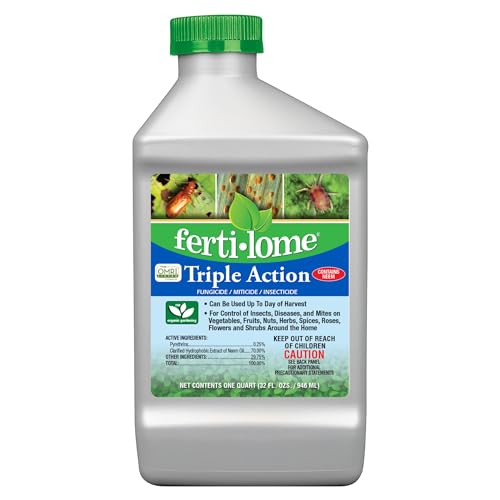
1. Fertilome (12246) Triple Action (32 oz)
Our pick — over 4.5★ from 800+ verified ratings; the strongest balance of quality and price.
The triple-threat neem oil that tackles bugs, mites, and fungus in one spray pass.
This is the workhorse of the list — a single bottle that pulls three jobs at once. The active ingredient is neem oil (clarified hydrophobic extract of the neem tree), and at 32 fluid ounces, it covers a substantial garden area. You get an insecticide (kills bugs), a miticide (kills mites), and a fungicide in one container. It protects against powdery mildew, rust, and leaf spot while also controlling aphids, spider mites, leafminers, and scale. The label says to reapply on a 7 to 14 day schedule, which fits most preventative routines. Buyers report it “works quickly on aphids, white flies, and scale,” and one owner even credits it with saving crepe myrtles from an aphid invasion.
It is labeled for fruits, vegetables, herbs, nuts, roses, flowers, shrubs, and spices. You can spray tomatoes one week and your apple tree the next. The only mixed feedback revolves around value for money: some find the per-bottle cost high, but given that it replaces three separate products, the math works out for most gardeners. A few owners note that neem oil needs consistent reapplication, especially after rain, so this is a product for those who stay on top of their spray schedule.
Why It Leads
- Three functions (insecticide, miticide, fungicide) from one bottle — simplifies your garden cabinet
- Covers a huge range of plants: fruits, vegetables, herbs, ornamentals, and turf
- Neem oil is a well-established organic option with a long track record
Consider This
- Neem oil requires regular reapplication every 7 to 14 days for continuous protection
- A few owners mention the price feels steep compared to single-purpose concentrates
Reach for this if: you want one spray that handles the three most common garden problems — bugs, mites, and fungus — without managing multiple bottles.
Look elsewhere if: you need a fast-acting rescue cure for an existing severe outbreak; this shines more as a consistent preventative.
2. Southern Ag Garden Friendly Biological Fungicide, 16oz
The biological root colonizer that prevents disease by outcompeting pathogens at the root zone.
This is not a chemical that kills fungus on contact. It is a live bacterial fungicide containing Bacillus subtilis (a beneficial bacterium) that colonizes the root system and creates a protective barrier against pathogenic fungi. Owners apply it as a soil drench (pouring the mix onto the soil around the roots) at a rate of 1 teaspoon per gallon of water — and one gardener describes how a single drench revived a wilting hibiscus overnight. The bacteria work by occupying the space on the roots that harmful fungi need to establish, making it an excellent choice for plants prone to overwatering or root rot.
Who it saves: anyone growing in hydroponic systems (growing plants in water without soil), RDWC setups (recirculating deep water culture), or pots where overwatering is common — the root colonization is a standout for high-moisture environments.
Perfect for: organic gardeners who want to strengthen root health and prevent disease before it starts, especially in hydroponics or containers.
Avoid if: you need a fast knockdown of an active outbreak — biological fungicides take time to establish.
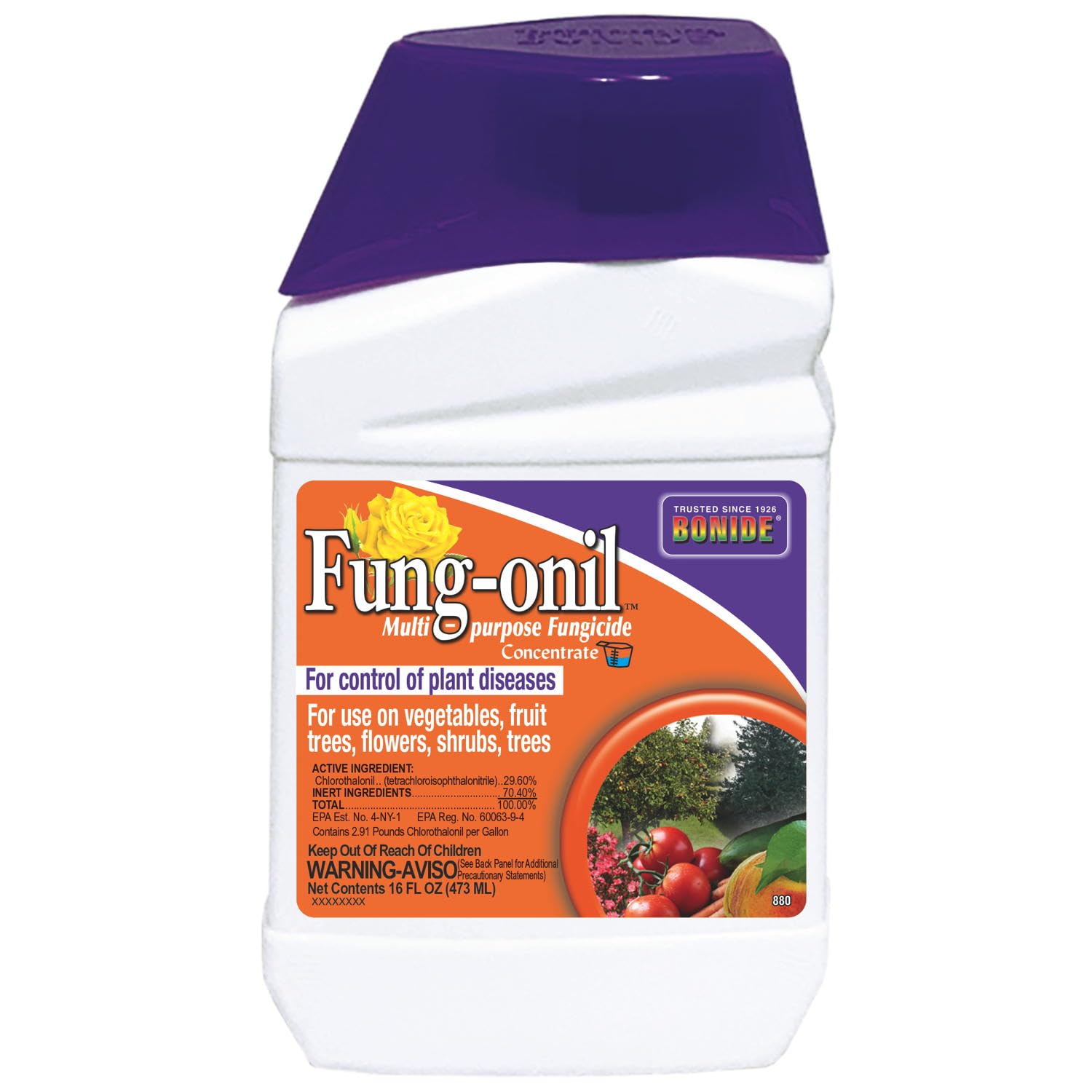
3. Bonide Fung-onil Multi-Purpose Fungicide, 16 oz
The chlorothalonil concentrate that delivers a knockout punch to blight, rust, and leaf spot.
When your garden is already showing signs of disease, you need a broad-spectrum synthetic that goes to work fast. Bonide Fung-onil uses chlorothalonil (a chemical that disrupts fungal cell metabolism), a well-proven active ingredient that controls leaf spot, rust, blight, powdery mildew, scab mold, and more. It is a concentrate that you mix with water — one owner describes the liquid as having a “milky soapy texture that clings to plants,” which means better coverage on the leaves. The results speak: “solved early blight/bacteria on shrubs, roses, ground cover after 21 days of weekly spraying.”
It is labeled for a huge range of plants including beans, vegetables, fruits, ornamentals, shrubs, and trees. Owners who struggled with tomato blight particularly praise it — one says it saved tomatoes that were “already infected with black spot fungus.” The downsides are few but real. The instructions could be clearer about mixing ratios for refill bottles, and the product leaves a slight white residue on leaves, which some find unsightly. A small number of customers note leaf issues, but the overwhelming consensus (rated 4.5 across a large owner base) is that this is a reliable rescue spray for active disease.
What It Does Best
- Stops a wide range of established fungal diseases including blight, rust, and leaf spot
- Concentrate format stretches the bottle far — one 16 oz bottle makes many gallons of spray
- Milky texture clings to leaves for better coverage and rain resistance
Downsides
- Leaves a visible white residue on foliage that some gardeners dislike
- Mixing instructions are not the clearest — you may need to check the label closely
Pick this when: you are dealing with an active disease outbreak in vegetables, ornamentals, or fruit trees and need a proven broad-spectrum cure.
skip it if: you want an invisible finish on ornamental plants or prefer organic-only options.
4. Select Source Propiconazole 14.3 Pint Select Fungicide

The systemic lawn fungicide that turns brown patches green again with low odor and high residual control.
If fungus is wrecking your lawn, this is the product owners reach for. Propiconazole 14.3 (a systemic fungicide that moves inside the plant tissue) provides excellent residual control that lasts. One owner says it got their lawn “back to green twice this year and last year” and calls it “like magic.” Another uses it alongside Azoxystrobin for rotation to prevent resistance — a smart move for serious lawn care. At just 1.4 pounds per bottle, it is lighter than the Fertilome Triple Action (2 pounds), making it easier to handle during mixing.
The low odor formulation is a real perk for residential use — you are not fumigating your yard with strong chemical smells. It works on both turf (brown patch, dollar spot) and ornamental plants. Owners consistently praise the value for money, noting it is “very inexpensive” compared to big-brand equivalents like the Atticus Gunner 32oz. The main caution: because it is a single active ingredient (propiconazole at 14.3%), rotating with other fungicide classes is recommended to avoid resistance buildup. A few owners note the instructions are printed very small, so keep a magnifier handy.
Best for lawns: this is the top pick for homeowners fighting brown patch, dollar spot, or general lawn fungus — it works fast, smells minimal, and the cost per treatment is tough to top.
Grab this for: lawn fungus problems where you need a reliable, low-odor systemic treatment that works fast.
Not ideal if: you prefer organic or biological fungicides for your garden beds — this is a synthetic systemic.
5. Bonide Revitalize Biofungicide, 16 oz

The organic biofungicide that triggers a plant’s own immune system to fight off disease.
This is a different approach entirely. Bonide Revitalize contains Bacillus amyloliquefaciens (a beneficial bacterium), which does not attack fungi directly. Instead, it triggers an immune response in the plant itself, making the plant more resistant to diseases like blight, powdery mildew, black spot, and anthracnose. It is approved for organic gardening and can be used right up until the day of harvest — no waiting period. One owner with mature pear trees suffering from fire blight applied it as a soil drench every 3 to 4 days for a month and watched the trees rebound with new leaves and no more black foliage.
It works on vegetables, fruits, nuts, trees, shrubs, houseplants, and more. You can use it as a foliar spray (spraying the leaves) or a soil drench. Owners say it does not burn flowers, is easy to use, and makes a noticeable difference in plant health over time. The mixed feedback is that results are not instant — this is a preventative and systemic immune support, not a kill-on-contact cure. A few reviewers point out plants still struggling, but given the organic nature, consistent application over several weeks is key. One tomato grower admitted “I didn’t think this stuff would work” but was impressed after seeing it turn around septoria leaf spot.
Choose this for: organic vegetable gardens, fruit trees, and houseplants where you want disease prevention without any chemical residues.
Not the one for: a severe, fast-spreading outbreak that needs immediate chemical knockdown — this works over days and weeks, not hours.
6. Arber Organic Insecticide & Fungicide for Plants, 16oz

The two-in-one bio formula that handles powdery mildew and aphids in a single mixing step.
This is a solid choice if insect problems and fungal issues show up together — which they often do. Arber combines an insecticide and fungicide into one bio-based concentrate. The fungicide is mixed at a rate of 1 tablespoon per gallon, while the insecticide uses 2 tablespoons per gallon. Together, one bottle makes approximately 8 gallons of spray. The results are rapid: owners watching pests report the spray killed bugs “within 5 to 10 seconds” of contact. It is odorless, which matters for indoor use on houseplants, and the maker says it targets fungus gnats, powdery mildew, aphids, whiteflies, thrips, and spider mites.
Perhaps the most surprising feedback is how well it promotes plant health — owners say plants treated with it are “thriving” and that it eliminated gnats after a single soaking. The downside is that it does not kill Japanese beetles, so if those are your main pest, look elsewhere. The concentrate is economical, yielding multiple refills for ongoing care. A few owners found the fungicide component thicker than expected, but noted it mixes easily and does not burn leaves.
Smart combo: for houseplant owners and container gardeners tired of managing separate bottles for bugs and fungus — this streamlines the whole routine.
Reach for this if: your indoor plants or container veggies are dealing with both pests and mold — the dual-action saves time and storage space.
Look elsewhere if: Japanese beetles are your primary enemy; this one will not touch them.
7. Garden Safe Brand Fungicide3, 1 Gallon
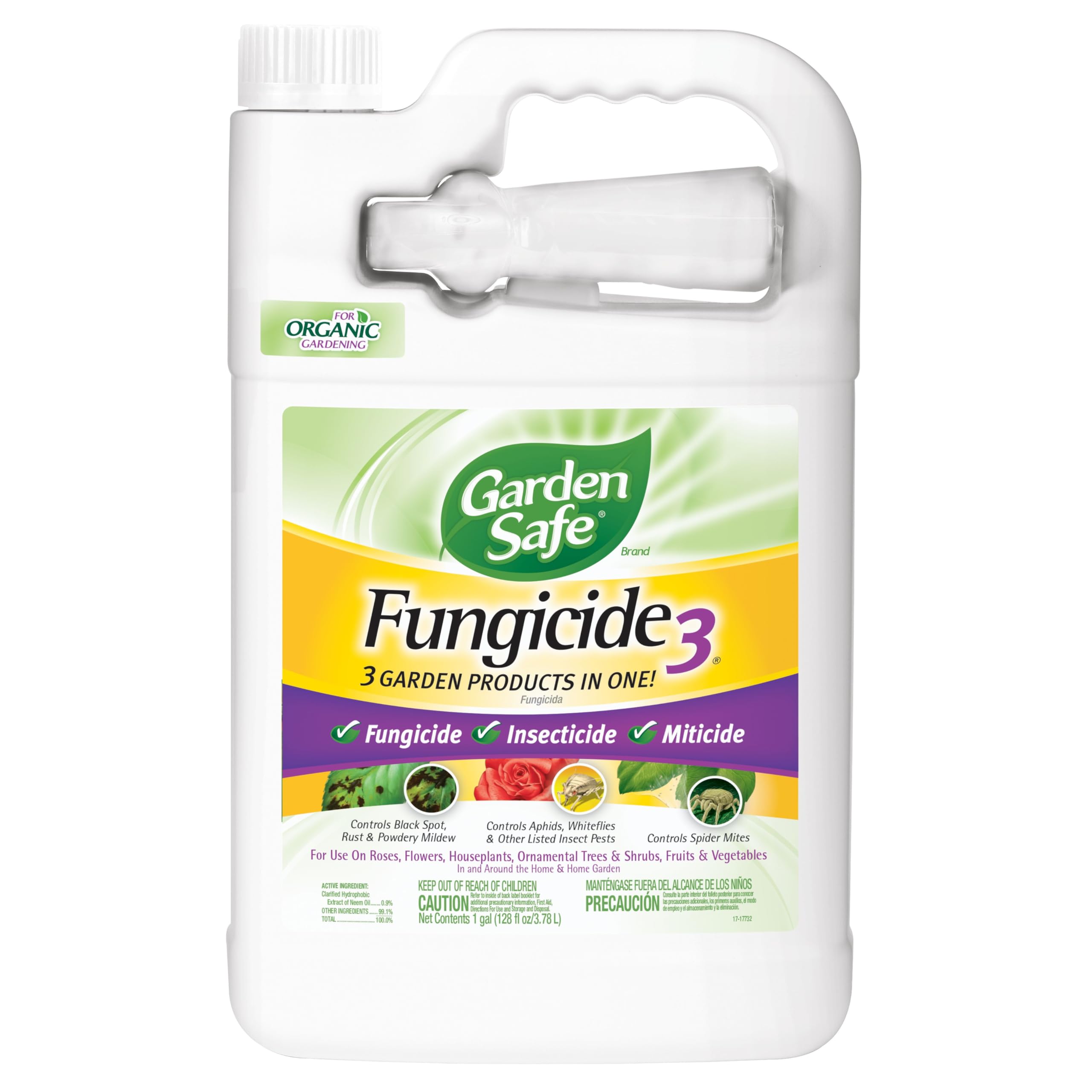
The ready-to-use gallon that saves you mixing time and covers a whole rose garden in one go.
If you hate mixing concentrates and just want to spray, this one-gallon ready-to-use formula is your shortcut. Garden Safe Fungicide3 combines a fungicide, insecticide, and miticide all in one bottle, using clarified hydrophobic extract of neem oil as the active ingredient. It targets black spot, rust, and powdery mildew while also controlling aphids, whiteflies, and spider mites, according to the maker. At 128 fluid ounces, you get serious coverage without needing a separate sprayer — just screw on the included hose-end or trigger sprayer.
Orchid owners rave about it. One says it “works very well with our orchids.” Another gardener calls it “absolutely amazing stuff” for curing mildew on hibiscus, noting that weekly use prevented recurrence on roses, tomatoes, and blueberries — and that foliage got greener with more blossoms and fruit. The trade-off is the included sprayer. Multiple owners find it “dumb design” with only about 4 inches of coiled hose to reach plants, suggesting you replace it with a better sprayer. A small number of owners also report minor leaf burn if used in direct daytime sun, so apply in the evening.
Choose this for: large gardens with roses, ornamentals, and edibles where convenience and coverage volume matter more than per-ounce cost.
pass on it if: you prefer a concentrate to customize your mixing ratio, or if you cannot stand a finicky sprayer attachment.
8. Atticus Gunner 14.3 MEC Propiconazole Fungicide (32 OZ)
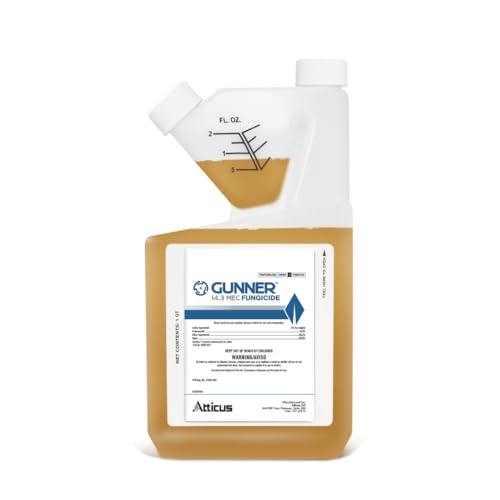
The microemulsion propiconazole that delivers pro-level disease control without the pro-level smell.
Atticus Gunner uses a microemulsion concentrate (MEC) formulation — the same active ingredient (14.3% propiconazole) used in premium brands like Banner Maxx that golf courses and nurseries trust. The MEC technology means extremely small particles that mix more easily and resist separating in the sprayer, so you do not have to re-agitate constantly. Protection lasts up to 28 days after application, which is significantly longer than the 7 to 14 day schedule of neem-oil products like the Fertilome Triple Action. Once dry, it resists washing off in rain, making it a great choice for unpredictable weather.
Owners targeting lawn dollar spot and brown patch report excellent results. The low-odor formulation is another plus — no chemical smell lingering in your yard. The label covers more than 20 plant fungi including blights, powdery mildew, and rusts. The mixed feedback centers on mixing: a few owners note it needs thorough mixing to work correctly, and one mentions that the instructions are too small to read easily. Some users also point out that propiconazole-only rotations can face resistance over time, so alternating with other classes like azoxystrobin is recommended. At 32 fluid ounces, you get solid coverage for multiple treatments.
Ideal for: homeowners who want the same systemic propiconazole quality that professionals use, with the convenience of a microemulsion that stays mixed.
Not for: organic gardens or those who avoid synthetic systemic fungicides entirely.
9. Southern Ag Liquid Copper Fungicide, 1 Gallon

The copper-based workhorse that controls both fungus and bacteria in a single gallon jug.
The gallon size at 9 pounds total weight is substantial, but one owner points out it is cheaper per ounce than buying smaller containers. It stores well over winter in a dry, warm place — a real advantage for seasonal gardeners. A few practical notes: do not tank-mix with Miracle-Gro or pesticides to avoid burning plants, and the formulation appears to be 27% strength for some batches rather than the advertised 31%, though owners still find it effective. The ability to kill poisonous mushrooms in a dog yard — safe for animals — shows just how versatile this copper spray is.
Broad coverage: if you need a single product that handles fungal leaf spots, bacterial blights, and even moss in one go, copper is the only category that does all three.
Choose this when: you need both fungal and bacterial disease control in a large volume, especially for fruit trees, ornamentals, and lawns.
Avoid if: you are growing delicate seedlings — copper can be harsh on young or stressed plants if over-applied.
Understanding the Specs
Active Ingredient
Concentrate vs Ready-to-Use
A concentrate requires you to mix the product with water at a specific ratio before spraying. It costs less per treatment and stretches much further — a 16 ounce bottle of concentrate can make several gallons of spray. Ready-to-use comes pre-mixed in a spray bottle and costs more per ounce but eliminates measuring and mixing errors. If you treat a large garden or lawn, concentrate is the better value. If you have a few houseplants or a small patio garden, ready-to-use saves you the hassle of storing and mixing chemicals.
FAQ
Can I use a lawn fungicide on my vegetable garden?
How often should I spray fungicide on my plants?
What is the difference between a fungicide and a biofungicide?
Will fungicide hurt my plant’s flowers or fruit?
Can I mix fungicide and insecticide in the same sprayer?
How do I apply fungicide as a soil drench?
Is neem oil fungicide safe for indoor plants?
What is the best fungicide for tomato blight?
Final Thoughts: The Verdict
For most buyers, the best fungicides for plants winner is the Fertilome Triple Action because it replaces three products (insecticide, miticide, fungicide) with one effective neem oil spray that covers everything from tomatoes to roses. If you want a root-focused biological option for hydroponics or moisture-prone pots, grab the Southern Ag Biological Fungicide. And for a fast-acting rescue on an active disease outbreak, the {“@context”: “https://schema.org”, “@graph”: [{“@type”: “ItemList”, “name”: “9 Best Fungicides For Plants”, “url”: “https://lawngearlab.com/best-fungicides-for-plants/”, “numberOfItems”: 9, “itemListElement”: [{“@type”: “ListItem”, “position”: 1, “name”: “Fertilome (12246) Triple Action (32 oz)”, “url”: “https://lawngearlab.com/best-fungicides-for-plants/#product-1”}, {“@type”: “ListItem”, “position”: 2, “name”: “Southern Ag Garden Friendly Biological Fungicide, 16oz”, “url”: “https://lawngearlab.com/best-fungicides-for-plants/#product-2”}, {“@type”: “ListItem”, “position”: 3, “name”: “Bonide Fung-onil Multi-Purpose Fungicide, 16 oz”, “url”: “https://lawngearlab.com/best-fungicides-for-plants/#product-3”}, {“@type”: “ListItem”, “position”: 4, “name”: “Select Source Propiconazole 14.3 Pint Select Fungicide”, “url”: “https://lawngearlab.com/best-fungicides-for-plants/#product-4”}, {“@type”: “ListItem”, “position”: 5, “name”: “Bonide Revitalize Biofungicide, 16 oz”, “url”: “https://lawngearlab.com/best-fungicides-for-plants/#product-5”}, {“@type”: “ListItem”, “position”: 6, “name”: “Arber Organic Insecticide & Fungicide for Plants, 16oz”, “url”: “https://lawngearlab.com/best-fungicides-for-plants/#product-6”}, {“@type”: “ListItem”, “position”: 7, “name”: “Garden Safe Brand Fungicide3, 1 Gallon”, “url”: “https://lawngearlab.com/best-fungicides-for-plants/#product-7”}, {“@type”: “ListItem”, “position”: 8, “name”: “Atticus Gunner 14.3 MEC Propiconazole Fungicide (32 OZ)”, “url”: “https://lawngearlab.com/best-fungicides-for-plants/#product-8”}, {“@type”: “ListItem”, “position”: 9, “name”: “Southern Ag Liquid Copper Fungicide, 1 Gallon”, “url”: “https://lawngearlab.com/best-fungicides-for-plants/#product-9”}]}, {“@type”: “Product”, “position”: 1, “name”: “Fertilome (12246) Triple Action (32 oz)”, “image”: “https://m.media-amazon.com/images/I/41YCbSH-ApL.jpg”, “brand”: {“@type”: “Brand”, “name”: “Fertilome”}, “url”: “https://www.amazon.com/dp/B004XDHDD2/”, “offers”: {“@type”: “Offer”, “url”: “https://www.amazon.com/dp/B004XDHDD2/”}}, {“@type”: “Product”, “position”: 2, “name”: “Southern Ag Garden Friendly Biological Fungicide, 16oz”, “image”: “https://m.media-amazon.com/images/I/81IXc0l4jhL.jpg”, “brand”: {“@type”: “Brand”, “name”: “Southern”}, “url”: “https://www.amazon.com/dp/B00VXQG23O/”, “offers”: {“@type”: “Offer”, “url”: “https://www.amazon.com/dp/B00VXQG23O/”}}, {“@type”: “Product”, “position”: 3, “name”: “Bonide Fung-onil Multi-Purpose Fungicide, 16 oz”, “image”: “https://m.media-amazon.com/images/I/61w8xIst7dL.jpg”, “brand”: {“@type”: “Brand”, “name”: “Bonide”}, “url”: “https://www.amazon.com/dp/B000A0YHGS/”, “offers”: {“@type”: “Offer”, “url”: “https://www.amazon.com/dp/B000A0YHGS/”}}, {“@type”: “Product”, “position”: 4, “name”: “Select Source Propiconazole 14.3 Pint Select Fungicide”, “image”: “https://m.media-amazon.com/images/I/81Nh7YhzKyL.jpg”, “brand”: {“@type”: “Brand”, “name”: “Select”}, “url”: “https://www.amazon.com/dp/B07G8F7FSY/”, “offers”: {“@type”: “Offer”, “url”: “https://www.amazon.com/dp/B07G8F7FSY/”}}, {“@type”: “Product”, “position”: 5, “name”: “Bonide Revitalize Biofungicide, 16 oz”, “image”: “https://m.media-amazon.com/images/I/71CTSurs7oL.jpg”, “brand”: {“@type”: “Brand”, “name”: “Bonide”}, “url”: “https://www.amazon.com/dp/B076HW6S9K/”, “offers”: {“@type”: “Offer”, “url”: “https://www.amazon.com/dp/B076HW6S9K/”}}, {“@type”: “Product”, “position”: 6, “name”: “Arber Organic Insecticide & Fungicide for Plants, 16oz”, “image”: “https://m.media-amazon.com/images/I/719iSm4LJTL.jpg”, “brand”: {“@type”: “Brand”, “name”: “Arber”}, “url”: “https://www.amazon.com/dp/B0BWL5C16W/”, “offers”: {“@type”: “Offer”, “url”: “https://www.amazon.com/dp/B0BWL5C16W/”}}, {“@type”: “Product”, “position”: 7, “name”: “Garden Safe Brand Fungicide3, 1 Gallon”, “image”: “https://m.media-amazon.com/images/I/71cIQIq3tqL.jpg”, “brand”: {“@type”: “Brand”, “name”: “Garden”}, “url”: “https://www.amazon.com/dp/B06Y26F84Z/”, “offers”: {“@type”: “Offer”, “url”: “https://www.amazon.com/dp/B06Y26F84Z/”}}, {“@type”: “Product”, “position”: 8, “name”: “Atticus Gunner 14.3 MEC Propiconazole Fungicide (32 OZ)”, “image”: “https://m.media-amazon.com/images/I/31rcOm4unrL.jpg”, “brand”: {“@type”: “Brand”, “name”: “Atticus”}, “url”: “https://www.amazon.com/dp/B0C1P7HFV5/”, “offers”: {“@type”: “Offer”, “url”: “https://www.amazon.com/dp/B0C1P7HFV5/”}}, {“@type”: “Product”, “position”: 9, “name”: “Southern Ag Liquid Copper Fungicide, 1 Gallon”, “image”: “https://m.media-amazon.com/images/I/61BUbDQ11gL.jpg”, “brand”: {“@type”: “Brand”, “name”: “Southern”}, “url”: “https://www.amazon.com/dp/B007PJUJG4/”, “offers”: {“@type”: “Offer”, “url”: “https://www.amazon.com/dp/B007PJUJG4/”}}, {“@type”: “FAQPage”, “mainEntity”: [{“@type”: “Question”, “name”: “Can I use a lawn fungicide on my vegetable garden?”, “acceptedAnswer”: {“@type”: “Answer”, “text”: “Check the product label carefully. Some fungicides labeled for turf are not registered for use on edible crops. Products like Bonide Fung-onil and Fertilome Triple Action specifically list vegetables on the label, while lawn-focused propiconazole products like Select Source and Atticus Gunner are primarily for turf and ornamentals. Never use a product on edibles unless the label explicitly says it is safe and lists the pre-harvest interval (the number of days you must wait between spraying and picking).”}}, {“@type”: “Question”, “name”: “How often should I spray fungicide on my plants?”, “acceptedAnswer”: {“@type”: “Answer”, “text”: “It depends on the product. Neem-oil based products like Fertilome Triple Action recommend reapplication every 7 to 14 days. Biofungicides such as Bonide Revitalize also follow a similar schedule. Systemic propiconazole products like Atticus Gunner can protect for up to 28 days. In wet weather, you should reapply more frequently because rain can wash off the treatment. Always follow the label instructions for your specific product and target disease.”}}, {“@type”: “Question”, “name”: “What is the difference between a fungicide and a biofungicide?”, “acceptedAnswer”: {“@type”: “Answer”, “text”: “A conventional fungicide like chlorothalonil or propiconazole directly kills or stops fungal growth through chemical action. A biofungicide uses living beneficial bacteria or microbes (like Bacillus subtilis or Bacillus amyloliquefaciens) to outcompete harmful fungi, colonize root surfaces, and trigger the plant’s own immune defenses. Biofungicides are generally safer for beneficial insects and can be used up to the day of harvest, but they work more slowly and require consistent application.”}}, {“@type”: “Question”, “name”: “Will fungicide hurt my plant’s flowers or fruit?”, “acceptedAnswer”: {“@type”: “Answer”, “text”: “Most fungicides are safe for flowers and fruit when used according to the label. Bonide Fung-onil leaves a white residue that some find unsightly on ornamental blooms, but it does not damage them. Bonide Revitalize is noted by owners as being gentle — it \”does not burn flowers.\” Avoid spraying in direct midday sun as some products can cause leaf burn. Always follow the pre-harvest interval for edible crops to avoid residues on fruit.”}}, {“@type”: “Question”, “name”: “Can I mix fungicide and insecticide in the same sprayer?”, “acceptedAnswer”: {“@type”: “Answer”, “text”: “Some products are designed for tank-mixing (mixing two or more products in one sprayer). Fertilome Triple Action is already a 3-in-1 that includes insecticide, miticide, and fungicide. Arber offers a dedicated 2-pack with separate insecticide and fungicide concentrates designed to be mixed together. For other products, check the label for tank-mix compatibility. A general caution: do not mix copper fungicide with Miracle-Gro or other pesticides, as shoppers say it can burn plants.”}}, {“@type”: “Question”, “name”: “How do I apply fungicide as a soil drench?”, “acceptedAnswer”: {“@type”: “Answer”, “text”: “A soil drench means you mix the fungicide with water according to label instructions and pour it directly onto the soil around the plant’s root zone, rather than spraying the leaves. This is the recommended method for biofungicides like Southern Ag Biological Fungicide and Bonide Revitalize, because the beneficial bacteria colonize the roots. It is also effective for systemic fungicides like propiconazole, as the roots absorb the chemical and transport it throughout the plant.”}}, {“@type”: “Question”, “name”: “Is neem oil fungicide safe for indoor plants?”, “acceptedAnswer”: {“@type”: “Answer”, “text”: “Yes, neem oil fungicides like Fertilome Triple Action and Garden Safe Fungicide3 are safe for houseplants when used as directed. Neem oil is a natural extract and has low toxicity. The main concern is the smell — neem oil has a distinct odor that some find strong in enclosed spaces. Arber’s bio-based formula is odorless, which makes it a better choice for indoor application if smell is a concern. Always test on a small leaf first and avoid direct sunlight after application.”}}, {“@type”: “Question”, “name”: “What is the best fungicide for tomato blight?”, “acceptedAnswer”: {“@type”: “Answer”, “text”: “For active blight on tomatoes, Bonide Fung-onil (containing chlorothalonil) is a proven choice — buyers report it saves plants already infected with black spot and blight. Bonide Revitalize (biofungicide) also works, but it takes time and consistent application. For prevention, neem oil products like Fertilome Triple Action work well when applied on a 7 to 14 day schedule. Southern Ag Liquid Copper is effective against bacterial issues that can mimic blight symptoms. Rotating products with different active ingredients is a smart strategy.”}}]}]}