
Specs are compiled from manufacturer listings and verified buyer reviews and can change over time — please confirm the key details on the product page before buying.
Nothing hits a gardener harder than finding those first fungal spots on a redbud tree—withered leaves, black splotches, or powdery mildew creeping across the canopy. You need a treatment that stops the problem without a chemistry degree, one that works on ornamental trees without harming other plants or the soil. The Bonide Rose Rx 3-in-1 Concentrate is the smartest buy for most people because it combines organic certification with proven fungus-and-pest control in one 16-ounce bottle, but the best pick for you depends on if you need hose-end ease or professional-grade systemic power.
I’m Rikta — the founder and writer behind Lawn Gear Lab. This guide is built by comparing the manufacturers’ published specifications and the patterns across verified customer reviews, so you get each pick’s real strengths and trade-offs instead of marketing spin.
Below you’ll find five powerful fungicides that tackle common redbud tree issues—from leaf spot to powdery mildew—with a clear breakdown of what each one does best and where it falls short so you can pick the right fungicide for redbud tree care without second-guessing yourself.
Our Picks at a Glance


How To Choose The Best Fungicide For Redbud Tree
Redbud trees are prone to several fungal diseases—cercospora leaf spot, anthracnose, verticillium wilt, and powdery mildew are the most common culprits. Choosing the right fungicide means matching the product’s active ingredient to the specific disease you see and the stage of the infection you are dealing with.
Active Ingredient Matters Most
Neem oil is your go-to for a gentle, organic option. It works by smothering fungal spores and is safe for beneficial insects once dry. But it needs to be reapplied every 7-14 days and is better at preventing disease than curing a bad outbreak. For faster, stronger results on an existing infection, look for chlorothalonil (a broad-spectrum synthetic that clings to leaves and resists rain) or propiconazole (a systemic absorbed into the tree that provides up to 28 days of protection).
Application Form: Concentrate, Ready-to-Spray, or Ready-to-Use
Concentrates give you the most flexibility and the best value per gallon—mix only what you need. Ready-to-spray bottles attach to your garden hose and are easy for large trees. Ready-to-use sprayers are the simplest for a single small tree but are expensive per ounce and not practical for repeated treatments on a mature redbud.
Organic vs. Conventional
If you grow vegetables or herbs near your redbud, or you want to protect pollinators, an OMRI-listed product like neem oil or the Fertilome fungicide is a safer bet. Conventional options with chlorothalonil or propiconazole are more reliable for hard-to-shake diseases like anthracnose—just follow the label’s waiting period and avoid spraying flowers.
Quick Comparison
| Model | Best For | Active Ingredient | Volume | Application Type | Amazon |
|---|---|---|---|---|---|
| Bonide Rose Rx 3-in-1★ Best Overall | All-in-one pest + fungus control | Neem Oil (Clarified Hydrophobic Extract) | 16 oz Concentrate | Mixes with water | Amazon |
| Fertilome Fungicide 5Best Value Organic | Organic, ready-to-spray convenience | Sulfur-based | 32 oz Ready-to-Spray | Hose-end sprayer | Amazon |
| Bonide Captain Jack’s Neem Oil | Large organic gardens | Neem Oil | 128 oz Ready-to-Use | Ready-to-Use sprayer | Amazon |
| Atticus Gunner 14.3 | Professional, long-lasting treatment | Propiconazole 14.3% | 1 Gal Concentrate | Mixes with water | Amazon |
In‑Depth Reviews
1. Bonide Rose Rx 3-in-1 Concentrate
Our pick — over 4.5★ from 350+ verified ratings; the strongest balance of quality and price.
The organic triple-threat that stops bugs, fungus, and mildew with one simple mix.
You get a 16-ounce bottle of concentrated clarified hydrophobic extract of neem oil (a purified neem-oil ingredient that smothers spores without leaving residue). This USDA-approved organic formulation kills fungal diseases like powdery mildew, black spot, and rust, plus the insects that often come with them (aphids, spider mites, whiteflies). Mix 1 tablespoon per gallon of water, then apply with a hand sprayer or watering can. Buyers report it works better than many synthetic competitors: the most-praised attribute is effectiveness, with dozens of owners calling it a “go-to solution” for both roses and ornamentals like your redbud.
It tackles fungal issues and pests in one pass, which saves you a whole second spray session. Some owners mention the smell is strong when wet (neem oil smells like garlic and sulfur), but it fades within moments. Because this is a concentrate, you get far more treatments per ounce than a ready-to-use bottle. One owner treating 23 rose bushes confirmed a single application handles spider mites and leaf miners, so it scales beautifully to a mature redbud tree.
Why It Works for Redbuds
- Kills fungus AND insects together—fewer products on your shelf
- USDA organic, safe for use on ornamentals, vegetables, and fruit trees near your redbud
- Concentrate gives you dozens of full spray-tank treatments from one small bottle
One Real Caveat
- Mixed opinions on value—some owners find it runs out quicker than expected on large plants
- Neem oil requires regular reapplication; it is not a one-and-done systemic cure
The smart all-rounder: If you want a single organic product that protects your redbud from fungal spots and the pests that spread them, this concentrate delivers proven results without harsh chemicals.
Look elsewhere for severe outbreaks: For an established anthracnose or wilt infection that needs a stronger systemic kick, a synthetic like the Atticus Gunner is a better fit.
2. Fertilome (16114) Fungicide 5 Ready to Spray
The hose-end sprayer that makes treating a 20-foot redbud as easy as watering the lawn.
This is a 32-ounce ready-to-spray bottle that screws onto your garden hose—no mixing, no measuring, no extra sprayer to buy. It is OMRI-listed for organic gardening, so you can use it around vegetables and flower beds without worry. The sulfur-based fungicide targets common tree diseases: leaf spot, blight, mildew, rust, rot, and mold. For a redbud tree showing signs of cercospora leaf spot or powdery mildew, this is an easy first line of defense.
The 32-ounce bottle (2.0x larger than the 16-ounce Bonide Rose Rx concentrate) connects to your hose and treats a surprising area. Owners who have used it on fruit trees and roses in 94°F heat report it keeps working; one gardener in South Louisiana said it replaced a weaker fungicide and fixed rose fungus after 3-4 applications at the maximum dose every 3 days. It also doubles as a soil drench (poured around the root zone to kill soil-borne fungi), so you can target root-level issues on your redbud. The most common feedback is that it works fast and exactly as labeled.
The catch is that sulfur can burn leaves if applied in direct hot sun—always spray in the evening or on a cloudy day. It also stains dark-colored surfaces. Some owners note that the hose-end sprayer can be finicky to get the perfect dilution ratio, so follow the dial setting carefully. For a straightforward, organic, no-fuss option for a mature redbud, this delivers tremendous value per bottle.
The Ease Advantage
- Hose-end ready-to-spray—attach, turn on, and walk around the tree
- OMRI listed for organic gardens; safe around edibles and ornamentals
- Works as both foliar spray and soil drench for root-level fungus
Things to Watch
- Sulfur can burn leaves if applied in direct sun or high heat
- Hose-end dilution can be inconsistent; requires careful dial setting
The low-maintenance choice: If you hate mixing chemicals and just want to spray your redbud on a Saturday morning, this hose-end bottle is the simplest organic option.
Skip for precision work: For a small potted redbud or when you need a specific concentration for a tough disease, a concentrate you mix yourself gives better control.
3. Bonide Captain Jack’s Neem Oil, 128 oz Ready-to-Use
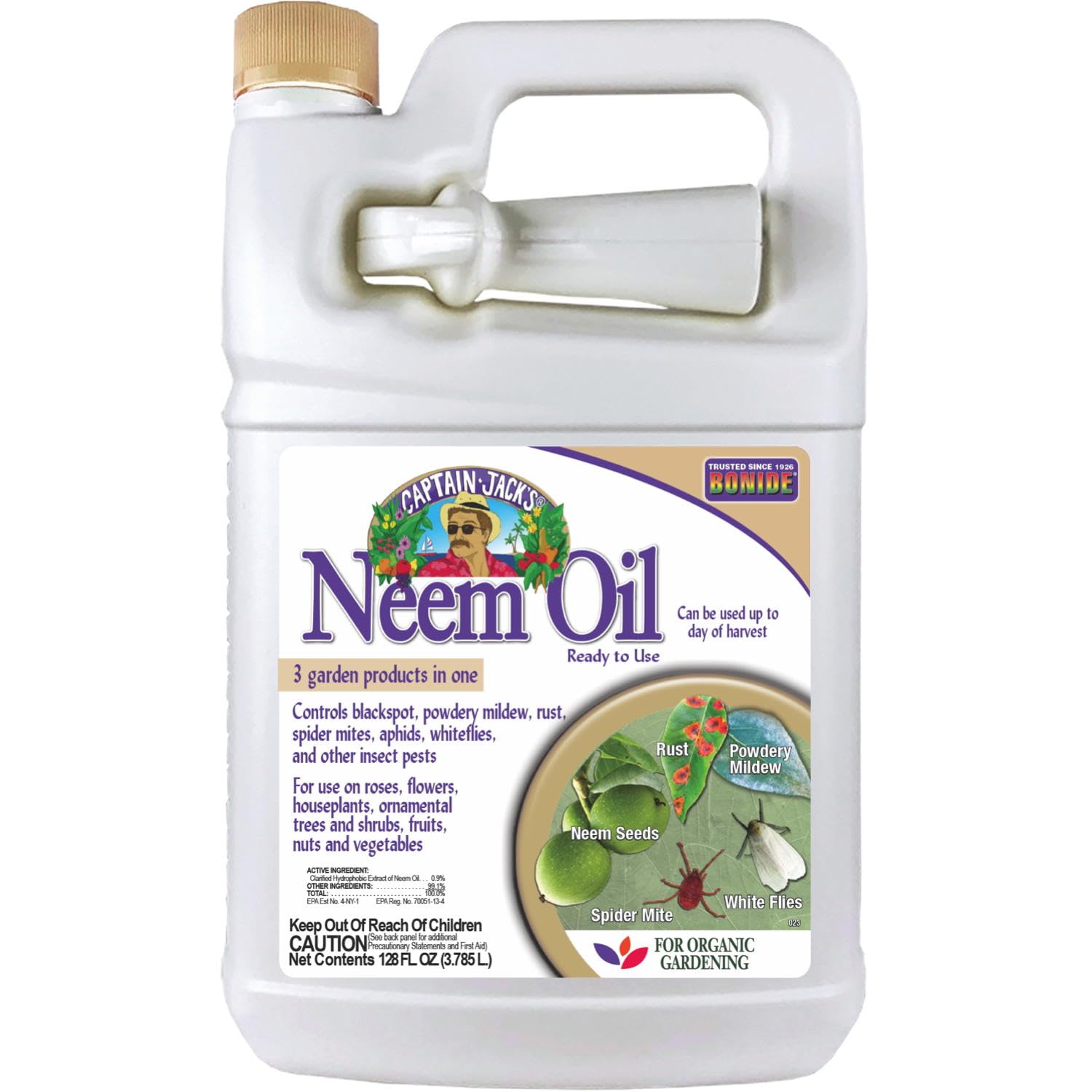
The gallon-sized garden defender for organic growers who value convenience above all else.
This is a massive 128-ounce (1 gallon) ready-to-use spray bottle of clarified hydrophobic extract of neem oil. It comes with a spray nozzle already attached, so you just shake, point, and spray. It works as a fungicide, insecticide, and miticide all in one—targeting powdery mildew, rust, spider mites, aphids, and whiteflies. For a redbud tree with a mild case of powdery mildew or an early pest problem, this is the no-brainer choice: you can use it right up until the day of harvest on edibles, so it is extremely safe.
It is approved for organic gardening and works on house plants, roses, trees, shrubs, and vegetables. The sheer volume—4x the 16-ounce bottle of the Rose Rx concentrate—makes it the best pick if you have multiple trees or a large garden. The included sprayer is reliable, and the ready-to-use nature means zero prep time for weekly applications. Owners have saved pepper plants from white spots and spider mites, and used it biweekly on hostas, lilies, and pentas with clear results.
The flip side is that neem oil has a notoriously strong smell that some find unpleasant, and because it is not a concentrate, you are paying for a lot of water weight. The bottle weighs 9 pounds and is bulky to carry around a yard. Also, quality control can be spotty: one owner reported a second bottle that smelled rotten, indicating the oil had degraded. As with any neem oil product, reapplication every 7-14 days is necessary, especially after rain. For a budget-conscious buyer who wants more treatments per dollar, the smaller Rose Rx concentrate is a smarter choice.
easy Organic Care
- Huge 128 oz bottle ready to spray—no mixing, no measuring, no mess
- Approved for organic use; safe for edibles even on harvest day
- Triple-action: kills fungus, insects, and mites in one pass
The Trade-Offs
- Strong neem smell can be off-putting for some gardeners
- Bottle is heavy (9 lbs) and bulky to carry around a yard
- Needs regular reapplication; not a cure for severe established disease
Best for the organic gardener with a big collection: If you want gallon-sized convenience and the assurance of an organic label for your redbud and surrounding garden, this is the simplest route.
Skip if you need targeted strength: For a concentrated spray regimen or a budget-conscious buy, a smaller concentrate bottle (like the Rose Rx) gives you more treatments per dollar.
4. Atticus Gunner 14.3 Fungicide (1 Gal)
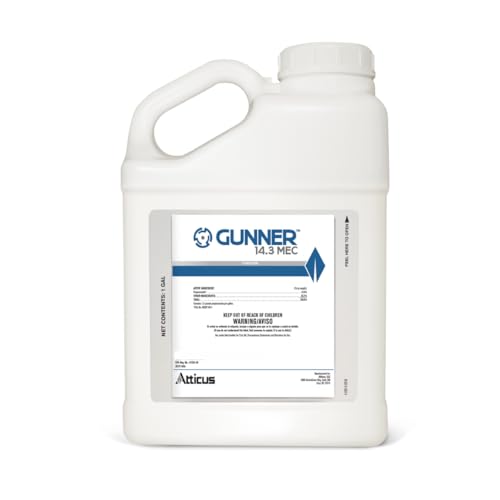
The professional-grade systemic that moves inside the tree and keeps working for a full month.
This is a 1-gallon (128 fluid ounces) concentrate of 14.3% propiconazole (the same active ingredient as the turf-industry standard Banner Maxx). Unlike surface protectants, propiconazole is a systemic fungicide: it gets absorbed through the roots and stems into the tree’s vascular system (the tubes that carry water and nutrients), so it protects from the inside out. For a redbud tree suffering from a deep, hard-to-reach fungal infection like anthracnose, this is the most thorough solution on this list. Owners confirm it works on spot anthracnose after the disease has emerged, and it is effective against brown patch, dollar spot, blights, powdery mildew, and rust.
The microemulsion concentrate (MEC) formulation mixes easily without separating or settling, and it is tank-mix compatible with other fungicides if you need a custom combo. Once the spray dries on the leaves, it resists rain and irrigation wash-off. The key advantage: a single application provides protection for up to 28 days, which is 2-4 times longer than the 7-14 day cycle of neem oil products like the Rose Rx. The odor is very low compared to other fungicides, so you notice the results, not the smell. Value for money is the second-most-praised aspect, with one owner simply calling it a “professional fungicide.”
Systemic Advantage
- Absorbed by roots and stems for internal tree-wide protection lasting up to 28 days
- Same active ingredient (propiconazole) trusted by professional golf course and landscape managers
- Low odor and rain-fast once dry; mixing is clean and stable
The Investment Decision
- Highest upfront cost—best suited for serious or recurring infections
- Not organic; avoid use near edible crops unless label-compliant
- Not available in all states (AK, HI, PR, DC, VT)
The professional’s choice: If you have a mature redbud tree with a stubborn case of anthracnose or rust that returns every season, this systemic fungicide offers the longest, most convenient protection available.
Overkill for mild issues: For routine prevention on a small or healthy tree, the Bonide Rose Rx or Fertilome hose-end spray is more budget-friendly and equally effective for light fungal pressure.
Understanding the Specs
Active Ingredient
This is the single most important factor in a fungicide. Neem oil is a natural smothering agent that works well for prevention and mild infestations—safe for beneficial insects once dry but requires weekly reapplication. Chlorothalonil is a synthetic protectant that forms a rain-resistant barrier on leaves; great for stubborn leaf spot and blight but not organic. Propiconazole is a systemic that the tree absorbs internally, offering up to 28 days of protection from the inside out—ideal for deep infections like anthracnose but costs more and is not organic. Pick the ingredient that matches the severity of your redbud’s symptoms.
Concentrate vs. Ready-to-Use
A concentrate requires you to mix a small amount (typically 1 tablespoon per gallon) with water in a sprayer. It gives you the most treatments per ounce and the best value—a 16-ounce concentrate can make 16 or more gallons of spray. Ready-to-use (RTU) bottles are pre-diluted and attach directly to your hose or have a trigger sprayer. They are easy for one tree but cost more per spray and are wasteful for multiple trees. Ready-to-spray (RTS) is a hybrid: a hose-end bottle that mixes as it sprays. For a single redbud tree, an RTU or RTS is fine; for multiple trees or a large yard, go with a concentrate.
FAQ
What is the best fungicide for redbud tree anthracnose?
Can I use neem oil on a redbud tree?
How often should I spray a redbud tree with fungicide?
What causes redbud tree leaves to turn brown and fall off?
Is there a difference between a fungicide and a bactericide for redbud trees?
Can I use a lawn fungicide on my redbud tree?
What time of year should I treat a redbud tree for fungus?
How do I apply fungicide to a tall redbud tree?
Are chlorothalonil fungicides safe for redbud trees?
What is the difference between a systemic and a contact fungicide?
Final Thoughts: The Verdict
For most people looking for a fungicide for redbud tree care, the Bonide Rose Rx 3-in-1 Concentrate is the top pick because it combines organic certification with proven effectiveness against both fungus and pests in one simple mix. If you prefer the ultimate convenience of a hose-end sprayer for a large tree, grab the Fertilome Fungicide 5 Ready to Spray. And if your redbud is fighting a stubborn, recurring infection like anthracnose that demands professional-grade protection, the Atticus Gunner 14.3 is the systemic option that delivers up to 28 days of uninterrupted defense.
How We Picked
We do not accept paid placement. Every pick is matched to a real buyer and a real use-case; we do not hands-on test units.
Sources & Methodology
Specifications: manufacturer listings and product documentation. Review insights: verified customer reviews, as of July 2026. Pricing: not shown on this page (it changes often); check the current price via the retailer link.
As an Amazon Associate, Lawn Gear Lab earns from qualifying purchases. This does not affect which products we feature.