
Specs are compiled from manufacturer listings and verified buyer reviews and can change over time — please confirm the key details on the product page before buying.
That chalky white dusting on your grass blades isn’t a weird morning frost — it’s powdery mildew, a fungus that thrives in shade and damp air. It won’t kill your lawn fast, but it weakens it slowly, turning a deep green turf pale and tired. The fix isn’t a single magic spray; it’s choosing the right active ingredient and applying it before the mildew gets a stranglehold. The best fungicide for powdery mildew on grass works from the inside out, stopping new spores before they can settle.
I’m Rikta — the founder and writer behind Lawn Gear Lab. This guide is built by comparing the manufacturers’ published specifications and the patterns across verified customer reviews, so you get each pick’s real strengths and trade-offs instead of marketing spin.
if you need a concentrated liquid for spot spraying or a granular feed-and-treat combo that covers your whole yard at once, this roundup breaks down what works and what doesn’t. The right fungicide for powdery mildew on grass puts the disease on notice before your lawn ever wears that ghostly coat.
Our Picks at a Glance

How To Choose The Best Fungicide For Powdery Mildew On Grass
Active Ingredient: Propiconazole vs. Myclobutanil
These two systemic fungicides (fungicides absorbed into the plant) dominate the market for powdery mildew on turf. Propiconazole (often at 14.3% concentration) is a broad-spectrum workhorse that stops everything from brown patch to dollar spot alongside powdery mildew. Myclobutanil, found in products like Eagle 20EW and Atticus Gravex, offers a different mode of action, which is useful if you are rotating chemistries to prevent resistance. Both move upward into new growth, protecting leaves that emerge after you spray.
Formulation: Liquid Concentrate vs. Granular Feed
A liquid concentrate lets you spot-treat affected patches with precision, using a hose-end or backpack sprayer to coat the leaf surface directly. Granular products, like the Scotts 2-in-1, combine the fungicide with a fertilizer (typically a 19-0-10 mix), so you treat the disease while feeding the lawn. Granules must be watered in after application, which moves the active ingredient down to the root zone where the grass absorbs it systemically — a slower but longer-lasting approach.
Preventative vs. Curative Timing
Quick Comparison
| Model | Best For | Active Ingredient | Form | Coverage | Amazon |
|---|---|---|---|---|---|
| Quali‑Pro Propiconazole 14.4★ Best Overall | Best Overall | Propiconazole 14.3% | Liquid concentrate | 32 oz bottle | Amazon |
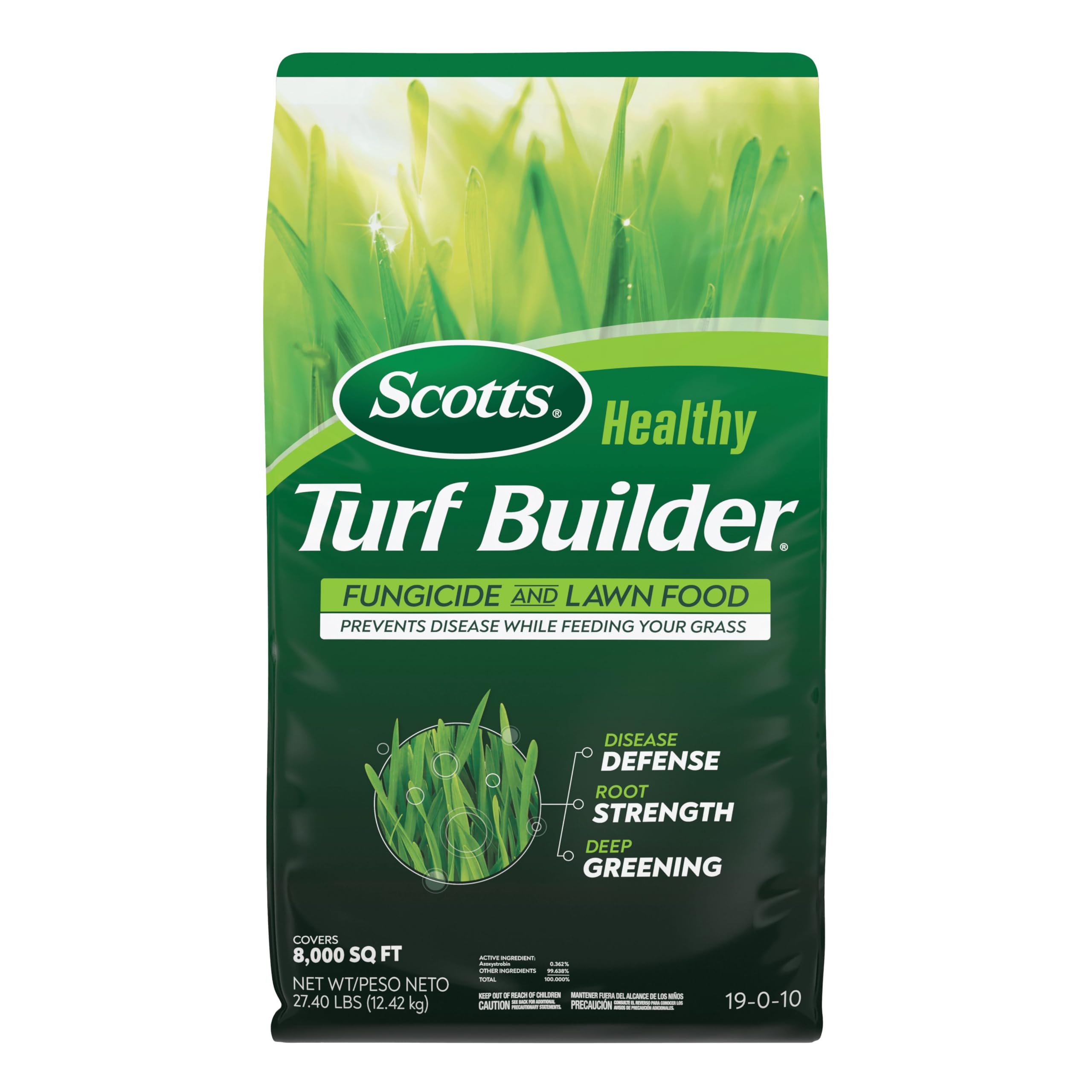
| Scotts Turf Builder Fungicide & Lawn FoodBest Value | 2‑in‑1 Convenience | Propiconazole (in feed) | Granular powder | 8,000 sq. ft. | Amazon |
| Atticus Gravex 20EW | Myclobutanil Choice | Myclobutanil 19.7% | Liquid concentrate | 16 oz bottle | Amazon |
| Dow Eagle 20EW | Premium Performer | Myclobutanil 19.7% | Liquid concentrate | 16 oz bottle | Amazon |
| Atticus Gunner 14.3 MEC | Low‑Odor Formula | Propiconazole 14.3% | MEC liquid | 32 oz bottle | Amazon |
| Liquid Harvest Broad Spectrum | Budget Alternative | Propiconazole 14.3% | Liquid concentrate | 32 oz bottle | Amazon |
In‑Depth Reviews
1. Quali‑Pro Propiconazole 14.4 Fungicide, 32oz
Our pick — over 4.5★ from 850+ verified ratings; the strongest balance of quality and price.
The gold‑standard propiconazole concentrate that lawn owners trust for year‑round mildew defense.
This 32-ounce jug of Quali-Pro delivers a 14.3% propiconazole formulation in a microemulsion, which means less odor during mixing and better stability once it is in the tank. The active ingredient moves systemically through the grass blade, stopping powdery mildew, brown patch, dollar spot, and rusts from the inside. Buyers report that a single application at a rate of 2 ounces per gallon per 1,000 square feet on affected areas showed visible new grass growth in about a week, with a follow‑up 14 days later locking in the results for the season.
At 2 pounds per bottle, this is heavier than the Dow Eagle (1 pound) and the Liquid Harvest (2.5 pounds) options, but that extra weight reflects the larger liquid volume and the professional‑grade concentration. Reviewers mention the built‑in measuring device makes dosing straightforward, and people who rotate it with a granular product every few weeks find it keeps their Bermuda or zoysia clean through the humid summer stretch. The catch — and it is a small one — is that propiconazole can face resistance issues if used exclusively year after year; alternating with a myclobutanil‑based product is a smart long‑term play.
Everything that makes this the top pick is backed by strong owner consensus. Effectiveness draws the most praise by a wide margin, and value for money ranks second — a cost per ounce that undercuts many big‑box brands while matching their performance.
What seals the deal
- Microemulsion formulation mixes easily and stays stable in the sprayer
- Controls powdery mildew plus a dozen other common turf diseases
- Built‑in measuring cup on the bottle simplifies dosing
One honest trade‑off
- Repeated solo use can lead to fungal resistance — rotate with a different active ingredient every few applications
Grab this if: you want a proven, affordable liquid concentrate that handles powdery mildew and most other lawn fungus in one bottle.
Think twice if: you prefer a granular feed‑and‑treat product that fertilizes while it fights mildew.
2. Scotts Turf Builder Fungicide and Lawn Food, 27.4 lbs
A single bag that feeds your lawn and wipes out powdery mildew in one spreader pass.
Scotts packs a broad‑spectrum systemic fungicide alongside a 19-0-10 fertilizer into a 27.4‑pound bag that covers up to 8,000 square feet. After you spread the granules, you water the area for 15 to 20 minutes to activate them. The grass absorbs the fungicide through its roots and moves it upward, protecting new leaf growth from powdery mildew, red thread, brown patch, and 24 other listed diseases. One owner saw their fungus “completely gone” after a single application, noting the elimination of a separate fertilizer step was the real time‑saver.
What buyers highlight most is the greening effect — the fertilizer component thickens and deepens the lawn color quickly, which is not something a straight liquid concentrate delivers. The trade‑off is timing. Granular treatments work slower than foliar sprays, so if you already see a heavy white dusting, a liquid strike might give you faster visual results. This product shines as a preventative or an early‑season rescue, especially if you are already planning your regular feeding schedule.
Effectiveness and greening are the top two aspects owners mention most. For anyone who wants to simplify their lawn care routine into one bag, this is the strongest contender on the list.
Reach for this if: you want a dual‑action product that simplifies your spring and fall routine into a single bag.
Look elsewhere if: you need a fast‑acting curative spray for an active, widespread mildew outbreak right now.
3. Dow AgroSciences Eagle 20EW Fungicide, 16oz

The myclobutanil heavyweight that growers and arborists reach for when nothing else cuts it.
Eagle 20EW is the reference product for myclobutanil‑based fungicides. Its 19.7% concentration is higher than the propiconazole formulations, and it works by a different biochemical pathway, which makes it the ideal rotation partner if you have been using propiconazole for a few seasons. It controls more than 15 fungal diseases, including powdery mildew, rusts, and apple scab, and it moves systemically upward into new growth, protecting tender leaves as they emerge. Several owners call it their “go‑to product for zone 7 for powdery mildew,” and one described it as a must‑have for northwest gardens.
At 16 fluid ounces and just 1 pound, this bottle is physically smaller than the Quali‑Pro or Liquid Harvest options, but it is highly concentrated — you measure in milliliters per gallon rather than ounces. The label mixing ratios are listed in ounces per acre and per 100 gallons, which can feel technical if you are used to simpler dosing. Owners advise using full personal protective equipment (respirator, goggles, gloves) because this is an agricultural‑strength product. The effectiveness score dominates owner feedback, with 119 mentions — more than any other single aspect across the entire roundup.
It carries a strong smell during mixing, so the low‑odor advantage of the Atticus Gunner MEC is a real alternative if scent sensitivity matters. But for raw curative power, this is the pick.
Why it stands out
- Higher concentration (19.7%) means a little goes a long way
- Different mode of action than propiconazole — perfect for rotation
- Trusted by commercial growers and arborists for tough mildew cases
What to watch for
- Label mixing instructions are in agricultural units (oz/acre) — less beginner‑friendly
- Strong odor during mixing; requires full PPE
Grab this if: you are fighting a stubborn powdery mildew outbreak that has not responded to propiconazole, or you want to rotate chemistries to delay resistance.
Think twice if: you prefer a simpler, ready‑to‑measure liquid with less aggressive dosing math.
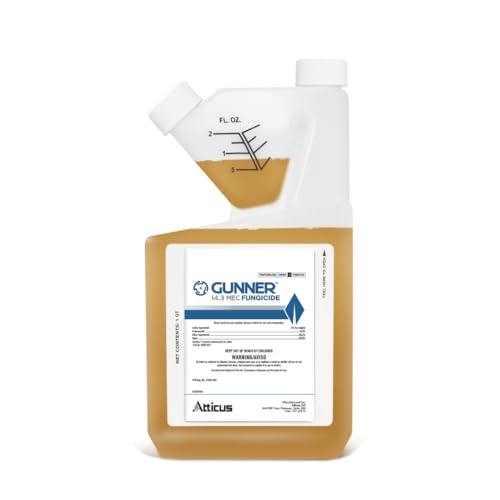
4. Atticus Gunner 14.3 MEC Propiconazole Fungicide, 32 Oz
A low‑smelling microemulsion concentrate that resists rain and stays mixed in the tank.
The “MEC” in Gunner stands for microemulsion concentrate, which uses extremely small particles that blend into water with minimal odor and stay suspended without constant re‑agitation. Once the spray dries on the leaf, it resists washing off in rain or irrigation — a practical advantage if you are treating during an unpredictable wet spell. The active ingredient is 14.3% propiconazole, the same workhorse as the Quali‑Pro, so it covers powdery mildew, dollar spot, brown patch, and rusts for up to 28 days per application. Owners specifically note that the low odor is a relief compared to other fungicides, and they appreciate that the formula does not separate overnight in the sprayer.
At 32 fluid ounces, this is the same liquid volume as the Quali‑Pro and Liquid Harvest bottles, but the MEC technology makes it the best choice for homeowners who mix a batch and want it to stay consistent through a long afternoon of spraying. The trade‑off is that the mixing process needs a thorough shake — a few owners mention that without good agitation, the concentrate can settle at the bottom of the bottle.
The top positive aspect is effectiveness, and growth ranks second — owners mention visibly healthier grass after a couple of applications. If you are sensitive to chemical smells or you spray near outdoor living spaces, this is the cleanest‑feeling option among the propiconazole liquids.
Best for the nose‑conscious sprayer: low odor, rainfast once dry, and the MEC formulation means you are not re‑mixing every 20 minutes. The 28‑day window between treatments reduces the number of passes you need per season.
Reach for this if: you want a propiconazole product that smells mild during mixing and stays rain‑resistant after it dries.
Look elsewhere if: you need a curative treatment with a different active ingredient (myclobutanil) rather than another propiconazole.
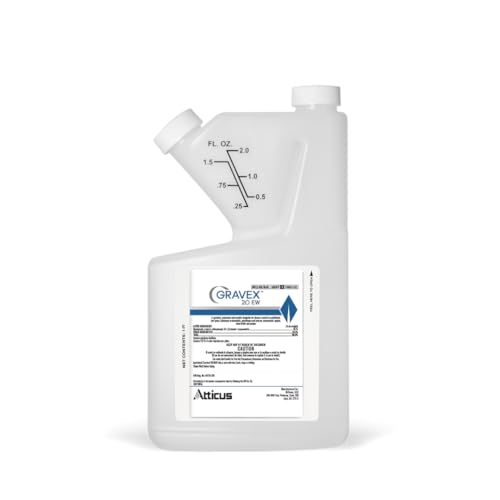
5. Atticus Gravex 20EW Fungicide, 16 oz
An affordable myclobutanil alternative that matches the Eagle 20EW active ingredient and performance.
Gravex 20EW contains 19.7% myclobutanil — the same active ingredient and concentration as the Dow Eagle 20EW — but at a lower price point. It works both curatively and preventatively, meaning you can apply it after you see the white powder and it will halt the infection while also protecting new growth for up to 28 days. The label lists control for more than 38 plant fungi, including powdery mildew, brown patch, red thread, anthracnose, and black spot. Users report seeing results fast: powdery mildew on zinnias showed improvement in 24 hours, with about 80% of the fungus gone after two weeks.
The 16‑ounce bottle has a handy measuring spout that makes dosing straightforward with a garden tank sprayer. Several owners mention the odor is strong — that is the trade‑off for the myclobutanil chemistry. If you have been using propiconazole for a few seasons and want to rotate to a different mode of action, this is the most direct swap on the list. The bottle is just 16 ounces, so it covers less total area than the 32‑ounce propiconazole jugs; for a full acre, you may need two bottles.
Owner feedback puts effectiveness at the top with 50 mentions, followed by quality and ease of use. The odor draws the most negative comments, but if you can tolerate a short‑lived smell during mixing, the disease control is tough to top at this price.
What stands out
- Same active ingredient (myclobutanil 19.7%) as the more expensive Eagle 20EW
- Works both as a curative and a preventative with residual activity up to 28 days
- Easy measuring spout built into the bottle
The honest downside
- Strong chemical odor during mixing — best used outdoors and upwind
- Smaller 16‑oz bottle means less coverage per purchase compared to 32‑oz options
Grab this if: you need an affordable myclobutanil option to rotate with propiconazole and do not mind a strong smell during spray prep.
Think twice if: odor sensitivity or a large lawn (over half an acre) would make you prefer a bigger bottle or a low‑smell alternative.
6. Liquid Harvest Broad Spectrum Disease Control, 32 oz

A budget‑friendly propiconazole concentrate that carries the same active ingredient as the top pick.
Liquid Harvest delivers 14.3% propiconazole in a 32‑ounce self‑measuring bottle, targeting the same broad spectrum of diseases as the Quali‑Pro: powdery mildew, red thread, gray leaf spot, summer patch, and snow mold. The dosing range is wide (0.5 to 4 fluid ounces per gallon per 1,000 square feet), so you can adjust the strength based on whether you are treating preventatively or curatively. The bottle itself is the measuring tool — a built‑in chamber that simplifies pouring.
The honest reality is that owner experiences are mixed. Some report great results on crepe myrtles and hydrangeas, praising the product as a “go‑to for powdery mildew and more.” But there is a notable counterpoint: at least one owner in North Florida applied it three times over three months and saw no positive results, switching to a granular product with the same active ingredient that worked within days. That inconsistency is the reason this product sits at a 3.9‑star average — lower than the Quali‑Pro and Atticus options. The self‑measuring bottle is convenient, but if you need guaranteed curative power for an active outbreak, the Quali‑Pro or Eagle 20EW are safer bets.
At 2.5 pounds, this bottle is the heaviest in the roundup, and it includes a self‑measuring bottle as the included component. For a budget‑minded buyer who wants propiconazole and is willing to test it first on a small patch, this keeps the upfront cost low.
Best for the cautious budget shopper: same 14.3% propiconazole concentration as the top pick, but at a lower price. Test on a small area before committing to a full‑lawn application.
Reach for this if: you want to try propiconazole at the lowest possible entry price and are comfortable spot‑testing first.
Look elsewhere if: you need a product with a proven, consistent track record for curative mildew treatment — the Quali‑Pro or Eagle 20EW are more reliable.
Understanding the Specs
Systemic vs. Contact Action
A systemic fungicide is absorbed into the grass blade and moves upward into new growth, protecting leaves that emerge after you spray. A contact fungicide stays on the leaf surface and must coat every inch to work. For powdery mildew, systemic products (propiconazole, myclobutanil) are the standard because they reach the fungus inside the plant tissue and last longer between applications — typically 14 to 28 days of residual protection.
MEC (Microemulsion Concentrate) Formulation
MEC formulations use particles small enough to stay suspended in water without constant shaking. They mix easily, resist separating in the tank, and often produce less odor during mixing. Standard emulsifiable concentrates (EC) can separate and require vigorous agitation. If you are using a backpack sprayer and mixing a batch you plan to use over an hour, MEC is the more convenient choice.
FAQ
Will propiconazole alone cure powdery mildew on my lawn?
Can I use a myclobutanil product after propiconazole stopped working?
How long does it take for a systemic fungicide to show results?
Should I apply fungicide before or after I see powdery mildew?
What is the difference between a liquid concentrate and a granular feed product?
Can I spray fungicide and fertilizer on the same day?
How often should I treat my lawn for powdery mildew in a season?
What safety gear do I need when mixing liquid fungicide?
Will rain wash away the fungicide after I apply it?
Can I use the same fungicide on my vegetable garden that I use on my lawn?
Final Thoughts: The Verdict
If you want one dependable pick, the fungicide for powdery mildew on grass winner is the Quali‑Pro Propiconazole 14.4 because it combines the most trusted active ingredient, a user‑friendly microemulsion formula, and the strongest owner consensus for effectiveness at a per‑ounce cost that undercuts professional brands. If you want a two‑step routine in one bag, grab the Scotts Turf Builder Fungicide and Lawn Food. And for a different chemistry to rotate against resistance, the Dow Eagle 20EW is the premium myclobutanil pick that growers swear by.
How We Picked
We do not accept paid placement. Every pick is matched to a real buyer and a real use-case; we do not hands-on test units.
Sources & Methodology
Specifications: manufacturer listings and product documentation. Review insights: verified customer reviews, as of July 2026. Pricing: not shown on this page (it changes often); check the current price via the retailer link.
As an Amazon Associate, Lawn Gear Lab earns from qualifying purchases. This does not affect which products we feature.