
Specs are compiled from manufacturer listings and verified buyer reviews and can change over time — please confirm the key details on the product page before buying.
If you grow cucumbers, you know the feeling: one morning the leaves look fine, and by the next afternoon they are dusted white. Powdery mildew hits fast, and once it settles in, it can cut your harvest short by weeks. The right spray stops it cold — but picking the wrong one means wasted time and more sick plants.
I’m Rikta — the founder and writer behind Lawn Gear Lab. This guide is built by comparing the manufacturers’ published specifications and the patterns across verified customer reviews, so you get each pick’s real strengths and trade-offs instead of marketing spin.
Whether you are tending a backyard patch or a full row, the top fungicide for powdery mildew on cucumbers must knock out the fungus on contact without harming the fruit you plan to eat.
Our Picks at a Glance
How To Choose The Best Fungicide For Powdery Mildew On Cucumbers
Not every fungicide is safe for edible crops, and cucumbers are especially sensitive to leaf burn from harsh chemicals. You need a product that specifically lists cucumbers or cucurbits (the plant family that includes squash, melons, and cucumbers) on its label. If it does not say it, do not risk it.
Active Ingredient Matters Most
Neem oil is the most common organic choice — it smothers the mildew spores and also works as an insecticide. Copper soap (potassium salts of fatty acids plus copper) kills the fungus on contact and is labeled for use up to the day of harvest. Sulfur-based sprays are effective but can burn cucumber leaves in hot weather — check the temperature restrictions on the label before applying.
Concentrate vs. Ready-to-Use
A concentrate like the Garden Safe neem oil pack gives you 96 fluid ounces total and costs less per treatment, but you have to mix it yourself. A ready-to-use bottle is grab-and-go — perfect for a small backyard patch where you only need a quick spray every week. If you have more than a few plants, a concentrate pays off fast.
OMRI Listing for Organic Gardens
If you grow organically or plan to eat your cucumbers the same day you spray, look for the OMRI (Organic Materials Review Institute) seal. It means the product meets USDA organic standards. Several picks here carry that listing and allow use up to the day of harvest, so you never have to worry about a waiting period.
Quick Comparison
| Model | Best For | Active Ingredient | Volume | Form | Amazon |
|---|---|---|---|---|---|
| Garden Safe Neem Oil (6-Pack)★ Best Overall | Best Overall Value | Neem Oil | 96 fl oz (6 x 16 oz) | Concentrate | Amazon |
| Monterey 70% Neem OilPremium Pick | High Potency Neem | Neem Oil (70%) | 1 Pint | Concentrate | Amazon |
| Garden Safe Fungicide3Best Value | Large Garden Spray | Neem Oil | 128 fl oz | Ready-to-Use | Amazon |
| Dr. Earth 7004 | Essential Oil Blend | Rosemary, Clove, Peppermint Oil | 32 fl oz | Concentrate | Amazon |
| Neudorff Copper Soap | Copper Fungicide | Copper Soap | 16 fl oz | Concentrate | Amazon |
| Fertilome (16116) | Ready-to-Use | Oil Blend | 32 fl oz | Ready-to-Use | Amazon |
| Fertilome Copper (16132) | Preventative Copper | Copper | 16 fl oz | Concentrate | Amazon |
| BioSafe ZeroTol HC | Contact Killer | Peroxyacetic Acid | 1 Gallon | Concentrate | Amazon |
| BioSafe ZeroTol HC (Broad Spectrum) | Greenhouse & Hydroponics | Peroxyacetic Acid | 1 Gallon | Concentrate | Amazon |
In‑Depth Reviews
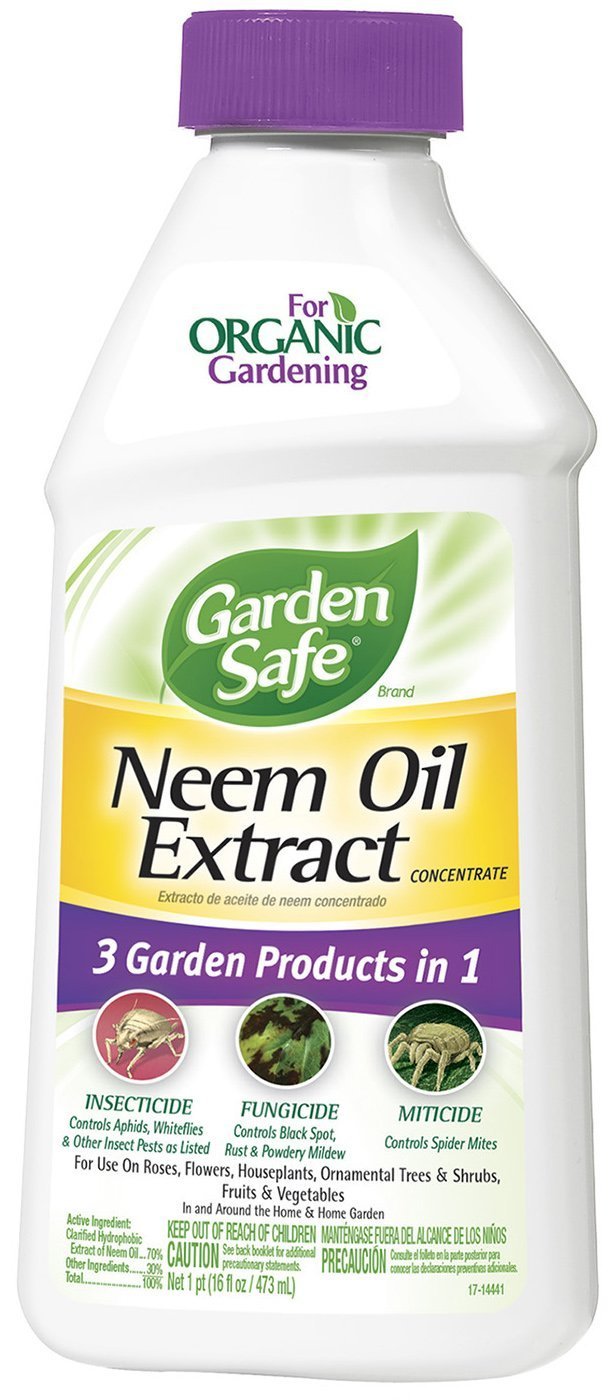
1. Garden Safe Neem Oil Extract Concentrate (6 Count)
Our pick — over 4★ from 7,500+ verified ratings; the strongest balance of quality and price.
Six bottles of concentrated neem oil that protect from mildew to mites — all the way up to harvest day.
This is the value king for a reason. You get six 16-ounce bottles — a full 96 fluid ounces of concentrate — compared to the Neudorff copper soap at 16 fluid ounces. That works out to a massive amount of mixed spray for a cucumber patch of any size. Mix roughly 1 ounce per gallon of water (check the label rates) and you are set for the whole season. The crowd favorite — with over 7,700 ratings at 4.4 stars — confirms that effectiveness (600+ mentions) and insect resistance (400+ mentions) are the two things owners praise most. One gardener who battled powdery mildew on dahlias, tomatoes, and peppers found that a 1-ounce-per-gallon mix knocked out the mildew and spider mites alike.
Because it is OMRI listed, you can spray it right up to the day you pick your cucumbers — no waiting period. It also works as a dormant spray in early spring to control overwintering insect eggs. The compromise: neem oil has a strong herbal smell that some find unpleasant, and it needs reapplication after heavy rain. One owner whose rubber tree had mealy bugs saw some initial leaf yellowing before the bugs cleared, so test a small area first if your plants are stressed.
What wins people over
- Three products in one — fungicide, insecticide, and miticide — so one bottle handles mildew and pests
- Can be used up to day of harvest with no safety interval
- Each 16-ounce bottle makes up to 16 gallons of mixed spray at the standard rate
The trade-offs
- Strong, lingering neem oil odor that some find off-putting
- Requires mixing with water and a surfactant (like mild dish soap) each time
- Needs frequent reapplication, especially after rain or overhead watering
Best for: gardeners with a large cucumber patch who want the lowest cost per treatment and an OMRI-listed spray they can use until harvest.
Think twice if: you prefer a grab-and-go sprayer and do not want to measure and mix concentrate every week.
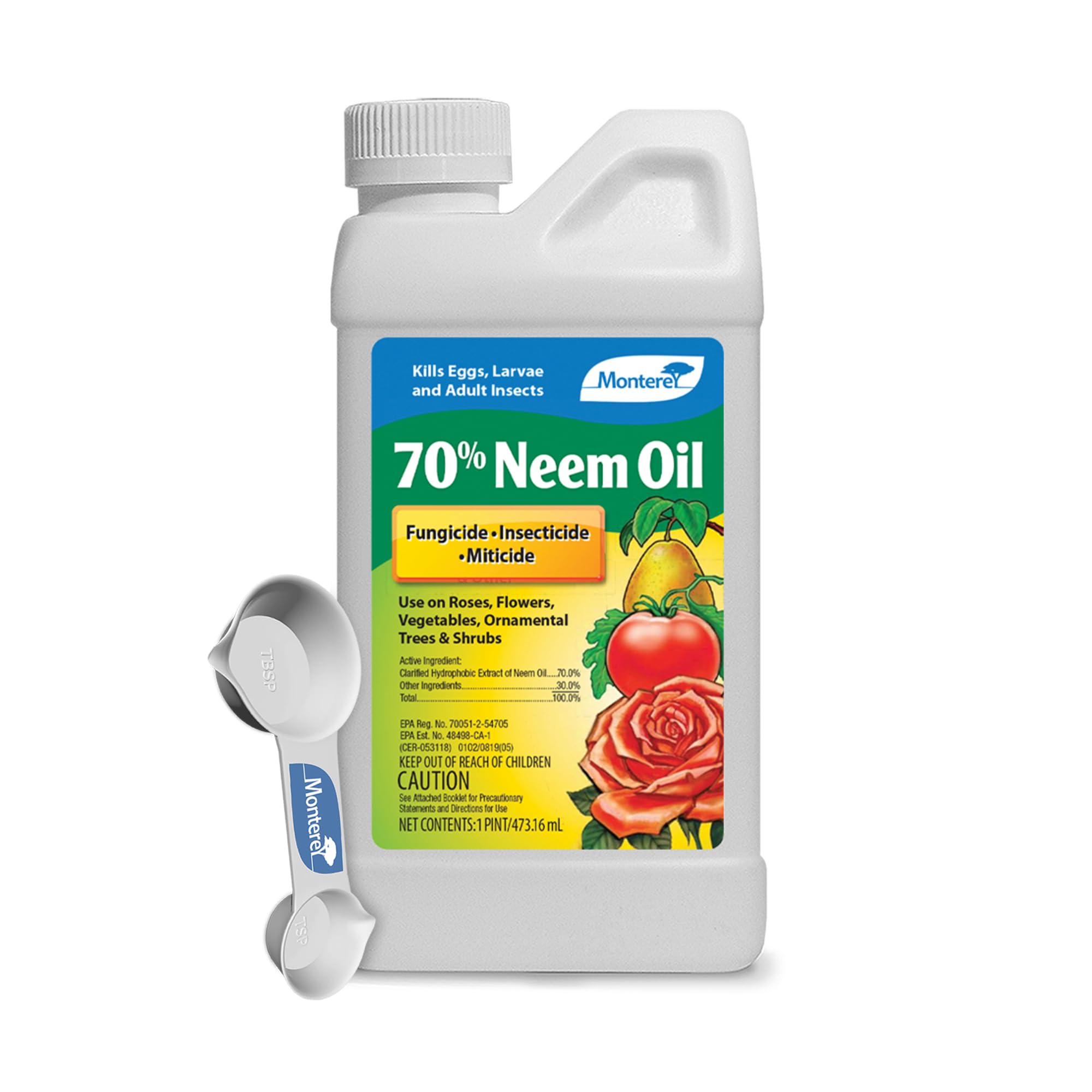
2. Monterey 70% Neem Oil Fungicide/Insecticide/Miticide
The most concentrated neem oil on this list — 70 percent active ingredient for serious mildew suppression.
Where the Garden Safe concentrate relies on a standard neem oil extract, Monterey pushes the active ingredient to 70 percent clarified hydrophobic neem oil. That higher concentration means less product per gallon of water, so the pint bottle goes further. It is OMRI listed for organic gardening and can be used on vegetables, fruit trees, roses, and ornamentals. The reviews back up the potency: owners in the humid South report that a regular spray schedule wiped out powdery mildew entirely for a full season, and one gardener called it a “must have” for organic growers. The main downsides are the odor — neem oil smell is pungent — and the fact that some sensitive plants (like peppers and oregano) can show leaf damage if oversprayed. A buyer who used it on squash plants found it effective against aphids but noted it does not work on flea beetles.
This is a premium tool for the gardener who already knows they want neem oil and wants the strongest concentration available for their money.
Why it stands out
- 70 percent neem oil concentration means a little goes a long way, stretching your investment
- Triple-action formula controls powdery mildew, black spot, rust, spider mites, aphids, and whiteflies
- OMRI listed and safe for use on edible crops like cucumbers
The catch
- Strong odor that lingers for hours after application
- Can burn or stress sensitive plant varieties if applied in full sun or high heat
- Requires careful mixing and a good sprayer to avoid clogging
Reach for this if: you want the highest-potency neem oil for a stubborn mildew outbreak and are comfortable mixing concentrates.
Look elsewhere if: you have a lot of tender seedlings or pepper plants that might react to the oil concentration.
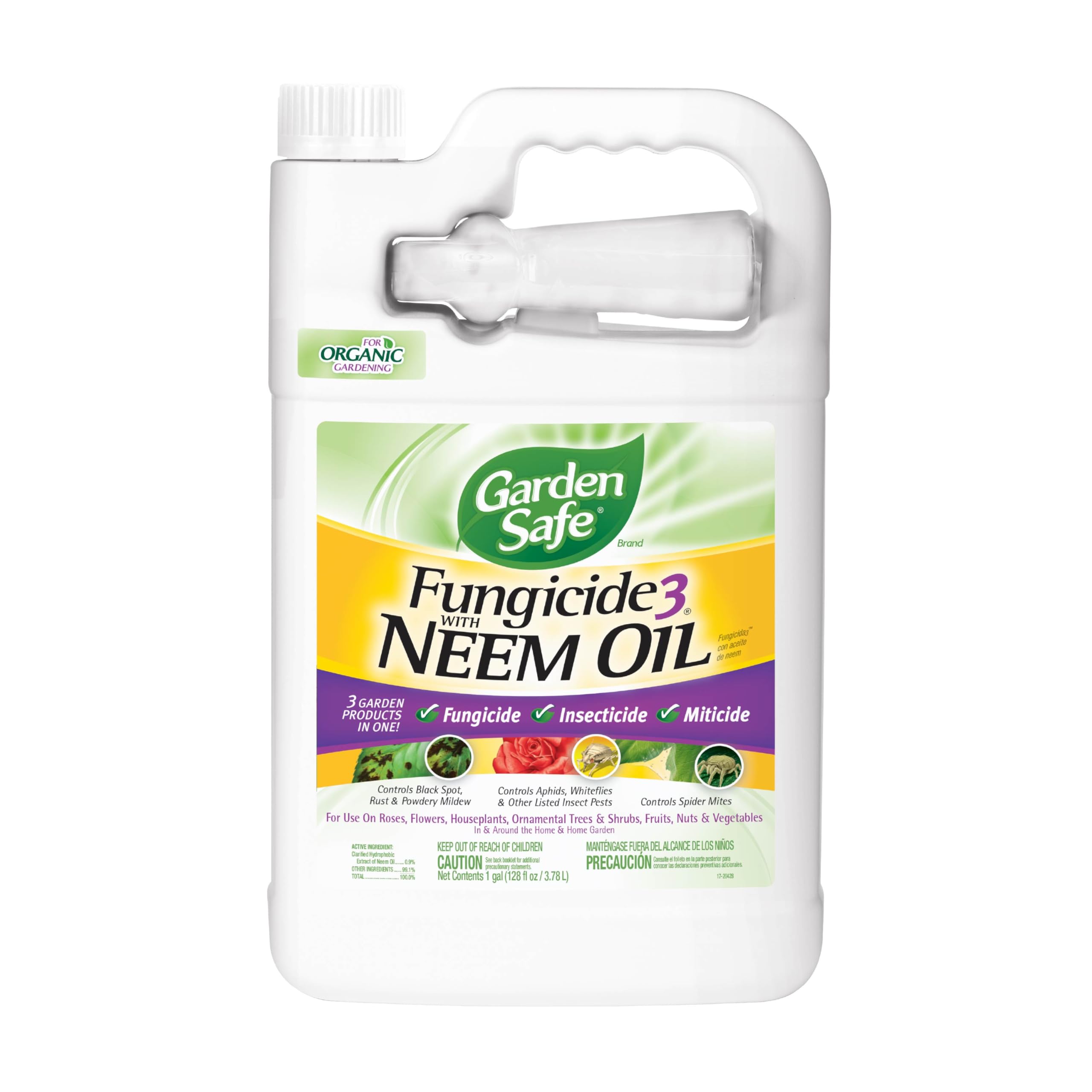
3. Garden Safe Brand Fungicide3 with Neem Oil (1 Gallon)
A full gallon of ready-to-use neem spray that you just hook to a hose and go.
If you hate measuring concentrates, this is your answer. The Fungicide3 comes premixed in a 128-fluid-ounce bottle that attaches to a standard garden hose, making it the simplest option for covering a long row of cucumbers. It contains the same clarified hydrophobic extract of neem oil as the Garden Safe concentrate but in a ready-to-spray format. It controls powdery mildew, black spot, rust, aphids, whiteflies, and spider mites — all with no mixing. Buyers report it works well for general garden problems and is safe around people and pets. The catch is that because it is ready-to-use, you pay a premium per ounce compared to buying concentrate. And weekly applications are needed to keep mildew at bay, so a heavy outbreak will go through this bottle fast.
For a small to medium cucumber bed where convenience matters more than ultimate cost efficiency, this is a solid mid-range choice.
What makes it easy
- No measuring, no mixing — attach to a hose and spray directly
- Safe for organic gardens and can be used on vegetables, roses, houseplants, and ornamentals
- Triple action covers fungus, insects, and mites in one pass
The downside
- Higher cost per treatment compared to concentrate options
- Large bottle is heavy to carry and maneuver around a garden
- Needs reapplication weekly, especially in humid or rainy weather
Ideal for: gardeners who want a no-fuss, hose-end sprayer and have a small to medium patch of cucumbers.
Not for: anyone on a tight budget per season — you will spend more per ounce than a concentrate.
4. Neudorff Plant Fungicide Concentrate, Copper Soap
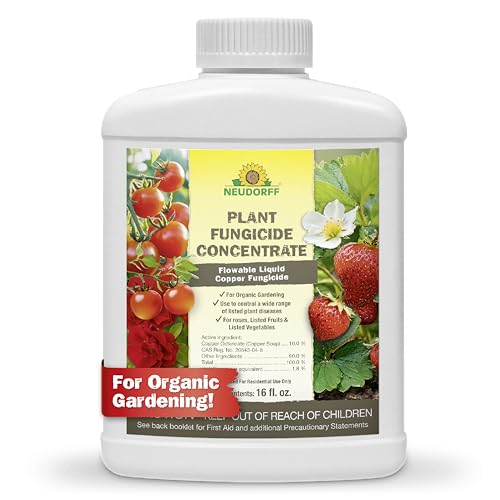
A low-concentration copper soap that decomposes naturally and still packs enough punch for powdery mildew.
Copper fungicide has been a standard for decades, but Neudorff’s formula uses a copper soap that breaks down into soluble copper and fatty acids — both usable by soil microbes and plants. It controls powdery mildew, rusts, black spot, downy mildew, late blight, and peach leaf curl, and it is labeled for roses, vegetables, fruits, and ornamentals. Owners praise its effectiveness most (45 mentions) and note that it works almost immediately on active infections. The review pages sum it up: “Worked great to eliminate a fungus that almost killed our decades old gardenia.” The 16-ounce concentrate bottle is small compared to the Garden Safe six-pack, but a little goes a long way — owners mention it stretches. The caution is that copper can burn sensitive foliage if over-applied; one owner who used it on hostas saw leaf damage. Follow the dilution rate closely and you should be fine on cucumbers.
This is the best pick if you prefer a copper-based solution that is gentle enough for organic use and still powerful against established mildew.
Bottom line: A concentrated copper soap that is effective and eco-friendly, but demand precision with mixing — overdo it and you risk leaf burn.
Grab this if: you want a copper fungicide that is OMRI suitable and can be used on a wide variety of edible and ornamental plants.
skip it if: you need a huge volume of spray for a large garden — the 16-ounce bottle goes fast if you have many plants.
5. Dr. Earth 7004 Concentrate 3 Controls Organic Fungicide
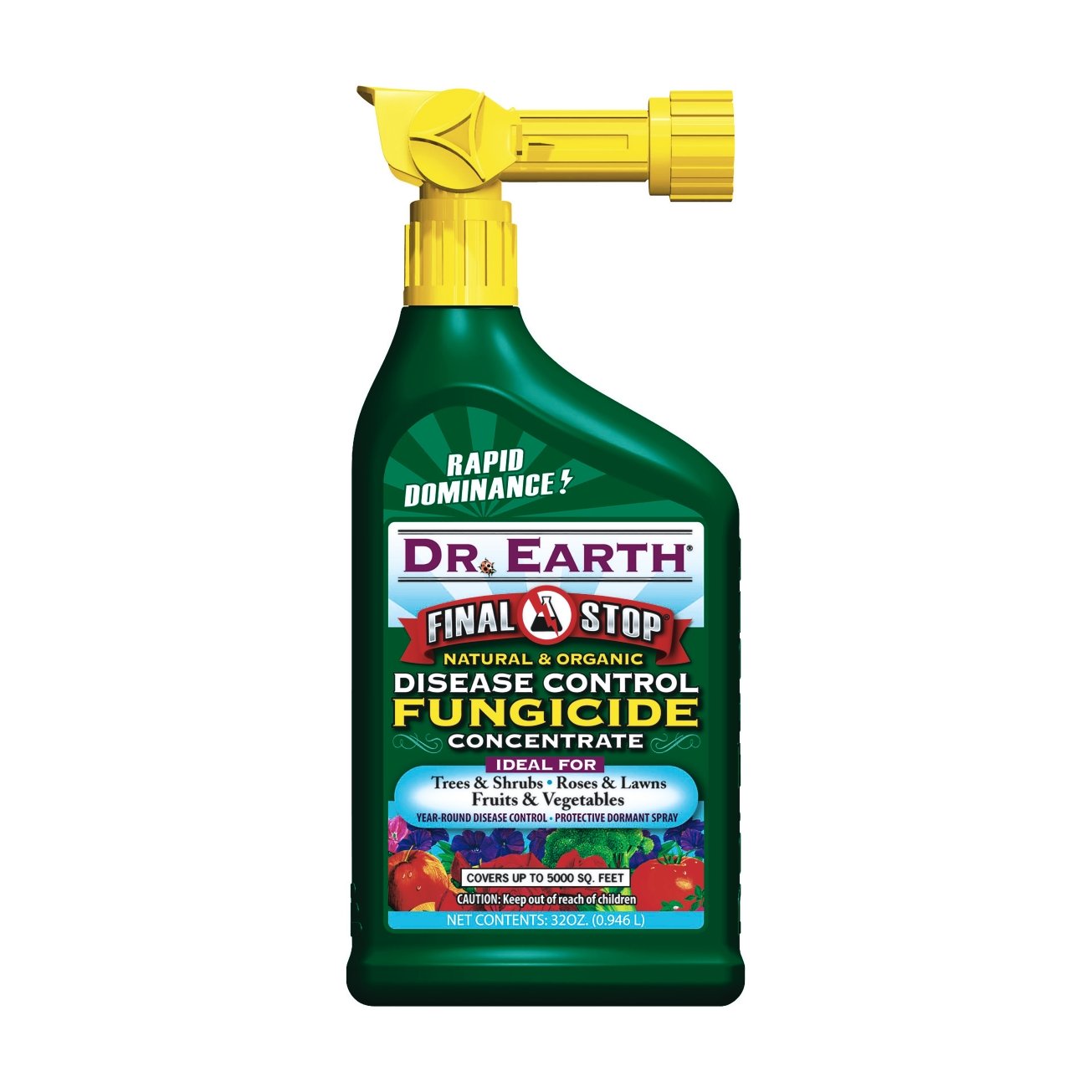
A botanical blend of rosemary, clove, and peppermint oils that collapses fungus cell walls without harsh chemicals.
Dr. Earth takes a different approach than neem or copper. Its active ingredients are rosemary oil, clove and clove oil, peppermint oil, and malic acid, with potassium bicarbonate as the inert carrier that collapses the fungus’s cell wall. The result is a broad-spectrum organic fungicide that can be used on vegetables, fruit trees, roses, turf, and ornamentals. One owner with powdery mildew on crape myrtles sprayed twice and reported no more mildew after two weeks. The 32-ounce concentrate bottle is a good value for its price tier. However, effectiveness gets mixed feedback. Some owners found it did not work on leaf curl on mulberries, and a few noted it is relatively weak compared to copper or neem for serious outbreaks. The quality rating is strong but the overall performance is best suited for early or mild mildew infections rather than a full-blown invasion.
This one is worth trying if you like the idea of essential-oil-based control and want to rotate fungicides to prevent resistance.
The honest read: Excellent as a first defense or rotation partner, but may not stop a heavy mildew outbreak on its own.
Choose this for: a mild mildew case or as part of a rotation strategy with neem or copper to avoid resistance.
Pass if: you already have a serious white coating on your cucumber leaves — you will want a stronger active ingredient.
6. Fertilome (16116) Fungicide 5 Ready to Use

A ready-to-use oil-based fungicide with a perfect 4.6-star rating, ideal for indoor and outdoor plants.
Fertilome’s 16116 formula is one of the highest-rated picks here at 4.6 stars. It comes ready to use in a 32-ounce bottle and is OMRI listed for organic gardening. It controls blights, molds, rots, spots, and mildews on trees, shrubs, vegetable gardens, flower beds, indoor plants, lawns, and tropicals. You spray the leaves and stems until moist but not dripping, and it can be used up to the day of harvest. One owner in South Louisiana replaced a different fungicide with this and saw significant improvement after three to four applications. Another used it on boxwood blight with good results. The downside is the small bottle — 32 ounces does not go far if you have a large garden, and the ready-to-use format means you pay more per ounce than a concentrate. But for a small cucumber patch or container garden, the convenience and high rating make it a strong candidate.
This is the grab-and-go champion for the home gardener with a modest number of plants.
One-line verdict: High-rated, easy to use, and OMRI listed — but the bottle size limits it to small gardens.
Best for: container cucumber growers or small backyard patches who value convenience over economy.
Not for: large gardens where you would need multiple bottles — a concentrate makes more sense.
7. Fertilome (16132) Copper Fungicide Concentrate
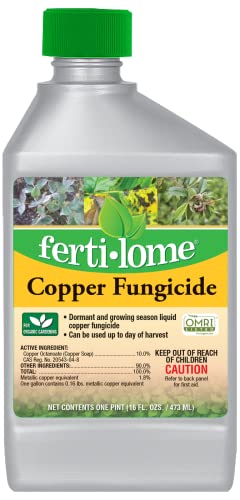
This is Fertilome’s copper concentrate, OMRI listed, and it covers needle blight, blackspot, anthracnose, leaf and fruit spot, cedar apple rust, powdery mildew, early and late blight on tomatoes, and peach leaf curl. You mix ½ to 2 ounces per gallon of water depending on the disease. The 16-ounce bottle is a concentrate, so it lasts a long time — one owner calculated roughly 40 gallons of mixed spray per bottle. The consensus is that it works best as a preventative or early treatment. For a plant that is already severely damaged, it may only slow the disease rather than reverse it. A minor frustration: the spray nozzle on the bottle can quit working before the liquid is used up. But the copper fungicide itself gets praise from owners who use it on roses, fruit trees, and vegetables.
If you already know you want a copper-based fungicide and want a trusted brand with OMRI certification, this is a solid mid-range choice.
The takeaway: Effective copper concentrate for prevention and early treatment, but the bottle’s sprayer may fail before the product is gone.
Reach for this if: you want an OMRI-listed copper fungicide in concentrate form for a medium to large garden.
Be aware: use it early — it is a preventative, not a cure for plants already in severe decline.
8. BioSafe ZeroTol HC Organic Disease Control (1 Gallon)

A peroxygen-based contact killer that leaves no residue and can be sprayed right up to harvest.
ZeroTol HC is a different animal from neem and copper. Its active ingredient is peroxyacetic acid — a strong oxidizer that kills mold and mildew spores on contact without leaving a harmful residue. It contains no copper or harsh chemicals, degrades into biodegradable byproducts, and is EPA-listed. The gallon jug is concentrated and you dilute it with water. One greenhouse orchid grower uses it monthly to keep vandas fungus-free in a hot, humid environment, and another owner calls it their go-to for powdery mildew. The downsides: it has a strong chemical smell that dissipates, and it requires personal protective equipment (mask, gloves) during mixing. One reviewer had a bad experience and said it did not work for them, but that is rare — the overall rating is 4.5 stars. This is a premium, clean-chemistry option for the serious gardener.
If you want a non-copper, non-neem option that is fast-acting and leaves no trace, ZeroTol HC is your best bet.
The short version: Highly effective contact killer with no residual buildup, but handling requires PPE and care.
Best for: greenhouse growers, hydroponic setups, or anyone who wants a clean, residue-free disease control.
Think twice if: you are uncomfortable wearing a mask and gloves each time you mix a spray.
9. BioSafe Systems ZeroTol HC Broad Spectrum (1 Gallon)

The same ZeroTol HC formula but marketed for broad-spectrum use — algaecide, bactericide, and fungicide in one.
This is essentially the same peroxyacetic acid formula as product 8, but with an explicit listing as an algaecide, bactericide, and fungicide. It kills powdery mildew, Botrytis, and Pythium on contact, and it is formulated for use around the home, garden, hydroponic systems, and grow rooms. Customers note it is the best product for bud rot and recommend using 5 teaspoons per gallon every five days for treatment or prevention. It also helps control waterborne pathogens like Pythium and Fusarium. The catch that sets this apart from the other ZeroTol HC listing is the safety concern: one owner pointed out that the Amazon listing claims it is safe for the environment, children, and pets, but the actual label states it is hazardous to humans and domestic animals, requiring runoff protection. That contradiction is note if you have kids or pets in the garden. Follow the label’s safety instructions — full PPE is mandatory.
This is a powerful tool for the informed gardener who reads labels and prioritizes efficacy over convenience.
Final word: Highly effective broad-spectrum control, but double-check the label for safety claims — and always use PPE.
Reach for this if: you need a serious, broad-spectrum solution for a greenhouse, hydroponics, or a stubborn mildew outbreak.
pass on it if: you have kids or pets who freely roam the garden and you cannot isolate the treated area.
Understanding the Specs
Active Ingredients
The most common ones for cucumbers are neem oil, copper soap, and potassium bicarbonate. Neem oil smothers spores and also repels insects. Copper soap kills fungus on contact by disrupting cell membranes. Potassium bicarbonate (found in Dr. Earth) raises the pH on leaf surfaces, which fungi cannot tolerate. Always check that your chosen ingredient is listed for cucurbits — some sulfur-based sprays can burn cucumber leaves in hot weather.
Concentrate vs. Ready-to-Use
A concentrate (like the Garden Safe six-pack or the Monterey 70%) must be mixed with water before spraying. It costs less per treatment and lets you adjust the strength. A ready-to-use formula (like the Fertilome 16116 or the Garden Safe Fungicide3) is premixed — you just spray. It is far more convenient for small gardens but more expensive per ounce. For a large cucumber patch, a concentrate saves significant money over a season.
FAQ
Can I spray a fungicide on cucumbers right up to the day I pick them?
Will neem oil kill powdery mildew on contact?
How do I know if a fungicide is safe for organic gardens?
What is the difference between copper soap and copper fungicide?
How often should I apply fungicide to cucumbers for powdery mildew?
Can I mix neem oil and copper fungicide together?
Will powdery mildew on cucumbers spread to my other plants?
Is it better to spray in the morning or evening?
Final Thoughts: The Verdict
If you want one dependable pick, the fungicide for powdery mildew on cucumbers winner is the Garden Safe Neem Oil Extract Concentrate (6-Pack) because it offers the best value per ounce, OMRI-listed safety, and triple-action coverage against mildew and pests. If you prefer a copper-based solution, grab the Neudorff Copper Soap Concentrate — it decomposes naturally and works fast on active infections. And for a no-mix, ready-to-use option that is highly rated, the Fertilome (16116) Ready to Use is the one to reach for.
How We Picked
We do not accept paid placement. Every pick is matched to a real buyer and a real use-case; we do not hands-on test units.
Sources & Methodology
Specifications: manufacturer listings and product documentation. Review insights: verified customer reviews, as of July 2026. Pricing: not shown on this page (it changes often); check the current price via the retailer link.
As an Amazon Associate, Lawn Gear Lab earns from qualifying purchases. This does not affect which products we feature.