
Specs are compiled from manufacturer listings and verified buyer reviews and can change over time — please confirm the key details on the product page before buying.
One humid week in the greenhouse can turn a perfect batch of poinsettias into a powdery mildew or botrytis wreck. The most important buying decision you will make is choosing a fungicide that prevents disease versus one that cures an active outbreak. You need a product labeled for ornamentals that targets the specific fungi that attack poinsettias: powdery mildew, botrytis blight (gray mold), and Pythium root rot (a soil-borne rot that causes wilting).
I’m Rikta — the founder and writer behind Lawn Gear Lab. This guide is built by comparing the manufacturers’ published specifications and the patterns across verified customer reviews, so you get each pick’s real strengths and trade-offs instead of marketing spin.
Below you will find seven fungicides proven to work on ornamental plants, each with a different active ingredient and mode of action to match your growing setup, from greenhouse sprays to granular soil drenches — your complete shortlist for the fungicide for poinsettias.
Our Picks at a Glance

How To Choose The Best Fungicide For Poinsettias
Poinsettias are sensitive to overwatering and high humidity, which makes them a magnet for several fungal diseases. The wrong product can burn the leaves or fall short against the specific pathogen. Here is what to check before you buy.
Active Ingredient — The Real Decider
Fungicides are classified by their active ingredient, not the brand name. Propiconazole and myclobutanil are systemics (absorbed into the plant’s tissue) that move through the plant’s vascular system, making them strong choices for established infections. Copper-based products work on contact (they stay on the leaf surface) and are safer for organic programs but need thorough coverage. Azoxystrobin provides both preventive and curative action across a very broad spectrum of fungi.
Systemic vs. Contact — Know the Difference
Systemic fungicides are absorbed into the plant tissue, so new growth stays protected even if you miss a spot. They are ideal for poinsettias that already show symptoms. Contact fungicides form a protective layer on the leaf surface and must be reapplied after rain or irrigation — better for prevention than cure.
Label Check for Ornamentals
Not every lawn fungicide is safe for poinsettias. Always verify the label lists ornamental plants, greenhouse crops, or flowering shrubs. A product designed only for turfgrass can harm your poinsettias.
Quick Comparison
| Model | Best For | Active Ingredient | Volume | Form | Amazon |
|---|---|---|---|---|---|
| Southern Ag Liquid Copper★ Best Overall | Organic prevention | Copper Ammonium Complex | 1 gal | Liquid | Amazon |
| Atticus Gravex 20EWPro Pick | Curative + preventive | Myclobutanil | 16 oz | Liquid | Amazon |
| Fertilome Liquid Systemic IIBest Value | Curative systemic | Propiconazole | 32 oz | Liquid | Amazon |
| Fertilome 2-N-1 Systemic | Insects + fungus | Propiconazole | 32 oz | Liquid | Amazon |
| Bonide Copper 4E | Organic 2-pack | Copper | 16 oz (2-pack) | Liquid | Amazon |
| Atticus Artavia 2 SC | Broad-spectrum | Azoxystrobin | 16 oz | Liquid | Amazon |
| Actinovate Fungicide | Organic biological | — | 18 oz | Powder | Amazon |
In‑Depth Reviews
1. Southern Ag Liquid Copper Fungicide, 1 Gallon
Our pick — over 4.5★ from 400+ verified ratings; the strongest balance of quality and price.
This copper-based fungicide keeps poinsettias safe without synthetic chemicals — and covers a full season in one gallon jug.
You get a gallon of 31.4% Copper Ammonium Complex (8% Metallic Copper Equivalent) — a contact fungicide that coats leaves and stems so spores cannot germinate. The crowd here is overwhelmingly satisfied, and the biggest praise is on effectiveness. Buyers report it is “100% organic, nontoxic to animals/humans,” which matters when poinsettias live indoors near pets. It works against both bacterial and fungal diseases, so powdery mildew and botrytis are within its reach. For comparison, the smaller Bonide Copper 4E (Pick 6) costs less upfront but only gives you 32 ounces total — this Southern Ag jug is for growers who need volume.
The trade-off is the weight: this jug comes in at 9 pounds, which is noticeably heavier than smaller concentrate bottles. It is a bulk investment best for growers with multiple plants or repeated applications through the season. The concentrate is designed to work with hose-end sprayers, making application straightforward once you mix it.
What wins people over
- Organic formulation suitable for indoor and outdoor ornamentals
- Gallon size provides many treatments for the cost
- Copper is gentle on poinsettia leaves when used at label rates
The honest trade-off
- Contact-only — must coat every surface; rain or overhead watering washes it off
- Heavy jug at 9 pounds makes handling less convenient
- Some deliveries arrived with outdated label photos showing 31% vs. the 27% received
Best for: growers who want an organic, copper-based preventive spray they can use liberally on poinsettias without worrying about harsh chemicals near people and pets.
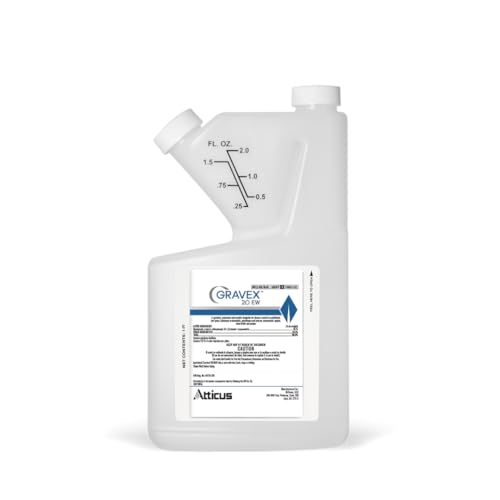
2. Atticus Gravex 20EW Fungicide (16oz) – Myclobutanil Concentrate
The curative systemic that chases fungus into new poinsettia growth — and can stop an infection within 24 hours.
Gravex 20EW packs 19.7% myclobutanil — the same active ingredient as the specialty fungicide Eagle 20EW — and it works both curatively and preventively. That dual action is rare and valuable. The upward systemic mobility (the fungicide travels to new leaves as they grow) matters for poinsettias that push fresh bracts and foliage. Approved for more than 38 plant fungi including ornamentals, it covers powdery mildew, black spot, and rust. It is faster than the Fertilome Liquid Systemic II (Pick 3), which owners mention takes three days to show results on grass fungus.
What buyers mention most is its effectiveness, and the feedback is consistent: it shows improvement within 24 hours on powdery mildew infections. The strong odor is the common complaint — several owners describe it as bad-smelling, so open a window or wear a mask when mixing. The built-in measuring spout makes it easy to dose with a backpack sprayer.
Curative punch: 2ml per gallon stopped powdery mildew on zinnias in 24 hours, with 80% clear after a couple of weeks. That kind of speed is what you want on a poinsettia that is already spotting.
Odor alert: The smell is the biggest real downside — use it with ventilation and do not store it near living spaces.
Reach for this if: you need a systemic that cures an active outbreak and keeps new growth protected — the upward mobility inside the plant is a real advantage for poinsettias.
Look elsewhere if: you are sensitive to strong chemical smells or you want a zero-odor product for an indoor greenhouse.
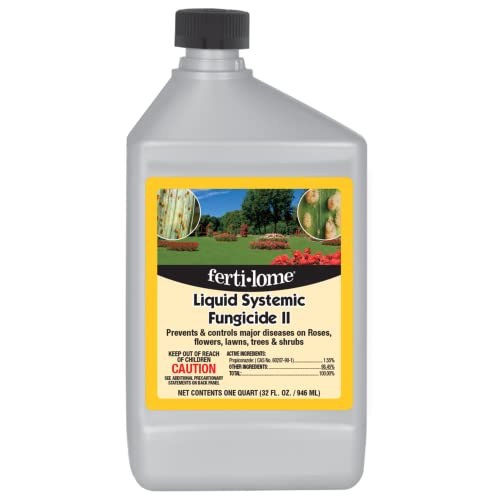
3. Fertilome (11378) Liquid Systemic Fungicide II Concentrate, 32 oz
A propiconazole systemic that stopped yellowing leaves after one treatment — and costs less per ounce than the Atticus propiconazole bottles.
It works faster than granular alternatives, and owners note it cleared both powdery mildew and rust. The very light weight of the bottle (2 pounds versus the 9-pound copper jug) makes it a much easier pour and mix for home users. The only real caveat is that severe infestations may need multiple applications — but that is true of any systemic.
Fast systemic action: buyers saw results within three days on grass fungus and it “works exactly what is advertised to deal with.” That speed translates well to poinsettias showing early signs of powdery mildew.
Value read: 32 ounces of concentrate goes a long way, making it among the most cost-efficient propiconazole options on the list.
Who it beats: the 32 oz format gives you more total solution than the 16 oz Atticus bottles at a lower upfront cost — best for medium-sized poinsettia collections.
Who it does not: if you need a combined insecticide-fungicide, the Fertilome 2-N-1 is a better fit.
4. Fertilome (10478) 2-N-1 Systemic Insecticide + Fungicide, 32 oz

Fungus and insects — one pour at the roots, and it protects for up to 6 weeks.
This is a systemic concentrate that works as both a fungicide and an insecticide in one bottle. You mix it with water and pour it at the base of the plant — no spraying needed. The systemic formula protects for up to 6 weeks. It controls aphids, borers, thrips, black spot, and rust, which makes it ideal for poinsettias that often attract whiteflies and fungus simultaneously.
Buyers call out the effectiveness, and one notes “each jug covers 16 rose bushes,” giving you a clear picture of how far 32 ounces stretches. Another owner in Florida found it “the most effective thing I’ve found that works on the many bugs and blights of Florida.” The catch is that because it works through root uptake, it takes a few days to move through the plant — it is not a fast knockdown spray for visible fungus spots.
What wins people over
- One product tackles both insects and fungal diseases — fewer bottles on the shelf
- Root drench application means no spray drift or leaf burn
- Protection lasts up to 6 weeks, longer than most standalone fungicides
The honest trade-off
- Not labeled for edible gardens — avoid if you grow herbs near poinsettias
- Slower than foliar sprays because the plant must absorb it through the roots
Best for: growers who want to simplify their spray program — one root drench covers fungus and common poinsettia pests like whiteflies and thrips.
skip it if: you need immediate visual results on an active leaf infection; this is a prevention and slow-curative tool, not a quick rescue.
5. Bonide 811 Copper 4E Fungicide 16oz (473ML) (2 Pack)

Two bottles of organic copper for indoor and outdoor use — one for the shed, one for the greenhouse.
Bonide Copper 4E is a copper-based fungicide suitable for organic gardening, and this 2-pack gives you two 16-ounce bottles. It protects turf, vegetables, fruit, and flowers — including ornamentals like poinsettias — from a host of listed diseases. The fact that it won’t harm beneficial insects is a strong plus if you introduce natural predators into your greenhouse.
Effectiveness is what buyers mention most, and the stories back it up: one owner stopped Pachysandra blight by spraying every 10-14 days alternating with Daconil. Another treated Fire Blight on Cleveland Pear trees successfully. The versatility is the second-most-praised aspect — owners use it on everything from tomatoes to beans to cucumbers. It is odor-free, works fast, and does not require frequent reapplication.
Organic edge: “suitable for organic gardening” is printed right on the label, so you can use it on poinsettias you sell or display without synthetic residue concerns.
Reapply schedule: for best results on poinsettias, plan to spray every 10-14 days — that is the rhythm that worked for buyers tackling persistent blights.
Reach for this if: you want a reliable copper fungicide in a convenient 2-pack that keeps one bottle in the shed and one in the greenhouse.
Note: like all contact fungicides, it requires thorough coverage — missing the underside of a poinsettia leaf leaves a spot for spores to enter.
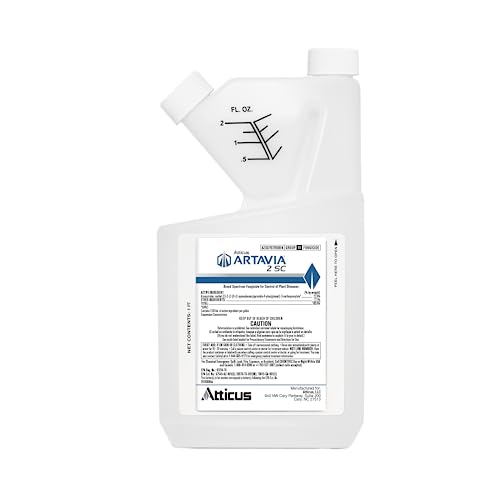
6. Atticus Artavia 2 SC Azoxystrobin Fungicide (16oz)
Leaf-to-root protection that covers more than 50 different fungi — with 28-day intervals between sprays.
Artavia 2 SC delivers 22.9% azoxystrobin — the same systemic active ingredient used by pros. It moves within the plant from root to leaf tip, protecting even tender new growth. The broad spectrum is extraordinary: it controls more than 20 turf and 30 ornamental plant fungi, including anthracnose, leaf spot, rhizoctonia, and brown patch. Many target fungi are labeled at application intervals up to 28 days, which lightens your spray schedule considerably.
Buyers find it effective, calling it “pricey but really works well.” One owner used it on St. Augustine sod and saw results after a single treatment. The mixed feedback on value is fair — at this price point, you pay for the professional-grade active ingredient. The built-in measuring mechanism on the bottle is a point of frustration for some; they recommend measuring manually to avoid over-dispensing.
Total plant defense: absorbed by both leaves and roots, so it protects poinsettias from soil-borne Pythium AND foliar powdery mildew at the same time.
Value fence: it is the most expensive of the Atticus line, but the 28-day interval means fewer applications per season.
Best for: serious growers who want one broad-spectrum systemic that covers both root and leaf diseases — a true all-in-one for poinsettia care.
Think twice if: you are on a tight budget; the upfront cost is higher than the propiconazole alternatives.
7. Actinovate Fungicide -18 oz

The OMRI-listed biological powder that fights fungus with beneficial microbes — slower but certified organic.
Actinovate is a water-soluble powder that is OMRI-listed organic — it uses a naturally occurring bacterium to suppress a wide range of fungal diseases. This is a biological fungicide, not a synthetic chemical, so it works differently: the microbes colonize the root zone and leaf surface, outcompeting pathogens. It is labeled for wilt, powdery mildew, and root rot.
Biological approach: this is a living product — the microbes need to be alive when applied. It works best as a preventive treatment applied early in the season and continued through the growing cycle.
Expiration watch: the reviews note that some units shipped past their date, so inspect immediately upon arrival.
Reach for this if: you want a certified organic biological option for poinsettias and are willing to apply preventively rather than waiting for disease to appear.
pass on it if: you need a fast-acting curative spray for an active outbreak — chemical fungicides work much faster than biologicals.
Understanding the Specs
Propiconazole
This is a systemic triazole fungicide that is absorbed into the plant and moves upward through the xylem (the tissue that carries water from roots to leaves). It stops fungal cells from producing ergosterol, a compound they need to build cell walls. For poinsettias, propiconazole is effective against powdery mildew, rust, and leaf spot. Products like Fertilome Liquid Systemic II and Atticus Gunner use this active ingredient.
Myclobutanil
Another systemic triazole, myclobutanil works similarly to propiconazole but is often favored for its curative properties — it can stop an infection that has already started. It also provides preventive protection for new growth because it moves into developing leaves. Atticus Gravex 20EW is built on this active ingredient and is approved for more than 100 ornamental plants.
Azoxystrobin
Part of the strobilurin family, azoxystrobin disrupts energy production in fungal cells by blocking mitochondrial respiration (the cellular process that produces energy). It is absorbed by both leaves and roots, providing total plant protection from bottom to top. It controls more than 50 different fungi and offers application intervals up to 28 days. The Atticus Artavia 2 SC is the azoxystrobin option on this list.
Copper vs. Biological
Copper fungicides like Southern Ag Liquid Copper and Bonide Copper 4E work on contact — they create a protective barrier on the plant surface that kills fungal spores before they germinate. They are suitable for organic gardening but wash off in rain. Biological fungicides like Actinovate use beneficial microorganisms to suppress pathogens and are best used preventively as they are slower-acting than chemical alternatives.
FAQ
What causes fungal diseases on poinsettias?
Can I use a lawn fungicide on my poinsettias?
How often should I spray poinsettias with fungicide?
What is the difference between systemic and contact fungicide?
Can I mix fungicide with insecticide for poinsettias?
Is copper fungicide safe for poinsettia bracts?
How do I treat powdery mildew on poinsettias?
Can I use organic fungicide on poinsettias?
What is the best fungicide for poinsettia root rot?
How long does fungicide take to work on poinsettias?
Final Thoughts: The Verdict
For most buyers, the fungicide for poinsettias winner is the Southern Ag Liquid Copper Fungicide because it combines organic safety with a generous gallon size that covers a full growing season. If you want a curative systemic that moves into new growth, grab the Atticus Gravex 20EW. And for broad-spectrum root-to-leaf protection with fewer applications, the Atticus Artavia 2 SC is the one to reach for.
How We Picked
We do not accept paid placement. Every pick is matched to a real buyer and a real use-case; we do not hands-on test units.
Sources & Methodology
Specifications: manufacturer listings and product documentation. Review insights: verified customer reviews, as of July 2026. Pricing: not shown on this page (it changes often); check the current price via the retailer link.
As an Amazon Associate, Lawn Gear Lab earns from qualifying purchases. This does not affect which products we feature.