
Specs are compiled from manufacturer listings and verified buyer reviews and can change over time — please confirm the key details on the product page before buying.
Petunias are tough until a wet spell hits. Then those velvety blooms turn brown, leaves spot up, and a once-lush planter looks like it’s on its last legs. The difference between a quick wilt and a full season of color is catching the fungus early — and having the right spray on hand before the damage sets in.
I’m Rikta — the founder and writer behind Lawn Gear Lab. This guide is built by comparing the manufacturers’ published specifications and the patterns across verified customer reviews, so you get each pick’s real strengths and trade-offs instead of marketing spin.
Matching the active ingredient to the problem and the application method to your routine is what makes a fungicide for petunias work — whether you face powdery mildew (a white powder that coats leaves), black spot (dark round patches that kill foliage), or root rot (a soil fungus that turns roots mushy).
Our Picks at a Glance

How To Choose The Best Fungicide For Petunias
Petunias catch fungal diseases fast when humidity stays high or water sits on the leaves overnight. Your choice depends on three factors: what the active ingredient targets (the chemical that kills the fungus), how it moves through the plant (stays on the surface or goes inside), and how often you are willing to reapply (every 7–28 days depending on the type).
Match the active ingredient to the disease
Copper ammonium complex works broadly against bacterial and fungal diseases — good for prevention and early leaf spot (small brown or black dots that spread across the leaf). Neem oil extract (a natural oily spray) smothers powdery mildew and also handles soft-bodied insects (like aphids), so it is a two-in-one for an integrated pest plan. Propiconazole (a synthetic systemic chemical) is a true systemic that attacks the fungus from inside the plant tissue, making it better for established infections like rust (orange powdery pustules on leaves). Citric-acid-based formulas (naturally derived from citrus) kill on contact and leave no residue (no lasting chemical film), ideal for organic growers who harvest the same day.
Choose systemic over contact for established infections
A contact fungicide (spray that stays on the leaf surface) stays on the leaf surface and kills only what it touches — you need to coat every bit of the plant. A systemic fungicide (like propiconazole or phosphonate) is absorbed into the plant’s vascular system (the internal tubes that carry water and nutrients), so it treats the whole leaf — even parts the spray missed. If your petunias already show yellowing or brown patches, a systemic option gives you a much better chance of reversing the damage.
Quick Comparison
| Model | Best For | Active Ingredient | Volume | Application | Amazon |
|---|---|---|---|---|---|
| Southern Ag Liquid Copper★ Best Overall | Broad prevention | Copper ammonium complex (31.4%) | 1 Gallon | Ready-to-spray (hose end) | Amazon |
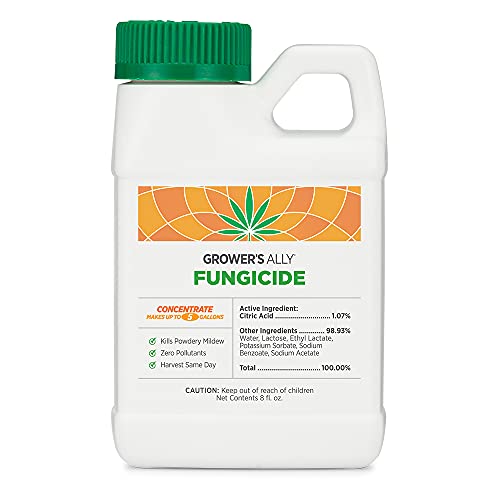
| Grower’s Ally FungicideBest Value | Powdery mildew control | Citric acid | 8 oz (makes 5 gal) | Concentrate (mix & spray) | Amazon |
| Fertilome Systemic II | Quick recovery | Systemic (propiconazole-based) | 32 oz | Ready-to-use spray | Amazon |
| Monterey Complete Disease Control | Organic root & leaf care | Bacillus amyloliquefaciens (a beneficial bacterium) | 16 oz | Concentrate (mix & spray) | Amazon |
| Monterey Garden Phos | Root rot & downy mildew | Phosphonate (a systemic salt compound) | 16 oz | Concentrate (pump sprayer) | Amazon |
| Garden Safe Fungicide3 | Three-in-one (fungus + bugs) | Neem oil extract (clarified hydrophobic extract of neem oil) | 1 Gallon | Ready-to-use spray | Amazon |
| Atticus Gunner 14.3 | Professional lawn-level control | Propiconazole (14.3%) | 1 Gallon | Concentrate (mix & spray) | Amazon |
In‑Depth Reviews
1. Southern Ag Liquid Copper Fungicide, 1 Gallon
Our pick — over 4.5★ from 400+ verified ratings; the strongest balance of quality and price.
The gallon jug that covers an entire flowerbed with one hose hookup — no mixing needed.
If your petunias sit next to tomatoes, roses, or a lawn that sees summer humidity, this is the one jug that covers everything. The active ingredient — a 31.4% copper ammonium complex (a copper-based liquid that stays on plant surfaces) with 8% metallic copper equivalent — controls both bacterial and fungal diseases, including leaf spot and powdery mildew. It is a broad-spectrum safety net (effective against many different diseases), not a spot treatment.
You attach the bottle to a hose-end sprayer (a device that connects to your garden hose and mixes the liquid with water) and walk the bed. No mixing, no measuring, no hauling a pump sprayer around. Buyers report it handles stubborn cases like peach leaf curl and poison mushrooms, so it has real muscle. The honest trade-off: some owners mention receiving bottles with 27% copper strength instead of the advertised 31% (one owner described it as “only 27% strength rather than the 31% shown in the product image”). The product still works well, but the inconsistency is worth knowing if you measure doses tight.
Bed-wide coverage: One gallon goes a long way on a mixed garden. It is a staple for prevention, not a cure for a plant already yellowed.
Label caveat: If you need the exact metallic copper content for a strict organic program (a set of rules for certified organic gardening), verify the bottle label you receive.
Reach for this if: you want a single, big-bottle solution that protects petunias while also treating neighboring plants. It is the low-maintenance choice for mixed beds.
Think twice if: you need a targeted systemic for an active, deep-seated infection. Copper is a contact fungicide — it prevents but does not cure from the inside, unlike the Fertilome or Atticus picks below.
2. Grower’s Ally Fungicide for Plants Concentrate – 8 oz
An 8-ounce concentrate that stretches to 5 gallons of spray with zero residue — safe to use up to harvest day.
This is the pick for organic growers who want something they can spray right up to harvest day. The active ingredient is citric acid (a natural compound from citrus that kills fungus on contact), which kills powdery mildew on contact and leaves no toxic trace. It is FIFRA 25(b) exempt (a special EPA classification for minimum-risk pesticides) and OMRI Listed (certified for organic use), so it passes muster for organic gardening. A little goes a long way — that small 8-ounce bottle makes 5 full gallons of mixed spray, so you are not lugging heavy jugs around.
Buyers with large hedges or entire rows of petunias report a single treatment clears most powdery mildew. The caveat (and it is a real one): once a mixed solution sits for a week or two, it can grow its own mold inside the sprayer. Mix small fresh batches and use them up. One reviewer noted it “cured my large, long hedge of its powdery mold” — but every owner who has success with it also stresses that it works better as a preventative. Once a petunia is fully covered in black mold, do not expect a resurrection. It is not as strong for established infections as the Atticus Gunner, which is systemic.
What wins people over
- Harvest-safe — spray right up to bloom without worry
- Concentrated — 8 oz makes 5 gallons of spray
- Bee-safe and pet-safe when used as directed
The honest catch
- Mixed solution spoils after 1–2 weeks — mix what you need
3. Fertilome (11380) Liquid Systemic Fungicide II RTS (32oz)
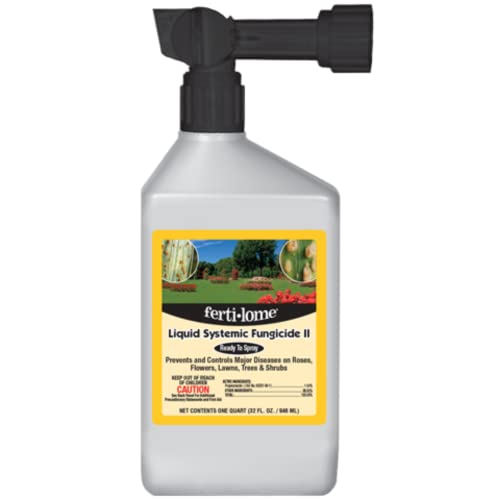
A ready-to-use systemic that customers note turned yellow leaves green in about three weeks.
Unlike the contact-only Southern Ag Liquid Copper, this one gets absorbed into the plant and fights the fungus from within. It controls Take All Patch, Brown Patch, Dollar Spot, Leaf Spot, and more — essentially the classic diseases that turn petunia beds into a brown mess. It comes in a ready-to-use 32-ounce spray bottle, so there is zero measuring or mixing. You just point and spray to the point of runoff.
The real-world evidence is hard to ignore: reviewers point out “visible greening after 2 weeks; nearly all yellow gone in 3 weeks.” That is a systemic doing its job. The effectiveness rating from Amazon is technically mixed — some owners did not see the bounce-back they hoped for — but the majority of owners who used it as a preventative or early treatment had excellent results. One honest safety note: the formula is a skin irritant (causes skin redness or stinging), so avoid wearing sandals during application and rinse any accidental contact.
Quick turnaround: If your petunias are already yellowing and you need a reversal, this is the most direct option in the lineup. The systemic action works from the roots up.
Not for organic gardens: This is a synthetic fungicide (man-made, not natural). If you are OMRI-only, choose the Grower’s Ally or Monterey Complete instead.
Reach for it when: you see yellowing leaves and you want a fast-acting systemic that does not require any mixing. The 32-ounce bottle is a grab-and-go solution.
Look elsewhere if: you prefer organic inputs or you are spraying near a vegetable bed you harvest daily.
4. Monterey Complete Disease Control Bundled with Measuring Spoon – 1 Pint
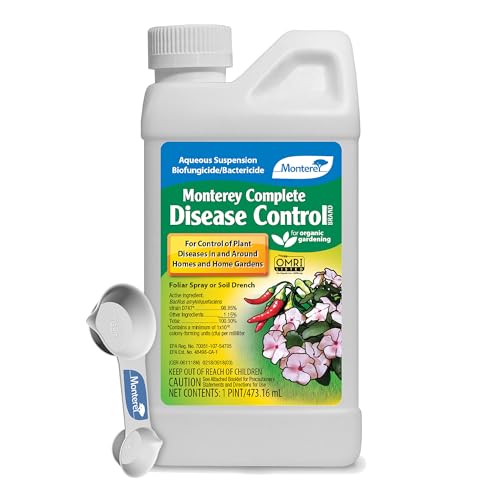
A biological fungicide (a living organism that fights disease) that colonizes root hairs to stop disease before it starts.
This is not a chemical — it is a beneficial bacterium called Bacillus amyloliquefaciens (a naturally occurring soil microbe) that outcompetes fungal pathogens (crowds out the bad fungi). It prevents and stops powdery mildews, rust, leaf blight, brown rot, leaf spots, anthracnose, and gray mold. You can spray it on the foliage or drench the roots, meaning you pour it into the soil. The fact that it colonizes root hairs (tiny root extensions that absorb water) is the real advantage for petunias: when you drench the soil, the bacteria set up shop and protect the root zone, which is exactly where root rot takes hold.
It is OMRI Listed for organic gardening. A few shoppers say the measuring spoon promised in the description did not arrive — the product still works as a concentrate, but you will need your own measuring tool. The overall feedback is positive, with owners seeing noticeable improvement in both tomato and watermelon plants within days. This biological approach is gentler than the synthetic Fertilome, but slower — it is more preventative than curative.
Root-zone protection: Most fungicides only hit the leaves. This one protects the roots and the foliage, making it a strong preventative for rain-heavy seasons.
Not for fast rescue: Biologicals (living organisms) take time to establish in the plant and soil. If you have active yellowing, pair with a faster systemic first.
Best for: the organic gardener who wants a long-term, living solution that protects the root zone of petunias all season long.
Not for: a full-blown active infection that needs immediate knockdown. Use a copper or systemic product first.
5. Monterey Garden Phos Bundled with Measuring Spoon – 1 PT

The systemic phosphonate that one buyer mentioned saved an avocado tree from root rot — and it works on petunias too.
This is a targeted weapon for downy mildew (a yellow-to-brown leaf disease that thrives in wet conditions), Phytophthora (a water-mold that attacks roots and stems), Pythium (a soil fungus that causes root rot), and root rot — diseases that attack petunias from the soil up when drainage is poor. The active ingredient is a phosphonate (a systemic salt compound that moves through the plant), which is absorbed by the plant and moves systemically. You can apply it as a soil drench (pour mixed solution into the soil around the roots), a foliar spray (mist onto the leaves), or a basal bark treatment (spray onto the lower stem). For petunias in containers or beds with heavy clay soil, the drench method is the most effective way to stop root-level fungus.
It is not organic. But for the job it does — especially with root rot — owners are emphatic. One described it as saving an avocado tree from root rot, and others note it helped prevent fire blight on apple trees. The downside: it can cause leaf burn if applied too heavily or at the wrong concentration, so follow the label rates exactly. It is a concentrated formula that requires a pump sprayer (a handheld tank you pump to pressurize), not a hose-end bottle. It is more aggressive on root-level issues than the Southern Ag Liquid Copper above.
Why this stands out
- Effective as a soil drench for root-level diseases
- Systemic — moves through the plant for full coverage
- Proven on tough cases like fire blight and root rot
Know before you buy
- Must be mixed with water — not ready-to-use
- Risk of leaf burn if misapplied; measure precisely
6. Garden Safe Brand Fungicide3, 1 Gallon
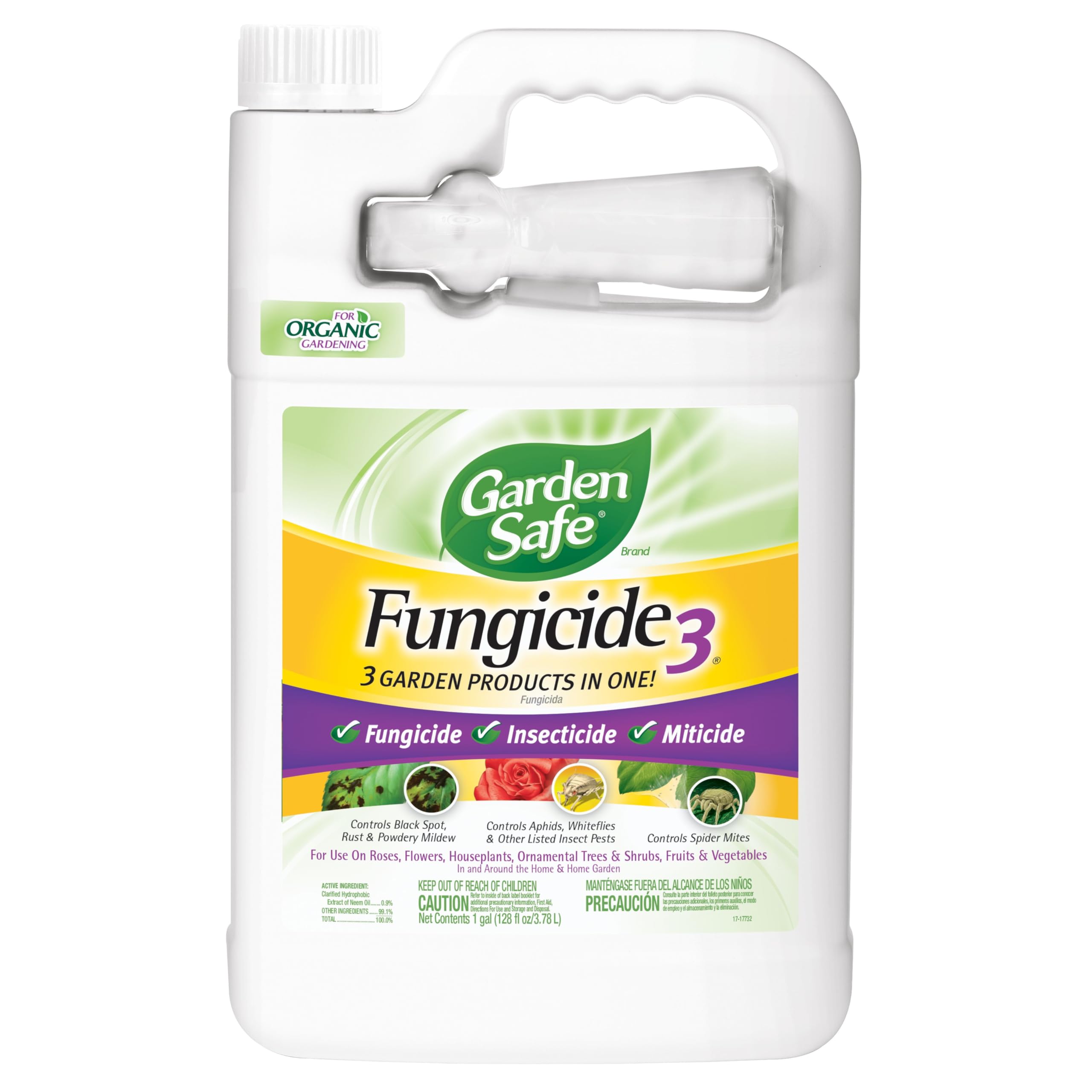
A 3-in-1 neem oil spray that tackles fungus, aphids (small sap-sucking insects), and spider mites (tiny leaf-eating pests) in one pass.
If your petunias have both powdery mildew AND aphids, this saves you from spraying twice. It is a fungicide, insecticide (kills insects), and miticide (kills mites) all in one ready-to-use gallon. The active ingredient is clarified hydrophobic extract of neem oil (a refined oil from the neem tree that smothers pests and fungus), which smothers fungal spores and soft-bodied insects on contact. It controls black spot, rust, and powdery mildew — the three most common petunia leaf diseases.
The reports from owners are consistently positive for prevention, but with a warning: some users found the recommended dose too strong and burned a few leaves. The advice from experienced users is to start with half the labeled dose, especially during hot daytime hours. The included sprayer is a weak point — one owner describes it as having only about “4 inches of coiled hose to reach out to your plant” — so consider transferring it to a better spray bottle. But for the volume and the three-in-one value, it is a top choice for mixed pest problems, complementing the Monterey Garden Phos which is better for root issues only.
Two birds, one jug: This is the only product on the list that also knocks down aphids and mites. If you have a multi-pest scenario, it saves time and shelf space.
Handle with care: Neem oil can burn foliage in direct sun or high heat. Spray in the evening and test a small area first.
Best for: the gardener fighting both fungus and insects on petunias. The 1-gallon jug covers a lot of ground for the price.
skip it if: you only need a fungicide and nothing else. You can save money with a simpler, single-purpose product.
7. Atticus Gunner 14.3 Fungicide (1 Gal)
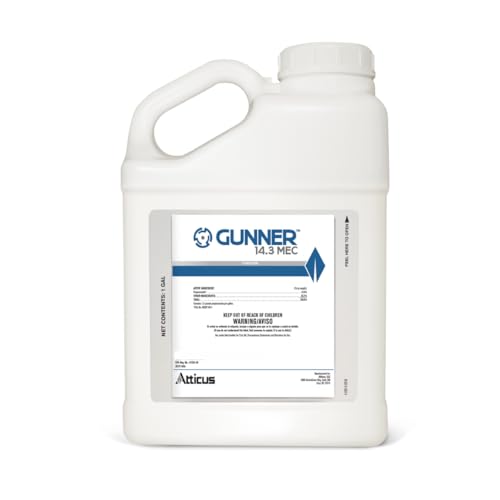
The same active ingredient pros use on golf courses — 14.3% propiconazole — in a gallon for your garden.
This one uses 14.3% propiconazole (a synthetic systemic chemical that moves through the plant) — the same active ingredient as Banner Maxx, which is the standard in turf and ornamental care. It controls over 20 fungal diseases, including brown patch, dollar spot, blights, powdery mildew, and rust. The microemulsion concentrate (MEC — a type of liquid with extra-fine particles that mix without clumps) means the particles are extremely small, so the liquid mixes easily and stays mixed without separating. Once it dries on the leaves, it resists washing off in rain, and the protection lasts up to 28 days.
For petunia owners who want professional-grade results, this is the powerhouse. A buyer using it for spot anthracnose on dogwood noted it worked “AFTER the disease has emerged” — meaning it has curative power, not just prevention. The honest caveat: at a full gallon, this is a large quantity for a home flower bed. You will use a fraction of it per season. But if you also treat a lawn, shrubs, or trees, the value kicks in. It is not for sale in Alaska, DC, Hawaii, Puerto Rico, or Vermont, so check your state before ordering. It offers longer-lasting control than the Fertilome’s ready-to-use spray, but requires mixing.
The pro-grade difference
- 28-day residual (stays active on the plant for 28 days) — fewer applications needed
- Rainfast (resists wash-off) once dry — no wash-off worry
- Microemulsion (extra-fine particles) won’t settle in the sprayer
Consider this
- Large 1-gallon size — more than a few pots need
- Not for Alaska, DC, Hawaii, Puerto Rico, or Vermont
Understanding the Specs
Active Ingredient Type
Contact vs Systemic Action
Contact fungicides (like copper and neem oil) sit on the leaf surface and kill only what they touch — you need full coverage and reapplication after rain. Systemic fungicides (like propiconazole and phosphonate) are absorbed into the plant’s sap flow (the fluid moving through stems and leaves), so even the parts of the leaf you missed get treated. For petunias, which grow dense and tangled, a systemic is often the better choice because the spray never reaches every hidden surface. Read the label to confirm which one you are buying: “systemic” or “protective” are the keywords to watch for.
FAQ
Can I use a lawn fungicide on my petunias?
How often should I spray petunias with fungicide?
What is the difference between a systemic and a contact fungicide?
Is neem oil safe for petunias?
Can I use copper fungicide on petunias?
How do I treat powdery mildew on petunias?
What causes petunia leaves to turn yellow and brown?
Can I mix fungicide with fertilizer?
Is it safe to use fungicide on petunias that are blooming?
How long after spraying fungicide can I water my petunias?
Final Thoughts: The Verdict
For most buyers, the fungicide for petunias winner is the Southern Ag Liquid Copper because its huge 1-gallon size and broad-spectrum copper formula cover an entire flower bed with one hose-end application — the crowd favorite at 4.6 stars across 400+ owners. If you want an organic, residue-free option for powdery mildew on blooming petunias, grab the Grower’s Ally Fungicide. And for advanced root rot or downy mildew that needs a systemic drench, the Monterey Garden Phos is the one to reach for.
How We Picked
We do not accept paid placement. Every pick is matched to a real buyer and a real use-case; we do not hands-on test units.
Sources & Methodology
Specifications: manufacturer listings and product documentation. Review insights: verified customer reviews, as of July 2026. Pricing: not shown on this page (it changes often); check the current price via the retailer link.
As an Amazon Associate, Lawn Gear Lab earns from qualifying purchases. This does not affect which products we feature.