
Specs are compiled from manufacturer listings and verified buyer reviews and can change over time — please confirm the key details on the product page before buying.
A money tree that looks sad, droopy, or spotted usually has a problem underground — or on its leaves — that a simple watering fix won’t solve. Fungal issues like root rot, leaf spot, and powdery mildew hit these braided-trunk plants hard because they sit in the same pot, often overwatered, for months. This guide covers the most effective treatments, from copper-based concentrates to biological fungicides, so you can match the right product to whatever your tree is fighting.
I’m Rikta — the founder and writer behind Lawn Gear Lab. This guide is built by comparing the manufacturers’ published specifications and the patterns across verified customer reviews, so you get each pick’s real strengths and trade-offs instead of marketing spin.
Whether you are battling yellowing leaves, fuzzy white patches on the soil, or dark spots spreading across the canopy, this look at the best fungicide for money tree care will help you protect your plant without guesswork.
Our Picks at a Glance


How To Choose The Best Fungicide For Money Tree
Money trees (Pachira aquatica) are tough houseplants, but their thick trunks and fleshy roots rot fast when the soil stays wet too long. A good fungicide for a money tree needs to do two jobs: stop an active infection from spreading and protect the root system from future problems. You want something safe enough for indoor use, easy to mix, and effective against both the fungal spores that land on leaves and the pathogens that attack roots in soggy soil.
Active ingredient matters more than the brand
Copper octanoate (copper soap) works as a contact fungicide that kills spores on leaf surfaces — it is great for spotting black spot, powdery mildew, or blight on the canopy. Neem oil is a 3-in-1 that also smothers insects and mites, making it the pick if you see bugs plus fungus. Biological fungicides — those containing Bacillus subtilis or Bacillus amyloliquefaciens — colonize the root zone and outcompete rot-causing pathogens before they take hold. For an indoor money tree, biological options are usually the safest choice because they leave no harsh residue and work as a soil drench.
Concentrate vs ready-to-use: the indoor trade-off
A concentrate bottle makes many gallons of spray — a 16 oz copper fungicide can treat dozens of plants over several seasons — but you must mix it yourself and store the unused concentrate safely. Ready-to-use spray bottles cost more per ounce but eliminate measuring, which matters if you only treat a single potted money tree. For most indoor houseplant owners, a concentrate that you dilute into a hand sprayer gives the best value and flexibility, especially if you also tend to other plants.
Safety for indoor use: people, pets, and the tree
Money trees live inside where you and your pets breathe the same air. Look for products labeled for organic gardening or OMRI listed — those typically use food-grade or natural active ingredients like citric acid, neem oil, or beneficial bacteria. Avoid synthetic systemic fungicides (those you apply to the soil that move into the plant tissue) unless you can move the tree outside for treatment. A foliar spray with a gentle active ingredient that you wipe off after 10-15 minutes is the safest approach for indoor treatment.
Quick Comparison
| Model | Best For | Active Ingredient | Form | Bottle Size | Amazon |
|---|---|---|---|---|---|
| Bonide Captain Jack Copper Fungicide★ Best Overall | Broad leaf disease control | Copper Octanoate | Concentrate | 16 oz | Amazon |
| Harris Neem OilBest Value | Pests + fungus combo | Neem Oil | Concentrate | 12 oz | Amazon |
| Ferti-lome Fungicide 5Grower’s Pick | Soil drench prevention | Bacillus subtilis | Concentrate | 16 oz | Amazon |
| Southern Ag Garden Friendly Bio | Root rot treatment | Bacillus amyloliquefaciens | Spray | 8 oz | Amazon |
| Organocide 3-in-1 | Ready-to-go indoor spray | Soybean & fish oils | RTU Spray | 24 oz | Amazon |
| Southern Ag Biological Fungicide 16oz | Hydroponic & drench use | Bacillus amyloliquefaciens | Spray | 16 oz | Amazon |
| Earth’s Ally Disease Control | Chemical-free leaf spot | Citric Acid | Concentrate | 32 oz | Amazon |
| Garden Safe Fungicide3 | All-in-one neem spray | Neem Oil Extract | RTU Spray | 128 oz | Amazon |
| Gardenera Money Tree Fertilizer | Nutrition + mild fungal support | 3-1-2 N-P-K | Concentrate | 8 oz | Amazon |
In‑Depth Reviews
1. Bonide Captain Jack Copper Fungicide 16 oz Concentrate
Our pick — over 4.5★ from 10,000+ verified ratings; the strongest balance of quality and price.
The copper concentrate that stops leaf spot before it turns the canopy yellow.
A money tree developing dark spots or a powdery white coating on its leaves needs a contact fungicide that kills spores on contact. Captain Jack’s Copper Fungicide uses copper octanoate (copper soap) — a broad-spectrum active ingredient that forms a protective barrier on the leaf surface. You mix it with water in a spray bottle, apply it thoroughly to both sides of the leaves, and it gets to work immediately on blight, black spot, and powdery mildew. Because it is approved for organic gardening and can be used up until the day of harvest, it is perfectly safe for an indoor money tree sitting on your desk or shelf.
The 1.3-pound bottle holds 16 fluid ounces of concentrate, and buyers report that it stretches far — “this concentrate is very economical,” as many owners put it. Effectiveness gets called out by hundreds of owners, and the product earns high marks for how quickly it shows results: a dose or two is often enough to turn around an infection. A few owners note that it controls powdery mold without fully eliminating it on certain plants, but for the typical money tree leaf issues — spotting, yellowing, mildew — it is a reliable first response.
Unlike neem oil, copper soap leaves minimal smell and does not coat leaves in a greasy film, so your money tree stays presentable indoors. Just remember that this is a protectant: it works best when you catch the problem early and apply before the infection spreads to the thick, woody trunk.
What wins owners over
- Effectiveness is the most-praised aspect — cited by a huge margin over any other feature
- Easy to mix, easy to apply with a standard spray bottle
- Works on many common fungal diseases, not just money tree issues
The one caution
- Controls but may not fully eliminate a heavy infection; reapplication sometimes needed
The go-to for leaf spots: if your money tree has visible leaf disease, this is the treatment to reach for — fast, economical, and proven across thousands of plants.
Who might skip: if you suspect root rot (soft trunk, yellowing despite dry soil), pair this with a soil-drench biological fungicide below for a two-prong attack.
2. Harris Concentrated Neem Oil 12 oz
Cold-pressed neem oil that smothers fungus and bugs in one application.
The 12-ounce bottle is a concentrate, so it makes many gallons of spray. Owners mention it works fast: “gets rid of gnats on houseplants,” as owners put it, and they note it works within about 4 days on mites. A few owners mention the smell — neem oil has a strong, earthy, garlic-like odor that lingers for a few hours after spraying. If you treat your money tree in a closed room, plan to ventilate or move the plant near an open window until the smell fades. The reward is a clean, pest-free tree without harsh residues.
Compared to the copper-based Captain Jack, this pick is better when you are chasing a dual problem. But if your money tree shows only leaf spots with no sign of bugs, the copper concentrate is the more targeted choice.
What owners love
- Three functions in one bottle — kills fungus, insects, and mites
- Cold-pressed cosmetic grade means high quality for both plants and skin use
- Works quickly on gnats and spider mites
The honest trade-off
- The smell is strong and earthy; ventilate your space after spraying
Best for mixed issues: reach for this when your money tree has both fungal leaf problems and visible pests — one spray treats both.
Skip if: you are sensitive to strong smells or only need a pure fungicide; the copper concentrate is odorless.
3. Fertilome Fungicide 5 Concentrate 16 oz
A biological drench that protects roots from rot without a single harsh chemical.
Money trees are notorious for developing root rot when the soil stays damp — the trunk gets soft near the base, leaves yellow, and the plant declines fast. Fertilome Fungicide 5 uses Bacillus subtilis, a beneficial bacterium that colonizes the root zone and outcompetes fungal pathogens before they can cause damage. OMRI listed for organic gardening, this concentrate is meant to be mixed and poured directly into the soil around the roots, so it works as a preventative and a slow-acting treatment. Instead of spraying leaves, you apply it to the soil, letting the bacteria do the work from below.
At 16 ounces, the bottle makes roughly 40 gallons of treatment when mixed at the standard 1 tablespoon per gallon of water. Customers note it works well on roses and boxwoods, and they note it handles black spot on fruit trees even in 94°F heat. For a money tree that is chronically overwatered or sitting in heavy soil, this biological approach is gentler than a copper or neem drench because it does not stress the roots. The trade-off is that it works more slowly than a contact spray — you are feeding a protective bacterial population, not instantly killing spores.
Use this as a regular soil drench every 2-4 weeks, especially after repotting or if your money tree sits in a cache pot without drainage holes. Pair it with better watering habits for the strongest protection.
What makes it stand out
- Safe for indoor use with no harsh residue or strong smell
- OMRI listed — suitable for organic gardening
- Highly concentrated: about 40 gallons of treatment per bottle
Know before you buy
For root rot prevention: apply this as a soil drench every few weeks if your money tree sits in dense soil or you tend to water heavily.
Not a rescue spray: if your tree already has advanced trunk rot, combine this with a copper foliar spray and consider repotting in fresh soil.
4. Southern Ag Garden Friendly Bio Fungicide 8 oz

A potent little bottle of Bacillus that punches well above its size.
A few owners note that it did not cure existing powdery mildew on squash, but that is not its job — this is a root-zone and preventative tool, not a foliar contact killer. For a money tree, use it as a soil drench every 2 weeks during the growing season. The water will look slightly cloudy after mixing (that is the bacterial suspension), but the smell does not linger. If you catch yellow leaves early and pair this with better drainage, it often turns the plant around within a couple of weeks.
Why owners grab it
- Extremely concentrated — a tiny dose treats gallons of water
- Cheaper and more potent than popular hydroponic alternatives
- Safe for indoor use, no chemical residue
The catch
- Small bottle size surprises some owners expecting a larger volume
For root-zone care: this is the right pick if you want a biological soil drench for a single plant and do not want to store a big bottle.
Skip if: you need a foliar spray for leaf spots — choose the copper concentrate or Organocide instead.
5. Organocide 3-in-1 RTU Garden Spray 24 oz

A blend of soybean, sesame, and fish oils that goes straight from bottle to leaf.
No mixing, no measuring, no hazmat gloves — Organocide 3-in-1 comes ready to use, which matters when you notice a problem on your money tree at 9 pm and want to act immediately. The active blend of soybean extract, sesame oil, and fish oil works as an insecticide, miticide, and fungicide. It smothers fungal spores on leaves while also killing aphids, mites, and soft scales. Because it is OMRI listed for organic production, you can spray it indoors without worrying about your cat brushing against the leaves later.
Reviewers point out it is effective against aphids on rose bushes and fruit flies in soil, and they describe it as bee-friendly when used as directed. The main complaint is the smell — the fish oil base gives it a strong scent that sticks around for a while after spraying. Some owners also warn that the “ready to use” label might still need dilution for certain sensitive plants, so test on one leaf first. For a money tree with a mild powdery mildew outbreak or a few aphids, this is the grab-and-go solution that keeps things simple.
What owners like
- No mixing needed — spray straight from the bottle
- Effective on both fungal disease and soft-bodied insects
- Safe for bees and pets when used as directed
The trade-off
- The fish-oil-based smell is strong and lingers; ventilate after spraying
Grabbed when spot treating: if you see one branch with mildew or a few aphids, grab this bottle for a fast fix — no setup required.
Not for deep infections: a serious root rot or widespread leaf disease needs a concentrate drench or copper treatment.
6. Southern Ag Garden Friendly Biological Fungicide 16 oz

The big-bottle biological that saved water propagations from rotting.
Where the 8-ounce Southern Ag bio fungicide is perfect for a single plant, this 16-ounce version gives you more volume at a better per-ounce value. It uses the same Bacillus amyloliquefaciens strain D747 — a bacterial concentrate that you apply as a soil drench or add to a water reservoir. Owners describe it as “thousands of times more potent than Hydroguard,” and they use it in both soil pots and recirculating deep water culture systems. For a money tree that sits in a self-watering pot or a cache container, a splash of this in the water keeps the root zone populated with beneficial bacteria that crowd out rot pathogens.
The customer reports highlight its ability to revive wilting plants overnight — a soil drench of 1 teaspoon per gallon turned around a hardy hibiscus with dieback, and other owners say it saved water propagations that had started to rot. The one gap is that the reviews are split on how many applications it takes: some see results fast, while others note it needs multiple doses over 7-14 days. For a money tree, use it preventatively once a month or start a treatment schedule as soon as you see the first yellow leaf.
What owners praise most
- Effectiveness on root rot and hydroponic issues gets the most mentions
- Very concentrated — a little goes a long way
- Works as a soil drench that colonizes roots against pathogenic fungus
The honest note
- Duration of effect is mixed; some owners found it requires repeat applications
For grown collections: if you have multiple houseplants or a hydroponic setup, this larger bio bottle gives you more treatments per dollar.
Better for prevention: it works on existing rot, but the best results come from regular use before the trunk gets mushy.
7. Earth’s Ally Disease Control Fungicide Concentrate 32 oz
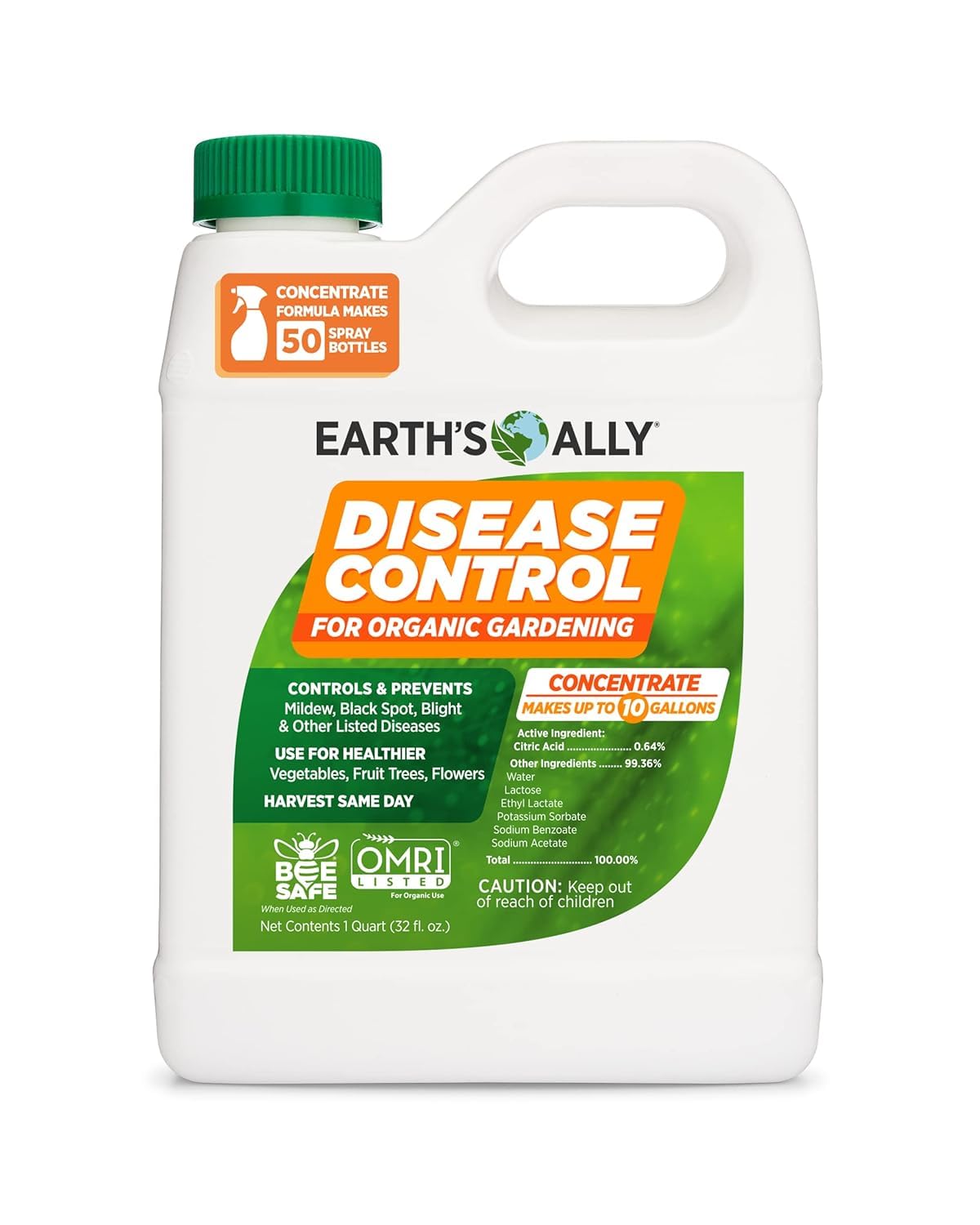
Citric acid spray that tackles mildew without toxic residue.
If you want a fungicide that is literally food-grade — citric acid is what gives citrus its sour punch — this is the one. Earth’s Ally Disease Control concentrate uses citric acid as its active ingredient to treat powdery mildew, downy mildew, blight, canker, black spot, and leaf spot. It is OMRI listed for organic gardening and leaves no harmful residues, so you can spray your money tree in the living room without worrying about pets or kids touching the leaves. The 32-ounce bottle makes a full 10 gallons of ready-to-use product — mix 6 tablespoons per gallon of water and spray.
Shoppers say seeing results after the first application, with noticeable improvement on mango trees, roses, and grapevines hit by black rot. The “no harsh chemicals” aspect gets called out repeatedly, and people appreciate that it works despite being one of the gentlest formulas on the list. The trade-off is that citric acid works as a contact fungicide — it needs thorough coverage and repeated application every 7-10 days during active infections. For a money tree, this is a great option if you want to avoid oils and biologicals altogether, but be prepared to spray consistently.
The standout feature
- Active ingredient is citric acid — safe enough for organic food crops
- Concentrated formula makes 10 gallons of spray per bottle
- Works fast on powdery mildew and black spot
What to plan for
- Needs consistent reapplication during active outbreaks; not a one-shot treatment
For the safety-conscious: if you want the gentlest active ingredient possible, this citric-acid-based concentrate is as clean as it gets.
Skip if: you want a one-and-done treatment; this works best as part of a regular spray schedule.
8. Garden Safe Fungicide3 with Neem Oil 1 Gal
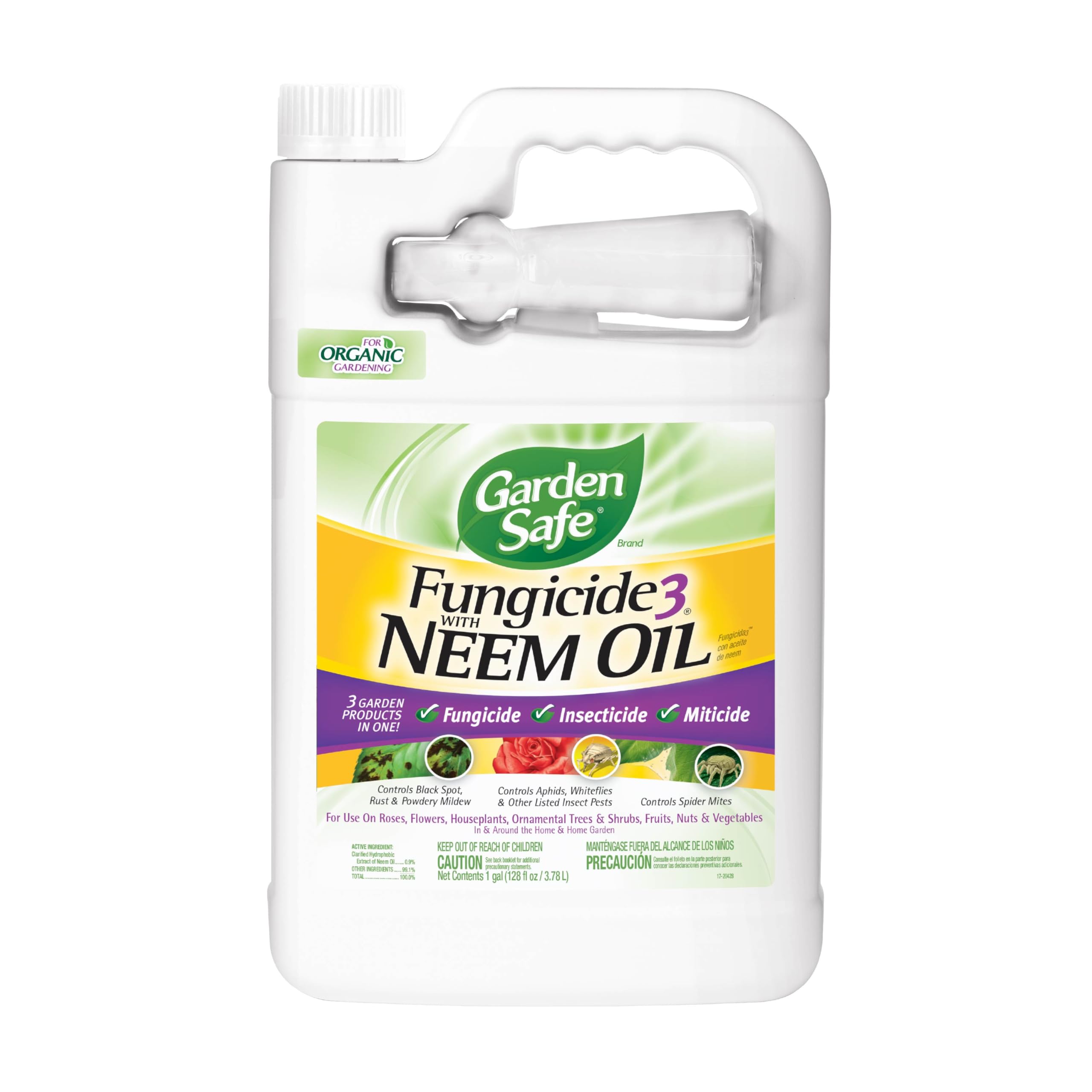
A full gallon of neem-based spray that covers a money tree for the whole season.
If you want a fungicide, insecticide, and miticide all in one ready-to-use gallon with neem oil as the active ingredient, this is the volume buy that saves you from mixing bottles all summer. Garden Safe Fungicide3 uses clarified hydrophobic extract of neem oil to control black spot, rust, powdery mildew, aphids, whiteflies, and spider mites. It comes pre-mixed, so you grab it and spray — no measuring, no dilution math. For a money tree that lives inside, the 1-gallon bottle is huge (128 fluid ounces), but you can treat the tree for years and still have product left for outdoor pots.
Owners have used it for years on roses, vincas, and vegetable gardens, and they consistently say “it works.” One owner in Central Florida noted that weekly applications were needed for powdery mold and spider mites, which is standard for neem oil — it is a protectant and smotherer, not a systemic cure. The big bottle means you can overspray without guilt, coating every leaf surface your money tree has. Just be aware that the smell of neem oil is present, though less concentrated than the raw Harris version above.
Why owners stick with it
- Safe for people and pets — no harsh chemical residues
- Controls fungus, insects, and mites with one spray
- Ready to use, no mixing required
Plan for this
- Neem oil requires weekly reapplication during active outbreaks
- 1-gallon bottle is large for a single plant; share with other houseplants
For the large collection: if you tend to several indoor plants or keep outdoor containers too, this gallon jug keeps you spraying without restocking.
Not for the minimalist: a single money tree in a small apartment might be better served by the smaller Organocide or a concentrate you mix per-need.
9. Gardenera Premium Liquid Money Tree Plant Fertilizer 8 oz
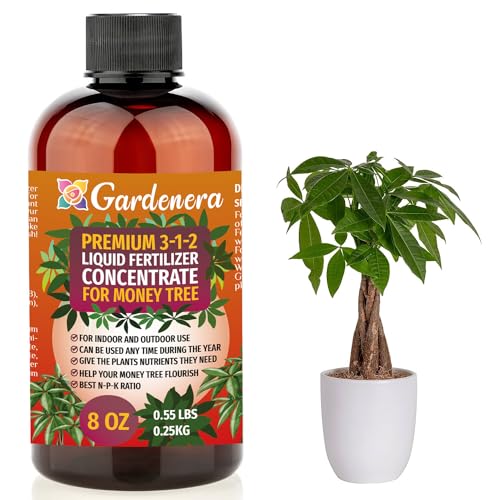
A money-tree-specific nutrient boost that helps a stressed plant fight back.
Buyers report improved money tree health over about one month, though they note periodic yellow leaf drop still happens — that is normal for a money tree adjusting to a new environment. The powder-like or liquid concentrate format is easy to store, and the 8-ounce bottle weighs just 8 ounces, making it a light addition to your plant-care shelf. Use this alongside a biological fungicide like Fertilome or Southern Ag if your tree is recovering from root rot, because the fungus can take hold again if the roots are weak and underfed.
What it does well
- Formulated specifically for money trees with the right N-P-K ratio (3-1-2)
- 100% organic, no chemical additives
- Strengthens roots and leaves, making the plant naturally more disease-resistant
The honest limit
Understanding the Specs
Copper Octanoate (Copper Soap)
Biological Fungicides (Bacillus subtilis / Bacillus amyloliquefaciens)
These are living beneficial bacteria that you apply to the soil or to the plant’s root zone. They work by physically crowding out pathogenic fungi and by producing natural compounds that suppress disease organisms. For a money tree, a biological fungicide is the gentlest option — it leaves no chemical residue, is safe for pets and kids, and actually improves root health over time as the bacteria colonize the potting mix. The downside is that it works more slowly than a copper spray because it relies on the bacteria population to build up. You typically apply it as a soil drench every 1-4 weeks. It is excellent for preventing root rot in a tree that tends to stay damp.
FAQ
Can I use copper fungicide on my indoor money tree?
How often should I treat my money tree with fungicide?
What is the difference between a biological fungicide and a copper fungicide?
Will neem oil hurt my money tree?
Can I use the same fungicide for both leaves and soil?
How do I know if my money tree has a fungal infection?
Should I move my money tree outside to treat it?
Can I mix fertilizer and fungicide together?
How long does a bottle of concentrate last for a single money tree?
Will these products kill fungus gnats in the soil?
Final Thoughts: The Verdict
For most owners, the fungicide for money tree winner is the Bonide Captain Jack Copper Fungicide because it is the most effective first-line spray against the leaf spots and powdery mildew money trees commonly face, and its concentrated 16-ounce bottle treats many plants over several seasons. If your money tree also has pests like fungus gnats or spider mites, grab the Harris Neem Oil — it handles fungus and bugs in one spray. And for root rot prevention, the Fertilome Fungicide 5 biological drench is the right pick to keep the root zone healthy without any harsh chemicals.
How We Picked
We do not accept paid placement. Every pick is matched to a real buyer and a real use-case; we do not hands-on test units.
Sources & Methodology
Specifications: manufacturer listings and product documentation. Review insights: verified customer reviews, as of July 2026. Pricing: not shown on this page (it changes often); check the current price via the retailer link.
As an Amazon Associate, Lawn Gear Lab earns from qualifying purchases. This does not affect which products we feature.