
Specs are compiled from manufacturer listings and verified buyer reviews and can change over time — please confirm the key details on the product page before buying.
You spot small orange or yellow pustules on the underside of your mint leaves — that is mint rust. Catch it early, and the right fungicide for mint rust can stop it before it spreads through your entire bed. The key is picking something labeled for rust and safe for edible herbs, because you want to eat that mint, not poison it.
I’m Rikta — the founder and writer behind Lawn Gear Lab. This guide is built by comparing the manufacturers’ published specifications and the patterns across verified customer reviews, so you get each pick’s real strengths and trade-offs instead of marketing spin.
Below, I break down three fungicides for herbs: two that explicitly list rust on the label, and a broad-spectrum powder that covers many fungal diseases.
Our Picks at a Glance
How To Choose The Best Fungicide For Mint Rust
Choosing a fungicide for edible mint depends on three factors: the active ingredient, whether it lists rust on the label, and the safety interval before harvest. Here is exactly what to check before you buy.
Match the Active Ingredient to Your Tolerance for Risk
Neem oil is the gentlest option and doubles as an insecticide (a substance that kills insects), but it needs thorough coverage and reapplication every 7–14 days. Copper soap is faster-acting but can burn tender new growth if you overapply. Captan is a stronger synthetic (a man-made chemical) that works great on fruit trees but may be overkill — or unavailable — for a small mint patch.
Check That Rust Is on the Label
Not every “fungicide for herbs” actually lists rust as a controlled disease. The first two picks below do — look for the words “Rust,” “Rusts,” or “Leaf Rust” in the product description or label. The third is a broad-spectrum powder, so always check its specific label before using on mint rust.
Consider the Reapplication Schedule
Mint grows fast, and rust spores spread fast. A product you can reapply every 7–10 days without worrying about leaf burn or a long pre-harvest waiting period will give you the most flexibility during a hot, humid season.
Quick Comparison
In‑Depth Reviews
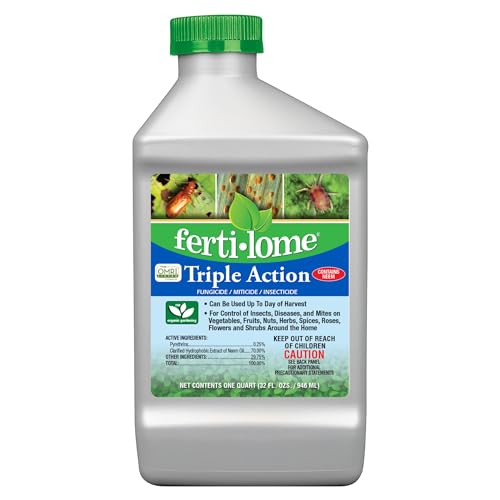
1. Fertilome (12246) Triple Action Insecticide Miticide Fungicide, 32 oz
Our pick — over 4.5★ from 800+ verified ratings; the strongest balance of quality and price.
The three-in-one spray that fights rust, aphids, and spider mites without a second bottle.
You get one bottle that handles rust, leaf spot, and powdery mildew while also controlling aphids and spider mites (tiny plant pests) — all in one concentrate (a liquid you mix with water). The 32 oz bottle (weighing 2 lb in total) is the largest volume here, at 32 fluid ounces versus the Neudorff copper soap’s 16 fluid ounces, so a single bottle stretches further across a whole herb bed. The active ingredient is neem oil, a plant-based oil that is about as gentle as it gets for edible plants.
Buyers report that “it seems to be doing a good job so far” on diseased tomato plants. The general consensus is that effectiveness is its standout trait — the aspect owners mention most is effectiveness, and it leans positive across the board. One long-time user swears it saved crepe myrtles from an aphid invasion. The trade-off is that some find it expensive relative to simpler fungicides, so if your only problem is rust and you have no insect pressure, you may be paying for extra functions you do not need.
The label recommends reapplying every 7–14 days. That is the same schedule you would follow for mint rust during a wet spell. Just be thorough — neem oil works best when every leaf surface is coated, including the rusty undersides.
What Owners Celebrate
- Triple action saves a separate insecticide spray for aphids and mites.
- Largest 32 oz volume at 2 lb total gives the most spray per purchase.
- Effectiveness is the top praise among owners.
The Fair Warning
- Mixed feedback on value — it costs more than single-purpose fungicides.
- Neem oil needs thorough coverage and may require a second pass.
Reach for it if: you want one bottle that covers rust, leaf spot, aphids, and spider mites in your herb garden.
Look elsewhere if: you only need a rust fungicide and your mint has zero pest problems.
2. Neudorff Plant Fungicide Spray Copper Soap Fungicide for Vegetables 16 OZ
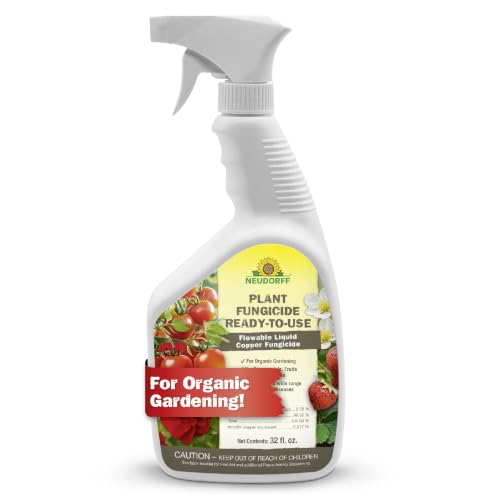
A ready-to-use copper spray that owners mention works almost immediately on stubborn fungus.
This copper soap fungicide lists rusts, black spot, downy mildew, and late blight right on the label. It is approved for use up to the day of harvest on vegetables and herbs. The bottle is 16 fluid ounces; the Fertilome above holds 32 fluid ounces —and it is a ready-to-use spray (a premixed liquid you spray directly from the bottle), so you do not mix anything. Customers note a standout result: it “worked great to eliminate a fungus that almost killed our decades old gardenia.” The same owner noted the plant “finally getting its green back and has even flowered,” which gives a strong signal on speed.
The catch is that a few owners experienced leaf burn when using it on sensitive plants like hostas. Copper soap is a contact fungicide (it kills fungus on contact but does not spread through the plant) and can damage tender foliage if applied in hot sun or at too high a concentration (though this is pre-mixed, so the risk is lower). For mint, that means spray in the evening or early morning to avoid burning the leaves, especially on new growth. The spray performance is the second-most praised aspect, and the consensus is that a little goes a long way.
Best use case: when rust has already appeared and you need a fast, no-mix solution you can use right up to harvest. Who should be cautious: anyone growing delicate herbs where copper burn is a real risk — apply with care on young mint shoots.
Grab this if: you want a ready-to-use spray that acts quickly on rust and black spot without measuring or mixing.
skip it if: you have sensitive herbs or tend to spray under full sun — copper can burn leaves.
3. Southern Ag – 01600 – Captan Fungicide – 8oz, White Bottle

A powder concentrate with proven results on fruit rot and leaf mold, now hard to find.
Captan (a broad-spectrum synthetic fungicide) controls botrytis rot. This 8 oz powder (at 8 ounces versus the Neudorff spray’s 16 ounces) is a concentrate you mix into water, so the small package goes a long way. Reviewers point out that “this product kept away most of the peach mummy brown rot that I experienced last year.” One happy owner with a tart cherry tree said it does “a terrific job helping us control the fungus.” Effectiveness is the most-discussed aspect, and value for money is the second most-praised feature, which tells you owners feel the price is right for what you get.
The downside is availability — several reviews mention “I wish it was still available” and note it may not be in production much longer. If you can find it, captan is a strong option for mint rust. But because it is a synthetic, you must follow the pre-harvest interval (the required waiting time between the last spray and picking the leaves) carefully for edible herbs. This is also a powder, so you need a sprayer and some willingness to mix, which is less convenient than the ready-to-use copper above.
Why Owners Choose It
- Effectiveness is the top praise, backed by real results on peach rot and cherry leaf mold.
- Value for money scores well — owners say you get your money’s worth.
- Lightweight 8 oz powder concentrate covers a lot of garden area per ounce.
The Real Limitation
- May be discontinued soon — multiple reviews mention scarcity.
- Requires mixing and a sprayer, not as instant as a ready-to-use bottle.
Choose this for: a powerful synthetic that works on tough rust and rot in fruit trees or large herb plots where you already have a sprayer. Think twice if: you want a simple ready-to-mist bottle and you are worried about the product being phased out.
Understanding the Specs
Neem Oil vs. Copper Soap vs. Captan
Neem oil is a gentle, plant-based fungicide that also kills insects, making it ideal for mint that faces both rust and aphids. Copper soap is a faster-acting contact fungicide that stops rust on contact, but it can burn tender leaves if applied in direct sunlight. Captan is a synthetic broad-spectrum powder that controls many fungal diseases but has a stricter pre-harvest interval for edible herbs.
Liquid Volume and Item Weight
These two specs tell you how much spray you get and how heavy the bottle is to store or carry. A 32 oz bottle (2 lb total weight) like the Fertilome gives you more concentrate — at 2 lb versus the 8-ounce powder. A ready-to-use 16 oz spray is lighter but runs out faster. Match the size to how much mint you are treating.
FAQ
Is neem oil safe to use on mint right before harvesting?
Can I use a copper soap fungicide on mint in direct sunlight?
How often should I reapply a fungicide for mint rust?
Will a fungicide labeled for vegetables work on mint?
Is Captan safe for edible herbs like mint?
Can I mix a fungicide with an insecticide to treat mint rust and aphids together?
Does the 8 oz powder of Southern Ag Captan need any special mixing equipment?
Will these fungicides prevent mint rust from coming back?
Final Thoughts: The Verdict
For most people, the fungicide for mint rust winner is the Fertilome Triple Action because a single 32 oz bottle of neem oil concentrate handles rust, leaf spot, and common mint pests without harsh synthetic chemicals. If you need a fast-acting, ready-to-use option that works right up to harvest, grab the Neudorff Copper Soap. And for a strong synthetic control where you already have a sprayer, the Southern Ag Captan is an effective choice — but act fast, because availability is shrinking.
How We Picked
We do not accept paid placement. Every pick is matched to a real buyer and a real use-case; we do not hands-on test units.
Sources & Methodology
Specifications: manufacturer listings and product documentation. Review insights: verified customer reviews, as of July 2026. Pricing: not shown on this page (it changes often); check the current price via the retailer link.
As an Amazon Associate, Lawn Gear Lab earns from qualifying purchases. This does not affect which products we feature.