
Specs are compiled from manufacturer listings and verified buyer reviews and can change over time — please confirm the key details on the product page before buying.
If your crepe myrtle leaves are covered in a white, dusty film or you’re fighting curled, blackened foliage, you are not alone — powdery mildew is the most common fungal issue for this tree. The real trick is matching the right fungicide to your tree’s condition, because a topical spray works differently than a systemic treatment that moves inside the plant. This guide focuses on which fungicide is suited to the infection and helps protect your crepe myrtle through the season.
I’m Rikta — the founder and writer behind Lawn Gear Lab. This guide is built by comparing the manufacturers’ published specifications and the patterns across verified customer reviews, so you get each pick’s real strengths and trade-offs instead of marketing spin.
Below, you will find seven of the most effective options for a fungicide for crepe myrtle infection, ranging from gentle biofungicides for organic growers to professional-grade concentrates for heavy, recurring disease.
Quick Picks
- Bonide Infuse Lawn & Landscape Systemic Disease Control — Best Overall
- Dow AgroSciences Eagle 20EW Fungicide — Top Performer
- Quali-Pro Propiconazole 14.3 Fungicide — Best Value
- Garden Safe Fungicide3 — 3‑in‑1 Pick
- Bonide Revitalize Biofungicide — Bio-Active Pick
- Earth’s Ally Disease Control Concentrate — Budget Champion
- Monterey Liqui-Cop Copper Fungicide — Copper Specialist
How To Choose The Best Fungicide For Crepe Myrtle
Crepe myrtles are prone to powdery mildew, especially in humid climates with poor air circulation. Picking the wrong fungicide can leave the disease untouched while wasting your time and money. Here are the three factors that matter most.
Contact vs. Systemic Action
A contact fungicide (like a copper spray) sits on the leaf surface, but it washes off in rain and only protects the areas you spray directly. A systemic fungicide (like the active ingredient in a granular formula or certain concentrates) gets absorbed into the tree’s tissues and moves inside, protecting new growth from the inside out. For a tall crepe myrtle, a systemic product saves you from needing to spray every single leaf perfectly.
Active Ingredient
Common active ingredients include neem oil (a gentle, organic option good for mild issues), copper (a preventative contact spray), and synthetic fungicides like propiconazole or myclobutanil (stronger, longer-lasting, but require care around pollinators). A biofungicide uses beneficial bacteria to trigger the tree’s immune response. Knowing the ingredient tells you how fast it will work and how long the protection lasts.
Ease of Application
Liquid concentrates need to be mixed with water and sprayed onto the leaves, which works well for small trees. Ready-to-use spray bottles are convenient for quick spot treatments. Granules are sprinkled around the root zone and watered in — they provide systemic control for large lawns and landscapes without needing a sprayer at all.
Quick Comparison
On smaller screens, swipe sideways to see the full table.
| Model | Best For | Active Ingredient | Type | Size | Amazon |
|---|---|---|---|---|---|
| Bonide Infuse Granules | Systemic Prevention | Propiconazole | Granules | 7.5 lbs | Amazon |
| Dow Eagle 20EW | Heavy Disease | Myclobutanil | Liquid | 16 oz | Amazon |
| Quali-Pro Propiconazole | Broad-Spectrum Control | Propiconazole 14.3 | Liquid | 32 oz | Amazon |
| Garden Safe Fungicide3 | 3-in-1 Pest Control | Neem Oil | Ready-to-Spray | 1 Gallon | Amazon |
| Bonide Revitalize | Organic Biofungicide | Bacillus | Liquid | 16 oz | Amazon |
| Earth’s Ally Concentrate | Gentle Organic Spray | Citric Acid | Liquid | 32 oz | Amazon |
| Monterey Liqui-Cop | Copper Preventative | Copper | Liquid | 8 oz | Amazon |
In‑Depth Reviews
1. Bonide Infuse Lawn & Landscape Systemic Disease Control

The low-maintenance granule that feeds protection up through the roots.
You do not need to drag a sprayer around your yard with this one. These ready-to-use granules are sprinkled around the base of your crepe myrtle and then watered in — the active ingredient gets absorbed by the roots and moves systemically throughout the tree. It prevents and stops a long list of diseases including powdery mildew, rust, leaf spot, and brown patch. At 7.5 pounds, a single container covers up to 5,000 square feet, which is a massive amount of landscape protection per bag.
Buyers report that this granule is the most effective systemic fungicide they have found, with one owner noting it saved roughly in plant replacements and that their camellias recovered fully in three months after application. Unlike a spray, you do not have to coat every leaf — the tree does the work for you. The trade-off is that it takes about a week to see results because the product has to travel through the root system first, and it will not cure an active, severe infection overnight.
Best systemic blanket: You apply it once and it protects your crepe myrtles for 2–3 months per application, making it ideal if you have a large landscape with many trees and want a low-effort prevention plan.
Not for quick rescue: If your crepe myrtle is already covered in mildew and you need to stop the spread today, you will want a fast-acting liquid spray instead of this slow-release granular.
Reach for this if: You want to treat the entire yard, including your crepe myrtles and lawn, with one easy sprinkle-and-water product that lasts two to three months.
Look elsewhere if: You need immediate visible results on a tree that is already heavily infected — a liquid systemic spray works faster.
2. Dow AgroSciences Eagle 20EW Fungicide

The heavy hitter for when powdery mildew refuses to quit.
This is a systemic fungicide, meaning it gets absorbed into the tree and protects new growth from the inside out — it is well tolerated by popular ornamental species like crepe myrtle. Eagle 20EW controls more than 15 different fungal diseases including powdery mildew, rust, and leaf spot. The 16-ounce bottle is a concentrate, so a little goes a long way, but it is a professional-grade product that requires careful mixing and handling.
Owners mention it is very effective against powdery mildew and that it saved plantings after copper fungicides failed. One reviewer noted that the mixing ratios can be complex (ounces per acre per 100 gallons) and that it requires the use of personal protective equipment (PPE). Unlike the Bonide Infuse granules which you simply sprinkle, this product demands precision and safety gear, but it delivers a faster, more aggressive knockdown on diseases that weaker sprays cannot touch.
Fast systemic rescue: Your top choice if you are dealing with a stubborn, recurring mildew outbreak that has not responded to gentler treatments — it works fast and stays in the tree.
Requires caution: Not for a casual weekend gardener; you need to read the label carefully, measure accurately, and wear gloves and a mask during application.
Best for: Gardeners who have tried copper sprays and organic options without success and need a strong systemic fungicide to save a valued tree.
skip it if: You prefer a ready-to-use, no-mix option or you are uncomfortable handling concentrated agricultural chemicals.
3. Quali-Pro Propiconazole 14.3 Fungicide

A professional-grade concentrate that gives you more product for less money.
While the Eagle 20EW gives you 16 ounces, this bottle holds 32 ounces of propiconazole 14.3, a locally systemic fungicide that works from the inside of the plant against disease. It targets a broad spectrum of problems including powdery mildew, rust, leaf spot, and brown patch — all common on crepe myrtles. The microemulsion formulation means you get less odor and better coverage on the leaves compared to older formulas.
Customers note that it fixed a large brown patch issue on a one-third acre lawn in just two applications, with new growth visible in one week and significant recovery in one month. One buyer mentioned it effectively eliminated orange rust on wild blackberries with three sprays and no recurrence all summer. The catch is that this is a serious chemical — you need a reliable sprayer and full personal protective equipment (bunny suit, respirator, goggles, gloves) when handling it, and you should avoid applying it in extreme heat.
Largest volume for the money: If you have many trees or a large area to cover, this 32-ounce bottle beats the 16-ounce alternative on price-per-ounce while delivering the same strong systemic control.
Not for quick, casual use: You need to mix it accurately, wear safety gear, and use a proper sprayer — this is not a grab-and-go bottle.
Ideal for: The serious home gardener who wants a large supply of a powerful, broad-spectrum fungicide ready for multiple seasons of treatment.
Not a fit for: Someone who wants a simple ready-to-spray bottle or is looking for an organic, OMRI-listed option.
4. Garden Safe Fungicide3
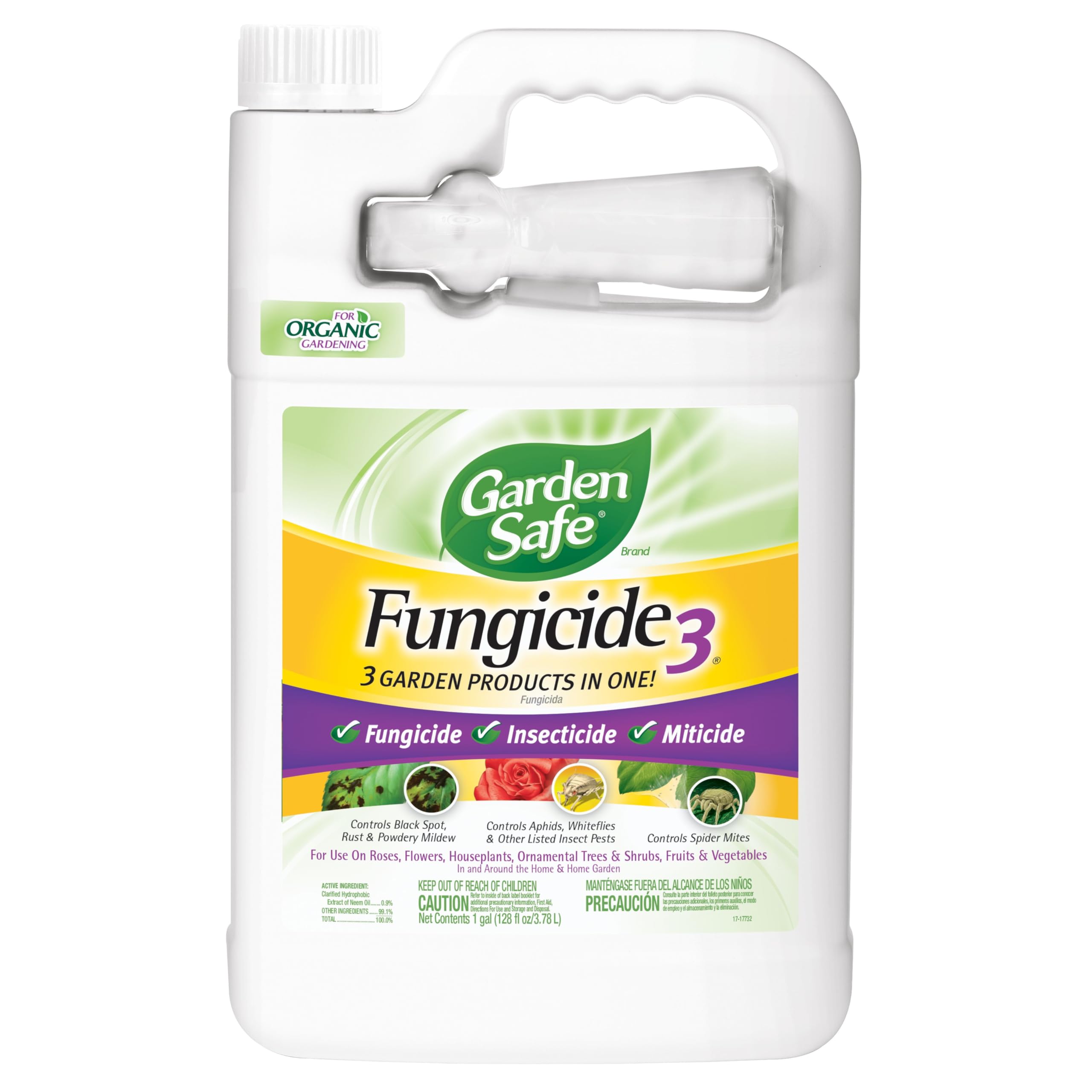
One sprayer does triple duty: kills bugs, stops fungus, and smothers mites.
This ready-to-use 1-gallon jug does three jobs in one: it is a fungicide, an insecticide, and a miticide. The active ingredient is clarified hydrophobic extract of neem oil (a refined oil from the neem tree), so it is approved for organic gardening and can be used on crepe myrtles right up until harvest — even though you are not eating the tree, it is still a gentler product near your garden. As a fungicide, it controls black spot, rust, and powdery mildew; as an insecticide, it also controls aphids, whiteflies, and spider mites.
Reviewers point out that repeated use helped with mildew and improved foliage, blossoms, and fruit yield. One owner warns that the built-in sprayer has a very short hose (about four inches), making it awkward to reach the top of a tall crepe myrtle — they recommend using your own sprayer instead. Compared to the concentrated options like the Quali-Pro or Eagle 20EW, this is a milder contact treatment, so you need to spray the entire leaf surface and repeat as needed.
Triple-action convenience: Ideal if your crepe myrtle also has aphids or spider mites — one spray handles both the insects and the mildew in a single pass.
Mild and frequent: Because neem oil is a contact product, you must spray every leaf thoroughly and reapply weekly, especially after rain.
Choose this for: Organic gardeners who want one product that tackles fungus and pests together, and who prefer a ready-to-use spray over mixing concentrates.
Look elsewhere if: You want a one-and-done systemic treatment that lasts for weeks — this neem oil spray requires consistent weekly effort.
5. Bonide Revitalize Biofungicide

A living biofungicide that makes your tree fight off disease on its own.
Instead of killing the fungus directly with a chemical, this product uses a beneficial bacteria called Bacillus (a natural microbe) to trigger the crepe myrtle’s own immune response — it is approved for organic gardening and can be used up until the day of harvest. You apply it as a foliar spray (spraying the leaves) or a soil drench (pouring at the roots), so you can treat soil-borne issues at the roots or spray the leaves for powdery mildew and black spot. A 16-ounce concentrate makes enough for several treatments.
Shoppers say that after using this as a soil drench for about a month, their trees started showing signs of rebounding with new leaves and no more black leaves. One owner said it turned their issue with septoria leaf spot on tomatoes. The important difference from the Garden Safe Fungicide3 is that this biofungicide works from the inside once the plant absorbs it, but it is a slower, more gentle approach compared to the synthetic systemics like propiconazole or myclobutanil.
Organic immune booster: Perfect if you want to avoid synthetic chemicals entirely and prefer a biological approach that works with the tree rather than against the fungus.
Patience required: You will not see results overnight — expect several treatments over a period of weeks before the tree fully rebounds.
Best for: Organic gardeners who have time to wait and want a gentle, soil-friendly product that can be used on edible plants and ornamentals alike.
Not for: Anyone who needs immediate, visible control of a severe powdery mildew outbreak — the synthetic systemic options work much faster.
6. Earth’s Ally Disease Control Concentrate
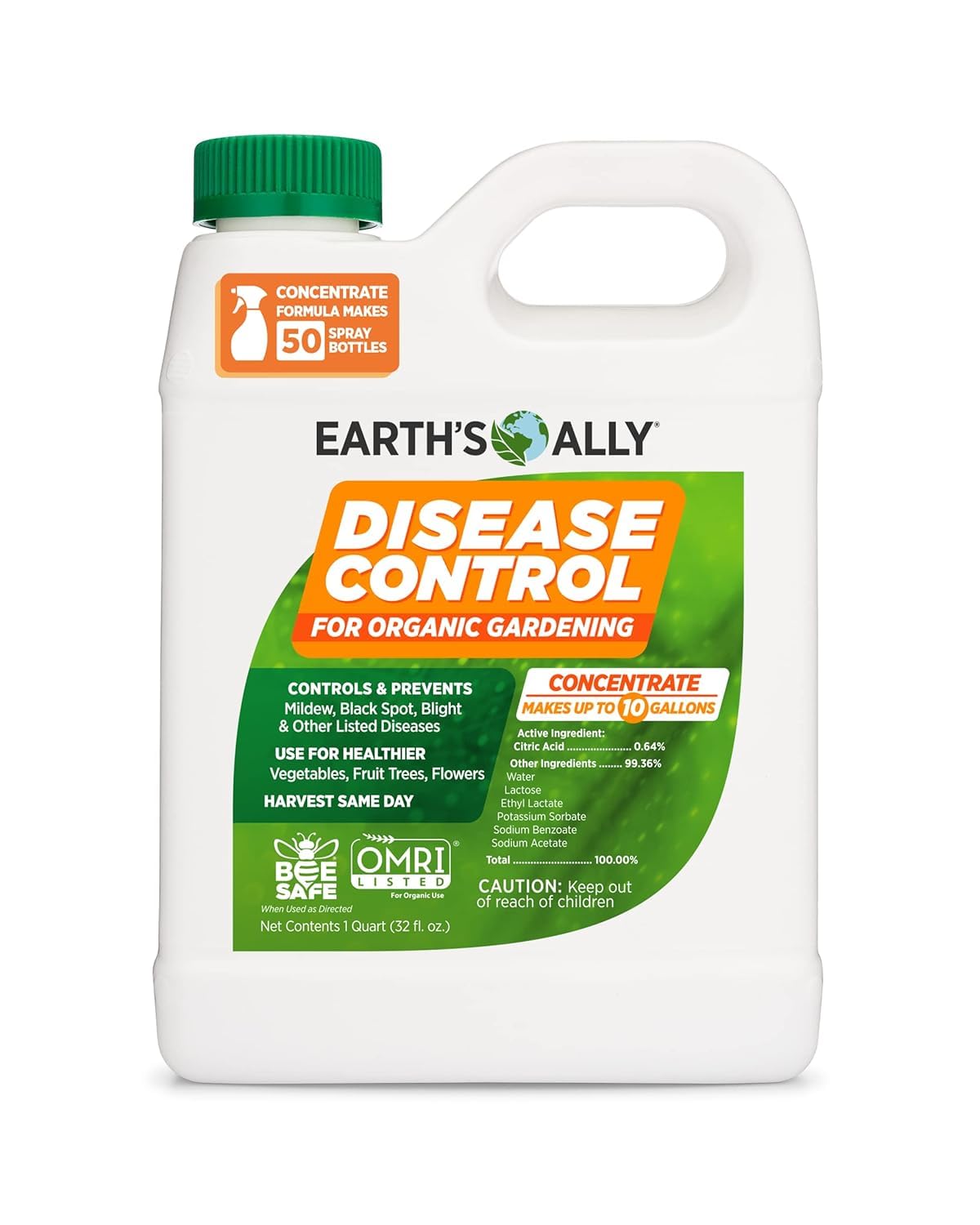
The lowest-priced organic concentrate that makes ten gallons of spray.
The active ingredient here is citric acid, a natural compound used in this formula for disease control, making it safe for people, pets, and the planet. A single 32-ounce bottle of concentrate makes up to 10 gallons of ready-to-use product — you just mix 6 tablespoons per gallon of water. This is an OMRI-listed formula, so it is suitable for use in organic gardening and can be sprayed on fruits, vegetables, flowers, ornamentals, trees, and shrubs, including your crepe myrtle, right up until the day of harvest.
Buyers report that it stopped root fungus in just two applications for a struggling tree that an arborist had diagnosed with a soil issue. One rose grower noted that after using this product, their rose leaves looked much healthier. The catch is that citric acid is a contact spray that washes off in rain and evaporates quickly — you need to cover every leaf surface and reapply regularly to keep powdery mildew at bay. It will not penetrate the tree the way the Quali-Pro or Bonide Infuse granules do.
Extreme value per use: For about the same price as the 8-ounce Monterey bottle, you get 32 ounces here versus 8 ounces there, and this bottle makes up to 10 gallons of finished spray — reviewers call it among the most economical organic options available.
Short-lived protection: Because citric acid is a contact treatment, you need to reapply after heavy rain or as needed during high-humidity mildew season.
Grab this for: Budget-conscious organic gardeners who have a few small crepe myrtles and do not mind spraying every week or two.
Pass on it if: You want a systemic product that provides weeks of protection without reapplication, or you are dealing with a very large, tall tree.
7. Monterey Liqui-Cop Copper Fungicide
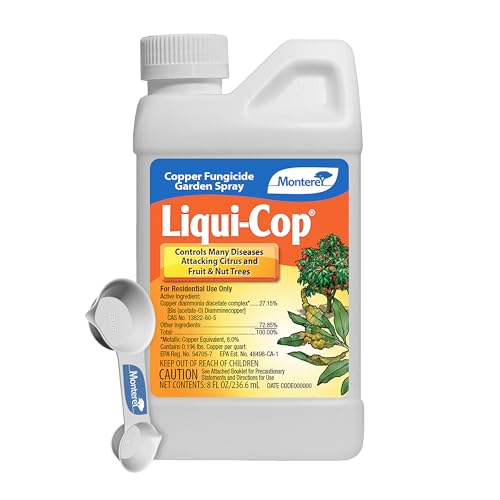
The classic copper gel that sticks to leaves and stays rain-fast.
Copper fungicides have been a gardener’s standby for decades, and this one stands out because it uses a gel formulation that prevents water from washing it off once it dries. That is a big deal for crepe myrtle owners in rainy climates — many contact sprays wash away in the first shower, but Liqui-Cop is designed to be extremely rain-fast. It is a preventative treatment, meaning you apply it before the fungus takes hold, and you must completely cover the leaf surface to create a protective barrier.
Owners mention that it has helped with rust on the leaves of their peach and nectarine trees, and they noticed significantly better leaf health from the prior year. One owner reported the bottle is very small — at 8 fluid ounces versus the 128-ounce Garden Safe bottle, you will need to mix small batches or buy multiple bottles for a large tree. Unlike the garden Safe and Earth’s Ally options, this is purely preventative, so it will not cure a severe existing infection.
Best for prevention: If your crepe myrtle gets mildew every year without fail, apply this early in spring before symptoms show up, and the rain-fast gel will stick through spring rains.
Small quantity, small price: The 8-ounce bottle is fine for a few small fruit trees or a single crepe myrtle, but if you have a large landscape, you will need multiple bottles.
Ideal for: The proactive gardener who wants to prevent powdery mildew before it starts, especially in a rainy area where other sprays wash off.
Not for: Treating a tree that is already covered in mildew — this is a barrier, not a cure, and you need a curative systemic for active outbreaks.
Understanding the Specs
Active Ingredient
This is the chemical or biological compound that actually fights the fungus. Common ones found here are neem oil (a natural, gentle option), copper (forms a protective barrier), citric acid (kills on contact), and synthetic fungicides like propiconazole and myclobutanil (systemic, long-lasting). The active ingredient determines how fast the product works, how long it lasts, and whether it is suitable for organic gardening. For a bad mildew outbreak on a crepe myrtle, you generally want a systemic ingredient that moves inside the tree.
Form: Granules vs. Liquid Concentrate
The form affects how you apply the product and what it can do. Granules (like the Bonide Infuse 7.5-pound bag) are sprinkled on the soil around the tree and watered in — the roots absorb the active ingredient, and the tree moves it upward to protect the leaves. This is the easiest method for large trees because you never have to reach the top branches. Liquid concentrates (like the Quali-Pro 32-ounce bottle) are mixed with water and sprayed directly onto the leaves — they work faster because the fungus is contacted immediately, but you need a sprayer and must cover every leaf surface thoroughly.
FAQ
What is the best time to spray fungicide on crepe myrtle?
How often should I apply a contact fungicide to my crepe myrtle?
Can I use a lawn fungicide on my crepe myrtle tree?
Is neem oil effective against powdery mildew on crepe myrtle?
What is the difference between a systemic and a contact fungicide?
Will fungicide hurt the bees?
Can I use the same fungicide for crepe myrtle and my lawn?
How long does it take for a systemic fungicide to start working?
Final Thoughts: The Verdict
For most people, the best fungicide for crepe myrtle is the Bonide Infuse Systemic Granules because it provides the easiest, longest-lasting protection for tall trees without needing a sprayer. If your crepe myrtle is already covered in powdery mildew and you need immediate results, grab the Dow Eagle 20EW for fast, strong systemic action. And for organic growers who want a budget-friendly, gentle spray that works on mild issues, the Earth’s Ally Concentrate is the most economical choice that makes ten gallons of spray from one bottle.
How We Picked
We do not accept paid placement, and we did not hands-on test every unit. Instead, we match each pick to a real buyer and use-case by comparing the manufacturers’ published specifications against the patterns in verified customer reviews — so you get each pick’s real strengths and trade-offs instead of marketing copy.
Sources & Methodology
Specifications: manufacturer listings and product documentation. Review insights: verified customer reviews, as of July 2026. Pricing: not shown on this page (it changes often); check the current price via the retailer link.
As an Amazon Associate, Lawn Gear Lab earns from qualifying purchases. This does not affect which products we feature.