
Specs are compiled from manufacturer listings and verified buyer reviews and can change over time — please confirm the key details on the product page before buying.
Your fruit tree’s roots live in the pot, not the ground, so the container you choose decides whether it thrives or stalls. A wrong pot — too shallow, wrong material — can strangle roots in a spiral, stunt a taproot before the first fruit sets, or dry out too fast. You need a deep, oxygenated pot that mimics open ground, prevents root circling, and survives a full season of sun and wind without crumbling.
I’m Rikta — the founder and writer behind Lawn Gear Lab. This guide is built by comparing the manufacturers’ published specifications and the patterns across verified customer reviews, so you get each pick’s real strengths and trade-offs instead of marketing spin.
Seven contenders — from fabric grow bags that air-prune roots to rigid nursery pots that outlast a decade — are broken down by capacity, build thickness, and real owner experience, helping you choose among the best fruit tree pots for your patio, orchard, or greenhouse.
Our Picks at a Glance

How To Choose The Best Fruit Tree Pots
The biggest mistake is grabbing a standard flower pot — most are too shallow for a tree’s root system. A fruit tree needs depth to let the main taproot develop and side roots spread. Here are the three specs that really separate a good pot from a trap.
Material: Fabric vs. Rigid Plastic
Fabric grow bags (nonwoven polypropylene or polyester) let air reach the root ball, which stops the roots from circling the container — a process called air pruning. The trade-off is faster soil drying, meaning you water more often in summer. Rigid plastic nursery pots retain moisture longer and can last for many seasons without tearing, but they can cause root spiraling if the tree lives in them for years. For a tree you plan to transplant into the ground after a season or two, a fabric pot is generally the better choice. For a long-term container tree that stays put, look at thicker injection-molded plastic.
Gallon Capacity: How Deep Is Deep Enough
A 5-gallon pot works well for a young citrus or a dwarf fig in its first season. For a semi-dwarf apple, peach, or a multi-year container tree, step up to 10- or 15-gallon pots. The extra depth gives the roots room to spread without coiling. A pot that is too small will stunt the tree’s growth and reduce fruit yield. Check the item dimensions — the 15-gallon Gro Pro, for example, measures 14.6 x 19 x 15 inches, providing the vertical space a tree taproot needs.
Fabric Density and Handle Strength
Fabric thickness is usually stated in “G” — 300G is standard for a couple of seasons, while 500G is noticeably heavier and resists tears much longer. Reinforced handles are critical because a 10-gallon pot full of damp soil can weigh well over 60 pounds. Look for double-stitched webbing handles, not thin fabric straps that tear when you drag a loaded pot across the patio.
Quick Comparison
| Model | Best For | Capacity | Fabric Thickness | Handle Type | Amazon |
|---|---|---|---|---|---|
| Cavisoo 24-Pack★ Best Overall | Bulk planting & seasonal rotation | 5 Gallons | 300G | Reinforced PP webbing | Amazon |
| Land Guard 10-PackBest Value | Budget-friendly mixed veg & herbs | 5 Gallons | Standard nonwoven | Heavy-duty fabric | Amazon |
| FEED GARDEN 10 Gal 4-Pack | Deep-root fruit trees & potatoes | 10 Gallons | 300G | Reinforced double-stitched | Amazon |
| Gro Pro 15 Gallon | Long-term container trees | 15 Gallons | Plastic (injection-molded) | Grip lip rim | Amazon |
| AC Infinity Square 5-Pack | Professional grow tents & patios | 5.39 Gallons | 500G | Nylon reinforced | Amazon |
| Labworkauto 10-Pack 2 Gal | Starting seedlings & small citrus | 2 Gallons | Plastic (HDPE) | Rim design | Amazon |
| DUNPUTE 6-Pack 5 Gal | Ornamental trees & flowers | 5 Gallons | Plastic (smooth finish) | Rigid sidewall | Amazon |
In‑Depth Reviews
1. Cavisoo 24-Pack 5 Gallon Grow Bags
Our pick — over 4.5★ from 850+ verified ratings; the strongest balance of quality and price.
Twenty-four bags that refuse to quit after a full season of sun and soil.
The thing everyone raves about is the build: 300G thick non-woven fabric (polypropylene) that holds its shape and, as owners put it, “lasted all season” and “well made with decent quality material.” The reinforced webbing handles have X-shaped stitching, so you can drag a full wet bag across the deck without the handle tearing off. These bags are 12.2 x 12.2 x 10.2 inches each.
A single buyer reports growing “mini peppers, tomatoes, basil, potatoes, ginger, bok choi” on one deck — that is the kind of rotation these bags handle without a problem. The breathable walls drain fast: roots poke through the bottom, which acts like a natural air-pruning release, but some water runs off quickly enough that you may need to do a bottom-soak system in hot weather.
The recurring caveat is the fast drying — some wish the bags held water a little longer. That is a feature of any fabric pot, not a flaw. For the price of a single premium 5-gallon bucket you get a whole season’s worth of deep-root homes for fruit trees, and the 3-year warranty backs the material claim.
Why it wins
- 300G fabric stands up to repeated seasons
- X-stitched PP webbing handles carry heavy loads
- Rapid air-pruning drainage prevents root rot
The only catch
- Dries fast in heat — plan for daily water checks
- Fabric feels thinner than 500G pro-grade options like the AC Infinity
Reach for this if: you need a bulk set of 5-gallon pots for rotating young fruit trees or a large vegetable garden and want a proven, crowd-favorite fabric build.
Look elsewhere if: you need a single deep 15-gallon container for a long-term semi-dwarf tree — this is a 5-gallon bag good for seasonal use.
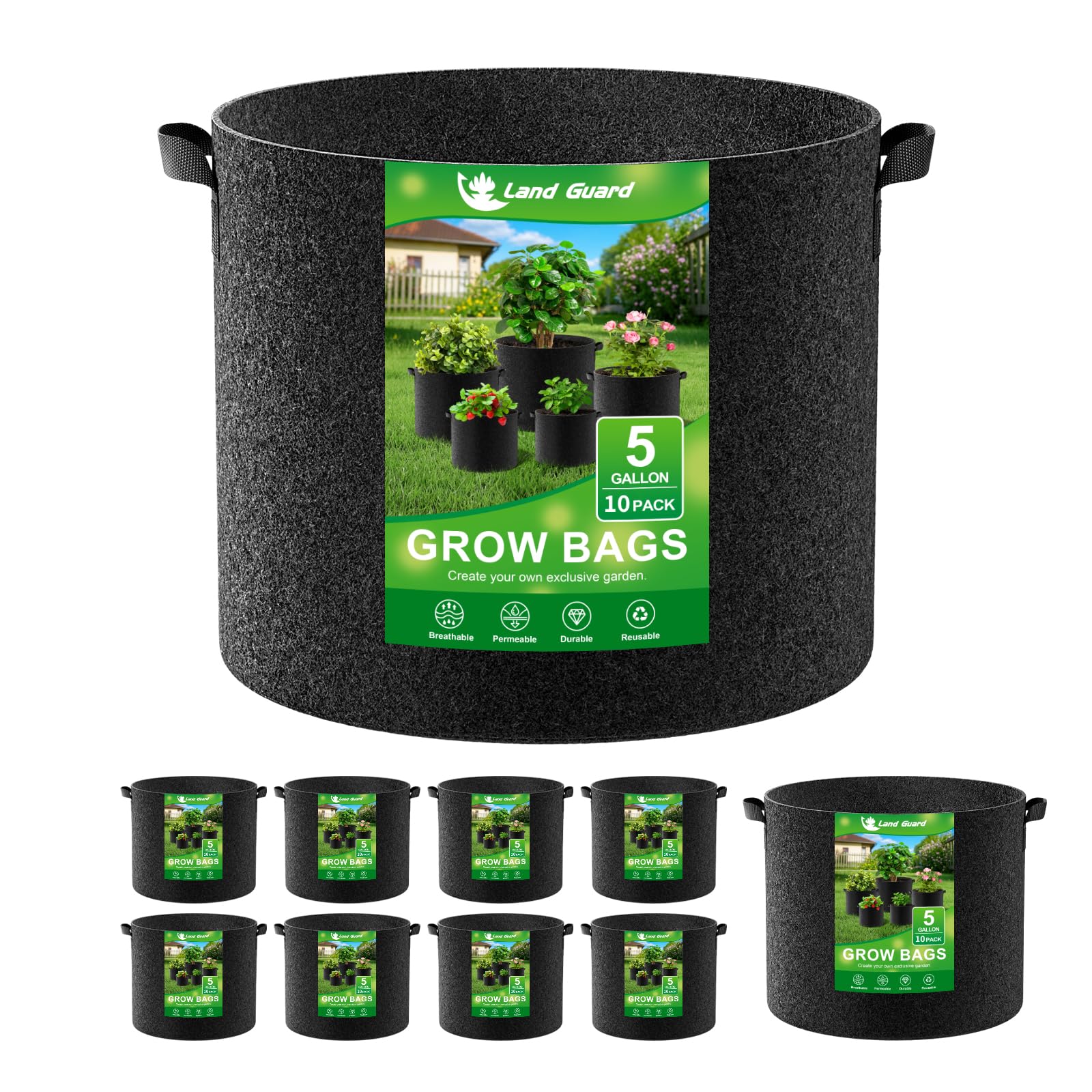
2. Land Guard 10-Pack 5 Gallon Grow Bags
Costs less per bag than a coffee run, yet handles a whole season of potatoes.
Quality is the top praise here — 64 owners call it out directly. The fabric is nonwoven and lightweight enough to move full, yet sturdy enough that a reviewer grew tomatoes and peppers in them with no tearing through the first season. The dimensions (9.8 x 11.8 x 11.8 inches) give it a larger diameter than a standard 5-gallon bucket, which matters when you are planting sprawling tomato roots or a young fig tree.
Budget-friendly for taters: one owner reports getting about 3 pounds of potatoes per bag from poor clay soil, then dumping, reusing, and planting again. The bags drain well and the sides fold flat for off-season storage, which is a real space-saver under a bench.
The honest limit: the handles feel weak when the bag is full of wet dirt, and the sides flop if the bag is not completely filled. A few owners note the material is not “overly thick” — they hope to get a few years out of them but would not bet on more. That is the trade-off for the price point.
The good stuff
- Excellent drainage — roots breathe, no over-watering
- Wider diameter than a standard bucket
- Sturdy enough for automated irrigation setups
The honest limit
- Handles strain under a fully saturated load
- Sides slouch when not packed full
Best for: the budget-conscious gardener who wants a 10-pack of 5-gallon bags for a season of root vegetables, tomatoes, and young tree starts, and does not mind replacing them every couple of years.
skip it if: you need heavy-duty fabric that will survive multiple seasons of dragging — step up to a 500G bag like the AC Infinity.
3. FEED GARDEN 10 Gallon Grow Bags 4 Pack
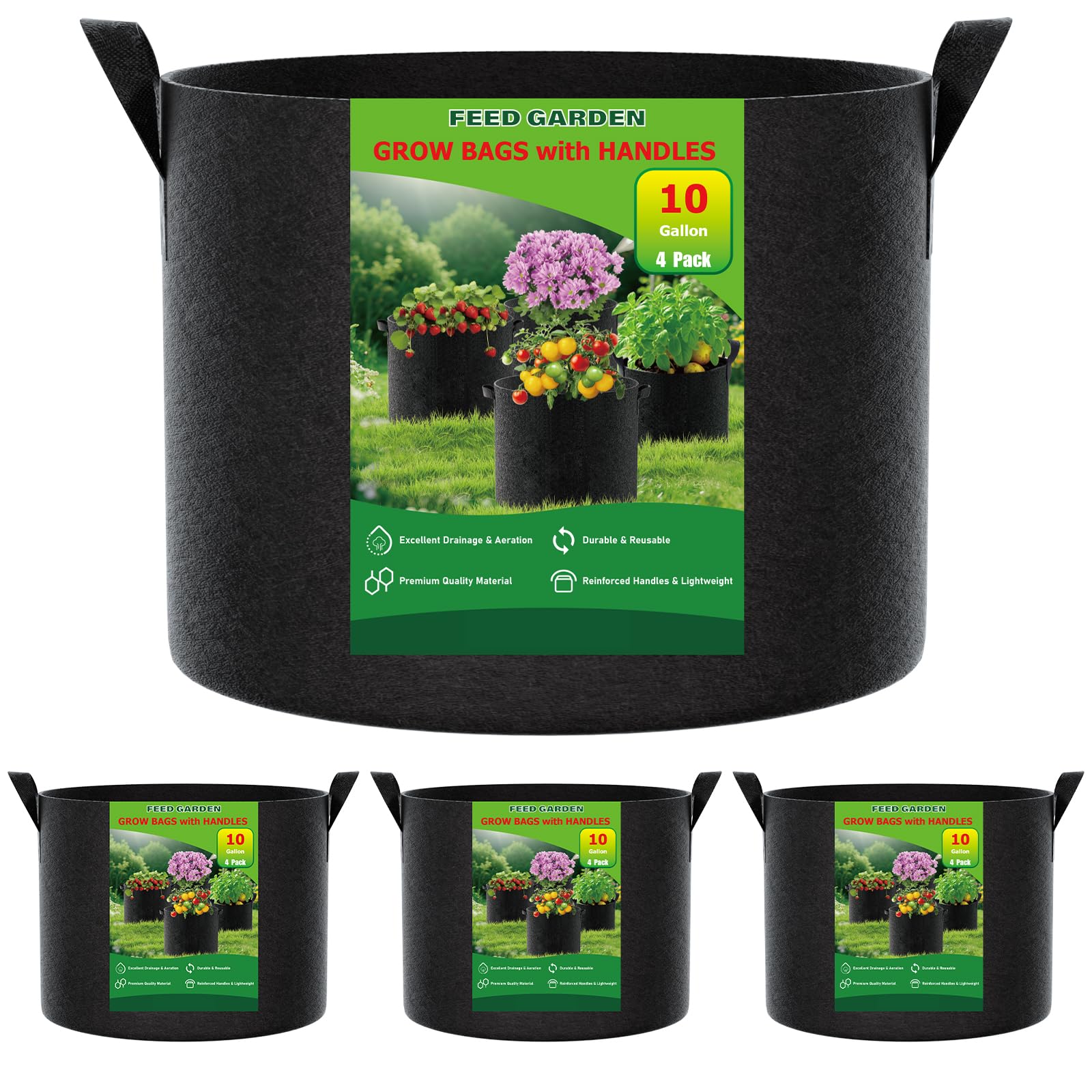
A full foot and a half of soil depth for a fruit tree that plans to stay put.
The FEED GARDEN bags hold 10 gallons each, while the Cavisoo packs hold 5 gallons, allowing deeper root growth for fruit trees. The 300G thickened nonwoven fabric with double-stitched handles means this thing stays upright in strong storms — one owner reports the bags “stayed upright in strong storms” while neighbors’ plastic pots tipped. The dimensions (11.8 x 15.7 x 15.7 inches) offer a wide, deep footprint ideal for tomatoes, peppers, cucumbers, and fruit trees.
The standout result from the data: “Tomato plants outperformed those in traditional pots.” The breathable wall prevents water pooling around the roots, which is a common killer in plastic containers. The foldable, space-saving design is a bonus for off-season storage — just collapse them flat under a bench.
Fabric pots dry out faster than plastic, so expect to water more often during hot spells. A 10-gallon bag of wet soil is heavy — the handles are reinforced, but some owners wish for a wider strap distribution.
The deep-root verdict: A 10-gallon fabric pot at this price point beats most rigid containers for root health. If you are moving a young citrus or dwarf apple from a 5-gallon up to a 10, this is the natural step — more depth, same air-pruning benefit, and the handles are built to carry the load.
Get it for: a 4-pack of true 10-gallon pots at a price that undercuts most single 10-gallon nursery pots. The fabric breathes, the handles hold, and the season-long durability is proven.
Skip it for: a permanent in-ground transplant — this is a seasonal or multi-season container, not a permanent planter.
4. Gro Pro Premium Nursery Pot 15 Gallon

The injection-molded heavyweight that holds 1.5 cubic feet of soil without sagging.
At 15 gallons and 2.6 pounds of rigid plastic, this pot is built for permanence — it is the category leader for a fruit tree that will stay in a container for years. The injection-molded construction (smooth finish) is noticeably thicker than the flimsy nursery pots you get from garden centers. Owners call it “heavy duty good quality” and note it “holds 1.5 cuft of soil” — enough for a semi-dwarf peach or a mature citrus that is not going into the ground.
The grip lip rim is a small but critical detail: an extra-large rounded edge that prevents finger wear when moving the pot. One owner says the rim is “worth extra cost for movability.” At 14.6 x 19 x 15 inches, it is wide enough to prevent a mature tree from blowing over in moderate wind, and the multiple drainage holes handle heavy rain.
The plastic is rigid, which means it does not provide air pruning like fabric pots. A few units arrived cracked in one shipment, and the permanent label (brand decal) is nearly impossible to peel off — a cosmetic gripe for those who want a clean look. For long-term container growing, this pot’s durability outweighs those small issues.
The long-haul pick: If your fruit tree is living the rest of its life in a pot, this injection-molded 15-gallon is the safest bet. It will not rip, it will not dry out as fast as fabric, and the grip lip makes moving it practical.
Go for it when: you need a single large container for a permanent patio tree and want the water retention and longevity of thick plastic.
Think twice if: you are starting multiple young trees and need bulk — this is sold as a single unit and costs more per gallon than fabric bags.
5. AC Infinity Square Heavy Duty Fabric Pots, 5 Gallon 5-Pack

Square corners, 500G fabric, and a true-to-size 5.39-gallon capacity that outlasts round bags.
The AC Infinity square pot is a serious upgrade for anyone who has dealt with thin grow bags that tear mid-season. The fabric is 500G thick — noticeably heavier than the 300G standard — and the square shape means more surface area for roots to breathe and no wasted space in a square grow tent. The capacity is a real 5.39 gallons, not an undersized 5, and the nylon handles are stitched to handle the heaviest loads.
One owner sums it up this way: “they wear like iron and seem larger than other 3 gallon bags.” The fabric loops for plant stakes are a smart touch — you can insert a stake right through the loop and support a top-heavy citrus without penetrating the root zone. Another owner upgraded from round AC Infinity bags and confirmed “no side leakage, more durable” with the square version.
The main trade-off is the price per bag — it is higher than the Cavisoo or Land Guard packs. For the 5-pack you get five pots, not twenty-four. If you are outfitting a large orchard operation on a budget, the cost adds up. But for a handful of prized fruit trees, the extra build thickness means these bags will still be in service when the budget bags have gone to the recycling bin.
What stands out
- 500G fabric — thicker than nearly any grow bag at this size
- Square shape fits grow tents and saves space
- Nylon handles + stake loops = premium build
The cost side
- Higher price per bag than 24-pack alternatives
- Only a 5-pack — not for massive bulk planting
Grab these for: the gardener who wants a long-lifetime fabric pot for a few key trees — the 500G material, square footprint, and stake loops make it a pro-grade choice.
Look past them if: you are planting 50+ starts on a tight budget — the 300G bulk packs offer better value per pot.
6. Labworkauto Nursery Pot 10-Pack 2 Gallon
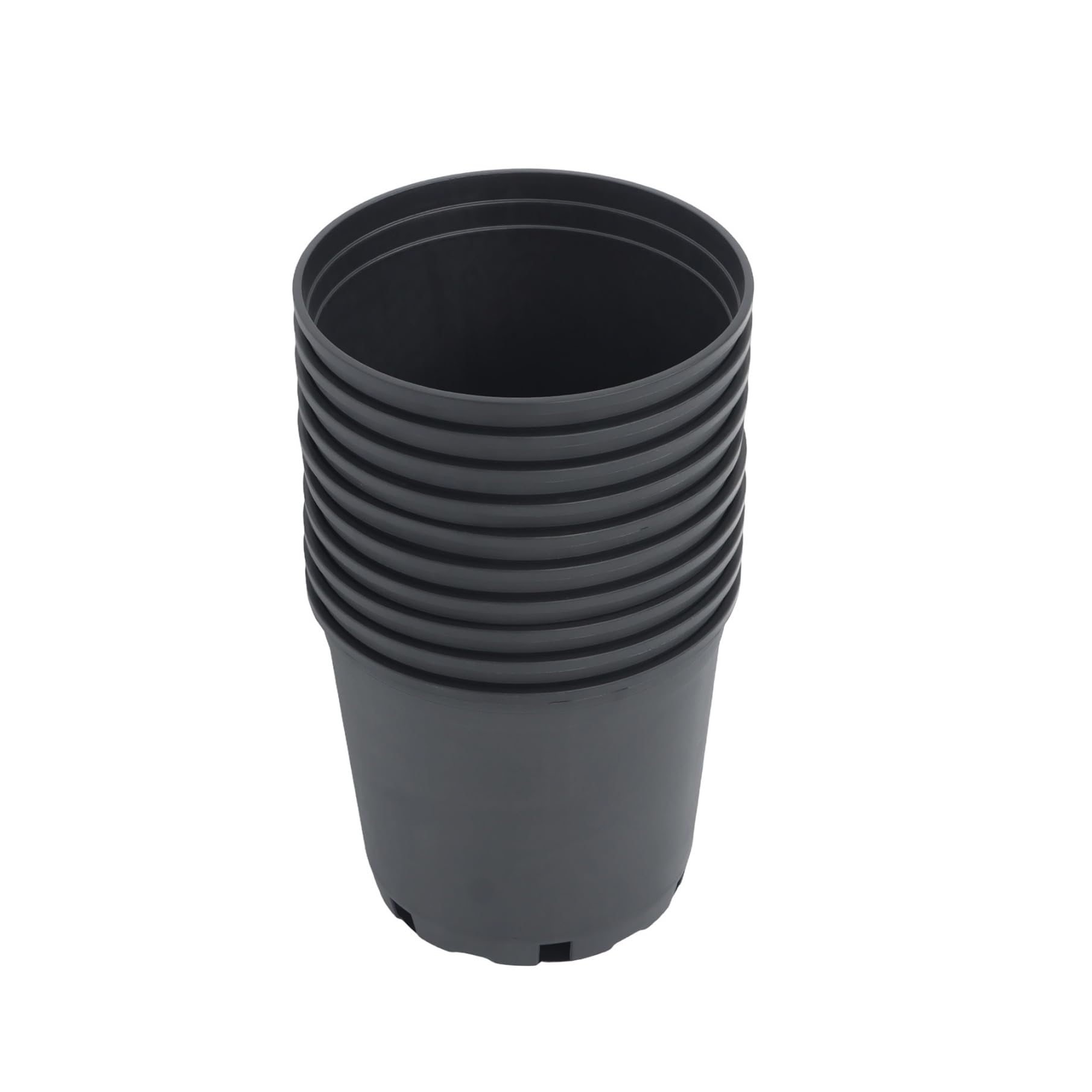
Ten recycled-plastic pots for seedling starts and small citrus at a bargain price.
The material is recycled HDPE plastic — the same tough stuff as milk jugs, but injection-molded into a uniform 8.66 x 8.66 x 8.27-inch nursery pot. At 3.7 pounds for the full 10-pack, each pot is lightweight but, as one owner describes, “not wimpy! Thick plastic and sturdy.” The rim design makes stacking and carrying easy, and the drain holes around the bottom handle the aeration job.
Owners who ordered 2-gallon pots found them “perfect for tomato and pepper plants” and “ideal for starting plants destined for bigger pots.” The price per pot is so low that several buyers noted they received an extra pot in the box — an 11th pot — as a bonus.
These are not permanent homes for a full-size fruit tree. At 2 gallons, they are best for seed-starting, rooting cuttings, or holding a young tree for a single season before transplanting to a larger pot or ground. Some owners question the long-term durability — the plastic is stiffer than premium nursery pots, and a few worry it may crack after multiple seasons. The odor from the start (a common trait of recycled HDPE) also gets negative marks from a few buyers.
The starter’s friend: If you are germinating a dozen citrus seeds or potting up bare-root saplings for one season, this 10-pack is the most economical way to do it. For permanent container trees, go bigger.
Best for: propagating seedlings, rooting cuttings, or short-term housing for young trees before they move to a larger pot.
Not for: a 3-year-old peach or any tree that needs deep root room — 2 gallons is too small for anything beyond a first-season nursery step.
7. DUNPUTE 5 Gallon Plastic Pots 6-Pack
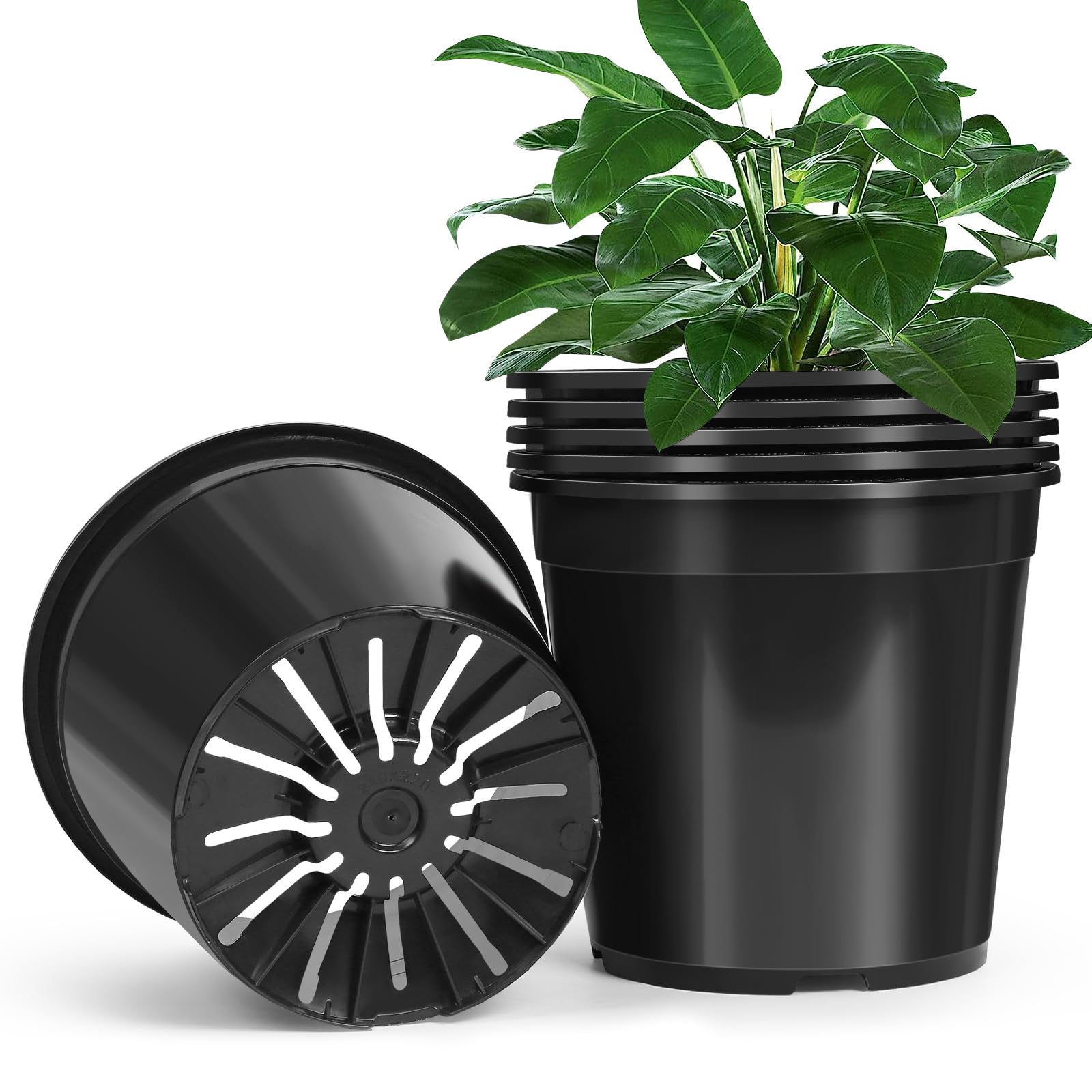
Six smooth-sided plastic pots that look clean on the patio without the fabric sag.
If you want a rigid, no-sag pot that looks tidy in a yard or on a deck, this DUNPUTE set is the polished alternative to fabric. The 5-gallon pots have a smooth black finish, 11.8 inches top diameter, 8.9 inches bottom, and a 10.2-inch height. The large drainage holes at the bottom let excess water escape and make bottom-watering practical — one owner specifically notes they “look well suited for those who bottom feed/water.”
The quality scores well — 14 buyers praise it directly, and the pots are described as “top-notch” and “perfect for large plants.” They work for non-edible trees (moon trees, fortune trees, roses) and for fruit trees you keep on a clean patio where you do not want fabric discoloration.
Durability is the most-discussed topic, though it is a mixed picture in the reviews. While some find them very sturdy, the plastic is rigid enough that “one of the pots arrived damaged” in one owner’s shipment, and the plastic can “crack easy under pressure” when moving a full pot. The material itself is rigid — great for structure, but less forgiving than rubberized plastics. The 6-pack price lands at the higher end of the 5-gallon range.
The looker’s pick: For a patio that doubles as an outdoor living room, these smooth black pots keep things neat. Just handle them gently when dragging full — they are rigid, not flexible.
Get these for: a clean, uniform look on a deck or balcony where you want rigid pots that match and do not sag.
Think twice if: you will be moving the pots often — the rigidity that makes them look good also makes them less forgiving of rough handling.
Understanding the Specs
Fabric Thickness (G)
This number (e.g., 300G, 500G) tells you how much nonwoven fabric weight is packed per square meter. A 300G bag is standard for a couple of seasons. A 500G bag is heavier, resists tears, and typically lasts years longer. For a heavy fruit tree that puts constant pressure on the walls, 500G is worth the upgrade.
Air Pruning
When a root tip hits the air at the fabric wall, it stops growing and branches out — that is air pruning. It prevents the root spiral you get in plastic pots. The result is a denser, healthier root ball that takes off faster when you transplant. Fabric pots do this naturally; plastic pots do not.
FAQ
Can I leave a fruit tree in a fabric pot for more than one season?
What size pot does a dwarf citrus tree need?
How do I prevent root circling in plastic nursery pots?
Will a 10-gallon feed garden bag be big enough for a semi-dwarf peach tree?
How long do the handles last on fabric grow bags?
Do fabric pots need a saucer for indoor use?
Which is better, a square or round grow bag?
Can I reuse fabric grow bags after removing the plant?
Final Thoughts: The Verdict
Across the board, the fruit tree pots winner is the Cavisoo 24-Pack because it delivers proven 300G fabric, reinforced webbing handles, and enough volume (24 pots) to start a whole orchard bed without breaking the budget. If you want the deepest root room for a single mature tree, grab the Gro Pro 15 Gallon — it is injection-molded plastic that holds 1.5 cubic feet of soil and will outlast any tree you plant in it. And for the gardener who wants pro-grade fabric that still looks new after three seasons, the AC Infinity Square 5-Pack with 500G fabric and nylon handles is the one to reach for.
How We Picked
We do not accept paid placement. Every pick is matched to a real buyer and a real use-case; we do not hands-on test units.
Sources & Methodology
Specifications: manufacturer listings and product documentation. Review insights: verified customer reviews, as of July 2026. Pricing: not shown on this page (it changes often); check the current price via the retailer link.
As an Amazon Associate, Lawn Gear Lab earns from qualifying purchases. This does not affect which products we feature.