
Specs are compiled from manufacturer listings and verified buyer reviews and can change over time — please confirm the key details on the product page before buying.
You plant a tree. You water it, prune it, wait months for fruit. Then one morning you find a single peck hole in every single peach, and the whole tree is stripped bare. That is the exact moment you realize that fruit tree netting for birds is not optional — it is the difference between a harvest and a loss.
I’m Rikta — the founder and writer behind Lawn Gear Lab. This guide is built by comparing the manufacturers’ published specifications and the patterns across verified customer reviews, so you get each pick’s real strengths and trade-offs instead of marketing spin.
Your netting needs to fit your tree size, stop birds without trapping them, and survive a full season of sun and storms — the right fruit tree netting for birds does all three without making installation a nightmare.
Our Picks at a Glance
How To Choose The Best Fruit Tree Netting For Birds
A single roll of netting can look identical to the next on the shelf, but three hidden specs decide whether it becomes your garden’s best friend or a tangled mess you throw away by August.
Mesh Size – The Line Between Bird-Proof and Useless
Anything larger than 1/2 inch is an invitation, not a barrier. Small finches and sparrows squeeze through gaps bigger than that. At 1/2 inch, you stop birds while letting in bees and sunlight. A 5/8 inch mesh stops most birds but may allow the smallest finches through. The balance is 1/2 inch — small enough to block even the smallest beaks but wide enough to keep air moving so your fruit does not rot inside a bag.
Material Weight and UV Resistance
Cheap netting weighs around 6-9 g/m² — that is grocery-bag thin. It tears on the first branch snag and turns brittle after one season of sun. Heavy-duty options come in at 30 g/m², made from UV-resistant HDPE (a type of durable plastic that holds up to constant sunlight). Those last three or more seasons and handle wind without shredding.
Closure System – Drawstring vs Zipper vs Loose Sheet
A drawstring gathers the bottom around the trunk and is the most flexible fit for odd-shaped trees. A zipper gives you a door for harvesting without removing the whole cover — a huge convenience for berry bushes you pick daily. Loose sheets need ground staples or rocks and work best for large vegetable gardens or rows of small trees where you want one continuous barrier.
Quick Comparison
| Model | Best For | Size | Mesh Size | Material | Amazon |
|---|---|---|---|---|---|
| RIFNY 13×40 ft★ Best Overall | Large multi-tree coverage | 13 x 40 ft | 5/8 in | Polyethylene | Amazon |
| Homoda 2-Pack 8×8 ft ZipperBest Design | Easy-access daily harvest | 8 x 8 ft each | Ultra-fine | HDPE | Amazon |
| ZYP 7×6 ft Drawstring | Single medium tree protection | 7 x 6 ft | Ultra-fine | Nylon | Amazon |
| GonLei 2-Pack 10×10 ft | Big trees needing full coverage | 10 x 10 ft each | Ultra-dense | Nylon | Amazon |
| POYEE 25×25 ft | Maximum durability and coverage | 25 x 25 ft | 1/2 in | HDPE | Amazon |
In‑Depth Reviews
1. RIFNY 13 x 40 ft Heavy Duty Anti Bird Netting Mesh
Our pick — over 4.5★ from 800+ verified ratings; the strongest balance of quality and price.
The big roll that does not tangle, tear, or give birds a way through.
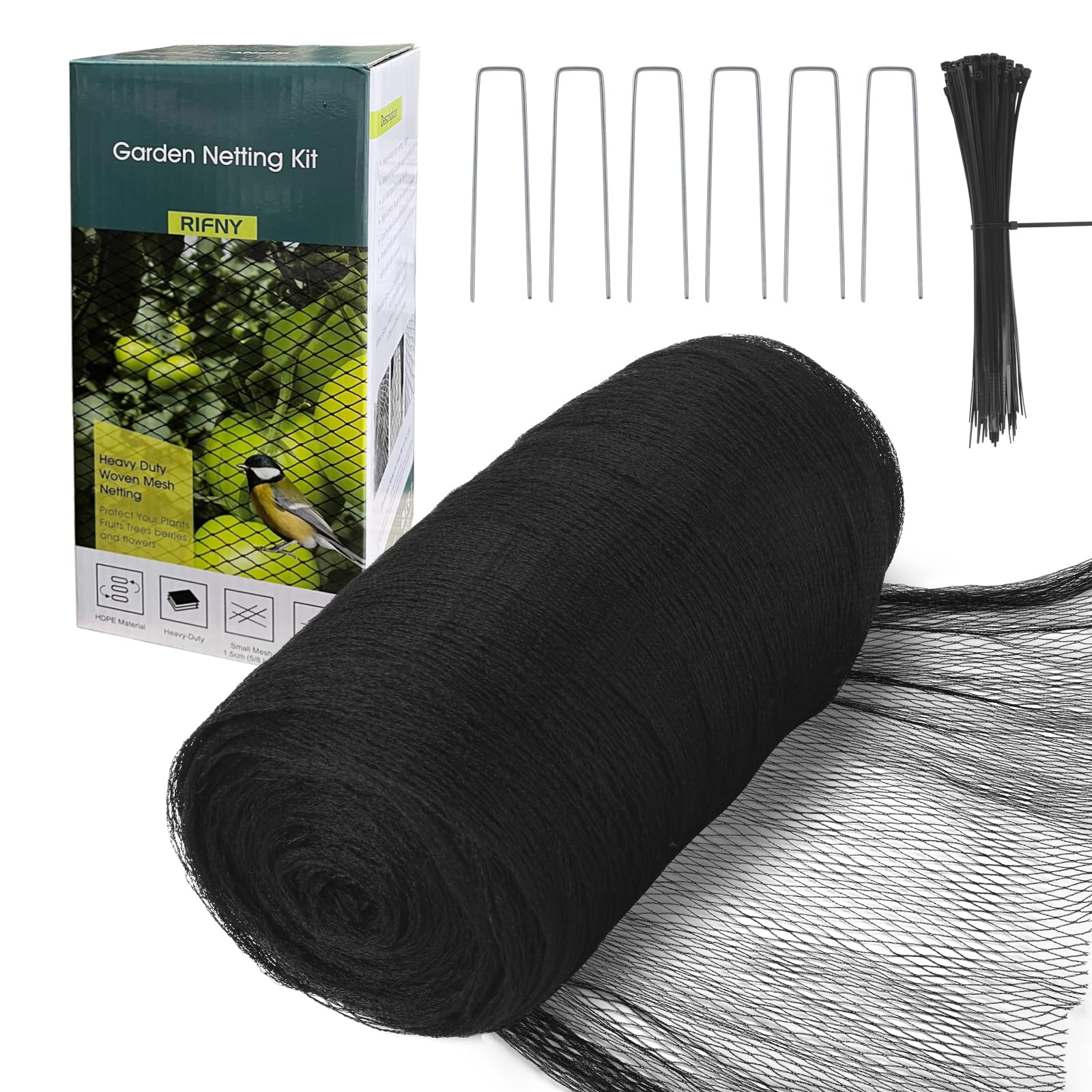
This is the roll you grab when you have multiple trees, a row of blueberry bushes, or one huge fig tree that needs wrapping. At 13 feet wide and 40 feet long, it covers 520 sq ft versus a single 7×6 ft bag (42 sq ft), and the 5/8-inch mesh keeps birds, squirrels, and even poultry out without trapping anything inside. The fabric weighs 0.65 oz/yd², which is dense enough to feel substantial but light enough to drape without extra support poles.
What wins people over is the lack of tangling — the netting unrolls flat and stays cooperative, unlike thin nets that turn into a knot within seconds. It comes with 6 landscape staples and a pack of twist ties, so you can cut it to size and anchor it the same day. Buyers report that “it doesn’t tangle or tear, it is easy to place and keeps the birds and small critters out,” and several have reordered multiple times. The only practical downside is that the included staples are not enough for hard ground — you will want to buy extra stakes if your soil is tough or windy.
At this size, you also get value per square foot that beats every single-tree bag on the list. It is the fastest way to protect a whole garden bed or a row of dwarf trees in one go.
Why it leads
- Massive 13×40 ft coverage for multiple trees or beds
- 5/8 in mesh stops birds without harming them
- Does not tangle during unrolling or install
- Holds up in wind and rain — owners praise the durability
The trade-off
- Only 6 staples included — need extra for firm anchoring
- Not a pre-shaped bag; you cut and fit it yourself
Grab it if: you have a large garden, multiple fruit trees, or a row of bushes and want one continuous barrier that covers everything in a single unroll.
Think twice if: you want a quick slip-over bag for a single small tree — the ROLL requires cutting and DIY fastening.
2. Homoda 2-Pack 8×8 ft Fruit Tree Netting with Zipper & Drawstring
A zipper door changes the entire harvest experience — no more untie-and-retie every morning.
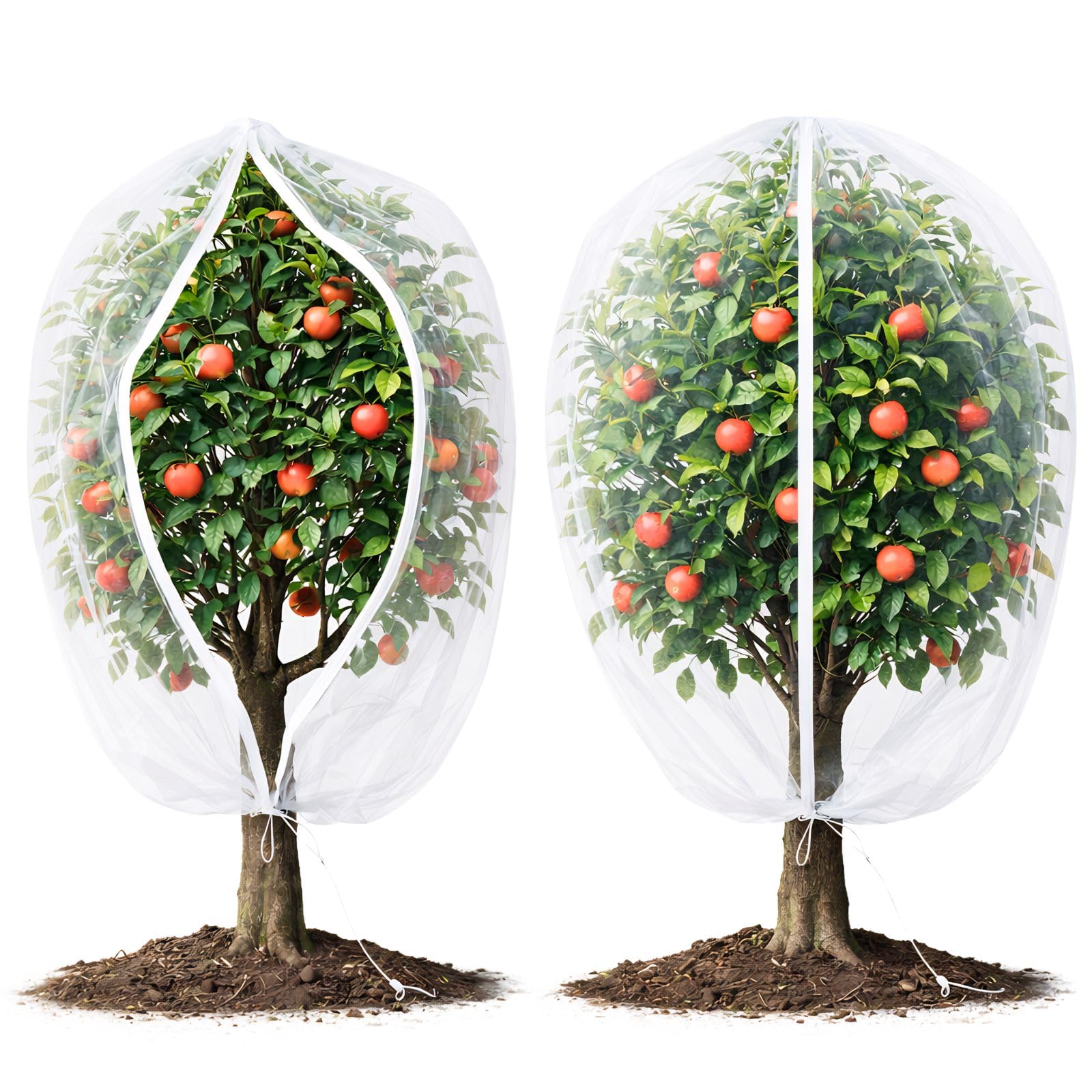
Every other bag on this list forces you to loosen the drawstring, reach inside, or lift the whole cover to get your fruit. The Homoda solves that with a side zipper and a bottom drawstring, so you open only a small access flap to pick ripe peaches or berries and zip it back shut. That convenience is the reason owners with berry bushes say they “can’t grow without them.” The netting is made from HDPE (a tough, lightweight plastic that resists UV damage) and comes in a 2-pack of 8×8 foot bags — large enough to fit a tree under 10 feet tall.
The bird protection aspect gets the most praise — 94 owners call it out, more than any other feature on any netting in this roundup. The zipper itself is the second-most-discussed feature (49 mentions), and the general sentiment is that it works exactly as hoped: birds and chipmunks stay out, sunlight and rain get through. The netting is airy and see-through, so you can monitor ripening without removing anything. The trade-off reported by a handful of owners is that the fabric does not hold a rigid dome shape — it drapes loosely over the branches like a ghost costume, which is purely cosmetic.
Compared to the drawstring-only ZYP bag (pick 3), this one gives you the zipper convenience and a second net in the pack. It is the right choice if you harvest daily and value not wrestling with knots.
Best for daily harvesters: the zipper+drawstring combo means you pick fruit in seconds without stripping the cover, and the 2-pack covers two medium trees or a row of bushes.
Our take: if you pick fruit every day during the season, the zipper alone is worth the small price bump over a basic drawstring bag. skip it if you only harvest once or twice and prefer a simpler slip-over design.
3. GonLei 2-Pack 10×10 ft Large Fruit Tree Netting Cover
Generous 10×10 foot bags that swallow big trees whole, with a drawstring that actually feels sturdy.
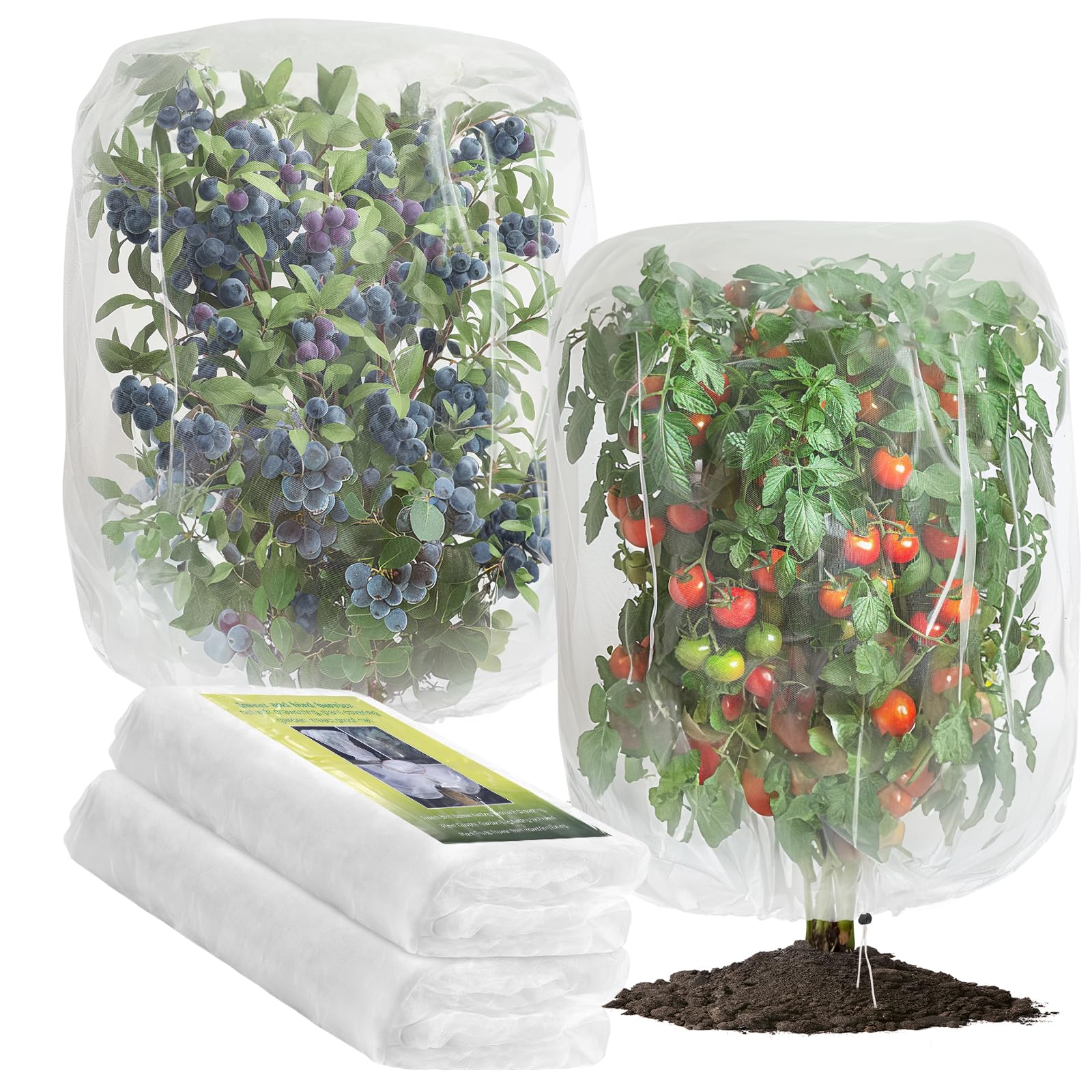
Most tree bags max out at 8×8 feet, which leaves a mature peach or apple tree half-exposed. The GonLei gives you 10×10 feet per bag in a 2-pack, so you cover larger specimens without stretching the mesh thin. The nylon material is described by owners as soft and elastic — it stretches slightly to conform to branch shapes without tearing, and the ultra-dense mesh stops birds (81 owners mention bird protection positively) while allowing ventilation that prevents moisture buildup.
What stands out in the reviews is the drawstring quality. Several owners call it “much thicker” than competing brands, which means it cinches tight around the trunk and stays tight through wind. The netting is also lightweight enough that rain passes through naturally — no pooling water sagging the branches. One owner who bought it for blueberries said it was “durable and lightweight enough so rain water gets in.” The only real caution is that a persistent squirrel may chew through the nylon if the fruit gets too ripe and tempting, so you want to pick promptly at peak ripeness.
At 10×10 feet, this bag provides 10-foot sides compared to the Homoda (8×8 ft) and Purple Star (7×8 ft) bags, making it the best fit for established trees that have put on a few seasons of growth.
Who it fits: gardeners with semi-mature trees in the 6-9 foot range who need extra fabric to reach the lower branches without straining the netting.
Reach for this if: your trees are pushing 8 feet tall and you want a bag that goes on easy and stays put. Look elsewhere if you need protection against determined rodents — the nylon is great for birds but softer against chewing teeth.
4. POYEE 25×25 ft Bird Netting, 1/2 in Mesh Heavy Duty
At 30 g/m² versus typical 6-9 g/m² — this roll takes weather and abuse that would shred cheaper mesh.
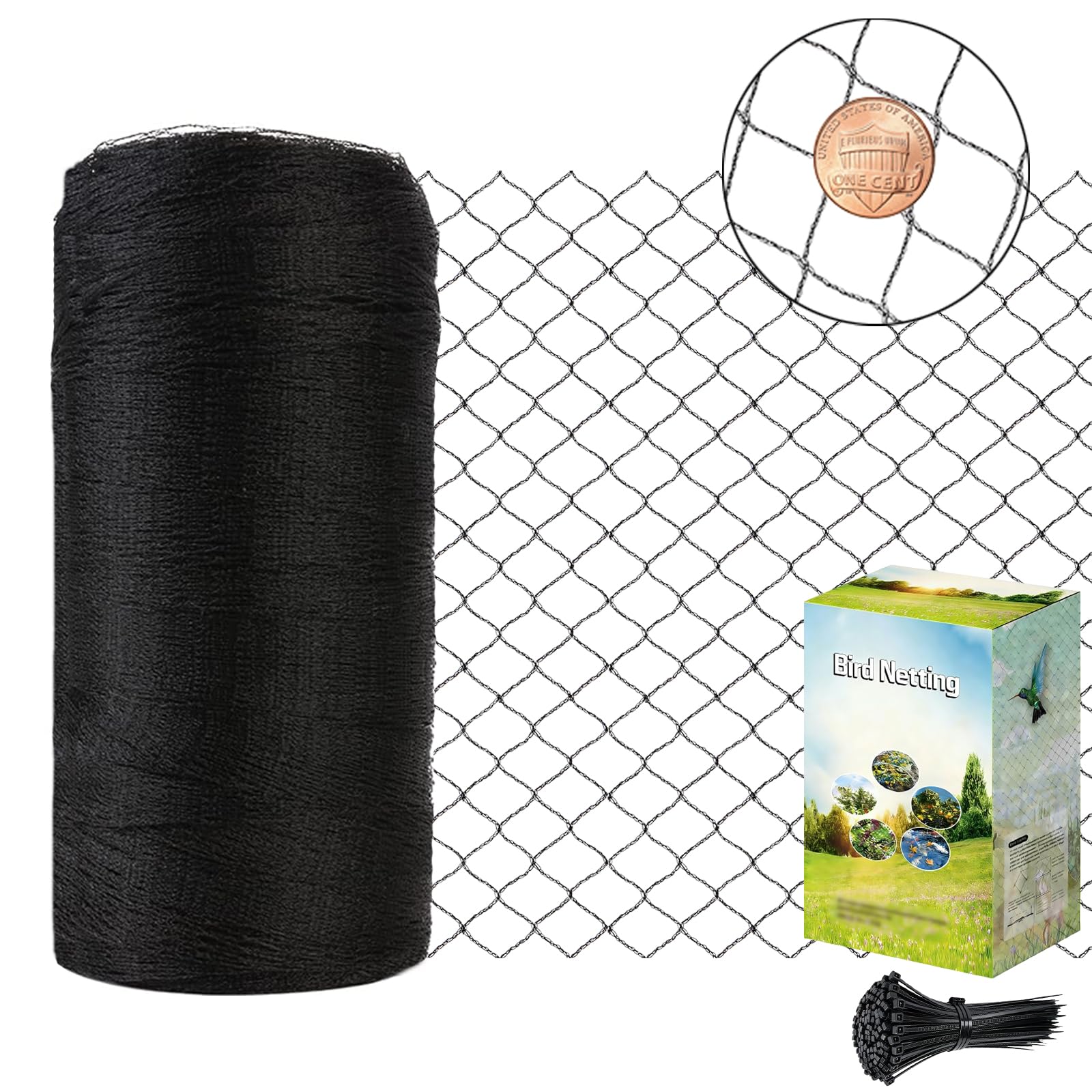
The POYEE is built around a single number that tells you everything: 30 g/m². Typical budget bird netting weighs 6-9 g/m², which is barely thicker than a disposable party tablecloth. At 30 g/m², this HDPE (high-density polyethylene — an UV-resistant plastic that survives years of sun) netting compares to typical 6-9 g/m² and is far more tear-resistant. The 1/2-inch mesh is the standard bird-proof size recommended by extension offices, and the square weave stays taut without sagging or tangling during install.
At 25×25 feet, it is the largest square roll in this lineup, and it works just as well thrown over a whole vegetable garden as it does wrapped around an orchard row. Owners mention using it for everything from chicken runs (keeping chickens in and hawks out) to leaf-catching over jasmine beds. The netting held “over two winters” in one owner’s report, and multiple reviews note it is easy to cut with scissors and reposition. One mild criticism: the holes are 1/2 inch, and some buyers expected them to be smaller — but that opening is the correct size for bird exclusion, because any smaller mesh blocks beneficial insects.
Compared to the RIFNY roll (Pick 1), this one uses a tighter 1/2-inch mesh versus RIFNY’s 5/8-inch, and it weighs significantly more per square foot, which means it handles heavy wind and animal pressure better but is also heavier to lift when wet.
Where it excels
- 30 g/m² HDPE — compared to budget nets’ 6-9 g/m², resists tearing and UV damage
- Covers 625 sq ft from a single roll
- 1/2 in mesh is the gold standard for bird exclusion
- Vetted for chicken runs, gardens, and pond covers
Consider this
- Heavier to handle when wet or folded
- Requires cutting to shape — no pre-sewn bag form
Best for: serious gardeners who want a single roll that lasts multiple seasons, handles extreme weather, and can be cut into custom sizes for different beds. pass on it if you just need two quick bag covers for small potted trees.
5. ZYP 7×6 ft Fruit Tree Netting with Drawstring, Ultra-Fine Mesh
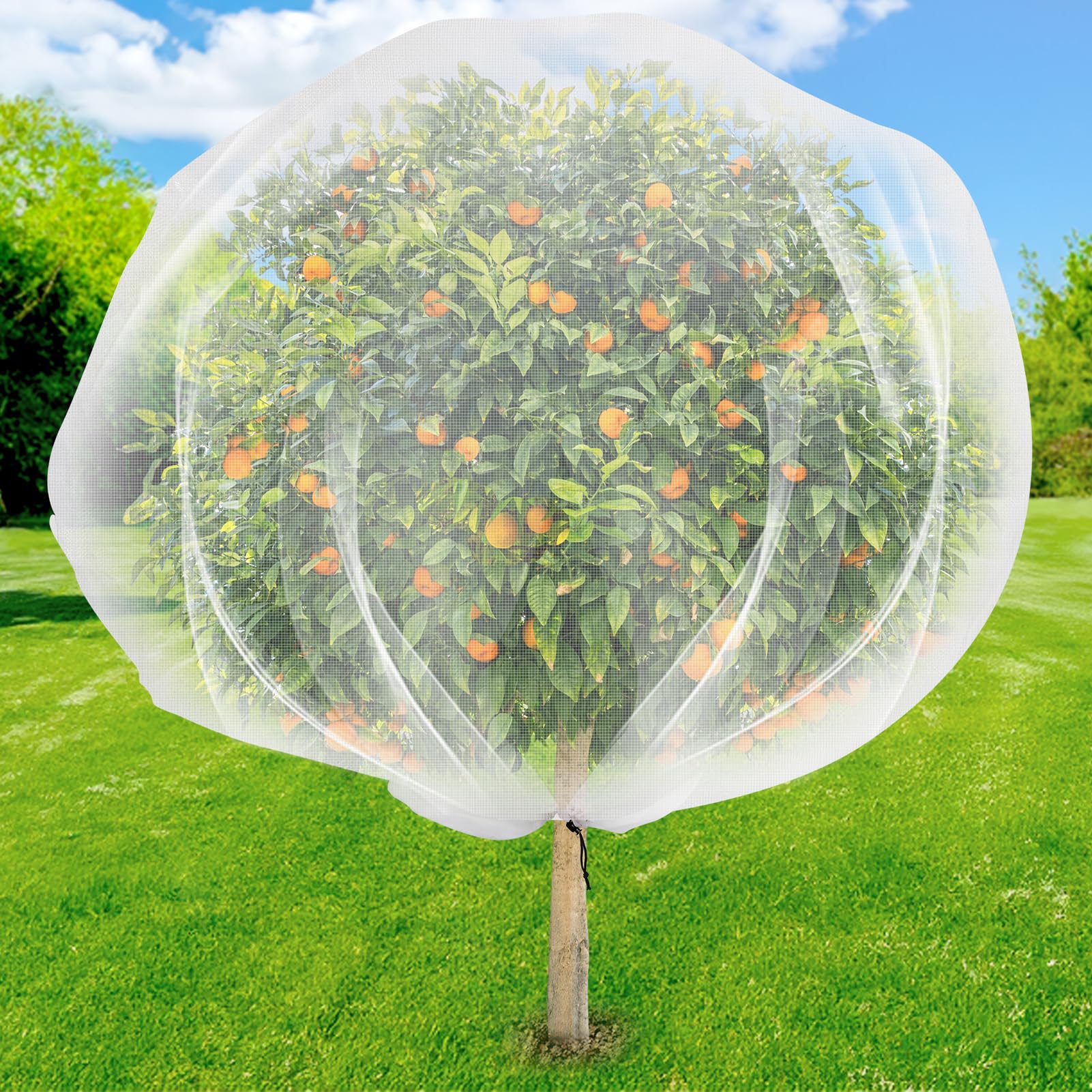
A lightweight nylon bag that lets you check on fruit without lifting the cover — and it weighs almost nothing on branches.
At 0.36 kilograms (about 0.8 pounds), this is the lightest bag on the list, and that weight matters when you drape it over a young or slender tree that might bend under heavy mesh. The nylon material is breathable and white, which reflects heat rather than baking the tree inside a dark bag. The ultra-fine mesh blocks insects and birds while passing sunlight and water, and the drawstring lets you cinch it around the trunk. One fig grower reported harvesting “27 perfect figs with zero bird damage” after just two weeks of using this cover.
The bird protection gets the most callouts from owners — 71 people mention it positively, and the general feedback is that the netting is effective and easy to install on potted or young trees. The bag size is 7×6 feet, which fits a standard dwarf or semi-dwarf tree with room to spare. The biggest trade-off is shared by a notable number of owners who find it too small for medium or large trees, and the drawstring does not fully seal the bottom against ground-level animals like squirrels — you may need to add rocks or extra ties at the base. The lightweight nylon also acts like a sail in heavy wind, so young trees in exposed spots may sway more than you want.
This bag leads on value — it costs less than the Homoda or GonLei but delivers the same essential protection for a single tree, making it ideal for container gardening or small backyard orchards.
The honest read: perfect for young trees, potted figs, and single blueberry bushes where you want cheap, effective coverage. Not the bag for an 8-foot mature tree — go up to the 10×10 GonLei for that.
Reach for this if: you have one or two dwarf trees and want a quick, affordable cover that works. Look elsewhere if your tree is wider than 5 feet or you need to block ground-level critters.
Understanding the Specs
Mesh Size – 1/2 in vs 5/8 in vs Ultra-Fine
The mesh opening size is the single spec that determines whether a net works or fails. A 1/2-inch square stops virtually all bird species because their bodies are wider than the opening. A 5/8-inch opening works for most birds but may let through smaller finches or wrens. “Ultra-fine” mesh has holes around 1-2 mm and also blocks insects — but it is thicker and reduces airflow slightly. For fruit trees where the main enemy is birds, 1/2 inch is the ideal compromise between safety and breathability.
Material Density – g/m² Explained
This number tells you how much the fabric weighs per square meter, and it correlates directly with tear strength and lifespan. Budget nets weigh 6-9 g/m² and feel like tissue paper — they work for one season if you are gentle. Mid-range options weigh around 20 g/m². The heaviest nets on this list hit 30 g/m², which is UV-stabilized HDPE that survives three or more seasons, windstorms, and the occasional branch snag without ripping.
Drawstring vs Zipper vs Staple-Down
A drawstring gathers the bottom around the trunk and is the most universal closure — it fits any trunk thickness. A zipper adds a side opening for harvest access, which is a standout for bushes you pick every day. Loose sheets that require ground staples or rocks give the most flexible coverage for irregular shapes or multiple trees in one row but take more time to install properly.
Single Bag vs Roll vs 2-Pack
Single bags (like the ZYP or Homoda) slip over one tree and cinch closed — the fastest install. Rolls (like the RIFNY or POYEE) give you a giant sheet you cut to size, which is best for covering multiple trees, raised beds, or oddly shaped areas. A 2-pack (Purple Star, GonLei) gives you two bags, ideal if you have exactly two trees of similar size. The roll always delivers the lowest cost per square foot but requires more DIY effort.
FAQ
What mesh size is best for keeping birds out of fruit trees?
Will the netting harm birds or trap them?
How do I measure the right net size for my tree?
Should I net before or after the fruit sets?
Can I reuse fruit tree netting for more than one season?
Does the netting block sunlight or rain?
Will a drawstring bag keep squirrels and chipmunks out?
Is a zipper net worth the extra cost?
How do I store fruit tree netting over winter?
Can I use the same net for vegetables and fruit trees?
Final Thoughts: The Verdict
For most people, the fruit tree netting for birds winner is the RIFNY 13×40 ft roll because it covers the most ground for the money, stays tangle-free during install, and the 5/8-inch mesh is proven across hundreds of owners to stop birds without trapping them. If you want the daily harvest convenience of a zipper, grab the Homoda 2-Pack with zipper. And for maximum toughness in a single roll that shrugs off weather and lasts multiple seasons, the POYEE 25×25 ft heavy-duty net is the one to reach for.
How We Picked
We do not accept paid placement. Every pick is matched to a real buyer and a real use-case; we do not hands-on test units.
Sources & Methodology
Specifications: manufacturer listings and product documentation. Review insights: verified customer reviews, as of July 2026. Pricing: not shown on this page (it changes often); check the current price via the retailer link.
As an Amazon Associate, Lawn Gear Lab earns from qualifying purchases. This does not affect which products we feature.