
Specs are compiled from manufacturer listings and verified buyer reviews and can change over time — please confirm the key details on the product page before buying.
Your fruit trees need something around their base that keeps moisture in, lets air flow to the roots, and doesn’t introduce weed seeds or harmful chemicals. The core choice is between compressed coconut husk blocks, ready-made coco mats, treated wheat straw, and cocoa bean shells — each behaves very differently around a tree trunk.
I’m Rikta — the founder and writer behind Lawn Gear Lab. This guide is built by comparing the manufacturers’ published specifications and the patterns across verified customer reviews, so you get each pick’s real strengths and trade-offs instead of marketing spin.
This breakdown walks you through nine of the best options on the market to help you find the right fruit tree mulch for your specific garden conditions, watering habits, and pest pressure.
Our Picks at a Glance
How To Choose The Best Fruit Tree Mulch
Picking the right mulch for a fruit tree isn’t just about looks—though that helps. It is mostly about moisture management, root temperature, and weed control. A good mulch prevents soil from baking in the sun, keeps weeds from competing for water, and slowly feeds the soil as it breaks down.
Volume and Coverage
Mulch is sold by compressed weight (usually 10 lb blocks) and the volume they expand to. Some expand to 65 quarts, others to 2 cubic feet. You need to match the expanded volume to the area around your tree — a 3-foot diameter ring at a 2-inch depth needs roughly 1.2 cubic feet of material. Check the expanded volume, not the dry weight, to ensure one block covers your tree ring.
Organic vs Processed
Organic certification (like OMRI listed) means the mulch was produced without synthetic chemicals. For fruit trees, you want something that breaks down into the soil without adding anything harmful. Coconut husk, wheat straw, and cocoa bean shells are all natural, but different certifications back them up.
Pest and Animal Deterrence
Squirrels, raccoons, and dogs may dig in fresh mulch. Some mulches, like cocoa bean shells, have a strong chocolate scent that can attract or deter different animals. Others, like coir mats, physically block digging. Know what critters visit your yard before you pick.
Quick Comparison
| Model | Best For | Expanded Volume | Form Factor | Key Feature | Amazon |
|---|---|---|---|---|---|
| Gro-Med Coco Husk Chips★ Best Overall | Large area coverage | 65 quarts | Compressed block | OMRI Listed, Low EC | Amazon |
| Deepthi 24-Inch Coco MatsSquirrel Defense | Squirrel digging protection | 3 mats (24 inch) | Pre-cut mat | Weed barrier, reusable | Amazon |
| Zeedix Coco Chips (8-Pack)Best Value Small Batch | Small batch mixing | 7 quarts each brick | 8 bricks | 100% Organic, Low EC | Amazon |
| MODELLOR Premium Coco Chips | Drainage and aeration | 2 cu ft (18 gallons) | Compressed block | Triple-washed, low salt | Amazon |
| PlantBest Coco Mulch Block | Long-lasting coverage | 2.1 cu ft | Compressed block | Lasts up to 2 seasons | Amazon |
| Plantonix Coco Chips Mulch | Biggest block value | 15 gallons | Compressed block | Recycled husks | Amazon |
| Back to the Roots Coco Mulch | Back-saving ease | 2 cubic ft | Compressed block | OMRI Listed, organic | Amazon |
| Hull Farm Cocoa Bean Shell Mulch | Chocolate scent appeal | 2 cubic ft | Loose bag | Fertilizer value 2.5-1-3 | Amazon |
| HealthiStraw GardenStraw | Vegetable gardens near trees | 3 cu ft | Compressed bale | Water-conserving | Amazon |
In‑Depth Reviews
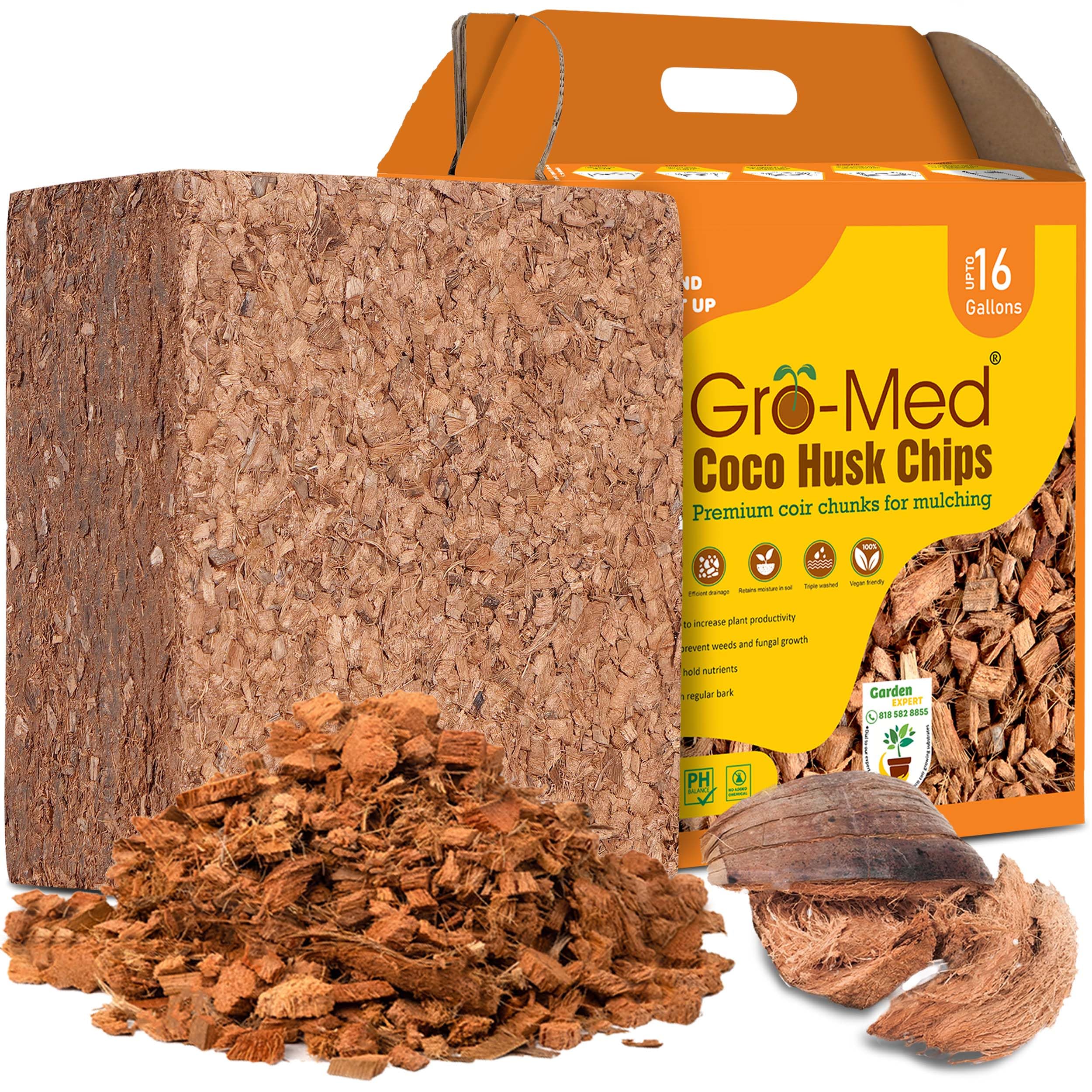
1. Gro-Med Coco Husk Chips for Plants (10lb)
Our pick — over 4.5★ from 500+ verified ratings; the strongest balance of quality and price.
The biggest bang for your buck — a single 10 lb block becomes 65 quarts of chunky mulch.
Your fruit trees need at least a 2- to 3-inch layer of mulch around their dripline, and that takes volume. That means one block covers a generous ring around a mature tree without needing a second block.
The chips are triple-washed, which keeps the EC (a measure of soluble salts) low. High salt levels can burn tender feeder roots, but this testing ensures the chips have a stable pH and won’t interfere with your tree’s nutrient uptake. The chips themselves are large and chunky, creating air pockets between pieces so oxygen reaches roots. Owners consistently praise the overall quality — it is the most frequently mentioned positive aspect, with comments about how it improves airflow and drainage in the root zone.
For the volume you get, this is the most cost-effective buy. It works perfectly as a top-dress mulch around apple, peach, or citrus trees, or you can mix 1/3 chips into your potting soil for container trees.
Why it wins
- Largest expanded volume (65 quarts) from a single 10 lb block
- Low EC and balanced pH means safer root zone
- OMRI Listed assures organic production standards
Consider this
- Compact block needs a large container to hydrate
- Some reviews mention water absorption is mixed
Grab this if: you are mulching several trees and want the absolute most coverage per block, with organic certification.
Look elsewhere if: you only need a small patch of mulch — the 65 quarts may be more than necessary for a single young sapling.
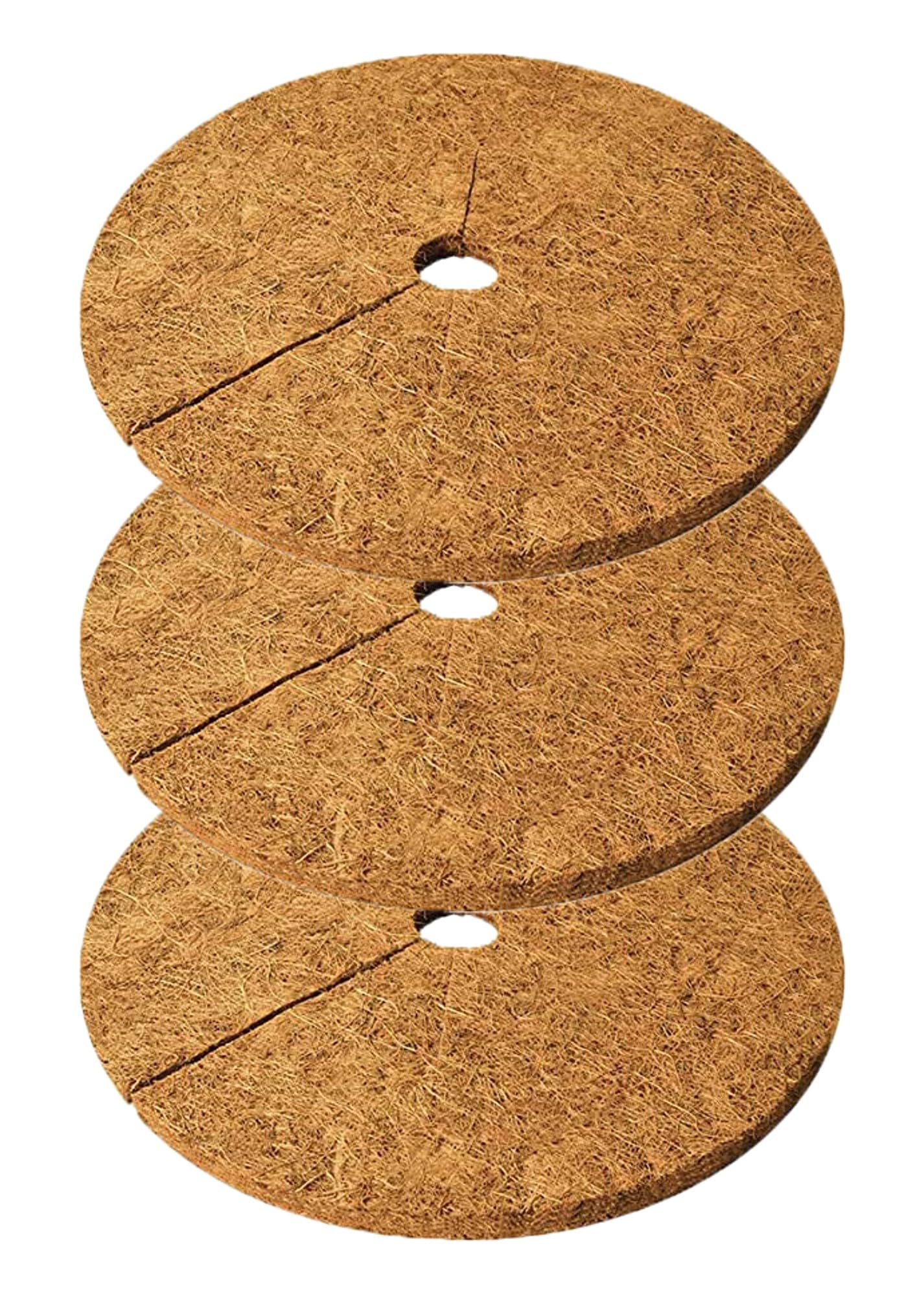
2. Deepthi 24-Inch Coco Coir Mulch Mats – Pack of 3
Not a bag of chips — pre-formed mats you unroll and staple down around the trunk.
If digging squirrels or string trimmers are your biggest threat, loose mulch won’t help. These 24-inch discs are made from 100% natural coconut fiber pressed into a firm mat. The mats come with a pre-cut center slit for easy placement around the trunk, so you can lay them flat. Buyers report buying them specifically “to protect my fruit trees from digging squirrels” — and they work because there is no loose material to scratch through.
Each mat is about 8.8 oz and 24 inches across, so three discs give you decent coverage for three young trees or one larger tree with overlapping mats. They absorb water and let it through to the soil while blocking sunlight so weeds don’t germinate underneath. The natural fiber is biodegradable, so it breaks down into the soil over a year or two, feeding the tree as it goes.
The trade-off is wind. Owners note the mats are lightweight and benefit from being pinned down with landscaping staples or a few stones, especially right after installation before they settle. Trim them with scissors to fit smaller pots or odd spaces.
Perfect physical barrier: stops digging animals and mower damage in one go. Ideal for saplings where loose mulch gets scattered.
Best for: new plantings where you want a solid, low-maintenance weed block that also stops critters from disturbing the roots.
skip it if: you prefer a deep, thick, loose mulch layer or you have a large established tree ring that needs more than 24 inches of coverage.
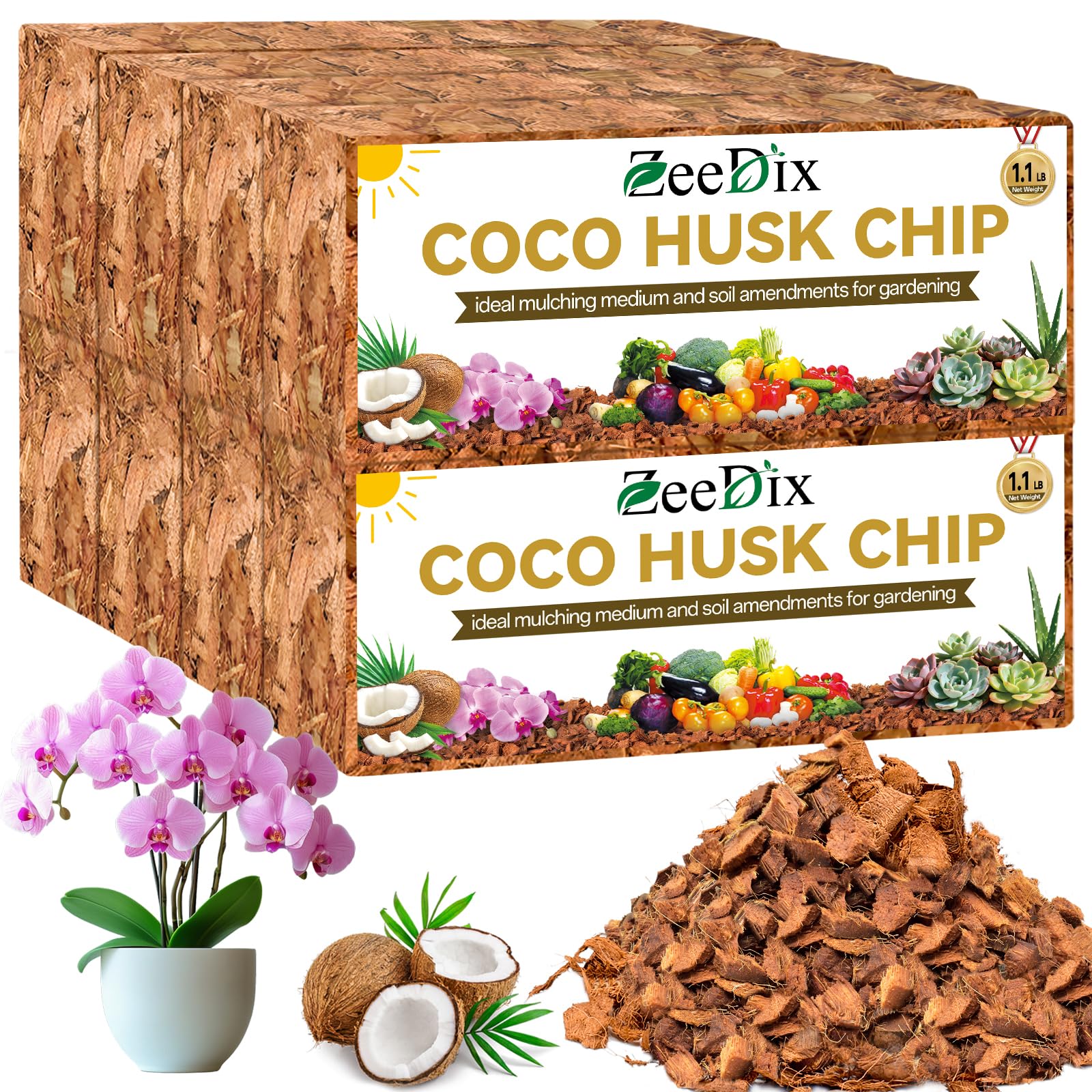
3. Zeedix Coco Chips Mulch, 100% Organic Coco Husk (8-Pack)
Eight individual bricks let you make small batches without committing to one giant block.
Each 1.1 lb brick expands to 7 quarts of chipped substrate. That is enough for one small tree ring or a few containers. The 8-pack gives you 56 quarts total, but the modular format means you open only what you need now and store the rest dry. This is perfect if you have a few fruit trees in the backyard but do not need mulch for the whole orchard at once.
The chips are 100% organic and certified biodegradable, with low EC and balanced pH — meaning no salt burns on young feeder roots. Owners find the quality strong, with 12 positive mentions. Some note the chips are chunky enough for aroid mixes and that the expansion is easy: just soak in a bucket. One owner described using them for ball pythons, which says volumes about the dust-free, clean nature of the material.
The catch is per-unit cost. At roughly the same price as the Gro-Med single block, you get less total volume per dollar — the 8-pack yields about 56 quarts compared to the Gro-Med’s 65, but the flexibility of separate bricks is worth the premium to some.
Modular advantage
- Use one brick at a time; the rest stay fresh in storage
- 100% organic, low EC and balanced pH for root safety
- Clean, dust-free, and insect-free according to owners
Trade-off
- Higher cost per quart than single large blocks
- Small 7-quart brick is best for small projects, not big tree rings
Reach for this if: you want portion control and organic certification for a few container citrus trees or young saplings.
Think twice if: you need to cover a large, established tree — you’ll need to hydrate multiple bricks at once.
4. MODELLOR Premium Super Washed Coco Chips (10 lb)

Triple-washed and low in salt — the safest choice for sensitive feeder roots.
One 10 lb block expands to 2 cubic feet (18 gallons) of loose chips, putting it slightly above the PlantBest for yield per block. The standout is the washing process. MODELLOR pre-washes the chips to lower the salt content, so you do not get that initial burst of sodium that can curl leaf edges on young trees. It is also odor-absorbing and mold-resistant, which helps in humid climates where mulch can sour.
Owners mention the chips are extra chunky. One owner who grows large orchids and monsteras says it is their favorite for the big piece size. Dry, compact block is bone-dry and solid — owners recommend a metal tool to break it apart rather than trying with your hands. Compared to the Gro-Med, the MODELLOR yields slightly more volume (18 gallons vs 16 gallons) but is priced a notch higher.
The main critique is dust content — some customers note significant dust in the block, though many say it is less dusty than other brands.
Pros for fruit trees
- Triple-washed, low salt for safe root contact
- Chunky chips resist compaction around trunk base
- Expands to 2 cu ft (18 gal), good for one large tree ring
Note
- Some dust content reported; wetting before spreading helps
- Requires a large bucket or tub for rehydration
Choose this if: salt sensitivity is a concern — perhaps for newly planted trees or after a dry spell when roots are stressed.
Consider another if: you prefer zero dust and want OMRI certification on top of the wash guarantee.
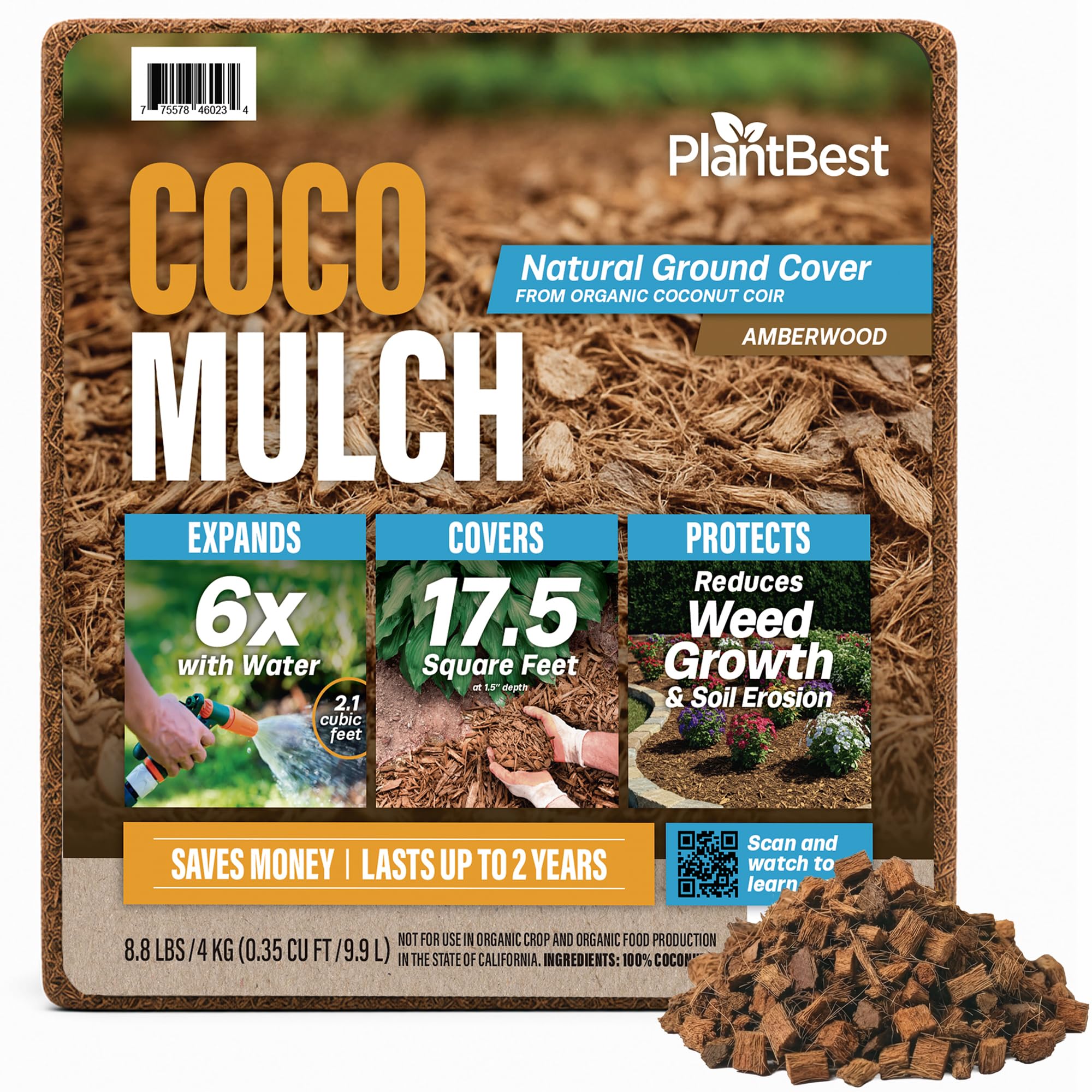
5. PlantBest Coco Mulch Compressed Block (9.1 lb)
Lasts up to two seasons before needing replacement. — fewer re-applications, less labor over time.
This 9.1 lb compressed block delivers the widest claimed coverage: 16 gallons (2.1 cubic feet) expand to cover up to 17.5 square feet at a 1.5-inch depth. That is enough for a respectable ring around a semi-dwarf fruit tree. The durability is the key advantage. The manufacturer says the material lasts up to 2 seasons before breaking down, which beats standard bark mulch that needs annual replacement.
The husk chips interlock when watered, forming a stable mat that resists washing away on slopes. Owners rate effectiveness and quality highest, with 40 positive mentions each. However, there are mixed reviews about how well the block actually expands — 17 owners mention expandability, and the sentiment is split. Some find it does not fluff up as much as promised. The ease-of-use feedback is solid (34 positive mentions), but the value-for-money opinions lean negative (34 owners call it poor value).
For fruit trees, the long life is genuinely useful. You can lay this once and not touch it again until the following spring. But measure your area carefully — if the expansion falls short, you may need a second block.
Ease vs value tension: owners love how easy it is to apply but feel the price is high for the material you get. If volume-per-dollar matters most, the Gro-Med beats it.
Who it’s for: gardeners tired of remulching every year. The 2-season life reduces annual labor.
Who might pass: anyone on a strict budget or hoping for a massive expansion from a small block — some reviews say it came up short.
6. Plantonix Coco Chips Mulch Brick (10 lbs)
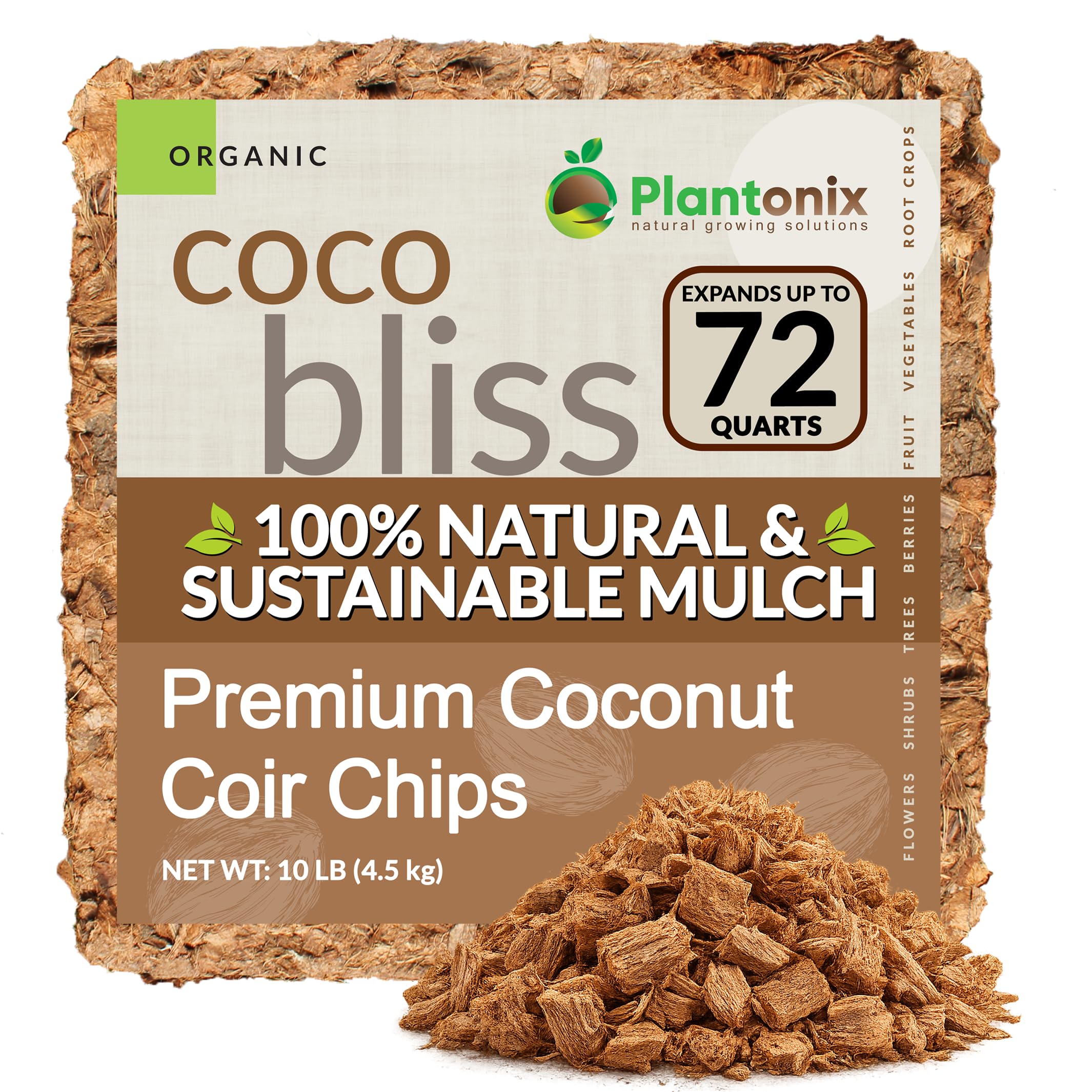
A 10 lb brick that makes 15 gallons of airy, tropical-looking chips.
Plantonix sources recycled coconut husks that would otherwise go to waste, compresses them into a tidy 10 lb block, and markets it as a mulch that keeps its shape. The chips are bigger than standard coco coir, so they allow more airflow between pieces. That matters under a fruit tree where fungal diseases can develop if moisture sits stagnant.
The block expands nicely with minimal dust, according to owners. One person who uses it for a chunky houseplant mix notes the pieces are “much bigger than coco-coir” and blend well with the finer material. Moisture retention gets 15 positive mentions, and the quality is the top talking point with 39 mentions. This is a straightforward buy — no frills, no special certifications, just solid chips that do the moisture-and-weed job.
The catch is the volume: 15 gallons is smaller than the 2 cu ft (15 gallons vs ~15 gallons for MODELLOR’s 2 cu ft, but the Gro-Med yields 65 quarts which is about 16.25 gallons). So the Plantonix is on the smaller side for the price tier but still adequate for one medium tree ring.
Solid points
- Recycled material is eco-friendly
- Chips stay chunky and resist compaction
- Strong moisture retention keeps tree roots cool
Real limit
- Only 15 gallons — may not cover a large tree at desired depth
- No organic certification stated in the specs
Solid pick for: a single established tree where you want reliable moisture retention without overspending.
Not the one if: you need maximum coverage per dollar or strictly organic inputs for organic fruit growing.
7. Back to the Roots 100% Organic Mulch (2 cu ft)
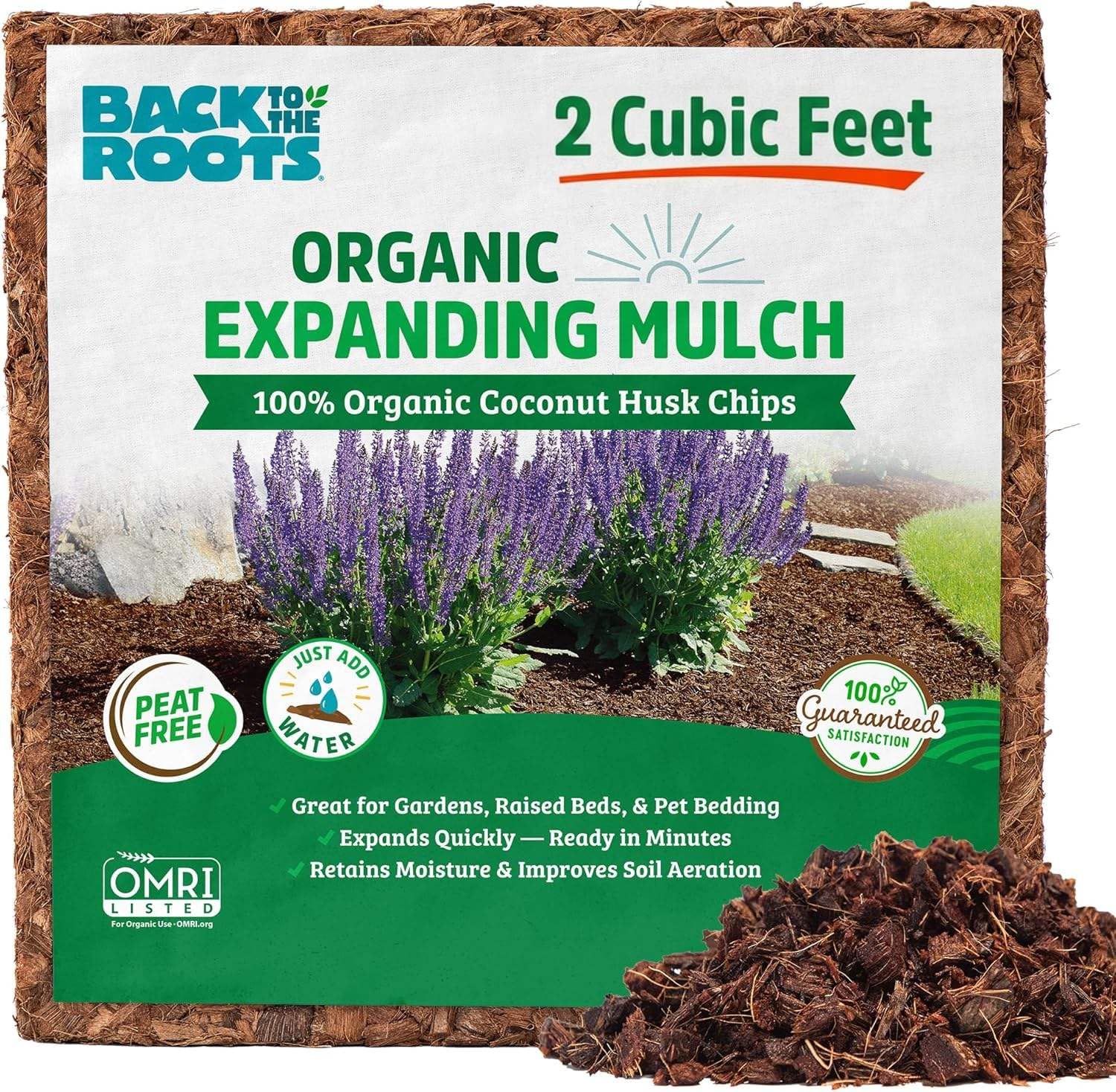
The 10 lb block fills a wheelbarrow — no heavy bags up the driveway.
This is the most owner-friendly mulch on the list. The 10 lb compressed block expands to over 2 cubic feet once soaked — enough to fill a wheelbarrow three-quarters full, according to owners. One reviewer noted, “Saved my back from carrying a heavy bag of mulch.” The lightness before expansion makes it easy to store and transport, and the organic (OMRI Listed) status means no synthetic chemicals near your fruiting trees.
It is peat-free and made from coconut husk. Quality gets 23 positive mentions, and ease of use gets 13. The color when hydrated is described as nice, contributing to 9 mentions for appearance. For a backyard orchardist who wants to avoid the chore of hauling wet bags, this is a genuine upgrade. The maker also runs a “GROWONEGIVEONE” program where sharing a garden photo donates a kit to a classroom — a feel-good bonus.
The volume is slightly smaller than the PlantBest (2 cu ft vs 2.5 cu ft), so it covers a bit less area. But the organic certification and the ease-of-use praise make it a competitive choice for organic growers.
Organic + convenient: the combination of OMRI listing and lightweight shipping puts this ahead of many bulk-bag coco options. Owners consistently call it easy.
Grab this for: your organic home orchard — the certification is real, and the back-saving format is a bonus.
Maybe skip if: you need the absolute cheapest per-cubic-foot ratio — the Gro-Med offers more volume for less money.
8. Hull Farm 50150 Cocoa Bean Shell Mulch, 2 Cubic Feet

Smells like hot cocoa when the sun hits it — and enriches soil as it breaks down.
This is not a coconut product. It is ground cocoa bean shells, and the immediate difference is the scent. Seventy-six owners mention the aroma as the top positive aspect — it genuinely smells like chocolate, especially in warmer weather. The scent fades over days, but during that window, your fruit tree ring smells like a bakery. More practically, the shells have a fertilizer value of 2.5-1-3, so as they decompose, they release nitrogen, phosphorus, and potassium into the soil. This is a light feed that won’t burn vegetation.
Owners love how it looks — dark and rich — and note it stays put better than fluffy mulches because the shells interlock when watered. It also works as a squirrel deterrent; one owner switched from pecan mulch because it attracted digging, but the cocoa beans seemed to lose the squirrels’ interest. The bag is 2 cubic feet loose, not compressed, so you get the same volume as a standard garden mulch bag.
The major caution involves dogs. Cocoa mulch contains theobromine (the same compound in chocolate), which is toxic if eaten in large quantities. Every review mentions this in the comments. If your dog patrols the fruit tree area, skip this pick. Also, owners on the fence about value: 25 mention poor value for money, noting the price has tripled in recent years.
Unique upsides
- Natural fertilizer (2.5-1-3 NPK) feeds the tree slowly
- Rich chocolate scent — a genuine sensory pleasure
- Stays in place on slopes better than bark
Serious caveats
- Toxic to dogs if ingested — keep away from pets
- Higher cost per bag than equivalent volume of coco chips
Best for: dog-free yards where you want a beautiful, scented, soil-feeding mulch around mature fruit trees.
Not for: pet owners, especially if dogs have free access to the garden — the risk is real.
9. HealthiStraw GardenStraw, 3 cu ft (20 lbs) All-Natural Mulch
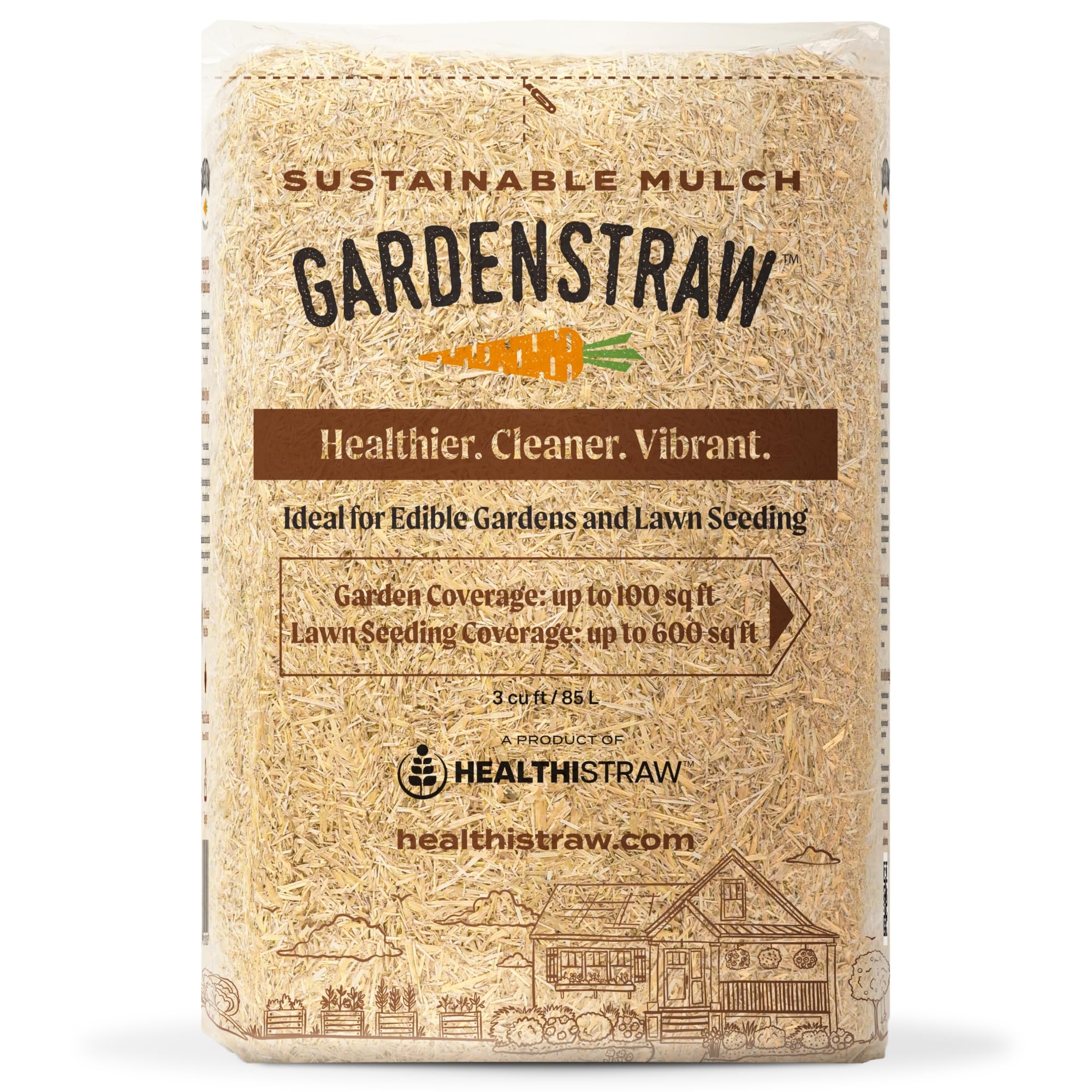
A 3 cu ft bale of wheat straw that cuts watering needs and feeds the soil afterward.
This is a fundamentally different material from the coconut options above. It is wheat straw, not husk, so it behaves differently around a fruit tree. The straw fibers are cut to a uniform length, stay put when watered (they interlock), and resist wind much better than loose hay. HealthiStraw claims it reduces watering needs, which is a massive benefit in dry climates. The bale covers up to 100 square feet at 2–3 inches deep — that is a lot of coverage, enough for several mature trees.
Quality gets the most positive mentions at 76, and weed suppression follows at 59. Owners using it around tomatoes and peppers note exceptional moisture retention and very few weed breakthroughs. The straw breaks down quickly, adding carbon to the compost pile when you replace it. For fruit trees, this quick decomposition means the straw enriches the soil sooner than coco chips, which last longer.
The main split is seed content. Fifty-eight owners mention sprouting. While the straw is “naturally filtered to remove as many seeds as possible,” some reviewers point out “hundreds of seeds” germinating. Others say “no wheat seed germination” at all. The outcome varies by batch. If you mind pulling wheat grass shoots from your tree ring, this may frustrate you.
Why straw works
- Big coverage (3 cu ft) for orchard-scale mulching
- Dramatic water savings
- Adds carbon to soil as it decomposes
Watch out for
- Seeds can sprout — some batches have significant wheat grass germination
- Breaks down faster than coco, so needs more frequent reapplication
Reach for this if: you have a dry climate, need to cover a large area, and are okay pulling an occasional grass shoot from the tree ring.
Look elsewhere if: you want a zero-maintenance mulch that lasts all season without any weeding.
Understanding the Specs
Expanded Volume (Quarts and Cubic Feet)
Compressed coconut blocks list their dry weight (usually 10 lb) and their expanded volume after soaking. This is the number that determines how much area you can cover. 1 cubic foot equals roughly 30 quarts. A 65-quart block (like the Gro-Med) yields about 2.2 cubic feet of mulch — enough for a 3-foot diameter ring at 2 inches deep. If the data only gives weight, you cannot guess the volume; each brand’s compression ratio differs.
EC Level and pH Balance
EC stands for electrical conductivity, which measures dissolved salt in the mulch. High EC can burn the tender feeder roots of a young fruit tree. Triple-washed chips have lower EC levels. A balanced pH (around 5.5 to 6.5) is better for most fruit trees because it matches the slightly acidic soil they prefer. Some bricks specifically say “Low EC and pH balanced” to signal they are safe for direct root contact.
OMRI Listed vs Organic Claims
OMRI (Organic Materials Review Institute) listing means a third-party organization verified that the product meets organic production standards. Not every natural mulch carries this label — some say “100% organic” without the OMRI stamp. For certified organic fruit growing, look for the OMRI listed mark. It is the strongest guarantee that no synthetic chemicals were used in processing.
Moisture Retention vs Drainage
Coconut husk chips can absorb water, but the size of the chips matters. Chunky chips (like the MODELLOR or Gro-Med) create air gaps that let excess water drain away, preventing root rot. Finer chips pack more tightly and hold water longer. For a fruit tree, you want the chunky texture for a balance — the mulch holds moisture for the roots but does not keep the trunk wet.
FAQ
Can I use regular bark mulch around fruit trees?
How deep should I lay fruit tree mulch?
Is cocoa bean shell mulch safe for dogs?
Will coconut mulch attract termites or ants?
How long does a compressed coco block take to expand?
Does straw mulch have seeds that will grow in my garden?
Can I mix coco chips into the soil when replanting?
What does “expands to 16 gallons” mean in practice?
How do I store unused compressed blocks?
Final Thoughts: The Verdict
For the majority of shoppers, the fruit tree mulch winner is the Gro-Med Coco Husk Chips because it gives you the largest expanded volume (65 quarts) from a single block, with OMRI organic listing and triple-washed safety for roots at a competitive price. If you want a ready-to-lay physical barrier that stops squirrels, grab the Deepthi Coco Mats. And for a large-scale, water-saving option that feeds the soil as it breaks down, the HealthiStraw GardenStraw covers over 100 square feet and dramatically reduces watering frequency — just watch for occasional seed sprouting.
How We Picked
We do not accept paid placement. Every pick is matched to a real buyer and a real use-case; we do not hands-on test units.
Sources & Methodology
Specifications: manufacturer listings and product documentation. Review insights: verified customer reviews, as of July 2026. Pricing: not shown on this page (it changes often); check the current price via the retailer link.
As an Amazon Associate, Lawn Gear Lab earns from qualifying purchases. This does not affect which products we feature.