
Specs are compiled from manufacturer listings and verified buyer reviews and can change over time — please confirm the key details on the product page before buying.
You spot curled leaves, black spots, or tiny bugs swarming new growth just as your fruit starts to ripen. The wrong spray can burn leaves, leave toxic residue on your apples and peaches, or fail against the specific pest you are fighting. You need a broad-spectrum knockout, an organic daily-driver, or a targeted worm-killer that spares the bees—here is the best insecticide for each job.
I’m Rikta — the founder and writer behind Lawn Gear Lab. This guide is built by comparing the manufacturers’ published specifications and the patterns across verified customer reviews, so you get each pick’s real strengths and trade-offs instead of marketing spin.
To find the right spray, you have to match the active ingredient to the pest and the tree—not every bottle works on every bug. Here is everything you need to know about choosing a fruit tree insecticide spray that actually protects your harvest.
Our Picks at a Glance

How To Choose The Best Fruit Tree Insecticide Spray
A fruit tree spray needs to do more than just kill bugs. It has to protect the fruit you are going to eat, handle multiple pest cycles across a season, and not torch your tree’s foliage in the summer heat. Here are the three specs that matter most.
Active Ingredient: The Muscle Behind the Bottle
The single most important decision is what chemical is doing the killing. Malathion is a potent broad-spectrum organophosphate that crushes aphids and spider mites but requires heavy protective gear. Spinosad is a naturally derived bacterium that targets caterpillars and thrips while being gentler on beneficial insects. Neem oil works as a fungicide, insecticide, and miticide in one, but it needs repeated applications. B.t. (Bacillus thuringiensis) is a bacteria that only kills caterpillars and worms, making it the safest choice for bees and earthworms when you have a specific leaf-roller problem.
Concentrate vs Ready-to-Spray
A 32 oz concentrate often makes 6 gallons of finished spray, which is far more economical for a small orchard than buying ready-to-use jugs. Ready-to-spray bottles attach directly to your garden hose and are easier for a quick treatment on a single tree, but you pay a premium for the convenience. If you have more than two trees, a concentrate almost always wins on cost per treatment.
Fungicide + Insecticide Combos
Quick Comparison
| Model | Best For | Active Ingredient | Volume | Form | Amazon |
|---|---|---|---|---|---|
| Hi-Yield 55% Malathion★ Best Overall | Broad-spectrum knockdown | 55% Malathion | 32 oz | Concentrate | Amazon |
| Bonide Captain Jack’s Orchard SprayBest Value | All-in-one disease + bug control | Sulfur + Pyrethrin | 32 oz | Concentrate | Amazon |
| Fertilome SpinosadTop Performer | Organic caterpillar & worm killer | Spinosad | 16 oz | Concentrate | Amazon |
| BioAdvanced 3-in-1 | Easy hose-end application | Lambda-cyhalothrin | 32 oz | Ready-to-Spray | Amazon |
| Monterey B.t. | Safe caterpillar control | Bacillus thuringiensis | 32 oz | Concentrate | Amazon |
| Dr. Earth Yard & Garden | Natural pet-safe repellent | Clove & garlic oil | 64 oz (2-pack) | Ready-to-Spray | Amazon |
| Garden Safe Fungicide3 | Large-volume neem treatment | Neem oil extract | 128 oz | Ready-to-Use | Amazon |
| Monterey Fruit Tree Plus | Fast knockdown + residual | 70% Neem oil + Pyrethrin | 16 oz | Concentrate | Amazon |
| Bonide Captain Jack’s Fruit Tree Spray | Large organic orchard care | Cold-pressed neem oil | 64 oz | Concentrate | Amazon |
In‑Depth Reviews
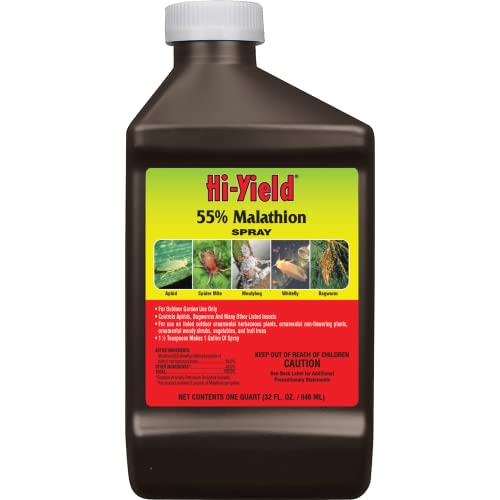
1. Hi-Yield (32029) 55% Malathion Spray (32 oz)
Our pick — over 4.5★ from 650+ verified ratings; the strongest balance of quality and price.
The heavy artillery that finally beats stubborn scale and spider mites.
When gentler sprays fail, the 55% Malathion concentration in this 32 oz bottle is the last-resort option that works. It controls aphids, thrips, spider mites, lace bugs, and more across herbaceous plants, ornamentals, vegetables, and fruit trees. As buyers report, it “got rid of the carpenter bees” where other methods fell short. The bottle weighs 2.4 pounds and carries a 4.7-star average across a large owner base, making it the crowd favorite among serious fruit growers.
The catch is honest and unavoidable: Malathion is a strong chemical that requires protective gear—gloves, long sleeves, and a respirator during mixing. Apply it in calm weather when rain is not expected for the next 24 hours, and use a hose-end or tank sprayer for even coverage. It meets USDA specifications, so you know it has passed federal scrutiny, but buy this only if you are comfortable with heavy-duty chemistry and willing to follow the label to the letter.
At 2.4 pounds it weighs about 4% more than the Bonide Captain Jack’s Orchard Spray (2.3 pounds), but that slight extra heft comes from a more concentrated active ingredient that delivers faster knockdown on tough pests.
The knockout punch
- 55% Malathion concentration is one of the highest available for home use.
- Covers a very wide pest range including spider mites and lace bugs.
- Owner reviews consistently praise its effectiveness on stubborn infestations.
Handle with care
- Requires protective clothing, gloves, and a respirator during mixing.
- Not safe for use when bees are active or near water sources.
- Strong odor lingers after application.
Your last resort: Choose this when every other spray has failed on scale, spider mites, or carpenter bees.
Think twice if: You prefer organic methods or have pets and children who play near the trees daily.
2. Bonide Captain Jack’s Citrus, Fruit & Nut Orchard Spray, 32 oz Concentrate
The all-in-one that turns a yellowing apple tree green again in weeks.
This 32 oz concentrate pulls triple duty as an insecticide, fungicide, and miticide, covering everything from beetles and fruit flies to powdery mildew and brown rot. One pint makes up to 6.4 gallons of finished spray, and you can apply it up to the day before harvest. Owners mention that “the leaf spots on my apple tree are disappearing and it is noticeably greener,” a result of both the pest control and the disease prevention working together.
If you want one bottle that handles bugs, blight, and mites on citrus, apples, pecans, and vegetables without switching products, this is your pick.
The triple threat
- Controls insects, fungal diseases, and mites with one mix.
- Safe for edible plants up to the day before harvest.
- One pint makes 6.4 gallons of spray—great economic value.
The limits
- 32 oz runs out faster on large orchards than bigger jugs.
- Requires reapplication after rain.
- Mixed results on plant damage—some owners saw leaf sensitivity.
Your one-bottle solution: Pick this for a small orchard or vegetable garden where you need fungus and insect control in a single spray.
Look elsewhere if: You need a targeted caterpillar killer that spares every beneficial insect—the pyrethrin affects bees if sprayed during bloom.
3. Fertilome (16062) Spinosad Insecticide, 16 oz
The OMRI-listed worm killer that saved one owner’s shrubs in days.
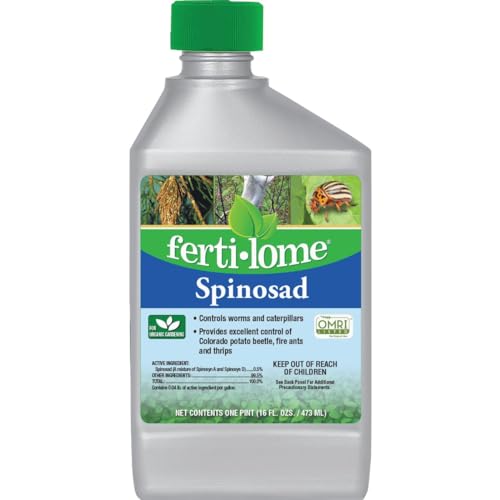
If bagworms, tent caterpillars, or Colorado potato beetles are your main enemy, this 16 oz Spinosad concentrate is the organic answer. Spinosad is a naturally derived bacterium that targets foliage-feeding worms, thrips, and borers while leaving beneficial insects largely alone. One owner reports “I did 3 applications for bagworms each 7-10 days apart” and cleared the infestation completely. The concentrate mixes at 4 tablespoons per gallon of water and works on vegetables, trees, shrubs, and citrus.
At 16 fluid ounces, this is half the liquid volume of the Hi-Yield 32 oz bottle, and the weight matches—16 ounces versus 2.4 pounds. That smaller size is fine for spot treatments but runs out faster if you have multiple trees. The OMRI listing means it is certified for organic production, and owners consistently praise the pest control—25 mentions on that aspect alone. The mixed value-for-money feedback suggests some find the small bottle pricey, but the concentrated formula stretches further than you think.
Versus the Monterey B.t. below, Spinosad has a broader target range: it kills chewing insects plus thrips and leafminers, while B.t. only kills caterpillars. If your pest list includes both worms and beetles, this is the better choice.
Organic muscle
- OMRI listed for certified organic gardening.
- Effective on bagworms, potato beetles, thrips, and leafminers.
- Gentler on beneficial insects than synthetic chemicals.
Size trade-off
- 16 oz bottle is small—reorder frequently for large orchards.
- Mixed value feedback—some owners find the per-ounce cost high.
- Requires 7-10 day intervals between applications for best results.
For targeted organic control: Use this when bagworms or potato beetles are the primary pest and you want an OMRI-certified solution.
Not ideal if: You need a fungicide component—this is insecticide-only, so add a separate treatment for powdery mildew or rust.
4. BioAdvanced 3-in-1 Fruit, Citrus & Nut Tree Spray – Ready-to-Spray, 32 oz
A hose-end sprayer that treats bugs, diseases, and mites in one pass.
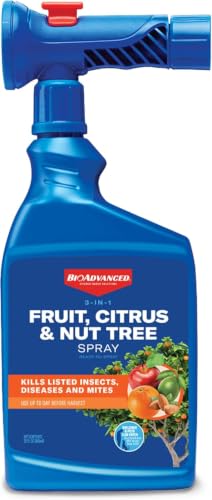
This 32 oz ready-to-spray bottle connects directly to your garden hose—no mixing, no measuring, no mess. It kills caterpillars, aphids, and mites while controlling black spot, powdery mildew, and rust on fruit, citrus, and nut trees. You can use it up to the day before harvest, which makes it the easiest option for a quick mid-season treatment. One owner on blood orange trees had tried two other products with no success; this one worked on the first application and saved the blooms.
The ease of use scores the highest owner praise—13 mentions—and the spray performance follows at 8 mentions. But the story is more complex: effectiveness gets 37 mentions, and Amazon marks it as mixed. Some customers note excellent results on peach trees and blackberry plants, while others say it did not work at all on their apples. The spray head can be finicky with water pressure, and shipping quality is hit-or-miss—one bottle arrived leaking.
Versus the Bonide Captain Jack’s concentrate above, the BioAdvanced trades a lower rating (4.4 vs 4.6) and mixed effectiveness for class-leading convenience. If you have one or two trees and hate mixing chemicals, this is your pick.
easy application
- No mixing—just attach to the hose and spray.
- 3-in-1 formula covers insects, mites, and diseases.
- Safe to use up to the day before harvest.
The effectiveness gamble
- Results vary widely—some reviewers point out no effect on apple pests.
- Spray head can be unreliable with low water pressure.
- Shipping packaging sometimes leaks.
For the quick fix: Grab this if you need to treat a single tree fast without measuring concentrate.
skip it if: You have a serious infestation—the mixed effectiveness reviews suggest heavier pests need the concentrated firepower of a product like Hi-Yield or Fertilome Spinosad.
5. Monterey B.t. Bundled with Measuring Spoon – 32 oz
A caterpillar-specific bacteria that leaves honeybees and ladybugs untouched.
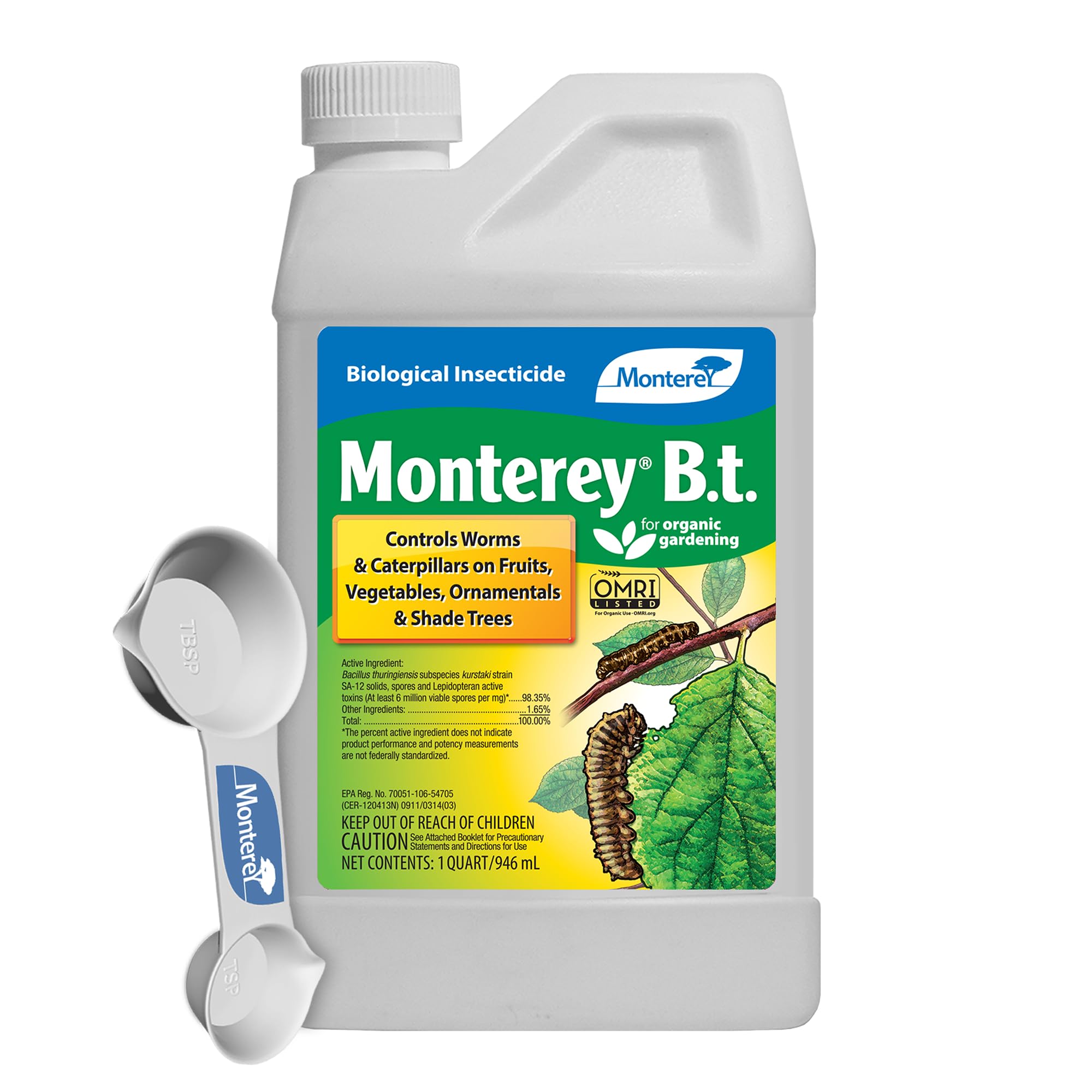
When your only problem is caterpillars — bagworms, cabbage loopers, hornworms, or squash vine borers — this B.t. concentrate is the most targeted weapon you can buy. B.t. is a naturally occurring bacteria that only affects the digestive system of caterpillars and worm-type insects. It has no effect on birds, earthworms, honeybees, or ladybugs when used as directed. The 32 oz bottle comes bundled with a measuring spoon, and the concentrate mixes instantly with water for use in a trigger or pressure sprayer.
Effectiveness tops the owner praise list with 56 mentions, and 17 owners single out quality. The common wisdom from the community is that B.t. breaks down rapidly in sunlight, so mix only what you need for the evening and apply at dusk. One owner on pickleworm control recommends combining it with net bags for the best results. The only consistent complaint is the bottle design—some owners could not open it and had to cut the bottle. The cost per bottle is higher than synthetic options, but owners insist it is worth it because a little product goes a long way.
Compared to the Fertilome Spinosad above, B.t. has a narrower target range (caterpillars only vs caterpillars plus thrips and beetles). Choose this when you know the pest is a leaf-roller or worm and you want zero collateral damage on pollinators.
Surgeon-precision organic
- Zero effect on honeybees, earthworms, or ladybugs.
- OMRI listed for organic gardening.
- Very concentrated—a little covers a lot of foliage.
The sunlight problem
- Breaks down in UV light—must apply in late evening or early morning.
- Only kills caterpillars; no effect on aphids, scale, or fungal diseases.
- Some bottles are nearly impossible to open; have pliers ready.
Save the bees: Use this when caterpillars or hornworms are the sole pest and you want to protect pollinators.
Not the right tool: If your trees have aphids, scale, or powdery mildew, you need a broader-spectrum spray like the Bonide Captain Jack’s.
6. Dr. Earth 8004 Ready to Spray Yard and Garden Insect Killer, 32-Ounce (Pack of 2)
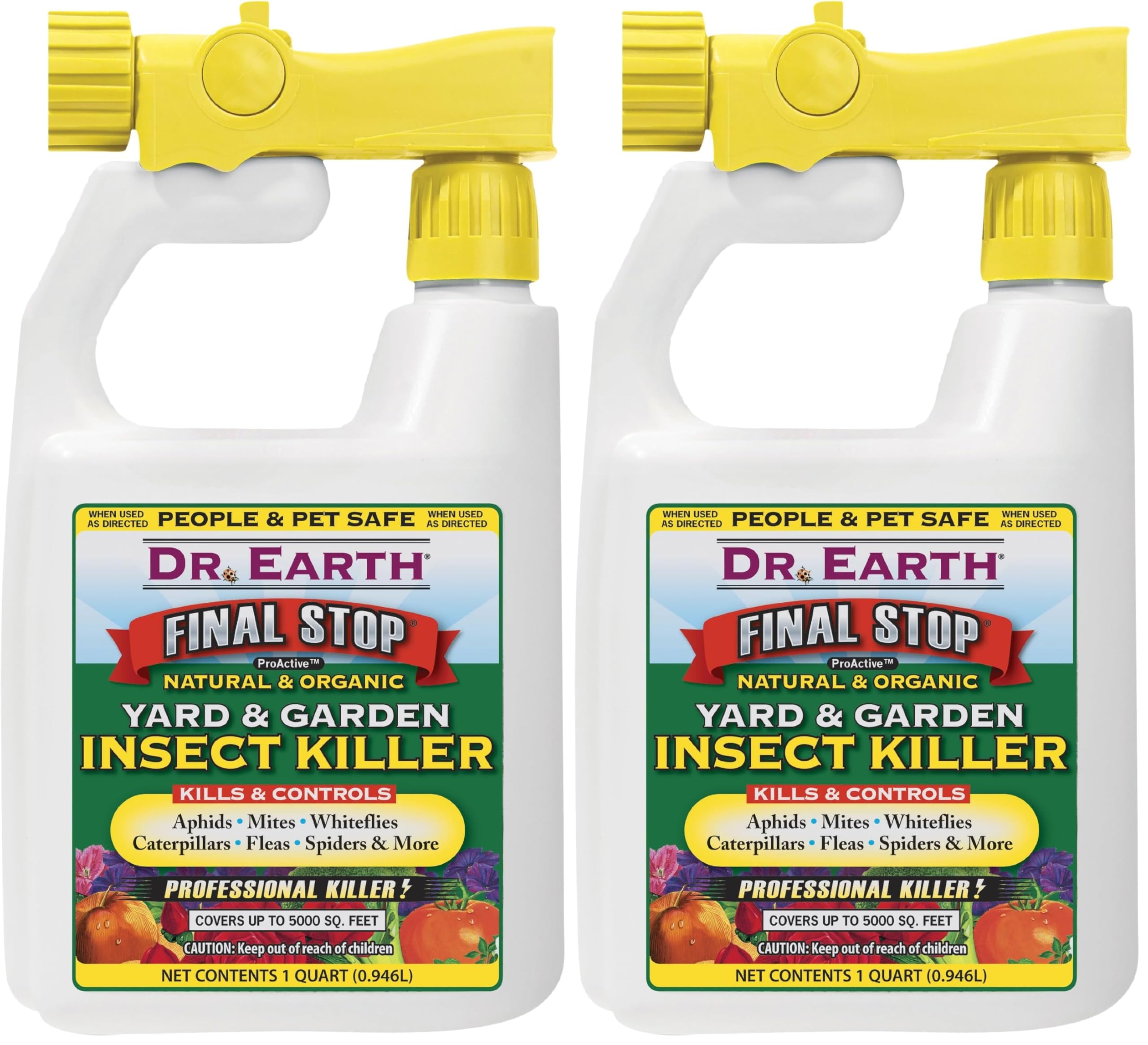
A two-pack of natural spray that is safe around pets and smells like a kitchen garden.
This ready-to-spray formula uses clove and garlic oils to kill and control insects on vegetables, fruit trees, turf, and ornamentals. It comes as a two-pack, giving you 64 fluid ounces total, and you can apply it up to the day of harvest. Owners love that it is natural, safe for pets, and effective at reducing mosquitoes and flying insects. One owner called it a “wonderful addition to my safe and organic way to care for my Dogs and Grandchildren.” The bottle is even made from ocean plastic.
The 4.3-star average across a solid owner base tells an honest story: natural oils work well for general pest pressure but may not knock down heavy infestations. The most-discussed issue is the sprayer cap—shoppers say it breaks immediately, and the on/off switch feels awkward. Apply early morning or late afternoon to avoid leaf burn, and spray the undersides of leaves where mites and aphids hide. It does not eliminate ants, so pair it with a separate treatment if fire ants are your problem.
Versus the Garden Safe Fungicide3 below, the Dr. Earth has a more pleasant scent but a smaller volume per bottle. If you want a natural spray for a small yard with pets and kids, this two-pack is the right fit.
Natural and gentle
- Safe for use around dogs, grandchildren, and edible crops.
- Pleasant scent compared to chemical sprays.
- Bottle made from ocean plastic—eco-friendly packaging.
Hardware flaws
- Sprayer cap often breaks on first use.
- On/off switch is stiff and awkward.
- Less effective on heavy infestations of scale or hard-bodied insects.
For the pet-friendly yard: Choose this when you want a natural spray that is safe around animals and children.
Avoid if: You need a heavy-duty insecticide for a serious pest invasion—the essential oils lack the punch of synthetic or even neem-based sprays for tough bugs.
7. Garden Safe Brand Fungicide3, 1 Gallon (128 oz)
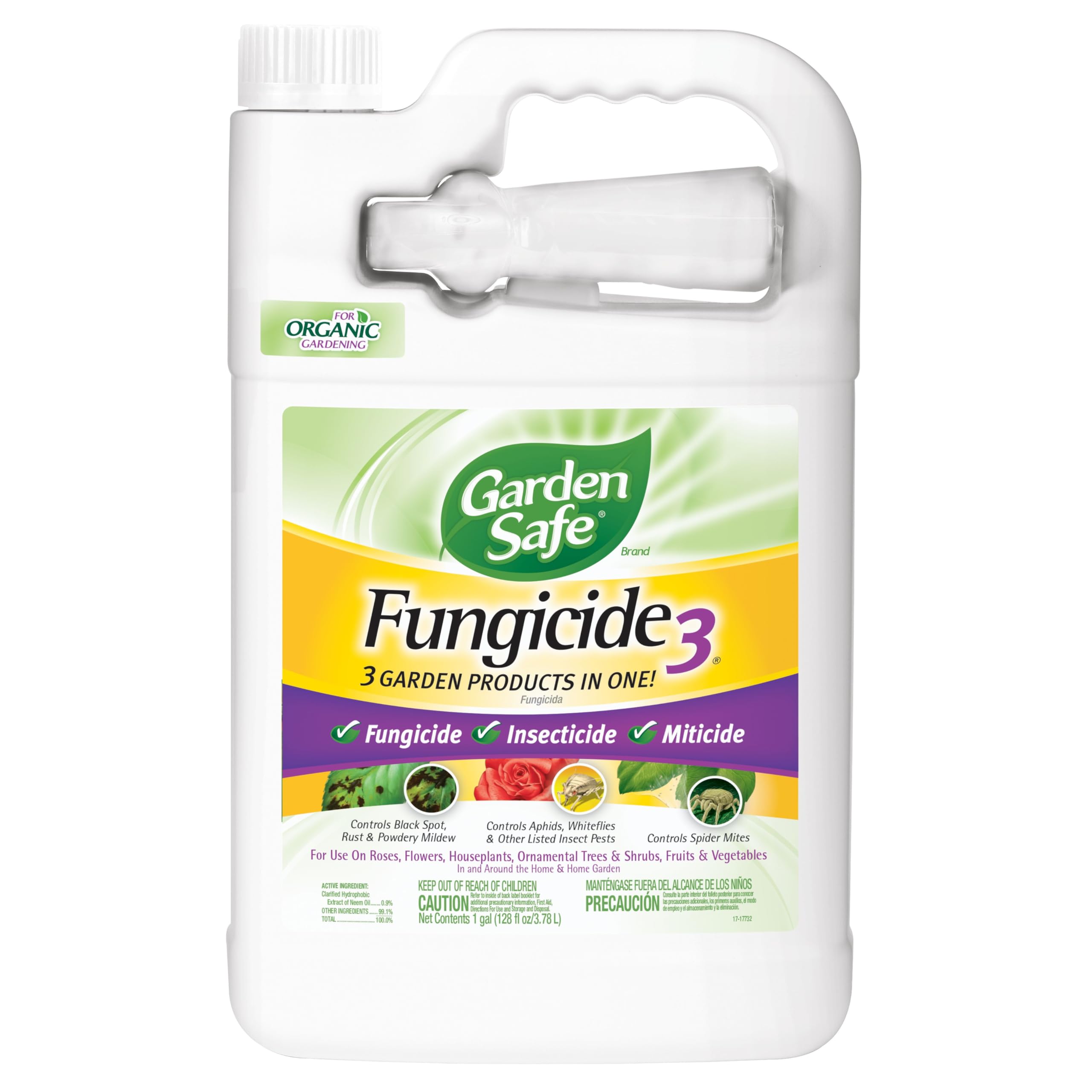
A full gallon of neem-based treatment that tackles black spot and powdery mildew.
With a full 128 fluid ounces in one jug, this is the largest volume product on the list. It combines clarified hydrophobic extract of neem oil as a fungicide, insecticide, and miticide in one ready-to-use formula. It kills eggs, larvae, and adult stages of aphids, whiteflies, and spider mites while preventing black spot, rust, and powdery mildew. Use it on roses, flowers, houseplants, ornamentals, and fruit and vegetable trees. Buyers report it eliminated mildew on hibiscus, roses, tomatoes, and blueberries with weekly use, producing greener foliage and higher yields.
The neem oil is EPA-specified, meaning it meets federal standards for safety and efficacy on edible crops. The catch is the sprayer design—owners consistently call it “dumb design” with only about 4 inches of coiled hose reaching from the jug to the plant. Some owners also warn that neem oil can burn plants if applied in full sun or at double strength; the consensus is to use less than half the recommended dose and avoid daytime application. It also does not kill squash bugs or grubs, so check your pest list before committing.
At a gallon, this is over 4x the volume of the BioAdvanced 3-in-1 (32 oz) for a similar price tier. If you have a large orchard or a lot of ornamentals, the per-ounce savings are significant.
Gallon-sized power
- 128 oz is the largest volume—best value for big gardens.
- Neem oil kills eggs, larvae, and adult insects.
- Safe for vegetables and fruit up to harvest.
Application annoyances
- Sprayer has a very short hose—hard to reach into dense trees.
- Neem oil can burn foliage if applied incorrectly or in direct sun.
- Does not control squash bugs or grubs.
For the big orchard: Pick this gallon jug when you have many trees and need an economical neem solution for routine maintenance.
Think twice if: You have a specific grub or squash bug infestation—this spray will not touch them, and you will need a Spinosad or B.t. product instead.
8. Monterey Fruit Tree Spray Plus Bundled with Measuring Spoon – 16 oz
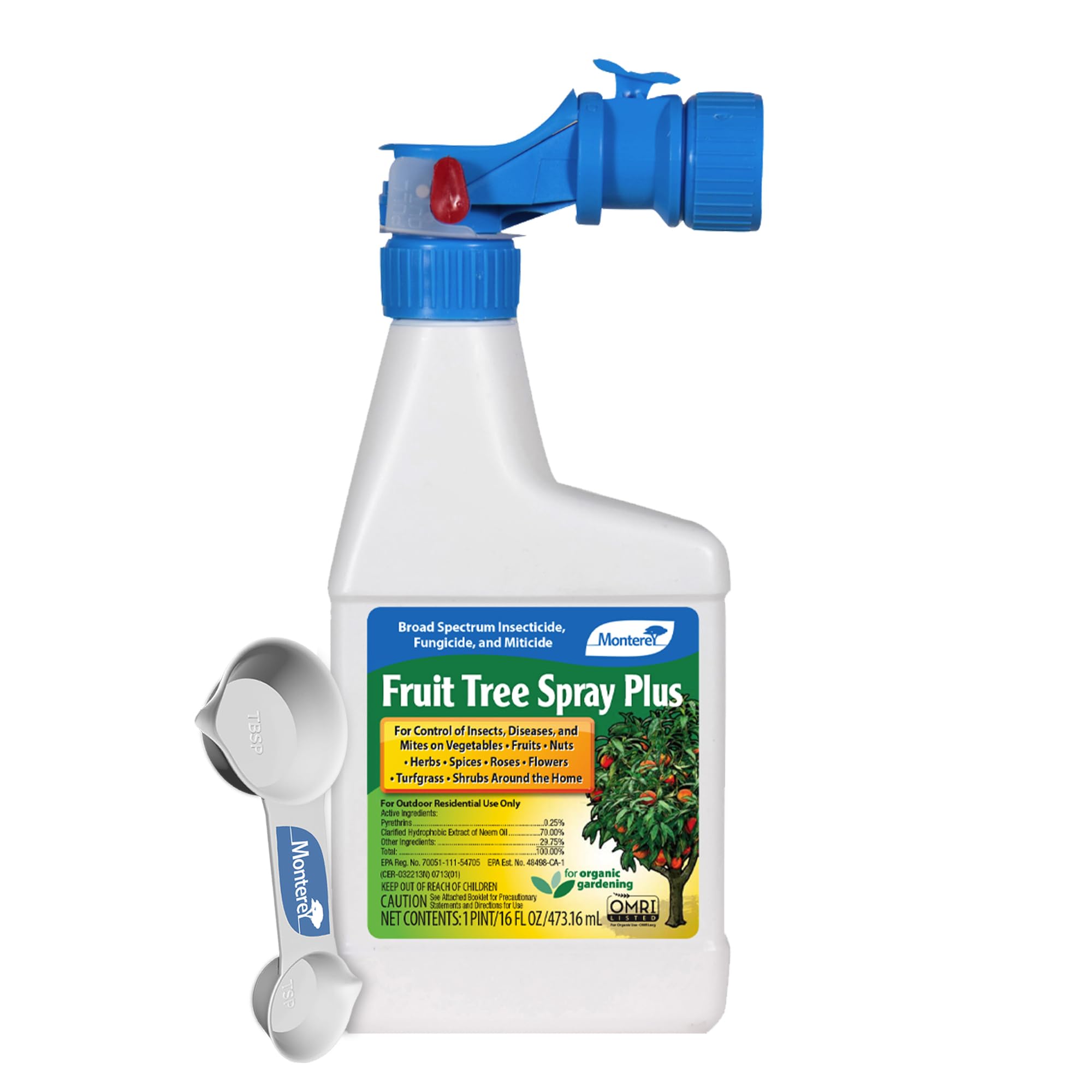
Neem oil plus natural pyrethrin for a one-two punch against aphids and stink bugs.
The 3.8-star rating and smaller review base (58 ratings) are the most honest indicators here: the formula works, but the packaging has issues. Several owners mention leaks during shipment, and the red attachment that connects the bottle to the hose can pop off under water pressure. The bottle runs out fast at 16 oz for a concentrate that you mix at small doses, but the bundled measuring spoon makes mixing easy. This product is relatively new (March 2025), so long-term reliability data is thin.
Versus the Garden Safe Fungicide3 above, this Monterey product has a faster knockdown due to the pyrethrin component but comes in a much smaller bottle. If you want the speed of pyrethrin with the residual protection of neem oil and do not mind a smaller bottle, this fills that specific niche.
Speed plus staying power
- Pyrethrin provides instant knockdown; neem oil offers residual control.
- Triple coverage: insecticide, miticide, and fungicide.
- OMRI listed for organic gardening.
Packaging letdown
- Frequent reports of leaking during shipment.
- Hose attachment can pop off under pressure.
- 16 oz bottle is smaller than most concentrates.
For fast acting organic control: Use this when you need immediate results on aphids or stink bugs and want organic certification.
Buy locally if possible: The recurring leak complaint means shipping is risky—grab from a local nursery if you can.
9. Bonide Captain Jack’s Fruit Tree Spray, 64 oz Concentrate

A full 64 oz of organic neem concentrate that keeps citrus trees healthy for years.
This is the premium choice for the serious organic orchardist. The 64 oz bottle of cold-pressed neem oil concentrate works as a fungicide, insecticide, miticide, and even a nematicide when used as directed. It controls powdery mildew, blight, black spot, and mold while repelling aphids, gnats, beetles, and grasshoppers. It arrives ready to mix with water and can be used up to the time of harvest. One owner reports using it on citrus trees for “a couple years” with consistent results, and another says after two years their apple and pear trees look healthier and are finally producing fruit.
At 4.39 pounds, this is the heaviest bottle on the list, reflecting the large concentrate volume. The 64 oz capacity means you get twice the ready-to-mix spray of the Bonide Captain Jack’s Orchard Spray (32 oz) for roughly the same price tier. The 4.5-star average from a smaller review base (89 ratings) suggests a devoted but smaller following. The one caution from the reviews is direct: “don’t use on pear trees,” so check the label for species-specific guidance before spraying.
Compared to the Garden Safe Fungicide3 gallon (128 oz), this Bonide concentrate is half the bottle volume but pure neem oil rather than a ready-to-use dilution, so it actually goes further when mixed—a tablespoon per gallon typically.
Serious organic volume
- 64 oz concentrate provides many gallons of finished spray.
- Cold-pressed neem oil controls insects, fungus, mites, and nematodes.
- Proven long-term success—customers note healthier trees after two years.
Species caution
- Not recommended for pear trees—some reviewers point out damage.
- Smaller review base (89 ratings) means less crowd-sourced data.
- Neem oil requires careful mixing and timing to avoid leaf burn.
For the dedicated organic grower: Invest in this when you have multiple trees and want the largest neem concentrate available for the long haul.
Steer clear if: You grow pears or need a fast knockdown for an active infestation—neem works slower than synthetic or pyrethrin-based sprays.
Understanding the Specs
Active Ingredient Concentration
This is the percentage or amount of the killing chemical in the bottle, not the bottle size. A 55% Malathion concentrate means more than half the liquid is pure Malathion—very potent. A Spinosad concentrate typically uses a much lower percentage because the active ingredient is biologically potent at tiny doses. Higher percentage does not always mean better; it means more careful mixing and more protective gear.
Concentrate vs Ready-to-Use
Concentrate means you mix it with water yourself—usually a few tablespoons per gallon. It costs less per treatment and lets you customize the strength. Ready-to-use (or ready-to-spray) is pre-diluted and hooks directly to your hose for instant application. You pay more for the convenience and get fewer total treatments per bottle.
OMRI Listing
The Organic Materials Review Institute (OMRI) reviews products to make sure they comply with USDA organic standards. An OMRI-listed spray can be used in certified organic production. This matters if you sell your fruit or if you simply want to avoid synthetic chemicals. Note that OMRI listing does not mean the product is harmless—neem oil can still burn foliage if applied in direct sun.
Broad-spectrum vs Targeted
A broad-spectrum spray kills many types of insects and mites, including beneficial ones like honeybees and ladybugs. A targeted spray (like B.t.) only kills a specific group—caterpillars, for example—and leaves the rest alone. If you know exactly what pest you have, a targeted spray is better for the ecosystem. If you have multiple unknown pests, broad-spectrum is more reliable but more dangerous for pollinators.
FAQ
When is the best time of day to spray fruit trees?
Can I use fruit tree insecticide up to the day of harvest?
What is the difference between Spinosad and B.t.?
How often should I reapply fruit tree spray?
Will fruit tree spray kill honeybees?
What does OMRI listed mean for fruit tree spray?
Can I use the same spray on all my fruit trees?
How much concentrate do I need for a full-sized orchard?
What protective gear do I need for Malathion spray?
Why does neem oil sometimes burn my tree leaves?
Final Thoughts: The Verdict
How We Picked
We do not accept paid placement. Every pick is matched to a real buyer and a real use-case; we do not hands-on test units.
Sources & Methodology
Specifications: manufacturer listings and product documentation. Review insights: verified customer reviews, as of July 2026. Pricing: not shown on this page (it changes often); check the current price via the retailer link.
As an Amazon Associate, Lawn Gear Lab earns from qualifying purchases. This does not affect which products we feature.