
Waking up to a garden blackened by an unexpected freeze is a gut punch no gardener forgets. The sudden temperature drop that steals blooms, blackens leaves, and turns months of work into compost is a recurring threat in nearly every hardiness zone. A quality frost cover is the difference between salvaging your harvest and starting over, acting as a portable microclimate that traps ground heat while blocking the icy air that destroys plant cells.
I’m Rikta — the co-founder and writer behind Lawn Gear Lab. I’ve spent hundreds of hours reading through soil temperature data, owner testimonials from freeze events across the country, manufacturer material specs, and field failure reports to isolate which thick, breathable fabrics actually hold up when the mercury plummets and which tear apart after a single season.
This guide breaks down the real-world performance of seven distinct frost covers by fabric weight, UV resistance, breathability ratings, and reusability to help you choose the best frost covers for plants for your garden’s specific winter threat level.
How To Choose The Best Frost Covers For Plants
Not all frost covers are created equal. A thin, lightweight sheet may stop a light morning frost but fail completely during a hard freeze. The four specs below separate temporary patches from reliable winter armor.
Fabric Weight: The Ounce-Per-Yard Standard
The most objective measure of a frost cover’s cold-stop ability is its weight per square yard. Fabrics under 1.0 oz/yd² are suitable for light frosts above 30°F. The 1.0 to 1.5 oz/yd² range handles mid-20s freezes. At 1.5 oz/yd² and above, you gain protection down to around 24°F when doubled, and the material resists tearing under wind load. For extremely cold zones, look for 2.2 oz/yd² or consider layering two covers.
Breathability and Light Transmission
A cover that seals completely traps condensation, which can freeze and damage foliage on the inside. Quality frost fabrics use a spun-bond or non-woven construction with micro-pores that allow air exchange and moisture vapor to escape while holding ground heat. Most mid-weight covers transmit about 70-85% of available light, which is enough to keep plants photosynthesizing on sunny cold days without overheating.
Ease of Securing: Zippers, Drawstrings, and Staples
Flat rectangular sheets are budget-friendly and work well over low-growing beds, but they require pins, soil, or hoops to stay in place. For taller plants like shrubs and small trees, a bag-style cover with a zippered side and cinchable bottom offers two major advantages: faster installation without catching branches, and a sealed skirt that prevents wind from lifting the fabric off the plant.
Quick Comparison
On smaller screens, swipe sideways to see the full table.
| Model | Category | Best For | Key Spec | Amazon |
|---|---|---|---|---|
| Refasen 3-Pack Zippered | Bag Style | Shrubs & Small Trees | 2.2 oz/yd² fabric weight | Amazon |
| DeWitt 1.5 oz Supreme | Roll Sheet | Large Beds & Reliability | UV-treated 1.5 oz/yd² | Amazon |
| Garutom 10×50 ft | Roll Sheet | Large Coverage Value | 85% light transmission | Amazon |
| Gardzen 1.5 oz | Roll Sheet | Multi-Season Durability | 1.5 oz/yd² non-woven | Amazon |
| AlpineReach 10×30 ft | Roll Sheet | All-Season Versatility | 1.2 oz/yd² fabric | Amazon |
| JUNKOGO 7x100ft | Roll Sheet | Maximum Roll Length | 0.9 oz/yd² lightweight | Amazon |
| Cahomo 10×30 ft Green | Roll Sheet | Entry-Level Budget | 3% UV-resistant PP | Amazon |
In‑Depth Reviews
1. Refasen 3-Pack Zippered Plant Covers
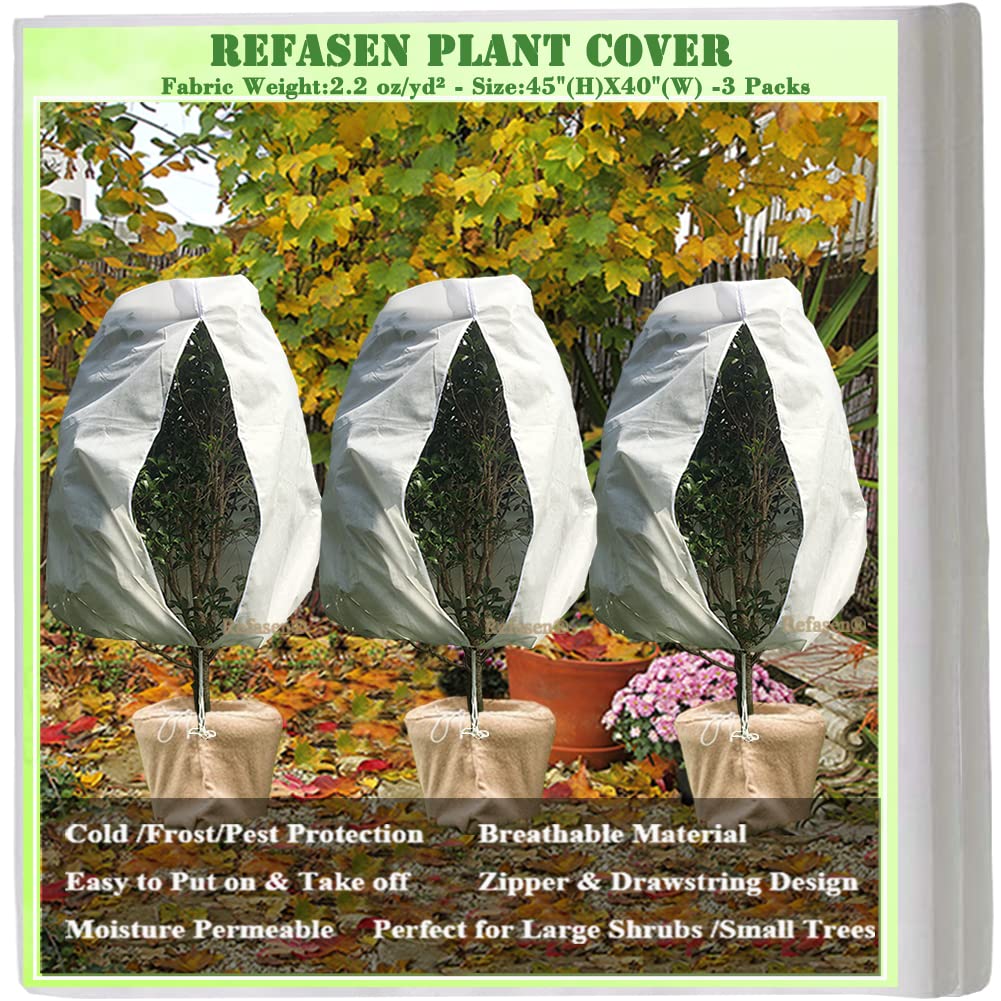
The Refasen set is the only product on this list built specifically for above-ground shrubs and small trees, thanks to its 2.2 oz/yd² spun-bond fabric and bag-style design. At this weight, the material provides a meaningful thermal buffer against hard freezes without becoming heavy enough to damage branches. The zippered side makes applying and removing the cover far less disruptive to delicate flower buds compared to draping a flat sheet over a fragile canopy.
Real-world owners report this cover saved entire butterfly bushes and ripening figs during sustained freezes in Ohio and Wisconsin. The drawstring bottom cinches around the trunk to create a sealed microclimate, which traps daytime warmth and prevents wind-driven frost from sneaking in underneath. Multiple reviewers noted the fabric held up for consecutive winters, though one reported tearing when heavy snow accumulated on a very wide crepe myrtle.
The main limitation is size: each bag is 45 inches tall by 40 inches wide, so it works for columnar shrubs and small fruit trees but will not fit mature spreading specimens. If your garden features young trees or high-value statement shrubs in exposed beds, this set earns its premium price through superior fit and removable convenience.
What works
- Thickest fabric in this roundup at 2.2 oz/yd² for deep cold
- Zipper and drawstring create an airtight seal around the trunk
- Three-pack covers multiple key specimens at once
What doesn’t
- Limited to smaller plants under 45 inches tall
- Fabric can tear under heavy snow load on very wide trees
2. DeWitt Supreme 1.5 oz Frost Cloth 6×50 ft
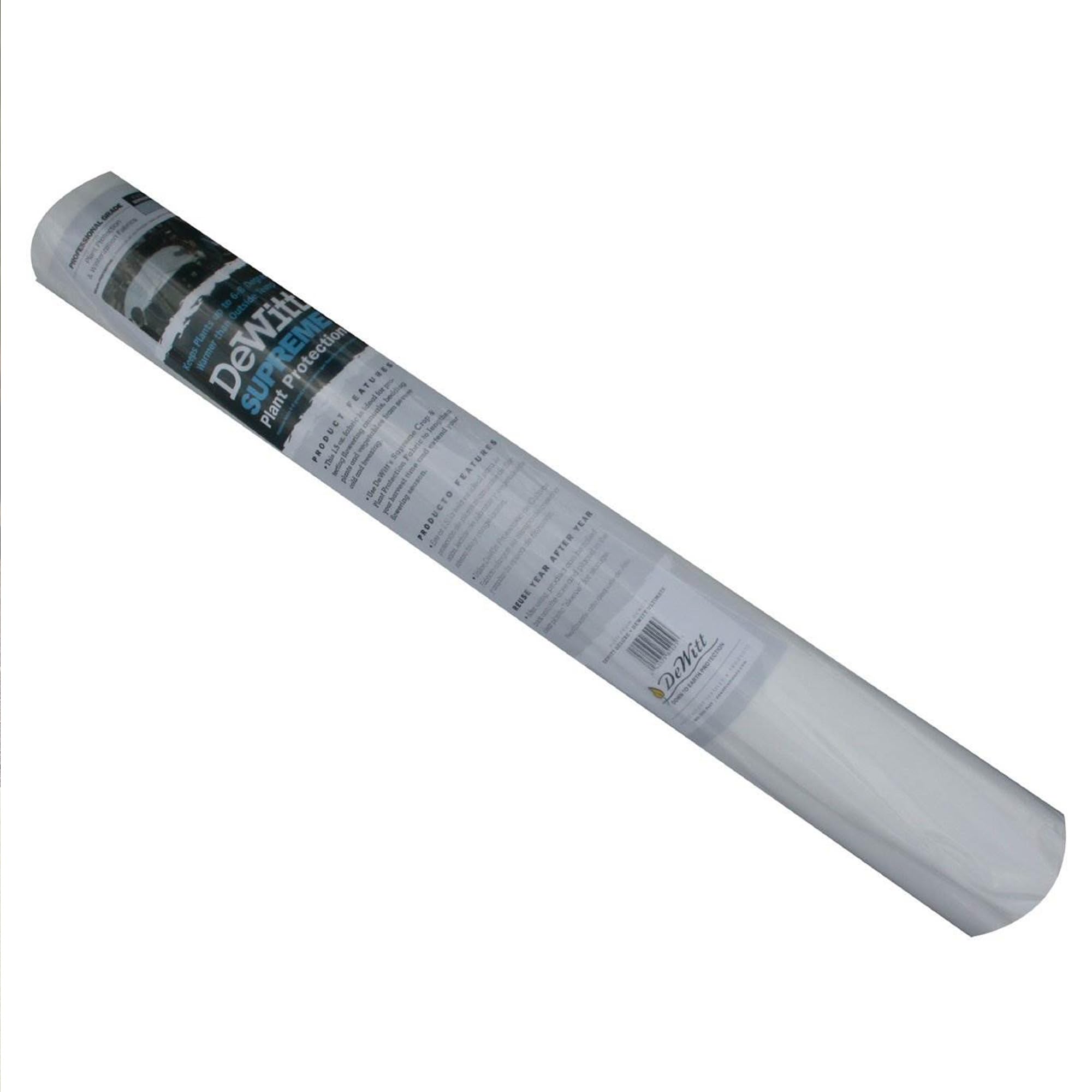
DeWitt is a known quantity in the landscape fabric world, and this 1.5 oz/yd² frost cloth brings that same manufacturing consistency to winter plant protection. The UV treatment is a significant differentiator here — it resists the sun degradation that causes cheaper non-woven fabrics to disintegrate after a single season of spring and fall use. The 6-foot width is wide enough to cover standard raised beds and narrower row tunnels without wasteful excess.
Owner reports from several winters confirm this cloth reliably protects lettuce and cabbage through mid-20s freezes, with one reviewer noting it outperformed a more expensive brand while being easier to fold and store. The fabric’s breathability prevents the moisture buildup that can lead to mold, while still holding enough warmth to give frost-tender crops a survival buffer. Multiple reviewers emphasized that it tolerated wind and rain well without tearing, and one user reported two full seasons of heavy use before the first signs of wear appeared.
The 50-foot length gives you room to cover long runs of garden beds, but the 6-foot width means you may need multiple strips side-by-side for wider plots. This is not a budget pick, but if you value multi-year reusability over the lowest upfront cost, the DeWitt provides the best cost-per-season value in the mid-weight category.
What works
- UV treatment extends usable lifespan beyond most white fabrics
- Breathable enough for multi-day use during variable weather
- Withstands wind and rain without fraying or delaminating
What doesn’t
- 6-foot width limits coverage on wide garden plots
- Higher upfront cost than entry-level alternatives
3. Garutom 10×50 ft Frost Cloth
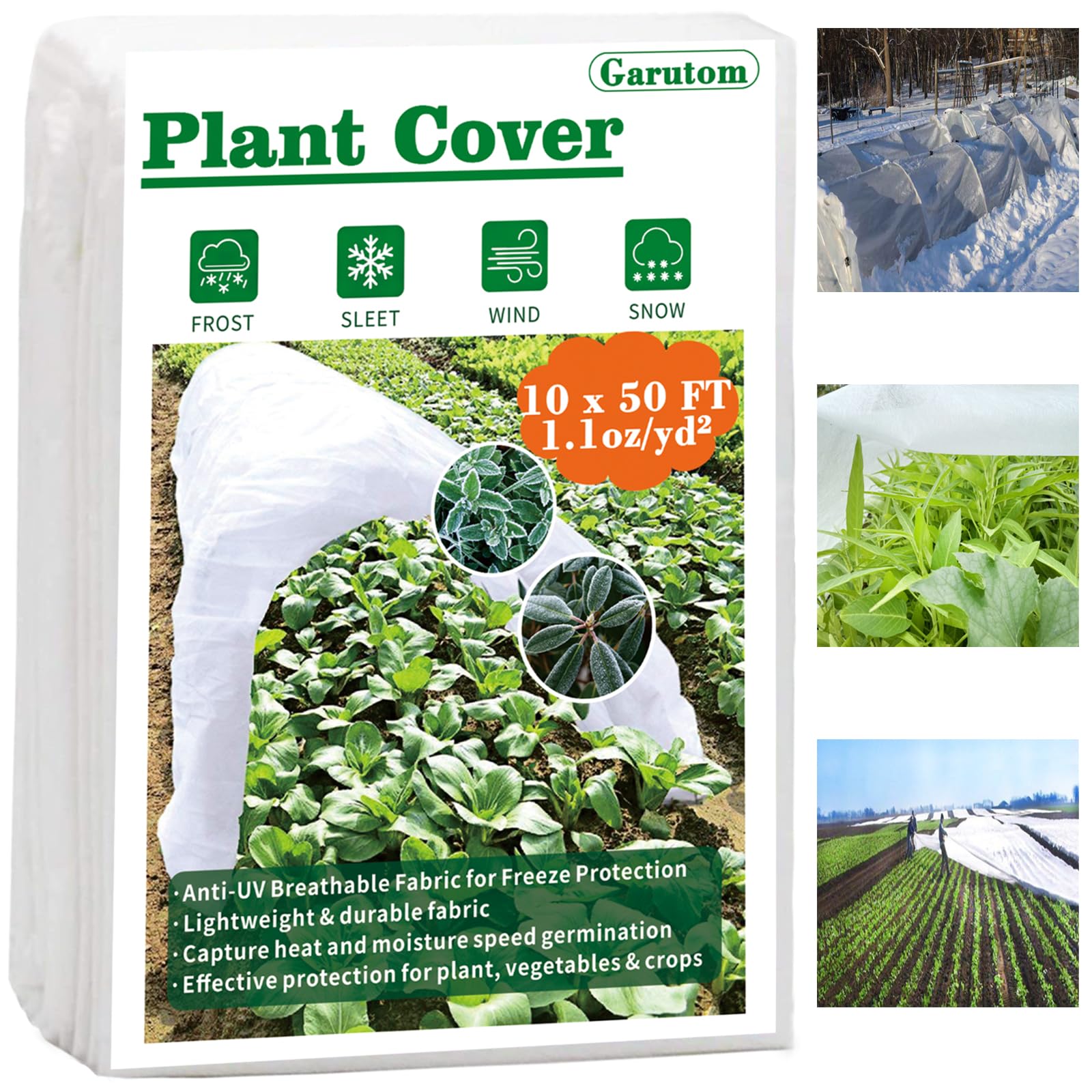
The Garutom frost cloth carves out a specific niche: gardeners who need to cover a very large surface area without spending premium-tier money. At 10 feet wide by 50 feet long, this roll can blanket an entire vegetable patch, multiple raised beds, or a row of citrus trees in one pass. The 1.1 oz/yd² weight hits a practical sweet spot for light to moderate frost events, offering enough insulation to handle low-20s temperatures when doubled, while remaining lightweight enough to drape without additional support structures.
Buyers consistently praise how the fabric balances light transmission and heat retention. The 85% light transmission keeps plants photosynthesizing during cold sunny days, and the spun-bond polypropylene allows rainwater to pass through so you don’t have to remove the cover during wet weather. Several reviews highlight the material’s durability after cutting to custom sizes — the edges do not fray aggressively, which is a common failure point on cheaper non-woven fabrics.
The trade-off for the massive coverage is the weight class: 1.1 oz/yd² is not enough for extended hard freezes below 22°F without doubling the fabric. You will also need your own stakes, soil, or hoops to secure it, as the roll comes without any anchoring hardware. For gardeners with large, flat growing areas who face occasional frost rather than deep winter, this is the most square-footage-efficient option available.
What works
- Massive 10×50 ft coverage for large gardens at a low per-square-foot cost
- High light transmission keeps plants actively growing
- Cleans up and stores well for reuse across seasons
What doesn’t
- 1.1 oz weight is marginal for deep freezes without doubling
- No built-in anchoring system — requires separate stakes or pins
4. Gardzen 1.5 oz 10×30 ft Plant Covers Freeze Protection

The Gardzen frost cover hits the 1.5 oz/yd² weight threshold that separates light-duty frost cloths from genuinely protective winter blankets. In this segment, that extra half-ounce per yard translates directly into better thermal retention and higher resistance to tearing when the wind picks up. The 10×30 foot dimensions provide enough material to cover a substantial garden layout, and Gardzen offers smaller sizes down to 10×10 ft for gardeners with more modest plots.
Owner feedback reveals a pattern: this is the cover that multiple buyers say they have purchased three or four times, not because it fails, but because they keep expanding their garden and need more coverage. One reviewer directly compared it to a heavier green “planket” that disintegrated after one season, noting the white Gardzen fabric remained perfectly usable after an entire summer left outside. The breathability is adequate for multi-day use, and the non-woven construction withstands being cut to shape without unraveling immediately.
While the fabric is thicker than budget options, it is still a flat sheet that requires securing. For flat ground coverage, the Gardzen delivers dependable mid-weight protection at a reasonable cost per square foot. The primary shortcoming is the lack of included anchoring hardware — you will need landscape staples or soil to pin the edges, especially in exposed locations.
What works
- Full 1.5 oz weight provides genuine freeze protection, not just frost mitigation
- Survives full summer sun exposure without degrading
- Available in multiple lengths to match garden size exactly
What doesn’t
- Requires separate anchoring to prevent wind lift
- Not ideal for tall plants due to flat sheet design
5. AlpineReach 10×30 ft Plant Frost Cover
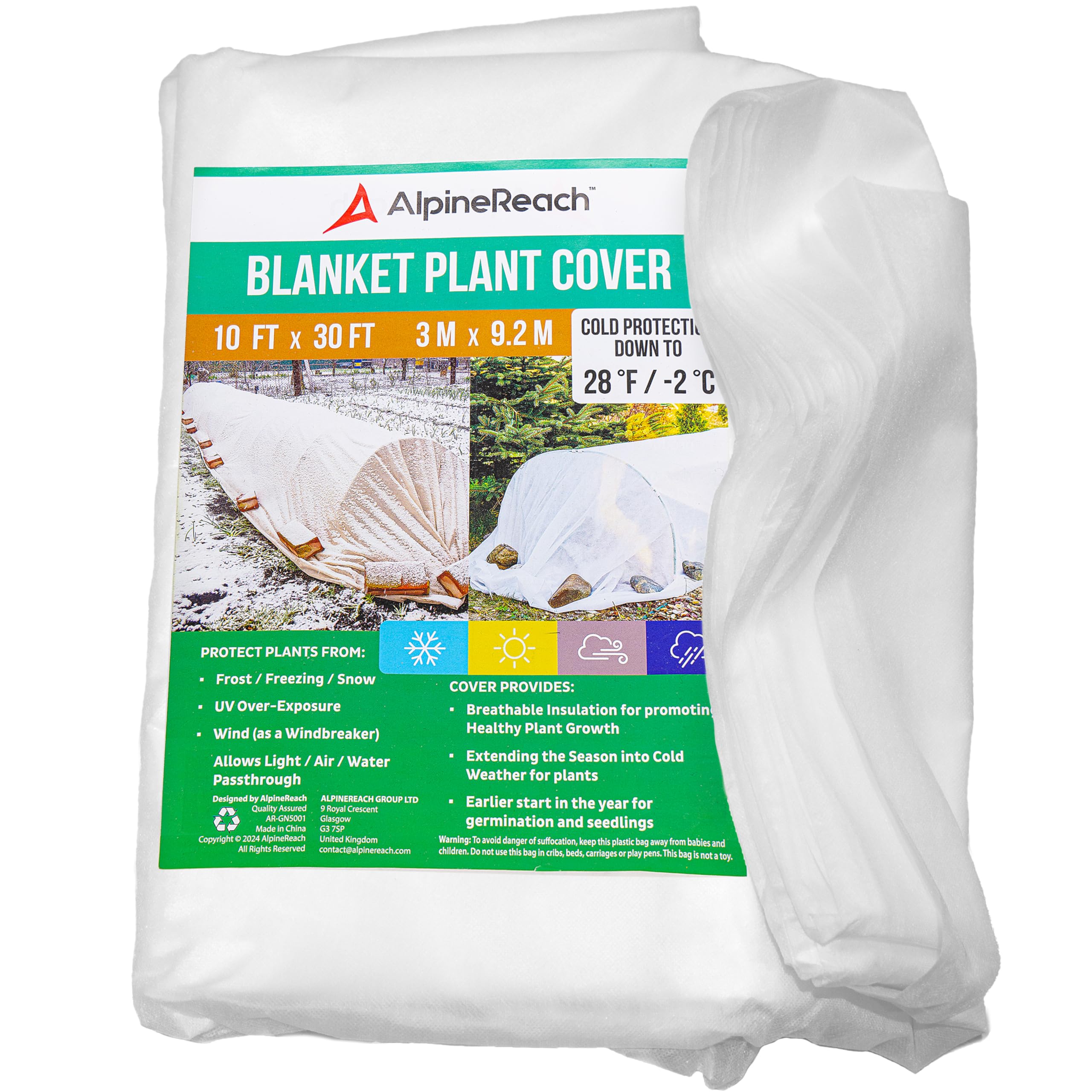
The AlpineReach cover markets itself as an all-season protector, and the 1.2 oz/yd² fabric with additional UV and wind resistance does pull double duty effectively — blocking winter cold while also shading tender seedlings from harsh spring sun. The material’s microporous structure allows enough light and moisture through that owners in central Texas reported leaving it on for a full week-long freeze event without any mold or overheating damage to Indian Hawthorns and shrubs underneath.
What sets this cover apart in the mid-weight category is the combination of tensile strength and a reasonable price point. Buyers in desert climates noted the fabric held up during windy conditions without tearing, and the large 10×30 size left enough surplus to bunch around the base for extra wind sealing. Several reviewers mentioned using it for early spring planting, covering beds after an unseasonably warm March, and the fabric provided enough frost protection to keep squash plants alive through a light April freeze.
Despite the positive feedback, one verified buyer reported the fabric disintegrated after just two weeks of April sun exposure, which suggests quality control may vary between batches. The 1.2 oz weight is adequate for most frost events but will require doubling for extended hard freezes. For gardeners who need a single cover that transitions from late fall through early spring without needing separate summer shade cloth, the AlpineReach offers versatility at a mid-range cost.
What works
- Dual-purpose frost and sun protection for extended seasonal use
- Holds up well in windy desert conditions when staked properly
- Good value for a large 10×30 sheet at a mid-range price
What doesn’t
- Inconsistent durability — some batches degrade in sunlight
- 1.2 oz weight requires layering for deep freeze events
6. JUNKOGO 7×100 ft Freeze Protection Cover
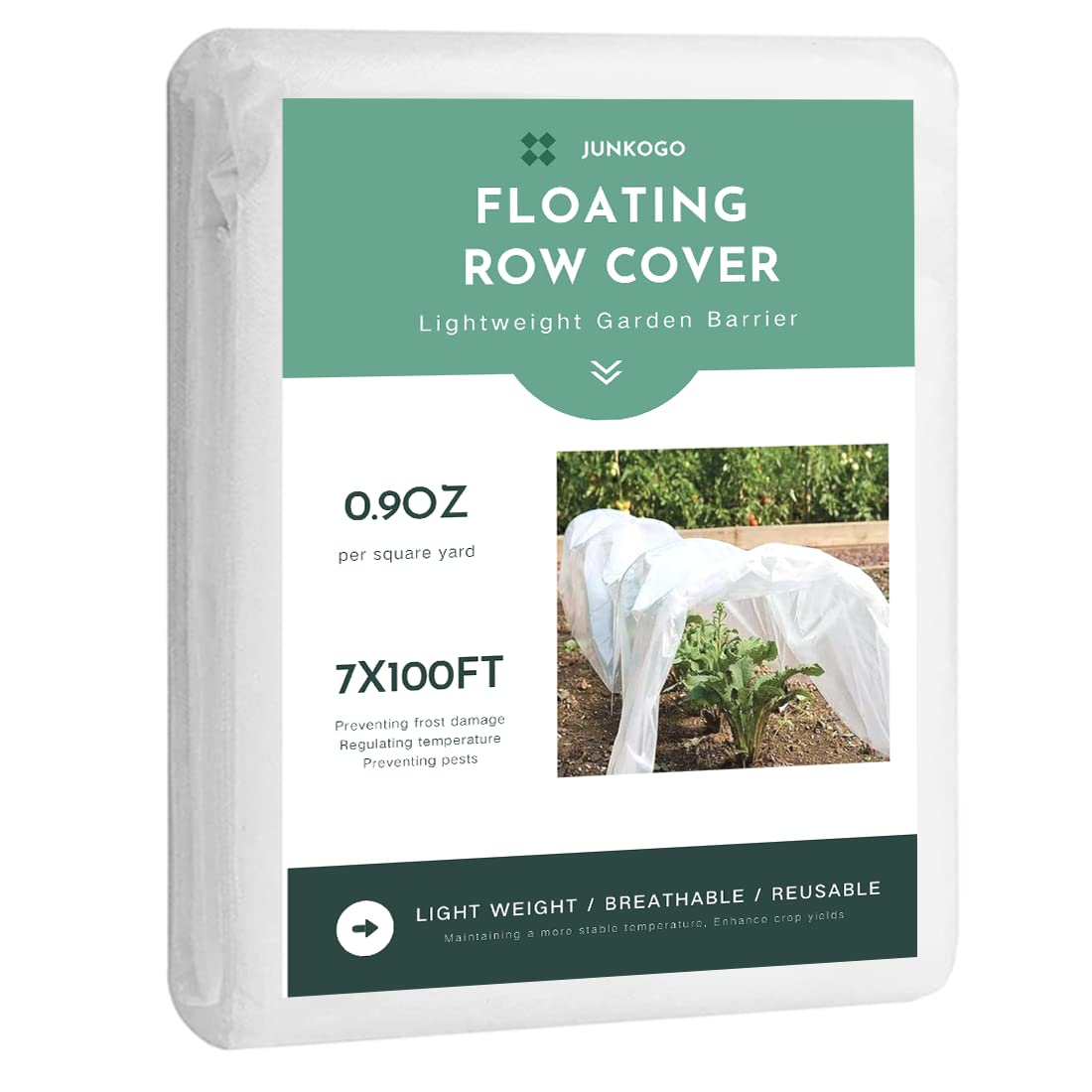
The JUNKOGO frost cloth targets a very specific scenario: gardeners who need to cover very long, narrow rows of crops and want the lowest per-foot cost available. With a 7-foot width and 100-foot length, this roll can stretch down a full market garden row or cover multiple long beds end-to-end. The 0.9 oz/yd² fabric is the lightest in this roundup, making it best suited for light frost protection above 28°F or for use as an insect barrier and light shade cloth during the growing season.
Owner reports confirm the fabric allows rain to penetrate effectively and provides enough thermal lift to protect strawberries and flowers through freezes in the upper 20s. One reviewer specifically noted it was tough enough to survive storms when properly secured, and another used it as an extra layer inside a hoop house to protect lemon trees from sub-freezing temperatures. The breathability is excellent, which reduces condensation risk during long cold snaps.
The compromises are straightforward: the lightweight material is more delicate than heavier options, and one buyer described it as “a little delicate” after use. It will not hold up to the same abrasion or wind load as a 1.5 oz cloth. This is not a do-it-all winter blanket — it is a high-value consumable for very light frost events or for gardeners who need massive linear coverage on a tight budget and plan to replace it seasonally.
What works
- Unmatched 100-foot length at a very low per-foot cost
- Excellent breathability for multi-day use without moisture buildup
- Versatile enough for light frost, insect barrier, and shade duty
What doesn’t
- 0.9 oz fabric is fragile — prone to tearing under stress
- Not suitable for hard freezes below 25°F without doubling
7. Cahomo 10×30 ft Green Frost Cloth
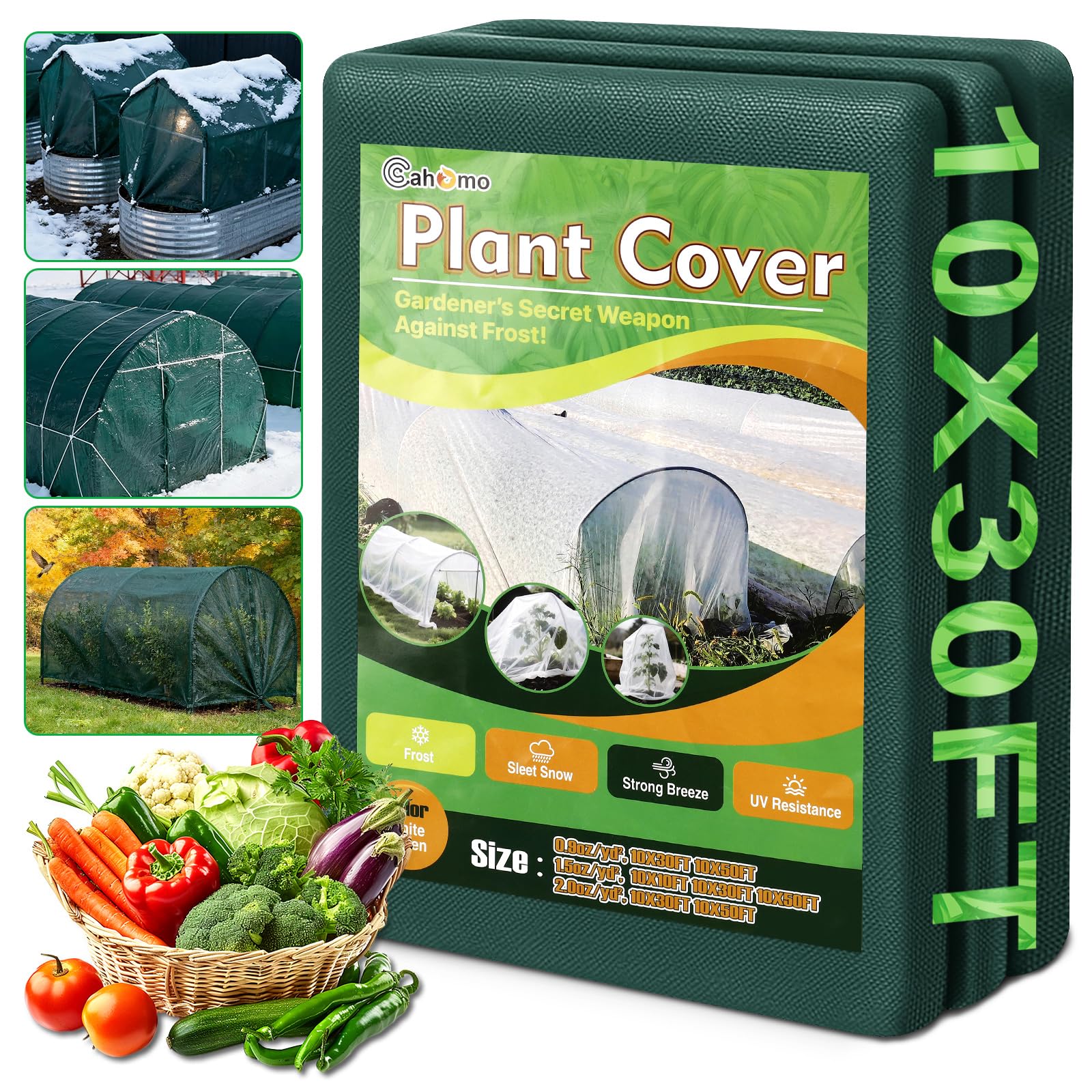
The Cahomo green frost cloth is an entry-level roll that makes frost protection accessible for gardeners who are just beginning to winterize their plots. The 100% polypropylene non-woven fabric with 3% UV resistance provides basic cold protection while remaining lightweight enough for easy handling and cutting. The green color is a minor practical advantage — it blends into the garden visually better than white covers, which can stand out harshly against snow or bare soil.
Buyer feedback shows the fabric works reliably for its intended purpose: one Florida gardener reported the cover saved new shrubs and a small tree during a frost event, and a reviewer who cut the sheet to exact dimensions praised the clean edges that did not immediately fray. The weight is competitive with other sheets in the 1.0 to 1.2 oz range, and multiple users described it as better thickness than other options they had purchased previously.
The main limitation is in the 3% UV resistance — this is significantly lower than the UV-treated DeWitt or the Gardzen fabric that survived an entire summer outside. Prolonged sun exposure will degrade this cover faster, so it is best treated as a seasonal consumable rather than a multi-year investment. It is also a flat sheet, requiring your own stakes or pins. For a gardener on a tight budget protecting a few beds, the Cahomo gets the job done without the premium price tag.
What works
- Noticeably thicker than ultra-budget 0.7-0.9 oz alternatives
- Easy to cut to custom sizes with minimal fraying
- Green color is less visually obtrusive in the garden
What doesn’t
- Low UV resistance reduces lifespan with sun exposure
- No anchoring system included — needs separate pins or soil
Hardware & Specs Guide
Fabric Weight (oz/yd²)
This is the single most important spec for frost covers. A fabric listed at 1.5 oz/yd² provides roughly 50% more cold protection than a 1.0 oz/yd² cloth of the same material. The weight directly correlates to how much ground heat the fabric can trap. For light frosts above 30°F, 0.9 to 1.2 oz works. For hard freezes below 25°F, choose 1.5 oz or higher, or plan to double-layer a lighter cover.
Breathability & Light Transmission
A good frost cover must balance heat retention with air exchange. Non-woven polypropylene fabrics naturally have micro-pores that allow water vapor to escape — preventing the frozen condensation that can damage foliage. Look for fabrics that transmit at least 70% of available light so plants continue photosynthesizing on sunny cold days. The Garutom cover’s 85% transmission rating is excellent for this balance.
FAQ
Can I leave a frost cover on my plants for multiple days and nights?
How many degrees of protection does a 1.5 oz frost cover actually provide?
Should I remove the frost cover during the day or leave it on?
Final Thoughts: The Verdict
For most gardeners, the frost covers for plants winner is the Refasen 3-Pack Zippered because it combines the thickest 2.2 oz/yd² fabric with a bag-style design that seals completely around shrubs and small trees. If you want large-area coverage for raised beds and row crops, grab the Garutom 10×50 ft for the best square-footage value at a practical mid-weight. And for long-term reusability and UV resistance that survives multiple seasons, nothing beats the DeWitt 1.5 oz Supreme.