
Specs are compiled from manufacturer listings and verified buyer reviews and can change over time — please confirm the key details on the product page before buying.
A single night of hard frost can turn a season’s worth of care into brittle, blackened leaves. Wrapping your trees in the wrong blanket—something too thin, too fragile, or too small—can leave your investment exposed when the mercury really drops. The right frost blanket acts like a thermal shield, trapping daytime warmth and letting air and light reach the bark so your trees survive winter’s worst.
I’m Rikta — the founder and writer behind Lawn Gear Lab. This guide is built by comparing the manufacturers’ published specifications and the patterns across verified customer reviews, so you get each pick’s real strengths and trade-offs instead of marketing spin.
This guide is for shielding a young citrus tree, a row of blueberries, or a prized Japanese maple. Here is what you need to choose your frost blanket for trees with confidence.
Our Picks at a Glance

How To Choose The Best Frost Blanket For Trees
Frost blankets all look similar—white fabric, big rectangle—but the differences in thickness, breathability, and how well the material holds up in the sun make or break your tree’s survival. Here is what actually matters when you are shopping.
Fabric weight and thickness
This is the number that decides how much cold your blanket stops. Lighter blankets (0.9 oz per square yard) are great for light frosts and early spring. Heavier ones (1.5 oz and up) fight hard freezes and can be doubled over for extra warmth. The thicker the fabric, the more daytime heat it traps overnight.
Breathable non-woven construction
Unlike plastic sheeting, a good frost blanket is made from non-woven polypropylene that lets air, rain, and sunlight pass through. This prevents moisture from condensing on the fabric and freezing against your tree bark. Breathable fabric also lets the tree keep respiring (breathing) even when it is covered.
Size and coverage
A tree’s canopy and lower trunk both need covering. Measure the height and spread of your tree before buying. The best frost blankets are wide and long enough to drape to the ground so you can weigh down the edges with stones, soil, or staples. Most serious gardeners choose 10 ft x 30 ft or larger to accommodate multiple trees or one large specimen.
UV stabilization and durability
Cheaper fabric breaks down in sunlight after one season. Look for UV-stabilized polypropylene—it stays intact through summer sun exposure so you can reuse the same blanket for years. A reusable blanket that lasts three winters saves you both money and the hassle of re-ordering every fall.
Quick Comparison
| Model | Best For | Fabric Weight | Coverage Area | Rating | Amazon |
|---|---|---|---|---|---|
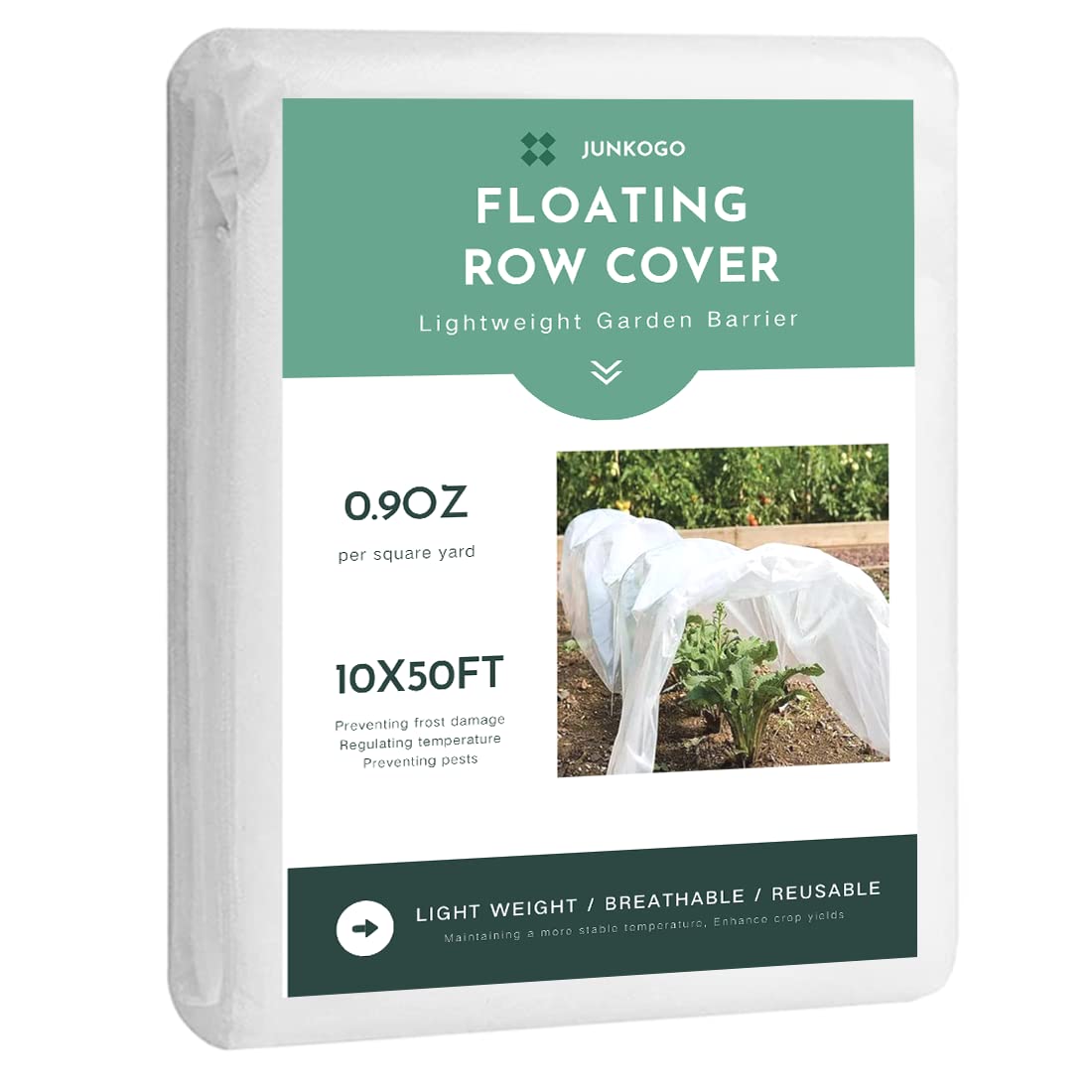
| Plant Freeze Protection Cover 10×50 ft★ Best Overall | Maximum coverage for multiple trees | 0.9 oz/yd² | 500 sq ft (10×50 ft) | 4.6 / 5 | Amazon |
| FUZE Thicker 1.77 ozPremium Pick | Deep freeze & heavy snow | 1.77 oz/yd² | 330 sq ft (10×33 ft) | 4.6 / 5 | Amazon |
| YFFSIDMY 8×40 ft | Value & light frosts | 0.9 oz/yd² | 320 sq ft (8×40 ft) | 4.5 / 5 | Amazon |
| Gardzen 1.5 oz 10×30 ft | Mid-weight all-rounder | 1.5 oz/yd² | 300 sq ft (10×30 ft) | 4.5 / 5 | Amazon |
| Garutom 1.1 oz 10×33 ft | Lightweight & versatile | 1.1 oz/yd² | 330 sq ft (10×33 ft) | 4.4 / 5 | Amazon |
| Amazon Basics 10×30 ft | Budget pick for mild climates | 0.9 oz/yd² | 300 sq ft (10×30 ft) | 4.4 / 5 | Amazon |
In‑Depth Reviews
1. Plant Freeze Protection Cover, 10×50 FT Floating Row Cover
Our pick — over 4.5★ from 250+ verified ratings; the strongest balance of quality and price.
The biggest rectangle on the list, built to drape a whole row of young trees in one go.
At 10 ft wide and 50 ft long, this blanket covers 500 square feet—enough to wrap an entire citrus row, a cluster of young maples, or a raised-bed garden without splicing pieces together. The 0.9 oz per square yard fabric is lightweight enough that you can throw it over tall trees without a ladder, yet buyers report it stood up to high winds and multiple winter freezes. One owner in Virginia said they used it to cover eucalyptus plants through the season and everything survived—nothing was damaged by frost.
The non-woven fabric breathes, so air and moisture pass through instead of condensing on the leaves. That is the difference between a frost blanket and a plastic tarp: breathable fabric prevents ice from forming on the foliage. The same owners who praise its frost protection (the most-discussed quality by a wide margin) also note it doubles as a shade cover and insect barrier in summer, making it a year-round utility piece rather than a one-season expense.
At 2.33 pounds, it is easy to carry out to the garden, but packaging is flat-folded rather than rolled, which a few find a bit awkward to handle at first. Once it is cut to size and draped, that minor setup quirk fades fast.
What wins people over
- Massive 10×50 ft coverage handles multiple trees or a long row without needing a second blanket
- Breathable fabric keeps air and light moving so tree bark does not get trapped moisture
- Light enough at 0.9 oz to drape over tall trees without extra support
- Works as a summer shade and insect screen too, so it earns its keep year-round
The honest trade-off
- Fabric is lightweight (0.9 oz) so it is best for moderate freezes; pair with a thicker inner layer for deep subzero temps
- Folded packaging means it can be unwieldy to spread out the first time
Reach for this if: you have several trees to cover or want one blanket that does winter frost, summer shade, and bug protection in a single purchase.
Think twice if: you face extended hard freezes below 10°F—you may want a thicker fabric like the 1.77 oz option for more insulation.
2. Thicker Plant Covers Freeze Protection 1.77 oz/yd², 10ft x 33ft
The thickest blanket on this list, built for the kind of cold that kills unprotected trees.
At 1.77 oz per square yard, this fabric is nearly double the density of the typical 0.9 oz frost blanket—and the reviews back it up. Owners say it feels like a heavy dust bag, and buyers in Boston reported that their plants survived record snow of four feet and extreme cold. One gardener paired it with a 170W incandescent light and kept their bed at 33°F when the temperature outside was 24°F. The 1.77 oz weight does the heavy lifting: it traps more daytime warmth and holds it overnight.
The fabric is 98% non-woven polypropylene with a 2% UV stabilizer, rated UPF 30+. That means it will not deteriorate in the sun after one season—a common failure point cheaper blankets—so you get multiple years of use. At 3.94 pounds it is noticeably heavier to carry than the lighter options, but the durability (the top-praised aspect) makes that weight worthwhile. A few owners mention they wish the 10 ft width was a touch wider to better fit standard garden hoops.
Where it shines
- 1.77 oz thickness beats most Amazon frost blankets for insulation against deep freezes
- UPF 30+ UV protection keeps the fabric intact for years of reuse
- Light and air still pass through, so no trapped moisture against bark
One honest limitation
- At 10 ft wide it just barely clears standard hoop tunnels; some gardeners wish for a 12 ft width
- Heavier at 3.94 pounds than lighter 0.9 oz blankets, though that weight is the source of its insulation
Best for: deep-winter protection in zones 5 and colder where a light blanket will not cut it.
skip it if: you only get light frosts—the extra thickness and weight are overkill for mild climates.
3. YFFSIDMY Plant Covers Freeze Protection 8’x40′

A huge 8×40 ft blanket at a price that makes covering an entire orchard affordable.
Spanning 320 square feet, this blanket is long enough to cover a long row of fruit trees or a large vegetable plot without piecing multiple sheets together. The 0.9 oz fabric is UV-stabilized polypropylene, so it holds up under sun exposure between frost events. Buyers love its plant protection (the single most-praised aspect by far) and note it works better than straw, sheets, or towels—it does not bend branches and lets air and light circulate freely. One owner in Houston said it withstood heavy winds, dogs, ice, and rain.
The trade-off is that at 0.9 oz it is a light fabric. In hard freezes, you may need to double it over or layer it with a thicker material. Durability gets mixed feedback: some have used it for multiple seasons while others say it started falling apart after one. The 2.12 pound weight makes it one of the lightest large blankets here, which helps when draping over tall trees but also means you will need to weigh it down well—stones, soil staples, or bricks—so the wind does not steal your coverage.
What makes it a value winner
- 40 ft length covers a huge area at a price that beats most per-square-foot costs
- Light enough at 2.12 pounds to carry and position without help
- UV-stabilized so it lasts beyond one season of sun exposure
What to watch for
- Light 0.9 oz fabric requires weigh-downs to stay put in wind
- Durability is mixed—some owners get multiple seasons, others report fraying
Reach for this if: you need to cover a long row of trees on a budget and get light to moderate frosts.
Look elsewhere if: your area gets hard freezes every winter—you will get better protection from the 1.5 oz or 1.77 oz options.
4. Gardzen 1.5 oz Plant Covers Freeze Protection, 10ft x 30ft

The middle-weight fabric that hits the balance between light frost protection and deep-freeze insulation.
At 1.5 oz per square yard, Gardzen bridges the gap between the flimsy 0.9 oz entry-level covers and the heavy 1.77 oz premium option. This is the blanket you reach for when you know frost is coming but you do not live in a deep-freeze zone. It is thick enough that you can double it over for extra cold nights without the fabric becoming too bulky or heavy to handle. Owners love how it protects potted trees and 5-foot-plus lemon and lime trees through winter, letting them skip the hassle of hauling big pots indoors.
The fabric comes in multiple sizes from 10×10 ft up to 10×50 ft, so you can pick exactly the coverage you need without waste. Plant protection is the most-praised aspect by far—owners rely on it for frost, deer deterrent, and even as summer shade. The honest catch is durability: some owners mention the fabric holds up well, while others report it started falling apart after a season. The freezing resistance also gets a few negative marks, so if your temperatures drop into the single digits for days at a time, you may want the 1.77 oz blanket instead.
Solid middle ground: 1.5 oz fabric gives noticeably more frost protection than a 0.9 oz blanket without the weight and cost of the 1.77 oz model. The sizing flexibility (four size options) means you buy only what you actually need.
Best for: temperate climates that see a mix of light and moderate freezes, and anyone who wants one blanket for both frost and summer shade.
pass on it if: you have long subzero stretches—the 1.77 oz blanket traps more warmth.
5. Garutom Plant Covers Freeze Protection 10ft x 33ft, 1.1 oz

A feathery blanket that lets 85% of sunlight through so your trees keep photosynthesising even under cover.
Garutom sits at 1.1 oz per square yard—a noticeable step up from the 0.9 oz ultra-lights but still lighter than the 1.5 oz mid-weight options. That matters if you are covering trees in early spring or late fall when they still need sunlight to fuel growth. The 10 ft x 33 ft size (330 square feet) is generous enough to cover a small tree line or a greenhouse bench, and you can cut it to shape with scissors. Frost protection is the number-one reason owners buy it, with over 50 buyers calling it out.
The catch is that at 1.1 oz it is not the most durable blanket here. Durability gets mixed feedback: some owners say it holds up well season after season, while others report it tears easily if snagged on branches. The thin fabric also demands gentle handling—treat it carefully and store it indoors between uses. For a tree that you will wrap and unwrap only a few times a winter, that is usually fine. If you plan to leave the blanket out for months on a tall specimen exposed to wind, the heavier Gardzen or FUZE options will survive longer.
Great balance: 1.1 oz is thick enough for solid frost protection yet light enough to transmit 85% of sunlight. Best for trees that still need light during cold snaps.
Reach for this if: you are covering trees in a mild-winter zone or early spring, and you want maximum light penetration.
Think twice if: your trees are in a windy, exposed spot or you need a blanket that survives rough handling season after season.
6. Amazon Basics Plant Covers for Frost Protection, 10 x 30 ft
The entry-level pick that saves your trees from a light frost without emptying your wallet.
Amazon Basics keeps it simple: a 10 x 30 ft rectangle of 0.9 oz non-woven polypropylene that you can cut to any shape you need. It is the lightest fabric here, and that is exactly its strength—you can drape it over a young tree in seconds, and the breathable material lets air and moisture pass through so your tree bark does not sweat under the cover. Customers note it saved their hydrangeas from a late spring frost and extended the growing season a little longer. One owner in Florida said it kept plants alive even into the teens during second snow and cold weather.
The limits are clear at this weight. It is built for light frost and mild cold conditions—think early spring protection, not a deep-winter freeze. The 30 g per square meter (0.9 oz per square yard) construction means you should not expect it to hold up through weeks of subzero weather. For covering a few small trees or raised beds on chilly nights, it is the simplest, lowest-cost option that actually works. Just weigh it down well because the lightweight fabric can lift in a breeze.
Simple and effective: 0.9 oz fabric is the standard for light frost protection. It will not win any awards for insulation, but it does exactly what a budget frost blanket should do—protect against a cold snap—at a price that makes it replaceable.
Best for: new gardeners or anyone who needs a quick, cheap cover for a few nights of light frost each year.
it’s not for you if: you live in a region with hard freezes—you will need the thicker 1.5 oz or 1.77 oz options for real insulation.
Understanding the Specs
Fabric Weight (oz per square yard)
This single number tells you how much cold your blanket stops. A 0.9 oz blanket is the entry-level standard—it works for light frosts down to about 28°F. At 1.5 oz you get noticeably more insulation, good for moderate freezes into the low 20s. At 1.77 oz you are looking at serious freeze protection that can pair with a secondary heat source. Heavier fabric also traps more daytime warmth and releases it slowly overnight.
Non-woven polypropylene construction
Unlike plastic sheeting, non-woven fabric is porous. That means air, rain, and sunlight can pass through, preventing moisture from condensing on your tree bark and freezing. Breathable fabric also keeps the tree respiring (breathing) while covered. The fibers are bonded together rather than woven, which gives the fabric a soft, cloth-like feel that will not scratch the bark.
UV stabilization
Frost blankets left outdoors between cold snaps can degrade under sunlight. UV-stabilized fabric contains an additive that blocks ultraviolet rays, keeping the material from becoming brittle or disintegrating after one season. If you plan to reuse your blanket for multiple winters, UV stabilization is essential—it is the difference between a three-year blanket and a one-year disposable.
Coverage area and sizing
Frost blankets are sold by length and width, usually in feet. A 10×30 ft blanket covers 300 square feet—enough for a small row of trees or a medium raised bed. A 10×50 ft blanket covers 500 square feet, handling multiple large trees or a long orchard row. Measure the canopy spread and height of your trees first. You want the blanket to drape to the ground on all sides so you can weigh down the edges.
FAQ
Will a frost blanket really protect my tree from a hard freeze?
Can I leave a frost blanket on my tree for weeks at a time?
How do I keep a frost blanket from blowing off in the wind?
What is the difference between a frost blanket and plastic sheeting?
Which size frost blanket do I need for a standard fruit tree?
Can I reuse a frost blanket for multiple winters?
Is a frost blanket also a good shade cloth for summer?
Does the color of the frost blanket matter?
Final Thoughts: The Verdict
If you want one dependable pick, the frost blanket for trees winner is the Plant Freeze Protection Cover 10×50 ft because its massive coverage and breathable 0.9 oz fabric handle everything from a light spring frost to a winter cold snap—and it pulls double duty as a summer shade cloth. If you need deep-freeze protection for the coldest zones, grab the FUZE Thicker 1.77 oz blanket; it is the thickest fabric here and owners say it survived record snow and subzero nights. And for the budget-conscious gardener covering a long row of trees, the YFFSIDMY 8×40 ft offers the most square footage per dollar without sacrificing UV stabilization.
How We Picked
We do not accept paid placement. Every pick is matched to a real buyer and a real use-case; we do not hands-on test units.
Sources & Methodology
Specifications: manufacturer listings and product documentation. Review insights: verified customer reviews, as of July 2026. Pricing: not shown on this page (it changes often); check the current price via the retailer link.
As an Amazon Associate, Lawn Gear Lab earns from qualifying purchases. This does not affect which products we feature.