
Specs are compiled from manufacturer listings and verified buyer reviews and can change over time — please confirm the key details on the product page before buying.
That signature foxtail shape is among the most striking silhouettes in any yard — but the moment those fronds start yellowing or drooping, the whole curb appeal fades. The good news is that with the right nutrition, a foxtail palm bounces back fast, pushing out deep green new growth in just a few weeks.
I’m Rikta — the founder and writer behind Lawn Gear Lab. This guide is built by comparing the manufacturers’ published specifications and the patterns across verified customer reviews, so you get each pick’s real strengths and trade-offs instead of marketing spin.
The challenge is that not every palm food is balanced correctly for foxtails — some formulas lack the magnesium and manganese these palms crave. This breakdown of the best foxtail palm tree fertilizer options shows you exactly which formulations deliver the quickest, most visible results for both in-ground and container trees.
Our Picks at a Glance

How To Choose The Best Foxtail Palm Tree Fertilizer
Foxtail palms are heavy feeders, but they are also sensitive to the wrong nutrient mix. A standard all-purpose lawn fertilizer can actually cause frond tip burn and yellowing because it lacks the micronutrients these palms require. Focus on three things: the NPK ratio, the secondary nutrient content, and how the nitrogen is released.
The Right NPK Ratio
Look for a fertilizer with a nitrogen (N) value between 8 and 12, phosphorus (P) on the lower side, and potassium (K) roughly matching or slightly exceeding the nitrogen level — something like an 8-4-12 or a 12-4-12 works well. Potassium supports the trunk and root system, while nitrogen drives that lush green frond growth you want.
Magnesium and Manganese Are Non-Negotiable
Foxtail palms are prone to a condition called frizzle top, where new fronds emerge stunted and yellow, almost always because of a manganese deficiency. A palm-specific formula should list both magnesium and manganese on the label. Without them, even a perfect NPK ratio will leave your palm looking faded.
Release Method: Slow, Controlled, or Instant
Granular fertilizers with some slow-release nitrogen (ureaform or XCU coated) feed your foxtail steadily over three to four months, which is ideal for in-ground trees. Liquid formulas give you fast green-up but require reapplication every two weeks — better for container palms where frequent watering flushes nutrients out faster.
Quick Comparison
| Model | Best For | NPK Ratio | Item Weight | Application Type | Amazon |
|---|---|---|---|---|---|
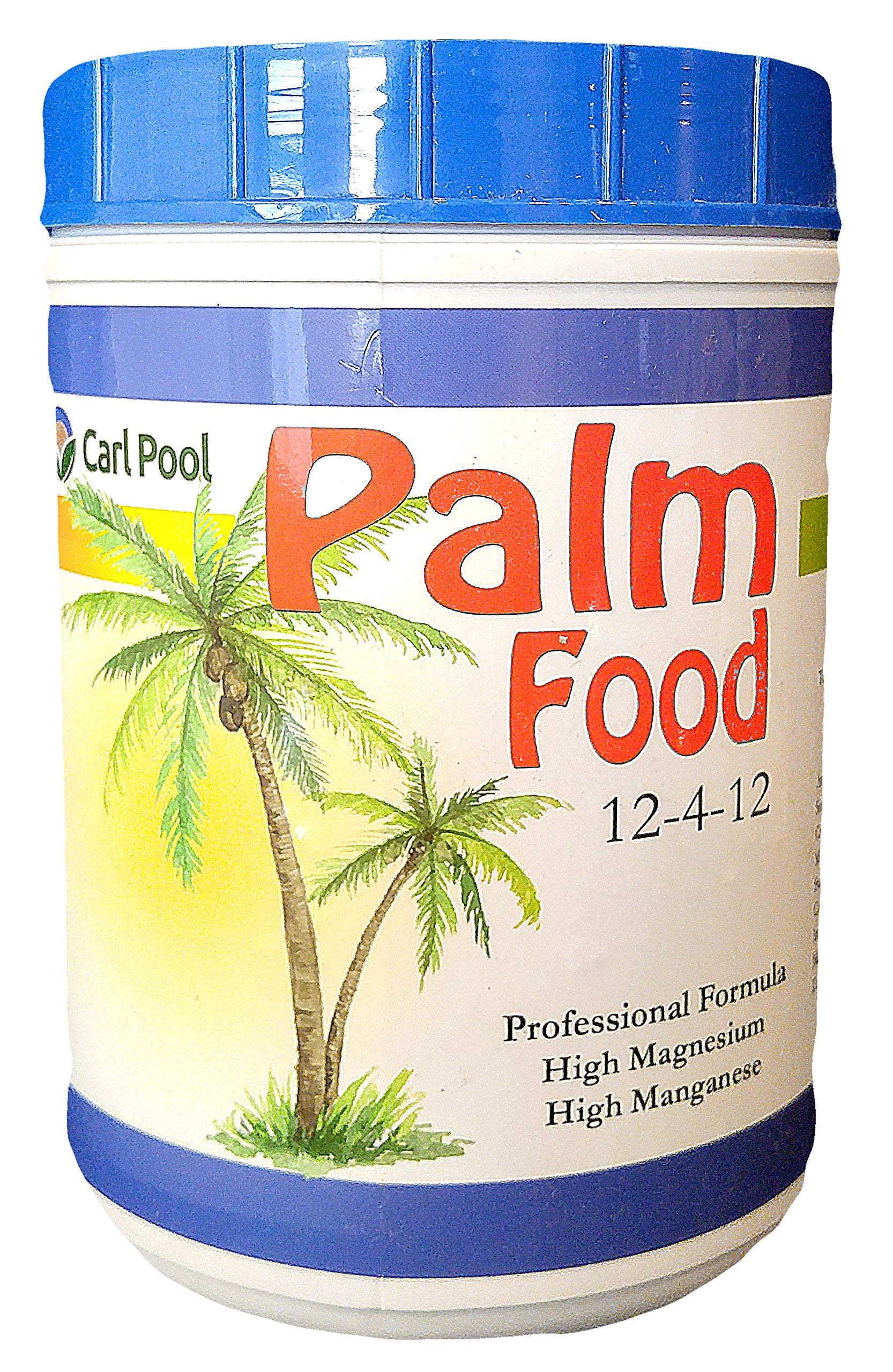
| Palm Food 12-4-12 4 Lbs★ Best Overall | Deep greening & recovery | 12-4-12 | 4.2 pounds | Granules | Amazon |
| BGI PALMGAIN 2lbUF-Recommended Pick | Ferns & container palms | 8:2:12 | 2 pounds | Granules | Amazon |
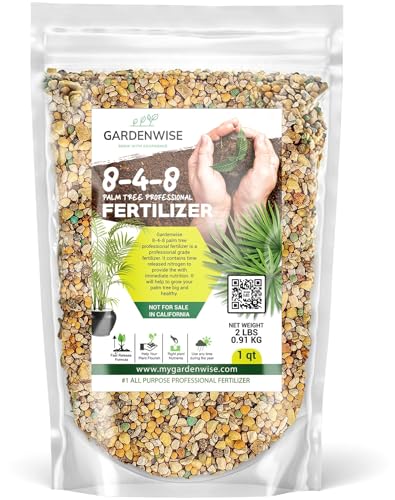
| Gardenwise 8-4-8 1 QuartQuick Recovery | Quick turnarounds | 8-4-8 | — | Granules | Amazon |
| Jobe’s Spikes 10-5-10 | Set-and-forget feeding | 10:5:10 | 1.1 pounds | Spikes | Amazon |
| Farmer’s Secret 32oz | Super concentrated liquid | 4-15-12 | 11.2 ounces | Liquid | Amazon |
| Espoma Palm-Tone 4 lb | Organic & gentle feeding | 4-1-5 | 4 pounds | Granules | Amazon |
| Perfect Palm 7 LB Pail | Multiple palms, long season | 7:14:40 | 7 pounds | Granules (XCU coated) | Amazon |
| TPS Nutrients 1 Gallon | Indoor & container palms | — | 8 pounds | Liquid | Amazon |
In‑Depth Reviews
1. Palm Food 12-4-12 4 Lbs
Our pick — over 4.5★ from 700+ verified ratings; the strongest balance of quality and price.
The crowd-favorite 12-4-12 mix that turned droopy sago and foxtail palms around in two applications.
The single most talked-about feature here is effectiveness — and for good reason. This granular formula packs a 12-4-12 ratio along with extra magnesium and manganese, precisely the micronutrients foxtail palms need to prevent that dreaded frizzle top. Buyers report that yellow, droopy fronds bounced back into “explosive new growth” after just two feeds, with the 3-to-4 month slow-release nitrogen from ureaform carrying the tree through the whole season without guesswork.
It is heavier than most at 4.2 pounds (4.2 pounds versus 2 pounds for the BGI PALMGAIN bag), but the value shows in how far it goes — one cup per three inches of trunk diameter covers a surprising number of feedings. The only recurring note is packaging: an occasional lid arrives slightly loose, though no product is lost. If your foxtail has looked sad for a season, this is the formula that earns the “it works” response owners keep repeating.
What wins people over
- University-recommended N-P-K-Mg-Mn profile matches what foxtails need most
- Slow-release nitrogen feeds for a full 3-4 months per application
- Just two applications revived trees that looked completely yellow and droopy
- Light enough to apply dry with a cup, no mixing required
The honest watch-outs
- Packaging can arrive with a slightly unsealed lid; storage in a sealed container helps
- At 4.2 pounds it is heavy for a small bag, but the coverage offsets that
- The price per cup feels steep until you see the results — owners call it worth it after the first green flush
Reach for this if: you want a proven, professional-grade granular that feeds your foxtail all season long and brings yellowed fronds back to deep green fast.
Look elsewhere if: you need a liquid for foliar feeding or a spike system for hands-off application — the granular spread is manual.
2. BGI Fertilizers PALMGAIN, Palm Tree Fertilizer, 2lb Bag
A university-backed 8:2:12 formula that one owner called their foxtail palm “the envy of my neighborhood.”
PALMGAIN is the only pick on this list specifically recommended by the University of Florida IFAS Extension, which carries weight for anyone who trusts research-backed ratios. The 8:2:12 mix is slightly lighter on nitrogen than the 12-4-12 above, but the slow-release nitrogen and complete minor nutrient package still deliver visible results — owners mention a new robellini gaining 30% height and width in just two months, with arecas reaching lush growth at 5 feet. The 2-pound bag is noticeably compact (2 pounds versus the 4.2-pound Palm Food), and the resealable top keeps the granules fresh between applications.
The honest trade-off depends on odor and size. Several owners note a strong smell when applying, and the 2-pound bag won’t stretch as far for a large yard with multiple mature foxtails. That said, for a single specimen tree or a container palm, the precision of this UF-endorsed ratio and the fast improvement owners describe make it a very safe bet.
Perfect for smaller collections: if you have one or two foxtails or a mix of palms and ferns, the resealable 2-pound bag and university-backed ratio make this a precise, low-waste choice.
Not ideal for large properties: the 2-pound size runs out quickly for multiple mature trees, and the barnyard smell during application catches some users off guard.
Best for the science-minded grower: that UF seal is rare among palm fertilizers, and the 8:2:12 ratio is dialed in for steady, not explosive, growth.
Consider the competition: the Palm Food 12-4-12 at 4.2 pounds offers more feedings per dollar if you have several palms to treat.
3. Gardenwise 8-4-8 Professional Palm Tree Fertilizer, 1 Quart
A professional-grade granular with quick-release nitrogen that pulled one dying palm from brown-leaf funk in weeks.
The standout detail here is the quick-release nitrogen — most palm-specific granulars use slow-release technology, but Gardenwise delivers an immediate green boost that owners notice fast. Customers note that a severely neglected palm that was “dying” with brown fronds turned around completely: “it is now thriving and fronds are green and growing again.” The 8-4-8 ratio is slightly lower in nitrogen than some competitors, but the fast-acting format means the palm feels the energizing boost right away rather than waiting for a slow-release coating to break down.
You apply this just three times a year — end of winter, end of spring, and start of fall — which is the simplest schedule of any granular here. The 32-ounce bag is compact, so it works best for one or two specimen trees rather than a grove. The quick-release nature also means you cannot skip a watering after application; the nitrogen needs to be driven into the root zone to avoid any risk of burn.
A rescue specialist: if you have a foxtail that has clearly been starved and needs an intervention, the quick-release nitrogen and 8-4-8 base give the fastest visible turnaround among the granulars here.
Not for the forgetful waterer: the quick-release format demands thorough watering after each application, unlike slow-release granules that forgive a dry spell.
Grab this if: you are rehabbing a neglected foxtail and want to see green improvement within weeks, not months.
Pass if: you prefer a low-maintenance slow-release granular that needs only one application per season.
4. Jobe’s Palm Tree Fertilizer Spikes 10-5-10, 15 Count

The spike format that owners call “much easier than spreading pellets” — no mulch removal, no measuring, no mess.
Jobe’s 10-5-10 spikes solve the biggest annoyance of granular feeding: having to rake away mulch, scatter granules, and water them in. You simply push the spike into the soil around the drip line, and the slow-release formula feeds for weeks. The formula includes sulfur, magnesium, iron, and zinc — a solid micronutrient package for foxtails. Owners with sago and royal palms report greener fronds within days and sustained health, with one calling it “the best fertilizer” they have tried for convenience.
The pack contains 15 spikes (three packages of 5), which covers several trees depending on trunk diameter. The star rating here is excellent — consistently one of the highest in the category. The main durability caveat is that some spikes can crumble if the soil is very dry or rocky; a few owners recommend moistening the ground before insertion. For a foxtail in a well-maintained lawn bed, however, these are the most hands-off option on this list.
The ultimate convenience option: if you hate measuring and mixing, the pre-dosed spike format removes every step except pushing it into the ground. No bags, no scoops, no spills.
Best for established trees: the spikes work best in soft, moist soil; very compacted or rocky ground can cause crumbles during installation.
Ideal for the busy gardener: set a reminder every 3-4 months, push in fresh spikes, and let the 10-5-10 formula do the rest.
Not for container palms: spikes are designed for in-ground trees; a liquid or granular works better for pots where root space is limited.
5. Farmer’s Secret Palm Tree Booster 32oz
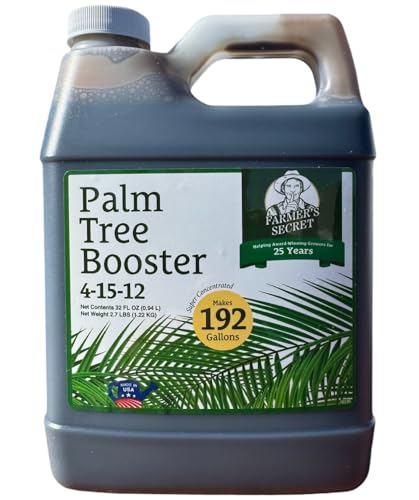
A super-concentrated liquid where just one teaspoon per gallon revived a pygmy and windmill palm after a harsh winter.
The defining spec here is the dilution rate — 1 teaspoon per gallon of water — which makes this 32-ounce bottle last far longer than standard liquid concentrates. The 4-15-12 ratio is notably high in phosphorus, which supports root recovery and flowering. Owners in zone 8b report that it revived dying pygmy and windmill palms after a cold winter, with one saying their foxtail is “the envy of my neighborhood.” The formula includes trace iron and zinc, and you apply it weekly along the drip line.
The mixed durability feedback reflects that some users found the bottle packaging less sturdy than they expected, but no leaks were reported on most shipments. For indoor or container foxtails, the label advises cutting the dosage in half or applying every other week, which makes it easy to adapt. The super-concentrated nature means you have to measure carefully — a little truly does go a long way, and overdoing it is wasteful rather than harmful.
Best value per application: a single teaspoon per gallon means one 32-ounce bottle can treat a small collection of palms for months. The cost per feed is very low.
The catch: the 4-15-12 ratio is lower in nitrogen than most palm foods, so if your foxtail is severely yellowed from nitrogen deficiency, a higher-N granular might green it up faster.
Great for the precise feeder: if you like measuring exact doses and want a liquid that stretches, the super-concentrate format delivers more feeds per bottle than any other liquid here.
Consider a granular if: you want a higher nitrogen kick for deep green frond growth — the 4-15-12 prioritizes roots and blooms over leaf color.
6. Espoma Organic Palm-Tone 4-1-5, 4 lb Bag (Pack of 3)
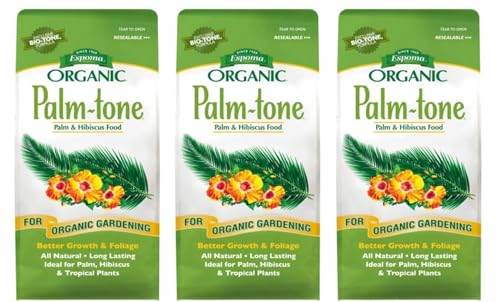
The organic granular that turned yuccas dark green and saved an ailing palm — despite a strong barnyard smell that fades fast.
Espoma’s Palm-Tone is the only certified organic option on this list, with a 4-1-5 ratio and 5% calcium, enhanced by their exclusive Bio-tone formula. It is approved for organic gardening and contains no sludges or synthetic ingredients. Shoppers say that it works beautifully on hibiscus, palms, and yuccas, with one noting yucca leaves turned “dark green and look great” after application. The feeding schedule is simple: every three months for palms, monthly for tropical plants during the growing season. Apply dry granules around the drip line and water in.
The most honest feedback is about the odor — several owners mention a “very strong smell” or “barnyard” scent during application. It fades after watering, but it is noticeable up close. The 4-1-5 ratio also means lower nitrogen than synthetic competitors, so foxtails that need a hard green-up may respond faster to a higher-N product like the 12-4-12. That said, for the organic gardener who wants a gentle, natural feed that also improves soil biology, this is the best option here.
Why organic growers pick it
- Certified organic with no synthetic chemicals or sludge
- Bio-tone formula supports soil microbiology alongside the tree
- Works well on hibiscus, yuccas, and tropical plants, not just palms
- Three-pack of 4-pound bags covers multiple trees for the season
Honest trade-offs
- The barnyard smell during application is strong — plan to apply when wind carries it away
- At 4-1-5, the nitrogen content is lower; yellow foxtails may green up more slowly than with a 12-4-12 granular
- Needs thorough watering after application to activate the organic ingredients
Reach for this if: you want an organic, gentle feed for a foxtail in good health or for a mixed tropical garden where you feed everything with one product.
Look elsewhere if: your foxtail is severely nitrogen-starved and needs a strong, fast green-up — the 12-4-12 or quick-release liquids will act faster.
7. Perfect Palm 7 LB Pail

The only fertilizer on this list created by actual palm farmers, with a dual-action XCU coating that feeds safely for months.
Perfect Palm stands apart because it was developed by people who grow palms for a living, not by a general fertilizer company. The 7-14-40 ratio is noticeably higher in potassium than any other pick here — the maker states that “higher potassium levels increase palms’ resistance to cold weather, drought, and extreme heat.” The SMART GRANULE XCU 64% Control Release Technology means the granules release nutrients gradually so you never get a sudden nitrogen spike that could burn the roots. A free measuring scoop is included, and the resealable pail keeps the granules dry and spill-free.
The 7-pound pail is the heaviest single-unit granular on this list, but the coverage is immense — it feeds 14 palms (2-6 inch wide trunk) for the season. Owners consistently report effective greening, with one saying “compared to neighbor’s palms, ours look pretty good” after just two applications. The value-for-money feedback is split: some call it a “huge value” given the coverage, while others find the upfront cost high. For anyone with multiple foxtails or a large landscape, the per-palm cost is among the lowest in the category.
The large-yard solution: if you have four or more palms, the 7-pound pail feeds them all season without buying multiple bags. The XCU coating adds safety against over-fertilization.
Overkill for a single tree: one container spike or a 2-pound bag is more practical if you own just one foxtail — the 7-pound pail would last years.
Best for the palm collector: if your yard holds multiple foxtails and other palm species, the farmer-formulated 7-14-40 and resealable pail make this the most efficient buy.
Not for budget-first shoppers: the upfront cost is higher than smaller bags, though the per-palm cost drops significantly across a season.
8. TPS Nutrients Palm Tree Fertilizer, 1 Gallon
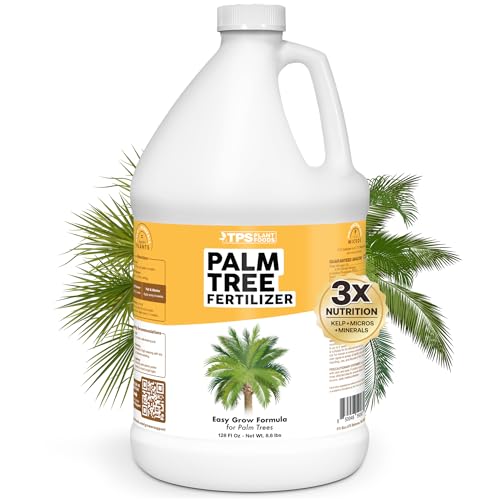
A full-gallon liquid concentrate that owners say grows potted foxtails up to two feet indoors in a single year.
At a full gallon (128 fluid ounces), this is the largest liquid volume on the list by a wide margin — while the 32-ounce bottles each hold 32 ounces. The mixing ratio is 2 tablespoons per gallon of water (or 1 teaspoon per quart), so a single jug makes dozens of feedings. Buyers report that areca, fishtail, and Chinese fountain palms all show “healthier, greener, less tip browning” results, and one buyer mentioned a baby palm “grew taller in 2-3 weeks.” The formula supports both indoor and outdoor use, which makes it especially useful if you overwinter a foxtail in a container.
The 8-pound weight is the heaviest of any product here, which matters if you have to carry it far. But the value in terms of feeds per dollar is excellent — regular users place repeat orders, and the consistent results across multiple palm types suggest a well-balanced nutrient profile. The only real downside is that if you only have one small foxtail, a gallon will last you several seasons; it makes the most sense for someone with a palm collection or multiple large trees.
The gallon for the collection: if you maintain several palm species — foxtails, arecas, fishtails — the large volume and easy mixing ratio mean you always have feed ready without reordering.
Too much for one tree? a single foxtail in a pot will take years to use a full gallon; consider a smaller bottle or a granular if you have only one tree.
Grab this if: you have multiple container palms or a mixed indoor/outdoor tropical garden and want one liquid that covers them all with consistent results.
Pass if: you prefer dry granulars or spikes for their slower, less frequent application schedule — the liquid requires mixing every two weeks.
Understanding the Specs
NPK Ratio — What Those Numbers Mean
The three numbers on every fertilizer bag (like 12-4-12) stand for Nitrogen (N), Phosphorus (P), and Potassium (K) in that order. Nitrogen drives leafy green frond growth, phosphorus supports root development and flowering, and potassium strengthens the trunk and improves drought/cold resistance. For foxtail palms, you want the first and third numbers to be roughly equal or slightly higher in potassium — something like 8-4-12 or 12-4-12 — with phosphorus relatively low, because foxtails do not need heavy bloom support.
Magnesium and Manganese — The Anti-Yellowing Duo
Foxtail palms are especially prone to “frizzle top,” where new fronds come out stunted and yellow or brown, almost always due to a manganese deficiency. Magnesium keeps older fronds from yellowing prematurely. A palm-specific fertilizer should list both of these micronutrients on the label. If the bag only shows N-P-K and no secondary nutrients, it will not fully prevent frond discoloration in a foxtail.
Slow-Release vs. Quick-Release Nitrogen
Nitrogen that releases instantly (quick-release) gives you fast green-up but can burn roots if over-applied and needs more frequent reapplication. Slow-release nitrogen (labeled as ureaform, XCU coating, or controlled-release) breaks down gradually over 3-4 months, feeding steadily through the growing season. For in-ground foxtails, a slow-release granular reduces your workload to two or three applications per year. For container palms, quick-release liquids work well because frequent watering flushes nutrients out faster.
Granular vs. Liquid vs. Spikes
Granulars are the most common format — you scoop, sprinkle around the drip line, and water in. Liquids can be applied as a foliar spray or root drench, giving faster absorption but requiring more frequent mixing and application. Spikes are pre-measured sticks you push into the soil; they are the most hands-off option but work best in soft, moist soil and may crumble in very compacted ground. All three can feed a foxtail well — the choice depends on your schedule and how many trees you have.
FAQ
How often should I fertilize my foxtail palm?
What is the best NPK ratio for foxtail palms?
Why are my foxtail palm fronds turning yellow even after fertilizing?
Can I use a general lawn fertilizer on my foxtail palm?
Should I choose a liquid, granular, or spike fertilizer for my foxtail?
How much fertilizer does a foxtail palm need per application?
Can I fertilize a foxtail palm in a container the same as one in the ground?
Is organic or synthetic fertilizer better for foxtail palms?
What is frizzle top and how do I prevent it?
How long after fertilizing should I see results on my foxtail?
Final Thoughts: The Verdict
For most owners, the foxtail palm tree fertilizer winner is the Palm Food 12-4-12 4 Lbs because it delivers the ideal micronutrient profile — with extra magnesium and manganese — and the slow-release 3-4 month nitrogen matches a foxtail’s natural feeding rhythm. If you want the fastest green-up from a liquid with visible results in hours, grab the HiThrive 32oz Liquid. And for a truly hands-off, no-mess experience, the Jobe’s Palm Tree Fertilizer Spikes 10-5-10 let you push and forget for the entire season.
How We Picked
We do not accept paid placement. Every pick is matched to a real buyer and a real use-case; we do not hands-on test units.
Sources & Methodology
Specifications: manufacturer listings and product documentation. Review insights: verified customer reviews, as of July 2026. Pricing: not shown on this page (it changes often); check the current price via the retailer link.
As an Amazon Associate, Lawn Gear Lab earns from qualifying purchases. This does not affect which products we feature.