
Specs are compiled from manufacturer listings and verified buyer reviews and can change over time — please confirm the key details on the product page before buying.
You guess how much food for pot plants to give, and your plant pays the price. Too little stops growth cold. Too much burns the roots and turns leaves brown. The right balance — nitrogen (N), phosphorus (P), and potassium (K) — is what turns a struggling plant into one with thick stems and steady new leaves.
I’m Rikta, the writer behind Lawn Gear Lab. This guide compares the published N-P-K ratios and what real buyers report in their reviews, so you get each pick’s honest strengths and trade-offs, not marketing spin.
Matching the N-P-K (the three numbers on the label) to what you grow — and how much time you want to spend mixing — is the whole game.
Quick Picks
- Jack’s Classic 15-30-15 Houseplant Special Water-Soluble Fertilizer — Top Performer
- Miracle-Gro Water Soluble All Purpose Plant Food (3 lb) — Best Overall
- HiThrive 16oz Houseplant Fertilizer, All Purpose Indoor Plant Food — Best Value
- Miracle-Gro Indoor Plant Food, Liquid Plant Food for Houseplants, 8 oz, 2-Pack — Easiest to Use
- Espoma Organic Grow! Liquid Concentrate Plant Food — Organic Champion
- Dyna-Gro Foliage Pro Liquid Plant Food (1 Quart) — Foliage Specialist
- Growth Technology GT Foliage Focus Liquid Indoor Plant Food (1 Quart) — Premium Choice
How To Choose The Best Food For Pot Plants
The right plant food depends on what you grow, how often you want to feed, and whether you prefer a ready-to-use liquid or a powder you mix yourself. These three factors steer you to the best match.
N-P-K Ratio (Nitrogen, Phosphorus, Potassium) — The Three Numbers That Matter
Every fertilizer label shows three numbers, like 6-2-4 or 24-8-16. The first is nitrogen (N), which drives leaf and stem growth. The second is phosphorus (P), for root development and flowers. The third is potassium (K), for overall plant health and disease resistance. A leafy houseplant like a pothos needs a higher first number. A flowering plant like a peace lily benefits from a higher middle number.
Form — Liquid, Powder, or Concentrate
Liquid fertilizers are ready to use or need a simple mix with water. That makes them the easiest choice for beginners. Powders (water-soluble) are more concentrated and often cost less per gallon, but you must measure and mix each time. Concentrates like the 2x formula stretch further — one bottle can make over 85 gallons — but you need to store them properly.
Organic vs Synthetic
Organic options, like those with kelp extracts or humic acids, feed the soil microbes and release nutrients slowly. Synthetic fertilizers deliver nutrients immediately and give a faster visible result. Organic formulas tend to have lower N-P-K numbers (like 2-2-2) and a noticeable smell. Synthetics are odorless and produce a quicker green-up.
Quick Comparison
On smaller screens, swipe sideways to see the full table.
| Model | Best For | Form | N-P-K Ratio | Volume / Weight | Amazon |
|---|---|---|---|---|---|
| Jack’s Classic Houseplant Special | Blooms & Green-Up | Powder | 15-30-15 | 8 oz | Amazon |
| Miracle-Gro All Purpose (3 lb) | Big Gardens & Pots | Powder | 24-8-16 | 3 lb | Amazon |
| HiThrive 16oz Houseplant Fertilizer | Value & Coverage | Liquid | 6-2-4 | 16 fl oz | Amazon |
| Miracle-Gro Indoor Plant Food (2-Pack) | Easy Daily Feed | Liquid | Not listed | 8 oz x2 | Amazon |
| Espoma Organic Grow! | Organic Gardens | Liquid | 2-2-2 | 16 fl oz | Amazon |
| Dyna-Gro Foliage Pro | Foliage & Hydroponics | Liquid | 9-3-6 | 1 qt (32 fl oz) | Amazon |
| Growth Technology GT Foliage Focus | Tropical & Rare Plants | Liquid | Not listed | 1 qt (946 mL) | Amazon |
In‑Depth Reviews
1. Jack’s Classic 15-30-15 Houseplant Special Water-Soluble Fertilizer

This powder’s high phosphorus (30) pushes peace lilies and African violets into heavy bloom — something the all-purpose 24-8-16 Miracle-Gro cannot do.
The middle number — 30 phosphorus (P) — is what sets this apart. That high phosphorus level directly supports more and bigger flowers on plants like peace lilies, African violets, and holiday cactus. Unlike most all-purpose picks, this one is specifically tuned for flowering houseplants, not just leafy greens.
This is a water-soluble powder, so one 8 oz container goes further than liquid formulas. The included measuring spoon makes it easy to mix 1 teaspoon per gallon of water. Owners mention it can also be used as a foliar spray (spraying diluted mix directly on leaves) for faster absorption. One reviewer noted their plants grow significantly, though they avoid leaf contact to prevent burns. The downside is the same 8 oz size that makes it portable also means you will reorder sooner than with a larger liquid bottle. It is also more expensive per ounce than the 3 lb Miracle-Gro powder, but the targeted N-P-K justifies the premium for bloom-focused growers.
One experienced gardener who owns a rubber tree and several flowering plants noted that Jack’s products are “well made” and that this formula keeps indoor plants healthy despite the small container size. This is a specialist pick for people who want flowers, not just green leaves.
What Makes It Shine
- High-phosphorus (P) 15-30-15 ratio targets flower production directly
- Water-soluble powder stretches further than liquids — the 8 oz container makes multiple gallons
- Works as both a root drench and a foliar spray for faster results
The Trade-Offs
- Small 8 oz package means more frequent repurchases for a large collection
- Price per ounce is higher than bulk powders like the 3 lb Miracle-Gro
- Not ideal for foliage-only plants that need more nitrogen than phosphorus
This is the pick for bloom-lovers. If you have flowering houseplants like peace lilies or African violets and want visible flowers, the 15-30-15 formula delivers what the 24-8-16 Miracle-Gro cannot. The trade-off: you mix powder each time.
Skip it for foliage-only collections. If you grow pothos or snake plants that never flower, a nitrogen-heavy or balanced formula costs less and works better.
2. Miracle-Gro Water Soluble All Purpose Plant Food (3 lb)

The 3 lb powder is the best value per feed — one container feeds 1,200 square feet, beating every liquid here on cost.
This is the most versatile entry in the list. With a 24-8-16 N-P-K ratio, it is heavy on nitrogen (N) — ideal for pushing thick, dark green leaves on both indoor and outdoor potted plants. It works for roses, vegetables, trees, and houseplants, and it dissolves in water instantly. Customers note it “dissolves quickly, easy to apply” and note that the powder itself vanishes into water, though the fine blue dust can blow in the wind and stain clothing if you mix outside.
The sheer coverage is a standout: a 3 lb container feeds roughly 1,200 square feet of garden area. That makes it the most economical choice on this list by volume, beating every liquid option on cost-per-feed. It is a powder, so you need to mix 1/2 teaspoon per gallon for indoor plants or 1-1/2 tablespoons per 1-1/2 gallons for outdoor pots. One long-time user confirmed it “never burns plants” even when sprinkled directly on soil. The catch: the high nitrogen (N) is not ideal if you want heavy blooms — for that, you need a formula with more phosphorus, like the Jack’s Classic 15-30-15.
One buyer mentioned their tomatoes recovered with “lush leaves and blossoms” and their ferns grew “thicker” after using this. For a single product that handles all your potted plants — patio and windowsill — this is the most practical and cost-effective choice.
The 3 lb advantage: At 3 pounds versus 16 fluid ounces for smaller liquid concentrates, this container gives you far more feeds per purchase than many liquid options.
Worth the Buy For
- Massive 1,200 sq ft coverage for the price — best value per feed on this list
- High nitrogen (N) at 24 pushes rapid leaf and stem growth on all plant types
- Works for both indoor pots and outdoor garden beds in one formula
Watch Out For
- Fine blue powder can blow away and stain hands or clothes during mixing
- Not the best choice if your main goal is flowers rather than foliage
- Requires measuring and mixing each time, unlike a pump liquid
Choose this for versatility and volume. If you have a mix of indoor houseplants and outdoor potted vegetables or flowers, this one formula covers everything and lasts for months. It is the practical pick for anyone with a dozen or more pots.
Not for instant-feed convenience. If you want a squeeze-and-go bottle with no measuring, look at the liquid concentrates instead — this one needs a spoon and a watering can every time.
3. HiThrive 16oz Houseplant Fertilizer, All Purpose Indoor Plant Food

A single 16 oz bottle of this 2x concentrated liquid makes 85+ gallons of feed — more than the 3 lb Miracle-Gro per drop, but costs less upfront.
This is the most cost-efficient liquid option because it is 2x concentrated — you use only 1 teaspoon per gallon. The 6-2-4 N-P-K ratio is balanced toward leaf growth (nitrogen) while still providing some phosphorus and potassium for roots and overall health.
It works specifically for indoor plants — fiddle leaf figs, monstera, peace lilies, pothos, dracaena, and bonsai. You can also use it as a foliar spray (spraying diluted mix directly on leaves). One owner reported “i have seen a great difference in my plants since using it has even helped my snake plant and seedlings sprout for our garden.” Another reviewer noted they water with it regularly but advised spacing out applications rather than using it every watering to avoid nutrient overload.
At 16 fluid ounces, this is the same liquid volume as the Espoma Organic Grow! (both 16 fl oz), but the HiThrive is a synthetic formula rather than an organic one. The trade-off: while it delivers faster results, it does not contain the beneficial microbes or natural proteins that organic growers value. For anyone on a budget who wants a simple, fast-acting liquid that stretches far, this is the top value pick.
Why It Saves You Money
- 2x concentrated formula makes 85+ gallons from a single 16 oz bottle
- Low 1 teaspoon per gallon mixing ratio means less product used per feed
- Works on a wide range of popular houseplants including snake plants and fiddle leaf figs
What to Consider
- Synthetic formula lacks the organic soil-building microbes some growers prefer
- Not formulated for outdoor vegetable gardens or heavy bloom support
- May need more frequent feeding than a powder concentrate for large collections
Best for budget-minded indoor plant owners. If you have a handful of houseplants and want a liquid that will last well over a year, this 2x concentrate delivers the most feeds per dollar.
Skip if you grow organic. If you specifically want an OMRI-listed (organic) input for edible plants or soil health, go with the Espoma Organic instead.
4. Miracle-Gro Indoor Plant Food, Liquid Plant Food for Houseplants, 8 oz, 2-Pack
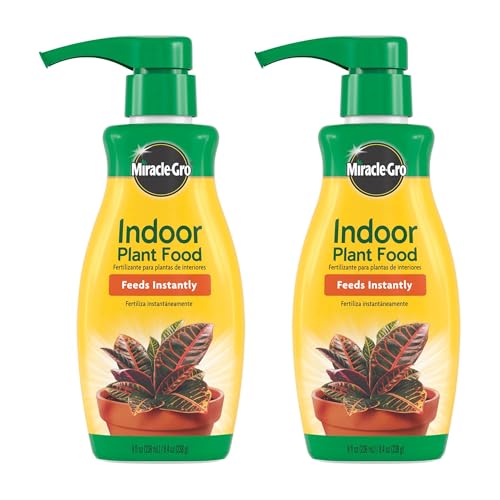
You pump directly into the soil — 1 pump for small pots, 2 for large — with zero measuring or cleanup.
This is the simplest plant food on the list. Instead of measuring teaspoons or worrying about mixing ratios, you just pump directly into the soil — 1 pump for small pots, 2 for large pots. Or you can mix 4 pumps into 1 quart of water and water as usual. It feeds instantly, so you see results in leaf color and new growth within days. Reviewers point out it is “easy-to-use liquid fertilizer with clear instructions” and that it boosts leaf vibrancy effectively on snake plants, peace lilies, and herbs.
The 2-pack gives you two 8 oz bottles, totaling 16 fluid ounces of liquid. That is a much smaller amount than the 3 lb Miracle-Gro All Purpose powder, so you will run out faster if you have many plants. However, for a person with just a few houseplants on a windowsill, the convenience of a pump dispenser is worth the trade-off. One reviewer who has used it for years said it consistently boosts plant health and growth. The catch: it costs more per feeding than a bulk powder, and the N-P-K is not listed on the label, so you cannot tailor it to a specific plant’s needs.
It is also narrower in scope — it is designed for indoor container plants only, not outdoor pots or vegetable beds. If you want one product for both inside and outside, the 3 lb Miracle-Gro All Purpose powder is a better fit. But if feeding your houseplants feels like a chore, this pump bottle removes all the friction.
Why It Wins on Ease
- Pump dispenser eliminates measuring — 1 pump for small pots, 2 for large
- Neutral smell and clear instructions make it beginner-friendly
- Works on snake plants, peace lilies, croton, succulents, herbs, and more
The Catch
- Liquid volume is just 16 fluid ounces total versus the 3 lb powder
- N-P-K ratio is not disclosed, so you cannot match it to specific plant needs
- Not intended for outdoor garden pots or large plant collections
Reach for this if convenience is king. If you have a small indoor plant collection and want the fastest, simplest feeding routine possible, this pump-and-go liquid is your best match.
Look elsewhere for large collections or outdoor pots. The small volume (16 fluid ounces total) and indoor-only limitation mean serious gardeners with many plants will outgrow this quickly.
5. Espoma Organic Grow! Liquid Concentrate Plant Food

The only OMRI-listed organic liquid here — it feeds soil microbes with kelp and humic acids, not just the plant.
This is the only OMRI-listed organic liquid on the list, meaning it meets the requirements for certified organic production. The 2-2-2 N-P-K is low and balanced, feeding the soil microbes as much as the plant itself. It contains natural proteins enhanced with kelp extracts and humic acids — no sludges or toxic ingredients. One dedicated buyer said “I first started using this on my holiday cactus and now it’s all i will use on my houseplants.”
The honest trade-off is the smell. Multiple reviewers mention a “horrible smell like liquid manure” that, while short-lived, is strong during mixing. It is a natural byproduct of organic ingredients, not a defect. At 16 fluid ounces, this is the same liquid volume as the HiThrive, but the HiThrive is synthetic and 2x concentrated, whereas this one requires a 1:3 mixing ratio. Because the N-P-K is low (2-2-2), you need to feed more often — every 2-4 weeks during the growing season — compared to a synthetic that might only need monthly application.
One customer observed that after a move that left their indoor plants sun-damaged, this Espoma formula revived them. Another praised that the organic line “doesn’t burn plants” and “adds beneficial microbes.” If you grow vegetables or herbs indoors and want to keep your inputs organic, this is the right pick. If you just want fast green leaves with no odor, a synthetic is simpler.
Organic Edge
- OMRI-listed for organic gardening — safe for edible plants and herbs
- Contains kelp extracts and humic acids that boost soil microbiology
- Works for both indoor pots and outdoor containers
The Reality Check
- Strong manure-like odor during mixing, though it fades quickly
- Low 2-2-2 N-P-K means feeding every 2-4 weeks rather than monthly
- Liquid concentrate must be used quickly after mixing to avoid separation
Best for organic growers. If keeping your plant food natural and OMRI-listed matters — especially if you grow edibles or herbs indoors — this is the only clear organic choice on the list.
Not for odor-sensitive users. If a strong manure smell during mixing would bother you or your living space, a synthetic option like the HiThrive or Miracle-Gro liquid will be more pleasant to use.
6. Dyna-Gro Foliage Pro Liquid Plant Food (1 Quart)
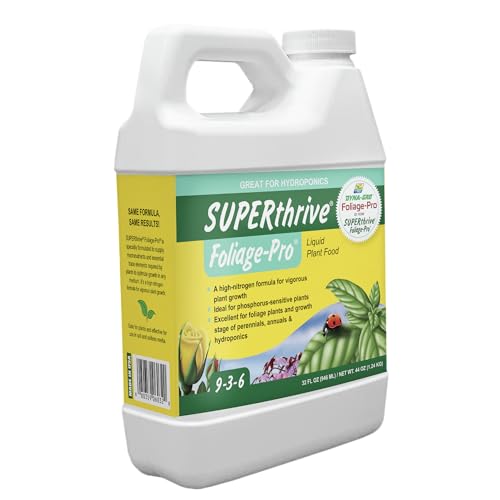
This 9-3-6 formula gives foliage plants dense, dark leaves in low light — but a dosing mistake can kill them.
This 9-3-6 formula is designed specifically for foliage plants, tropicals, and low-light environments. The 3:1:2 NPK ratio (9-3-6) mirrors the ideal balance for leaf development: high nitrogen (N) for green mass, moderate potassium (K) for stem strength, and low phosphorus (P) since foliage plants do not need heavy bloom support. It works in both soil and hydroponic (water-only) systems, making it unusually versatile for growers who use different setups.
The liquid volume is 1 quart (32 fluid ounces) — more than double the 16 fl oz of the HiThrive or Espoma. Shoppers say a small amount goes a long way, and one user highlighted “fast, abundant new growth within days” after switching to Dyna-Gro. However, the same reviewer issued a serious warning: adding too much nearly killed all their plants. This is a potent concentrate, so following the dilution instructions exactly is critical. Professional growers recommend it, but beginners should start with a weaker mix than the label suggests.
It is also a pure synthetic, so it lacks the organic certifications and soil-microbe benefits of the Espoma. For indoor gardeners who grow tropical foliage plants like philodendrons, calatheas, or ferns and want a fast, reliable green-up, this is a top-tier choice. For anyone growing flowers, the low phosphorus (3) will not produce big blooms — you would need the Jack’s Classic for that.
Strengths
- Large 1 quart (32 fl oz) bottle outlasts smaller liquid options significantly
- 3:1:2 NPK ratio is ideal for foliage plants and low-light conditions
- Works in soil, hydroponics (water-only), and semi-hydro setups
Caution Needed
- Highly concentrated — dosing mistakes can severely damage or kill plants
- Synthetic formula with no organic or soil-building properties
- Low phosphorus (P) means it will not boost flower production
Perfect for foliage fanatics. If you grow tropical houseplants like philodendrons, ferns, or calatheas and want dense, dark green leaves, this is the most effective formula on the list — just measure carefully.
Skip if you are a beginner who eyeballs doses. This concentrate punishes guesswork. If you prefer a forgiving, low-risk feed, go with the Miracle-Gro liquid pump or the HiThrive concentrate.
7. Growth Technology GT Foliage Focus Liquid Indoor Plant Food (1 Quart)
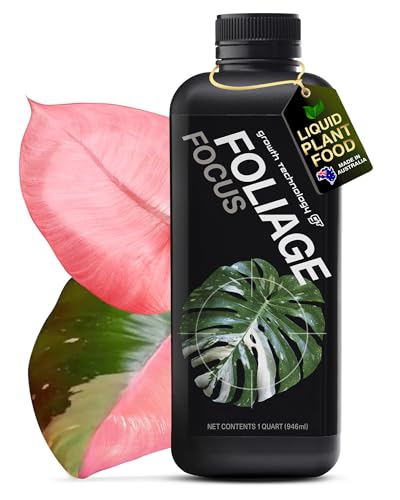
This premium tonic is precision-engineered for rare aroids and monsteras — it delivers calcium and magnesium for deep leaf color.
This is the most specialized formula on the list, developed specifically for tropical indoor species like aroids, philodendrons, monsteras, alocasias, ferns, palms, anthuriums, and calatheas. It is not a general all-purpose feed — it is precision-engineered for plants that evolved in the understory of tropical forests. The formula includes nitrate-nitrogen, potassium, calcium, magnesium, and trace elements to maintain chlorophyll production and steady leaf color.
It works across all growing media — soil, potting mix, hydroponics (water-only), semi-hydro, and even as a foliar spray (on leaves). The dosing is simple: 3–5 ml per liter of water for soil, or 5–7 ml per liter for hydroponics. Reviewers who own rare plants say “the new growth and leaf size is significantly larger” and that this is “the best stuff I’ve found” for hydroponic setups. One buyer recommended flushing soil monthly with plain water to prevent mineral salt build-up.
The price is the highest on this list, reflecting both the specialized formulation and the 1-quart (946 ml) volume. It is a premium choice best suited for collectors of rare tropical plants where leaf quality and color are paramount. If you grow common houseplants like pothos or snake plants, you can get the same results from the HiThrive or Miracle-Gro for a fraction of the cost. One practical issue: several reviewers noted the original bottle can leak during shipping, so check the seal on arrival.
Why Collectors Love It
- Precision-formulated for aroids, monsteras, alocasias, and other tropical species
- Versatile across all growing media including soil, hydroponics, and foliar spray
- Contains calcium and magnesium for strong cell structure and deep leaf color
Consider Before Buying
- Highest price on the list
- Overkill for common houseplants like pothos, snake plants, or peace lilies
- Some buyers report leaking bottles during shipping; inspect on arrival
Ideal for rare-plant collectors. If you own monsteras, alocasias, anthuriums, or other tropical aroids and want maximum leaf size and color, this is the premium formula to use.
Not worth it for basic houseplants. If you mainly grow pothos or snake plants, the extra cost of this specialized formula does not deliver noticeable benefits over the cheaper all-purpose options here.
Understanding the Specs
N-P-K Ratio
This is the three-number code on every fertilizer label (like 6-2-4 or 24-8-16). The first number is nitrogen (N), which fuels leaf and stem growth. The second is phosphorus (P), which supports roots and flowers. The third is potassium (K), which strengthens the plant against stress and disease. A leafy houseplant needs a higher first number. A flowering plant needs a higher middle number.
Water-Soluble vs Liquid Concentrate
Water-soluble powders (like Jack’s Classic or the 3 lb Miracle-Gro) must be measured and mixed with water before each use. They are more concentrated and generally cheaper per gallon. Liquid concentrates (like the HiThrive or Dyna-Gro) are already dissolved and simply need dilution, making them faster to use but more expensive per feed. The trade-off is convenience versus cost.
FAQ
What does N-P-K mean on a plant food label?
Should I use liquid or powder plant food for my pot plants?
How often should I feed my potted houseplants?
Can I use outdoor garden fertilizer on indoor pot plants?
What is the best N-P-K ratio for flowering pot plants?
Is organic plant food better than synthetic?
How do I avoid overfeeding my pot plants?
Can I use the same plant food for hydroponics and soil?
What is the difference between foliar feeding and root feeding?
How long does liquid plant food last after opening?
Final Thoughts: The Verdict
For the majority of shoppers, the food for pot plants winner is the Miracle-Gro All Purpose Plant Food (3 lb) because it combines the best price per feed, massive coverage for 1,200 square feet, and versatility across all plant types — indoor pots, outdoor containers, vegetables, and flowers alike. If you want maximum blooms from your flowering houseplants, grab the Jack’s Classic 15-30-15. And for the simplest no-measure feeding routine, the standout is the Miracle-Gro Indoor Plant Food 2-Pack.
How We Picked
We do not accept paid placement, and we did not hands-on test every unit. Instead, we match each pick to a real buyer and use-case by comparing the manufacturers’ published specifications against the patterns in verified customer reviews — so you get each pick’s real strengths and trade-offs instead of marketing copy.
Sources & Methodology
Specifications: manufacturer listings and product documentation. Review insights: verified customer reviews, as of July 2026. Pricing: not shown on this page (it changes often); check the current price via the retailer link.
As an Amazon Associate, Lawn Gear Lab earns from qualifying purchases. This does not affect which products we feature.