
Specs are compiled from manufacturer listings and verified buyer reviews and can change over time — please confirm the key details on the product page before buying.
Knockout Roses are some of the toughest, most reliable bloomers out there, but even the toughest need the right food to put on a real show. The difference between a bush that just survives and one that explodes with color all season depends on one thing: what you feed it, how often, and whether the nutrients actually reach the roots when the plant needs them most.
I’m Rikta — the founder and writer behind Lawn Gear Lab. This guide is built by comparing the manufacturers’ published specifications and the patterns across verified customer reviews, so you get each pick’s real strengths and trade-offs instead of marketing spin.
Whether you are planting new bushes or reviving an old favorite that has gone quiet, picking the right food for knockout roses is the single most effective thing you can do for your garden this season.
Quick Picks
- Espoma Organic Rose-Tone — Top Performer
- True Organic Rose & Flower Food — Best Overall
- Growth Technology GT Rose Focus — Rose Specialist
- Farmer’s Secret Rose Booster — Best Value
- Dr. Earth Total Advantage Rose & Flower — Premium Organic
- Heirloom Roses Founder’s Fish Fertilizer — New Rose Starter
- Great Big Roses and Flowers Liquid Fertilizer — Soil Activator
How To Choose The Best Food For Knockout Roses
Picking a rose food can feel overwhelming when you see shelves full of bags and bottles with different numbers and claims. The trick is to focus on three things that make a real difference for Knockouts: the form of the food, the nutrient balance, and how easy it is to apply on your schedule.
Granules vs. Liquid Concentrate
Granules are what you sprinkle around the base of the plant; they break down slowly and feed the roots over weeks. Liquids mix with water and soak into the soil immediately, giving the plant a fast jolt of nutrients. For Knockouts that are already established and healthy, a slow-release granular is often enough. If you are trying to revive a struggling bush or push for a second big bloom wave, a liquid concentrate can get results faster.
The NPK Numbers
The three numbers on the label (like 4-3-2 or 5-7-3) stand for nitrogen, phosphorus, and potassium. Nitrogen drives green leaf growth, phosphorus is the main fuel for flowers, and potassium keeps the plant’s overall structure and disease resistance strong. A food with a phosphorus number about equal to or slightly higher than the nitrogen number is the balance for roses — it pushes blooms without turning the bush into a giant green leafy ball.
Organic vs. Synthetic
Organic foods feed the soil microbes along with the plant, building healthier soil over time. Synthetic formulas deliver nutrients in a form the plant can use instantly but do little for the long-term soil health. If you are growing near kids or pets and want to avoid chemical residue, organic products with OMRI (Organic Materials Review Institute) certification give you a clear standard to trust.
Quick Comparison
| Model | Best For | Form | NPK Ratio | Coverage | Amazon |
|---|---|---|---|---|---|
| Farmer’s Secret Rose Booster | Fast-acting weekly feed | Liquid | — | Medium | Amazon |
| True Organic Rose & Flower Food | Monthly organic maintenance | Granules | 4:5:3 | 70 sq. ft. | Amazon |
| Growth Technology GT Rose Focus | Hydroponic & container roses | Liquid | — | Full | Amazon |
| Dr. Earth Total Advantage Rose & Flower | Non-GMO organic choice | Granules | — | Medium | Amazon |
| Espoma Organic Rose-Tone | Monthly granular for all roses | Granules | 4-3-2 | Medium | Amazon |
| Heirloom Roses Founder’s Fish Fertilizer | Organic liquid for new plants | Liquid | — | Full | Amazon |
| Great Big Roses and Flowers Booster | Soil activator + fertilizer booster | Liquid | — | Full | Amazon |
In‑Depth Reviews
1. Espoma Organic Rose-Tone

The granular standard that turns spindly Knockouts into vibrant bloom machines.
This bag gives you a 4-3-2 NPK ratio (four parts nitrogen, three parts phosphorus, two parts potassium) with 5% calcium added for stronger stems — exactly the kind of balanced support a heavy-feeding rose bush needs month after month. You apply it once per month from May through September, sprinkling it around the drip line and watering in, which means no mixing, no measuring cups, no mess. One reviewer noted that their roses went from “spindly to vibrant” after switching to this food, and buyers consistently mention the “gradual nutrient release” that keeps leaves dark green and buds forming steadily instead of in one big burst.
The trade-off is the smell. Several buyers describe the odor as strong, and one even mentioned their wife disliked it. But every single one follows that complaint with the same verdict: the bloom results are worth it.
This is a pack of two 4 lb. bags, so each bag covers a decent bed of established bushes. It is a 4.4-pound item, which is noticeably heavier than the liquid concentrates, but the weight reflects the concentrated organic matter inside.
Monthly feeding, no math: If you want a set-it-and-water-it granular that works on all rose types including Knockouts, climbers, and floribundas, this is your pick. It is also safe for bougainvillea and clematis.
The honest catch: The odor can be off-putting, so store the bag in a sealed container or apply on a breezy day. If smell sensitivity is a dealbreaker, a liquid concentrate might suit you better.
Fortify your bed: Choose this if you want a proven, organic monthly granular that delivers consistent green growth and more buds across the entire season.
Look elsewhere if: You need an immediate blast of nutrients for a struggling plant — that calls for a liquid concentrate, not a slow-release granular.
2. True Organic Rose & Flower Food
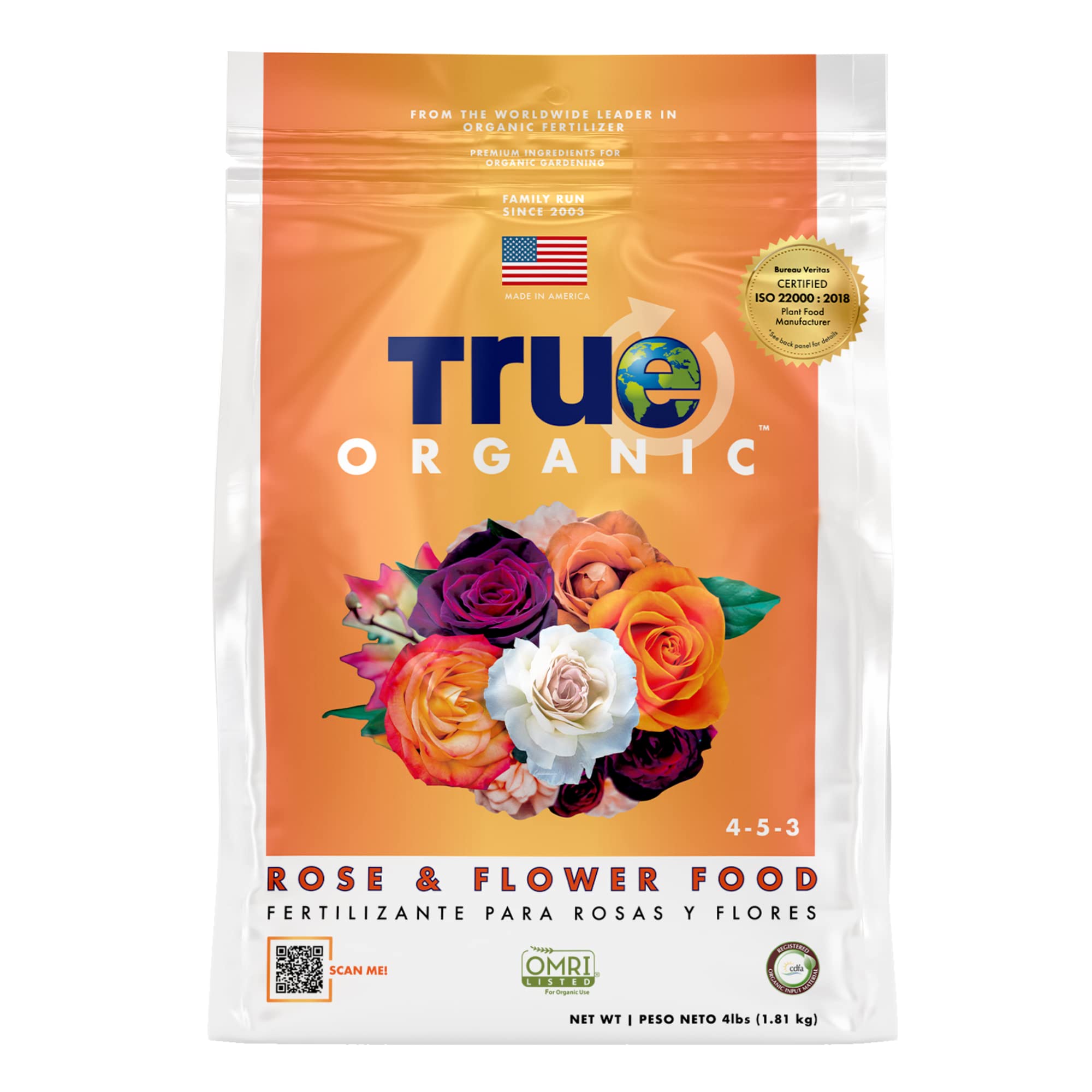
An organic granular that turned a 2-foot Playboy rose into a 7-foot giant.
The NPK ratio here is 4:5:3, which means phosphorus (the bloom driver) is the highest of the three numbers — exactly what you want if your goal is flowers, not just foliage. The blend uses seabird guano, shrimp and crab shell meal, fish bone meal, and soybean meal, so the nutrients come from real organic sources rather than synthetic salts. Buyers report that 1/4 cup per bush lasts 3-4 weeks, making a 4lb bag go further than you might expect. One reviewer documented their Playboy rose jumping from 2-3 feet to 7 feet tall after using this food, which gives you a sense of what it can do when a hungry bush finally gets what it needs.
Unlike many organic granulars, this one reportedly leaves no fishy smell on the roses, even after rain or irrigation. That is a big deal if you grow near a patio or walkway where you will brush past the blooms. The bag covers up to 70 square feet, so it fits small to medium beds comfortably.
Bloom-focused organic: The 4:5:3 ratio puts phosphorus front and center, making this a strong pick if you want maximum flowers without adding extra green growth that needs constant trimming.
No smell after watering: Reviewers confirm the lack of lingering odor, which removes one of the biggest complaints about organic rose foods.
Reach for this if: You want an organic granular with a bloom-forward NPK ratio that is easy to apply monthly and leaves no smell on the flowers.
Pass if: Your rose bed is smaller than a few bushes — the 4lb bag might be more than you need for a single season, though it stores fine in a dry shed.
3. Growth Technology GT Rose Focus
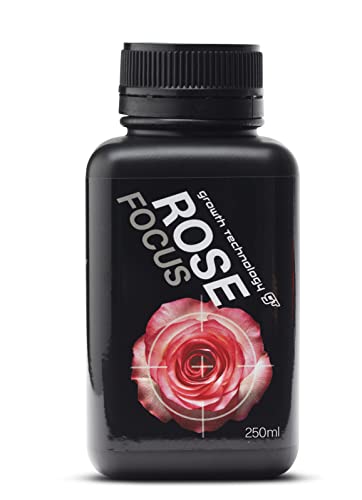
A concentrated liquid that makes hydroponic roses grow like weeds.
This is a liquid formula with 12 essential minerals plus extra soluble calcium, designed for everything from Hybrid Tea Roses to miniature and climbing varieties. The big difference from most rose foods is that it is pH-buffered and works in hydroponic systems, soil, and potting mix equally well — which matters if you grow any roses in containers on a patio. Owners mention that “my hydro plants grow like weeds with it,” and multiple reviewers mention significantly larger leaves and faster new growth within a week or two of starting.
The bottle is small at 8.45 fluid ounces, but it is highly concentrated: you use 5-10 ml per liter for hydroponics or 3-7 ml per liter for soil. One cap equals 20 ml, so a single bottle lasts a good while if you are feeding a few bushes. The GT Rose Focus bottle is 0.7 pounds, which is noticeably lighter than the 4-pound granular bags. A few customers note the bottle can leak during shipping, so open it over the sink on first use.
Fast absorption, big leaves: The liquid form hits the roots immediately, and the extra calcium helps build sturdy cell walls that resist wind and heavy rain damage.
Mineral salt buildup risk: The manufacturer recommends flushing monthly with plain water to prevent salt accumulation, so it is not a “forget about it” formula.
Ideal for containers: If you grow Knockouts in pots or have a hydroponic rose setup, this is the most targeted formula in this lineup.
Skip if: You prefer a low-maintenance granular — this requires mixing and a monthly flush step.
4. Farmer’s Secret Rose Booster

A super-concentrated liquid that revived a white climbing rose from the brink.
This Kentucky-made liquid concentrate packs a lot of punch in a small bottle. You dilute just two teaspoons into one gallon of water and apply weekly during the growing season. The 7.98 fluid ounce bottle is only 0.7 pounds, making it the lightest product here — but it holds 6% more volume than the Growth Technology GT Rose Focus at 8.45 fl oz. Customers note that weekly feeding (except during heavy rain) revived a white climbing rose that “bloomed and filled out,” while also pushing mums into wild blooming and making Thai basil greener and taller.
The smell is the main trade-off. Multiple reviewers mention a sulfur-like odor during mixing, though it dissipates after watering. One buyer mentioned it works on “most garden plants,” not just roses, so if you want one bottle that feeds your Knockouts and your vegetable starts in the same session, this can pull double duty.
Weekly feed, instant results: The super-concentrated formula means a single bottle produces many gallons of feed, making it cost-effective for a whole bed.
Sulfur smell during mixing: Plan to mix this outdoors or with the windows open — the odor is real but temporary.
Revival specialist: If you have a Knockout that has stopped blooming or looks tired, this weekly liquid feed can bring it back faster than most granulars.
Not for you if: You cannot commit to weekly mixing — the schedule is more hands-on than monthly granulars.
5. Dr. Earth Total Advantage Rose & Flower Fertilizer

The only Non-GMO Project Verified fertilizer in the U.S., handcrafted with human-grade ingredients.
Dr. Earth’s Total Advantage is built around a transparency standard that few rose foods meet: it carries OMRI (Organic Materials Review Institute) listing, OIM (Organic Input Materials) certification, CCOF (California Certified Organic Farmers) verification, and the Non-GMO Project Verified seal. That means no synthetic chemicals, no GMO-infested chicken manure, and no toxic ingredients. The formula is enriched with multi-minerals, proteins, carbohydrates, humic acids, and trace elements designed to promote healthy soil biology rather than just feeding the plant directly.
One buyer with ten established rose bushes reports using it after winter pruning and again when the first bloom fades, and says they have had “the best blooms ever” since switching. Another South Florida gardener calls it “the best nutrition for your roses” and notes their roses thrive every year with this product. The 4 lb. bag weighs 16 ounces (the label lists item weight at 16 ounces, which is the bag plus contents), and it is formulated by Milo Shammas, founder of Dr. Earth.
Pet-safe and people-safe: The lack of synthetic chemicals makes this a strong choice if you garden in areas where kids or pets run through the beds.
Certification overload: If organic certification matters to you, this product has more third-party verifications than any other rose food in this list.
Maximum purity: Pick this if you insist on Non-GMO verified inputs and want a granular that feeds the soil ecosystem, not just the plant.
Skip if: You need a quick boost for a plant in distress — granulars are slow-release by nature, and this one works best as a consistent monthly maintenance feed.
6. Heirloom Roses Founder’s Fish Fertilizer
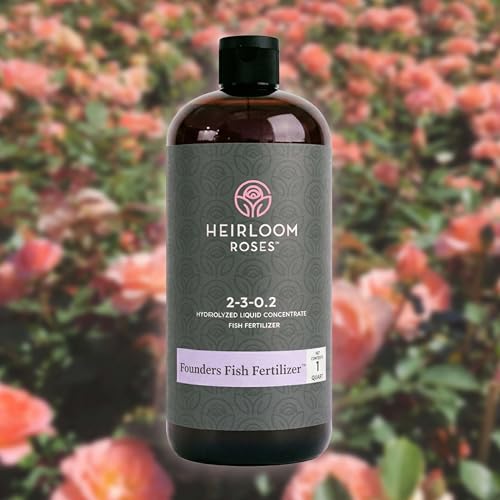
A smelly fish emulsion that kept five new own-root roses blooming all season.
This organic liquid emulsion is derived from acidulated fish solubles stabilized with phosphoric acid, and it contains multiple species of fish for broader soil mineralization. You mix 4 oz. per gallon of water, and one gallon is enough for 2-3 roses. The big selling point is what it does for new roses: one buyer with five new own-root roses reported that “every single one bloomed this year and bloomed quite a lot” after using this food. The bottle holds 32 fluid ounces, and that same reviewer said one bottle lasted the entire season for their five plants.
The smell is the obvious issue. Multiple reviewers mention it — one even jokes that their neighbor started sneezing after afternoon application. The general advice is to apply at night when everyone is inside. The smell does not linger long after watering, but it is potent during mixing. On the plus side, it is organic and safe around pets once it has soaked into the soil.
New rose specialist: If you are planting fresh Knockouts this season and want to push them into blooming in their first year, this fish emulsion is among the most effective options.
The stink is real: Plan your application time carefully — evenings are better, and avoid applying right before a garden party.
Best for new plantings: If you just put Knockouts in the ground and want to boost first-year blooms, this fish fertilizer has the reviews to back it up.
Not for sensitive noses: If you or your neighbors cannot tolerate fish emulsion smell, stick with a granular option.
7. Great Big Roses and Flowers Liquid Fertilizer Booster
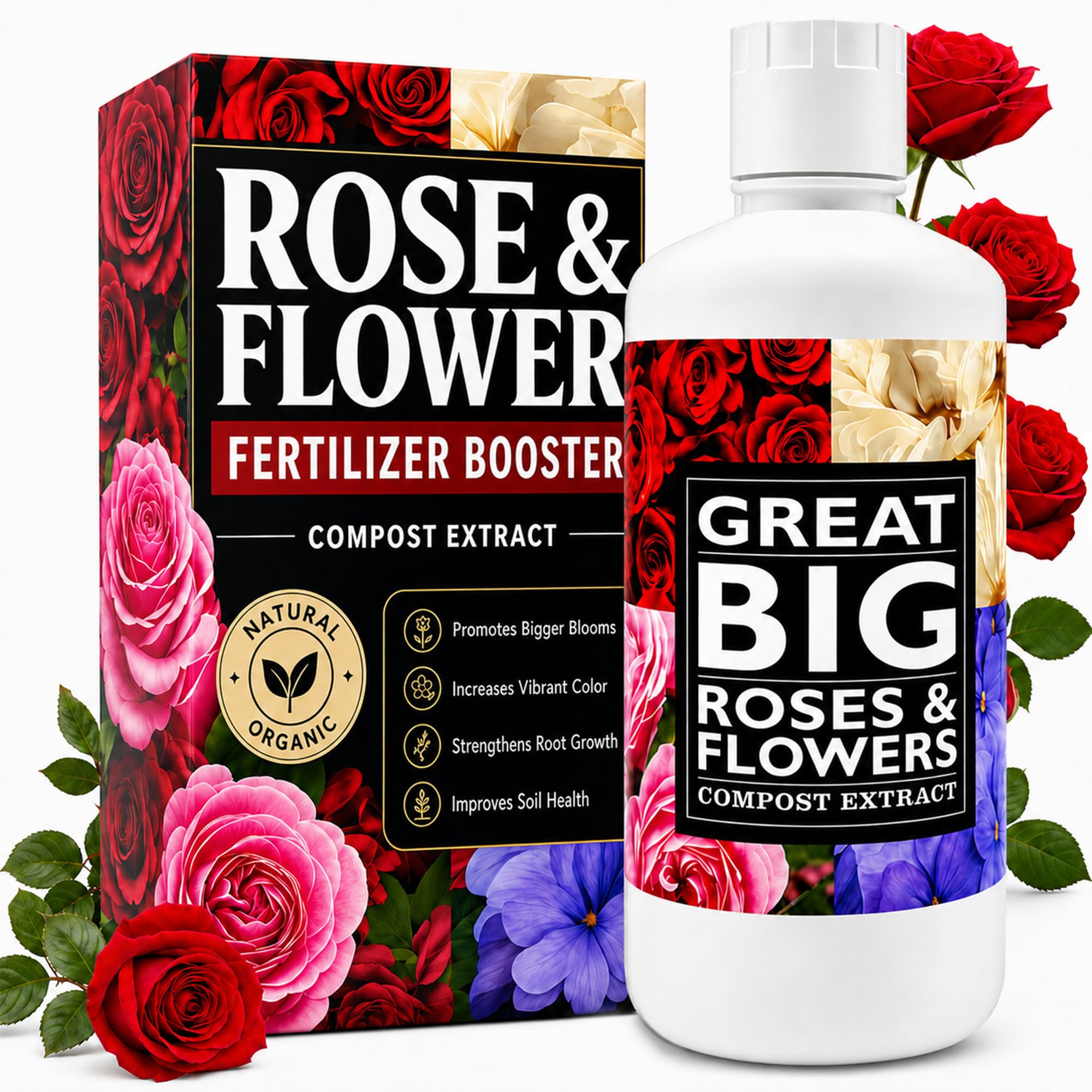
A 70-mineral booster that woke up rose bushes that had not bloomed in years.
This is not a traditional fertilizer — it is a soil activator that delivers humic acids, seaweed, chelated iron, and over 70 trace minerals into the root zone. The idea is that it open up nutrients already in the soil and amplifies whatever fertilizer you are already using. Reviewers point out that rose bushes that “had not bloomed in years” produced big flowers within weeks of first application. One verified reviewer shares photos showing their bushes covered in buds just two weeks after starting, with a follow-up image showing full blooms.
You mix 4 oz. of liquid concentrate with one gallon of water and apply around the base — no digging or tilling required. The 32-ounce bottle provides roughly eight applications, and one reviewer says a single gallon of mixed solution covered their entire growing season. It works alongside organic fertilizer, fish emulsion, bone meal, blood meal, and worm castings, so you can layer it with other products in this list. A few buyers noted that their roses showed “no black spot” after using this booster, though that could be a seasonal coincidence rather than a guaranteed effect.
Soil unlocker: If your soil is tired or heavy, the humic acids and trace minerals can make existing nutrients available that the plant could not reach before.
Not a standalone feed: This is a booster, not a complete fertilizer. For best results, use it alongside a balanced granular or liquid food.
Revival tool: Pick this if you have older Knockouts that have stopped producing or if you want to boost the results of whatever fertilizer you are already using.
Skip if: You want a complete one-bottle feed — this needs a partner product to supply the primary NPK nutrients.
Understanding the Specs
NPK Ratio
The three numbers on the label (like 4-3-2 or 4:5:3) tell you the percentage by weight of nitrogen, phosphorus, and potassium in the bag. Nitrogen drives leaf and stem growth — too much and you get a big green bush with few flowers. Phosphorus is the fuel for blooms and root development. Potassium supports overall plant health and disease resistance. For Knockout Roses, look for a phosphorus number that is close to or slightly higher than the nitrogen number to encourage flowers over foliage.
Granules vs. Liquid Concentrate
Granules are dry pellets you sprinkle around the base of the plant and water in. They release nutrients slowly over several weeks as soil microbes and moisture break them down. Liquid concentrates are mixed with water and applied directly to the soil, giving the roots immediate access to nutrients. Granules are lower-maintenance (apply once a month and forget it), while liquids give you faster results and more control over timing — useful if you are nursing a struggling plant or timing a bloom push for a special event.
FAQ
How often should I feed my Knockout Roses?
Can I use a general all-purpose flower food on Knockout Roses?
When should I start feeding Knockout Roses in spring?
Is organic rose food better than synthetic for Knockouts?
Can I overfeed my Knockout Roses?
Should I stop feeding Knockout Roses before winter?
Do Knockout Roses need a different food than hybrid tea roses?
Can I mix granular and liquid rose foods together?
How long does a 4lb bag of granular rose food last?
What does “super concentrated” mean on a liquid rose food label?
Final Thoughts: The Verdict
For most gardeners, the best food for knockout roses is the Espoma Organic Rose-Tone because it delivers consistent monthly nutrition with a balanced 4-3-2 NPK ratio and the simplicity of a sprinkle-and-water granular. If you want a bloom-focused organic feed with the highest phosphorus ratio in this lineup, grab the True Organic Rose & Flower Food. And for reviving tired bushes or boosting an existing fertilizer program, the standout is the Great Big Roses and Flowers Booster with its 70 trace minerals and humic acid soil activation.
How We Picked
We do not accept paid placement. Every pick is matched to a real buyer and a real use-case; we do not hands-on test units.
Sources & Methodology
Specifications: manufacturer listings and product documentation. Review insights: verified customer reviews, as of July 2026. Pricing: not shown on this page (it changes often); check the current price via the retailer link.
As an Amazon Associate, Lawn Gear Lab earns from qualifying purchases. This does not affect which products we feature.