
Specs are compiled from manufacturer listings and verified buyer reviews and can change over time — please confirm the key details on the product page before buying.
You pull a plant from a plastic pot and see roots circling the bottom, strangling the plant’s own growth. That does not happen with flower grow bags. They let roots breathe and naturally prune themselves, so your plants build a dense, healthy root system instead of choking. The trick is finding bags that survive a full season of sun, water, and moves — without the fabric tearing or handles ripping loose under wet soil.
This guide compares the manufacturers’ published specs and patterns across verified customer reviews, so you get each pick’s real strengths and trade-offs.
The six picks cover the widest range of garden setups, from large multi-pack collections for big vegetable plots to heavy-duty premium fabric that lasts year after year. The best flower grow bags deliver proven durability, true-to-label capacity, and handle strength that lets you drag a soggy bag without it giving way.
Our Picks at a Glance

How To Choose The Best Flower Grow Bags
Three factors decide whether a bag lasts one season or five. Getting these right saves you money and frustration.
Fabric Weight and Density
The fabric weight, measured in grams (like 300G or 600G), tells you how thick and durable the material is. A heavier fabric resists tearing, stands up to repeated washing, and holds its shape longer. Lightweight bags (under 200G) often sag, leak soil, or develop holes by mid-season. Most serious gardeners look for at least 300G as a baseline for multi-year use.
Handle Construction
Handles get the most stress of any part of the bag. Weak handles are merely strips of the same fabric sewn on as an afterthought. The best designs use reinforced polypropylene webbing (a strong strap material) with X-shaped or serger stitching (a stronger method than standard sewing), so you can lift a fully saturated bag without handles pulling loose. If you plan to move bags around your patio or yard frequently, handle strength is a deciding factor.
True Capacity vs. Advertised Size
Not every 5-gallon bag holds a true 5 gallons to the top. Some manufacturers measure to the fill line, others to the very brim — and some simply round up. Check the exact dimensions and any “true gallon” claims in the specs. A bag that is smaller than expected can stunt deep-rooted plants like tomatoes or potatoes.
Quick Comparison
| Model | Best For | Capacity | Fabric Weight | Pack Count | Amazon |
|---|---|---|---|---|---|
| Cavisoo 5 Gal (24-Pack)★ Best Overall | Large vegetable gardens | 5 gallons | 300G | 24 | Amazon |
| OPPOLIFE 3 Gal (12-Pack)Best for Herbs | Herbs and peppers | 3 gallons | 300G | 12 | Amazon |
| VIVOSUN 5 Gal (5-Pack) | Everyday reliability | 5 gallons | 300G | 5 | Amazon |
| ADORMA 3 Gal (20-Pack) | Budget bulk planting | 3 gallons | 300G | 20 | Amazon |
| AC Infinity 7.66 Gal (5-Pack) | Square tent growing | 7.66 gallons | 500G | 5 | Amazon |
| Gorilla 5 Gal (4-Pack) | Maximum durability | 5 gallons | 600G | 4 | Amazon |
In‑Depth Reviews
1. Cavisoo 24-Pack 5 Gallon Grow Bags
Our pick — over 4.5★ from 850+ verified ratings; the strongest balance of quality and price.
The bulk buy that does not cut corners on fabric or handle strength — 24 bags that cover a whole garden.
This Cavisoo set gives you 24 bags in one purchase, each made from 300G thick nonwoven fabric that the manufacturer says can be reused for over 3 years. The reinforced polypropylene webbing handles use X-shaped stitching, so when you load one up with wet soil and a full-grown tomato plant, the handles stay anchored rather than peeling away from the bag.
Owners praise the durability and value for money more than any other aspect — and the numbers back that up, with those two categories dominating the feedback. The 5-gallon size works for tomatoes, cucumbers, bell peppers, and potatoes. In hot weather, the breathable fabric dries out fast: buyers report needing water twice daily when temperatures hit the 80s, and three times when it climbs past 90°F. That is the trade-off for excellent drainage, so plan your watering schedule accordingly.
Compare this to the VIVOSUN 5-pack below: both use the same 300G fabric, but the Cavisoo holds 24 bags compared to the VIVOSUN’s 5 bags. If you are starting a serious container garden from scratch, this pack gives you the volume to do it all in one order.
What wins people over
- 24 bags for one low price — enough for a full vegetable garden
- 300G fabric with X-stitched handles that hold up under heavy soil
- Breathable material prevents root circling (roots that would otherwise wrap around the pot) and promotes healthy root growth
The one catch to know
- Dries out fast in hot weather — needs watering twice daily in the 80s, three times above 90°F
- Some owners note the bags are shorter than expected for 5 gallons
Best for: Gardeners planting a large number of tomatoes, cucumbers, or potatoes who want durable bags they can reuse for multiple seasons.
Think twice if: You garden in extreme desert heat without an automated watering system — the rapid drying will demand near-constant attention.
2. OPPOLIFE 12-Pack 3 Gallon Plant Grow Bags
The compact size that suits herbs, peppers, and sweet potato slips without wasting soil.
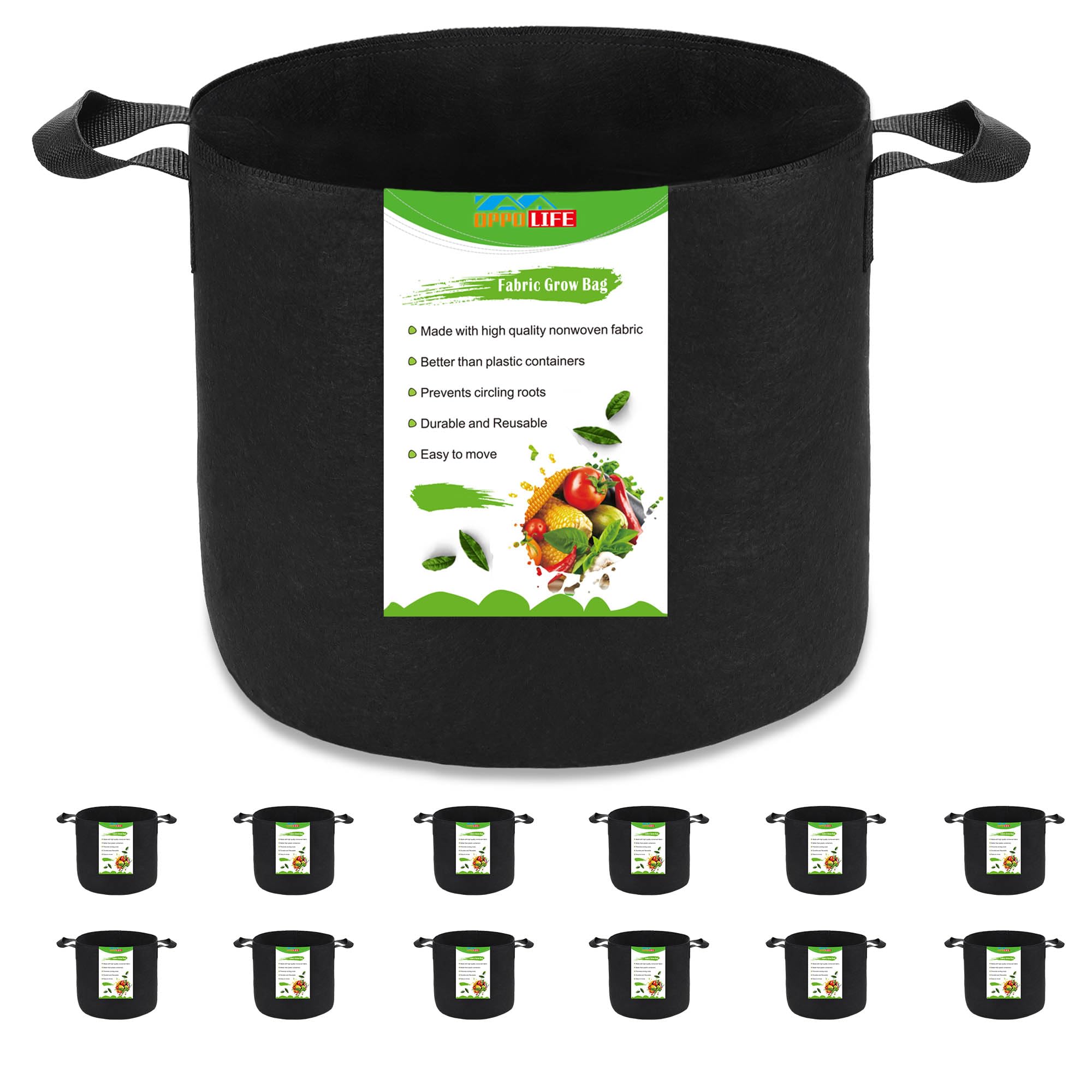
Twelve 3-gallon bags give you the right volume for shallow-rooted plants — think basil, cilantro, chili peppers, and strawberries — without wasting soil in oversized containers. The 300G thickened nonwoven fabric offers the same durability as the bigger bags above, and the reinforced polypropylene webbing handles have an inner lining for extra tensile strength. Moving a filled bag around your patio is genuinely one-handed.
The size bracket gets mixed feedback here: at 3 gallons and 10″ diameter x 9″ height, these are noticeably smaller than a standard bucket, so they are not ideal for deep-rooted crops like full-size tomatoes. What they excel at is dense planting for root veggies and herbs. One creative owner in a desert climate devised a DIY hack — wrapping the sides with plastic wrap and using a peat bag base as a vapor barrier — to combat the rapid drying that aeration fabric causes in extreme heat. That is the same inherent trait of any breathable bag: you trade moisture retention for root health.
Compared to the Cavisoo 24-pack above, this OPPOLIFE set gives you 12 bags versus 24, making it a natural fit for anyone who only needs a modest herb garden.
Why people pick these
- Compact 3-gallon size is perfect for herbs, peppers, and strawberries
- Reinforced handles with inner lining for secure lifting
- Washable and reusable — the maker claims a lifespan of over 5 years
What to know
- 3-gallon capacity is too small for large tomato or potato plants
- Breathable fabric dries quickly in hot, dry climates — plan for extra watering
Reach for these if: You are planting a patio herb garden or starting seeds in 3-gallon pots and want quality fabric that outlasts a single season.
Look elsewhere for: Deep-rooted plants that need 5+ gallons — the 3-gallon size will stunt their growth.
3. VIVOSUN 5-Pack 5 Gallon Grow Bags

Over 60,000 owners have bought these — they are the crowd-tested workhorse of the list.
VIVOSUN is among the most recognized names in indoor and outdoor growing, and this 5-pack of 5-gallon bags shows why. The 300G thickened nonwoven fabric is BPA-free (free of bisphenol A, a chemical sometimes found in plastics) and moderately permeable — it drains well without letting soil dry out as aggressively as some lighter fabrics. The handles use serger stitches (a stronger stitching method than standard sewing) to attach them to the bag, which is a meaningful upgrade from bags where the handle is just a loop of the same fabric.
The sheer volume of feedback here is remarkable: over 60,000 ratings with durability and quality both clearing 1,500 positive mentions each. Size draws mixed comments — some owners find the bags huge, others say they run smaller than expected. The item dimensions (12.99 x 7.48 x 3.94 inches when flat) suggest a typical 5-gallon profile when opened. In practice, owners say cucumbers, tomatoes, and strawberries all thrive, and the fabric holds its shape under the weight of wet soil without bulging or collapsing.
Stacked against the Gorilla 4-pack below, the VIVOSUN uses a lighter 300G fabric versus 600G, but it also costs significantly less per bag. For a gardener who is not ready to invest in premium fabric yet wants a proven, reliable bag, this is the safest middle-ground choice on the list.
What the reviews love
- Over 60,000 ratings with overwhelmingly positive feedback on durability and quality
- Serge-stitched handles hold up better than basic fabric-loop handles
- BPA-free, breathable fabric prevents overwatering and root circling
The honest trade-off
- Size accuracy is debated — some owners feel the 5-gallon bag runs slightly small
- 300G fabric is durable but not as thick as premium 500G or 600G options
Who it fits: First-time grow bag users who want a proven, affordable 5-gallon option with strong handles and a brand they can trust.
Might not suit you if: You need the absolute thickest fabric available or require a true-to-the-brim 5-gallon capacity for deep-root crops.
4. ADORMA 20-Pack 3 Gallon Grow Bags
Twenty 3-gallon bags that punch well above their price point in build quality.
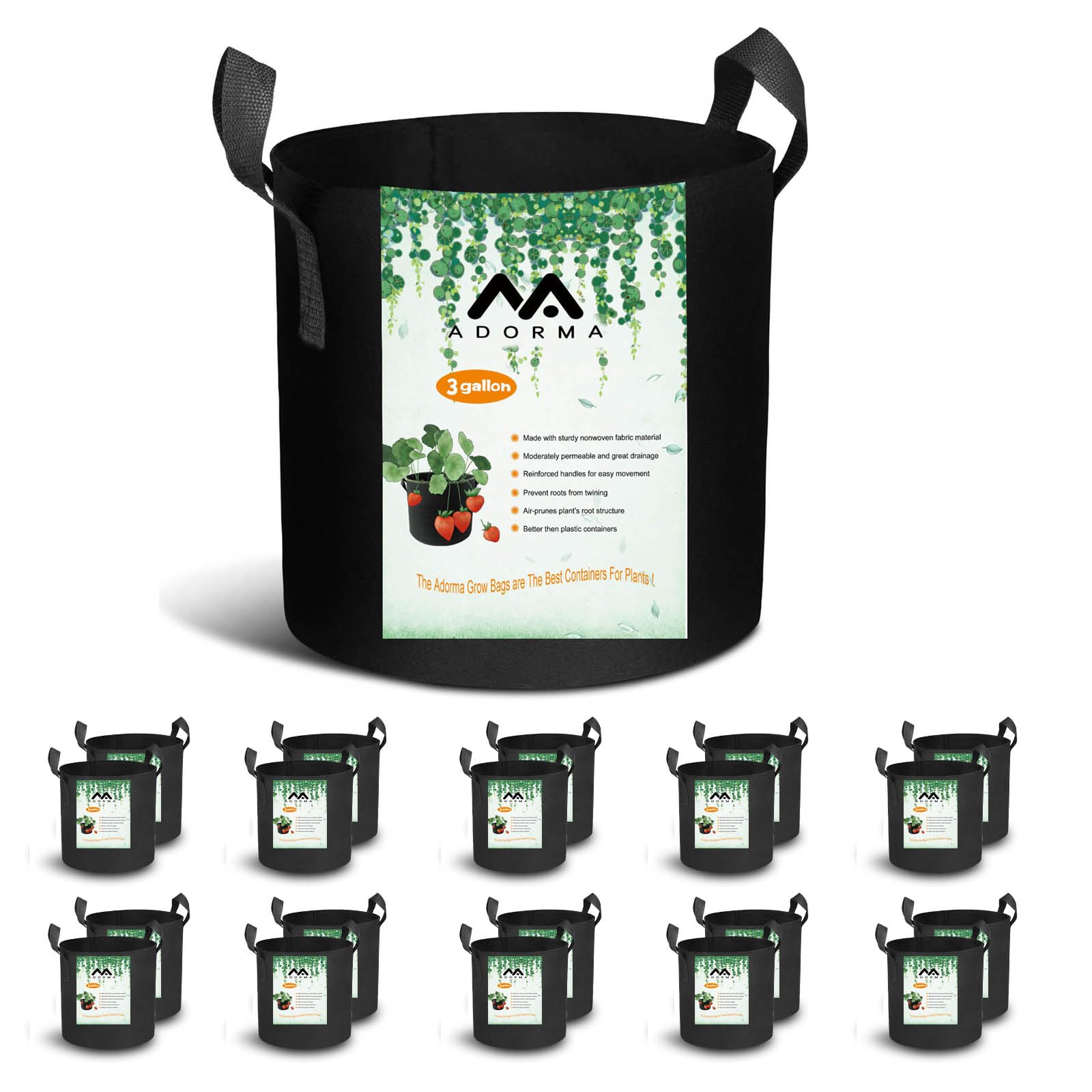
If you are planting flowers, herbs, peppers, or strawberries in bulk, this ADORMA 20-pack offers an aggressive value without cheaping out on the fabric. Each bag uses 300G thickened nonwoven material with five-line edging on the top and double sewing along the side seams — construction details you normally see on more expensive bags. The handles are polypropylene webbing with X-shape sewing, which the maker says provides 10 times more weight-bearing strength than single-stitch handles.
Quality and sturdiness are the two most-praised aspects here, with over 40 combined positive mentions between them. Owners use these bags for everything from standard vegetable growing to a creative second life as koi pond planters — the fabric lets water flow through the sides while keeping mud and roots contained. The 3-gallon size (10″ x 9″) works well for water lilies or three small aquatic plants.
Side-by-side with the OPPOLIFE 12-pack, this set gives you eight extra bags for a moderate step up in price. Both are 3-gallon with 300G fabric, so the deciding factor is sheer quantity: if you want the most bags for your money at a 3-gallon capacity, the ADORMA pack is the clear winner.
Standout strengths
- 20 bags for a low price — the highest count at 3-gallon size on this list
- Five-line edging and double-side seams add durability
- Reinforced X-stitched handles handle heavy loads without tearing
What to watch for
- 3-gallon capacity limits what you can plant — not for large tomatoes or potatoes
- Breathable fabric dries quickly; requires consistent watering in hot weather
Perfect for: Gardeners who need a high volume of 3-gallon bags for flowers, herbs, or strawberries on a budget.
Not for: Deep-root crops or anyone needing a single 5-gallon bag — this set is all 3-gallon.
5. AC Infinity Square Heavy Duty Fabric Pots, 7 Gallon (5-Pack)

The square shape that boost every inch of grow tent space — and 500G fabric that wears like iron.
AC Infinity is known for premium grow gear, and these square fabric pots are a clear step up in design thinking. The 500G nonwoven fabric, at 500G versus the standard 300G bags above, which translates to better shape retention, less side leakage, and longer usable life — owners mention these wear “like iron” compared to bags whose threads disintegrate after a year. The true capacity is 7.66 gallons, making them genuinely larger than a standard 5-gallon bag for deep-root plants like tomatoes or cannabis.
The square form factor is the standout feature here. In a grow tent, round bags waste corner space — square bags fit flush against each other and the walls, giving you more growing area per square foot. The fabric loops at the top allow plant stakes to pass through without puncturing the bag, which helps maintain plant structure without damaging the root zone. Nylon handles and reinforced stitching add to the premium feel.
Quality is the most-praised aspect by a wide margin, though sturdiness and drainage both draw mixed notes — a few owners wish the walls were even firmer. At 500G, these bags are not the absolute thickest on the market (the Gorilla bags below beat them at 600G), but they strike a near-perfect balance of durability, smart design, and value for serious growers.
Why it stands out
- Square design fits grow tents perfectly, maximizing usable floor space
- 500G fabric is substantially thicker than 300G bags — fewer leaks and longer life
- True 7.66-gallon capacity gives deep roots room to spread
The trade-offs
- Square shape is less convenient for standard round planters or decorative pots
- Sturdiness and drainage draw mixed feedback from a small number of owners
Best fit for: Grow tent owners or serious gardeners who want thick, square pots that fit together tightly and outperform standard round bags.
Not the best choice if: You only need round bags for a patio or deck — the square shape does not sit as neatly in round saucers or decorative containers.
6. Gorilla 5 Gallon Grow Bags with Reinforced Handles (4-Pack)
The thickest fabric on the list — 600G that refuses to sag or tear, with handles that wrap under the bottom.
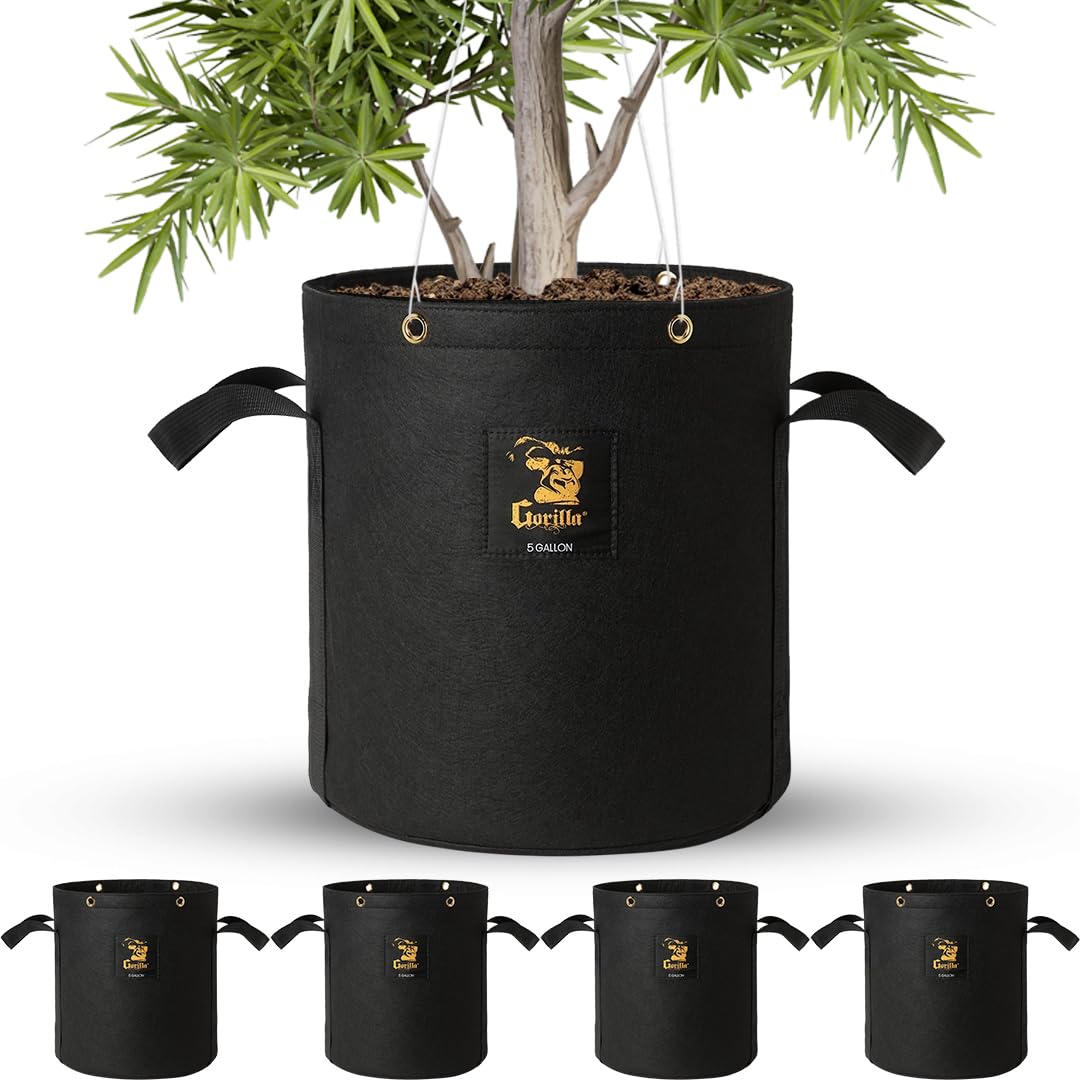
Gorilla brings the same heavy-duty philosophy from their grow tents to these bags, and the result is the most sturdy fabric pot in this roundup. The 600G nonwoven fabric, at 600G versus a standard 300G bag, holds its shape rigidly even after repeated waterings and prevents soil from leaking through the sides. The reinforced handles wrap around the bottom of the bag — so when you lift, the handle supports the full base rather than just the top edge. That is a design detail you rarely see, and owners confirm the handles do not break even under heavy plant loads.
The 360-degree metal grommets around the top are another unique feature. They let you thread 1/4-inch dowels through for low-stress training (bending and tying down plant branches to increase yield) without damaging the fabric. If you are serious about maximizing your harvest, this opens up techniques that standard fabric bags simply cannot accommodate.
Quality and thickness are the top praises here, with 19 and 12 positive mentions respectively. The honest caveat is that value for money is mixed — at a 4-pack, the per-bag cost is higher than any other entry on this list. Owners who buy these tend to say “you get what you pay for” and consider them an investment that outlasts cheaper alternatives by multiple seasons.
What makes it special
- 600G fabric — the thickest and most durable of any bag reviewed here
- Wrap-around handles go under the bottom for safe, full-support lifting
- Metal grommets allow low-stress plant training with dowels
What to consider
- Only 4 bags per pack — per-bag cost is higher than other options
- Value for money draws mixed reviews; some owners find them pricey
Get these if: You want the absolute toughest bag available and plan to use advanced training techniques like low-stress bending.
Pass on them if: You need a large number of bags at a low per-unit cost — the Gorilla 4-pack is an investment, not a bulk buy.
Understanding the Specs
Fabric Weight (300G vs 500G vs 600G)
This number tells you how dense the nonwoven fabric is. A 300G bag is the standard for most home gardeners — it lasts a season or two and drains well. Stepping up to 500G or 600G (like the AC Infinity or Gorilla bags) gives you a thicker wall that holds its shape better, resists tearing when you move it, and can survive multiple growing seasons with proper washing and storage. Heavier fabric also means less soil leakage through the sides.
Air Pruning
When a root tip reaches the edge of a fabric bag, it hits air and stops growing. That sounds bad, but it is actually the whole point. The root then sends out lateral branches inside the bag, creating a dense, fibrous root ball instead of the circling, tangled mess you see in plastic pots. Healthier roots mean your plant can absorb more water and nutrients, leading to stronger growth above ground.
Handle Construction
Not all handles are equal. The weakest handles are just a loop of the same fabric as the bag — they tear off when the soil is wet and heavy. The best handles use reinforced polypropylene webbing (a strong strap material) sewn on with serger stitches or X-shaped patterns. Some premium designs, like the Gorilla bags, wrap the handle under the bottom of the bag so the full weight is supported by the base, not just the top seam.
Gallon Size and True Capacity
A “5-gallon” grow bag does not always hold 5 gallons of soil to the top. Some brands measure to the fill line (the point where you stop adding soil), others to the brim. Always check the actual dimensions — a bag that is 12″ in diameter and 10.2″ tall is a true 5-gallon, while a bag that measures smaller may leave your deep-rooted plants cramped. Premium brands like AC Infinity explicitly state their true capacity (7.66 gallons in their case).
FAQ
How many seasons will a good grow bag last?
Can I use grow bags indoors or only outside?
Do grow bags need a saucer or tray underneath?
What size grow bag is best for tomatoes?
How do I clean and store grow bags at the end of the season?
Will the roots grow through the fabric?
Do grow bags dry out faster than plastic pots?
Are these grow bags BPA-free and safe for vegetables?
Can I use grow bags for plants other than vegetables?
What is the difference between a round bag and a square bag?
Final Thoughts: The Verdict
Across the board, the best flower grow bags winner is the Cavisoo 24-Pack because it gives you 24 true 5-gallon bags with reinforced handles and 300G fabric at a per-bag cost that undercuts nearly everything else while maintaining the quality to last multiple seasons. If you want a proven, moderately priced 5-gallon option with tens of thousands of happy owners, grab the VIVOSUN 5-Pack. And for the grow tent enthusiast who refuses to waste an inch of floor space, the AC Infinity Square 7-Gallon is the one to reach for.
How We Picked
We do not accept paid placement. Every pick is matched to a real buyer and a real use-case; we do not hands-on test units.
Sources & Methodology
Specifications: manufacturer listings and product documentation. Review insights: verified customer reviews, as of July 2026. Pricing: not shown on this page (it changes often); check the current price via the retailer link.
As an Amazon Associate, Lawn Gear Lab earns from qualifying purchases. This does not affect which products we feature.