
Specs are compiled from manufacturer listings and verified buyer reviews and can change over time — please confirm the key details on the product page before buying.
Flower beds look best when they have a crisp, clean border — that single line between the lawn and the plants makes the whole garden look intentional. But keeping that edge sharp can feel like a constant battle against creeping grass and overgrown turf. The right edger turns that chore into a quick, satisfying job, giving you a professional-looking boundary with far less effort.
I’m Rikta — the founder and writer behind Lawn Gear Lab. This guide is built by comparing the manufacturers’ published specifications and the patterns across verified customer reviews, so you get each pick’s real strengths and trade-offs instead of marketing spin.
The best manual edgers offer a sharp blade, an ergonomic handle, and a design that slices through roots without needing gas or electricity. That is exactly what you will find in this roundup of the best flower garden edgers, each suited to a different yard and style of gardening.
Our Picks at a Glance


How To Choose The Best Flower Garden Edgers
Picking the right edger depends more on your garden’s soil and the look you want than on complicated specs. A few key factors will steer you toward the tool that makes the job quicker and your flower beds look their best.
Blade Type and Material
The blade is the heart of any edger. A half-moon blade is the classic choice for cutting a clean, straight line along a bed. A saw-tooth edge helps bite into tough roots and compacted soil, requiring less downward force from you. The best blades are made from carbon steel, which holds a sharp edge longer and resists rust better than standard steel. A powder coating adds an extra layer of protection against corrosion.
Handle Length and Grip
A longer handle saves your back. It allows you to stand upright while you work, pushing or stepping the blade into the ground without stooping. Look for a handle around 40 to 61 inches. The grip matters too. A padded ergonomic grip or a T-style handle gives you better control and reduces hand fatigue, especially if you have a long stretch of edging to finish.
Quick Comparison
| Model | Best For | Blade Material | Handle Material | Overall Length | Amazon |
|---|---|---|---|---|---|
| Radius Garden Pro-Lite★ Best Overall | All-Around Manual Edging | Carbon Steel | Fiberglass | 40.25 in | Amazon |
| Root Slayer 22611Root Cutter | Tough Roots & Compacted Soil | Carbon Steel | Fiberglass | 39.25 in | Amazon |
| BULLY TOOLS Round EdgerLong Reach | Heavy-Duty Trenching & Edging | Steel | Steel | 61.5 in | Amazon |
| Professional Edge Lawn Tool | Budget Saw-Tooth Edging | Carbon Steel | Plastic/Rubber | — | Amazon |
| Worth Garden Corten Steel | Permanent Rustic Borders | Corten Steel | — | 4.5 in strip H | Amazon |
| SnugNiture Corrugated Metal | Long, Straight Beds | Metal | — | 600 in L x 6 in W | Amazon |
| Corrugated Garden Edging Pre-Rusted | Flexible Metal Borders | Metal | — | 480 in L x 6 in W | Amazon |
| FunFanso Plastic Edging Kit | Quick, No-Dig Borders | Plastic | — | 472 in L x 5 in W | Amazon |
| Beuta Polyrock Edging | Stone-Look Borders | Resin | — | 48 in L x 4 in W | Amazon |
In‑Depth Reviews
1. Radius Garden 25602 Pro-Lite Carbon Steel Edger
Our pick — over 4.5★ from 500+ verified ratings; the strongest balance of quality and price.
The crowd-favorite manual edger that excels in heavy clay without flexing.
This edger feels different the moment you pick it up. The fiberglass shaft is light, but the real story is the heat-treated carbon steel blade that measures roughly 9 by 5 inches. Owners consistently report it “cuts clean and deep, removing roots,” and the extra-wide improve forward step gives you real leverage without straining your balance. The doughnut-shaped handle makes the grip natural, and the tool comes in at just 4 pounds, so a long session around the yard does not wear you out.
The thing that wins people over is its sheer strength in tough soil. Buyers report the tool is “very strong, no joint flex even in heavy clay,” which is impressive for a manual tool. It creates a smooth, professional edge that looks like it was done with a power tool, but with zero noise or fumes. The trade-off is that the blade needs to be wiped clean after each use to keep its performance, and an occasional owner notes it could be slightly sharper from the start.
Lightweight carbon steel
- Extra-wide step provides excellent leverage for hard soil.
- Doughnut-shaped handle is easy to grip and store.
- Lifetime manufacturer guarantee in the continental US.
Requires more effort
- Blade requires cleaning after each use to prevent rust.
Best for precision: Homeowners who want one reliable manual edger that handles everything from light touch-ups to tough clay soil without breaking a sweat.
Look elsewhere if: You prefer a saw-tooth blade for cutting through thick roots, or you want a tool with a longer handle to minimize bending.
2. Root Slayer 22611 Serrated Garden Edger
A serrated half-moon blade that bites through compact soil and small roots with ease.
The defining spec here is the aggressive serrated teeth combined with an inverted V cutting tip. That design lets the blade cut through tough turf and shallow roots without you having to push down with all your weight. Built with powder-coated carbon steel, the blade resists corrosion, and the fiberglass shaft with a non-latex grip provides solid control. It weighs 4.8 pounds, which is a touch heavier than the Radius Garden, but that weight helps drive the blade home in hard ground.
What owners talk about most is how effective it is at cutting. The Root Slayer “cuts right through the ground to define your landscape beds,” and one owner says they can even stand on it like a shovel to chop through grass roots along curbs. The blade is very sharp right from the start, making edging projects noticeably easier. On the flip side, its weight is a point of discussion — some find it heavy after extended use, and a few owners mention it is closer to 2-3 times heavier than cheaper models, so it is not the best choice if you want the lightest tool in the shed.
Serrated blade grip
- Serrated V-shaped tip cuts through tough roots with less effort.
- Powder-coated carbon steel blade resists rust and wear.
- Build quality feels solid enough to last a lifetime with normal use.
Heavier to wield
- Heavier than most manual edgers, which can fatigue some users.
Reach for this if: You have tough, root-filled soil and want a manual edger that does the grunt work for you, without needing a gas-powered machine.
A better fit elsewhere if: Lightweight portability is your top priority, or you prefer a straight half-moon blade for simple maintenance cuts.
3. BULLY TOOLS 12-Gauge Manual Lawn Edger
An American-made, all-steel edger that excels at trenching and sod cutting.
The Bully Tools edger is built for serious work. Its 12-gauge extra-thick steel edge cuts through soil and roots, and the 61.5-inch overall length is the longest in this roundup, saving your back from constant bending. The detachable head measures 36 inches by 3.5 inches and can be removed for easy cleaning or storage. The steel T-style grip gives you precision control, and the wide footrest makes it easy to drive the blade into the ground.
Owners praise its sturdiness and versatility, noting it works well for edging sidewalks and driveways, as well as for trenching. One owner put it bluntly: “I advise anyone to purchase this bully. It works and doesn’t break.” The all-steel construction resists warping, and it is 100% made in the USA with a limited lifetime warranty. The main critique from some users is that the blade comes somewhat dull from the factory, with a 50-55 degree angle that benefits from a quick sharpening to a finer 25-30 degrees for optimal cutting.
Ideal for tough soil: Landscapers or homeowners who need a durable tool for both edging and digging trenches, and who appreciate a product built to last generations.
Consider another if: You want a tool ready to cut straight from the start, or you prefer a lighter, more nimble edger for quick flower bed touch-ups.
4. Professional Edge Lawn Tool, Heavy Duty Steel Half Moon & Saw-Tooth Blade
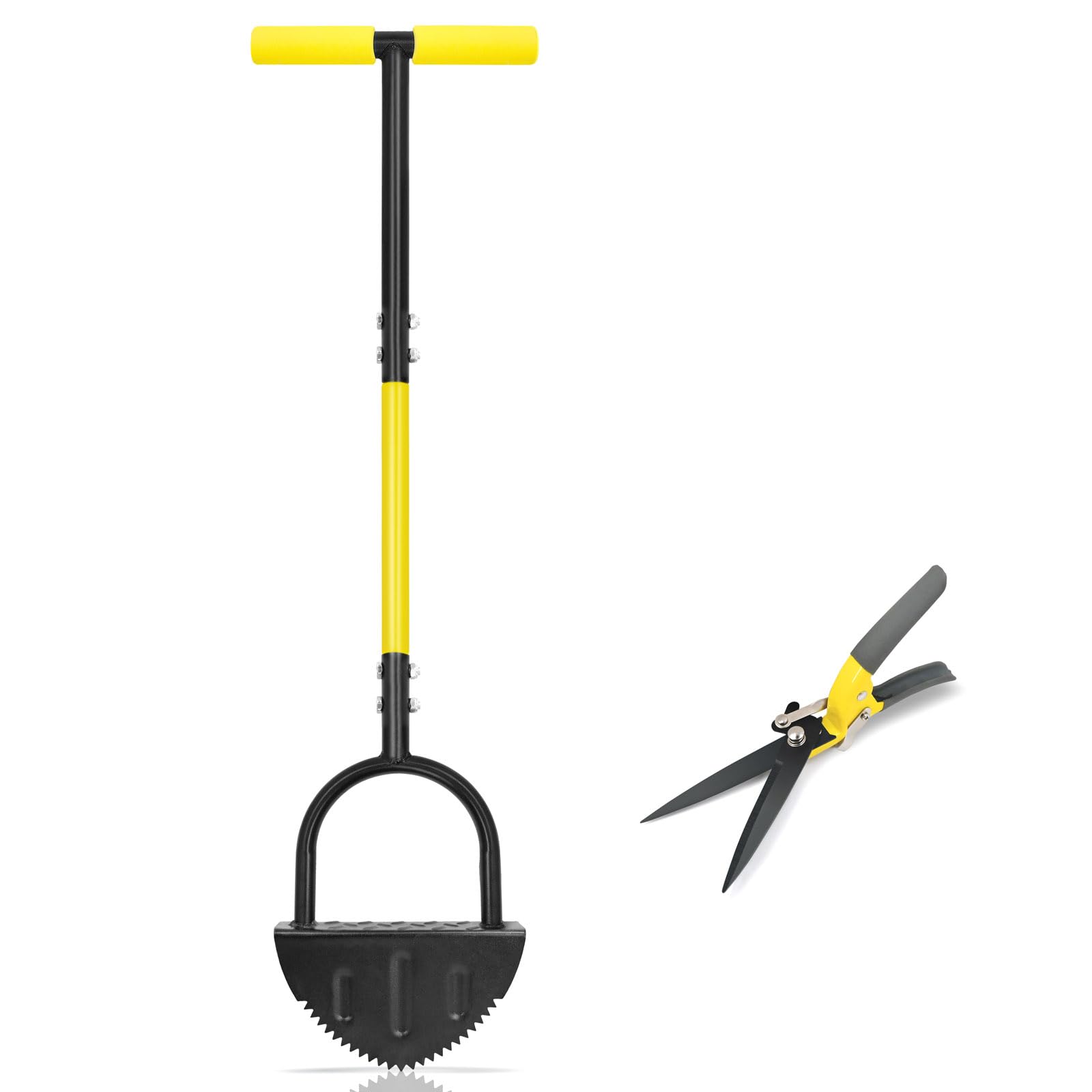
A saw-tooth half-moon blade that pulls weeds by the roots as it cuts.
This edger stands out for its dual-action design. The curved half-moon blade has teeth along the bottom that bite into grass and roots instead of just pushing them down. The result is a clean cut that also pulls up weeds, saving you a separate task. The long handle reduces bending, and the wide footplate gives you solid leverage. It is made from carbon steel with a welded steel construction for years of use.
Buyers consistently call it effective, saying it “creates clean, professional edges easily” even in clay soil, especially after rain. The ergonomic design includes a padded grip to reduce fatigue. One owner did note the blade is fairly thick at almost 1/8 of an inch, and they sharpened the teeth to get better performance in heavy turf. A few others found it not sharp enough from the start for their taste, but many consider it excellent value given the results and the included accessories.
Who it suits pros: Gardeners on a budget who want a manual edger with the extra cutting power of a saw-tooth blade for weedy, overgrown beds.
Skip it for wet areas: Very hard, dry clay where a sharper blade from the start might be more effective, or if you prefer a perfectly flat half-moon cut.
5. Worth Garden Corten Steel Landscape Lawn Edging

Hammer-in steel strips that create a permanent, rustic border for flower beds.
Unlike the manual edging tools above, this is a physical border that stays in place. The kit includes 10 strips of corten weathering steel, each 40 inches long, for a total installed length of 33 feet. The strips have a 2.5-inch saw-tooth spike at the bottom and stand 2 inches above ground for a clean, low-profile barrier. The pre-rusted patina finish acts as a protective layer and blends naturally into garden landscapes.
Installation is straightforward. The hammer-in design means you drive the spikes into the soil with a mallet — no digging required for soft ground. The strips are flexible enough to form gentle curves or straight lines, and 11 metal clips are included for extra stability. Owners find it “easy to install with a string line, spade, and rubber mallet,” and many say it is worth the extra cost for the quality. The main challenge is that the spikes can be hard to drive into compacted or rocky soil, so a bit of prep work might be needed.
Best for rustic look: Creating a neat, natural-looking separation between lawn and flower beds that requires no maintenance once installed.
Not ideal if straight: Your soil is very hard or rocky, or you need a taller barrier to contain deeper mulch or prevent larger weeds from spreading.
6. SnugNiture Corrugated Metal Garden Edging, 6″×50′

A 50-foot roll of corrugated metal that gives you 25% more length than the pre-rusted option.
This edging comes in a 6-inch height by 50-foot roll, offering the most material in this comparison. The corrugated design adds rigidity while still allowing you to shape it into straight lines or curves. The metal is coated to prevent rust, and it features a “secure hemmed edge” — a safety wrapping technology that prevents cuts during installation. It is ideal for large flower beds, pathways, or defining a long stretch of lawn.
Owners say the 6-inch height is perfect for burying 2 inches into the ground, leaving a 4-inch barrier that effectively contains mulch up to that height. The material is easy to cut with tin snips and bends nicely for curves. The only recurring trade-off is the mixed feedback on sturdiness and flexibility; the metal is sturdy but can be unruly off the reel if you are working alone. A few owners also mention the color can vary slightly from what is pictured.
Reach for this if curves: You have a long, straight flower bed or need a cost-effective way to edge a large area with a clean, modern black border.
Consider another if stability: You need tight, intricate curves in heavy clay, or you prefer the rustic look of pre-rusted steel.
7. Corrugated Garden Edging, 6″×40Ft Pre-Rusted
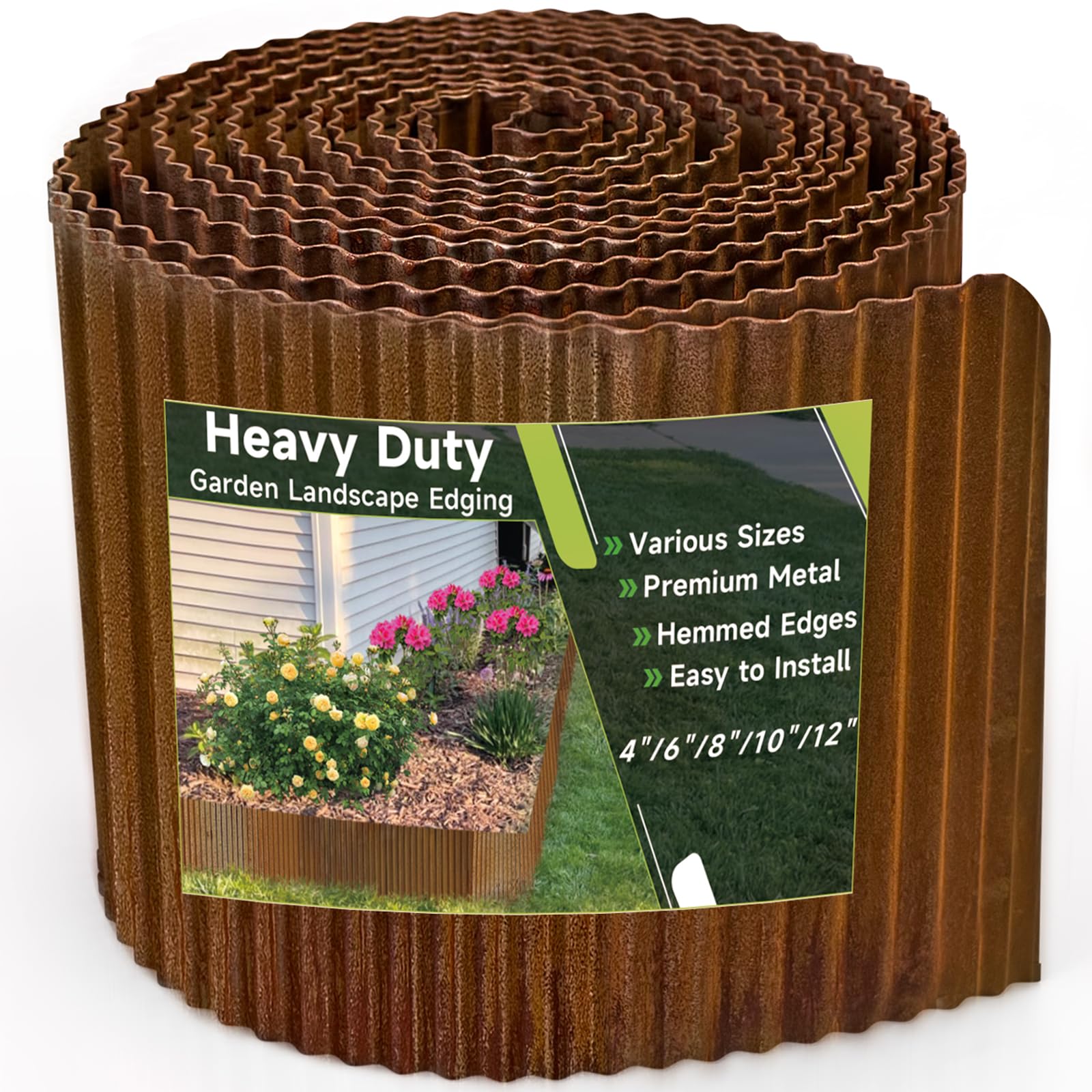
Pre-rusted metal edging that develops a beautiful patina while keeping grass roots at bay.
This 6-inch by 40-foot roll from GTSABWAY is made from high-quality metal that is both durable and flexible. The narrow corrugated design features rounded R-shaped corners and rolled top edges for safety. The pre-rusted finish is not just a color — the rust patina naturally deepens over time, creating a unique, rustic look that blends into garden landscapes. It is ideal for separating weeds from flower beds, keeping mulch in place, or creating borders for lawns and pathways.
Installation is straightforward. You wet the soil, gently push the edging into the ground, or use a rubber mallet for harder ground. Owners mention that the 8-inch version effectively keeps out bermuda grass roots if the weeds outside the border are kept clear. The steel cuts easily with metal scissors for custom lengths. The main consideration is the pre-rusted look is exactly that — weathered — and some owners were surprised it was not a clean silver finish. A few also voiced concerns about rust-through over a long period, though the manufacturer states the patina acts as a protective coating.
Who it suits decor: Gardeners who want a sturdy, flexible metal border with a natural, weathered appearance that becomes more beautiful with age.
Think twice if durability: You prefer a pristine, painted finish or need a taller barrier to contain deeper mulch beds.
8. FunFanso Landscape Edging Border Kit (40FT with 72 Stakes)
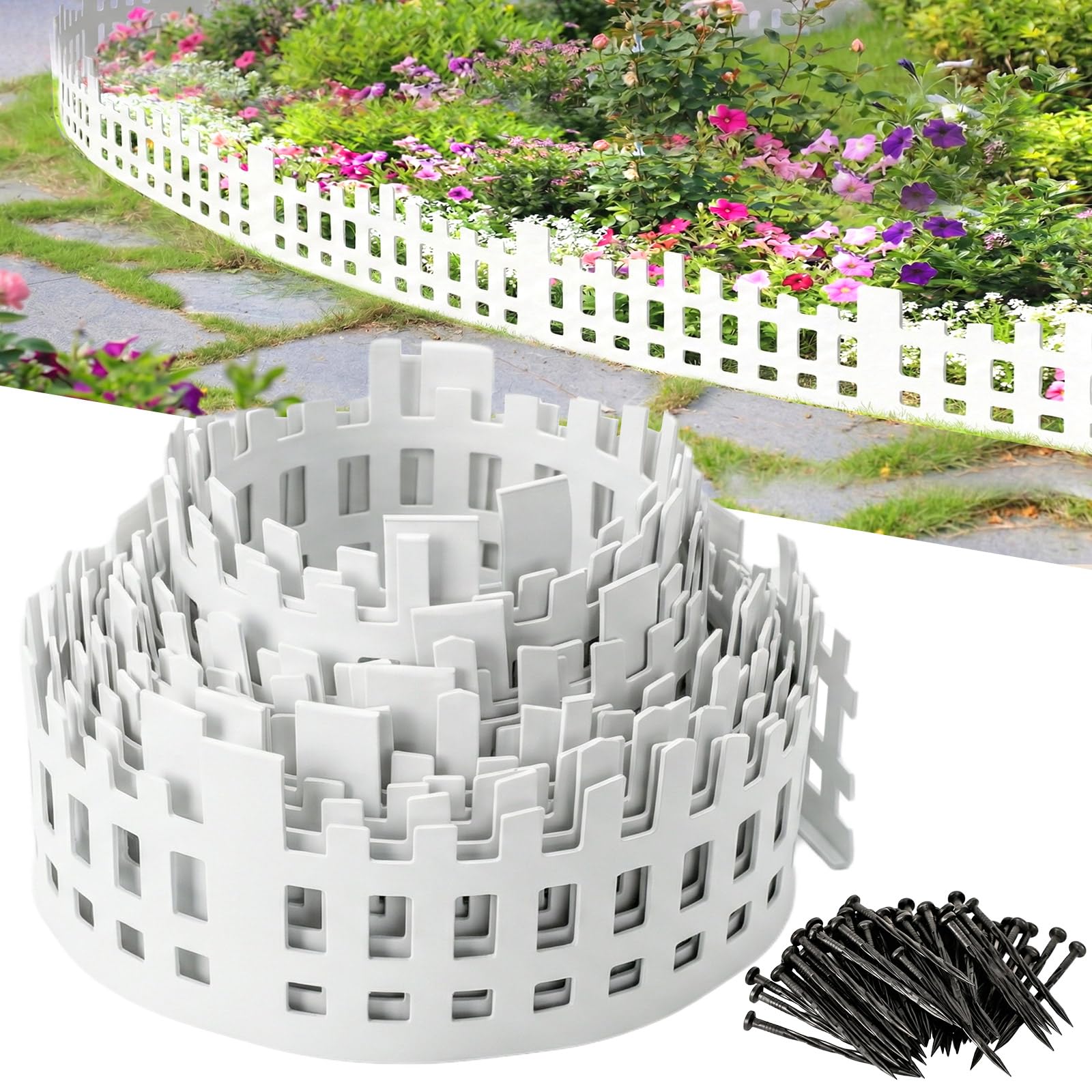
A no-dig plastic border kit that comes with plenty of stakes for a secure hold.
This white plastic edging is the easiest option to install. You do not need to dig a trench — just hammer the included stakes into the ground and secure the border in place. The 5-inch tall edging is made from thickened PE plastic that is flexible enough for curves but strong enough to withstand the elements. The kit includes 72 stakes, which is more than most competitors, ensuring the border stays put even in looser soil.
Owners love how easy it is to install, calling it a “great product and a great price.” It makes garden beds look cleaner and more defined almost instantly. The edging holds mulch in well and comes with enough stakes to make it genuinely sturdy. The biggest complaint is the stakes themselves — the tips can break off easily when you are hammering them into hard ground. A few owners suggest pre-drilling or using a lighter touch. The plastic construction also means it is not as heavy-duty as metal options, so it is best for decorative separation rather than blocking aggressive roots.
Best for quick install: A quick weekend project where you want an instant, clean border around flower beds without any digging or special tools.
Skip it for permanence: Heavy clay or rocky soil that will snap the plastic stakes, or if you need a barrier strong enough to stop spreading grass roots.
9. Beuta Landscape Edging Polyrock Bricks

Resin bricks that look exactly like real stone without the weight or the cost.
Each Beuta section is 48 inches long and contains six man-made bricks that snap together and stay in place with three included spikes. The sandstone color and realistic texture fool almost everyone, with owners saying it “looks high-end for a fraction of the cost of stone pavers.” It is made in the USA and each piece measures 48 inches long by 4 inches wide by 2.25 inches tall. The interlocking design makes it easy to create straight lines or gentle curves.
What wins people over is the appearance — it genuinely looks like cut stone once installed. The edging holds its integrity through all seasons and protects flower beds from weed eater damage. The installation is truly easy: sections snap together, you drive the spikes in, and you are done. The downside is the value-for-money aspect. Some owners, while loving the look, feel the price is steep for resin blocks. A hacksaw makes it easy to cut for custom fits, but you will need additional “Function Bricks” (sold separately) for more creative shapes.
Perfect for lightweight: Homeowners who want the high-end look of stone edging without the heavy lifting or high cost, especially for visible front-yard beds.
Consider other options if heav: You are edging a very large area and need to keep costs down, or you need a taller barrier for deep mulch.
Understanding the Specs
Blade Material
The blade material determines how long your edger stays sharp and how well it resists rust. Carbon steel is the most common choice for serious manual edgers. It holds a sharp edge better than standard steel and resists corrosion, especially when it has a powder coating. Tools made from heat-treated carbon steel, like the Radius Garden Pro-Lite, are built to handle tough roots and heavy clay without bending.
Handle Length and Design
The handle length directly affects your posture while working. A longer handle, usually 40 inches or more, allows you to stand upright while you push or step the blade into the ground. This reduces back strain significantly. The grip style also matters—a T-style handle gives you more leverage for tough cuts, while a padded ergonomic grip reduces hand fatigue during long sessions. Some models have a doughnut-shaped handle for a comfortable, secure hold.
Blade Shape and Edge
The blade shape determines what kind of cut you get. Half-moon blades create a clean, straight line and are the classic choice for flower bed borders. Saw-tooth blades are designed to bite into compacted soil and roots, requiring less downward force. A straight blade is best for simple maintenance, while a serrated edge is better for cutting through dense turf and stubborn roots.
Weight and Balance
The weight of the tool affects how easy it is to use for extended periods. A lighter tool, around 4 pounds, is easier to maneuver and less tiring for quick touch-ups. A heavier tool, closer to 5 pounds, can help drive the blade into hard ground with less effort from you. The balance point is also important—a well-balanced tool feels lighter than its actual weight because the weight is distributed evenly between the handle and the blade.
FAQ
What is the best type of edger for a flower garden?
How often should I edge my flower beds?
Is a manual edger better than a gas-powered one?
Can I use a manual edger on hard clay soil?
How do I maintain a manual edger?
What is the difference between a lawn edger and a lawn trimmer?
What does “pre-rusted” mean on garden edging?
How long does metal garden edging last?
Can I cut metal garden edging to size?
Do I need to dig a trench for garden edging?
Final Thoughts: The Verdict
If you want one dependable pick, the best flower garden edgers winner is the Radius Garden 25602 Pro-Lite because it balances sharp carbon steel performance with an ergonomic design that handles everything from light maintenance to heavy clay. If you have tough, root-filled soil and want a serrated blade that bites through, grab the Root Slayer 22611. And for creating a permanent, rustic border that blends into the landscape, the Worth Garden Corten Steel Kit is the one to reach for.
How We Picked
We do not accept paid placement. Every pick is matched to a real buyer and a real use-case; we do not hands-on test units.
Sources & Methodology
Specifications: manufacturer listings and product documentation. Review insights: verified customer reviews, as of July 2026. Pricing: not shown on this page (it changes often); check the current price via the retailer link.
As an Amazon Associate, Lawn Gear Lab earns from qualifying purchases. This does not affect which products we feature.