
Specs are compiled from manufacturer listings and verified buyer reviews and can change over time — please confirm the key details on the product page before buying.
Floral pruning shears live a life of contradiction. You need a blade sharp enough to slide through a tough stem without a struggle, yet fine enough to deadhead a spent bloom without damaging the bud next to it. Grab the wrong pair and you are wrestling with a sticky lock, pinching your palm, or crushing the very plant you are trying to care for. The right pair makes the work feel easy — a quick snip and you move on.
I’m Rikta — the founder and writer behind Lawn Gear Lab. This guide is built by comparing the manufacturers’ published specifications and the patterns across verified customer reviews, so you get each pick’s real strengths and trade-offs instead of marketing spin.
You will find nine pairs of the best floral pruning shears below, and each one has a distinct reason for making the cut — whether it is a micro-tip for bonsai work or a built-in thorn remover that saves your fingers.
Our Picks at a Glance


How To Choose The Best Floral Pruning Shears
Picking the right floral shears depends on more than just grabbing the sharpest-looking tool. You need to match the blade style, steel type, handle comfort, and safety features to the kind of trimming you actually do. Here is what to look for.
Blade Type: Bypass vs. Anvil
Bypass blades work like scissors — two sharp blades slide past each other for a clean cut. This design is better for live stems and flowers because it does not crush the plant tissue. Anvil blades have a single sharp edge that closes against a flat surface, which is fine for dead wood but can mash soft stems. For floral work, always lean toward a bypass blade.
Blade Material and Coating
High-carbon steel holds a sharper edge longer than standard stainless, but it can rust if not dried after use. Stainless steel resists corrosion better but may dull faster. A non-stick coating, like Teflon or PTFE, helps sap and resin slide off the blade instead of gumming it up. Some shears also add a sap groove — a channel that diverts sticky residue so the blades keep moving smoothly.
Handle Ergonomics and Size
If you have smaller hands, look for compact handles with a comfortable grip. An ergonomic, non-slip handle reduces fatigue during long sessions. Hand orientation matters too — most shears are ambidextrous, but a few are designed for right-handed users. A good safety lock prevents accidental nicks when you reach into your pocket or tool bag.
Quick Comparison
| Model | Best For | Cutting Capacity | Blade Material | Weight | Amazon |
|---|---|---|---|---|---|
| Modern Sprout★ Best Overall | Herb snipping & delicate blooms | Fine tips | High-Carbon Steel | Lightweight | Amazon |
| Fiskars BypassLegacy Pick | Everyday garden work & value | 5/8 inch | Precision-Ground Steel | 0.65 lbs | Amazon |
| WORKPRO 2-PackTwo-Tool Value | Two-tool versatility | 3/4 inch / 1/2 inch | SK5 Steel | 0.75 lbs | Amazon |
| Cyrus Blue Floral | Rose pruning & thorn removal | — | Stainless Steel | 6 oz | Amazon |
| Dramm ColorPoint | Compact flower trimming | 1/4 inch | Stainless Steel | Lightweight | Amazon |
| PrunePro | Precision cuts in tight spots | Delicate stems | German Stainless Steel | 0.31 lbs | Amazon |
| ARS HP-130DX | Pocket-sized floral & event work | ~1/2 inch | High-Carbon Tool Steel | 0.29 lbs | Amazon |
| Kimura Pro | Arthritis-friendly precision | 15 mm | Japanese SK5 Steel | Lightweight | Amazon |
| Saboten Harvesting | Professional florists & greenhouse | Fine-tip angled | Japanese Steel (Fluorine-Coated) | Lightweight | Amazon |
In‑Depth Reviews
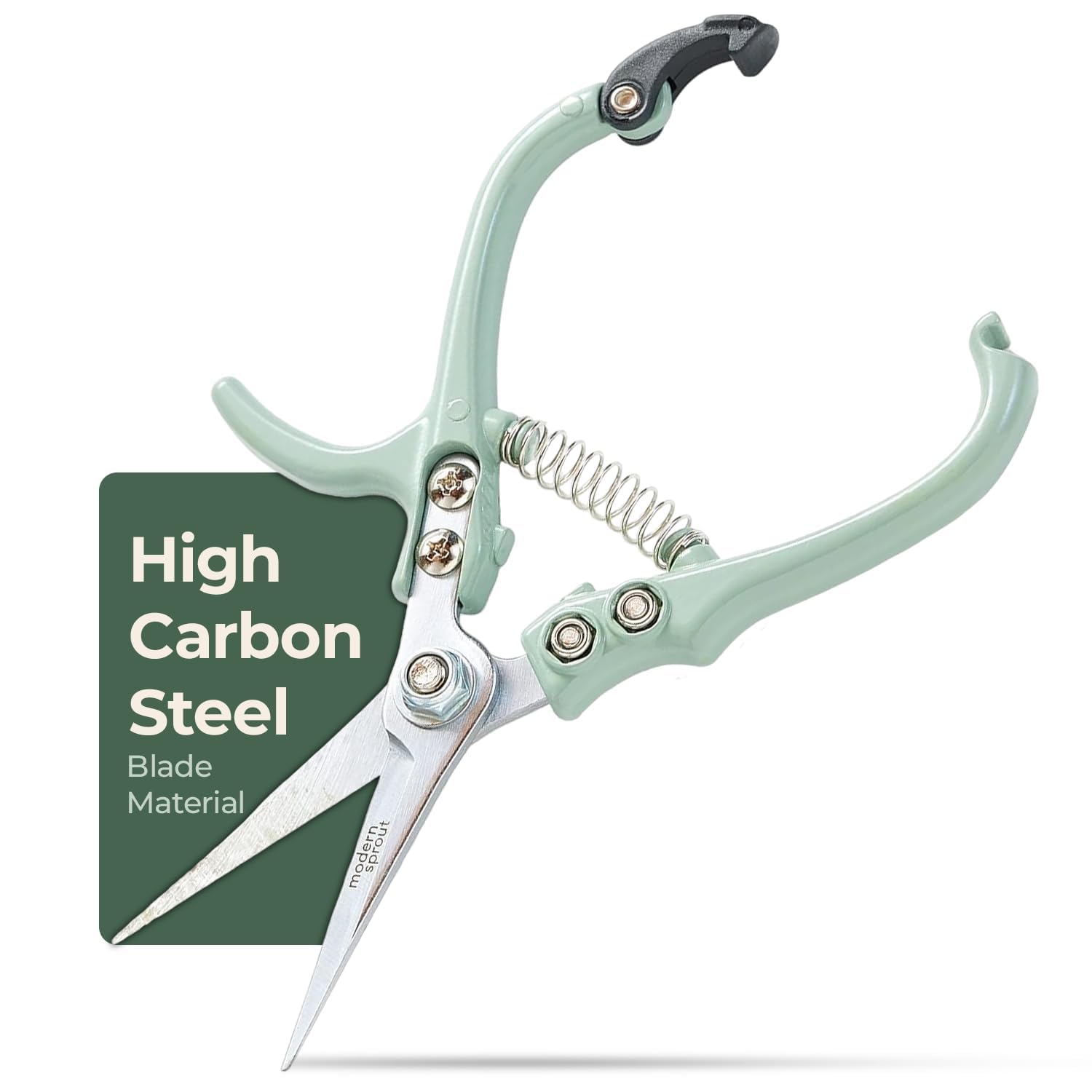
1. Modern Sprout Pruning Shears
Our pick — over 4.5★ from 900+ verified ratings; the strongest balance of quality and price.
The featherweight snip that disappears into a pocket, for all-day trimming without the ache.
What wins people over here is the raw quality — it is the single strongest pattern across the owner experience. The high-carbon steel needle-nose blades are built for precision, slicing through basil, mint, and slender flower stems without crushing the surrounding growth. The aluminum handle keeps the whole tool light enough that fatigue is never part of the conversation, even during long afternoon deadheading sessions.
The bypass blade design means these shears are kind to live plants. They leave a clean cut that heals faster, rather than a mashed edge that invites disease. And the easy-lock safety latch slides into place without fuss, so you can toss them in a gardening apron or kitchen drawer and never worry about an accidental snag.
Buyers report they are particularly effective on fine-stemmed herbs and delicate blooms. As the review pages sum it up: they are “perfect for herb snipping, deadheading slender-stemmed spent blooms while leaving buds on same stem intact, trimming bouquets.” A few owners mention the sage color is a nice change from standard black or green.
Why Owners Love Them
- Needle-nose tip slips into tight spots without damaging leaves
- Ambidextrous design works for left-handed users
- Comfortable grip reduces hand strain over extended use
The Honest Trade-Off
- Not built for thick woody branches — focus on fine stems
Grab these if: you spend your time snipping herbs, deadheading annuals, or trimming bouquets for the vase.
Look elsewhere if: your garden involves pruning 1-inch shrub branches regularly.
2. Fiskars Bypass Pruning Shears
The legend that hands down after fifteen years and still cuts like the day it was new.
This is the name that gardeners trust, and for good reason. The bypass blade slices cleanly through stems up to 5/8 inch in diameter, and the low-friction coating helps prevent sap buildup that gums up lesser shears. The self-cleaning sap groove is a subtle but serious feature — sticky resin drains away rather than gluing the blades together mid-cut.
Buyers have reported these shears lasting more than fifteen years after being handed down, which speaks to the all-steel construction and precision-ground blade edge. The ergonomic non-slip handle reduces fatigue, and the easy-open safety lock secures the blade for transport. The 4.6-star rating is backed by a massive owner base — tens of thousands strong — making this the most trusted pick on the list by sheer volume of real-world use.
That is rarely an issue for floral trimming and deadheading, but if you occasionally need to handle thicker branches, the WORKPRO set gives you more room.
What Keeps Owners Coming Back
- Self-cleaning sap groove prevents blades from sticking during use
- Precision-ground steel stays sharp through heavy use
- Lifetime warranty backs the purchase
The Fine Print
- Grips can slide down over time with heavy use
- Rust may form if left out in the rain
Best for: anyone who wants a single, proven pair of shears for general flower and light shrub work without spending a premium.
skip it if: you need a ultra-compact tool for precise indoor plant snipping.
3. WORKPRO Garden Pruning Shears 2 Pack
Two sharp tools for the price of one nice lunch, and both punch above their weight.
This set gives you an 8-inch bypass pruner with a 3/4 inch cutting capacity and a 6.25-inch straight tip pruner with a 1/2 inch cut. That is at 3/4 inch versus the Fiskars 5/8 inch, which matters when you need to snip something just a bit thicker than standard flower stems. The bypass pruner uses professional SK5 steel with a non-stick coating, while the straight shear uses heat-treated stainless steel for precision work.
The ergonomic tri-material soft injection molded handle reduces hand strain, and the spring mechanism pushes the blades open automatically after each cut. Owners consistently praise the sharpness and the build quality, saying they are well built, sharp, and versatile. The smaller straight shear is especially good for container plants and herbs.
Why This Set Works
- Two different blade sizes for different tasks
- SK5 steel stays sharp through regular use
- Non-slip handle feels secure in the hand
The Thing to Know
- Blade lock is a bit stiff for some owners at first
Reach for this if: you want both a heavy-duty pruner and a fine-tip detail shear in one box — great for a mix of woody and soft plants.
Look elsewhere if: you prefer a single, purpose-built tool rather than a two-pack.
4. Cyrus Blue Floral Shears

Shears that double as a thorn remover so your roses never win the fight.
The standout feature here is the integrated thorn-removing hole — a slot that strips thorns from rose stems as you pull the branch through, saving your fingertips from the usual poking. The stainless steel blades are electroplated for corrosion resistance, and the TPR/PP rubber resin handles provide a non-slip grip.
The handles are large enough to give ample finger room, which buyers with arthritic hands find a relief. The short 8 centimeter blades stay nimble for floral design work. At 7.5 inches long and 4.2 inches wide, these are purpose-built for cutting flowers, de-thorning roses, and arrangement prep.
The Big Advantage
- Thorn-removing slot is unique and genuinely useful for rose growers
- Blades are sharp enough to handle woody stems without crushing
- Comfortable ergonomics suit users with hand pain
The Catch
- Best for smaller hands — larger palms may feel cramped
Best for: rose enthusiasts and floral arrangers who want one tool that snips and protects fingers from thorns.
pass on it if: your pruning is mostly vegetable garden work rather than roses.
5. Dramm ColorPoint Compact Pruning Shears

A tiny package with a serious edge that handles roses, suckers, and twine on the go.
Despite its compact 2-inch blade, this shear does not mess around. Owners describe it as “the best small pruning shears I’ve ever had” and note that it stays rust-free even after months of daily use in damp conditions. The stainless steel blades are corrosion-resistant and the fine point makes it ideal for detailed trimming where you need to reach between branches.
It is also available in six bright colors (red, orange, yellow, green, blue, and berry) which makes it easy to spot when you set it down in the garden. The slide lock mechanism is simple and effective, and the ergonomic handle fits comfortably in the hand. Buyers with arthritis or smaller hands particularly appreciate the lightweight feel.
What Stands Out
- Extremely sharp from the start and holds the edge well
- Compact enough to slip into a pocket for quick access
- No rust even after months of regular use
The Limit
- Cutting capacity is only 1/4 inch — not for thick branches
Reach for this if: you want an ultra-portable pruner for deadheading, trimming suckers off tomatoes, and light flower cutting that you can carry anywhere.
Look elsewhere if: your pruning regularly involves stems thicker than a pencil.
6. PrunePro Garden Scissors
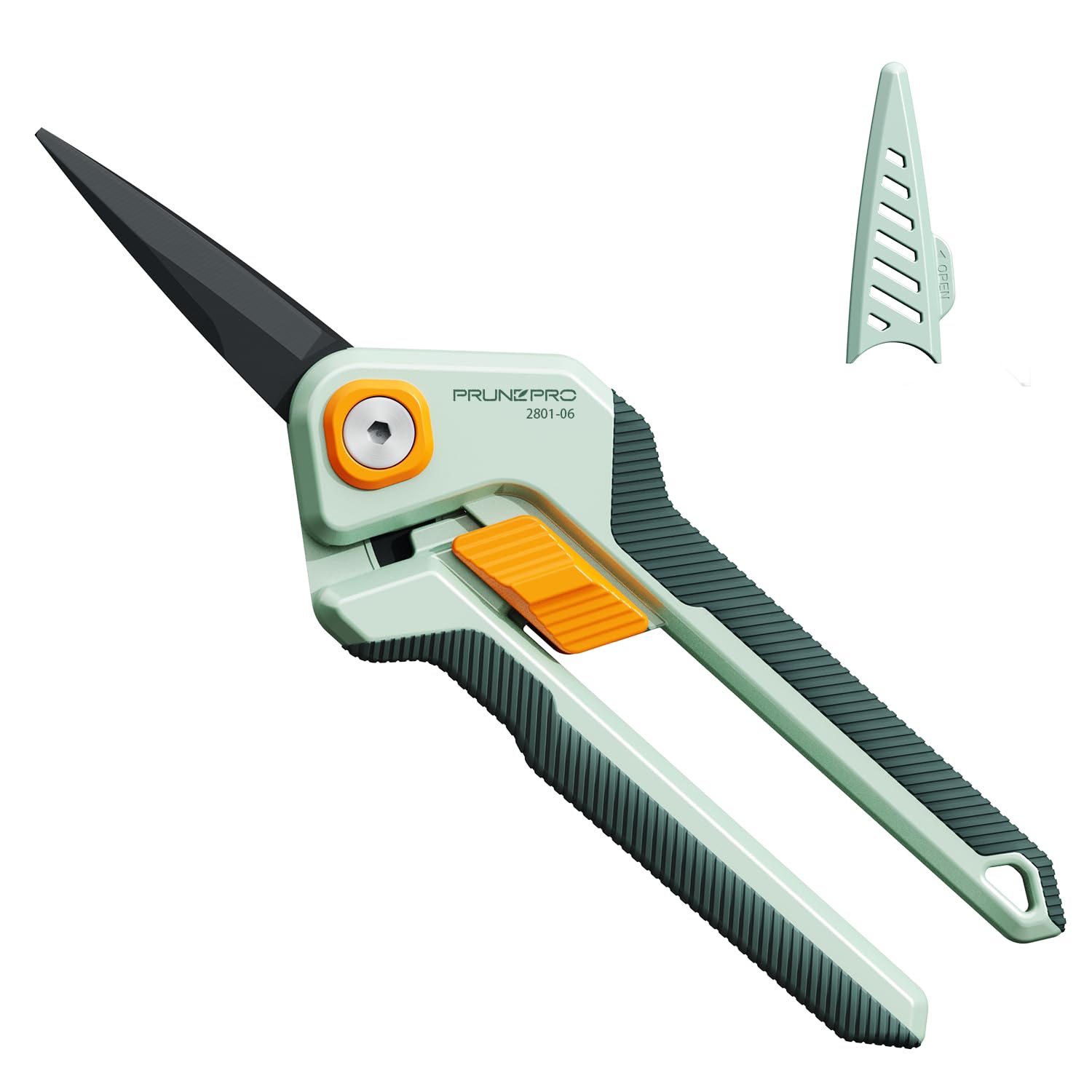
The micro-tip snips that slide into tight spots and cut woody stems with surprising ease.
The blades here are made of German 1.4031 stainless steel with a Teflon coating, so sap and resin do not stick. The micro-tip design lets you trim exactly the area you want without damaging surrounding stems or leaves, which matters when you are shaping a bonsai or deadheading a dense cluster of flowers.
Owners remark that these are the sharpest pruning scissors they have ever used, capable of trimming woody stems with very little force. The high-tension spring reduces effort, and the ergonomic polypropylene handle keeps fatigue low. The unique safety lock mechanism is designed to prevent the lock from sliding up during use.
Why It Impresses
- Teflon coating keeps blades clean between cuts
- Micro-tip reaches into crowded plant clusters
- Very sharp against woody stems despite lightweight build
The Caution
- Designed for delicate stems — thick branches will damage the blade
Best for: bonsai enthusiasts, rose lovers, and anyone who needs a precise shear for tight spaces and soft to semi-woody growth.
it’s not for you if: you need a rugged branch cutter rather than a precision tool.
7. ARS HP-130DX Ideal Light Pruner

The pocket secateur that professional florists reach for year after year without hesitation.
This 7-inch pruner from ARS has a cult following for a reason: the high-carbon tool steel blade is hard chrome plated and precision ground, holding a razor edge for years. The soft PVC handle fits small hands comfortably, and the built-in latch keeps the blade safe when closed. It weighs just 0.29 pounds, so it feels like nothing in your pocket.
Owners who do flowers for weddings and events say these are the best floral snips they have ever used, cutting any type of flower smoothly and staying sharp after three years of regular use. The 2-inch blade is single bevel, which means one side is flat and the other is angled — this gives cleaner cuts on live stems. It is a right-handed tool, so lefties may find it less natural.
What Wins Over Florists
- Stays sharp for years even with heavy professional use
- Lightweight and compact, easy to carry all day
- Clean cuts without crushing plant tissue
The Note
- Right-handed only — left-handed users will struggle
- Not designed for branches over 0.5 inches
Reach for this if: you do a lot of flower cutting — whether in the garden or for events — and want a tool that lasts.
Look elsewhere if: you are left-handed or regularly cut branches thicker than half an inch.
8. Kimura 8″ Pro Pruning Scissors

Japanese SK5 steel forged to 59 HRC gives this shear an edge that refuses to quit.
The blade steel here is Japanese high-carbon SK5, heat-treated to 59 HRC (a hardness scale for steel), which means it stays sharper far longer than standard stainless. The PTFE coating reduces friction and prevents sap from building up. The 15 millimeter cutting width is modest, but the razor sharpness makes quick work of small branches and dense stems.
Owners with arthritis or carpal tunnel specifically praise the ergonomic design. The aluminum handles are lightweight and wrapped in non-slip vinyl that provides a secure grip without squeezing hard. The locking strap is easy to operate with a light push. The lifetime warranty provides confidence, and owners mention these are fantastic for vegetable gardens and general pruning.
Why It Stands Out
- Japanese SK5 steel at 59 HRC for edge retention
- Ergonomic vinyl-coated handle is gentle on stiff hands
- Low-friction PTFE coating prevents rust and sap buildup
The Trade-Off
- Not ideal for heavy-duty branch cutting
Best for: gardeners with hand pain who want a sharp, easy-to-squeeze shear that does not cause fatigue or cramping.
look elsewhere if: you need a heavy-duty pruner for thick, woody limbs.
9. Saboten Japanese Harvesting Shears

Magnetic repulsion replaces the spring, so the action never wobbles or wears out.
Instead of a traditional metal spring, this shear uses built-in magnets to push the blades back open after each cut. That means no spring fatigue, no wobble, and a consistent rhythm that is ideal for repetitive harvesting. The fine angled tip lets you reach between leaves and buds without damaging the surrounding plant, making it a favorite for bonsai and greenhouse work.
The fluorine coating on the Japanese stainless steel blades resists resin, sap, and sticky buildup — a quick wipe and it is ready for the next cut. The cushioned non-slip handles absorb impact and reduce pressure on the hands. The dual-sided laser-etched measuring scale up to 5.1 inches (13 cm) helps you trim stems to consistent lengths, which is a genuine advantage for flower arranging or uniform bunching.
The Clever Engineering
- Magnetic reopening means no spring to break or lose tension
- Fluorine coating makes cleanup easy
- Angled tip reaches into tight plant clusters
The Single Concern
- A small number of customers note the lock coming loose over time
Reach for this if: you want a premium, innovative shear for delicate harvesting and precision floral work — and you value a tool that does not rely on a spring.
Look elsewhere if: you need a heavy-duty pruner for thick branches, not fine-tip work.
Understanding the Specs
Bypass Blade
A bypass blade cuts like a pair of scissors — two sharp edges slide past each other. This design makes a clean slice through live plant tissue without crushing it, which helps flowers and stems heal faster. For floral pruning, a bypass blade is almost always the right choice.
Blade Steel & Coatings
High-carbon steel holds a very sharp edge but can rust if left wet. Stainless steel resists rust but may dull faster. A non-stick coating (like Teflon, PTFE, or fluorine) prevents sap and plant resin from building up on the blade, so the cut stays smooth and cleanup is easier. Some shears also include a sap groove — a channel that diverts sticky residue away from the pivot point.
Cutting Capacity
This is the maximum stem thickness the shear can cut in one clean snip. A capacity of 5/8 inch is plenty for most flowers and soft stems, while a 3/4 inch capacity gives you room to handle slightly thicker green growth. Going beyond the rated capacity risks damaging the blade edge or leaving a ragged cut.
Safety Lock
A safety lock keeps the blades closed when the shears are not in use, preventing accidental cuts when you reach into a pocket, tool bag, or drawer. Look for a lock that is easy to slide open and close with one hand — a lock that is too stiff can be frustrating during a quick trim session.
FAQ
What is the difference between bypass and anvil pruning shears?
How do I clean and maintain floral pruning shears?
Can I use floral pruning shears on thick woody branches?
What does a sap groove do on pruning shears?
Are left-handed floral shears available?
How often should I sharpen my pruning shears?
What is the best cutting capacity for flower pruning?
Why do some shears have a Teflon or PTFE coating?
Final Thoughts: The Verdict
For most buyers, the best floral pruning shears are the Modern Sprout shears because they combine a needle-nose tip with high-carbon steel at a weight that disappears in your hand. If you want a tool with a proven 15-year track record, grab the Fiskars. And for the professional florist or the gardener who craves innovative engineering, the Saboten with its magnetic springless action is the one that makes every cut feel different from anything else on this list.
How We Picked
We do not accept paid placement. Every pick is matched to a real buyer and a real use-case; we do not hands-on test units.
Sources & Methodology
Specifications: manufacturer listings and product documentation. Review insights: verified customer reviews, as of July 2026. Pricing: not shown on this page (it changes often); check the current price via the retailer link.
As an Amazon Associate, Lawn Gear Lab earns from qualifying purchases. This does not affect which products we feature.