
Specs are compiled from manufacturer listings and verified buyer reviews and can change over time — please confirm the key details on the product page before buying.
A single night of unexpected frost can wipe out weeks of careful planting. Floating row covers drape directly over your beds, trapping heat and blocking cold air without blocking the light and rain your plants need to keep growing. The trick is picking the right weight and size for your specific weather, so you get protection without smothering your seedlings.
I’m Rikta — the founder and writer behind Lawn Gear Lab. This guide is built by comparing the manufacturers’ published specifications and the patterns across verified customer reviews, so you get each pick’s real strengths and trade-offs instead of marketing spin.
You need a floating row cover that protects your plants from frost, pests, and harsh weather without smothering them. The best ones differ by material weight (how thick the fabric is), coverage area (how many plants it shields), and durability (how it survives wind and cold). Here are the top floating row covers for plants broken down by those factors so you can pick the right one for your garden and climate.
Our Picks at a Glance
How To Choose The Best Floating Row Covers For Plants
Not all row covers are the same. The weight of the fabric, how breathable it is, and its overall size all play a role in whether your plants survive a cold snap. Here are the three things to check before you buy.
Fabric Weight and Insulation
The thickness of the material is measured in ounces per square yard. Lighter fabrics (around 0.9 oz/yd²) work best for light frost and insect protection. Heavier options (1.2 oz/yd² and up) handle deeper freezes better. Thicker fabric traps more heat but can also block more light, so you need to balance warmth with growth.
Breathability and Light Transmission
Your plants still need air, sunlight, and water. A good floating row cover uses non-woven fabric that lets moisture and light pass through freely. If the cover is too airtight, you risk overheating on sunny days or trapping excess moisture against the leaves.
Coverage and Reusability
Think about the area you need to protect. Big rolls let you cut custom lengths for multiple beds, while pre-sized bags fit individual trees or shrubs. Reusable covers save money over time, but you have to store them dry and clean. Some fabrics tear after a season of wind and sun, so reading owner experiences matters more than the spec sheet.
Quick Comparison
| Model | Best For | Fabric Weight | Coverage Area | Weight | Amazon |
|---|---|---|---|---|---|
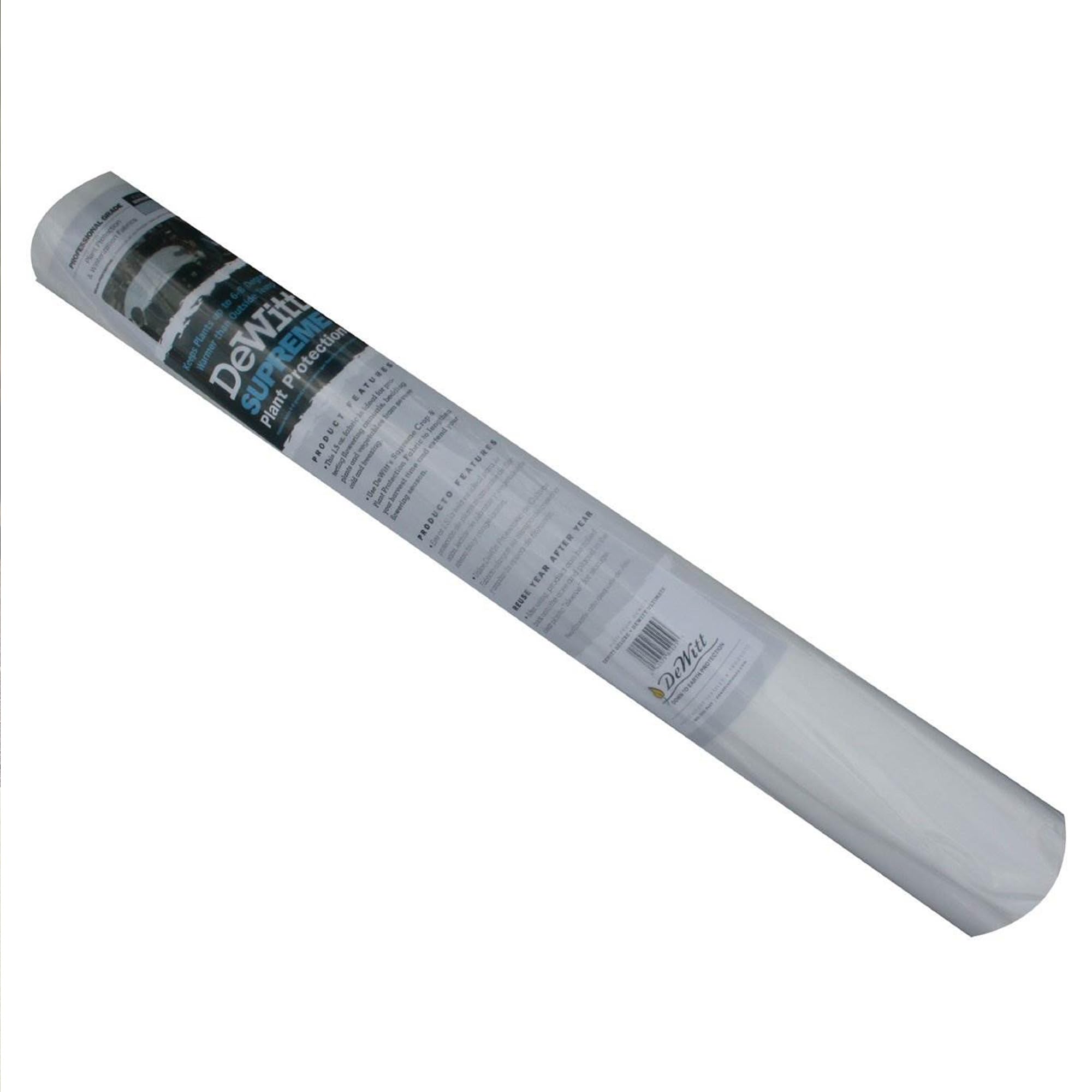
| DeWitt Supreme 6′ x 50′★ Best Overall | Heavy-duty frost protection | 1.5 oz | 300 sq ft | 3.1 lb | Amazon |
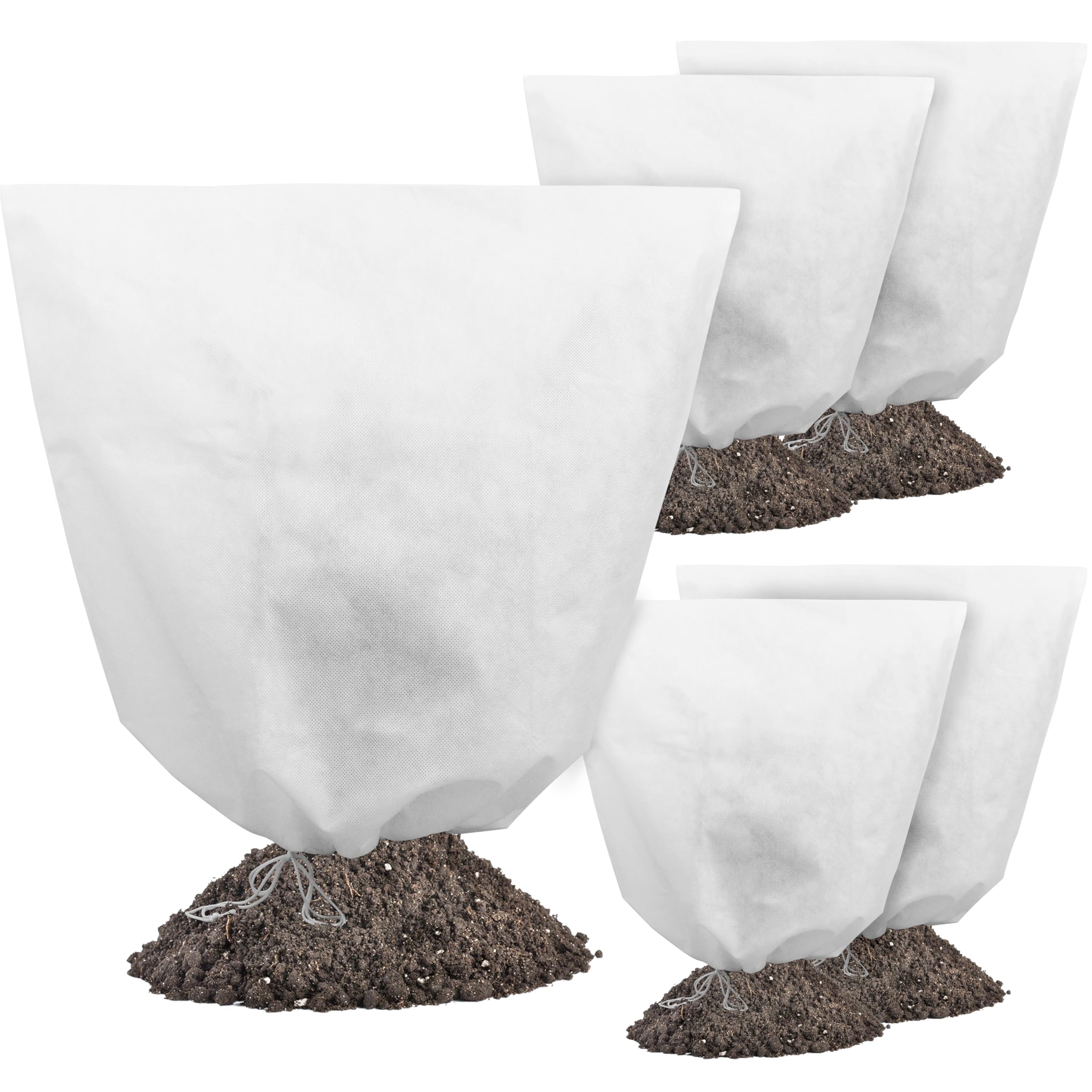
| Gardzen 5-Pack 22.4″ x 24″Best Value for Trees | Individual tree/shrub covers | 2.06 oz/yd² | 5 covers | 10.5 oz | Amazon |
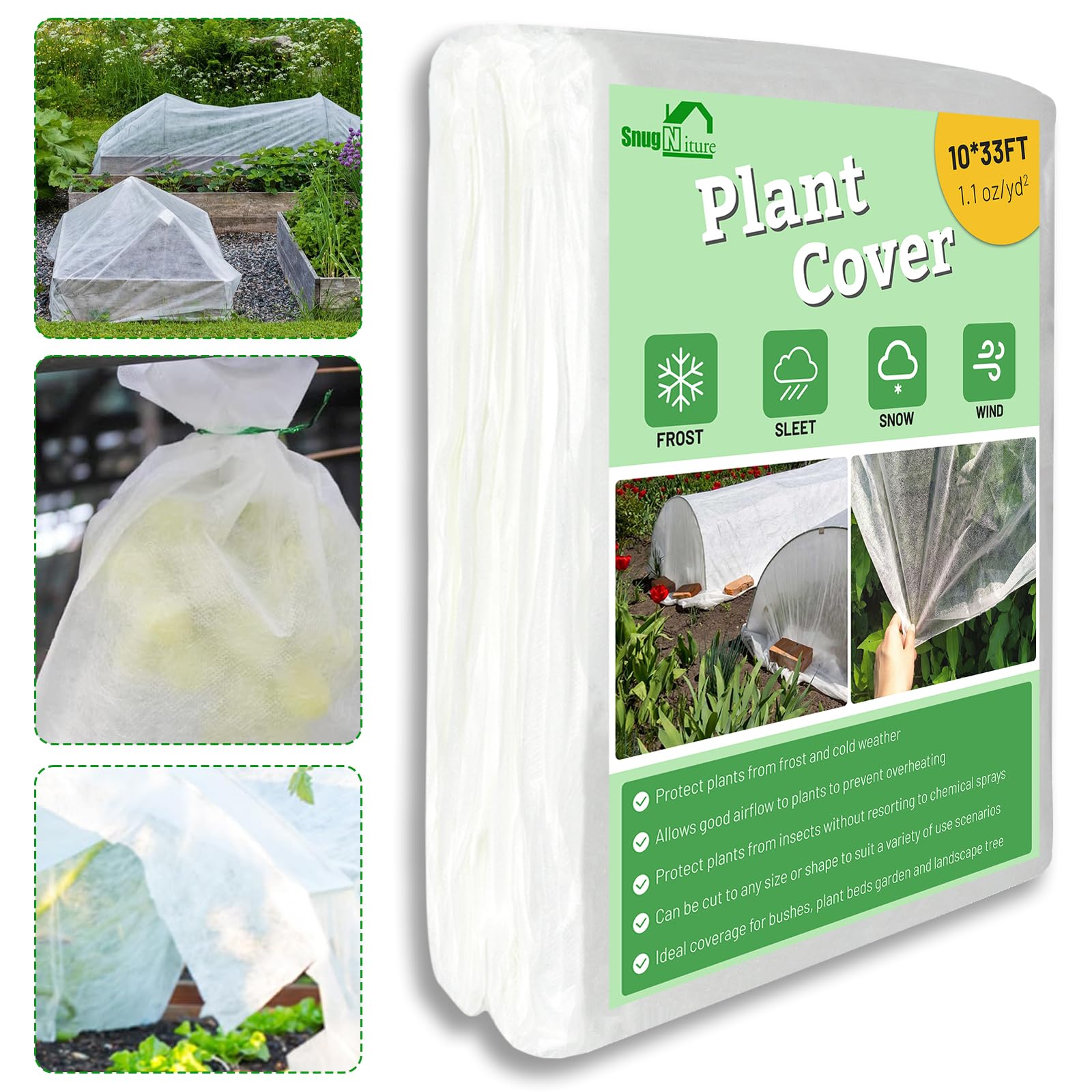
| SnugNiture 10′ x 33′Large Coverage | Large roll, light frost | 1.1 oz/yd² | 330 sq ft | 1.96 lb | Amazon |
| Amazon Basics 10′ x 30′ | Budget-friendly large cover | 0.9 oz/yd² | 300 sq ft | 2.35 lb | Amazon |
| YFFSIDMY 10′ x 20′ | Mid-size row cover | 0.9 oz/yd² | 200 sq ft | 1.26 lb | Amazon |
| JUNKOGO 10′ x 30′ | Versatile frost + shade cover | 0.9 oz/yd² | 300 sq ft | 1.39 lb | Amazon |
| AlpineReach 10′ x 30′ | Thicker fabric for colder temps | 1.2 oz/yd² | 300 sq ft | 2.46 lb | Amazon |
| Harvest Guard 5′ x 25′ | Lightweight row cover for seed germination | — | 125 sq ft | 6.4 oz | Amazon |
In‑Depth Reviews
1. DeWitt Supreme Crop Protection Fabric, 6′ x 50′
Our pick — over 4.5★ from 400+ verified ratings; the strongest balance of quality and price.
The 1.5-ounce fabric that keeps lettuce alive when the thermometer dips into the mid-20s.
This is the heaviest cover in the lineup, and that extra weight shows in the reviews. Buyers report it survived 20°F lows and rain, then folded up clean for reuse. The 6-foot width is generous enough for raised beds and row cropping, and at 50 feet long you get 300 square feet of coverage.
Durability is the main story here. The crowd notes the material can be sewn into custom bags, and one owner got two full seasons out of it protecting a sensitive tree before the wind-exposed stress points gave way. The trade-off is that a fabric this thick blocks more light, so it is not ideal for all-season use on sun-loving crops. But for a dedicated winter freeze blanket, it is the most trusted pick in the data.
Two-season workhorse: Owners consistently say it outperforms pricier garden-shop brands. The 20°F survival claim comes straight from real use, not a marketing brochure.
Reach for this if: your winters dip below freezing repeatedly and you need a cover that can take rain, wind, and re-folding year after year.
Look elsewhere if: you just need a lightweight insect barrier for spring — the 1.5 oz weight is overkill for mild weather.
2. Gardzen 5-Pack Plant Covers Freeze Protection
Pre-cut bags with drawstrings that let you cover a citrus tree in sixty seconds flat.
Where most row covers come as a single giant sheet, Gardzen gives you five individual bags sized at 22.4 inches by 24 inches. The fabric is thicker than the typical budget roll — 2.06 oz/yd² — and uses a breathable non-woven material that lets sunlight through while keeping cold air out. Owners mention these covers let 5-foot-tall citrus trees stay outside all winter instead of hauling them indoors, with protection down to 50°F.
The drawstring and zipper combo is the standout feature: unzip, wrap around the trunk, zip back up. No wrestling with flapping fabric in the wind. The main caveat is durability is mixed — some owners get years of use, others find the material wears after a single season. These are best for potted trees, rose bushes, and individual shrubs, not for covering long rows of vegetables.
Why owners keep buying them
- Five covers in one pack for separate plants
- Drawstring and zipper make installation fast
- Thicker than many budget row-cover sheets
Fabric trade-off to know
- Durability splits opinion — some report fraying after one winter
- Small size limits use to individual plants
Best for: container gardeners and small-yard owners who need quick, no-cut coverage for trees, shrubs, and hanging baskets.
skip it if: you are covering a full raised bed or vegetable row — this is a per-plant solution, not a roll.
3. SnugNiture Plant Covers Freeze Protection, 10′ x 33′
A lightweight 10-foot-wide roll that survived three days below freezing with zero plant damage.
The SnugNiture cover strikes a middle ground between the ultra-light Amazon Basics fabric and the heavy DeWitt blanket. At 1.1 oz/yd² and a weight of 1.96 pounds for the whole roll, it weighs 1.96 pounds versus the DeWitt’s 3.1 pounds but still offers frost protection. Owners in Texas reported using it during a freeze where temperatures stayed below freezing for three days straight — no plant damage occurred. The 10-foot width is wide enough to cover a full row of crops or a multi-plant bed without piecing sheets together.
The fabric cuts easily with scissors, so you can trim custom shapes for odd-size beds. Durability draws mixed reviews: some owners note the material tears in high winds, and the lack of included stakes or clips means you need your own anchors. For light to moderate frost, this is a capable, budget-friendly roll that covers a lot of ground.
Good for moderate freezes: the 1.1 oz/yd² fabric handled three-day sub-freezing temps in real owner use. Keep extra stones or stakes handy for windy nights.
Reach for this if: you need a wide, long roll to cover a large garden bed and your winters see temperatures in the mid-20s.
Look elsewhere if: you expect single-digit freezes or need a fabric that can bounce back from repeated wind stress.
4. Amazon Basics Plant Covers for Frost Protection, 10′ x 30′
The lightest fabric in the test, built for late-fall and early-spring touch-ups rather than deep winter.
Amazon Basics uses a 0.9 oz/yd² non-woven polypropylene that is best described as a light frost cloth. It handles temperatures into the teens when used doubled-over, as one buyer demonstrated on Florida hydrangeas. The material is breathable — light, air, and moisture pass through easily — which matters when you leave it on for days at a time. The 10-by-30-foot sheet gives you 300 square feet to work with.
Because it is so thin, this cover is not built for heavy snow loads or constant wind. Owners use it for quick overnight protection on tender transplants and early-spring seedlings. It cuts easily and can be layered for extra warmth. At this weight, think of it as a seasonal helper for mild cold rather than a freeze fortress.
Best for light frost: ideal for extending the growing season in spring and fall. Double it up if a hard freeze is forecast.
Buy it for: budget gardeners covering tomatoes and hydrangeas from light freezes. You get a large coverage area for a low price, which is tough to top.
Pass on it if: your area sees prolonged sub-freezing weather — the 0.9 oz fabric needs layering or hoops to create an air gap.
5. YFFSIDMY Plant Covers Freeze Protection, 10′ x 20′

A 200-square-foot sheet that pulls double duty as a frost blanket and summer shade cover.
YFFSIDMY markets this as a UV-stabilized 0.9 oz/yd² fabric that protects plants from both winter freezes and summer sun. Owners use it to shield succulents north of Seattle during snowless winter stretches and to block birds and insects during the growing season. The cloth is lightweight at 1.26 pounds, so it is easy to handle, though wind can be a challenge — buyers mention using bricks and stakes to keep it down.
Frost resistance gets mixed marks: it kept succulents alive through a mild winter but did not protect sub-tropical plants from a hard freeze. The 10-by-20-foot size covers 200 square feet, which is smaller than the 10-by-30 rolls but still generous for a standard raised-bed garden. This is a good all-rounder for moderate climates, not a hard-freeze specialist.
What works well
- UV-stabilized material holds up to sun exposure
- Lightweight and easy to cut to size
- Covers multiple rows without bending plants
Limitations to know
- Thin fabric struggles in hard freezes
- Blows around easily without heavy anchors
- Durability is mixed in owner reports
Good for: three-season use as a light frost cloth, bug barrier, and shade screen in mild climates.
pass on it if: you routinely face temperatures below 25°F and need a cover that can take wind and ice without reinforcement.
6. JUNKOGO Plant Freeze Protection Cover, 10′ x 30′
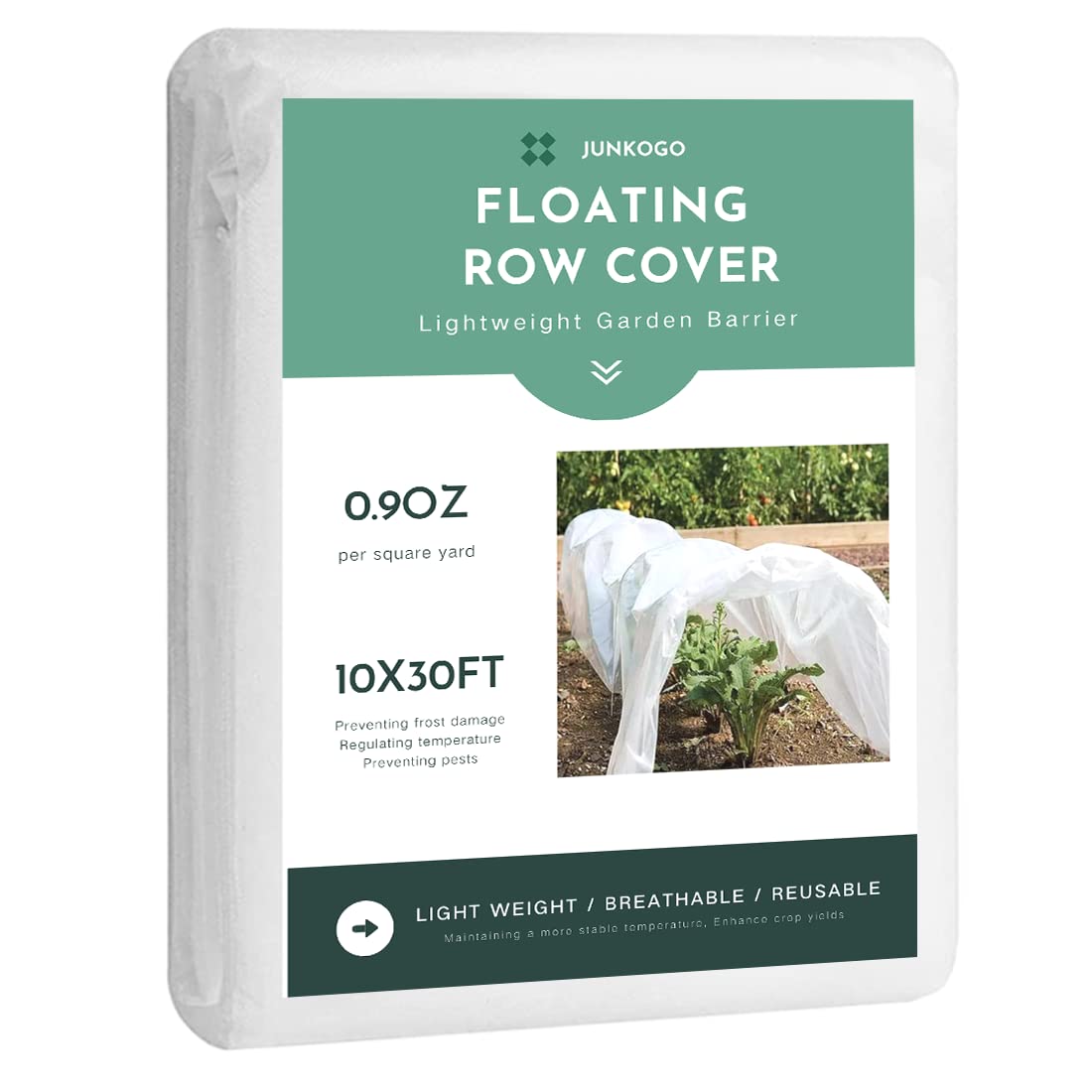
A 0.9 oz/sq cover that doubles as an insect barrier — owners use it against squash vine borers and frost alike.
This JUNKOGO cover gets mentioned most for its versatility: buyers in Virginia draped it over eucalyptus all winter and saw zero frost damage, while others throw it over cabbage and brassicas to keep worms and flies off during the growing season. The 0.9 oz/sq fabric is breathable and lets moisture and sunlight through, which matters when you leave it on for weeks at a time. It weighs 1.39 pounds for the full 300-square-foot roll.
The main complaint is packaging — the fabric comes folded rather than rolled, which can make it unwieldy to unbox and spread. But once it is laid out, owners praise its durability and frost protection. One gardener used it as an extra layer inside a damaged hoop house and saved pineapple plants and a lemon tree from sub-freezing temps. For the price, this is one of the more flexible covers you can buy.
Pest and frost double-duty: owners rate the effectiveness highest among all specs. The breathable fabric keeps plants healthy under long-term coverage.
Reach for this if: you want one cover that handles winter freezes, spring insects, and summer shade without switching products.
Look elsewhere if: unpacking a folded sheet instead of a roll bothers you, or you need a heavier fabric for deep-freeze climates.
7. AlpineReach Plant Covers Frost & Sun Protection, 10′ x 30′
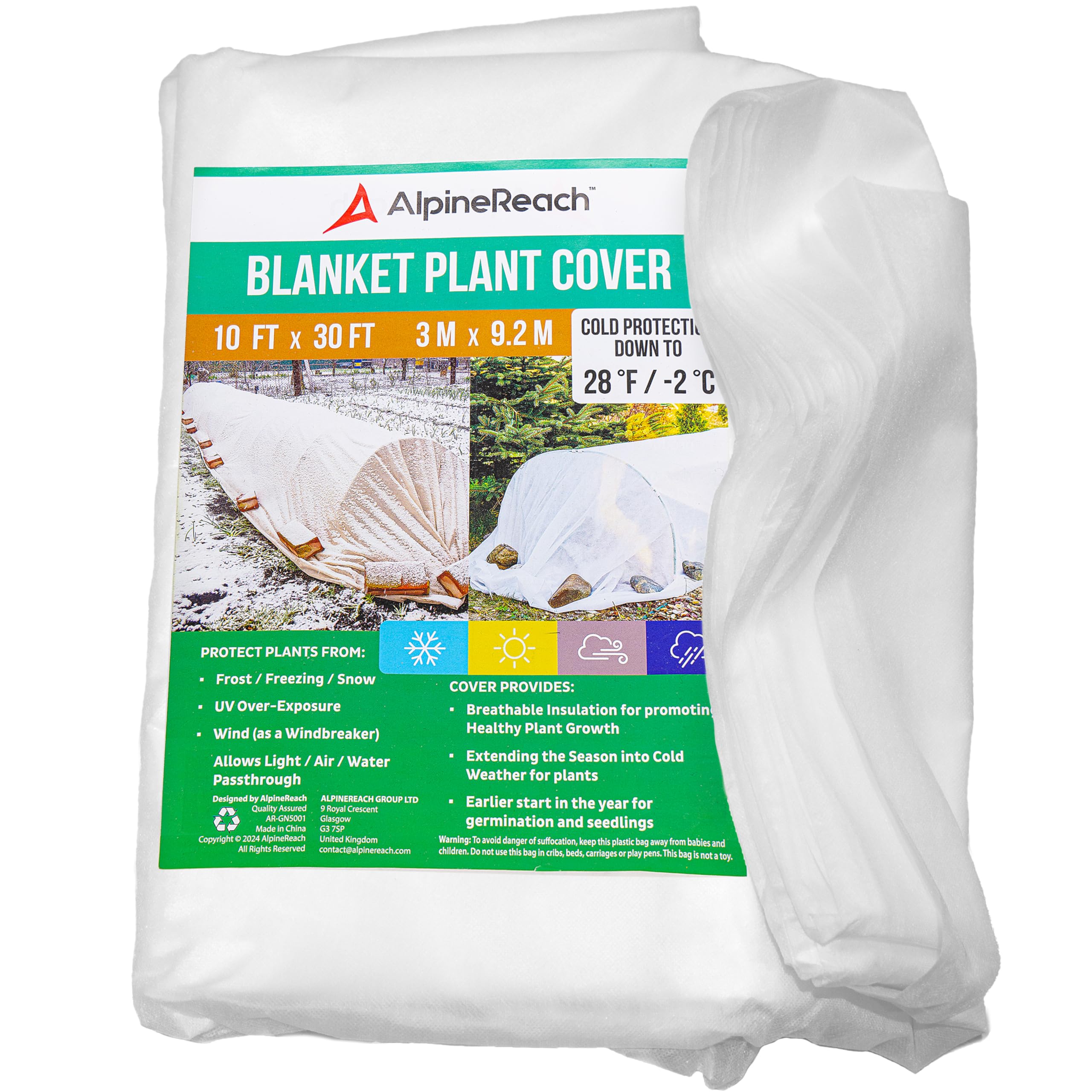
A 1.2 oz/yd² blanket that Texas owners used to keep Indian Hawthorns green through single-digit freezes.
The AlpineReach cover sits between the budget 0.9 oz sheets and the heavy 1.5 oz DeWitt. The fabric is thick enough for 28-degree protection, and customers note it kept frost and snow off plants during a single-digit freeze event in Texas. The material allows sunlight through, so the plants kept their color under cover for days. It weighs 2.46 pounds, making it the heaviest after the DeWitt.
Durability draws mixed reactions: some owners praise the thickness, but others found it was not as dense as they expected, and a few report tearing in wind when snagged on rose thorns. The 10-by-30-foot sheet is a versatile size for beds and borders. If you want more insulation than the ultra-lights but do not need the full 1.5 oz weight, this is a solid midpoint.
Where it shines
- 1.2 oz/yd² fabric handles deep freezes
- Lets sunlight reach plants during extended coverage
- Resists tearing on thorns
Know before you buy
- Fabric thickness splits opinion among owners
- Some reported tearing in strong wind
- No clips or stakes included
Best for: gardeners in areas that see occasional single-digit freezes and need a middle-weight fabric that still breathes.
it’s not for you if: you need a guaranteed multi-season material — durability reviews are mixed enough that the DeWitt is a safer longer-term bet.
8. Harvest Guard Freeze Protection Plant Cover, 5′ x 25′

At just 6.4 ounces for a 125-square-foot roll, this is the featherweight champion for seed starting and light frost.
Harvest Guard is a different breed of row cover. It is not built for deep winter freezes but for floating directly over crops without support, trapping heat and moisture to speed up seed germination. Owners in Northern California report growing lettuce year-round under this fabric. It also works as a bird and insect barrier — animals avoid walking on it, and birds cannot land on the loose surface.
The fabric is lightweight enough that grass seedlings push through easily, but the cover can tear at staple points in strong wind. One owner described how rabbits attacked uncovered plants but left the covered bed alone. Because it is so light, it is best for moderate cold and pest protection rather than hard freeze conditions. The 5-foot width is narrower than most other rolls here, so it fits smaller beds neatly.
Seed-starter special: owners love this for getting an early jump on the season. The lightweight fabric retains heat and moisture without crushing tender sprouts.
Reach for this if: you want a reusable cover for seed germination, pest barriering, and extending the shoulder seasons without heavy fabric overhead.
Look elsewhere if: your priority is winter freeze protection — the thin material is better suited to spring and fall than January ice storms.
Understanding the Specs
Fabric Weight (oz/yd²)
This is the single most important number for a floating row cover. Lighter fabrics around 0.9 oz/yd² let in more light and work well for insect barriers and light frost. Heavier options at 1.2 oz/yd² and above trap more heat and survive deeper freezes, but they also block more sunlight, so you cannot leave them on during warm spells without overheating your plants.
Coverage Area and Width
Row covers come in rolls of various lengths and widths. A wider sheet like 10 feet covers a full raised bed or a row of crops without having to tape multiple pieces together. The total area (in square feet) tells you how much ground you can protect from a single roll. Always measure your beds before buying so you do not end up short or with wasteful excess.
FAQ
Can I leave a floating row cover on all winter?
How many degrees of frost protection does a row cover provide?
Do floating row covers need to be supported by hoops?
Can I cut a floating row cover to a custom size?
Are these covers also effective against insects?
How do I store a floating row cover after winter?
Will a row cover protect my plants from snow?
Why does the Gardzen cover have a zipper but the roll covers do not?
Can I use these covers in summer for shade?
Final Thoughts: The Verdict
If you want one dependable pick, the floating row covers for plants winner is the DeWitt Supreme 6′ x 50′ because its 1.5-ounce fabric has proven itself in real 20°F freezes and survives multiple seasons of reuse. If you want an easy-to-use cover for individual trees, grab the Gardzen 5-Pack. And for lightweight seed germination and pest protection in milder weather, the Harvest Guard 5′ x 25′ is the one to reach for.
How We Picked
We do not accept paid placement. Every pick is matched to a real buyer and a real use-case; we do not hands-on test units.
Sources & Methodology
Specifications: manufacturer listings and product documentation. Review insights: verified customer reviews, as of July 2026. Pricing: not shown on this page (it changes often); check the current price via the retailer link.
As an Amazon Associate, Lawn Gear Lab earns from qualifying purchases. This does not affect which products we feature.