
Specs are compiled from manufacturer listings and verified buyer reviews and can change over time — please confirm the key details on the product page before buying.
Your rose bushes need a steady diet to produce those heavy, fragrant blooms you want all season. The difference between a few sad flowers and a show-stopping display often depends on what you feed them at the root. Fish-based fertilizers deliver a rich stew of nutrients that roses crave — nitrogen for leafy growth, phosphorus for those fat buds, and a host of micronutrients that synthetic bags just cannot match. The catch is the smell, the mixing ratios, and figuring out which bottle actually delivers on its NPK promise without costing a fortune.
I’m Rikta — the founder and writer behind Lawn Gear Lab. This guide is built by comparing the manufacturers’ published specifications and the patterns across verified customer reviews, so you get each pick’s real strengths and trade-offs instead of marketing spin.
Here are the top contenders for the best fish fertilizer for roses you can buy right now.
Our Picks at a Glance


How To Choose The Best Fish Fertilizer For Roses
Not all fish fertilizers are built the same. The bottle that turns your neighbor’s vegetable patch into a jungle might leave your roses with lots of leaves and no flowers. Here is what to watch for when picking the right one for your rose bed.
The NPK Ratio — Your Rose’s Menu
Every fertilizer bottle shows three numbers: nitrogen (N), phosphorus (P), and potassium (K). For roses, you want a balanced ratio that supports both green growth and flower production. A formula too high in nitrogen (like a 5-1-1) will give you massive leafy bushes but fewer blooms. Ratios like 2-3-1 or 3-2-1 are closer to what roses need for steady flowering throughout the season.
Emulsion vs. Hydrolysate — How the Fish Is Processed
Fish emulsion is the most common type — whole fish are cooked, pressed, and the oils removed. The result is a stable liquid that stores well but has fewer micronutrients. Hydrolyzed fish fertilizer uses a cold-enzyme process that breaks down the fish without heat, preserving more amino acids, vitamins, and beneficial bacteria. Hydrolysate is what you want if you are serious about soil health, though it tends to smell stronger and cost more.
The Smell Test — Honest or Masked?
A real fish fertilizer smells like fish. If a bottle claims to be fish-based but has no odor, it has likely been heavily processed or deodorized — which often strips away the very compounds your plants benefit from. The smell is a feature, not a bug. It usually fades within a day after application, and if you water it into the soil properly, the scent stays underground where it belongs.
Quick Comparison
| Model | Best For | NPK Ratio | Size | Coverage | Amazon |
|---|---|---|---|---|---|
| The Grow Co Organic Fish Fertilizer★ Best Overall | Overall value & volume | 2-3-1 | 128 oz | — | Amazon |
| Bush Doctor Wholly MackerelFast Results | Fast nutrient uptake | 3-1-0 | 1 Pint | Organic | Amazon |
| Heirloom Roses Founder’s Fish FertilizerRose Specialist | Rose-specific feeding | — | 32 oz | Full | Amazon |
| Great Big Roses Liquid Fertilizer Booster | Blooms & soil activation | — | 32 oz | Full | Amazon |
| Alaska Fish Fertilizer 5-1-1 | Leafy growth & value | 5-1-1 | 115 oz | 1000 sq ft | Amazon |
| Lilly Miller Alaska Fish Fertilizer 2-Pack | Multi-plant gardens | 5-1-1 | 2 x 1 Quart | Medium | Amazon |
| Neptune’s Harvest Organic Fish Fertilizer | Premium soil biology | — | 36 oz | Medium | Amazon |
| Fish Plus Kelp Seaweed Concentrate | Heat & drought resistance | — | 128 oz | 500 sq ft | Amazon |
In‑Depth Reviews
1. Organic Fish Fertilizer by The Grow Co
Our pick — over 4.5★ from 600+ verified ratings; the strongest balance of quality and price.
This gallon jug gives you more blooms per dollar than any other option here
The Grow Co’s 2-3-1 NPK (nitrogen-phosphorus-potassium) ratio is the reason it wins the top spot. The phosphorus number is higher than the nitrogen — that extra phosphorus (the “P” in NPK) drives bud and flower formation, exactly what your roses need. Most fish fertilizers lean heavy on nitrogen, which gives you leaves instead of blooms. This one does the opposite. At 128 fluid ounces and a mixing ratio of 1:100 (one part fertilizer to 100 parts water), the single bottle is enough for a large rose bed all season.
The odor is honest and pungent. As one buyer put it: “if it doesn’t smell, then it’s not real fish.” That smell fades within a day after watering, and the results have owners raving, with one reporting their garden goodies loved it so much they could not believe the results. It is sustainably sourced and cold-pressed (a low-temperature process), so the amino acids and vitamins survive the manufacturing process intact.
One thing to note: the consistency is thin — do not expect a thick goop. That thinness actually makes it easier to mix and spray, and it flows through hose-end sprayers without clogging. For rose growers who want a single versatile bottle that covers everything from soil drench to foliar spray, this is the most straightforward choice.
Why rose growers pick this
- 2-3-1 NPK ratio favors flowers over leaves
- 128 oz jug at 1:100 mixing ratio
- Cold-pressed emulsion preserves nutrients
- Sustainably sourced from fish byproduct
The honest trade-offs
- Strong fishy smell — not for indoor use
- Thin consistency may surprise those used to thick emulsions
- Requires consistent weekly application for best blooms
Grab it if: you want the most gallon-per-dollar value for a rose-friendly NPK ratio that actually drives blooms.
Think twice if: you have a tiny rose bed and do not want to store a gallon of fish juice — the smaller options below may suit you better.
2. Bush Doctor Wholly Mackerel Fish Fertilizer
The same FoxFarm brand trust in a pint bottle that shows greener stems the next day
FoxFarm has been making serious plant food since 1984, and this Wholly Mackerel formula is their direct-entry fish fertilizer for immediate results. The 3-1-0 NPK is nitrogen-forward, so you will see rapid leaf and stem development — the kind of response where you notice a difference the very next morning, as buyers report with jalapeño pepper plants. For roses coming out of dormancy or recovering from a harsh prune, this jump-starts the green growth that supports later flowering.
The mixing is simple: 1 tablespoon per gallon of water every other week. That 1-pint bottle goes further than its small size suggests. What wins people over is the sheer effectiveness — the plant benefits are the most-discussed aspect, with owners consistently seeing stronger stems and faster growth. It is particularly good for in-ground and container roses alike, designed for immediate nutrient uptake so the plant does not have to wait for soil microbes to break things down.
Because it is nitrogen-heavy, you will want to pair it with a phosphorus supplement later in the season if your roses are already leafy but not blooming. The odor is present but manageable — the bottle is small enough that you are not committed to a year of smell.
What makes it stand out
- Immediate nutrient uptake — visible results fast
- Simple 1 Tbsp per gallon mixing
- Trusted FoxFarm brand with decades of greenhouse testing
- Works on containers and in-ground roses
Watch out for
- 3-1-0 NPK is low in phosphorus — may need bloom booster later
- Small 1-pint size means more frequent reordering
- Thick consistency requires thorough shaking before each use
Best for: giving your roses a fast green-up in early spring or after pruning — this gets new growth moving.
skip it if: your roses are already leafy and you need a phosphorus boost for more flowers.
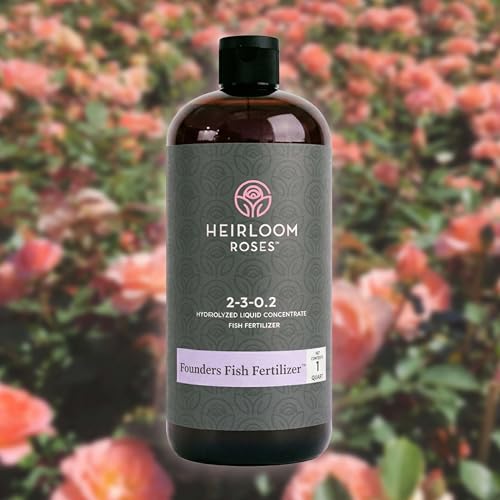
3. Heirloom Roses Founder’s Fish Fertilizer
Made by a company that breeds roses — the formula was tested on the same plants you grow
When a company named Heirloom Roses makes a fish fertilizer, you know the target species was not an afterthought. This 32-ounce organic liquid emulsion is derived from acidulated fish solubles and stabilized with phosphoric acid, and the formula includes a variety of fish species for broader soil mineralization. The mixing ratio is 4 ounces per gallon of water, and one gallon of solution feeds 2-3 rose bushes — neatly sized for a dedicated rose bed rather than a whole vegetable garden.
The effectiveness is what owners praise most — it helps rose bushes bloom from spring through fall, as one gardener in Virginia reported. The odor is the recurring conversation point: it is undeniably strong, but it dissipates quickly after application, and the bloom results more than make up for the brief olfactory assault. The organic matter feeds mycorrhizae (beneficial soil fungi that help roots absorb water and nutrients), building healthy soil bacteria over time.
This is not a general-purpose garden fertilizer — it is formulated with roses and tomatoes in mind. If you want a product that was designed by people who breed and sell roses for a living, this is that bottle.
It clicks when: your rose bushes are established but not producing the flower volume you expect — this shifts them into high bloom gear.
One honest note: the smell is real, even though it fades fast. Wear gloves when mixing to keep it off your hands.
Reach for this if: you have a dedicated rose bed of 6-10 bushes and want a formula that was literally designed for them.
Look elsewhere if: you need a multi-purpose garden fertilizer — this one is best kept for your prized blooms.
4. Great Big Roses Liquid Fertilizer Booster
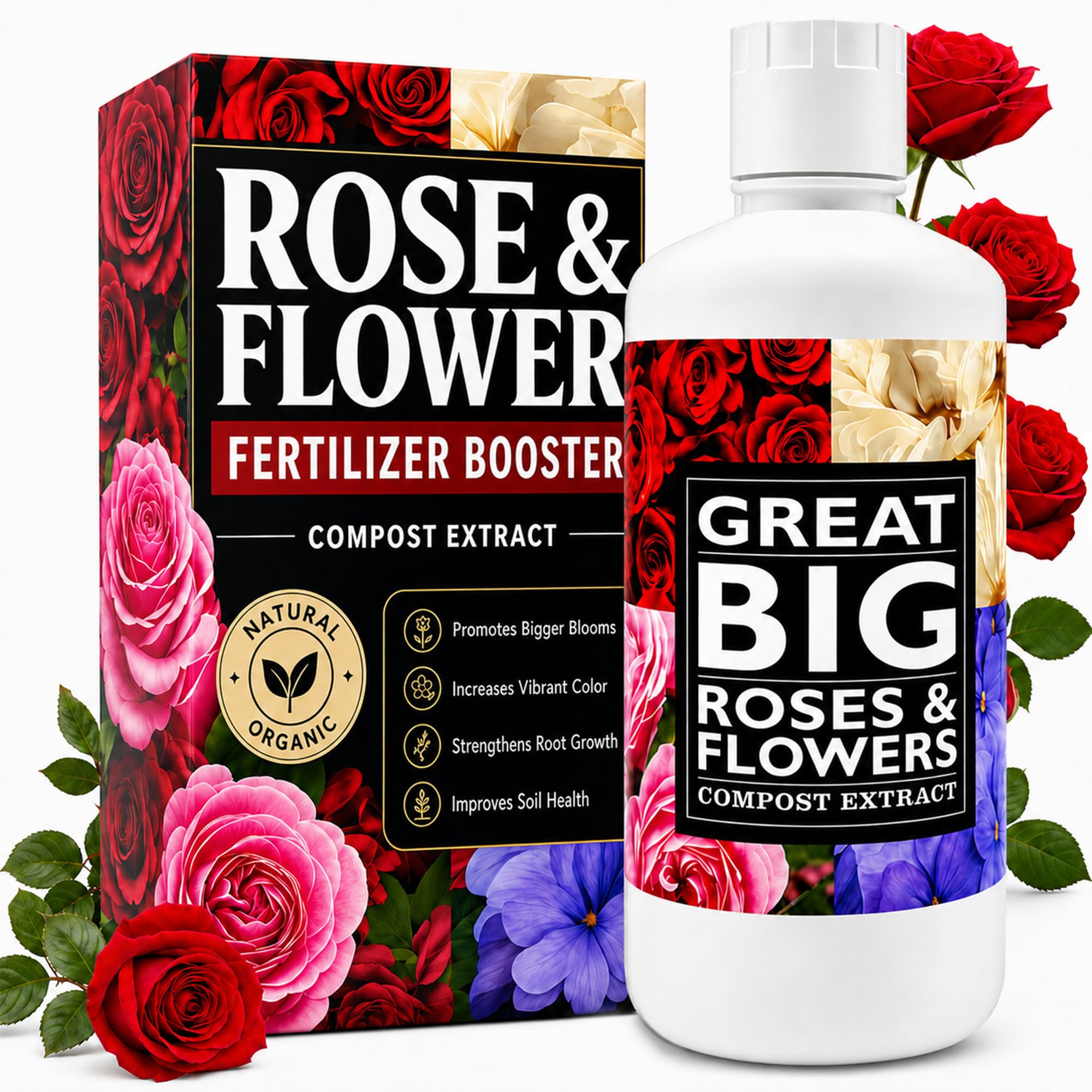
This booster adds 70 trace minerals to open up nutrients already in your soil
This 32-ounce concentrate does something different from the other fish fertilizers here — it is a booster designed to work alongside your existing fertilizer, not replace it. The proprietary formula delivers humic acids, seaweed, chelated iron, and over 70 chelated trace minerals directly into the root zone. What that means in plain English: it open up nutrients already sitting in your soil that your roses cannot access on their own. Owners mention rose bushes that had not bloomed in years producing big, beautiful flowers within weeks of application.
It is formulated specifically for roses and flowers, though it works across hydrangeas, citrus, and perennials too. The mixing ratio is 4 ounces per gallon of water, and that 32-ounce bottle covers an entire growing season for most gardens. The effectiveness is the most-discussed aspect — buyers consistently see more blooms, better color, and fewer disease problems, with one owner noting their roses had never looked better with abundant blooms and no black spot.
The catch is the price per ounce — it is not the cheapest option on the shelf. But for established rose bushes that have gone lackluster, this booster works like a reset button for the soil food web. If your roses are already getting a basic fish feed and you want to push them into show-winning territory, this is your add-on.
What gives it an edge
- 70+ trace minerals plus humic acids and seaweed
- Can revive bushes that stopped blooming for years
- Works with any existing fertilizer program
- Suppresses black spot according to multiple owners
What to weigh
- Premium pricing per bottle
- Not a standalone fertilizer — works best as a booster
- 32 oz goes fast on larger gardens
Best for: reviving underperforming rose bushes that refuse to bloom — this open up what your soil already has.
Not ideal if: you want a single all-in-one fish fertilizer; this is a supplement, not a meal replacement.
5. Alaska Fish Fertilizer 5-1-1

The 10-year garden staple with a milder smell that covers 1000 square feet
Alaska Fish Fertilizer has been around long enough that many gardeners consider it the default starting point for organic feeding. The 5-1-1 NPK is nitrogen-heavy — this is a leaf and stem builder first, a bloom promoter second. At 115 fluid ounces, it covers up to 1000 square feet, making it one of the best value-per-gallon options on the market. It is OMRI listed (Organic Materials Review Institute) for organic use, so you can use it with confidence in any garden.
The formula is cold-pressed to preserve micronutrients, and it is deodorized — which means the fishy smell is significantly less intense than the other options. This is a genuine advantage if you live close to your neighbors or have a small yard. However, the low phosphorus and potassium (1-1) means you will likely need a bloom-specific supplement if you want heavy flower production. For new rose growers, veterans recommend pairing this with a bone meal or kelp supplement during the flowering phase.
Use it every three weeks during the growing season, and watch your roses put on lush foliage before the flowering window opens.
It excels when: your roses need a strong leaf canopy early in the season — this delivers dense, dark green growth fast.
The trade-off: by itself, it is not enough for heavy blooming. Plan to rotate with a phosphorus source by mid-summer.
Choose this if: you want an affordable, OMRI-listed nitrogen source for leafy rose growth and are comfortable adding a bloom booster later.
Pass on it if: you want one bottle that handles leaf and flower needs — the 2-3-1 picks above do double duty.
6. Lilly Miller Alaska Fish Fertilizer 2-Pack

Two quart bottles mean you always have a backup when your roses need mid-season feeding
This is the same trusted Alaska 5-1-1 fish fertilizer in a convenient 2-pack of quart-sized bottles. For rose growers with a mixed garden — tomatoes, flowers, shrubs, and containers — having two bottles on hand means you never run out mid-season when your plants need feeding most. The 5-1-1 ratio follows the same nitrogen-forward profile as the larger Alaska bottle, feeding lush green growth every three weeks.
The smaller quart size makes it easier to handle and store than the gallon jug, especially if you only have a handful of rose bushes. Customers note that this product has become a staple for their home gardens, with one noting their tomato harvest was significantly larger after a season of regular use. The smell is present but mild compared to undiluted fish products, and it dissipates quickly once watered into the soil.
One practical note: do not use this on indoor houseplants — the smell lingers inside. Outdoors, it is among the most reliable base fertilizers you can buy. For rose growers who also tend to vegetables and flowers, this 2-pack covers all bases without requiring separate products for each plant type.
Smart buy for: gardeners managing both roses and a vegetable patch — one bottle for the flowers, one for the tomatoes.
Keep in mind: same low-phosphorus limitation as the single bottle — bloom support will still need a partner product.
Get this pack if: you like having backup fertilizer on hand and want the flexibility of two bottles for different garden zones.
pass on it if: you only grow roses — the smaller bottle size means more frequent mixing and reordering.
7. Neptune’s Harvest Organic Fish Fertilizer

The cold-enzyme process preserves amino acids that most fertilizers destroy with heat
Neptune’s Harvest makes its fish fertilizer differently than most — it uses naturally occurring enzymes from fresh North Atlantic fish to break down the protein, preserving the full spectrum of amino acids. This is a true hydrolysate, not an emulsion, which means no oils or proteins are removed. The nutrients stay in the soil longer because they break down slowly into basic compounds, feeding the beneficial bacteria that create a healthy root zone for your roses.
The mixing ratio is 1 ounce per gallon of water, so the 36-ounce bottle makes 36 gallons of solution. That is a reasonable amount for a small-to-medium rose bed. Owners praise the quality most of all — one saw their desert roses and bougainvillea blooming heavily within two weeks of application. The smell is present but lighter than many fish hydrolysates, and some reviewers point out no fish odors at all after a short while.
The downsides are the price per ounce (it is one of the pricier options here) and the smaller bottle size. But if your goal is long-term soil health rather than a quick green-up, the enzymatic breakdown process makes this a superior choice. It works on lawns, flowers, vegetables, fruit, and house plants, so one bottle serves the whole garden.
Why this stands apart
- True cold-enzyme hydrolysate — preserves all amino acids
- Nutrients stay in soil longer than emulsions
- Promotes beneficial bacteria growth
- Lighter fishy odor than most hydrolysates
What holds it back
- Premium pricing for 36 oz
- Small bottle means more frequent restocking
- Best results require consistent soil moisture for slow release
Choose this if: you are building soil health for the long haul and want a hydrolysate that feeds microbes, not just plant roots.
Pass if: you want maximum volume for the money — the 128-oz options give you four times the product for a similar price.
8. Fish Plus Kelp Seaweed Concentrate

Fish proteins plus North Atlantic kelp in one jug — the kelp adds stress tolerance your roses need in summer heat
Indian River Organics combines their all-natural fish fertilizer with North Atlantic kelp to create a dual-action concentrate that covers more ground than fish alone. The kelp adds natural growth hormones, trace minerals, and polysaccharides (complex sugars that feed soil microbes), while the fish provides the amino acid and protein backbone. The manufacturer claims plants receiving both fish and seaweed out-perform those on fish alone — they become more resistant to heat, drought, and cold.
The 128-ounce gallon is a serious volume, and the mixing ratios are straightforward: 2-4 ounces per gallon depending on the plant type. For roses, mix 3 ounces per gallon and drench the soil thoroughly. Owners consistently praise the quality — it greens up plants significantly and makes them more vigorous. One reviewer noted their seedlings thrived until planting out, with minimal wildlife attraction despite the fish content.
The odor is moderate for a fish product — “kind of stench plants will love” as one owner put it. Because the kelp tempers the intensity somewhat, it is more tolerable than straight fish hydrolysate. The only caution is that it can attract dogs and wildlife to treated areas until it is watered in thoroughly. For rose growers who also want the stress-tolerance benefits of seaweed, this two-in-one bottle eliminates the need for a separate kelp supplement.
What makes it versatile
- Fish plus North Atlantic kelp in one concentrate
- 128 oz goes a long way — economical per gallon
- Improves heat and drought tolerance in plants
- Easy mixing ratios for different plant types
Things to note
- Can attract pets and wildlife to treated areas
- Odor is present though milder than straight fish
- Stronger concentrate — stick to dilution instructions precisely
Reach for it if: your roses face hot summers or drought stress and you want the added resilience that kelp provides.
Better options exist if: you are looking purely for bloom stimulation — the kelp supports overall health more than flower count.
Understanding the Specs
NPK Ratio — What Those Numbers Mean
Every fertilizer label displays three numbers: nitrogen (N), phosphorus (P), and potassium (K). Nitrogen drives leafy green growth and stem strength. Phosphorus supports root development and flower bud formation — this is the number you want higher for blooming roses. Potassium aids overall plant health and disease resistance. For roses, a balanced ratio like 2-3-1 or a moderate 5-1-1 works, but you need to pair a high-nitrogen feed with a bloom booster later in the season.
Hydrolyzed vs. Emulsified — A Processing Difference
Fish emulsion is made by cooking and pressing fish, then removing the oils. It is stable, stores well, and has a milder smell, but many micronutrients are lost to heat. Hydrolyzed fish uses cold enzymes to break the fish down naturally, preserving amino acids, vitamins, and beneficial bacteria. Hydrolysate is generally more effective for soil biology but costs more and smells stronger. Your choice depends on if you want quick nitrogen (emulsion) or long-term soil building (hydrolysate).
FAQ
How often should I apply fish fertilizer to my roses?
Will fish fertilizer burn my rose bushes if I use too much?
What is the best NPK ratio for rose blooms?
Does fish fertilizer smell bad and how long does it last?
Can I use fish fertilizer on roses in containers and pots?
Is fish fertilizer safe for pets and children after application?
Can I mix fish fertilizer with other organic fertilizers?
How long does a 128-ounce bottle of fish fertilizer last for roses?
What is the difference between fish emulsion and fish hydrolysate?
Will fish fertilizer attract pests like raccoons or stray cats?
Final Thoughts: The Verdict
For most rose growers, the best fish fertilizer for roses is the Organic Fish Fertilizer by The Grow Co because its 2-3-1 NPK ratio is tailored for both foliage and flower production, and the 128-ounce bottle delivers unrivaled value at over 160 gallons of mixed solution. If you want a dedicated rose formula from a specialist brand, the Heirloom Roses Founder’s Fish Fertilizer is the one designed by people who breed roses for a living. And for reviving tired bushes that have stopped blooming, the Great Big Roses Liquid Fertilizer Booster with its 70 trace minerals and humic acids can bring your garden back to life in weeks.
How We Picked
We do not accept paid placement. Every pick is matched to a real buyer and a real use-case; we do not hands-on test units.
Sources & Methodology
Specifications: manufacturer listings and product documentation. Review insights: verified customer reviews, as of July 2026. Pricing: not shown on this page (it changes often); check the current price via the retailer link.
As an Amazon Associate, Lawn Gear Lab earns from qualifying purchases. This does not affect which products we feature.