
Specs are compiled from manufacturer listings and verified buyer reviews and can change over time — please confirm the key details on the product page before buying.
Tomato plants need a lot of food, and the right organic boost can turn a thin stem into a vine loaded with fruit. The difference between a so-so harvest and a bumper crop often depends on what you pour into the soil early on. Fish emulsion (a liquid made from processed fish) gives your tomatoes a fast-acting dose of nitrogen (for leaves), phosphorus (for roots and blooms), and potassium (for fruit quality). It does this without the synthetic salt buildup that can harm soil life over time.
I’m Rikta — the founder and writer behind Lawn Gear Lab. This guide is built by comparing the manufacturers’ published specifications and the patterns across verified customer reviews, so you get each pick’s real strengths and trade-offs instead of marketing spin.
After looking at the NPK ratios (the three-number fertilizer code), bottle sizes, mixing instructions, and what actual gardeners report back about their tomato yields, these stand out as the best choices for fish emulsion for tomato plants.
Our Picks at a Glance


How To Choose The Best Fish Emulsion For Tomato Plants
Tomatoes need a balanced meal, not just a nitrogen blast. The three numbers on the label — N-P-K — tell you the ratio of nitrogen (for leaves), phosphorus (for roots and blooms), and potassium (for fruit quality). A formula too high in nitrogen will produce a huge, dark-green plant with few tomatoes. Look for a phosphorus number that is equal to or higher than the nitrogen, or at least a blend that supports fruiting.
Hydrolyzed vs. Straight Emulsion
A hydrolyzed fish fertilizer (broken down using enzymes at low temperatures) preserves more amino acids and micronutrients. The nutrients become available to the plant faster this way. A standard emulsion is cooked down and can lose some of those delicate compounds. Hydrolyzed versions often have a stronger smell, which is actually a sign that the good stuff is still intact.
Odor and Practical Application
Real fish emulsion smells like fish. Some brands use deodorizing processes, but the smell is a natural sign of the product’s source. The odor usually dissipates within a day after you water it in. Avoid using fish emulsion on houseplants or in enclosed spaces unless you enjoy a strong aroma. For outdoor tomatoes, water the soil thoroughly after application to minimize any scent that might attract wildlife.
Bottle Size and Coverage
A quart (32 oz) is a good starting point for a small garden. If you have more than a few plants, a gallon (128 oz) will save you money per feeding. Check the mixing ratio on the label — most call for 1 to 4 tablespoons per gallon of water. A larger bottle with a 1:100 dilution ratio can cover 160 gallons, which goes a long way.
Quick Comparison
| Model | Best For | NPK Ratio | Volume | Coverage | Amazon |
|---|---|---|---|---|---|
| The Grow Co Organic Fish Fertilizer★ Best Overall | Best Overall | 2-3-1 | 128 fl oz | 160+ Gallons | Amazon |
| Drammatic Organic OriginalProfessional Grade | Professional Grade | 2-4-1 | 32 fl oz | — | Amazon |
| Dr. Earth Home Grown TomatoTomato Specialist | Tomato-Specific Blend | 3-2-2 | 24 fl oz | Full | Amazon |
| Fish & Kelp Blend | Fish & Seaweed Combo | — | 36 fl oz | 500 sq ft | Amazon |
| Bush Doctor Wholly Mackerel | Fast Nutrient Uptake | 3-1-0 | 1 Pint (16 fl oz) | Organic | Amazon |
| TPS Nutrients Fish Emulsion | Salmon-Based Formula | — | 32 fl oz | Vegetable gardens | Amazon |
| Alaska Fish Fertilizer 5-1-1 | High Nitrogen Boost | 5-1-1 | 115 fl oz | 1000 sq ft | Amazon |
| Lilly Miller Alaska Fish (2-Pack) | Two-Pack Value | 5-1-1 | 32 fl oz (2×16) | Medium | Amazon |
| Neptune’s Harvest Organic Fish | Protein-Based Nitrogen | — | 36 fl oz | Medium | Amazon |
In‑Depth Reviews
1. The Grow Co Organic Fish Fertilizer
Our pick — over 4.5★ from 600+ verified ratings; the strongest balance of quality and price.
The gallon jug that keeps tomato vines fed all season without a second thought.
This is the bottle you reach for when you want to simplify your feeding schedule. The NPK ratio of 2-3-1 is notably higher in phosphorus (the middle number, which supports flowers and fruit) than many standard fish emulsions, which usually lean toward more nitrogen. That extra phosphorus is exactly what tomato plants need to set flowers and develop fruit, rather than just growing more leaves. The coverage is impressive — at a 1:100 mixing ratio, one 128-fluid-ounce bottle makes over 160 gallons of fertilizer. That is enough to run a large in-ground garden for an entire growing season.
The hydrolyzed, cold-pressed process (enzyme-broken at low heat) means the nutrients are in a form plants can use right away, and the reviews pages back that up with the sort of enthusiasm you rarely see: “I cannot believe how great this stuff works!!!” The trade-off is the honest, pungent fishy aroma that comes with a genuinely unprocessed product. As one long-time gardener with five decades of experience put it, the smell rules out indoor use, but for outdoor tomatoes the payoff — vigorous growth and high yields when combined with a rainwater tea and kelp — is worth the brief odor.
Why it leads the pack
- The 2-3-1 ratio is a near-perfect match for tomato fruiting needs
- 128 fl oz at a 1:100 dilution covers 160+ gallons of feed
- Hydrolyzed and cold-pressed to preserve amino acids and micronutrients
- Thin consistency mixes easily and won’t clog sprayers
The honest trade-off
- The unmistakable fish smell means it belongs outdoors only
- Higher phosphorus than some emulsions may not suit early leaf-building if your soil is already rich in P
Your season-long gallon: The Grow Co is for the gardener who wants one bottle that handles every feeding from transplant to harvest, with a phosphorus boost that targets fruit production.
Who should grab a smaller size: If you only have a couple of containers on a patio, 128 fl oz may outlast your season. The smaller Drammatic or Dr. Earth bottles would be a better fit.
2. Drammatic Organic Original Fertilizer 2-4-1
The formulation professional growers trust, with a phosphorus profile that pushes blooms.
Drammatic’s 2-4-1 NPK is a standout for tomato growers who struggle with getting their plants to set fruit. The middle number — 4 — is the highest phosphorus of any product in this lineup, and it directly supports flower development and root strength. The Grow Co has more phosphorus than most, but Drammatic beats it by a full point. This is a true fish protein hydrolysate (enzyme-broken fish scraps), made from recycled fish scraps processed at low temperatures. The enzymes, amino acids, and vitamins remain intact, feeding soil microbes and earthworms as well as the plants themselves. It is OMRI listed (approved for certified organic use) and the same formula used in commercial organic operations.
The downsides are minimal but worth noting. The bottle is a 32-ounce quart, which is a manageable size for a small to medium garden but will require reordering sooner than the gallon jugs. The odor is present but milder than a standard emulsion — one gardener noted it “doesn’t smell as bad as pure fish emulsion.” The response from plants, however, is rapid. As one owner put it simply: “My plants are growing like crazy. They never really grew until I used this stuff.”
Blooms-first formulation: If your tomatoes tend to grow lush leaves but few flowers, the 2-4-1 ratio is the direct fix. It is a targeted phosphorus supplement disguised as an all-purpose feed.
Reach for this if: You want a professional-grade hydrolysate that prioritizes fruit set and root development, and you don’t mind a slightly milder smell than standard emulsions.
Look elsewhere if: You need a massive volume for a large garden — this quart bottle goes quickly at the recommended 1-2 oz per gallon rate.
3. Dr. Earth Home Grown Tomato, Vegetable & Herb Liquid Fertilizer
A 100% sustainable formula built from recycled grocery produce, fish, and meat.
This is the only fertilizer on the list that specifically names tomatoes (and vegetables and herbs) right in the product name. The 3-2-2 NPK gives a slightly higher nitrogen ratio to support early leafy growth, while still providing enough phosphorus and potassium for fruit development. The claim that really stands out here is the sourcing: “created with recycled grocery produce, fish & meat.” That is a different approach from straight fish emulsion, and it shows in the nutrient diversity. It is also OMRI listed (approved for certified organic use) and the brand markets it as safe around family and pets.
The 24-ounce bottle is on the smaller side, but at a 1:200 mixing ratio it stretches further than you might expect. The singular benefit buyers report most often is its effectiveness on seedlings — it “really helped my seedlings leaf up” and sets the stage for a good harvest. The caution from the reviews is that it is too strong for flower pots, so stick to in-ground tomatoes and large containers. One annual user reports that tomatoes come out “bountiful and beautiful” every year.
What makes it different
- Sourced from recycled grocery waste — a unique sustainability angle
- 3-2-2 ratio supports both early leaf growth and later fruiting
- OMRI listed and marketed as safe for use around kids and pets
- High 1:200 dilution ratio makes the 24 oz last a while
One thing to watch
- Too concentrated for container flowers — stick to vegetable beds
- Bottle size is small compared to gallon options in the same price tier
Best for the organic purist: If the idea of feeding your tomatoes with recycled grocery fish and produce appeals to you, Dr. Earth delivers results without synthetic inputs.
skip it if: You are feeding a large raised bed — you will finish this 24-ounce concentrate quickly and need to reorder.
4. Indian River Organics Fish & Kelp Blend Fertilizer
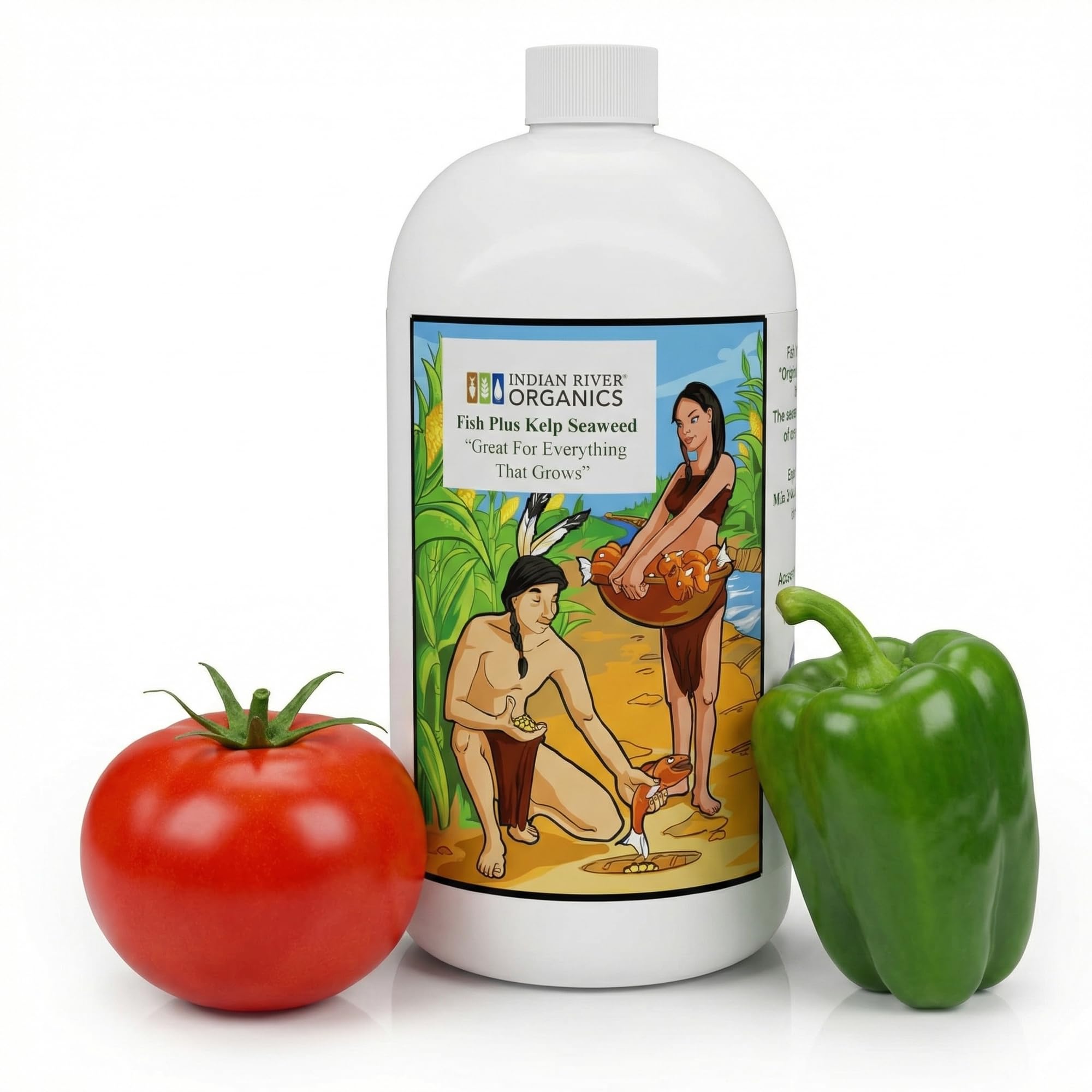
Fish plus North Atlantic kelp — two organic powerhouses in one pour.
Indian River Organics combines liquid fish fertilizer with North Atlantic seaweed, giving tomato plants a broader spectrum of micronutrients (trace elements like zinc and iron) than a straight fish emulsion can offer. Seaweed contains growth hormones, trace minerals, and compounds that help plants handle heat, drought, and cold stress. The integration of the two is done through a proprietary digestion process that breaks down polysaccharides (complex carbohydrates) into bio-available compounds. The result is a single easy-to-apply liquid that supports root development, foliar health, and fruit production.
The quality is the aspect owners praise most, and the effectiveness ranks second. One gardener described it as “a very economical way to fertilize organically,” noting that a little goes a long way. The 36-ounce bottle covers up to 500 square feet of lawn or a substantial vegetable garden. The odor is a typical fish emulsion smell, but consistent feedback says it is less offensive than pure fish. A few owners warn that wildlife (especially dogs) can be attracted to the scent, so water the plants thoroughly after applying.
Two-in-one convenience: You get the amino acids and micro-nutrients from fish plus the stress-tolerance boost from kelp, all in a single bottle that mixes at 2-4 oz per gallon. It simplifies your feeding routine without sacrificing nutrient diversity.
Reach for this if: You want a fish-based fertilizer that also gives your tomatoes seaweed’s heat- and drought-tolerance benefits. It is ideal for gardeners in hot climates or those who want maximum nutrient variety from one product.
Look elsewhere if: You need an NPK ratio printed on the label for precise feeding schedules — this blend doesn’t advertise one.
5. FoxFarm Bush Doctor Wholly Mackerel Fish Fertilizer

The FoxFarm formula that turns spindly stalks into sturdy stems overnight.
FoxFarm has been producing fertilizers since 1984, and Wholly Mackerel is their dedicated fish emulsion. The 3-1-0 NPK is clearly focused on vegetative growth — higher nitrogen and no potassium — making it a strong choice for the early-to-mid season when you want your tomato plants to build sturdy stems and dense leaves before fruiting begins. It is formulated for immediate nutrient uptake, which means the nitrogen is available to the plant as soon as it hits the roots.
The reviews share a visceral enthusiasm: “the very first dose that I put on my jalapeno pepper plants it was like night and day.” Another gardener noted that their plants had “skinny stalks, but this stuff really made the stem much bigger and strong.” The 3-1-0 ratio is worth repeating because it is not ideal for late-season fruiting. You will want to switch to a bloom booster or a more balanced fertilizer once flowers appear. The recommended dose is just 1 tablespoon per gallon every other week.
What stands out
- Fast-acting 3-1-0 formula shows visible stem and leaf growth within days
- Low dosage — 1 tablespoon per gallon stretches the pint bottle
- Greenhouse-tested by FoxFarm since 1984 for consistency
When to hold back
- No potassium (the third number is 0) in the NPK, so it won’t carry your tomatoes through the fruiting stage alone
- Pint size is small for large gardens — you will need multiple bottles
Best for early-season stem building: If your tomato seedlings look leggy or weak, this is the nitrogen boost that thickens them up fast. Pair it with a balanced fertilizer once flowers appear.
pass on it if: You want a single all-season fertilizer. The lack of potassium means you will need a second product for the fruiting stage.
6. TPS Nutrients Fish Emulsion Fertilizer
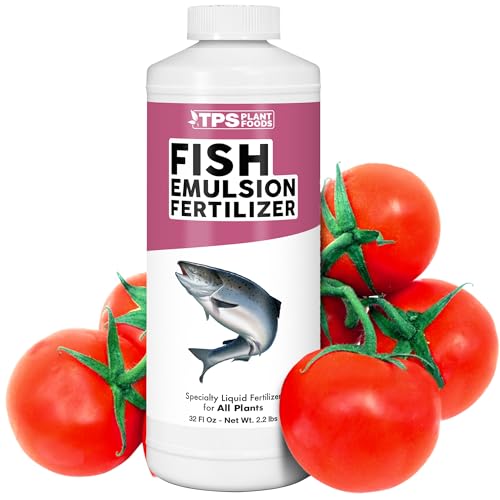
A salmon-based liquid that drives fast green growth without the harshest fish smell.
TPS Nutrients offers a straightforward fish emulsion made in the USA, and the reviews highlight one thing consistently: it works well on newly planted vegetables. The formula delivers essential nutrients for root strength and leafy growth, and the bottle’s 32-fluid-ounce size is a sensible middle ground — bigger than a pint but not as heavy as a gallon. It is meant for vegetable gardens, lawns, and houseplants.
The stand-out detail from the feedback is that some owners found the smell milder than expected: “I haven’t noticed much of a smell with normal use.” Others disagree and find it pretty smelly, so your nose may vary. The real-world warning that pops up is about local wildlife — one gardener in a rural area reported that raccoons dug up a plant the first night after application because the soil smelled like fish. That is an honest trade-off with any fish-based product. Watering the soil well after application helps
A solid entry-level quart: For a gardener with a modest patch of tomatoes who wants something affordable and effective without committing to a whole gallon, this is a practical choice. The plant sensitivity feedback suggests it is gentle on young plants when used as directed.
Reach for this if: You are starting a small vegetable garden and want a mid-size bottle of effective, salmon-based fish emulsion that won’t break your budget.
Look elsewhere if: You have a large garden — owners note the quart size runs out quickly for big spaces.
7. Alaska Fish Fertilizer OMRI Listed 5-1-1

The high-nitrogen slugger that powers leafy growth, but needs a fruiting partner later.
Alaska’s 5-1-1 is a classic in the gardening world. The nitrogen number is the highest in this group — five times the phosphorus — making it an exceptional choice for early-season growth, leafy greens, and building a strong plant structure. The 115-fluid-ounce bottle is enormous and covers up to 1,000 square feet, which is enough for a serious vegetable patch. It is OMRI listed (approved for certified organic use) and made in the USA with a deodorized formula that owners say dissipates in about a day.
The catch for tomato growers is the same as the strength: the 5-1-1 ratio is heavy on nitrogen and very light on phosphorus and potassium. For tomatoes to set fruit well, you will need to supplement with a bloom booster or a more balanced fertilizer once the plants begin to flower. Owners mention rapid green-up and strong stems within 1-2 weeks. The smell is described as “pungent” and “like dead fish” when concentrated, but it fades quickly once watered in. The value for the bottle size is undeniable — this is the most nitrogen per dollar in the lineup.
Where it shines
- High 5-1-1 nitrogen drives rapid vegetative growth and deep green leaves
- 115 fl oz bottle provides excellent value for large gardens
- Deodorized formula — smell fades within a day
- Safe and won’t burn plants when used as directed
The limitation
- Low phosphorus and potassium mean it cannot serve as a sole tomato fertilizer through the fruiting stage
- Can burn leaves if not diluted properly
Use it for early green-up: If your tomatoes need a strong start and you are comfortable adding a phosphorus-rich supplement at bloom time, this is the most cost-effective way to power early leaf and stem growth.
it’s not for you if: You want one bottle that handles the entire season — you will need a second product for the fruiting stage.
8. Lilly Miller Alaska Fish Fertilizer 5-1-1 Concentrate (2-Pack)

Two quarts of the same trusted 5-1-1 formula, bundled for convenience.
This is essentially the same Alaska 5-1-1 fish fertilizer in a two-pack of 1-quart bottles. If you are familiar with the Alaska brand and want the convenience of having a backup bottle without reordering mid-season, this bundle saves the trip. The 5-1-1 NPK delivers the same high-nitrogen punch for leafy growth that Alaska is known for, and the two quarts give you a total of 64 fluid ounces.
The reviews tell a consistent story: this is “hard to find in stores” so gardeners turn to Amazon for it. One owner reported that using it every few weeks resulted in “an abundance of tomatoes” the previous year. The odor is present (it is fish fertilizer, after all) but some owners find it manageable — “no bad odor” is a direct quote, though others call it awful and warn against indoor use. The 2-pack is best for gardeners who already know they like Alaska’s formula and want to stock up, rather than someone trying fish emulsion for the first time.
Stock-up convenience: If you have used Alaska fish fertilizer before and know the 5-1-1 works for your garden, the two-pack ensures you have enough for early-season feeding on a medium-sized plot without needing to repurchase mid-season.
Reach for this if: You are already a fan of Alaska’s 5-1-1 formula and prefer having two bottles on hand to avoid running out.
Look elsewhere if: You are new to fish emulsion — try a single quart or the larger 115 fl oz bottle first to see if the odor is tolerable for your garden.
9. Neptune’s Harvest Organic Fish Fertilizer

The North Atlantic protein formula that releases nitrogen slowly as it breaks down in the soil.
Neptune’s Harvest takes a different approach to fish fertilizer. Instead of just a simple emulsion, this is described as a “highly nutritional protein fertilizer” made with naturally occurring enzymes from fresh North Atlantic fish. The nitrogen comes from fish protein in the form of amino acids and breaks down slowly into basic compounds when added to the soil. This gradual release means the nutrients stay available longer and support beneficial soil bacteria rather than feeding the plant in a single quick burst.
The 36-ounce bottle mixes at 1 oz per gallon of water, making it a straightforward product to use. The quality is the aspect owners praise most, and the plant growth benefits rank second. One owner reported that it revived sad plants quickly and induced blooming on orchids, desert roses, and bougainvillea within two weeks. The smell is present — one gardener describes it as “strong fish odor” — but another says “no fish odors,” so sensitivity varies. The key instruction from the reviews is not to let mixed solution sit, as it “stinks if mixed solution has to sit at all.”
Slow-release protein approach: The amino-acid-based nitrogen is gentler on soil biology and lasts longer than a straight emulsified fish oil. This is a premium formulation for gardeners who prioritize soil health as much as plant growth.
Best for the soil-conscious grower: If you focus on building soil biology and want a fish fertilizer that feeds microbes while supporting slow, steady growth, Neptune’s Harvest is a strong match.
look elsewhere if: You want a quick synthetic-like nitrogen hit for a fast green-up — the protein-based release is intentionally slower.
Understanding the Specs
NPK Ratio
The three numbers on a fertilizer label stand for Nitrogen (N), Phosphorus (P), and Potassium (K). Nitrogen drives leafy green growth. Phosphorus supports root development and flower/fruit production. Potassium improves overall plant health and fruit quality. For tomatoes, a ratio with a phosphorus number equal to or higher than the nitrogen (like 2-3-1 or 2-4-1) is ideal for the fruiting stage. A high-nitrogen formula like 5-1-1 is better for the early vegetative phase.
Hydrolyzed vs. Emulsified
A hydrolyzed fish fertilizer is broken down by enzymes at low temperatures, preserving amino acids, vitamins, and micronutrients. The nutrients are available to plants immediately. A standard fish emulsion is cooked and filtered, which can destroy some of the delicate compounds. Hydrolyzed products tend to be darker and smell stronger. If the label says “fish protein hydrolysate,” you are getting the most biologically active form.
FAQ
How often should I apply fish emulsion to my tomato plants?
Will fish emulsion burn my tomato plants?
Is fish emulsion safe for tomato seedlings?
How long does the fishy smell last after applying fish emulsion?
What is the difference between 5-1-1 and 2-4-1 for tomatoes?
Can I use fish emulsion as a foliar spray on tomato leaves?
Does fish emulsion attract animals like raccoons or dogs?
Is OMRI listed fish emulsion the same as organic fish emulsion?
Final Thoughts: The Verdict
For most gardeners, the best fish emulsion for tomato plants is the The Grow Co Organic Fish Fertilizer because its 2-3-1 ratio delivers the phosphorus tomatoes need for fruiting, and the 128-ounce bottle at a 1:100 dilution covers the entire season. If you want a professional-grade hydrolysate with the highest phosphorus for maximum blooms, grab the Dram