
Specs are compiled from manufacturer listings and verified buyer reviews and can change over time — please confirm the key details on the product page before buying.
If you are splitting firewood this season, the real question is not which brand looks the toughest in the garage. The question is which tool turns a pile of round logs into stacked kindling with the fewest swings and the least strain on your shoulders. The best splitting axe for you has one job: deliver a clean, one-strike split more often than not, while being light enough to swing all afternoon. That is a surprisingly rare combination, and the eight tools here handle it very differently.
I’m Rikta — the founder and writer behind Lawn Gear Lab. This guide is built by comparing the manufacturers’ published specifications and the patterns across verified customer reviews, so you get each pick’s real strengths and trade-offs instead of marketing spin.
You are about to see a crowd-favorite 4.8-star axe that owners say is “light enough to swing all day,” a heavy-duty maul engineered for the meanest knotty rounds, and a hand-forged Swedish heirloom that is sharp enough to make you rethink what an axe can do. This is the honest breakdown of the best firewood splitting axe for every kind of wood splitter.
Our Picks at a Glance


How To Choose The Best Firewood Splitting Axe
A splitting axe is not just a big hatchet. The geometry, weight, and handle length are all tuned for one motion: driving the blade straight through a log’s grain. Understanding a few key specs makes it easy to find the one that fits your wood, your height, and your stamina.
Head Weight and Your Swing Stamina
The head weight tells you the mass coming down on the log, but a heavier head also tires your shoulders faster. A 6-pound head is a common balance — heavy enough to split most hardwoods, light enough to swing for an hour. An 8-pound maul packs extreme force but demands more recovery time between swings.
Handle Length for Leverage and Reach
A longer handle (around 36 inches) generates more swing speed and lets you stand farther from the split, reducing the risk of a glancing blow to your shin. Shorter handles (28 inches or less) offer more control for smaller logs and pack-friendly portability, but you lose leverage on big rounds.
Blade Design vs. Splitting Maul
A splitting axe uses a thinner, convex blade edge that wedges the wood apart. A splitting maul uses a thicker, wedge-shaped head that forces the wood apart by brute mass. For most firewood, a splitting axe is faster and easier on your body. For gnarly, knotty wood, a maul’s extra mass is often the answer.
Quick Comparison
| Model | Best For | Head Weight | Handle Length | Total Weight | Amazon |
|---|---|---|---|---|---|
| Fiskars X27 Super Splitting Axe★ Best Overall | Overall Performance & Value | — | 36″ | 6.3 lb | Amazon |
| Estwing 6 lb Splitting MaulBest Value Maul | Balanced Mid-Weight Maul | 6 lb | 36″ | 8.4 lb | Amazon |
| 1844 Helko Werk Saxon SplitterPremium Pick | German Craftsmanship for Big Logs | 6.25 lb | 31″ | 8.5 lb | Amazon |
| Fiskars 28″ Chopping Axe | Lightweight Camp & Kindling | — | 28″ | 3.5 lb | Amazon |
| Estwing 8 lb Splitting Maul | Heavy-Duty Tough Rounds | 8 lb | 36″ | 10.5 lb | Amazon |
| Husqvarna Wood Splitting Axe S2800 | Durable Compact Splitting | 5 lb | 27.6″ | 6.2 lb | Amazon |
| THRWCLUB Professional Splitting Axe | Traditional Hickory & Timbersports | 6 lb | 32.4″ | 7.17 lb | Amazon |
| Gränsfors Bruk Splitting Maul | Swedish Heirloom & Precision | 5.5 lb | 31.5″ | 7.9 lb | Amazon |
In‑Depth Reviews
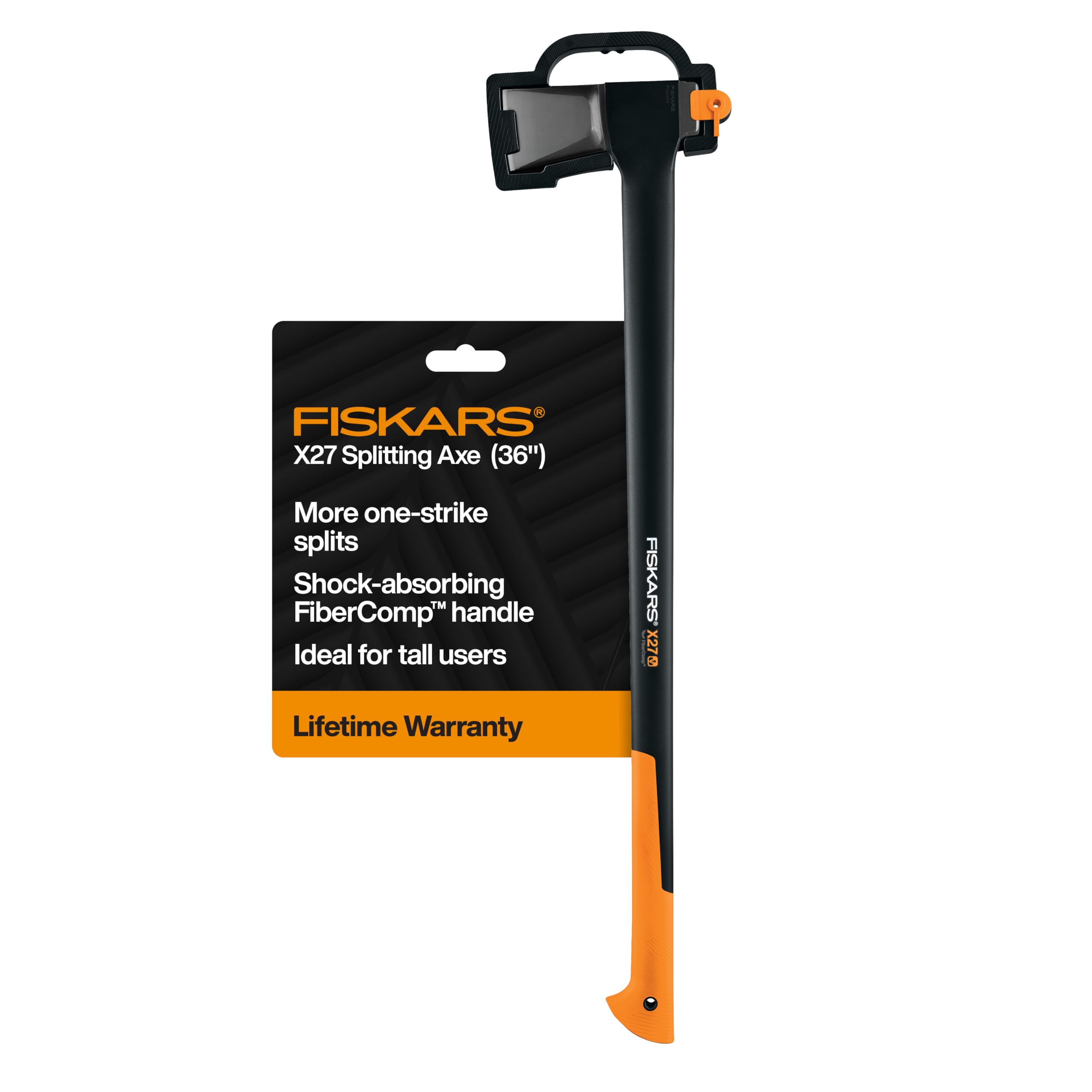
1. Fiskars X27 Super Splitting Axe, 36″
Our pick — over 4.5★ from 9,000+ verified ratings; the strongest balance of quality and price.
The crowd favorite that makes split-after-split feel almost easy.
The Fiskars X27 is the axe that keeps earning its reputation one log at a time. It weighs just 6.3 pounds with a 36-inch handle, yet buyers report it “splits better with less force than any maul” they have used, calling out “nearly every cut is a full split on first swing.” The hardened forged steel blade uses a convex bevel design that not only chews through medium-to-large logs but also releases cleanly, so you spend less time prying the blade out of the wood.
The shock-absorbing handle and textured non-slip grip are the real stamina savers. They cut down vibration so your hands and forearms do not feel hammered after an hour. The trade-off is that the plastic sheath is underwhelming, and a few owners mention handle scuffs from a hard miss — though the composite handle survived the hit without cracking. For a tool this capable at this price point, the 4.8-star consensus is hard to argue with.
What Owners Rave About
- “Nearly every cut is a full split on first swing” — owners consistently say the X27 outperforms 8-pound mauls at a much lighter weight.
- The convex blade stays sharper longer than traditional axes and exits the wood cleanly after each strike.
- At 6.3 pounds, the long handle generates tremendous force without the fatigue of a heavy maul, and the lifetime warranty backs it.
The Honest Trade-Offs
- The included plastic protective sheath feels cheap compared to the quality of the axe itself.
- A few owners note the composite handle can scuff from an overstrike, though it held up structurally.
Your go-to if: you split medium-to-large logs regularly and want the fastest path from cord to stack without exhausting yourself.
Not ideal if: you only split tiny kindling — the 36-inch handle is overbuilt for that job, and the compact 28″ axe below will feel more nimble.
2. Estwing 6 lb Wood Splitting Maul, 36″
The 6-pound balance that splits tough rounds without wrecking your shoulders.
One owner who previously swung an 8-pound maul summed it up: “6lb is a perfect weight for me.” This Estwing delivers the mass you need for knotty wood — its head is hardened to 50–55 HRC (Rockwell Hardness Scale, a measure of how resistant the steel is to deformation) — without the full-body exhaustion of an 8-pounder. The 36-inch fiberglass handle is infused with over 70% fiberglass, giving it the strength to handle repeated beatings.
It is heavier than the Fiskars X27 at 8.4 pounds total versus 6.3 pounds, but that extra weight is what you want when you face elm, ironwood, or wet rounds that laugh at a lighter blade. The “high-force splitting head design” is a real difference-maker on stubborn pieces. Just note that, unlike the all-American Estwing framing hammer legacy, this maul is made in India — a surprise for some buyers, but the quality consensus among the reviewer community remains solid.
Why It Wins
- The 6-pound head hits the ideal balance between splitting power and swing stamina, earning high marks from owners for both quality and performance.
- The dual-injection fiberglass handle handles overstrikes far better than raw wood and is built to last a long service life.
- Estwing’s forged head hardening to 50–55 HRC means the edge withstands demanding wood-splitting use without deforming.
One Real Difference
- If you are accustomed to Estwing’s USA-made reputation, the “Made in India” marking may give you pause, though owner reviews across multiple users praise the actual build quality.
The move: grab this maul if you split a mix of softwood and tough hardwood and want a tool that can do both without costing a premium.
skip it if: your goal is all-day splitting of smaller, seasoned logs — the lighter Fiskars X27 will split faster with less fatigue.
3. 1844 Helko Werk Germany Saxon Heavy Log Splitting Axe
A hand-forged German splitter that turns splitting from chore into craft.
The Helko Werk Saxon Splitter is built for the firewood splitter who wants heirloom quality and brute capability in one swing. The head weighs 6-1/4 pounds and is open-face drop forged by hand from German C50 high-carbon steel. Owners mention that after 7 hours of splitting wet, knotty wood, the edge was still sharp and the handle was still tight. It splits 6-inch logs in one blow and 12-to-14-inch logs in three or four strikes without sticking.
What really separates it is the feel. The 31-inch Grade A American hickory handle is sanded to 150 grit and finished with boiled linseed oil, giving it a smooth, warm grip that a fiberglass shaft simply cannot match. The full-grain leather sheath and Axe Guard protective oil are thoughtful inclusions. But the “small turnaround hook on the heel” — a tiny hook at the bottom edge of the blade — is a clever log-moving feature that experienced wood splitters will appreciate. It is noticeably heavier than the Fiskars X27 at 8.5 pounds, and splitting performance is mentioned by almost 40 owners, making it a clear leader for those who face large, difficult rounds.
What Shines
- Hand-forged in Germany from C50 high-carbon steel (53-56 HRC) for an edge that holds up exceptionally well against wet knotty wood.
- The angle of the head is designed so it does not get stuck — even after splitting dense rounds, the blade releases without prying.
- The 31-inch hickory handle is sustainably sourced and hand-selected for grain orientation, providing a comfortable and smooth finish.
One Thing to Know
- The overstrike protector on some units arrived misaligned, though customers note the manufacturer made it right quickly with a free leather protector.
Reach for it if: you split large, knotty rounds regularly and appreciate the performance of a traditional German-forged blade on a premium hickory handle.
Think twice if: you are budget-conscious or exclusively split smaller, seasoned softwood — the Fiskars X27 delivers comparable splitting speed for less than half the price.
4. Estwing 8 lb Wood Splitting Maul, 36″

The brute-force specialist for wood that refuses to split any other way.
When you manage elm, ironwood, or wet rounds that make lighter tools bounce off, the Estwing 8-pound maul is the answer. Owners call it a “beast” and say it “shatters logs in one swing.” The head is forged to 50–55 HRC and the high-force splitting head design pushes through fiberous wood that would stall a standard splitting axe. At 10.5 pounds total weight, this maul is a commitment — you feel every swing, but the result is usually a clean split on the first attempt.
The dual-injection fiberglass handle — infused with over 70% fiberglass — is broad and tough, which owners specifically praise for withstanding the kind of abuse that would crack a wooden handle. “Just a word if you are not sure though, 8 lbs. is heavy,” one owner notes honestly. This is not an all-day tool for most people, but when you come across a piece that stops your lighter maul cold, this one is the closer.
The Case for It
- Delivers the maximum splitting force of any tool in this lineup — owners say it “shatters logs” and handles the toughest fibrous woods.
- The broad fiberglass handle design is a standout for comfort and durability, taking overstrikes without issue.
- Quality is the most-mentioned positive aspect among owners, with splitting performance close behind.
Consider Before Buying
- At 10.5 pounds this is a heavy tool — owners warn it will tire you out quickly if you are splitting a large pile without breaks.
- It is best kept as a specialist for tough rounds rather than your go-to for daily firewood splitting.
Grab it for: stubborn knotty rounds and wet wood that a 6-pound maul or splitting axe just bounces off — this is your heavy hitter.
Pass if: you split mostly seasoned softwood or value swing speed over raw mass — the lighter picks above will serve you better.
5. Fiskars 28″ Chopping Axe
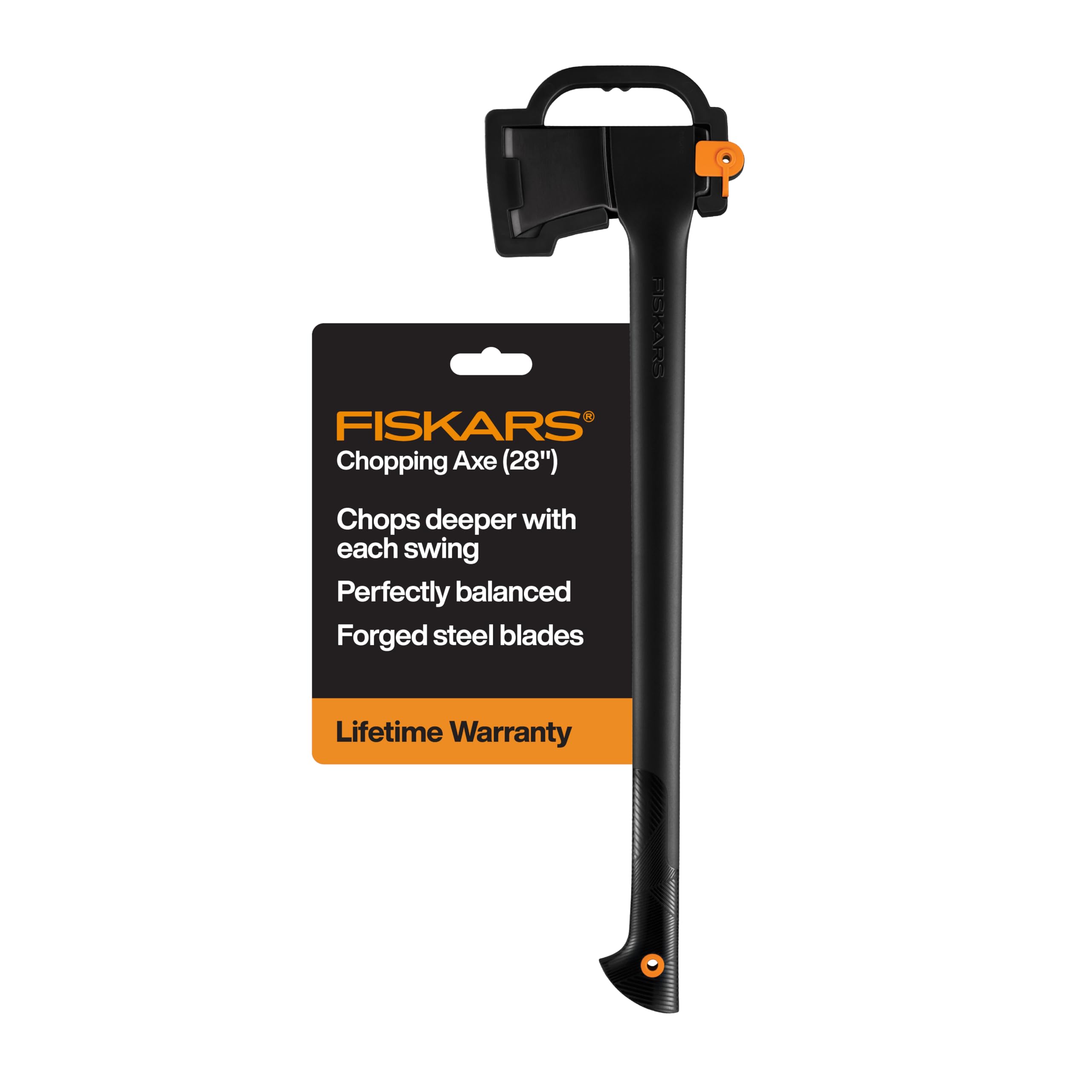
The featherweight that goes from backpack to kindling without missing a beat.
At just 3.5 pounds, this 28-inch Fiskars chopping axe is a completely different animal from the X27 above. It is designed for the person who wants one tool that can handle small splitting tasks, campfire prep, and backyard cleanup without hauling a 6-pound maul around. One owner calls it “ultra-sharp blade, well-balanced, 3.5 lbs” and notes it is efficient for kindling and small logs.
The low-friction coating on the blade reduces drag, which means it cuts cleanly and does not stick in the wood as easily as a bare steel blade. It is also among the most-reviewed axes in this lineup, with owners praising its quality, splitting performance, and sharpness in large numbers. The trade-off is simple: the shorter 28-inch handle gives you less leverage than the 36-inch X27, so you will not match the one-swing power on big rounds. But for its intended job — kindling, small logs, and pack-friendly use — it is a near-perfect tool.
What Makes It Special
- At 3.5 pounds, versus the Estwing 6-pound maul at 8.4 pounds total weight, and easy to swing all day without fatigue.
- The ultra-sharp blade and low-friction coating combine for clean cuts that rarely stick, making it ideal for quick kindling prep.
- Owners overwhelmingly praise the quality and splitting performance, and the lifetime warranty adds confidence.
Keep in Mind
- The shorter 28-inch handle limits leverage on larger logs, so you may need more swings on medium-to-heavy rounds compared to the X27.
- Not the best choice if your primary task is splitting full cords of hardwood—the longer X27 is more efficient for that.
Ideal for: campers, occasional splitters, and anyone who needs a lightweight tool for kindling, small logs, and backyard tasks.
Consider another if: you plan to split large rounds regularly — the X27 at 36 inches gives you the leverage you need for that job.
6. Gränsfors Bruk Splitting Maul 31.5″

A Swedish masterpiece that splits wood with surgical precision and lasts a lifetime.
The Gränsfors Bruk Splitting Maul is not just a tool — it is a carefully hand-forged instrument that owners say “performs with surgical precision.” With a 5.5-pound head and a 31.5-inch hickory handle, it is lighter than most mauls, but the secret is in the blade geometry. The sharper convex angle means the head bites deeper and faster than a blunter maul, and reviewers point out that after two years of heavy use splitting cherry, oak, locust, and maple, the edge is still sharp and the head is still tight.
The metal collar (the “overstrike plate”) is a brilliant touch — it protects the handle from glancing blows that would splinter a wooden shaft. The included “Axe Book” and 20-year guarantee reflect the confidence behind this tool. But there is a catch: the head can stick in very large or stubborn rounds, and removing it requires a firm pull or a pair of wedges. It is also the most expensive pick here, so it is for the buyer who values craftsmanship and longevity over the lowest price.
Exceptional Qualities
- The razor-sharp convex edge and 5.5-pound head create a combination that outperforms many 8-pound mauls through pure cutting efficiency and higher swing speed.
- The overstrike plate extends the handle’s life significantly, and the grooved hickory grip provides outstanding control even with wet hands.
- Quality is the most praised aspect (84 positive mentions), and owners describe it as a tool that “lasts a lifetime with care.”
Fair Warning
- It can stick in oversized rounds — owners recommend pairing it with a splitting wedge or keeping an 8-pound maul for the most stubborn logs.
- Not the right choice for beginners; the consensus is that a Fiskars splitting axe is a better starting point before graduating to this precision tool.
Buy it if: you want a hand-forged, heirloom-quality maul that splits wood with less effort than a heavy maul and comes from a storied Swedish workshop.
Look elsewhere if: you are new to splitting firewood or need a budget-friendly tool — start with the Fiskars X27 and upgrade to this when you are ready.
7. THRWCLUB 32.4″ Professional Splitting Axe
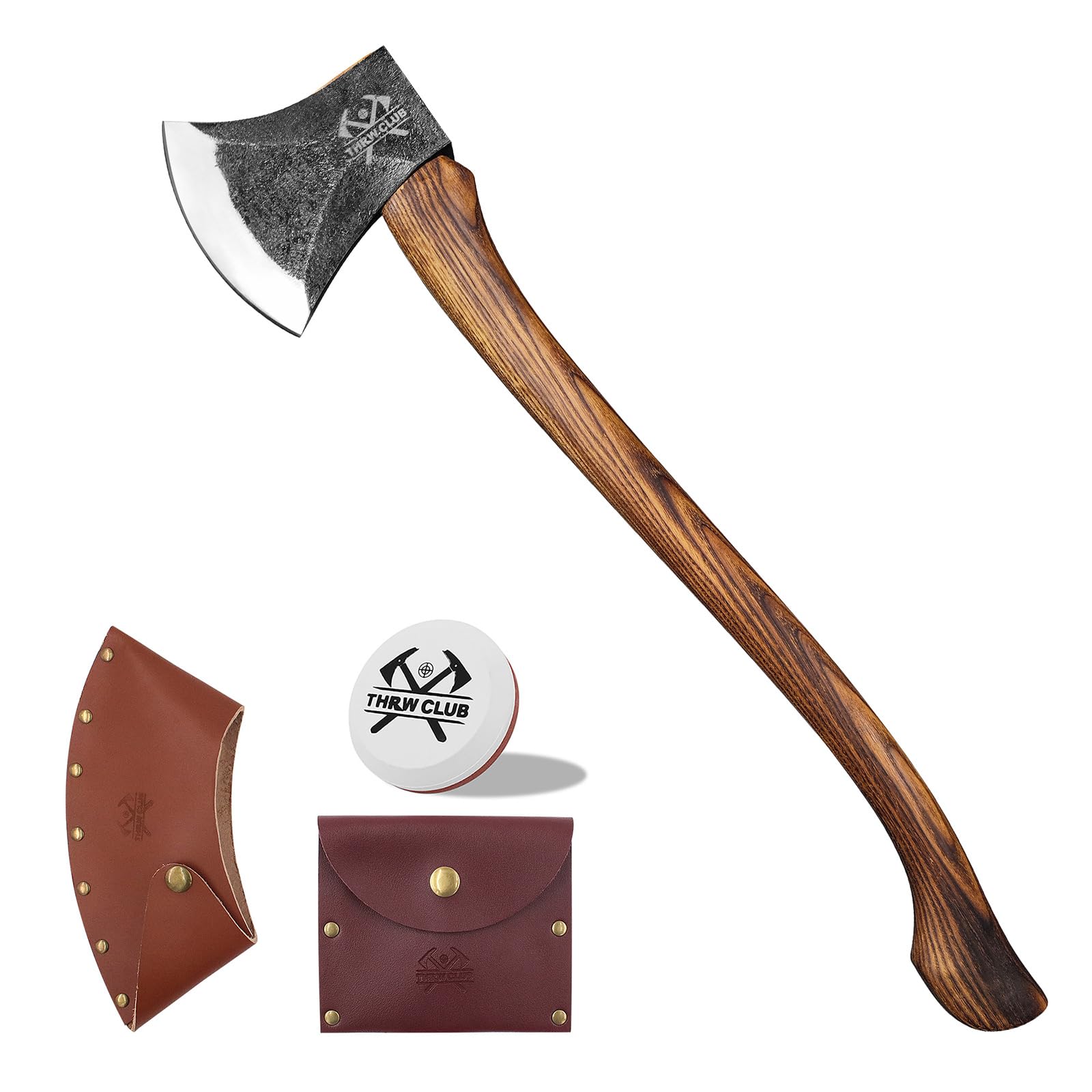
A traditional hickory axe with modern extras for the enthusiast splitter.
This 32.4-inch professional axe from THRWCLUB brings a classic wood-handle feel with a 6-pound head and several accessories that most axes do not include. The high-carbon steel blade is polished to help prevent rust and reduce cutting friction, and it arrives with a dual-sided sharpening stone and a thickened full-grain leather sheath. Owners appreciate the complete package, and one noted it “split about 1 cord of wood” during off-roading trips without issue.
It is noticeably heavier than the 3.5-pound Fiskars chopping axe at 7.17 pounds total, and the sharpness from the start draws mixed reviews — some call it “razor sharp,” others found it dull. One owner discovered the head was mounted upside down (curved edge on top), and another reports the head loosened after 15 minutes of use, though the steel spacers included are designed to help with that. This is a capable tool for the money, but the quality control is not as consistent as the Fiskars or Helko Werk offerings.
What Stands Out
- The high-carbon steel blade is polished to reduce friction and resist rust, with a 6-pound head for solid splitting power on medium-to-large rounds.
- It comes with a thickened full-grain leather sheath, dual-sided sharpening stone, and steel handle inserts — accessories most axes in this price range do not include.
- The 32.4-inch hickory handle offers a traditional feel with plenty of leverage.
The Realistic Picture
- Quality control is a known variable — some shoppers say razor-sharp edges from the start, while others note dull blades or a loose head after brief use.
- It is on the heavy side, and a few owners feel it is “more for show than use,” so manage expectations for heavy daily splitting.
Works best for: occasional splitters who want a traditional wood-handle axe with useful accessories, particularly for campsite or offroading use.
Not the pick if: you need reliable daily splitting performance — the Fiskars X27 or 6-pound Estwing maul have much more consistent quality feedback.
8. Husqvarna Wood Splitting Axe S2800

A durable, smaller-headed axe that asks you to swing it fast, not hard.
The Husqvarna S2800 splits wood with a 5-pound steel head and a 27.6-inch fiber-composite handle, making it one of the more compact dedicated splitting tools here. Owners say it is “light enough to swing for long periods” and praise its durability — one even reported it survived a 40-inch water oak falling on it with only a slight handle bend. The non-stick coating on the blade helps reduce friction, and the hardened stainless steel edge stays sharp for a good stretch.
There is a clear ergonomic caveat: several owners note the handle needs to be about 6 inches longer for tall users. If you are over 6 feet tall, the shorter handle forces you to bend your swing, which reduces power and increases the risk of a glancing blow. The fiber-composite construction resists weather and warping, but traditionalists may miss a wood handle. For its intended role — splitting smaller logs and storm cleanup — owners find it “satisfying” and effective, but it is not the tool for big rounds.
Strengths
- Durability is the standout — buyers report surviving a falling tree and heavy use without breaking, and the composite handle resists weather and warping.
- The 5-pound head and 27.6-inch handle make it manageable for extended splitting sessions, earning praise for being lightweight yet capable.
- Includes a sheath and is backed by a lifetime warranty.
Ergonomics Note
- The handle length gets mixed feedback — several owners over 6 feet tall say it is too short for comfortable splitting, reducing power and reach.
- The blade may not be sharp from the start for splitting seasoned softwood, but owners note it is not strictly necessary for that job.
Choose it for: storm cleanup and smaller-log splitting if you are under 6 feet tall and want a durable composite handle that withstands heavy weather.
Consider one of the 36-inch options if: you split taller wood piles or are over 6 feet tall — the extra handle reach makes a noticeable difference in swing power.
Understanding the Specs
Head Weight and Why It Matters
The head weight (measured in pounds) is the mass of the steel blade that contacts the wood. A heavier head delivers more force on impact, but you also have to lift that weight for every swing. The 6-pound range is a versatile balance — heavy enough to split hardwoods, light enough to allow a full afternoon of work without exhaustion. An 8-pound maul crushes knotty wood but is best used as a specialist tool for tough rounds. A 3.5-pound axe is great for kindling and camping but will struggle on large logs.
Handle Length and Leverage
Handle length, measured in inches, determines how much arc speed you can generate and how far you stand from the log. A 36-inch handle generates much more force than a 28-inch handle because of the longer arc, making it easier to split medium-to-large logs in one swing. The trade-off is control — shorter handles are easier to aim precisely and fit in a backpack. If you are over 6 feet tall, lean toward a 36-inch handle to avoid bending your swing uncomfortably.
FAQ
What is the difference between a splitting axe and a splitting maul?
Should I get a 6-pound or 8-pound head?
How long should the handle be for my height?
Can I use a splitting axe for felling trees?
Do I need a metal overstrike protector on a wood handle?
How do I keep the blade sharp?
Will a fiberglass handle last as long as a wood handle?
What does the Rockwell hardness rating mean on an axe blade?
Should I use a splitting wedge with my axe or maul?
What does the “low-friction coating” on some axes do?
Final Thoughts: The Verdict
For most people, the best firewood splitting axe is the Fiskars X27 Super Splitting Axe because it delivers one-swing splits on medium-to-large logs at 6.3 pounds without the fatigue of a heavy maul. If you want a hand-forged German tool for large, knotty rounds, the 1844 Helko Werk Saxon Splitter brings exceptional craftsmanship and splitting performance. And for a traditionalist who values a Swedish-made heirloom, the Gränsfors Bruk Splitting Maul is a precision instrument that owners describe as performing with surgical efficiency.
How We Picked
We do not accept paid placement. Every pick is matched to a real buyer and a real use-case; we do not hands-on test units.
Sources & Methodology
Specifications: manufacturer listings and product documentation. Review insights: verified customer reviews, as of July 2026. Pricing: not shown on this page (it changes often); check the current price via the retailer link.
As an Amazon Associate, Lawn Gear Lab earns from qualifying purchases. This does not affect which products we feature.