
Specs are compiled from manufacturer listings and verified buyer reviews and can change over time — please confirm the key details on the product page before buying.
Some fiber pots turn to mush the first time you water them. Others hold together long enough for roots to grow, then vanish into the soil right on schedule. The difference depends on three things you cannot see in a photo: wall thickness, fiber density, and drainage. Your seedlings deserve a pot that wont collapse. Here is how to find one for your tomatoes, peppers, or marigolds.
I’m Rikta — the founder and writer behind Lawn Gear Lab. This guide is built by comparing the manufacturers’ published specifications and the patterns across verified customer reviews, so you get each pick’s real strengths and trade-offs instead of marketing spin.
Whether you are starting a few herb pots on a windowsill or mapping out a full vegetable patch, choosing among fiber pots for plants means balancing size, quantity, and how long the pot holds together before it breaks down—and these nine options cover every scenario from budget bulk buys to premium, deep-root-friendly pots.
Our Picks at a Glance
How To Choose The Best Fiber Pots For Plants
Fiber pots look simple—a pressed pulp cup with soil in it—but picking the wrong one can stunt seedlings or create a mold problem. Here is what to watch for.
Size and root run
A 3.15-inch pot is fine for most herbs and leafy greens. A 4-inch pot gives tomatoes, peppers, and cucumbers an extra few weeks before they get root-bound. If you plan to start plants very early indoors, the larger diameter means you water less often and the roots have room to branch out.
Wall thickness and wet strength
Thicker walls hold shape longer under daily watering. Thin pots can collapse when lifted wet, which makes transplanting a mess. Look for pots that owners describe as “sturdy” or “hefty”—that usually means the fiber density is high enough to survive a wet spring.
Drainage and breathability
Bottom drainage holes prevent standing water, but the porous fiber itself also lets air reach roots. Pots that lack visible holes or feel too tight in the fiber weave can trap moisture and cause root rot. Four small holes at the bottom is a good baseline.
Quick Comparison
| Model | Best For | Diameter | Count | Material | Amazon |
|---|---|---|---|---|---|
| JNYONG 120 Packs 3.15″★ Best Overall | Best Overall — bulk seed starting | 3.15 in | 120 | Peat | Amazon |
| JNYONG 60 Packs 4″Top Performer | Top Performer — larger seedlings | 4 in | 60 | Paper / Fiber | Amazon |
| Dalzom 60 Pcs 4″Premium Pick | Premium Pick — classroom-friendly | 4 in | 60 | 100% Recycled Pulp | Amazon |
| JERIA 200-Pack 3.15″ | Best Value — high volume | 3.15 in | 200 | Peat | Amazon |
| 50 Pack 4″ Peat Pots | Budget Champion — tall pots, low cost | 4 in | 50 | Natural recycled pulp | Amazon |
| 150 Pcs 3.15″ with Tools | Compact Pick — kit with tools | 3.15 in | 150 | Peat | Amazon |
| ARGCONNER 4″ 50PCS | Most Versatile — indoor/outdoor | 4 in | 50 | Peat Moss | Amazon |
| FDGARDEN 100 Pack 2.36″ | Compact Pick — succulents & herbs | 2.36 in | 100 | Moss & Recycled Pulp | Amazon |
| Jiffy 5″ 24 Pack | Premium Pick — deepest pot | 5 in | 24 | Peat | Amazon |
In‑Depth Reviews
1. JNYONG 120 Packs 3.15 Inch Peat Pots
Our pick — over 4.5★ from 450+ verified ratings; the strongest balance of quality and price.
The 120-pack that holds together for four months of daily watering.
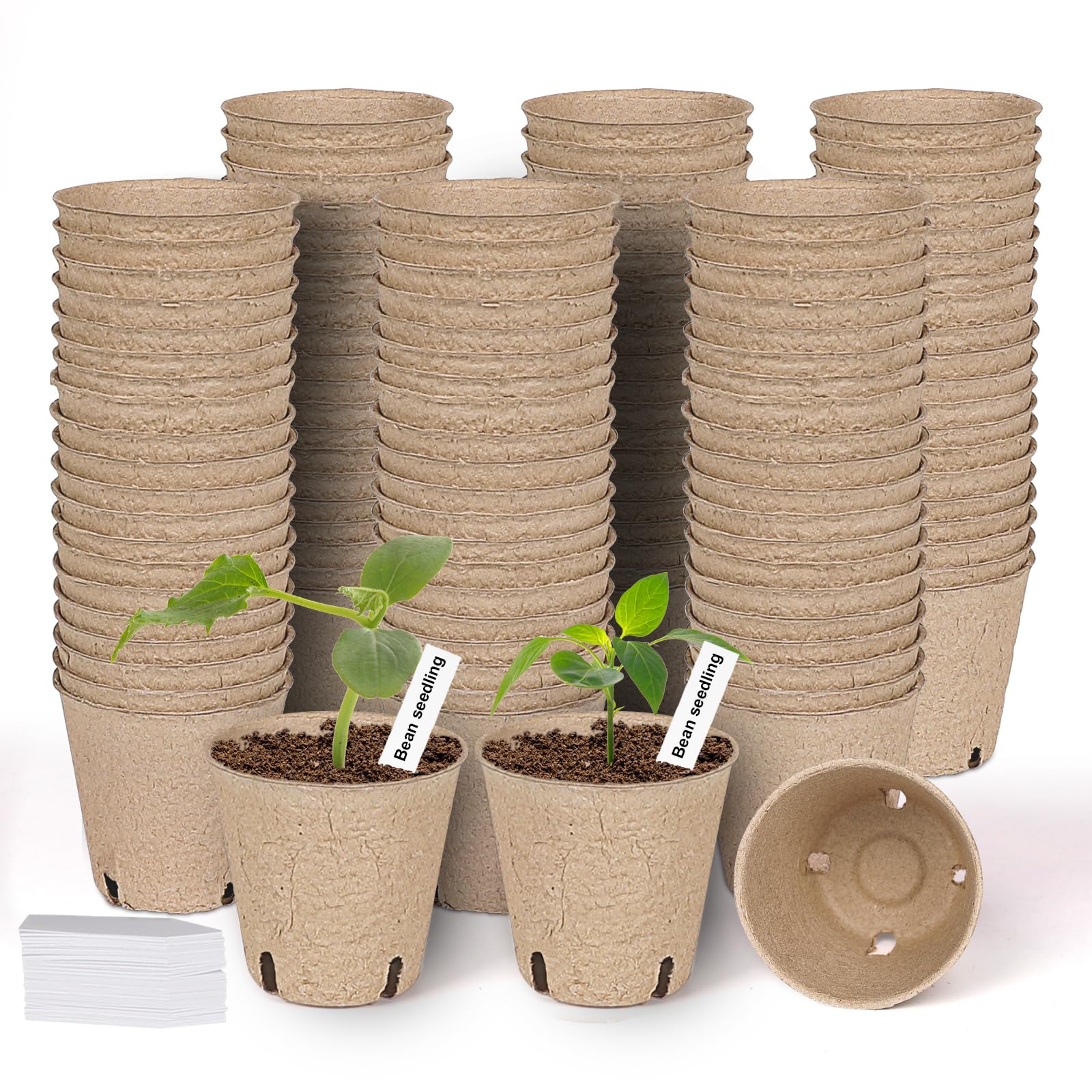
You want pots that do not collapse by week two. These JNYONG pots, at 3.15 inches (about 8 cm) across, give herbs, flowers, and vegetable seedlings enough room to develop a solid root system. The four drainage holes at the bottom let excess water escape, so you do not drown young roots. The box also includes 100 plant labels — no second purchase needed if you like to mark every variety.
Buyers report these hold up for four months of daily watering and stay intact until transplant. That wet-strength (the ability to stay firm when saturated) is rare in fiber pots at this price. The main concern is surface mold — a few owners spotted it within the first week. A tray with airflow gaps usually fixes that. Unlike the JERIA 200-pack below, these maintain their shape when wet; you can lift a pot by its rim without it collapsing.
What wins people over
- Holds up for months of daily watering without crumbling
- 120 pots plus 100 labels in one box — no second trip needed
- Four drainage holes per pot prevent waterlogging
The honest trade-offs
- Surface mold can appear if pots sit in still water without airflow
- Durability gets mixed feedback — most find it excellent, but a few report early breakdown
Perfect for: Gardeners who want a bulk pack of consistent, long-lasting starter pots that go straight into the ground. The 120-count covers a full season of seed starting without restocking.
Think twice if: You need a 4-inch diameter for large plants like tomatoes — the 3.15-inch size means you transplant sooner.
2. JNYONG 60 Packs 4 Inch Peat Pots
The 4-inch size that gave tomato plants a strong start for an end-of-school project.
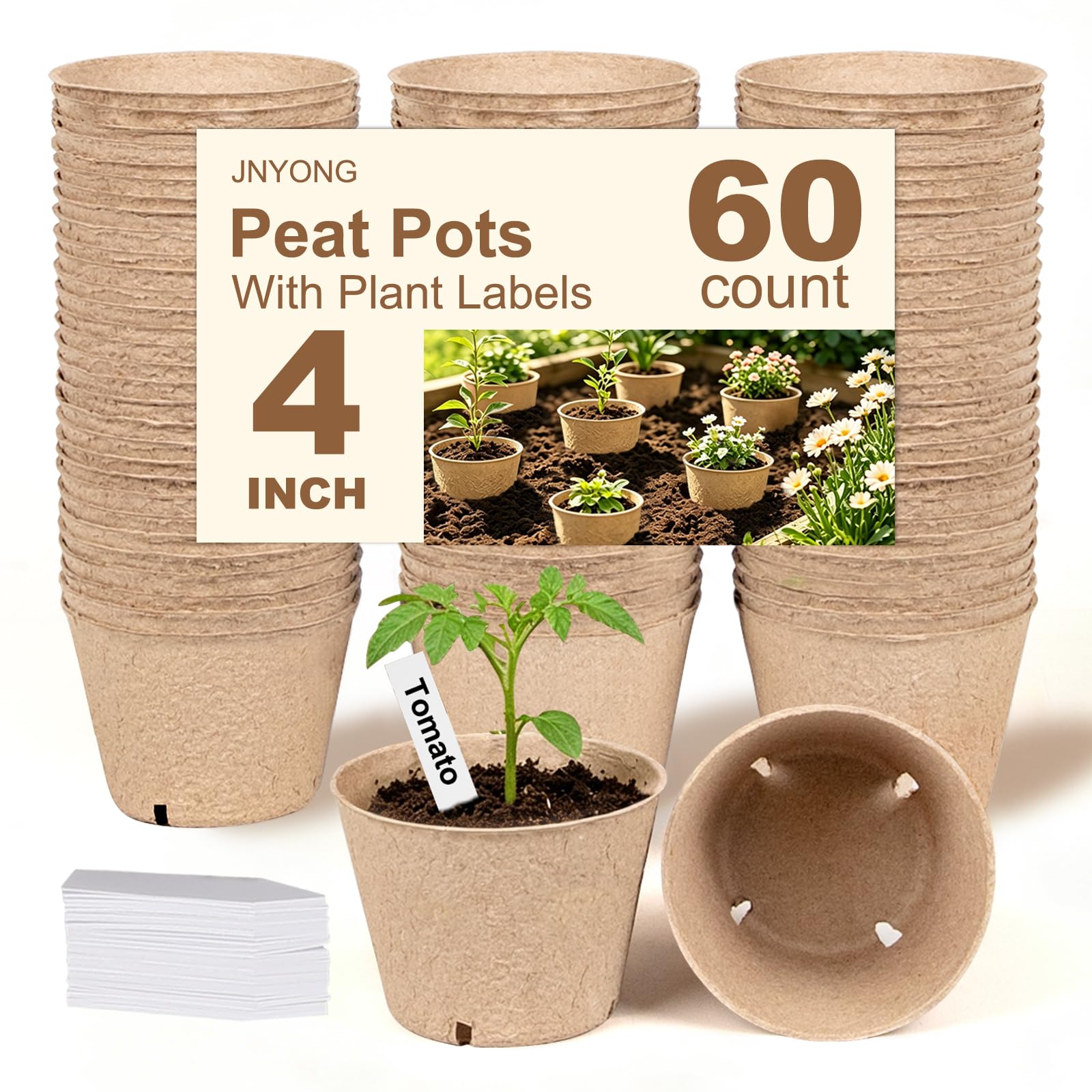
Stepping up from 3.15 inches to 4 inches (about 10 cm) means roots have nearly 33% more space. Measuring 4 x 4 x 3 inches, these pots keep peppers, tomatoes, and marigolds comfortable longer before transplant. The recycled pulp material breathes like clay, and four drainage holes prevent waterlogged soil. A set of 50 plant labels is included.
One gardening owner used these for a school project planting marigolds and reported they “worked a treat.” Another buyer found them perfect for tomato plants. A few owners describe the material as “a little thin,” but most say it is sturdy enough. Compared to the slimmer 3.15-inch JNYONG pots, these give you the middle ground — roomy for vigorous roots without taking up an entire shelf.
Best for mid-size starts: If you grow tomatoes, peppers, or flowers that need more than six weeks indoors, the 4-inch diameter buys you time before roots get cramped. The 60-count with labels is a ready-to-go kit.
Reach for these when: Your starting list includes tomatoes, peppers, or marigolds that need extra root space before heading outside. The 4-inch diameter prevents early root binding.
Note: A few owners found the walls a bit thin — double-potting with a second pot is an easy workaround if you want extra insurance.
3. Dalzom 60 Pcs 4″ Peat Pots
The 100% recycled pulp pot that wicks water from below without turning to sludge.
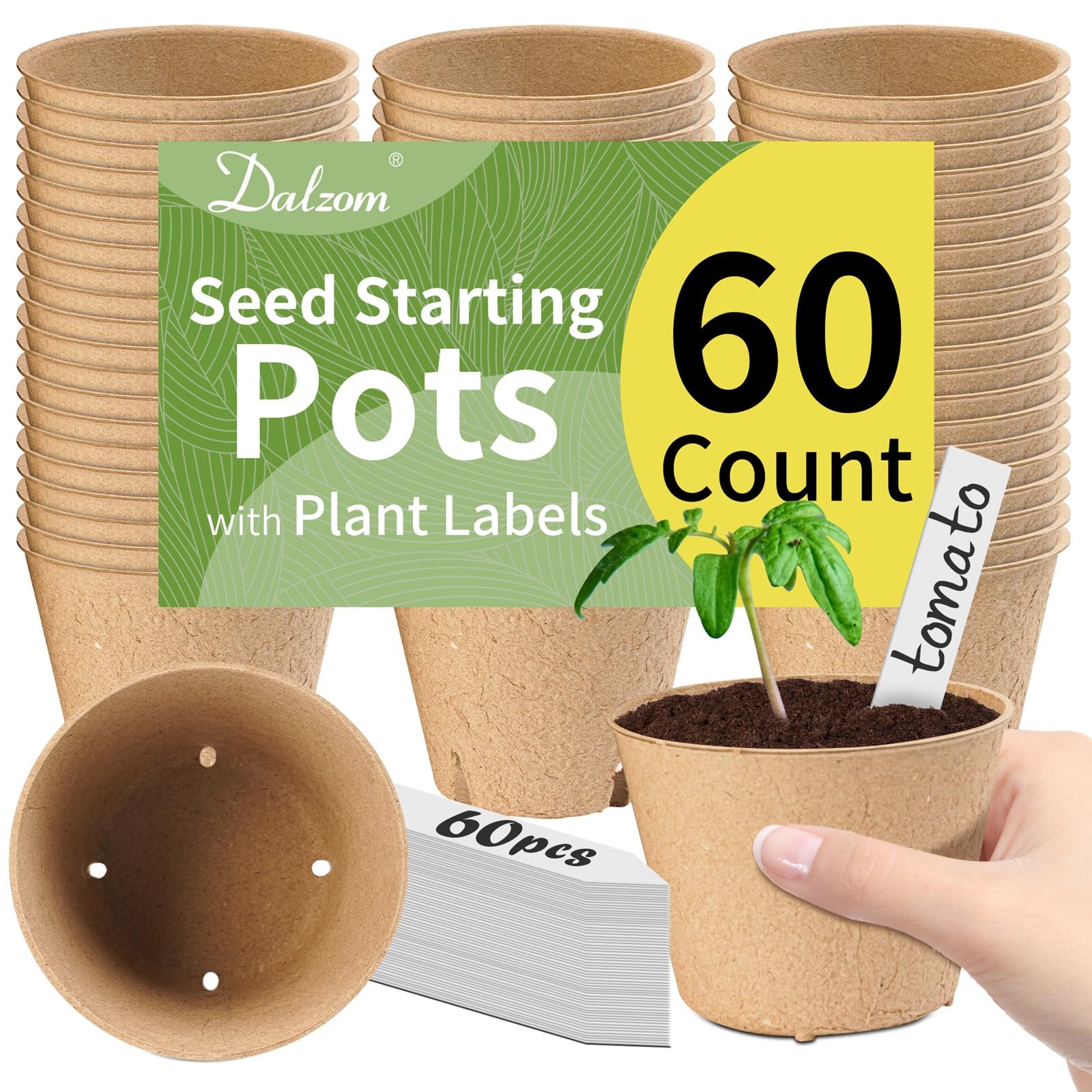
Dalzom uses 100% recycled pulp (not a peat blend with binders), so the fiber is uniform and predictable. These 4-inch pots measure 4 inches top diameter, 2.7 inches bottom diameter, and 3 inches tall — a slight taper that stacks neatly when stored. The porous material lets roots push through easily. One owner left seedlings in these pots for 4 weeks indoors with standing water in a tray and found the pots wicking moisture effectively the whole time.
Quality and value for money are the most-praised features. A school garden club used them for seed starting, noting the pots were durable enough for small hands. The sturdiness gets mixed feedback — some find them firm, others report they begin to fall apart after a few weeks. Mold resistance is also a concern, so keep these on a tray with airflow. At 60 pots with 60 labels, this is a thoughtful kit for a serious home nursery.
Best for indoor seed starting: The consistent pulp density and wicking ability make these reliable for long indoor germination periods. The 4-inch depth gives taller cuttings like tomato suckers room to root.
Choose this if: You want a premium pulp pot that wicks water well from a tray and holds together for weeks indoors. The 60-piece kit with labels is turnkey.
skip it if: You need maximum durability — a small number of owners found these began to fall apart sooner than expected.
4. JERIA 200-Pack 3.15 Inch Peat Pots
Two hundred pots that are “hefty” enough to survive a moist seedling environment without crumbling.
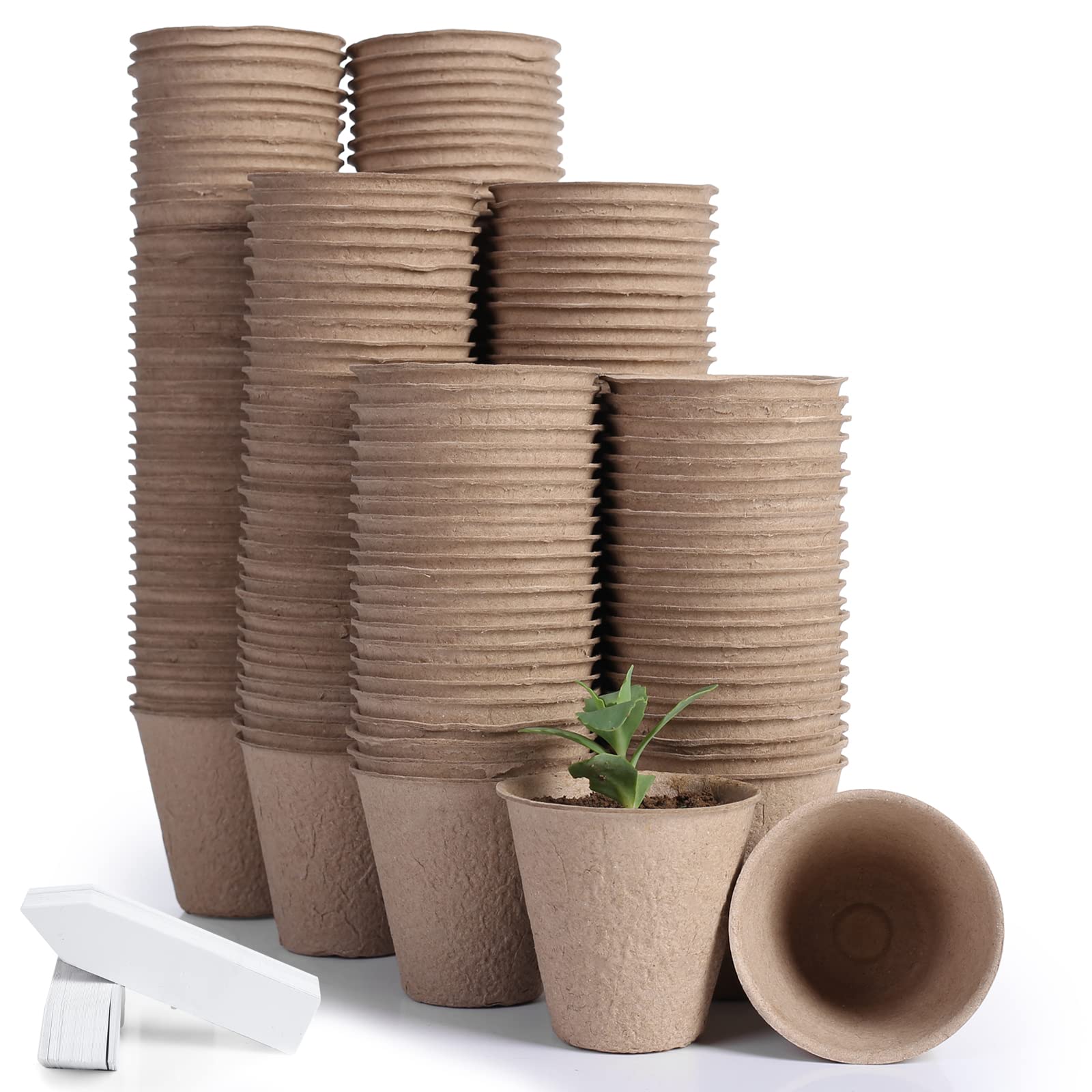
Volume alone is useless if the pots disintegrate. These JERIA pots earn a reputation for being thicker and more resilient than typical bulk packs. Each pot is 3.15 inches in diameter — standard for herbs, lettuce, and flower starts — and the recycled pulp construction breathes like clay. The set comes with 200 plant labels, the highest label-to-pot ratio in this lineup.
Owners describe these as “hefty” and “sturdy compared to paper-thin alternatives.” One reviewer noted they “don’t crumble under moist environments.” The caution is to avoid overwatering initially; they drain well once you learn the rhythm. With 200 pots, this is the clear choice for anyone planning a large vegetable garden or community plot.
Why owners stock up
- 200 pots with 200 labels — the highest pot-to-label ratio in this list
- Thicker walls hold up better under moisture than most bulk packs
- Breathable pulp material supports healthy root development
The one thing to watch
- Overwatering initially can make them soggy — they drain well once you dial in the amount
- These are single-use; they degrade naturally after transplant and cannot be reused
Load up if: You are starting dozens of seedlings for a vegetable garden, flower bed, or community plot. The 200-count keeps you stocked for the whole season.
Consider another option if: You only need a small number — 200 pots is a lot of storage space if you are just starting a few windowsill herbs.
5. 50 Pack 4 Inch Peat Pots
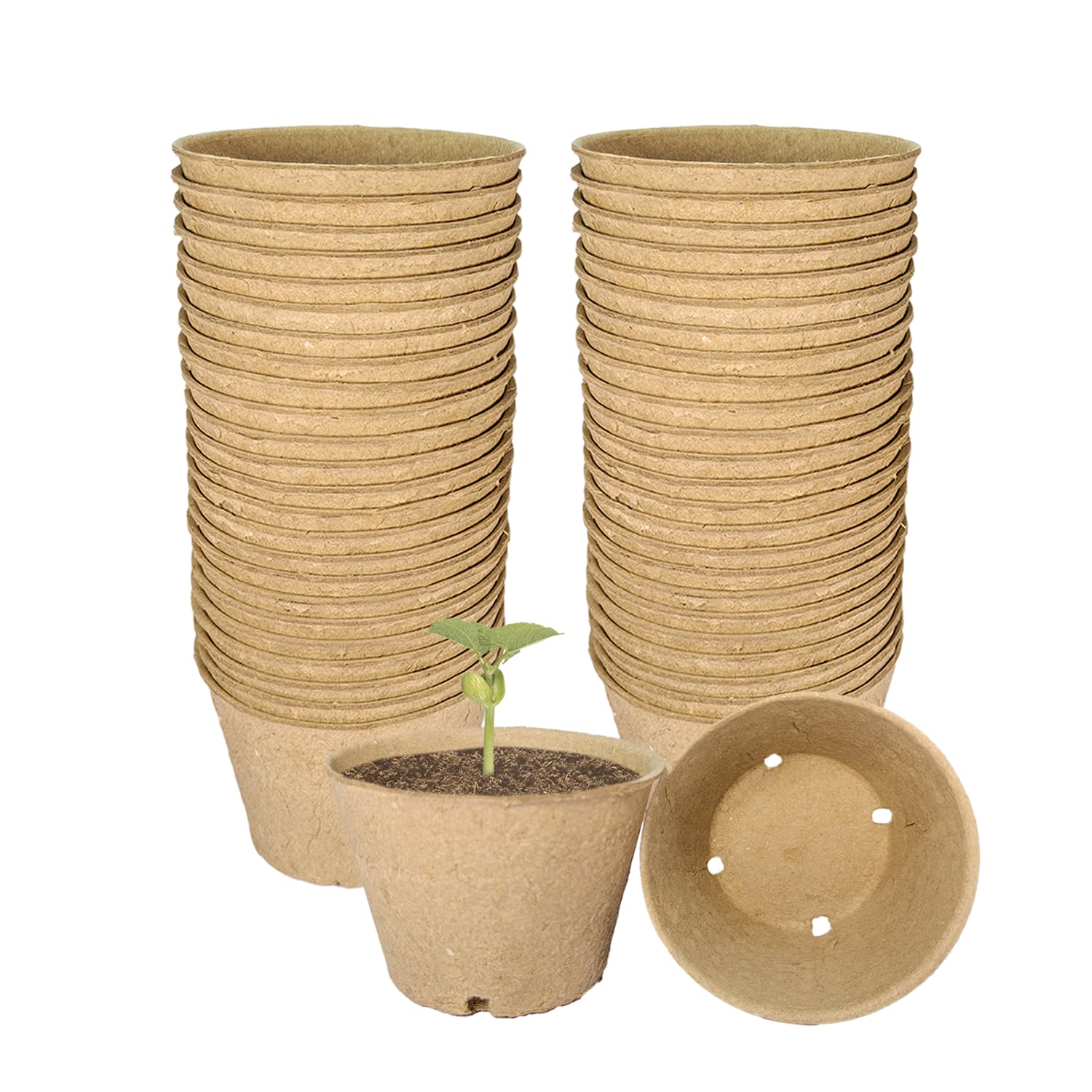
The 4-inch pot that one gardener chose specifically so bean plants would have time to grow.
At 4 x 4 x 3 inches, these pots are the same diameter as the JNYONG 60-pack but arrive in a smaller 50-count — a practical entry point for modest gardens. The material is natural recycled pulp, the same porous fiber that lets roots breathe. The textured surface stops pots from sticking together when stacked, so you can separate one with a gentle twist.
One buyer bought these specifically for bean plants, wanting the larger 4-inch size so the beans could develop longer before transplant. Another called them “very sturdy.” The main limitation is the pack size: 50 pots go fast for large operations, but for a home gardener starting tomatoes, peppers, and a few flowers, it is exactly right.
Smart starter pack: The 50-count gives you enough 4-inch pots for a moderate garden without committing to 120 or 200 pieces. The textured stacking surface keeps storage tidy.
Grab these if: You want 4-inch pots for a garden of beans, tomatoes, or peppers but do not need a huge quantity. The 50-pack is a practical middle ground.
Look elsewhere if: You plan to start more than 50 plants — you will need a second pack, and the per-pot cost is slightly higher than bulk options.
6. 150 Pcs 3.15 Inch Peat Pots with Tools
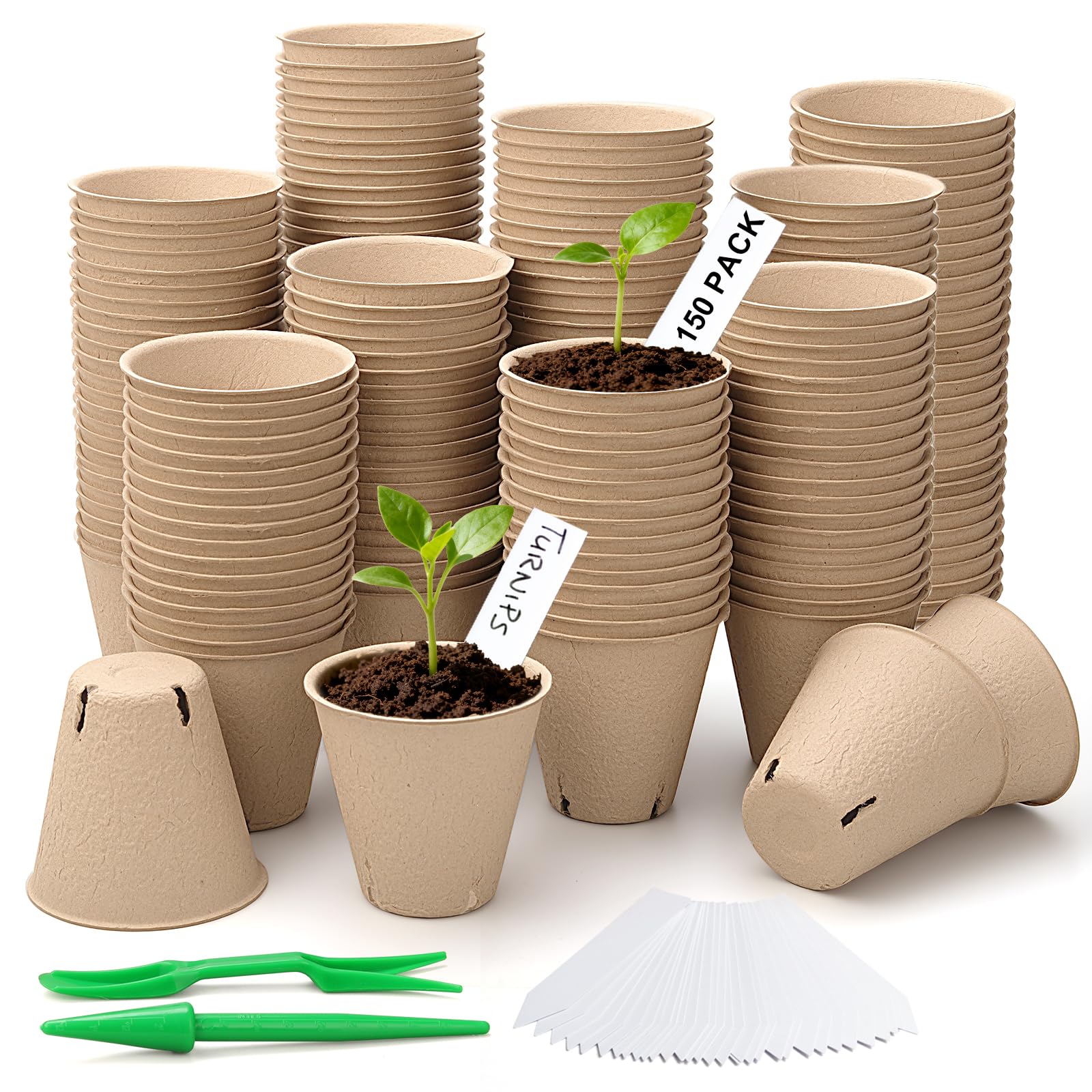
The kit that took Aerogarden seedlings straight to the garden — every one rooted and healthy after 5 weeks.
This is the only set that includes transplant tools (two small trowels) plus 30 plant labels alongside 150 pots. Each pot is 3.15 inches in diameter, made of natural peat pulp, with built-in drainage holes. The 0.25-quart capacity is small but adequate for seeds that move to the ground within a few weeks. At 3 x 3 x 3 inches, these are slightly more compact than the JNYONG 3.15-inch pots, which measure 3.15 x 2 x 3.15 inches.
One owner moved seedlings from an Aerogarden directly into these pots and reported every single one “took root and are still healthy after 5 weeks.” Another praised them as a “solid purchase” that holds up when saturated, though noted they are not ideal to move when wet — the walls soften as intended for biodegradation. A few owners found the material “too hard” and felt it did not absorb water as well as other peat pots.
What makes this kit complete
- Includes two transplant tools and 30 labels — no extra shopping
- Built-in drainage holes prevent overwatering
- Holds up well when saturated, breaks down naturally in soil
What to expect
- Not ideal to move when wet — walls soften as designed
- Some owners find the material absorbs water less readily than other peat pots
Choose this when: You want one box that covers pots, labels, and transplant tools — ideal for a new gardener setting up a first seed-starting station.
pass on it if: You already own transplant tools and labels — the extra gear adds cost you do not need.
7. ARGCONNER 4 Inch Peat Pots 50PCS

The 4-inch peat moss pot that one grower calls “amazing for peppers” planted directly into the soil.
Made from peat moss (not recycled pulp), these pots have a more fibrous, spongy texture. At 4 x 2.7 x 2.9 inches, they are a touch shorter than standard 4-inch pots but offer the same top diameter for root spread. The porous peat moss provides excellent aeration, and the pots break down over time in the soil.
Owners call these “perfect size” for starting seeds. One buyer who grew peppers in these pots placed them directly into the ground and reported “wonderful growth after planting.” The durability feedback is split — some find them sturdy, while others say they “fall apart” when watered heavily. A few owners had to double-pot because water leaked through a single layer. For direct-soil planting, they work as intended.
Best for direct-soil transplant: The peat moss construction breaks down readily in the ground, making these ideal if you plan to sink the whole pot into a garden bed rather than move pots around a greenhouse.
Get these if: You plan to place pots directly into garden soil and want material that decomposes quickly. The 50-count is manageable for a medium garden.
Think twice if: You need to move pots frequently when wet — the walls are less durable than thicker pulp options and can leak if handled roughly.
8. FDGARDEN 100 Pack 2.36 Inch Peat Pots

The 2.36-inch pot that is the perfect size for succulents and small herb starts.
At 2.36 inches (about 6 cm) in diameter, these are the smallest pots in the lineup, ideal for succulents, cacti, and tiny herbs that do not need deep root runs. The 150-milliliter capacity is about half that of a 3.15-inch pot, so the soil dries out faster — a benefit for plants that prefer drier conditions. The material is a blend of moss and recycled pulp. Included are 10 plant markers, though owners note these plastic flags are oversized relative to the tiny pots.
One gardener found these pots “perfect for providing adequate spacing for vegetables” in a seed-starting tray. The mold and water absorption categories both carry negative signals — a number of owners mention that the pots do not absorb water well and that mold can appear on the surface. Once in the ground, they biodegrade and enrich the soil. Keep them on a dry tray between waterings to minimize mold.
Succulent and cactus specialty: The small size and fast-drying soil match what succulents need. If you grow a lot of sedums, echeverias, or small aloes, these save space.
Ideal for: Tiny seedlings, succulents, and microgreens. The 100-pack covers a full propagation tray at a very low per-pot cost.
Skip if: You need 4-inch or larger pots for vegetables — these are too small for tomatoes, peppers, or cucumbers.
9. Jiffy 5 Inch Seed Starting Pots 24 Pack

The 5-inch deep pot that gives large seedlings the room they need to develop strong roots before transplant.
Jiffy is the name that has been on peat pots for decades. At 5 inches (about 12.7 cm) top diameter and 3.75 inches tall, these pots hold significantly more soil volume than the 4-inch alternatives — enough that one owner noted they offer “surprisingly more volume than 4-inch” pots. That extra depth matters for tomatoes, peppers, and squash that may spend 8-10 weeks indoors before the last frost. The organic peat construction is pre-moistened during manufacturing, which helps the pots hold together during initial watering.
Owners call these “perfect peat pots” for starting seeds indoors. One Colorado gardener plants the pot and seedling directly into the ground, protecting the roots completely. The durability feedback is mixed — some find they hold up well, while others say they start to disintegrate after a couple of months. At 24 pots per pack, this is the smallest count but the largest individual pot, making it the right choice for gardeners who prioritize root health over quantity.
Why depth matters
- 5-inch diameter gives the most soil volume of any pot in this guide
- Trusted Jiffy brand with decades of consistent manufacturing
- Pots break down naturally in soil — plant the whole thing
The trade-off
- Only 24 pots per pack — per-pot cost is higher than bulk options
- Durability mixed; some customers note disintegration after two months
Get these for: Large seedlings that need weeks of indoor growth — the 5-inch depth accommodates tomatoes, peppers, and squash comfortably.
Consider alternatives if: You are starting dozens of small plants like lettuce or herbs — 24 pots go fast, and the per-pot cost is higher than smaller packs.
Understanding the Specs
Diameter and Root Run
The pot diameter directly controls how long you can keep a seedling indoors before roots crowd the walls. A 3.15-inch pot is good for about 4-6 weeks for most vegetables. A 4-inch pot buys you 6-8 weeks. A 5-inch pot like the Jiffy can handle 8-10 weeks. If you plan to start seeds early — say, February for a May transplant — go bigger.
Material: Peat vs. Recycled Pulp
Peat pots are made from compressed sphagnum peat moss. They hold together well and absorb water evenly. Recycled pulp pots are made from post-consumer paper fiber. They tend to be a bit denser and can feel sturdier at first, but they may wick water differently. Both break down in soil — peat generally decomposes faster, while pulp can take a bit longer depending on soil moisture and microbial activity.
FAQ
Can I plant the whole fiber pot in the ground?
How long do fiber pots take to break down in soil?
Can I reuse fiber pots?
Why do my fiber pots grow mold on the outside?
Should I remove the bottom of the pot before transplanting?
Are 3.15-inch pots big enough for tomato seedlings?
What is the difference between peat pots and cow pot alternatives?
How do I water fiber pots without them falling apart?
Final Thoughts: The Verdict
If you want one dependable pick, the best fiber pots for plants is the JNYONG 120 Pack because it combines a proven 4-month wet-strength track record, a sensible 3.15-inch diameter, and 100 plant labels in one box — everything a home gardener needs for a full season of seed starting. If you want the extra root room that 4-inch pots provide, grab the JNYONG 60 Pack 4 Inch. And for large-scale operations or community garden projects, the JERIA 200-Pack gives you the most pots for your money without sacrificing wall thickness.
How We Picked
We do not accept paid placement. Every pick is matched to a real buyer and a real use-case; we do not hands-on test units.
Sources & Methodology
Specifications: manufacturer listings and product documentation. Review insights: verified customer reviews, as of July 2026. Pricing: not shown on this page (it changes often); check the current price via the retailer link.
As an Amazon Associate, Lawn Gear Lab earns from qualifying purchases. This does not affect which products we feature.