
Yews demand precise soil acidity and a balanced nitrogen supply to maintain their deep, rich green color without succumbing to root burn. The wrong fertilizer triggers yellowing needle tips and stunted growth, leaving hedges thin and unhealthy. Selecting the correct formulation—one that delivers slow-release nutrients without shocking the root system—is the only path to a dense, vibrant privacy screen or foundation planting.
I’m Rikta — the co-founder and writer behind Lawn Gear Lab. I’ve spent hundreds of hours comparing NPK ratios, analyzing soil-acidification data, and cross-referencing verified owner feedback to separate the formulations that actually green up yew foliage from those that merely promise results.
Whether you are feeding a single specimen or a long hedge line, securing the right fertilizer for yews means choosing between granule longevity, liquid speed, or organic bio-stimulant safety — and my research pinpoints exactly which product fits each real-world scenario.
How To Choose The Best Fertilizer For Yews
Yews (Taxus species) are acid-loving evergreens that respond best to fertilizers with a slightly acidic profile and a nitrogen content that supports steady foliage density without forcing soft, disease-prone growth. The selection criteria below focus on the real-world chemistry that determines whether your hedge will flourish or struggle.
NPK Ratio for Yew Foliage Density
A nitrogen-heavy formula, such as a 17-6-6 analysis, drives rapid needle development and richer green coloration. However, excessive nitrogen without corresponding potassium and phosphorus leads to weak root systems and susceptibility to winter burn. Look for formulations where the first number (N) is moderate to high, but the second (P) and third (K) remain present to support root anchoring and stress resistance.
Soil Acidification and Sulfur Content
Yews prefer soil pH in the 5.5 to 6.5 range. Fertilizers that include elemental sulfur or other acidifying agents help lower alkaline soil pH, unlocking iron and manganese that keep needles dark green. Products labeled for acid-loving plants typically contain added sulfur — a critical detail if your tap water or native soil leans basic.
Release Mechanism: Spikes vs. Granules vs. Liquid
Spikes provide a set-it-and-forget slow release over 60–90 days, ideal for established yews where you want minimal effort. Granules (organic or synthetic) scatter around the drip line and break down with rainfall or irrigation. Liquids offer immediate uptake for stressed plants showing chlorosis, but require reapplication every 7–14 days — a better rescue tool than a maintenance staple for mature hedges.
Quick Comparison
On smaller screens, swipe sideways to see the full table.
| Model | Category | Best For | Key Spec | Amazon |
|---|---|---|---|---|
| Espoma Organic Holly-Tone 4-3-4 | Organic Granules | Long-term soil health | 4-3-4 + 5% sulfur | Amazon |
| Espoma Organic Evergreen-Tone 4-3-4 | Organic Granules | Broadleaf evergreens | 4-3-4 + Bio-tone | Amazon |
| Jack’s Classic 17-6-6 Acid Special | Water-Soluble Powder | Rapid greening | 17-6-6 + micronutrients | Amazon |
| Jobe’s 01661 Evergreen Spikes 13-3-4 | Fertilizer Spikes | No-mess application | 13-3-4, 15 spikes | Amazon |
| FoxFarm Happy Frog Acid Loving 4 lb | Organic Powder | Container yews | Mycorrhizae + microbes | Amazon |
| TPS Nutrients Arborvitae Liquid 32 oz | Liquid Concentrate | Rescue / chlorosis | 2 tbsp/gal concentrate | Amazon |
| Miracle-Gro Azalea/Camellia/Rhododendron 5 lb | Water-Soluble Powder | Budget feeding | Water-soluble acid mix | Amazon |
In‑Depth Reviews
1. Espoma Organic Holly-Tone 4-3-4

Espoma Holly-Tone remains the gold standard for acid-loving evergreens because its 4-3-4 base plus 5% sulfur directly addresses the two factors yews demand: a slightly acidic feeding environment and a slow organic breakdown that won’t burn sensitive roots. The 36-pound bag covers extensive hedges through spring and fall applications, making it the most cost-efficient premium option for large landscapes. Its Bio-tone microbial blend improves soil structure over repeated use, a benefit synthetic-only formulas cannot replicate.
Owners consistently report denser foliage and richer green color within two to three weeks of spring application, with many noting that their azaleas and rhododendrons also respond strongly — confirming the product’s versatility for mixed acid-loving borders. Granules are dry and do not cake in storage, which matters when you need to store a large bag through wet seasons.
Because the NPK is intentionally modest (4-3-4), you will not see the dramatic overnight growth spike that high-nitrogen synthetics deliver. However, for yews, that moderation is a feature, not a flaw — it eliminates the risk of tender, late-season flush that winter-kills. This is the long-game product for gardeners who value soil health over instant visual results.
What works
- Proven acidifying sulfur targets alkaline soils
- Large bag size perfect for hedge-long applications
- Organic Bio-tone enriches soil microbiome over time
What doesn’t
- Slow release requires patience for visible greening
- Strong organic odor from natural ingredients
2. Espoma Organic Evergreen-Tone 4-3-4

Evergreen-Tone shares the same 4-3-4 analysis and Espoma heritage as Holly-Tone but is formulated specifically for needle-leaf and broadleaf evergreens — making it a slightly more targeted choice for yew-only beds. The 18-pound size is more manageable for smaller yards where a full 36-pound bag of Holly-Tone would be excessive. The Bio-tone mycorrhizae inclusion improves water and nutrient absorption in compacted soils, a common issue in foundation plantings where yews often live.
Customer feedback highlights rapid greening within two weeks on established yews and arborvitae, with several long-term users calling it the only fertilizer they have used for years without switching. The chicken-manure base gives off a barnyard smell upon application, but that dissipates within a day after watering. For organic gardeners who want OMRI-listed peace of mind, this product satisfies certification requirements without sacrificing performance.
One trade-off is the modest NPK ratio — if your yews are severely chlorotic and need immediate nitrogen correction, a water-soluble 17-6-6 formula will work faster. But for maintaining healthy, dark-green yews over multiple seasons without chemical salts accumulating in the soil, Evergreen-Tone is the safer, more sustainable route.
What works
- OMRI-listed for certified organic gardens
- Bio-tone improves root efficiency in compacted soil
- Granules scatter easily and do not need mixing
What doesn’t
- Temporary barnyard odor post-application
- 18 lb bag may not suit very large hedge rows
3. Jack’s Classic 17-6-6 Acid Special
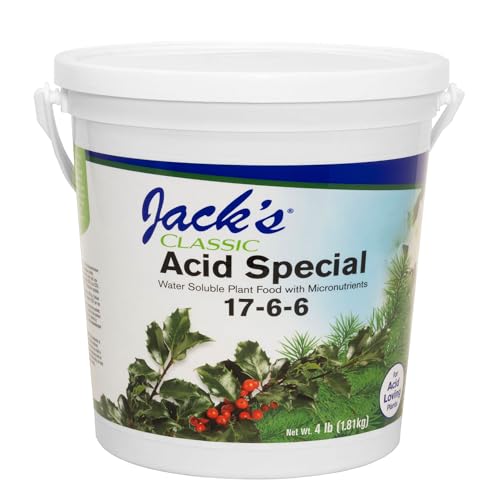
Jack’s Classic Acid Special delivers a potent 17-6-6 analysis with elevated iron and sulfur levels, making it the fastest-acting option for yews showing nitrogen deficiency or yellowing needles. The water-soluble powder mixes into multiple gallons of liquid, and the included measuring spoon ensures accurate dilution — critical because the 17% nitrogen concentration can burn roots if over-applied. Users who need to green up a hedge quickly before a home sale or landscaping inspection will see noticeable color improvement within seven days.
Real-world reports from blueberry and spruce growers confirm that the sulfur content effectively lowers soil pH over sequential applications, which directly benefits yews in alkaline regions. The powder format also allows foliar feeding, useful when soil conditions are too cold or wet for granule uptake. Jack’s Classic has a longstanding reputation among nursery professionals, and the micronutrient package (including manganese, zinc, and copper) supports overall immune function against fungal stress.
Because this is a synthetic salt-based fertilizer, repeated use without organic amendments can degrade soil microbiology over time. For a single corrective feeding in late spring, it is unmatched. For year-round maintenance, consider alternating with an organic 4-3-4 to keep soil biology balanced.
What works
- High 17-6-6 ratio reverses chlorosis fast
- Sulfur content actively acidifies alkaline soil
- Foliar application possible for cold-soil conditions
What doesn’t
- Synthetic salts can harm soil microbes long term
- Requires precise mixing to avoid root burn
4. Jobe’s 01661 Evergreen Spikes 13-3-4

Jobe’s Evergreen Spikes provide the ultimate convenience for yew owners who want to fertilize once and forget about it for three months. The 13-3-4 formulation delivers a solid nitrogen punch without the risk of surface runoff that granular products face on sloped properties. Each spike is driven into the soil around the drip line, and the slow-release coating prevents the nitrogen surge that can cause burning in young or stressed yews. The 15-spike pack covers 5 to 7 medium-sized shrubs, making it ideal for foundation plantings.
Verified buyers praise the spikes for reviving neglected evergreens without the hassle of mixing or measuring. The plastic cap that stays on the top of each spike allows you to tap it into dry or hard soil using a hammer without damaging the spike body — a practical design detail that matters when your yew bed is near a walkway with compacted ground. The decomposition rate holds up well even in wet climates, providing consistent nutrition through the summer growing season.
The 13-3-4 ratio is nitrogen-heavy but lacks significant acidifying sulfur, so if your soil pH is above 7.0, you will need a separate soil acidifier to prevent iron chlorosis. Additionally, spikes concentrate nutrients in a smaller root zone compared to broadcast granules, which can lead to uneven growth in larger yew hedges spaced widely apart.
What works
- Zero measuring — drive in and leave
- Release lasts up to 90 days without reapplication
- Plastic cap protects spike during hammer installation
What doesn’t
- No sulfur for active soil acidification
- Nutrients concentrate in spike zone, not uniform spread
5. FoxFarm Happy Frog Acid Loving 4 lb

FoxFarm Happy Frog Acid Loving Fertilizer stands apart because it combines gentle slow-release nutrition with beneficial mycorrhizal fungi and soil microbes specifically selected for low-pH environments. For container-grown yews or recently transplanted specimens, the microbial inoculant helps establish a robust root-to-fungi network that improves water uptake and nutrient cycling — critical when root space is limited. The 4-pound bag is compact but highly concentrated; the recommended mixing rate of 1/16 cup per gallon stretches it across multiple feedings for a small yew collection.
User reviews frequently mention that container plants — including gardenias and blueberries — responded with noticeable bud development within 10 days, indicating that the formulation is biologically active rather than just chemically balanced. The OMRI listing makes it a reliable choice for organic gardeners who want to avoid synthetic salts while still providing targeted acid-lover nutrition. The powder texture mixes easily into potting soil or topdresses around the drip line.
The NPK ratio is not disclosed prominently on the packaging, which can frustrate buyers who want exact numeric comparisons. Also, the 4-pound size runs out quickly if you are feeding multiple large in-ground yew hedges. For small gardens, containers, or first-year transplants, the microbial benefit justifies the premium per-pound cost.
What works
- Mycorrhizae improve transplant survival in container yews
- OMRI-listed for organic production
- Gentle formula reduces burn risk on young roots
What doesn’t
- NPK not printed prominently for easy comparison
- Small 4 lb bag insufficient for large hedge lines
6. TPS Nutrients Arborvitae Liquid 32 oz
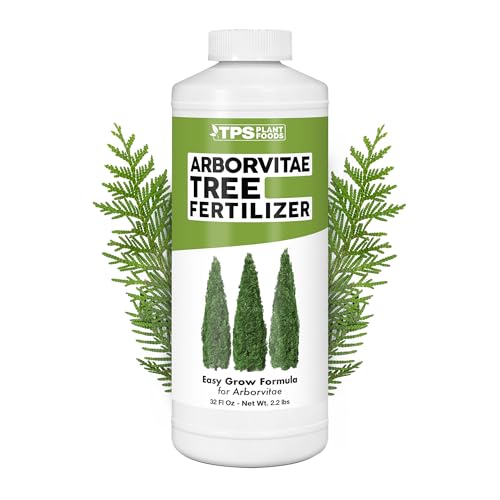
When a yew hedge turns brownish or starts dropping inner needles, a liquid rescue feed provides the fastest path to recovery. TPS Nutrients Arborvitae Liquid delivers a balanced concentrate at 2 tablespoons per gallon, designed for immediate foliar and root absorption. The 32-ounce bottle makes up to 32 gallons of feed, and the liquid formulation works well with hose-end sprayers for large hedges. This product is especially effective when soil temperatures are still cool in early spring and granular products break down slowly.
Real-world reports describe how arborvitae that had turned brown around a pool were restored to vibrant green within two weeks using biweekly applications. Yews in sandy soil — where nutrients leach quickly — benefit from the frequent liquid schedule because it maintains consistent availability without accumulating salts. The product is manufactured in the USA and uses a clearly labeled measuring guideline that reduces the guesswork that often leads to over-fertilization with liquid concentrates.
Because liquid fertilizers require reapplication every 7 to 14 days, they demand more labor than spikes or slow-release granules. If you have a large yew hedge, the ongoing mixing and spraying commitment can become tedious. This is a rescue and seasonal kickstart tool, not a low-maintenance season-long solution.
What works
- Available nitrogen corrects chlorosis within days
- Compatible with hose-end sprayers for large areas
- Ideal for fast-draining sandy soils
What doesn’t
- Requires reapplication every 1-2 weeks
- More labor-intensive than granular or spike options
7. Miracle-Gro Azalea/Camellia/Rhododendron 5 lb

Miracle-Gro’s water-soluble acid-lover formula is the most widely available and budget-friendly entry point for feeding yews, with a 5-pound bag that mixes into dozens of gallons of liquid feed. The product instantly dissolves in water and can be applied every 7 to 14 days, making it accessible for gardeners who already own a hose-end sprayer or watering can. Its formulation targets acid-loving plants broadly, so yews will green up reliably as long as the soil pH is not extremely high.
Long-term users report that it works effectively on rhododendrons, azaleas, and hollies, indicating that the acidifying chemistry is present enough to support most acid-lovers. The resealable bag with Velcro closure is a practical upgrade over previous packaging — it keeps the powder dry between uses as long as you wipe the closure channel clean. For a new yew planting or a tight budget, this product provides a solid baseline without requiring a significant financial commitment.
The synthetic salt base means that exclusive, long-term use can suppress beneficial soil fungi and lead to a dependency on frequent reapplication. The 30-10-10 ratio (as listed for the standard version) is extremely nitrogen-heavy — using it at the recommended rate on yews in heavy clay soil can produce weak, fleshy growth that attracts pests. Diluting slightly or alternating with an organic granular feed helps mitigate this risk.
What works
- Extremely affordable for the volume of feed produced
- Works with hose-end sprayers for fast application
- Readily available at most garden retailers
What doesn’t
- Synthetic salts can degrade soil microbiology over time
- High nitrogen ratio risks weak growth if over-applied
Hardware & Specs Guide
NPK Ratio Meaning for Yews
The three numbers on any fertilizer bag represent Nitrogen (N), Phosphorus (P), and Potassium (K) by percentage weight. Nitrogen drives green needle growth, phosphorus supports root development, and potassium strengthens cell walls against drought and cold. For yews, a ratio with a higher first number (13–17% N) accelerates foliage density, while balanced 4-3-4 formulas provide steady, low-risk nutrition. Always look for sulfur inclusion, as yews require acidic conditions to access soil iron.
Water-Soluble vs. Granular Release
Water-soluble powders dissolve instantly and provide a rapid nitrogen spike that greens yews within days, but they require weekly reapplication and can leach past the root zone in sandy soil. Granular organic products like 4-3-4 formulas break down slowly via soil microbes, delivering nutrients over 6–8 weeks without causing tender growth late in the season. Fertilizer spikes occupy a middle ground, releasing steadily over 60–90 days through a polymer coating that activates with soil moisture.
FAQ
How often should I fertilize established yews?
Can I use a general all-purpose fertilizer on yews?
What are the signs of over-fertilizing a yew?
Final Thoughts: The Verdict
For most gardeners, the fertilizer for yews winner is the Espoma Organic Holly-Tone 4-3-4 because it provides the acidifying sulfur, slow organic release, and large bag size needed to maintain healthy hedges without root burn. If you want rapid greening for a stressed specimen, grab the Jack’s Classic 17-6-6 Acid Special. And for maximum convenience with zero measuring, nothing beats the Jobe’s 01661 Evergreen Spikes.