
A vegetable garden is only as productive as the soil it grows in, and the right granular or liquid feed determines whether your tomatoes swell with juice or stay green and small. Sorting through NPK ratios, organic certifications, and slow-release mechanisms can feel overwhelming, but the payoff — a harvest measured in pounds rather than handfuls — makes the research worth every minute.
I’m Rikta — the co-founder and writer behind Lawn Gear Lab. I’ve spent countless hours cross-referencing label guarantees, studying how different nutrient profiles affect fruiting versus leaf growth, and analyzing thousands of verified owner experiences to separate the formulas that deliver from the ones that just fill a bag.
Whether you grow in raised beds, containers, or traditional rows, finding the best fertilizer for vegetable garden use means matching the nitrogen-phosphorus-potassium balance to your crop’s specific growth stage and your soil’s existing condition.
How To Choose The Best Fertilizer For Vegetable Garden
Selecting a vegetable fertilizer is a matter of matching the product’s nutrient release profile and mineral composition to your crop type and planting method. The most common mistake beginners make is grabbing a high-nitrogen lawn fertilizer that produces lush leaves but zero fruit. Understanding the role of each primary nutrient and the value of secondary elements like calcium and magnesium eliminates that error entirely.
NPK Ratios: Matching Numbers to Crop Phase
Nitrogen fuels leafy green growth, phosphorus drives root establishment and flower formation, and potassium supports overall plant health and fruit ripening. A balanced ratio like 5-10-4 works well for heavy feeders such as tomatoes and peppers because the higher phosphorus number encourages blossom set without excessive foliage. For leafy greens like lettuce and spinach, a formula with a higher first number, such as 20-20-20, supplies the nitrogen needed for rapid leaf expansion.
Organic Certification and Soil Biology
Products listed by the Organic Materials Review Institute (OMRI) guarantee that every ingredient meets organic production standards. Organic granular feeds often contain bone meal, blood meal, feather meal, and kelp, which break down slowly through microbial activity rather than dissolving instantly. This slow-release mechanism reduces the risk of root burn and builds long-term soil fertility, though it requires warmer soil temperatures for the microbes to become active.
Calcium Content and Blossom End Rot Prevention
Blossom end rot — the dark, sunken spot on the bottom of tomatoes and peppers — is caused by a calcium deficiency at the fruit tip, often triggered by inconsistent watering. Fertilizers that include a calcium source, such as the 5-7-3 Happy Frog blend, directly address this issue by making calcium available during the critical early fruiting stage. Gardeners in humid climates or those who use drip irrigation should prioritize a formula with added calcium.
Quick Comparison
On smaller screens, swipe sideways to see the full table.
| Model | Category | Best For | Key Spec | Amazon |
|---|---|---|---|---|
| FoxFarm Happy Frog Tomato & Vegetable | Organic Granules | Heavy feeders needing calcium | NPK 5-7-3 + Calcium | Amazon |
| Trifecta+ 5-10-4 | Organic Granules | Pre-planting & side-dressing | NPK 5-10-4 | Amazon |
| Espoma Garden-tone 3-4-4 | Organic Granules | Monthly feeding for rows | NPK 3-4-4 + 5% Calcium | Amazon |
| Down To Earth 4-6-2 | Organic Granules | Gentle all-purpose feeding | NPK 4-6-2 | Amazon |
| FoxFarm Happy Frog All Purpose 6-4-5 | Organic Granules | Ornamentals & mixed beds | NPK 6-4-5 + Microbes | Amazon |
| GS Plant Foods 20-20-20 | Water-Soluble | Quick green-up & containers | NPK 20-20-20 | Amazon |
| Great Big Roses Liquid Booster | Liquid Concentrate | Flowering booster for perennials | 70 Trace Minerals | Amazon |
In‑Depth Reviews
1. FoxFarm Happy Frog Tomato & Vegetable Fertilizer 5-7-3

The FoxFarm Happy Frog Tomato & Vegetable formula is engineered specifically for vigorous feeders, and its 5-7-3 NPK profile reflects that focus. The higher middle number — phosphorus — drives robust flower formation and fruit set, while the inclusion of calcium directly counters blossom end rot, a frustration that sinks many tomato harvests. The 4-pound bag is enough for several raised beds or a dozen container plants through a full growing season.
Gardeners report that this granular feed works particularly well when mixed into the soil at planting time and reapplied as a side-dress during the early fruiting stage. The mycorrhizal fungi included in the blend enhance root efficiency, helping plants extract water and nutrients more effectively during hot, dry spells. Several verified buyers note that their plants showed visible improvement within days of the first application.
The bag carries an OMRI listing, so it meets organic production standards, and users consistently praise the lack of strong fish-based odor compared to other organic fertilizers. The main drawback is the price per pound — this is a premium product, and covering a very large in-ground garden will require multiple bags.
What works
- Calcium prevents blossom end rot effectively
- Mycorrhizal fungi boost root efficiency
- Low odor compared to fish-based organics
What doesn’t
- Price per pound is higher than comparable blends
- 4-pound bag goes fast for large gardens
2. Trifecta+ 5-10-4 Organic All Purpose Vegetable Fertilizer

The Trifecta+ blend uses a 5-10-4 ratio that is heavily weighted toward phosphorus, making it a strong choice for pre-planting soil preparation and early-season application for fruiting crops. Anecdotal evidence from a verified buyer who harvested 148 jalapeños from a single plant underscores how well this formula supports heavy fruit production. The granular form allows for even distribution across raised beds and rows.
Developed in collaboration with the MI Gardener community, this fertilizer has built a loyal following among gardeners who value transparency and a straightforward nutrient profile. It includes a wider range of micronutrients than many competitors in the same price tier, and users consistently mention that it revived struggling transplants within two weeks. The 6-pound bag offers solid coverage for a medium-sized garden.
One area where the Trifecta+ particularly shines is in soil conditioning — reviewers note improved tilth and microbial activity after just one season of use. On the downside, the bag does not include added calcium, so gardeners prone to blossom end rot should either supplement or pair this with a calcium amendment.
What works
- High phosphorus drives heavy fruit set
- Includes broad micronutrient profile
- Excellent soil conditioning over time
What doesn’t
- No added calcium for blossom end rot prevention
- Some users report strong initial odor
3. Espoma Organic Garden-tone 3-4-4 (2-Pack)

The Espoma Garden-tone 3-4-4 comes as a two-pack, delivering 8 total pounds of organic granular fertilizer at a per-pound cost that rivals bulk-bin options. The Bio-tone formula includes beneficial microbes that colonize the root zone and assist in nutrient breakdown, and the 5% calcium content offers built-in protection against blossom end rot. This product is formulated specifically for both cool-season crops like kale and warm-season staples like squash.
Gardener feedback highlights the forgiving nature of the 3-4-4 ratio — even heavy-handed application rarely causes root burn, making it suitable for beginners who are still calibrating their feeding schedule. One verified reviewer in zone 10b reported a 400-pound tomato yield using Garden-tone as the primary feed, which speaks to its efficacy under hot, intense growing conditions. The monthly reapplication schedule is easy to remember and fits a standard growing calendar.
The main trade-off is the lower nitrogen number: plants that need a quick green-up, such as leafy greens in a short season, may benefit from a supplemental nitrogen source. Additionally, the product has a noticeable earthy odor that some indoor gardeners find unpleasant, though it dissipates quickly outdoors.
What works
- Very forgiving ratio reduces burn risk
- Two-pack provides excellent value per pound
- Calcium helps prevent blossom end rot
What doesn’t
- Low nitrogen may require supplement for greens
- Noticeable odor during application
4. Down To Earth All Natural 4-6-2 Tomato & Vegetable Mix

The Down To Earth 4-6-2 mix positions itself as a gentle, non-burning all-purpose feed that works across vegetables, herbs, flowers, and even container plants. It sources its nutrients from fish bone meal, blood meal, feather meal, rock phosphate, langbeinite, greensand, humates, and kelp meal — a diversified organic base that feeds the soil biology as much as the plant. The 5-pound box provides solid coverage for a moderate garden area.
Verified reviews particularly appreciate how this formula revived pale, flimsy tomato plants within two weeks after application. The OMRI listing gives organic growers confidence that every ingredient meets production standards, and the inclusion of greensand adds a slow-release potassium source that supports fruit ripening into late season. Gardeners who prefer to mix their own amendments note that this blend simplifies the process by combining multiple inputs into a single product.
The primary downside is the odor — the fish and blood meal base produces a strong smell that lingers for several days after application, though it fades once worked into the soil. Some users also wish the bag were resealable, as the box design can lead to spills during storage.
What works
- Diverse organic ingredient base feeds soil microbes
- Gentle formula reduces risk of burning
- OMRI listed for organic production
What doesn’t
- Strong fish-based odor for several days
- Box packaging is not resealable
5. FoxFarm Happy Frog All Purpose 6-4-5

The FoxFarm Happy Frog All Purpose formula shifts to a 6-4-5 profile that is slightly higher in nitrogen, making it a better fit for leafy vegetables, ornamentals, and mixed beds where both flowers and foliage are desired. The inclusion of beneficial soil microbes and mycorrhizal fungi supports long-term root health, and the gentle slow-release action means less frequent application. The 4-pound bag is compact but potent — half a bag can cover an entire season for a small garden.
Users consistently describe this fertilizer as “explosive growth” in a bag, with reports of yellow tomato and zucchini plants turning dark green within a week of application. The OMRI listing adds organic credibility, and the dry granular format is easy to sprinkle evenly without specialized equipment. Several reviewers mention using this alongside worm castings for a complete organic feeding regimen.
The main complaint revolves around the pungent manure-like smell, which is significantly stronger than the Tomato & Vegetable version from the same brand. Indoor applications require open windows, and the smell can attract flies if the granules are left exposed. The price is also on the higher end for a 4-pound bag.
What works
- Fast visible green-up within one week
- Beneficial microbes support root health
- OMRI listed for organic gardening
What doesn’t
- Very strong manure odor during application
- Higher cost per pound than alternative blends
6. GS Plant Foods All Purpose 20-20-20 Water Soluble
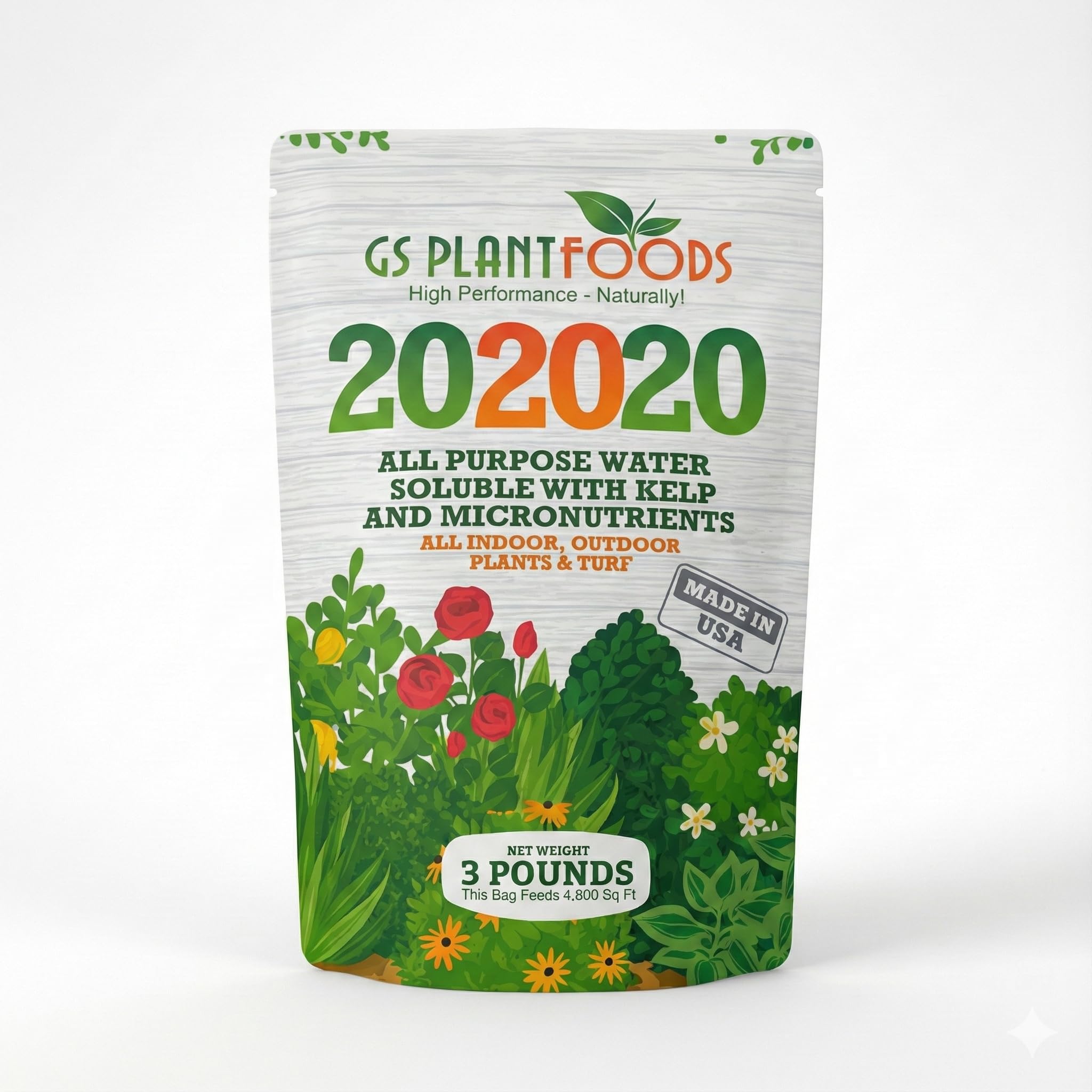
The GS Plant Foods 20-20-20 is a water-soluble synthetic formula designed for rapid nutrient delivery, making it the right tool for correcting visible deficiencies or giving container plants a quick boost. The balanced NPK ratio supplies equal parts nitrogen, phosphorus, and potassium, which works well as a general maintenance feed but is not optimized for fruiting crops that need more phosphorus. The 3-pound bag covers up to 4,800 square feet when used as directed.
Chelated micronutrients — including iron, manganese, and zinc — ensure that nutrients remain available to plants across a wide pH range, and the inclusion of kelp (Ascophyllum nodosum) adds a natural growth-stimulant component. Verified reviewers note that purple orchid trees showed darker, larger leaves within a week of the first application, demonstrating the solubility advantage. The powder dissolves completely with no residue in watering cans or hose-end sprayers.
The biggest drawback for organic gardeners is that this is not an OMRI-listed product; it combines synthetic NPK salts with kelp extract. Users who strictly adhere to organic practices will need to look elsewhere. Additionally, the 20-20-20 ratio can push excessive foliage growth in tomatoes and peppers if applied too late in the season.
What works
- Dissolves completely with no residue
- Micronutrients remain available across pH ranges
- Excellent for quick correction of deficiencies
What doesn’t
- Not OMRI listed for organic production
- Can push excessive foliage at the expense of fruit
7. Great Big Roses Liquid Fertilizer Booster 1 Gallon
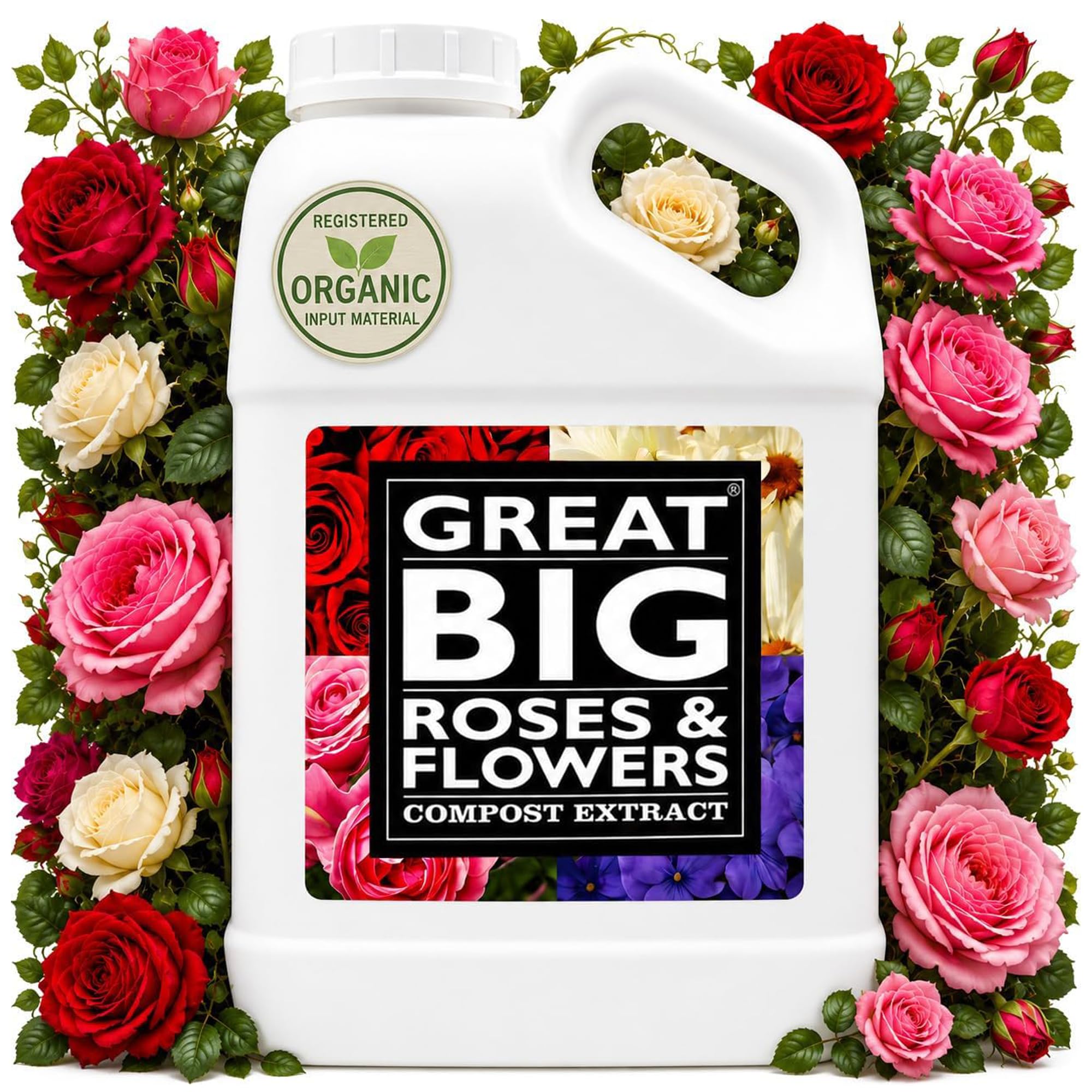
The Great Big Roses Liquid Fertilizer Booster is a concentrated liquid formula that delivers humic acids, seaweed extract, and over 70 chelated trace minerals directly to the root zone. While marketed primarily for roses, its soil-activation properties apply broadly to flowering vegetables and perennials, helping plants unlock nutrients already present in the soil. One gallon makes 32 applications, which covers a full season for most home gardens.
Verified users report dramatic results with rose bushes that had not bloomed in years producing flowers within weeks of the first application. The liquid format allows for precise dosing with a watering can, and the formula works alongside existing organic fertilizers to amplify their effects rather than replace them. Hydrangeas, citrus trees, and seedlings all show improved vigor according to multiple reviews.
The price per gallon is steep relative to granular options, and the jug design — a wide mouth with no measuring marks — makes it easy to spill the viscous concentrate. Some users also note that results for vegetables are less dramatic than for flowering ornamentals, so this is best deployed as a specialty bloom booster rather than a primary feed.
What works
- 70 trace minerals activate soil nutrients
- Works alongside existing organic fertilizers
- 32 applications per gallon for season-long use
What doesn’t
- High cost per gallon for concentrate
- Jug design leads to spills during measuring
Hardware & Specs Guide
NPK Ratio Interpretation
The three numbers on a fertilizer label represent the percentage by weight of nitrogen (N), phosphorus (P), and potassium (K). A 5-10-4 bag contains 5% nitrogen, 10% phosphorus, and 4% potassium. For vegetable gardens, the middle number — phosphorus — is critical for flower and fruit development. Ratios with a higher middle number, such as 5-10-4 or 5-7-3, support heavy fruiting crops like tomatoes, peppers, and squash, while balanced ratios like 20-20-20 are better suited for general maintenance or leafy greens.
Organic Matter and Soil Microbes
Organic fertilizers rely on soil bacteria and fungi to break down complex proteins and minerals into plant-available forms. Products containing mycorrhizal fungi or beneficial soil microbes, such as the FoxFarm Happy Frog line, accelerate this breakdown and improve root efficiency. These biological components are especially valuable in raised beds and container gardens where the native soil microbiome is limited. Look for OMRI listings to verify that all ingredients meet organic production standards.
FAQ
What NPK ratio should I use for tomatoes in a raised bed?
How often should I apply granular fertilizer to my vegetable garden?
Final Thoughts: The Verdict
For most gardeners, the best Fertilizer For Vegetable Garden winner is the FoxFarm Happy Frog Tomato & Vegetable 5-7-3 because its calcium content and mycorrhizal fungi address the two most common vegetable-growing frustrations — blossom end rot and weak root systems — in one balanced package. If you want a budget-friendly monthly feed with a gentle ratio, grab the Espoma Garden-tone 3-4-4. And for rapid correction of nutrient deficiencies in containers or leafy greens, nothing beats the GS Plant Foods 20-20-20 water-soluble formula.