
Specs are compiled from manufacturer listings and verified buyer reviews and can change over time — please confirm the key details on the product page before buying.
Growing a tomato in a pot means the soil holds fewer nutrients, and every time you water, some wash out the bottom. A gentle, steady-release fertilizer is the only way to feed your plant without burning its roots and still get a heavy harvest. This guide picks five formulas for container tomatoes based on their published NPK (nitrogen-phosphorus-potassium) ratios, ingredient lists, and patterns from buyer reviews.
I’m Rikta — the founder and writer behind Lawn Gear Lab. This guide is built by comparing the manufacturers’ published specifications and the patterns across verified customer reviews, so you get each pick’s real strengths and trade-offs instead of marketing spin.
Each fertilizer here is made for tomatoes and suits container use. You will see the exact NPK numbers, weights, and form factors to match your potting style. Here is a direct look at the best fertilizer for tomatoes in pots and which one fits your routine.
Quick Picks
- FoxFarm Happy Frog Tomato & Vegetable Fertilizer – Vegetable Fertilizer for Vigorous Feeders, 5-7-3 Blend with Calcium & Mycorrhizal Fungi, Supports Abundant Fruit Development, 4 lb — Best Overall
- Miracle-Gro Shake ‘N Feed Tomato, Fruit and Vegetable Plant Food – Fertilizer for Vegetable Gardens, for In-Ground and Container Plants, Feeds up to 3 Months, 4.5 lb. — Good to Know
- Down To Earth All Natural Fertilizers Organic All Purpose Tomato & Vegetable Mix – Plant Food for Tomatoes, Peppers, Herbs and Flowers 4-6-2, 5 lb — Best Value
- Bloom City Tomato & Veggie Plant Food – Liquid Fertilizer for Bigger Harvests, Stronger Roots & Vigorous Growth, 32 oz — Good to Know
- Tomato Fertilizer – Liquid Plant Food for Bigger Harvests, Stronger Plants & Healthy Growth, 32 oz — Good to Know
How To Choose The Best Fertilizer For Tomatoes In Pots
A pot holds a small amount of soil that gets watered often, which washes nutrients out fast. The right fertilizer delivers steady food without burning roots or building up salts.
NPK ratio — the three numbers that matter
The first number (nitrogen) powers leafy growth; the second (phosphorus) supports flowers and fruit; the third (potassium) strengthens overall health. For potted tomatoes, a balanced ratio — such as a 10:5:15 or a 4:6:2 — keeps the plant from getting all leaves and no fruit.
Granular vs liquid — how you want to feed
Granular fertilizers like the Miracle-Gro Shake ‘N Feed release nutrients slowly over weeks (up to 3 months for that one). Liquid options like the TPS Nutrients or Bloom City formulas require mixing with water and feeding every week or two, but they give you more control and act faster when a plant looks pale.
Calcium content — the blossom end rot defense
Container tomatoes are prone to blossom end rot (a black, sunken spot on the bottom of the fruit) because inconsistent watering disrupts calcium uptake. A fertilizer that contains calcium — like the Miracle-Gro (listed as formulated with calcium) or the FoxFarm Happy Frog (contains calcium to help prevent blossom end rot) — gives you a buffer against that problem.
Quick Comparison
On smaller screens, swipe sideways to see the full table.
| Model | Best For | NPK Ratio | Form | Weight | Amazon |
|---|---|---|---|---|---|
| FoxFarm Happy Frog Tomato & Vegetable Fertilizer | Organic, vigorous feeders | 5:7:3 | Granules | 4 lb | Amazon |
| Miracle-Gro Shake ‘N Feed Tomato, Fruit & Vegetable Plant Food | Set-and-forget convenience | 10:5:15 | Granules | 4.5 lb | Amazon |
| Down To Earth All Natural Fertilizers Organic All Purpose Tomato & Vegetable Mix | Organic ingredient list | 4:6:2 | Granules | 5 lb | Amazon |
| Bloom City Tomato & Veggie Plant Food | Liquid for potted veggies | 2 oz/gal | Liquid | 32 oz | Amazon |
| Tomato Fertilizer – Liquid Plant Food (TPS Nutrients) | Quick green-up after rain | 1:10 | Liquid | 32 oz | Amazon |
In‑Depth Reviews
1. FoxFarm Happy Frog Tomato & Vegetable Fertilizer – Vegetable Fertilizer for Vigorous Feeders, 5-7-3 Blend with Calcium & Mycorrhizal Fungi, Supports Abundant Fruit Development, 4 lb

The 4 lb granular that targets blossoms and roots at the same time.
This bag uses a 5:7:3 ratio — with 7 phosphorus versus the Down To Earth’s 6, so it leans harder into fruit support. It includes calcium to help prevent blossom end rot (black, sunken spots on the bottom of fruit), a common issue when watering fluctuates in containers. Buyers report it “corrected non-producing tomatoes; baby tomatoes appeared days after feeding,” which points to fast results on stalled plants.
Mycorrhizal fungi (beneficial fungi that attach to roots and help them pull more water and nutrients) in the formula help roots work more efficiently in the pot’s limited soil volume, giving container plants a real edge. Unlike the liquid options below, this is a dry granular you mix into the top layer of soil — one application feeds steadily without weekly mixing. One reviewer noted it has “no chemical or fish smell” and called it one of the best dry fertilizers for all veggies.
The all-in-one organic pick: Between the mycorrhizae, calcium, and the 5:7:3 ratio, this covers the three biggest container-tomato issues — weak roots, blossom end rot, and low fruit set — in one bag. The only missing piece is that it comes in a 4 lb bag versus the Down To Earth 5 lb bag, so heavy users with many pots might go through it faster.
Reach for this if: you want a single dry fertilizer that handles blossoms, roots, and calcium in one application and you prefer organic ingredients without a fish smell.
Look elsewhere if: you need the absolute largest bag for the money — the Down To Earth offers 5 lb at a lower price point.
2. Miracle-Gro Shake ‘N Feed Tomato, Fruit and Vegetable Plant Food – Fertilizer for Vegetable Gardens, for In-Ground and Container Plants, Feeds up to 3 Months, 4.5 lb.

The no-mix granular that keeps feeding for three months straight.
With a 10:5:15 ratio, this has the highest nitrogen number of the group — 10 nitrogen versus the Down To Earth’s 4. That extra nitrogen fuels big, dark-green leaves, which helps establish a young plant but means you want to follow the label carefully to avoid overdoing it in a pot. The 4.5 lb box covers up to 128 sq. ft., so a few pots will last most of the season.
Buyers consistently call it “convenient shake-on fertilizer; feeds plants for months.” The granules work into the top 1-3 inches of soil (just lightly work into the soil of established container plants, per the instructions), and you water after applying. It has calcium added, which owners mention helps prevent blossom end rot. Just be aware that one reviewer flagged the risk of over-application, so measure according to label for your pot size.
The set-and-forget champ: A single application every 3 months means you shake it on in spring, then again in midsummer, and that is your feeding schedule done. Perfect for anyone who does not want to mix liquid feeds weekly. But the 10:5:15 ratio is richer than the organic options, so beginners should err on the light side for small pots.
Ideal for: busy gardeners with multiple containers who want a long-lasting, calcium-fortified feed without mixing liquids.
skip it if: you prefer an organic OMRI-listed formula or need precise weekly control over nutrient levels.
3. Down To Earth All Natural Fertilizers Organic All Purpose Tomato & Vegetable Mix – Plant Food for Tomatoes, Peppers, Herbs and Flowers 4-6-2, 5 lb

The mild organic that revived dying plants in two weeks, per buyer reports.
This 5 lb box holds a gentle 4:6:2 NPK — the lowest nitrogen of all five picks here — which makes it very hard to burn roots in a confined pot. It is OMRI-listed (Organic Materials Review Institute — approved for certified organic production), and the ingredients include fish bone meal, blood meal, feather meal, rock phosphate, langbeinite, greensand, humates, and kelp meal. That is a broad mineral lineup that feeds the soil as much as the plant.
At 5 lb versus the FoxFarm’s 4 lb bag, you get more volume per dollar. One buyer mentioned it “revived pale, flimsy tomato plants in two weeks after application,” which suggests the gentle formula works fast even on struggling plants. A few reviewers mention a noticeable smell from the bone and blood meals, but it reportedly dissipates in a few days. The 4:6:2 ratio has 4 nitrogen compared to the Miracle-Gro’s 10:5:15, meaning you can use it more liberally on potted plants without worrying about leaf burn.
What stands out
- Largest bag in the roundup at 5 lb
- OMRI organic with eight natural ingredients
- Very low 4:6:2 ratio is safe for container use
- Proven quick recovery for pale plants
The downsides
- Organic ingredients create a noticeable smell for a few days
- Lower nitrogen means slower leaf growth than the Miracle-Gro
Best for: organic growers who want the largest bag, the gentlest ratio, and an OMRI seal for confidence.
Not for: anyone who needs a fast, heavy nitrogen boost for seedlings — the 4:6:2 is too mild for that job.
4. Bloom City Tomato & Veggie Plant Food – Liquid Fertilizer for Bigger Harvests, Stronger Roots & Vigorous Growth, 32 oz

A simple liquid that matched granular results with less guesswork, according to buyers.
This 32 oz liquid concentrate mixes at 2 oz per gallon of water, and you apply it via watering can or hose sprayer. That makes it one of the easiest formats to control — you can feed every two weeks or adjust strength based on how your plant looks. Bloom City specifically markets it for tomatoes, vegetables, and container use.
One buyer gave a balanced take: “No noticeable difference in yield or size vs. granule food; works equally well,” which means you get the same results as a granular without the up-front soil mixing. Another reviewer with a single plant said “it was so easy to apply and really helped it thrive and produce tons of delicious beefsteak tomatoes!” That is the main appeal of a liquid: fast absorption and no risk of miscalculating a dry measure. The trade-off is that you have to mix and apply every 1-2 weeks, unlike the once-every-3-months Miracle-Gro.
The liquid that keeps up with granules: If you already water your pots regularly, adding this to your watering can takes ten seconds and works just as well as a granular. The only catch is that one buyer felt the value was questionable for the price — a 32 oz bottle will feed one plant for a full season, but multiple pots will go through it faster.
Reach for this if: you want a water-soluble, easy-to-measure liquid that performs at the same level as granular feeds and you do not mind a weekly mixing routine.
Look elsewhere if: you prefer a “low-maintenance” granular that feeds for months — this requires regular attention.
5. Tomato Fertilizer – Liquid Plant Food for Bigger Harvests, Stronger Plants & Healthy Growth, 32 oz
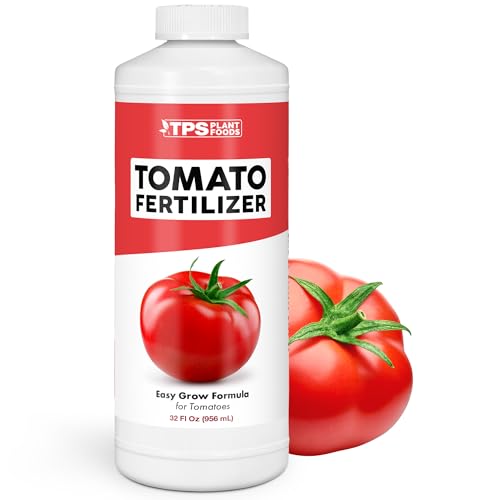
The fast-acting liquid that brought yellow leaves back to green after heavy rain, per one buyer.
This liquid from TPS Nutrients uses a 1:10 mixing ratio (1 part fertilizer to 10 parts water), which makes it a very mild feed — safe even if you pour a bit extra around the base of a container tomato. The brand targets strong flowering and fruit set for plants in gardens or containers.
One buyer described a very specific scenario: “With heavy rains plants were yellowing. This brought the green back.” That is exactly the kind of quick correction a liquid can deliver that a slow-release granular cannot — when heavy watering leaches nutrients out, a liquid feed gets right into the roots within hours. Another reviewer said it is “easy to mix and use” and that their plants “look better since starting use.” The bottle is 32 oz (same volume as the Bloom City), but the 1:10 dilution ratio is more concentrated than the Bloom City’s 2 oz per gallon — so one bottle might go further per feeding cycle.
What works
- 1:10 dilution is gentle and safe for container plants
- Proven to reverse yellowing caused by heavy rain
- Easy mixing with no measuring fuss
The limitation
- NPK ratio is not published as a standard three-number format, so comparing exact nutrient content to granular options is less straightforward
- Liquid requires regular weekly or bi-weekly application
Best for: growers who face heavy rain or overwatering issues and need a mild, fast-recovery liquid that will not stress the roots.
pass on it if: you want a published NPK ratio in the standard 3-number format to compare apples-to-apples with other fertilizers.
Understanding the Specs
NPK ratio
Those three numbers on the bag (like 10:5:15 or 4:6:2) tell you the percentage of nitrogen, phosphorus, and potassium by weight. For potted tomatoes, you want the middle number (phosphorus) to be decently high because it supports flower and fruit development. The first number (nitrogen) should not be too high, or you get a giant leafy plant with few tomatoes — the Miracle-Gro at 10 is the highest here, so use it carefully on small pots.
Granules vs liquid
Granular fertilizers are mixed into the top layer of soil and release nutrients slowly over weeks or months. They are low-effort but harder to adjust mid-season. Liquid fertilizers are diluted in water and applied directly to the soil, giving you faster control — useful if a plant shows a deficiency (like yellowing leaves after heavy rain) and you need a quick correction. For container tomatoes, both work; the choice depends on how often you want to feed.
Calcium for blossom end rot
Blossom end rot shows up as a black, sunken spot on the bottom of the fruit. It happens when calcium delivery to the fruit is interrupted by inconsistent watering. A fertilizer that contains calcium, like the FoxFarm Happy Frog (calcium to help prevent blossom end rot) or the Miracle-Gro (formulated with calcium), gives the plant a steady calcium source even when watering gets irregular — very useful in pots that dry out faster than garden beds.
Organic vs synthetic
Organic fertilizers like the Down To Earth (OMRI-listed) rely on natural ingredients like bone meal and kelp to feed soil microbes, which in turn feed the plant. They work slower but improve soil structure over time. Synthetic fertilizers like the Miracle-Gro deliver nutrients in a form the plant can use immediately, which means faster green-up but no long-term soil benefit. For containers, where you replace the soil each season anyway, either is fine — pick based on whether you value organic certification or rapid visible results.
FAQ
Can I use a regular vegetable fertilizer on tomatoes in pots?
How often should I fertilize potted tomatoes?
What happens if I over-fertilize my container tomato?
Is liquid or granular fertilizer better for pots?
Does OMRI-listed mean it is safe for organic tomato growing?
Why do potted tomatoes get blossom end rot?
Can I mix granular fertilizer into potting mix before planting?
How much fertilizer does one tomato plant in a pot need?
Will these fertilizers work for other container vegetables too?
Should I stop fertilizing when tomatoes start ripening?
Final Thoughts: The Verdict
Across the board, the best fertilizer for tomatoes in pots is the FoxFarm Happy Frog Tomato & Vegetable Fertilizer because it combines mycorrhizal fungi for root efficiency, calcium for blossom end rot prevention, and a 5:7:3 ratio that supports fruit without overwhelming a pot with nitrogen. If you prefer set-and-forget convenience with a single application every three months, grab the Miracle-Gro Shake ‘N Feed. And for organic growers who want the largest bag with an OMRI seal and the gentlest NPK ratio, the Down To Earth All Natural Tomato & Vegetable Mix gives you 5 lb of material and a proven track record of reviving struggling plants.
How We Picked
We do not accept paid placement, and we did not hands-on test every unit. Instead, we match each pick to a real buyer and use-case by comparing the manufacturers’ published specifications against the patterns in verified customer reviews — so you get each pick’s real strengths and trade-offs instead of marketing copy.
Sources & Methodology
Specifications: manufacturer listings and product documentation. Review insights: verified customer reviews, as of July 2026. Pricing: not shown on this page (it changes often); check the current price via the retailer link.
As an Amazon Associate, Lawn Gear Lab earns from qualifying purchases. This does not affect which products we feature.