
Specs are compiled from manufacturer listings and verified buyer reviews and can change over time — please confirm the key details on the product page before buying.
You know the feeling — green vines towering but fruit that never blushes, or peppers that stay small and tough. The difference between a heartbreaking harvest and a backyard full of sweet, heavy fruit is what you feed them when they need it most. Finding the right mix for two different plants that grow side-by-side but need slightly different things is the real trick.
I’m Rikta — the founder and writer behind Lawn Gear Lab. This guide is built by comparing the manufacturers’ published specifications and the patterns across verified customer reviews, so you get each pick’s real strengths and trade-offs instead of marketing spin.
I have looked at seven of the best options on the market to help you decide which top fertilizer for tomatoes and peppers can turn your garden into the one the neighbors always stop to compliment.
Quick Picks
- FoxFarm Happy Frog Tomato & Vegetable Fertilizer — Best Overall
- Cz Garden Supply 5-10-10 Tomato & Vegetable Fertilizer — Super Bloom
- Espoma Organic Garden-tone 3-4-4 (Pack of 2) — Two-Bag Value
- Down To Earth All Natural 4-6-2 Tomato & Vegetable Mix — Soil Builder
- Greenway Biotech Tomato Fertilizer 4-18-38 Powder — Hydroponic Power
- Bloom City Tomato & Veggie Plant Food Liquid — Container Quick-Feed
- Growth Technology GT Chilli Focus Liquid — Specialist Feed
How To Choose The Best Fertilizer For Tomatoes And Peppers
Tomatoes and peppers are heavy feeders — they pull a lot of nutrients from the soil to grow leaves, flowers, and fruit. But they also have slightly different preferences: tomatoes need more calcium to prevent blossom end rot, while peppers respond strongly to phosphorus for flower set. The right fertilizer balances these needs without overdoing it on nitrogen, which sends the plant into leafy overdrive instead of producing fruit.
Read the N-P-K numbers
The three numbers on the bag — for example, 5-10-10 — tell you the percentage of nitrogen (N), phosphorus (P), and potassium (K). Nitrogen fuels leafy growth. Phosphorus supports roots, flowers, and fruit. Potassium improves overall plant health and disease resistance. For tomatoes and peppers, you want a fertilizer with a higher phosphorus and potassium ratio relative to nitrogen, especially once the plants start flowering. A balanced all-purpose like 4-6-2 works at planting time, but a bloom-focused 5-10-10 or 2-8-4 is better mid-season.
Granular vs. liquid: Which fits your routine?
Granular fertilizers are slow-release — you sprinkle them on the soil and water in, and they feed the plant over weeks. They take less effort and are harder to mess up since they release nutrients gradually. Liquid fertilizers work faster; you mix them with water and apply directly, so the plant gets a quick boost. Liquids are great for fixing a deficiency right away or for container plants that drain quickly and need more frequent feeding. The trade-off is you have to remember to apply every week or two, while granules can last a whole month.
Look for organic ingredients and added micronutrients
Feeding the soil is just as important as feeding the plant. Organic fertilizers like fish bone meal, kelp meal, and feather meal improve soil structure and microbial activity over time, which makes nutrients more available to the roots. Ingredients like calcium, mycorrhizal fungi, or chelated iron can be the difference between a good crop and a great one — especially for peppers, which are prone to blossom end rot without enough calcium, and for tomatoes, which need steady micronutrients for flavor development.
Quick Comparison
| Model | Best For | N-P-K Ratio | Form | Weight | Amazon |
|---|---|---|---|---|---|
| FoxFarm Happy Frog | Fruit development & rot prevention | 5-7-3 | Granules | 4 lb | Amazon |
| Greenway Biotech 4-18-38 | Hydroponics & high-potassium feeding | 4-18-38 | Powder | 1 lb | Amazon |
| Espoma Garden-tone | Organic gardening (two-pack value) | 3-4-4 | Granules | 4 lb (2 bags) | Amazon |
| Down To Earth 4-6-2 | Gentle all-purpose feeding | 4-6-2 | Granules | 5 lb | Amazon |
| Cz Garden 5-10-10 | High-phosphorus fruiting | 5-10-10 | Granules | 4 lb | Amazon |
| Bloom City Liquid | Quick liquid boost for containers | Unlisted | Liquid | 32 oz | Amazon |
| Growth Technology Chilli Focus | Hydroponics & indoor peppers | Unlisted | Liquid | 8.5 fl oz | Amazon |
In‑Depth Reviews
1. FoxFarm Happy Frog Tomato & Vegetable Fertilizer

A granular mix that pushes fruit growth and prevents blossom end rot — no second-guessing needed.
This bag earns the top spot because of its 5-7-3 N-P-K ratio, which gives you more phosphorus (7) than nitrogen (5). That shift is exactly what your tomato and pepper plants need once flowers and fruit start forming, so energy goes into the harvest, not just leaves. Buyers report that “Fox Farm produces bumper tomato crops when blended with Ocean Forest soil, perlite, and coco coir.” The results come from more than just the big three numbers. This 4 lb bag also contains calcium to prevent blossom end rot (the dark, sunken spot on the bottom of fruit) and mycorrhizal fungi — a beneficial fungus that attaches to roots and helps the plant pull more water and nutrients from the soil.
Unlike a basic granular feed, the Happy Frog formula is designed for vigorous feeders — plants that demand a lot of food to perform. One reviewer noted their tiny cherry tomato sprig turned into a “tomato-producing tree” after using it. The granules have no strong chemical or fish smell, which makes it more pleasant to work with compared to some organic blends. At 4 lb, it covers a full season for a medium-sized backyard garden without needing to reapply every week.
The trade-off is the price point — you are paying a premium for a targeted blend over a plain all-purpose bag. If you are growing in good soil and just need a basic seasonal boost, a simpler fertilizer may be all you need. But for growers pushing for heavy yields, the calcium and fungi make this a smarter long-term investment.
Why it earns the top spot
- Calcium helps stop blossom end rot before it starts
- Mycorrhizal fungi improve root efficiency for better nutrient uptake
- No strong fish or chemical odor when applying
What to watch for
- More expensive per pound than general-purpose organic granules
- Needs mixing with soil or existing fertilizer for best results
Best for committed growers: This pick shines for anyone who wants big, healthy fruit and does not want to worry about blossom end rot later in the season.
Consider a simpler option if: Your garden soil is already rich in organic matter and you just need a basic maintenance feed.
2. Cz Garden Supply 5-10-10 Tomato & Vegetable Fertilizer

This high-phosphorus (10) granular feed pushes tomatoes and peppers into peak production dramatically more than the FoxFarm 5-7-3.
Its 5-10-10 N-P-K formula delivers twice as much phosphorus and potassium as nitrogen — exactly what you need to shift your plants from leaf growth to heavy fruit set. One buyer mentioned that “the tomato plants would grow huge, green leaves, lots of fruit,” and the lack of chemical smell is a bonus when you are working in the garden. The 2% iron in the blend also helps prevent yellowing leaves — a common sign of iron deficiency in container plants or alkaline soil.
The resealable pouch is a thoughtful detail that the FoxFarm bag does not offer: you can pour out what you need and seal the rest, keeping the granules dry and locked tight for next season. Application is simple — reviewers mention using a spoonful around the drip line after watering, once every two weeks during fruiting. One long-time user shared that they have used it on their vegetables for years and it has “never burned my plants” as long as you follow the clear directions.
The catch is the bag’s weight: at 4 lb, you get a quarter less product than the Down To Earth pick’s 5 lb option, yet the price is similar. For a large garden with multiple rows of peppers and tomatoes, you may need two bags for the full season. It is best suited for mid-season feeding when plants have already built their leafy frame and you want to shift their energy into fruiting.
What makes it productive
- High phosphorus (10) drives flower and fruit set
- Resealable pouch keeps the granules fresh for next season
- Includes 2% iron to prevent yellow leaves in containers
Keep in mind
- Only 4 lb per bag — smaller than some competitors at the same price
- Best used as a bloom booster, not a sole all-season feed
Reach for this if: Your plants are already leafy green but you want a targeted push to boost flower count and fruit size mid-season.
Look elsewhere if: You want a single fertilizer to use from seedling to harvest without switching products.
3. Espoma Organic Garden-tone 3-4-4 (Pack of 2)

You get two 4 lb bags of a gentle organic fertilizer that feeds the soil while it feeds the plant — a total of 8 lb for the price of most singles.
Its 3-4-4 N-P-K formula is lower in nitrogen than the FoxFarm 5-7-3, which reduces the risk of burning your plants if you accidentally over-apply — a point several reviewers mention as a reason they stick with it season after season. The blend includes 5% calcium, which rivals the FoxFarm pick for blossom end rot prevention, plus Espoma’s proprietary Bio-tone formula (a mix of beneficial microbes and organic compounds that help roots absorb nutrients).
This fertilizer is approved for organic production, so you can use it with confidence if you are trying to keep your garden chemical-free. It works on both cool-season greens (kale, lettuce) and warm-season crops like tomatoes, peppers, and squash, making it a versatile single-bag solution for a diverse garden bed. One seasoned gardener said Espoma products have been a “standout” and noted that “after using Espoma products for the past year, my garden has thanked me by the show of growth, blooms and beauty.”
The main drawback is the lower phosphorus content (4) compared to the fruit-focused picks like the Cz Garden 5-10-10. If your soil is already decent and you want a steady, gentle feed all season long, this works beautifully. But if your tomatoes are lagging on flower production, you may want to supplement with a bloom booster later in the season to get the phosphorus numbers up.
Why this packs value
- Two 4 lb bags for the price of one from many competitors
- 5% calcium helps prevent blossom end rot
- Approved for organic production; Bio-tone microbes improve soil health
What holds it back
- Lower phosphorus (4) than dedicated bloom fertilizers
- Has a noticeable organic smell, per some buyers
Best for organic gardeners: If you want an easy, forgiving feed that builds soil health and covers a full season for a mixed vegetable patch, this two-pack is tough to top.
skip it if: You are specifically looking for a high-phosphorus bloom formula for poor soil that needs a stronger push.
4. Down To Earth All Natural 4-6-2 Tomato & Vegetable Mix

A 5 lb box of organic OMRI-listed granules that revived one buyer’s pale tomato plants in two weeks by feeding the soil first.
At 5 lb, this box gives you a full pound more product than most competitors in the same price tier. The 4-6-2 N-P-K ratio is a gentle all-purpose number that works well at transplant time and throughout the growing season. One owner reported that it “revived pale, flimsy tomato plants within two weeks after application,” which speaks to the quality of the ingredients: fish bone meal, blood meal, feather meal, rock phosphate, langbeinite, greensand, humates, and kelp meal.
What sets this mix apart from simpler blends is the diversity of organic ingredients. Each source provides a different set of micronutrients and soil-building compounds — kelp meal adds trace minerals and growth hormones, humates improve nutrient retention, and greensand adds potassium that releases slowly over the season. It is designed to feed the microbial life in the soil, not just the plant, which leads to better long-term fertility. Owners mention that the “unpleasant smell dissipates in days,” so the initial odor from the fish bone and blood meal is temporary.
The trade-off is the 4-6-2 ratio: it has less phosphorus than the Cz Garden 5-10-10, so if your plants are already established and you want a heavy bloom push, this is more of a general maintenance feed. It works exceptionally well as a starter fertilizer and for gardeners who want to improve their soil year after year rather than chase a single season’s yield.
What makes it different
- 5 lb box — the biggest organic option in its price range
- Eight premium organic ingredients improve soil structure long-term
- OMRI listed for certified organic production
A caution
- Phosphorus (6) is modest — not ideal as a standalone bloom booster
- Strong smell when first applied, though it fades in days
Best for the long-game gardener: If you want to build richer soil over multiple seasons and have 5 lb of product to spread around, this is the best value-per-pound organic option.
Choose a different pick if: You need a high-phosphorus blast to get sandy or depleted soil into fruiting gear right now.
5. Greenway Biotech Tomato Fertilizer 4-18-38 Powder
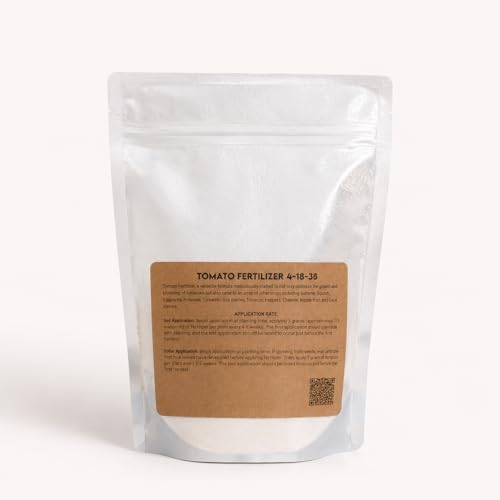
A concentrated powder with a 4-18-38 N-P-K ratio that turns a 1 lb bag into dozens of gallons of high-potassium feed for hydroponics or soil.
This is a different beast from the granular options above. The 4-18-38 N-P-K ratio is staggeringly high in potassium (38) and phosphorus (18), which is purpose-designed for nightshade crops — tomatoes, peppers, eggplants, potatoes. The potassium drives fruit size, flavor, and shelf life, while the low nitrogen (4) keeps plants from wasting energy on excess leaves. Because it is a water-soluble powder, you mix tiny amounts (1/2 teaspoon per gallon for soil, or precise grams per gallon for hydroponics) and the rest of the bag stays sealed for months.
It includes chelated iron, manganese, zinc, and copper — minerals bound to a chelate (an organic compound that prevents them from locking up in the soil) so they stay available to roots across a wide pH range of 4 to 9. This matters for tomatoes and peppers, which are sensitive to micronutrient deficiencies that cause yellow leaves and poor flavor. One customer observed it produced their “best-ever plant health and high yield” in a 5-gallon hydroponic bucket. Another cautioned that it is “extremely strong” — they fried 3 of 13 plants by using tablespoons instead of teaspoons, so beginners need to measure carefully.
The biggest advantage is concentration: 1 lb of this powder equals a whole garage shelf of liquid feeds. But it is not a grab-and-go product — you need to mix it with water and, for hydroponics, add calcium nitrate separately because calcium will fall out of the solution if mixed directly. This makes it a better fit for experienced growers comfortable with measuring and managing pH than someone looking for a simple sprinkle-and-wait routine.
The concentrated advantage
- Extremely high potassium (38) for maximum fruit size and flavor
- Chelated micronutrients prevent lockup in alkaline or acidic soil
- 1 lb makes dozens of gallons; lasts a long time
The warning
- Very easy to overdose — must measure by teaspoon or gram
- Needs separate calcium source for hydroponic use
Perfect for the serious grower: If you run hydroponics, drip irrigation, or just want surgical control over your feed strength, this powder delivers better per-dose value than any liquid.
Not for the casual gardener: If you prefer a simple sprinkle-and-water routine, start with a granular option instead.
6. Bloom City Tomato & Veggie Plant Food Liquid

A 32 oz liquid feed that one first-time tomato grower said made a “huge difference” for their beefsteak tomatoes — no mixing fuss required.
This liquid fertilizer from Bloom City is the easiest entry point for a new gardener who wants results without measuring spoons or bags that need sealing. You mix 2 oz per gallon of water and apply with a watering can or hose sprayer — that is it. One first-time tomato grower said it “made a huge difference in my tomato plant” and “really helped it thrive and produce tons of delicious beefsteak tomatoes,” noting the bottle lasted well beyond a single season for a single plant.
Because it is a liquid, the nutrients are immediately available to the roots, so you see results faster than with granular feeds — typically within a few days for leaf color and growth rate. It is formulated specifically for tomatoes and vegetables, making it a safe choice for raised beds, backyard plots, and container gardens. The liquid also makes it easy to adjust the strength for different plant stages: a lighter mix for young transplants and full strength once flowers appear.
The hurdle here is the frequency. Liquids wash through the soil faster than granules, so you need to reapply every 1-2 weeks through the growing season. For someone with a dozen plants in the ground, that becomes more labor than a single granular application that lasts a month. And the N-P-K numbers are not printed on the label in the available data (common with some liquid brands), so you cannot compare phosphorus content directly against the granular picks. It works — but you are paying for convenience, not for raw nutrient density per dollar.
What works for beginners
- No measuring fuss: 2 oz per gallon and done
- Immediate absorption — see results in days
- Large 32 oz bottle covers many applications for a small garden
The commitment
- Requires weekly or biweekly reapplications
- Concentrate must be mixed fresh each use
Best for the container gardener: If you have a few pots on a patio and want an easy, no-mix-granules liquid that works immediately, this is the simplest option.
Look for granular instead if: You have a large in-ground garden and want to feed once a month with less effort.
7. Growth Technology GT Chilli Focus Liquid
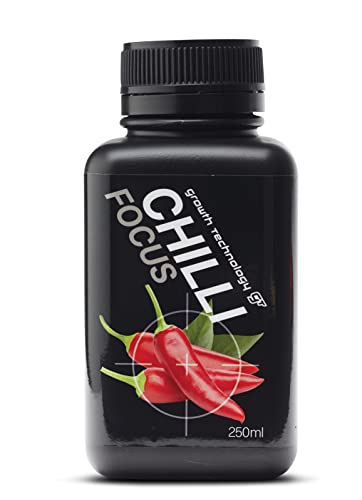
An 8.5 fl oz (250 mL) concentrated liquid that turned one grower’s houseplants into “glowing” specimens and works in hydroponic systems.
This small bottle from Growth Technology is a specialist’s tool — a balanced liquid nutrient formulated specifically for chillies, peppers, and tomatoes, but it also works for indoor houseplants, hydroponic systems, and container gardens. The mixing ratio is 5 ml per liter of water, which is a higher concentration than the Bloom City liquid, so the small bottle goes further per application. One verified buyer called it their “favorite plant fertilizer” and noted “healthier foliage, stronger growth, vibrant leaves” after switching to it.
What makes this liquid different from the Bloom City pick is its compatibility with hydroponic setups. It blends smoothly into reservoirs for deep water culture (DWC), nutrient film technique (NFT), and even semi-hydroponic systems. If you grow peppers in a soilless medium like coco coir or perlite, this targeted formula provides the exact balance of nitrogen, phosphorus, potassium, and trace minerals that fruiting plants need without the guesswork of mixing raw salts. Reviewers growing Alocasia and Monstera houseplants also reported significantly larger new leaves after using it.
The catch is the bottle size. At 8.5 fl oz, it costs nearly the same as the 32 oz Bloom City liquid, making it the most expensive option on a per-ounce basis. For a small collection of container peppers or a few houseplants, the small bottle is perfectly sized and will last weeks. But if you are feeding a full vegetable patch, you will run out quickly and the cost adds up fast. It is really for the enthusiast with a specific setup — not a budget-friendly all-rounder for a big backyard.
Why specialists choose it
- Balanced specifically for chilli, pepper, and tomato fruit development
- Works in soil, hydroponics, and semi-hydro systems
- High concentration — small volume provides many doses
The limitation
- Small 8.5 fl oz bottle is expensive per ounce
- Best for small gardens or indoor plants, not large plots
Reach for this if: You grow peppers in a hydroponic setup or have a small container garden and want a concentrated, performance-tested liquid that delivers visible results.
pass on it if: You are feeding a large in-ground vegetable patch — the cost per feeding is too high for extensive use.
Understanding the Specs
N-P-K Ratio
These three numbers are shorthand for the percentage of nitrogen (N), phosphorus (P), and potassium (K) in the fertilizer. Nitrogen drives leaf and stem growth; phosphorus fuels root development, flowers, and fruit set; potassium improves overall plant health, disease resistance, and fruit quality. For tomatoes and peppers, look for a ratio where the middle number (phosphorus) and the last number (potassium) are equal to or higher than the first (nitrogen) so the plant focuses energy on fruiting instead of just growing more leaves.
Water Soluble vs. Granular
Water-soluble fertilizers (powders or liquids) dissolve fully in water and make nutrients immediately available to the roots. They work fast and are great for container plants, hydroponics, or fixing a deficiency quickly. Granular fertilizers are sprinkled on the soil surface and release nutrients slowly over several weeks as the soil microbes break them down. Granules are lower maintenance — you apply once and the plant feeds steadily — but slower to show effects. Choose water-soluble if you want fast, precise control; choose granular if you want convenience and gradual feeding.
Calcium and Blossom End Rot
Blossom end rot is the dark, sunken spot that appears on the bottom of tomatoes and peppers. It happens when the plant cannot move enough calcium to the developing fruit quickly enough — often due to uneven watering. Fertilizers that include calcium (like the FoxFarm Happy Frog or Espoma Garden-tone) help supply the mineral directly, but consistent watering is equally important. The calcium content is listed as a percentage on the bag, not in the N-P-K numbers, so you have to check the ingredient list or fine print on the label.
Mycorrhizal Fungi and Bio-stimulants
These are beneficial fungi and microbes added to some organic fertilizers. Mycorrhizal fungi attach to plant roots and act like an extension of the root system, pulling more water and phosphorus from the soil in exchange for sugars from the plant. Bio-stimulants like kelp meal or humates provide natural growth hormones and organic acids that improve root growth and nutrient uptake. They are not strictly necessary, but they give the plant a measurable edge, especially in poor or compacted soil that is low on beneficial microbial life.
FAQ
Can I use the same fertilizer for tomatoes and peppers?
What happens if I use a fertilizer with too much nitrogen?
How often should I apply granular vs. liquid fertilizer?
Is organic fertilizer better for tomatoes and peppers?
What does blossom end rot look like and how do I prevent it?
Can I mix two different fertilizers together?
What does chelated mean on a fertilizer label?
How do I fertilize tomatoes in pots vs. in the ground?
Should I stop fertilizing when the fruit starts ripening?
What NPK ratio should I look for when the plant is flowering?
Final Thoughts: The Verdict
Across the board, the best fertilizer for tomatoes and peppers winner is the FoxFarm Happy Frog Tomato & Vegetable Fertilizer because it combines a fruit-focused 5-7-3 ratio with added calcium and mycorrhizal fungi to prevent blossom end rot and boost root efficiency. If you want a high-phosphorus granular feed for mid-season bloom, grab the Cz Garden 5-10-10. And for a powerful, concentration-controlled approach for hydroponic or soil systems, the standout is the Greenway Biotech 4-18-38 powder.
How We Picked
We do not accept paid placement. Every pick is matched to a real buyer and a real use-case; we do not hands-on test units.
Sources & Methodology
Specifications: manufacturer listings and product documentation. Review insights: verified customer reviews, as of July 2026. Pricing: not shown on this page (it changes often); check the current price via the retailer link.
As an Amazon Associate, Lawn Gear Lab earns from qualifying purchases. This does not affect which products we feature.