
Skip laurels demand a specific soil chemistry to deliver that dense, glossy green foliage hedge owners prize. A generic all-purpose feed often misses the mark, leaving plants yellowed or struggling to push new growth. The right fertilizer delivers a steady supply of nutrients tuned to the acidic soil conditions these evergreens crave.
I’m Rikta — the co-founder and writer behind Lawn Gear Lab. I spend my days comparing granular NPK ratios, analyzing slow-release durations, and cross-referencing thousands of owner experiences to pinpoint which formulations actually move the needle for acid-loving ornamentals.
After weeks of research, the one formulation that consistently outperforms others in feeding these acid-loving evergreens is the fertilizer for skip laurels that balances a low pH with a nitrogen-rich profile to sustain vigorous leaf production.
How To Choose The Best Fertilizer For Skip Laurels
Skip laurels (Prunus laurocerasus ‘Schipkaensis’) are acid-loving broadleaf evergreens that thrive when the soil pH sits between 5.5 and 6.5. Selecting the wrong fertilizer can lock out essential micronutrients like iron and manganese, causing chlorosis. Focus on these three criteria to make the right pick.
NPK Ratio and Sulfur Content
Look for a formula where the nitrogen (N) number is higher than phosphorus (P) and potassium (K) to drive dense foliage growth. A ratio in the 4-3-4 or 13-3-3 range works well. Products that include 5% sulfur or more help maintain the acidic soil environment skip laurels prefer.
Slow-Release vs. Liquid Feeding
Granular slow-release fertilizers feed the root zone over 8 to 12 weeks, reducing the risk of salt buildup and root burn. Spikes deliver nutrients directly to the root mass with zero runoff. Liquids act faster but require more frequent reapplication. For skip laurels, a controlled-release granular or spike is usually the safer bet for steady, long-season nourishment.
Organic Base and Soil Safety
Organic ingredients like cottonseed meal, bone meal, and kelp improve soil microbiology and structure over time. Products that are OMRI Listed or approved for organic gardening eliminate the risk of synthetic salt damage, which is a common cause of browning leaf edges on established laurels.
Quick Comparison
On smaller screens, swipe sideways to see the full table.
| Model | Category | Best For | Key Spec | Amazon |
|---|---|---|---|---|
| Espoma Organic Evergreen-Tone 4-3-4 | Granular | Established Laurel Hedges | 4-3-4 NPK + 5% Sulfur | Amazon |
| Jobe’s Tree Fertilizer Spikes 16-4-4 | Spike | Mess-Free Feeding | 16-4-4 / 30 Count | Amazon |
| Down To Earth Acid Mix 4-3-6 | Granular | Deep Soil Acidification | 4-3-6 / 25 lb Bag | Amazon |
| The Old Farmer’s Almanac 13-3-3 Spikes | Spike | Twice-Yearly Maintenance | 13-3-3 / 24 Spikes | Amazon |
| Espoma Organic Holly-Tone 4-3-4 | Granular | Acid-Loving Flowering Shrubs | 4-3-4 + Bio-tone | Amazon |
| Jobe’s 01661 Evergreen Spikes 13-3-4 | Spike | Budget-Friendly Spikes | 13-3-4 / 15 Spikes | Amazon |
| Down To Earth Cottonseed Meal 6-2-1 | Granular | Organic Soil Amendment | 6-2-1 / 5 lb Bag | Amazon |
In‑Depth Reviews
1. Espoma Organic Evergreen-Tone 4-3-4

The 18-pound bag of Evergreen-Tone delivers a 4-3-4 NPK ratio with a guaranteed 5% sulfur content, making it a precise match for skip laurels that need a sustained acidic environment. The Bio-tone microbial formula accelerates root colonization, so nutrients break down efficiently in the root zone rather than leaching away after a heavy rain. Owners consistently report a visible darkening of foliage within two to three weeks of spring application.
Applied as a dry granular broadcast around the drip line, this feed requires no mixing and releases gradually over approximately 10 to 12 weeks. The barnyard odor from the chicken manure base is a short-lived trade-off for the organic matter it adds to the soil. Users with Indian laurel (a close relative) note that established shrubs respond with vigorous new shoot growth after a single late-fall feeding.
Because it is formulated exclusively for needle-leaf and broadleaf evergreens, the nutrient balance avoids the phosphorus-heavy profiles that can suppress iron uptake in alkaline soils. For skip laurels planted in neutral or borderline pH ground, the 5% sulfur acts as a gentle acidifier without the risk of a sudden pH swing that liquid sulfur products can cause.
What works
- Exact 4-3-4 ratio with sulfur for acid-loving evergreens
- Slow-release granules prevent root burn on established plants
- Bio-tone formula improves soil biology over repeated use
What doesn’t
- Strong manure odor lingers for a day after application
- Requires thorough watering to activate granules in dry soil
2. Jobe’s Tree Fertilizer Spikes 16-4-4

The 16-4-4 analysis on these spikes delivers a heavy nitrogen punch that skip laurels convert directly into leaf mass. Each spike releases nutrients for a full growing season, so a single spring application covers the entire active growth window. The high nitrogen content is particularly effective for laurels that have been sheared hard and need to rebuild dense foliage quickly.
Installation requires driving the spikes into moist soil around the drip line, which owners find straightforward in loamy or amended beds. In clay-heavy ground, pre-drilling a pilot hole with a metal rod prevents the spike from snapping. The 30-count box covers roughly three to four medium-sized skip laurel shrubs, making it a practical solution for a hedge row without lugging a heavy bag.
Because the nutrients are compressed into a spike, there is zero dust, no measuring, and no risk of granules washing into non-target areas. The 16-4-4 formulation is higher in nitrogen than many organic granular feeds, so it is best used on established plants rather than newly installed liners. Users report that the spikes produce a noticeable greening effect within two weeks of placement.
What works
- No mixing, measuring, or cleanup required
- High nitrogen content drives rapid leaf greening
- Season-long release reduces the need for repeat applications
What doesn’t
- Spikes can crack in dry or rocky soil without a pilot hole
- Not formulated to lower soil pH like sulfur-based feeds
3. Down To Earth Acid Mix 4-3-6
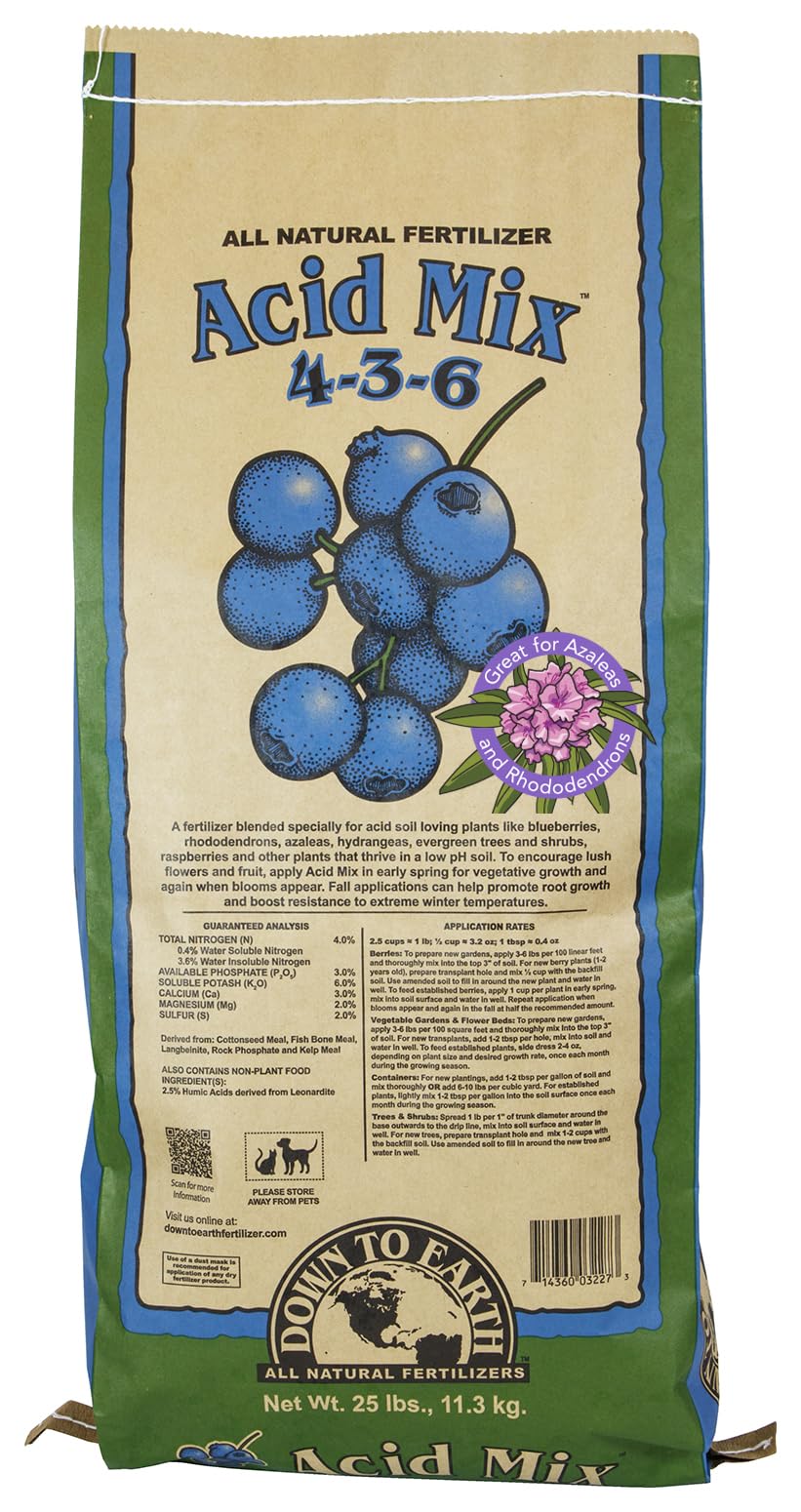
The 25-pound bag of Down To Earth Acid Mix uses a 4-3-6 ratio with a base of cottonseed meal, langbeinite, and kelp meal that naturally lowers root-zone pH over multiple seasons. The higher potassium number (6) strengthens cell walls and improves the laurels’ resistance to winter desiccation and summer heat stress. Owners of mixed acid-loving shrub borders report that this single feed keeps azaleas, blueberries, and skip laurels all performing well.
This granular formula releases slowly as soil microbes break down the organic ingredients, so there is virtually no risk of fertilizer burn even at slightly generous application rates. A 25-pound bag covers a substantial hedge run of 30 to 40 linear feet when applied at the recommended rate. The included fish bone meal supplies calcium and phosphorus for root anchorage, which helps newly planted skip laurels establish faster.
Unlike synthetic acidifiers that can drop pH too aggressively, the Acid Mix relies on the gradual decomposition of organic materials to create a long-term acidic environment. Gardeners with skip laurels planted near concrete foundations or walkways—where lime leaches into the soil—find this sustained acidification essential for preventing yellowing leaves. The OMRI listing confirms it meets organic production standards.
What works
- Large 25 lb bag offers the best coverage for big hedges
- Organic ingredients build soil structure while feeding
- Higher potassium improves cold and drought tolerance
What doesn’t
- Granules need moisture and soil warmth to release fully
- Not a quick fix for acute nitrogen deficiency symptoms
4. The Old Farmer’s Almanac 13-3-3 Spikes
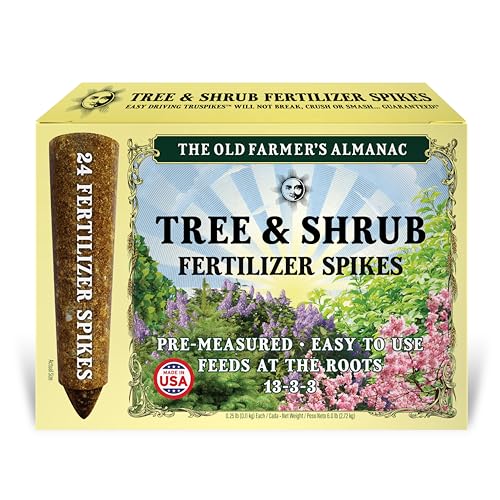
The 13-3-3 TruSpikes from Old Farmer’s Almanac include molasses as a carbohydrate source that feeds beneficial soil bacteria around the laurel roots. The 13% nitrogen drives deep green coloration, while the 3% potassium reinforces the structural integrity of new shoots. Owners report that a single spike placement in early spring and another in late fall keeps skip laurels full and vibrant through the winter months.
Each five-inch spike is formulated to resist shattering when hammered into moderately soft soil. The lack of a plastic cap eliminates the debris that other spike brands leave behind after installation. For clay soils, pre-moistening the ground or using a driving tool to create a starter hole reduces the effort required. The 24-spike count offers solid value for a hedge of eight to twelve medium shrubs.
The natural ingredient base—molasses, feather meal, and sulfate of potash—provides a slow, steady nutrient stream without the harsh salt index common in synthetic spikes. Users with skip laurels growing in partially shaded spots note that the spikes help maintain leaf density even where light levels are less than optimal. The twice-per-season feeding schedule aligns well with the natural growth flush of broadleaf evergreens.
What works
- Natural molasses content boosts soil microbial activity
- No plastic caps to retrieve after installation
- Durable spike design resists crumbling during insertion
What doesn’t
- Can still crack in very dry or rocky clay soils
- No added sulfur for lowering soil pH
5. Espoma Organic Holly-Tone 4-3-4
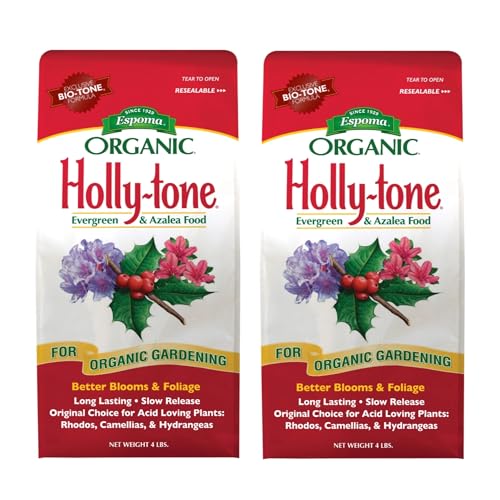
Espoma’s Holly-Tone is the original acid-lover’s feed, formulated at 4-3-4 with 5% sulfur and the proprietary Bio-tone consortium. While marketed primarily for hollies and azaleas, the nutrient profile is identical to what skip laurels need for consistent chlorophyll production. The two-bag pack gives enough product for multiple feedings throughout the season.
The fine granular texture makes it easy to spread evenly under the canopy without clumping, even when applied with a handheld spreader. Users with established skip laurels report that the spring application produces a flush of deep green growth within three weeks, and a follow-up application in late fall helps the plants hold their color through winter dormancy. The organic base eliminates concerns about salt accumulation that can burn shallow feeder roots.
Because Holly-Tone is designed for all acid-loving plants, it is a versatile option for gardeners who also maintain hydrangeas, rhododendrons, or gardenias in the same bed. The 5% sulfur content works gradually to counteract the alkalinity that builds up in soils irrigated with municipal tap water. Owners note that the product’s scent is mild and dissipates quickly after watering.
What works
- Proven acid-lover formula with decades of grower feedback
- Bio-tone microbes improve root efficiency
- Fine granules distribute evenly without clumping
What doesn’t
- Pack size is moderate; large hedges need multiple units
- May need supplemental iron for severe chlorosis cases
6. Jobe’s 01661 Evergreen Spikes 13-3-4

The 13-3-4 NPK ratio in these Jobe’s spikes is tailored specifically for evergreens, making it a straightforward option for skip laurel owners who want a no-fuss feeding system. Each spike feeds for up to 90 days, delivering nitrogen deep into the root zone where it is needed most. The 15-spike count covers roughly five small to medium laurels, making it an entry-level package for new hedge plantings.
Owners consistently mention that the spikes are easy to drive into moist soil without crumbling, though pre-soaking the ground is recommended for dry clay. The slow-release mechanism prevents the surge of growth that can happen with quick-release granular feeds, resulting in a more uniform canopy density. The plastic cap system allows for clean installation and retrieval after the spike is fully consumed.
For skip laurels showing early signs of nitrogen deficiency—pale lower leaves and slow shoot extension—these spikes provide a reliable correction mechanism. The absence of sulfur means it does not actively lower pH, so it is best paired with a sulfur-based soil amendment if your starting pH is above 6.5. Users with mixed evergreen borders find it effective for arborvitae and junipers as well.
What works
- Affordable spike option for targeted root feeding
- 90-day release window reduces application frequency
- Pre-measured spikes eliminate measuring errors
What doesn’t
- 15-spike count is best for smaller plantings
- Does not supply sulfur for pH correction
7. Down To Earth Cottonseed Meal 6-2-1
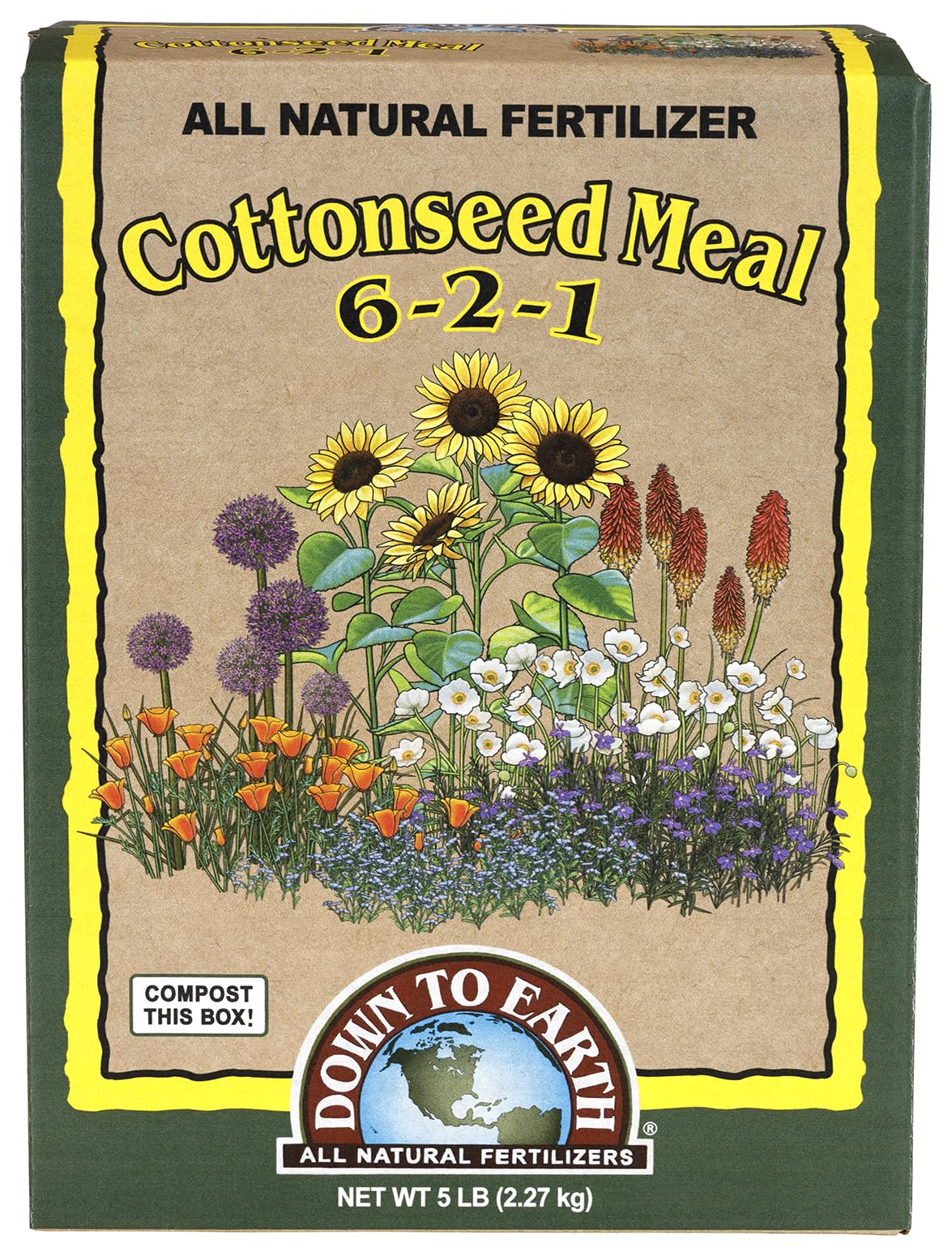
Cottonseed meal is one of the oldest natural acidifying fertilizers, and Down To Earth’s 6-2-1 formulation provides a gentle, low-burn option for skip laurels grown in organic beds. The moderate nitrogen level supports steady leaf growth without forcing a soft, pest-prone flush. Because it is OMRI Listed, it fits seamlessly into a regimen where synthetic inputs are avoided.
The fine granules break down slowly as soil temperatures warm, making it an ideal early-spring top-dress for beds where you want to avoid disturbing shallow laurel roots. The 5-pound bag is best suited for a small hedge or a few specimen plants rather than a long row. Users appreciate that the mild cottonseed scent does not attract animals, unlike blood meal or fish emulsion.
For skip laurels that are already established in healthy soil, this product works as a maintenance feed rather than a corrective one. It will not drastically lower pH on its own, so it pairs well with a sulfur supplement if your soil test indicates alkalinity. Gardeners who apply it regularly note that the soil texture improves noticeably over two to three seasons as the organic matter accumulates.
What works
- 100% organic cottonseed meal with zero synthetic additives
- Mild formulation eliminates burn risk on sensitive roots
- Improves long-term soil tilth and water retention
What doesn’t
- Low NPK requires larger volume for heavy feeders
- 5 lb bag covers only a small hedge row
Hardware & Specs Guide
NPK Ratio and Nitrogen Source
The three-number ratio on the bag tells you the percentage of nitrogen, phosphorus, and potassium. For skip laurels, nitrogen should be the highest number because it drives leaf production. Slow-release nitrogen sources like feather meal or methylene urea feed steadily, while fast-release ammonium nitrate can cause a surge followed by deficiency. A ratio in the 13-3-3 to 4-3-4 range is the sweet spot for these shrubs.
Sulfur Content for pH Management
Sulfur is the key ingredient for lowering soil pH in alkaline conditions. A fertilizer with 5% sulfur by weight can gradually shift the root-zone pH toward the 5.5–6.0 range that skip laurels prefer. Without adequate sulfur, iron and manganese become unavailable even if they are present in the soil, leading to interveinal chlorosis on new growth. Products like Espoma Holly-Tone and Evergreen-Tone include sulfur for this reason.
FAQ
How often should I fertilize skip laurels for healthy growth?
Can I use a general-purpose lawn fertilizer on skip laurels?
What does yellowing new growth on skip laurels indicate?
Final Thoughts: The Verdict
For most gardeners, the fertilizer for skip laurels winner is the Espoma Organic Evergreen-Tone 4-3-4 because its 5% sulfur content and Bio-tone formula deliver the acidic conditions and steady nutrition that skip laurels depend on for dense, deep green foliage. If you want a mess-free application that lasts the whole season, grab the Jobe’s Tree Fertilizer Spikes 16-4-4. And for a large hedge that needs sustained soil acidification, nothing beats the Down To Earth Acid Mix 4-3-6.