
Seedlings are notoriously fragile — their root systems are undeveloped, their cell walls are thin, and they burn easily from overly aggressive nutrient formulas. A seedling fertilizer must deliver a carefully balanced supply of phosphorus for root initiation and nitrogen for leaf development without causing tip burn, damping off, or salt accumulation in the small soil volume of a seed-starting cell. The wrong choice stunts a plant before it ever gets a real start.
I’m Rikta — the co-founder and writer behind Lawn Gear Lab. I spend my days cross-referencing NPK ratios, analyzing mycorrhizal inoculant efficacy, studying nitrogen source digestibility (urea vs. nitrate vs. fish hydrolysate), and mapping owner-reported success rates across hundreds of seedling-starting scenarios to separate the formulas that truly nurture young plants from those that just sell a label.
Whether you’re starting tomatoes, peppers, or flowers under grow lights, every drop matters at this stage. That’s why I built this guide to the best fertilizer for seedlings based on precise ratios, gentle delivery mechanisms, and real germination-to-transplant results.
How To Choose The Best Fertilizer For Seedlings
Seedling-stage feeding is fundamentally different from feeding an established plant. The root ball has limited surface area, the soil volume is tiny (often 1–2 ounces per cell), and the plant’s metabolic rate is still climbing. Over-concentrated or unbalanced formulas cause osmotic burn that sets a seedling back by weeks. Here is what you need to evaluate before buying.
Phosphorus-Heavy Early Ratios (The “Starter” NPK Profile)
The middle number in an NPK formulation — phosphorus — is the dominant nutrient during cell division, root initiation, and early energy transfer (ATP synthesis). Look for ratios where phosphorus equals or exceeds nitrogen, such as 3-4-3 or 4-3-3. Nitrogen should be present but not dominant; too much nitrate forces soft, leggy top growth with a weak root anchor. Avoid all-purpose 20-20-20 formulas for the first true-leaf stage — they are too hot for seedling physiology.
Liquid vs. Granular Delivery for Small Containers
Liquid concentrates (6-2-4, 5-1-1, or 3-1-2) dissolve instantly and deliver nutrients to the root zone within minutes — ideal for precise control and weekly feeding. Granular biological blends (like 3-4-3 with mycorrhizae) require soil incorporation at transplant time and release gradually as microbes break down organic matter. For seed-starting trays, liquids offer finer dosing granularity; for potting-up into 4-inch containers, granules provide sustained root colonization.
Half-Strength Dilution Rule
Nearly every seedling fertilizer on the market is concentrated for mature plants. The most common mistake beginners make is following the label rate for established plants on tender seedlings. A safe universal starting point is one-quarter to one-half of the recommended dilution after the first set of true leaves emerges. Watch for leaf-edge yellowing or salt crust on the growing medium surface — those signals mean the concentration is too high.
Quick Comparison
On smaller screens, swipe sideways to see the full table.
| Model | Category | Best For | Key Spec | Amazon |
|---|---|---|---|---|
| FoxFarm Happy Frog Jump Start | Granular Bio-Starter | Transplant shock & root development | NPK 3-4-3 + mycorrhizae | Amazon |
| Espoma Bio-Tone Starter Plus | Granular Organic | Organic transplant feeding | NPK 4-3-3 + endo/ecto mycorrhizae | Amazon |
| Dyna-Gro Foliage Pro | Liquid All-Purpose | Year-round indoor foliage feeding | NPK 9-3-6 (3:1:2 ratio) | Amazon |
| Alaska Fish Fertilizer | Organic Liquid Nitrogen | Vegetative leaf & stem growth | NPK 5-1-1, OMRI listed | Amazon |
| VIVOSUN Liquid Nutrients A & B | Two-Part Hydro | Hydroponic & coco coir systems | Two-bottle 1:1 mix, 100% soluble | Amazon |
| HiThrive Houseplant Fertilizer | Liquid Concentrate | General indoor seedlings | NPK 6-2-4, makes 87+ gallons | Amazon |
| Farmer’s Secret Plant Booster | Super Concentrate Liquid | High-phosphorus root initiation | 1 tsp per 2 gallons dilution | Amazon |
In‑Depth Reviews
1. FoxFarm Happy Frog Jump Start Fertilizer — 3-4-3 with Mycorrhizae

The FoxFarm Happy Frog Jump Start Fertilizer is a granular 3-4-3 blend engineered specifically for transplanted seedlings and newly re-potted plants. The elevated middle number — phosphorus at 4% — directly targets root initiation and early cell division, which is exactly what a stressed seedling needs during the first week after transplant. Each 4-pound bag contains OMRI-listed organic ingredients plus added mycorrhizal fungi that colonize the root zone and increase the soil volume the plant can mine for water and phosphorus.
User reports confirm that a single application at transplant produces visible root colonization within 5–7 days. One owner noted that after a month of cool, wet weather had stalled growth, two scoops of this mix spurred overnight recovery. The formulation is clean — reviewers specifically praise the absence of large wood chips or filler material found in cheaper bagged amendments. Because it is a slow-release granule, there is essentially zero risk of osmotic burn if mixed into the backfill soil at the recommended rate, making it forgiving for less experienced gardeners.
This product is OMRI-listed for organic production and FoxFarm has been developing greenhouse-tested formulas since 1984. For seed-starting use, work 1–2 tablespoons per gallon of soil into the planting hole or mixing container before setting the seedling. The 4-pound bag covers roughly 20–30 transplants depending on container size, and the resealable packaging retains moisture integrity between uses.
What works
- Phosphorus-dominant ratio (3-4-3) is ideal for delicate root systems
- Dual endo/ecto mycorrhizae greatly expand root surface area
- No odor complaints — clean organic granules with minimal filler
What doesn’t
- Granular format requires thorough incorporation into soil; not suitable as a top-dressing for established trays
- Not designed for hydroponic or soilless seed-starting mixes without soil microbes
2. Espoma Organic Bio-Tone Starter Plus — 4-3-3 Pack of 2
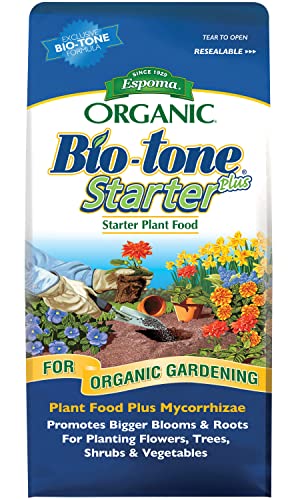
Espoma’s Bio-Tone Starter Plus is a granular organic starter that pushes the phosphorus-to-nitrogen balance even further in favor of roots with its 4-3-3 analysis. What sets this product apart from standard starter fertilizers is the inclusion of both endomycorrhizal and ectomycorrhizal fungi — a broader spectrum than most competitors. This dual inoculant strategy helps colonize the roots of a much wider range of plant species, from tomatoes (endomycorrhizal) to oaks (ectomycorrhizal), making it a true all-purpose starter for any type of seedling or transplant.
The bag size in this listing is a 2-pack of 4-pound bags, giving you 8 total pounds of product — enough for dozens of transplants and refresh applications. The fertilizer also contains 5% calcium, which bolsters cell wall integrity and reduces the risk of blossom-end rot in seedlings destined for fruiting crops. The material is rich and organic; multiple reviewers note the strong natural smell (from fish bone meal and feather meal) that signals active biological ingredients but dissipates once watered in.
Application is straightforward: mix the granules thoroughly with the backfill soil at a ratio of roughly 1:1 by volume. The slow biological release means one application supports root development for the first 4–6 weeks after transplant. Espoma has been producing natural organics since 1929, and the product is registered as an Organic Input Material for certified organic production. For seedling trays still in cells, this is better used as a potting-up amendment rather than a liquid drench.
What works
- Dual endo/ecto mycorrhizae species colonize vastly different plant families
- Includes calcium for cell wall strength and blossom-end rot prevention
- Large 8-pound total volume offers excellent value for multi-plant gardens
What doesn’t
- Strong organic odor (fish/feather meal) can be off-putting during mixing
- Not designed for liquid feeding; must be incorporated into soil medium
3. Dyna-Gro Foliage Pro — 9-3-6 (3:1:2 Ratio)
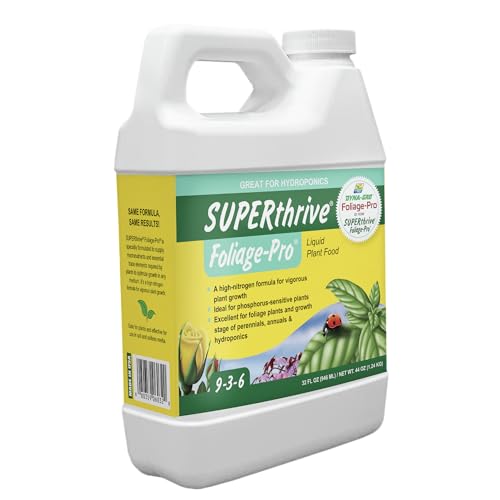
Dyna-Gro Foliage Pro is a complete liquid formula containing all 16 essential plant nutrients — not just the primary NPK macronutrients. The 9-3-6 (3:1:2 ratio) analysis is a well-established benchmark for balanced foliar and root feeding in moderate-to-low light environments, which makes it an excellent choice for seedlings grown under fluorescent or LED shop lights. Unlike many other liquid fertilizers, this product includes chelated micronutrients (iron, manganese, zinc) that remain available at a wide pH range — critical when starting seeds in peat-based or coir mixes that can drift acidic.
The 32-ounce quart bottle is highly concentrated: at the recommended rate for seedlings (approximately ¼ teaspoon per gallon), one bottle treats over 250 gallons of water. Multiple user reports mention seeing new leaf nodes emerge within 3 to 5 days of the first feeding. However, caution is warranted — the concentration is extreme, and several verified buyers reported burning their plants by not reading the dilution instructions closely. One owner said they nearly killed an entire tray by doubling the dose, and it took weeks to nurse them back.
For seedling applications, start at one-quarter of the label-recommended strength (roughly ¼ teaspoon per gallon) after the second set of true leaves appears. The low phosphorus content (3%) means it is better suited for maintaining established foliage than for root initiation during germination. Use this product for seedlings that have already developed a robust root system and need a leaf-growth push before transplanting into larger containers.
What works
- Complete micronutrient profile including chelated iron and zinc
- Extreme concentration — one quart treats hundreds of gallons
- Works equally well in soil, coco coir, and hydroponic systems
What doesn’t
- 9-3-6 ratio is not ideal for early root initiation; better for established foliage
- Extreme concentration makes overdosing easy and dangerous for young plants
4. Alaska Fish Fertilizer — OMRI Listed 5-1-1, 115 oz
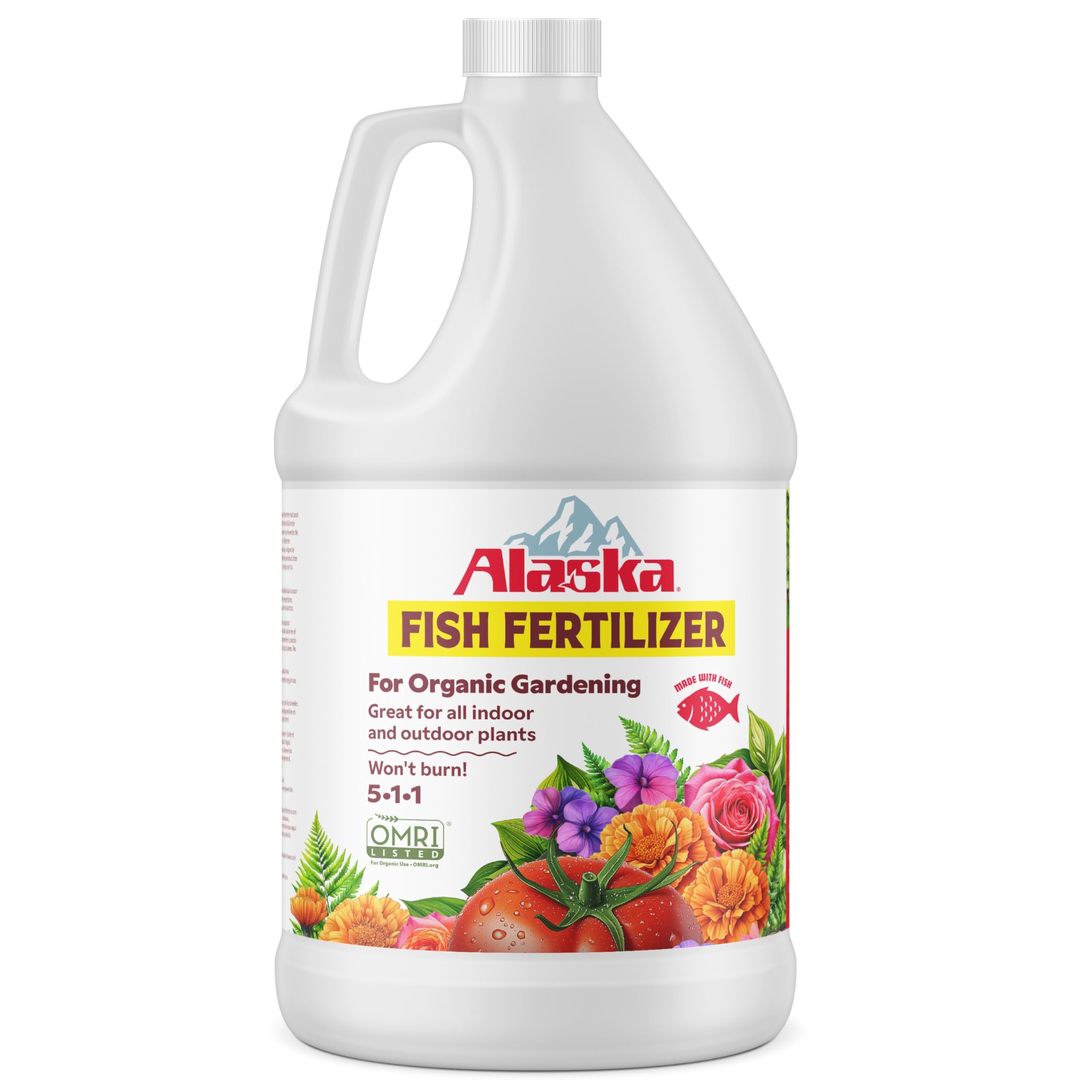
The Alaska Fish Fertilizer is an OMRI-listed liquid emulsion that delivers a strong nitrogen kick (5%) from cold-processed fish hydrolysate. The 5-1-1 analysis is heavily weighted toward foliar and stem growth, making it most appropriate for seedlings that have already passed the root-establishment phase and need a green-up boost before transplanting. The cold-processing method preserves amino acids, enzymes, and micronutrients that are often destroyed by heat-based fish emulsions, giving this product a biological edge over cheaper alternatives.
The 115-ounce jug is the largest volume in this guide, covering roughly 1,000 square feet of garden space at the recommended dilution. Users report dramatic results within days: stronger stems, deeper green leaf color, and accelerated growth rates on tomatoes, peppers, and herbs. The one trade-off is the smell — it’s a concentrated fish product, and even the deodorized formulation retains a pungent odor that lingers for about 24 hours after application. Many owners advise applying in a well-ventilated area or outdoors and avoiding use on indoor seedlings unless you have excellent airflow.
For seedlings, dilute at a rate of 1 tablespoon per gallon of water and apply every 3 weeks during the vegetative stage. The low phosphorus (1%) and low potassium (1%) mean this product alone will not support flowering or fruiting later in the plant’s life, so it should be used as a rotational supplement alongside a phosphorus-rich starter at transplant. It is plant-safe — the emulsion will not burn roots when used at the prescribed dilution — making it one of the safer organic liquid feeds for tender seedlings.
What works
- Cold-processed fish hydrolysate preserves beneficial enzymes and amino acids
- Highest nitrogen content (5%) in this guide for rapid green-up
- Enormous 115-ounce jug provides exceptional coverage per dollar
What doesn’t
- Strong fish odor can be overwhelming indoors for 24 hours post-application
- Very low phosphorus and potassium — not a complete standalone feed for fruiting crops
5. VIVOSUN Liquid Nutrients Base A & B Bundle — 16 oz Total

The VIVOSUN Liquid Nutrients A & B bundle is a two-part system designed for hydroponic and soilless growers who need precise control over nutrient delivery from the vegetative stage through flowering. The two bottles — Base A and Base B — are mixed in equal parts (1:1 ratio) after being diluted separately in water, ensuring that incompatible concentrated minerals do not precipitate out of solution before the plant can absorb them. This is a critical engineering detail that prevents nutrient lockout in small reservoir systems used for seedling hydroponics.
The formula delivers a full spectrum of macro and micronutrients, including calcium and magnesium, which are often deficient in reverse-osmosis or distilled water used in many hydro setups. Users report lush, green growth on herbs, lettuce, and microgreens started in deep-water culture, and the 8-ounce bottles (16 ounces total combined) last a surprisingly long time because the recommended dosage is only 5 milliliters per gallon during the vegetative phase. The product is compatible with soil and coco coir as well, making it a versatile option for a mixed garden.
For seedling applications, start at 2.5 milliliters of each part per gallon (half strength) after the first true leaves emerge. Because the two parts must never be mixed together in undiluted form, the process requires a bit more attention than a single-bottle concentrate — but the payoff is a stable, pH-buffered nutrient solution that supports crisp, vigorous growth without leaf tip burn. The bundles are compact and stackable, and the labeling includes a clear application chart for each growth phase.
What works
- Two-part separation prevents mineral precipitation in hydro reservoirs
- Includes calcium and magnesium for complete plant nutrition
- Versatile — works in hydroponics, coco coir, and soil grows
What doesn’t
- Requires more careful mixing than single-bottle liquid fertilizers
- Small 8-ounce per bottle size may require frequent reordering for large hydro setups
6. HiThrive Houseplant Fertilizer — 6-2-4, 16 oz (87+ Gallons)

The HiThrive Houseplant Fertilizer delivers a 6-2-4 NPK analysis in a concentrated liquid form that the manufacturer states is 2X more concentrated than standard houseplant feeds — one 16-ounce bottle makes over 87 gallons of ready-to-use solution. The higher nitrogen (6%) supports vigorous leaf development while the moderate potassium (4%) aids in water regulation and stress resilience, making it well-suited for seedlings of common indoor ornamentals like pothos, monstera, and peace lily that grow best in moderate light conditions.
Mixing simplicity is a major selling point: add 1 teaspoon (one half-capful) per gallon of water and apply with every watering. The formula can also be used as a foliar spray at the same dilution, which is useful for seedlings with small root balls that absorb more through their leaves. Users note that consistent use produces thicker leaves and faster growth, with one reviewer specifically mentioning that their plants began blooming more frequently after switching to this fertilizer from a general-purpose brand.
For seedling-stage application, reduce to ½ teaspoon per gallon and feed only once every other watering to avoid salt buildup in small pots. The 6-2-4 ratio is not phosphorus-dominant, so this product works best for seedlings that have already established a root system and need a green-growth push. It is also suitable for water propagation; the manufacturer recommends just ¼ teaspoon per gallon for cuttings rooting in water, preventing rot while supplying trace nutrients.
What works
- Extreme concentration — one bottle yields 87+ gallons of feed
- Works as both a soil drench and a foliar spray for multi-route absorption
- Very simple measurement: 1 teaspoon per gallon
What doesn’t
- 6-2-4 ratio is not optimized for root establishment in early-stage seedlings
- Intended primarily for indoor ornamentals; may lack calcium for fruiting vegetables
7. Farmer’s Secret Plant Booster — High Phosphorus, 8 oz
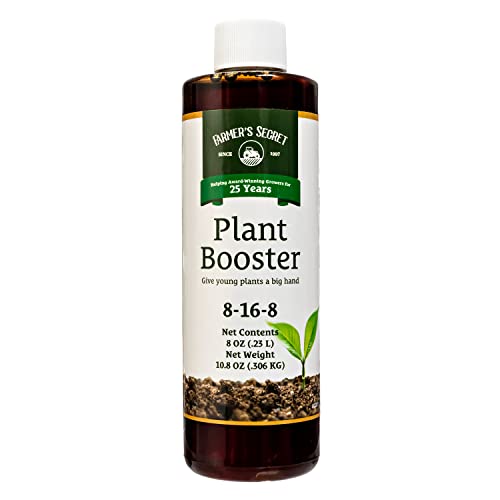
The Farmer’s Secret Plant Booster is an ultra-concentrated liquid formula with a deliberately high phosphorus content designed to target root development and early-stage energy conversion through photosynthesis. The recommended dilution is an astonishing 1 teaspoon per 2 gallons of water — one of the most dilute feeding rates in this guide — reflecting the heavy, dense concentration of the liquid (the manufacturer describes it as nearly 3 pounds per quart). The high phosphorus content helps seedlings convert sunlight into usable energy more efficiently, producing thicker stems and more vigorous root branching.
User feedback is overwhelmingly positive for seedlings: one grower describes diluting it to ½ teaspoon per gallon and applying after the first true leaves appear. Another first-time gardener noted measurable growth differences within days. The formula is produced in Kentucky using agricultural-grade inputs, and the brand emphasizes that the know-how comes from award-winning commercial farmers. The single 8-ounce bottle goes a very long way — at the 1-teaspoon-per-2-gallon rate, it treats over 300 gallons of water, making it one of the most economical options per use in this lineup.
For best results with seedlings, begin feeding at one-quarter strength (¼ teaspoon per gallon) once the first true leaves have fully expanded, then transition to the half-strength recommendation after two weeks. Because the formula is so concentrated, any visible salt crust on the growing medium is a sign to reduce the dose. The product works well both as a soil drench and as a foliar spray, and it is compatible with all plant types from vegetables to ornamentals.
What works
- Extreme concentration — one 8 oz bottle treats over 300 gallons
- High phosphorus formula is ideal for early root initiation and energy transfer
- Can be used as both a soil drench and a foliar feed
What doesn’t
- No full NPK disclosure on the label makes precise nutrient balancing difficult
- Requires careful measuring with a syringe or dropper due to extreme concentration
Hardware & Specs Guide
NPK Ratio & Your Seedling’s Growth Stage
The NPK ratio — nitrogen, phosphorus, potassium — is the single most important numeric on the label for seedling-stage feeding. During the first two weeks after germination (cotyledon stage), the seedling relies entirely on stored energy in the seed; no external fertilizer is needed. Once the first set of true leaves (not the cotyledons) emerges, the plant shifts to external nutrition. Phosphorus (the middle number) is the most critical macronutrient at this transition because it powers root cell division and ATP synthesis. A ratio with phosphorus at 3% or higher, such as 3-4-3 or 4-3-3, is ideal for this window. Ratios above 10% nitrogen, such as 20-20-20, will burn seedling roots and force soft, unmanageable top growth.
Liquid vs. Granular for Seed-Starting Trays
Liquid fertilizers (concentrates or emulsions) are the dominant choice for seed-starting trays because they allow precise dilution control and immediate uptake by the small root system. A 16-ounce bottle with a low dilution ratio (1 teaspoon per gallon) can last through dozens of feedings. Granular products (like FoxFarm Happy Frog or Espoma Bio-Tone) are better deployed at the potting-up stage — when the seedling moves from a 1-inch cell to a 4-inch pot. At that point, mixing the granules into the backfill soil ensures the mycorrhizae colonize the root ball over several weeks. Using granules in a tiny cell risks uneven distribution and localized salt pockets.
FAQ
When should I start fertilizing my seedlings after germination?
What is the best NPK ratio for young seedlings?
Should I use liquid or granular fertilizer for seedlings in trays?
Can I use fish fertilizer on indoor seedlings without the smell ruining my house?
Final Thoughts: The Verdict
For most gardeners, the fertilizer for seedlings winner is the FoxFarm Happy Frog Jump Start because its 3-4-3 ratio with mycorrhizae directly targets the two biggest seedling risks: weak root establishment and transplant shock. If you want a premium biological blend with broader plant-family coverage, grab the Espoma Bio-Tone Starter Plus for its dual endo/ecto mycorrhizae and calcium boost. And for an organic liquid nitrogen boost during the vegetative push, nothing beats the value and coverage of the Alaska Fish Fertilizer.