
The root zone is where a plant’s fate is decided long before any leaf unfurls. A thin, brown root system starves the canopy above it, while a dense, white web of feeder roots unlocks the nutrients and moisture that drive vigorous top growth. Choosing the wrong root stimulator means watching transplants wilt, cuttings fail, and soils stay inert.
I’m Rikta — the co-founder and writer behind Lawn Gear Lab. My process involves mapping every measurable detail: NPK ratios, spore counts per gram, mixing ratios, and organic certifications so you can compare a mycorrhizal powder against a synthetic hormone drench with real numbers, not guesswork.
This is the definitive fertilizer for root growth guide built on spec sheets and verified field results, not marketing claims.
How To Choose The Best Fertilizer For Root Growth
A root-growth product’s effectiveness hinges on three pillars: the active rooting compound, the phosphorus ratio, and whether the mechanism is synthetic or biological. Ignoring any one of these leads to weak transplants or wasted money.
Understand the NPK Triangle — Phosphorus Is the Root Driver
Nitrogen powers leaf expansion, potassium drives stress resistance, but phosphorus (the middle number) is the element plants use to build new root tissue and transfer energy during cell division. A root-growth formula should carry a significantly higher middle number — look for ratios like 4-10-3 or 0-10-0 rather than balanced 10-10-10 blends that push foliage at the expense of root mass.
Synthetic Hormones vs. Biological Inoculants
Indole-3-butyric acid (IBA) is the synthetic auxin that triggers root initiation on cuttings within days, ideal for propagation and emergency transplant rescue. Mycorrhizal fungi, by contrast, form a permanent symbiotic network that extends the root zone’s reach for months. Choose hormone-based products for rapid root starts on bare-root plants and cuttings; choose mycorrhizal powders or drenches for long-term root colonization in established soil or hydroponic systems.
Application Method Determines Real-World Success
Liquid concentrates require precise dilution ratios (often 1-4 ounces per gallon) and work best as a soil drench or foliar spray for general feeding. Powdered inoculants are applied directly into the planting hole or dipped onto wet roots at transplant — a single teaspoon can treat multiple plants. Granular refill sticks are designed for root-feeder tools that bypass dry topsoil and deliver nutrients directly to the root ball of established trees. Match the form factor to your specific planting scenario; a drench is impractical for a 20-foot oak, and a granular stick won’t help a hydroponic clone.
Quick Comparison
On smaller screens, swipe sideways to see the full table.
| Model | Category | Best For | Key Spec | Amazon |
|---|---|---|---|---|
| Fertilome Root Stimulator | Synthetic Hormone | Transplant shock & rapid rooting | 4-10-3 NPK with IBA hormone | Amazon |
| Xtreme Gardening Mykos WP | Mycorrhizal Powder | Long-term root colonization | Water-soluble powder fungi | Amazon |
| FoxFarm Bush Doctor Kangaroots | Liquid Inoculant | Hydroponics & container feeding | 1:100 liquid drench ratio | Amazon |
| Ross Root Feeder Refills | Granular Stick | Feeding established trees & shrubs | 25-10-10 deep-feed stick | Amazon |
| GS Plant Foods Root Ruckus | Liquid Compost Blend | Synergistic all-purpose feeding | Humic acid + kelp + mycorrhizae | Amazon |
| RootMax Mycorrhizal Fungi | Powder Inoculant | Transplant & cutting rooting | 245 spores/g Glomus intraradices | Amazon |
| Great White Mycorrhizae Booster | Liquid Mycorrhizae | Hydroponic & clone rooting | 1:2 liquid concentrate mix | Amazon |
In‑Depth Reviews
1. Fertilome Root Stimulator & Plant Starter Solution 4-10-3 (1 gal)

This is the formula that professional landscapers reach for when transplant shock stalls a job. The 4-10-3 NPK ratio delivers a phosphorus punch that forces root initiation, while the active ingredient Indole-3-butyric acid (IBA) triggers cell division at the root tip within hours of application. The one-gallon jug makes enough drench to treat dozens of trees, shrubs, or vegetable starts without needing to remeasure mid-project.
Real-world tests on clay soil show that wilted, raccoon-dug shrubs recover full turgor within 12 days of a single diluted application. The mix ratio is economical — just 0.25 tablespoons per pint of water — so the upfront investment stretches across an entire season. Owners report that fig trees that had never fruited began setting figs after a month of root-zone feeding, confirming that the phosphorus unlocks reproductive energy from the ground up.
The only tradeoff is that this is a synthetic auxin, not a biological inoculant. It does not establish a lasting fungal network in the soil, so long-term soil health requires additional organic amendments. For pure, measurable rooting speed on transplants, seedlings, and bare-root trees, this is the most reliable option in the category.
What works
- Proven IBA rooting hormone with decades of field data
- High-phosphorus 4-10-3 ratio targets root mass directly
- Economical concentrate treats a large number of plants
What doesn’t
- No mycorrhizal fungi for ongoing soil biology
- Measuring small liquid volumes requires care for accuracy
2. Xtreme Gardening Mykos WP Mycorrhizae Powder (12 oz)
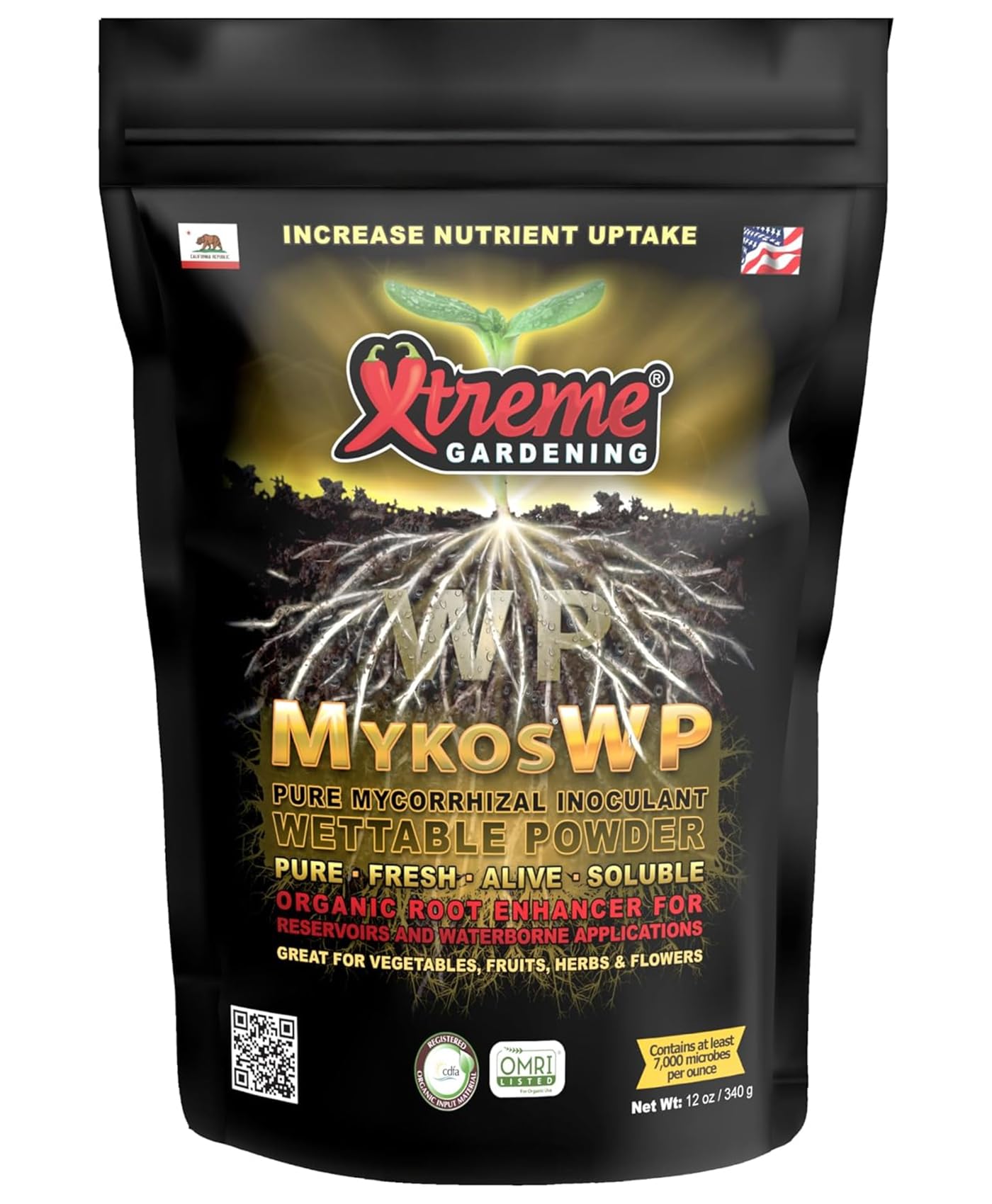
This water-soluble mycorrhizal powder is the benchmark for growers who want a permanent biological partnership rather than a temporary hormone push. When mixed into a drench or dipped onto bare-root transplants, the Glomus intraradices spores germinate and attach to root hairs within hours, extending the root system’s effective surface area by orders of magnitude. The 12-ounce bag lasts for dozens of treatments, making the per-plant cost negligible for serious operations.
Hydroponic users report that roots in autopot systems burst through the container walls within two months of regular application, requiring active trimming — a testament to the sheer fibrous density this fungus drives. Unlike granular mycorrhizae products that stay in one spot, the WP powder dissolves in water and distributes uniformly through any growing medium, from coco coir to heavy clay.
The only downside is that mycorrhizae require live roots to colonize, so this product has zero effect on unrooted cuttings or seeds without a root system. It also needs consistent moisture to stay active, so drought-prone surface applications benefit from immediate watering-in. For transplanting, repotting, and long-term root health, this is the cleanest biological tool available.
What works
- Water-soluble formulation ensures even root contact
- Single application colonizes roots for the entire growing cycle
- Excellent value per plant at this bag size
What doesn’t
- Ineffective on cuttings without existing roots
- Requires consistent moisture after application to stay viable
3. FoxFarm Bush Doctor Kangaroots Root Drench Inoculant (1 Pint)
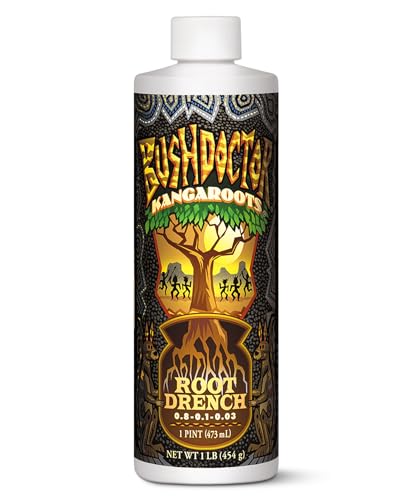
FoxFarm’s Kangaroots takes a different approach by delivering a custom blend of beneficial soil microbes rather than a single fungus species or synthetic hormone. The 1:100 dilution ratio means one pint makes over 12 gallons of root drench, and the microbial population immediately begins breaking down organic matter in the root zone to release locked-up nutrients. This makes it especially effective for container-grown plants where soil biology is naturally limited.
Indoor gardeners using the full FoxFarm nutrient line report that cannabis seedlings grown with Kangaroots develop stalks 40–50% thicker than untreated controls, with visibly denser root balls at transplant. The liquid format integrates seamlessly into any watering schedule — just add 2 milliliters per gallon at every feeding during the vegetative phase. Reviewers with eight years of continuous use note that the product never burns roots, even at slightly higher concentrations.
The microbial blend is not as targeted as a pure mycorrhizal inoculant, so if you specifically need Glomus intraradices colonization for a high-value tree, a dedicated powder is a better match. For everyday maintenance of indoor houseplants, hydroponic reservoirs, and garden vegetables, this is the most hassle-free liquid root enhancer on the market.
What works
- Broad microbial blend improves overall soil function
- Extremely concentrated — great value per gallon mixed
- Compatible with both soil and hydroponic systems
What doesn’t
- Lacks a defined spore count for targeted mycorrhizal colonization
- Bottle can be difficult to measure the small 2 ml dose
4. Ross Root Feeder Fertilizer Refills, Trees & Shrubs (36 Count)

Ross refills are the only entry in this guide designed specifically for the Ross Root Feeder tool, which injects fertilizer directly into the root zone at depth. The 25-10-10 analysis is nitrogen-heavy for established trees, but the delivery method is what makes it unique — by bypassing dry surface soil and thatch, the nutrients reach feeder roots that would otherwise starve during drought or compacted soil conditions. Each stick feeds at a rate of one per 2 inches of trunk diameter.
Owners of mature shade trees and shrubs report visible greening within weeks of treatment, especially during extended dry periods where surface fertilizers would simply sit on top of hard soil. The deep placement also prevents the nutrient runoff that plagues broadcast fertilizers on slopes. The 36-count box covers several large trees or a hedge line of smaller shrubs without needing to return to the store mid-job.
The obvious limitation is that you must own a compatible Ross Root Feeder tool to use these refills — this is not a standalone product. Additionally, the high nitrogen content is optimized for foliage and wood growth rather than root initiation, making it better for maintaining established plants than for stimulating new root development on transplants or cuttings.
What works
- Delivers nutrients directly to deep root zone
- No mixing or measuring — just load and plunge
- Effective during drought when topsoil is too dry for drenches
What doesn’t
- Requires a Ross Root Feeder tool to use
- High nitrogen favors canopy over root initiation
5. GS Plant Foods Root Ruckus Compost Fertilizer (32 oz)
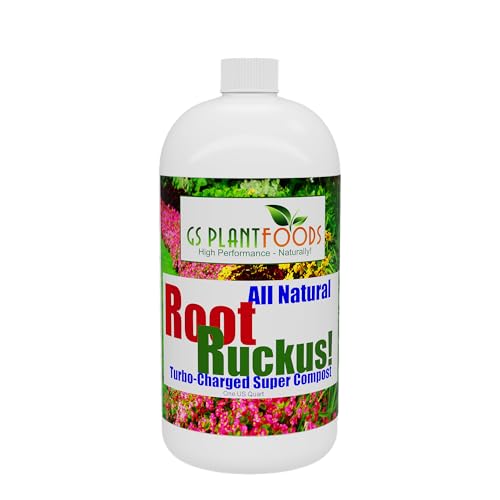
Root Ruckus combines humic acid, liquid kelp, and mycorrhizae into a single 32-ounce concentrate that works synergistically with any synthetic or organic fertilizer program. Humic acid acts as a natural chelator, unlocking micronutrients that phosphorus alone cannot mobilize, while the kelp-derived cytokinins stimulate root cell division alongside the mycorrhizal colonization. The 1-4 ounce per gallon mixing range lets you tailor the strength from a light weekly foliar spray to a heavy soil drench for stressed plants.
Reviewers describe reviving cold-shocked plants overnight and seeing tomato blooms emerge within five days of application — results that point to the kelp fraction reducing stress hormones while the humates improve water retention. Users integrating Root Ruckus with iron and micronutrient additives report lawns transitioning from patchy yellow to deep green in three applications, a sign that the root system is finally absorbing what the top-dressed fertilizer provides.
The main drawback is that the three-component blend makes it harder to isolate which ingredient is driving results for a specific problem. If you need pure hormone rooting for bare-root trees, the Fertilome is more direct. For the gardener who wants one bottle that supports root health, stress recovery, and nutrient efficiency across every plant in their landscape, this is a powerful all-in-one solution.
What works
- Triple-action formula addresses root zone from multiple angles
- Humic acid improves fertilizer efficiency across all NPK programs
- Kelp content provides stress recovery and cytokinin boost
What doesn’t
- Hard to diagnose which ingredient works for a specific deficiency
- Requires frequent reapplication for ongoing biological activity
6. RootMax Mycorrhizal Fungi (200 g/7.05 oz)
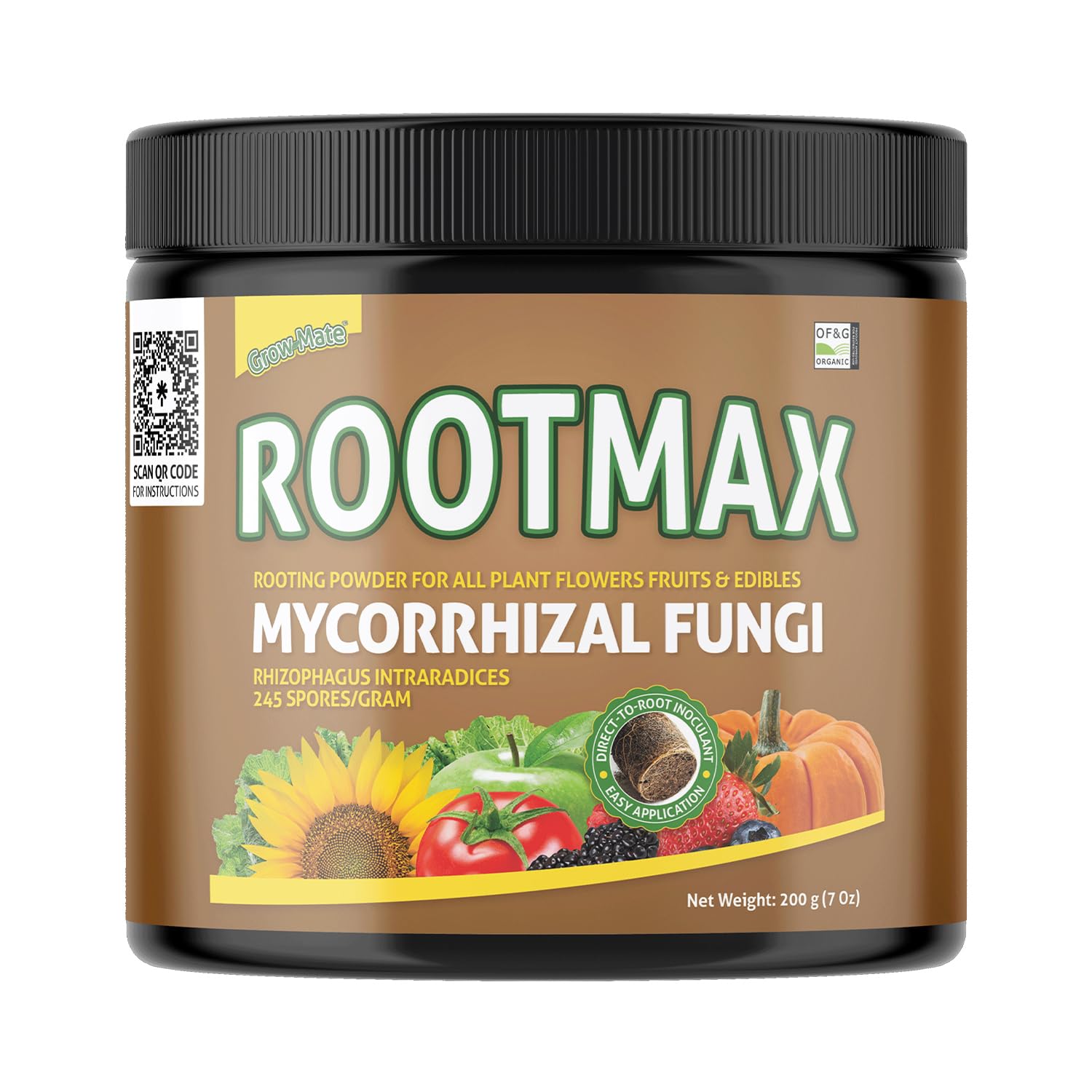
RootMax delivers 245 spores per gram of Glomus intraradices in a dry powder format that covers 40+ plants straight out of the 200-gram container. The certified-organic formulation is odorless, non-toxic, and safe around pets and children, making it a practical choice for edible gardens where synthetic hormones are not desired. The recommended application is one teaspoon per planting hole or dip for cuttings — a simple, repeatable dose that eliminates guesswork.
Gardeners using RootMax on tomato transplants and boxwood cuttings report successful rooting even in less-than-ideal spring conditions, with the fungi establishing visible white colonization on root balls within two weeks. The powder clings well to moistened roots and does not blow away during outdoor transplanting, a practical advantage over finer dust formulations that become airborne. Users appreciate that the 200-gram container often lasts multiple seasons for a home vegetable plot.
The spore count, while competitive at this price tier, is lower than premium mycorrhizal products that offer 1,000+ spores per gram. For high-value cannabis crops or rare specimen trees, the Xtreme Gardening Mykos WP delivers a higher spore density that justifies the cost premium. For standard garden transplants, shrubs, and edible beds, RootMax offers the best cost-to-coverage ratio in this guide.
What works
- Organic and safe for edible gardens with children and pets
- Simple 1 tsp per hole application is easy to measure
- Excellent coverage at a low per-plant cost
What doesn’t
- Spore count is lower than premium mycorrhizal powders
- Powder requires direct root contact for best results
7. Great White Premium Mycorrhizae Root Booster (1 oz)

Great White is the entry-level mycorrhizal product that proves smaller containers can deliver serious root results. The 1-ounce liquid concentrate mixes at a 1:2 ratio with water, and despite the compact packaging, the liquid format allows the mycorrhizal spores to coat root systems evenly during cloning and transplanting operations. The brand’s long reputation in the hydroponic community is built on consistent germination rates and faster clone establishment.
Hydroponic growers specifically praise the product for cutting transplant shock time in half when moving clones from aeroponic propagators to deep-water culture systems. The liquid formulation stays suspended well in reservoir water and does not clog drip emitters or spray nozzles, a practical concern that powder users sometimes face. Customers note that while the bottle appears partially empty on arrival, this headspace is intentional for proper shaking — the 1-ounce net weight is accurate as labeled.
The limitation is pure economics: at this size, the cost per ounce is higher than buying a larger mycorrhizal bag or bottle, and the small volume disappears quickly when treating multiple trays of cuttings or a garden with many transplants.
What works
- Liquid formulation ensures even root coating for clones
- Proven track record in hydroponic propagation circles
- Does not clog irrigation equipment
What doesn’t
- Small 1-ounce container is expensive per treatment
- Not cost-effective for large gardens or multiple beds
Hardware & Specs Guide
NPK Ratio — The Middle Number Matters Most
The three-number ratio on a fertilizer label represents Nitrogen (N), Phosphorus (P), and Potassium (K). For root development, the phosphorus (middle) number should be the highest in the blend — the 4-10-3 of Fertilome or even a straight 0-10-0 formulation. A balanced 10-10-10 pushes leaf growth first, diverting energy away from the root zone. Always match phosphorus percentage to the stage of growth; high nitrogen is for established foliage, not for starting roots.
Spore Count vs. CFUs — Measuring Biological Potency
Mycorrhizal products list either spores per gram (like RootMax at 245/g) or colony-forming units (CFUs). Higher numbers indicate more viable fungal propagules that can colonize roots. One gram of a premium powder may contain 1,000+ spores, while an entry-level product may have fewer than 100. For rapid colonization of bare-root transplants, aim for at least 200 spores per gram. Liquid formulations typically have lower viable counts but distribute more evenly through a hydroponic reservoir.
FAQ
Can I use a root growth fertilizer on all plant types?
How long does it take for mycorrhizal fungi to colonize roots?
Is a 25-10-10 fertilizer good for root growth on established trees?
Final Thoughts: The Verdict
For most gardeners, the fertilizer for root growth winner is the Fertilome Root Stimulator because its 4-10-3 NPK and IBA hormone composition provides the fastest, most reliable root initiation on transplants, cuttings, and bare-root trees. If you want long-term biological colonization that keeps feeding roots for months, grab the Xtreme Gardening Mykos WP. And for the best cost-to-coverage ratio in a certified-organic mycorrhizal treatment, nothing beats the RootMax Mycorrhizal Fungi powder.