
Potatoes are heavy feeders, but dumping a generic all-purpose fertilizer on the row can send energy straight into top growth, leaving you with a pile of leaves and marble-sized spuds underground. The right nutrient profile at the right time is what separates a mediocre harvest from a bin full of fist-sized tubers.
I’m Rikta — the co-founder and writer behind Lawn Gear Lab. I’ve spent hundreds of hours cross-referencing NPK ratios, calcium levels, and customer yield reports to separate the formulations that actually drive tuber development from those that just green up the leaves.
Whether you are growing in raised beds, grow bags, or a backyard plot, choosing the right fertilizer for potato plants directly determines the size, quantity, and quality of your harvest.
How To Choose The Best Fertilizer For Potato Plants
Potatoes have a unique growth cycle: they build foliage first, then shift energy underground to swell tubers. A fertilizer that works for lettuce or tomatoes can over-promote leaf growth at the expense of the spuds. You need a formula that matches this specific two-phase rhythm.
Understand the NPK Ratio for Tubering
The three numbers on a fertilizer bag tell the story. For potatoes, the middle number (phosphorus) and the last number (potassium) matter more than the first (nitrogen). A ratio where potassium equals or exceeds nitrogen — something like 3-4-4 or 5-10-10 — encourages root mass and tuber size without creating excessive foliage that steals energy from below ground.
Granular vs Liquid: Timing Matters
Granular fertilizers, especially organic blends with Bio-tone or mycorrhizae, release nutrients steadily over weeks. They are ideal as a pre-plant or side-dress application. Liquid fertilizers deliver a fast boost and are perfect for a mid-season foliar or soil drench when tubers are actively bulking. Many growers use a granular base feed and supplement with liquid during the critical tuber-initiation window.
Don’t Ignore Calcium and Micronutrients
Calcium is a silent hero in potato growing. It strengthens cell walls in developing tubers, reducing the risk of hollow heart and internal defects. Micronutrients like iron and zinc support chlorophyll function and root vigor. A fertilizer that includes at least 5% calcium and a trace mineral package gives you a measurable edge over a bare-bones N-P-K blend.
Quick Comparison
On smaller screens, swipe sideways to see the full table.
| Model | Category | Best For | Key Spec | Amazon |
|---|---|---|---|---|
| Espoma Garden-tone (2-Pack) | Organic Granular | Balanced monthly feeding | 3-4-4 NPK + 5% Calcium | Amazon |
| FoxFarm Happy Frog Tomato & Vegetable | Organic Granular | Calcium-rich tuber support | 5-7-3 NPK + Mycorrhizae | Amazon |
| Cz Garden 5-10-10 | Granular All-Purpose | High-phosphorus tuber initiation | 5-10-10 NPK + 2% Iron | Amazon |
| Down To Earth All Purpose Mix | Organic Granular | Soil-building long-term feed | 4-6-2 NPK (OMRI Listed) | Amazon |
| TPS Nutrients Potato Fertilizer | Liquid Concentrate | Fast-acting mid-season boost | 32 oz liquid, tuber-specific | Amazon |
| Espoma Potash 0-0-60 | Granular Supplement | Potassium “finishing” kick | 0-0-60 (60% Potash) | Amazon |
| BuildASoil Craft Blend | Organic All-Purpose | Living soil & container feeding | 3-5-2 NPK + 15 ingredients | Amazon |
In‑Depth Reviews
1. Espoma Organic Garden-tone 3-4-4 (2-Pack)

Espoma has been blending organics since 1929, and the Garden-tone formula hits the ideal potato-friendly NPK ratio of 3-4-4. The potassium level matches the nitrogen, which signals the plant to send energy into tuber bulking rather than leaf production. The 5% calcium content is a critical differentiator here — it strengthens tuber cell walls and reduces internal defects that can ruin a storage crop.
This is a granular, no-mix formula that feeds for roughly a month per application. Gardeners in zone 10b have reported yields of 400 pounds of tomatoes using Espoma products, and the same steady-release mechanism works perfectly for potatoes in the ground or in containers. The Bio-tone-enhanced blend includes beneficial microbes that help break down nutrients in the root zone, making them available exactly when the plant needs them.
The 2-pack provides flexibility for mid-season side-dressing without a second order. The smell is noticeable but typical of organic meals, and it dissipates after a day in the soil. For a balanced, calcium-fortified granular that supports the entire potato lifecycle, this is the most complete single-bag solution available.
What works
- Potassium matches nitrogen to drive tuber growth
- 5% calcium helps prevent hollow heart
- Bio-tone microbes improve nutrient cycling
What doesn’t
- Organic meal smell can be strong on application
- Slow release may not satisfy emergency deficiencies
2. FoxFarm Happy Frog Tomato & Vegetable Fertilizer

Happy Frog is a premium granular formulation with a 5-7-3 NPK that leans slightly higher on phosphorus — useful during the early tuber initiation phase when root development is paramount. The standout inclusion here is mycorrhizal fungi, which form a symbiotic relationship with potato roots and effectively extend the root system’s reach for water and nutrients, especially in less-than-ideal soil.
The calcium level is high enough to prevent blossom end rot in tomatoes, and the same protection applies to potatoes: stronger cell walls mean fewer cracked or misshapen tubers. Growers using a blend of Happy Frog with Ocean Forest soil and perlite report “bumper” yields, and the fertilizer is odorless compared to traditional organic meals, making it more pleasant to store and apply.
It is on the expensive side per pound compared to standard blends, but the mycorrhizae and calcium package justify the premium for serious growers who want maximum quality per square foot. The 4-pound bag covers a modest home garden; larger plots may require multiple bags.
What works
- Mycorrhizal fungi expand root reach for better nutrient uptake
- No fishy or offensive odor
- Calcium content reduces tuber defects
What doesn’t
- Higher price per pound than generic blends
- Small bag size requires multiple units for large plots
3. Cz Garden 5-10-10 Tomato & Vegetable Fertilizer

The Cz Garden 5-10-10 flips the standard NPK script by doubling the phosphorus and potassium relative to nitrogen — exactly what potatoes need during the tuber bulking stage. This formula is designed to shift the plant’s energy priority firmly underground. The 2% iron addition helps prevent chlorosis in alkaline soils, keeping leaves photosynthesizing efficiently while the tubers develop.
User reports from Pennsylvania detail tomatoes reaching 7 feet tall using this blend, which indicates strong root and structural support. For potatoes, the high phosphorus (10) encourages prolific root and tuber set, and the resealable pouch keeps the product fresh between monthly applications. The formulation includes muriate of potash, which is a mined potassium source — effective but not OMRI-listed for organic certification.
This granular option requires mixing into the soil or watering in after application. It is a strong mid to late-season choice for growers who have already built good organic matter in the soil and want a targeted phosphorus-potassium push. Not ideal for certified organic growers due to the synthetic potassium source.
What works
- 5-10-10 ratio is perfectly suited for tuber bulking
- 2% iron prevents yellowing in high-pH soil
- Resealable pouch for convenient storage
What doesn’t
- Not certified organic; contains muriate of potash
- Granules require thorough watering in to avoid salt burn
4. Down To Earth All Purpose Mix 4-6-2

Down To Earth’s All Purpose Mix brings an OMRI-listed organic blend with a balanced 4-6-2 analysis. The ingredient list — fish bone meal, blood meal, feather meal, rock phosphate, langbeinite, greensand, humates, and kelp meal — provides a broad spectrum of macro and micronutrients that build soil biology over time. The moderate nitrogen level avoids the common mistake of pushing too much foliage early in the season.
The slower nutrient release means you won’t see an instant green-up, but you will see roots and soil microbes thrive. The 5-pound box covers a generous area, and the gentle nature of the formula makes it safe for direct contact with seed potatoes in the furrow — no burning risk. Gardeners have reported that pale, flimsy transplants transformed into healthy, productive plants within two weeks of application.
The noticeable organic smell is a sign of active biological ingredients, and it fades after a few days in the soil. For certified organic growers on a budget who want a single product for pre-plant and side-dress feeding throughout the potato season, this is the most cost-effective fully organic option.
What works
- OMRI listed for certified organic production
- 15 premium ingredients build long-term soil health
- Non-burning formula safe for seed furrows
What doesn’t
- Strong organic odor upon application
- Slow release may not help acute nutrient deficiencies
5. TPS Nutrients Potato Fertilizer (Liquid)
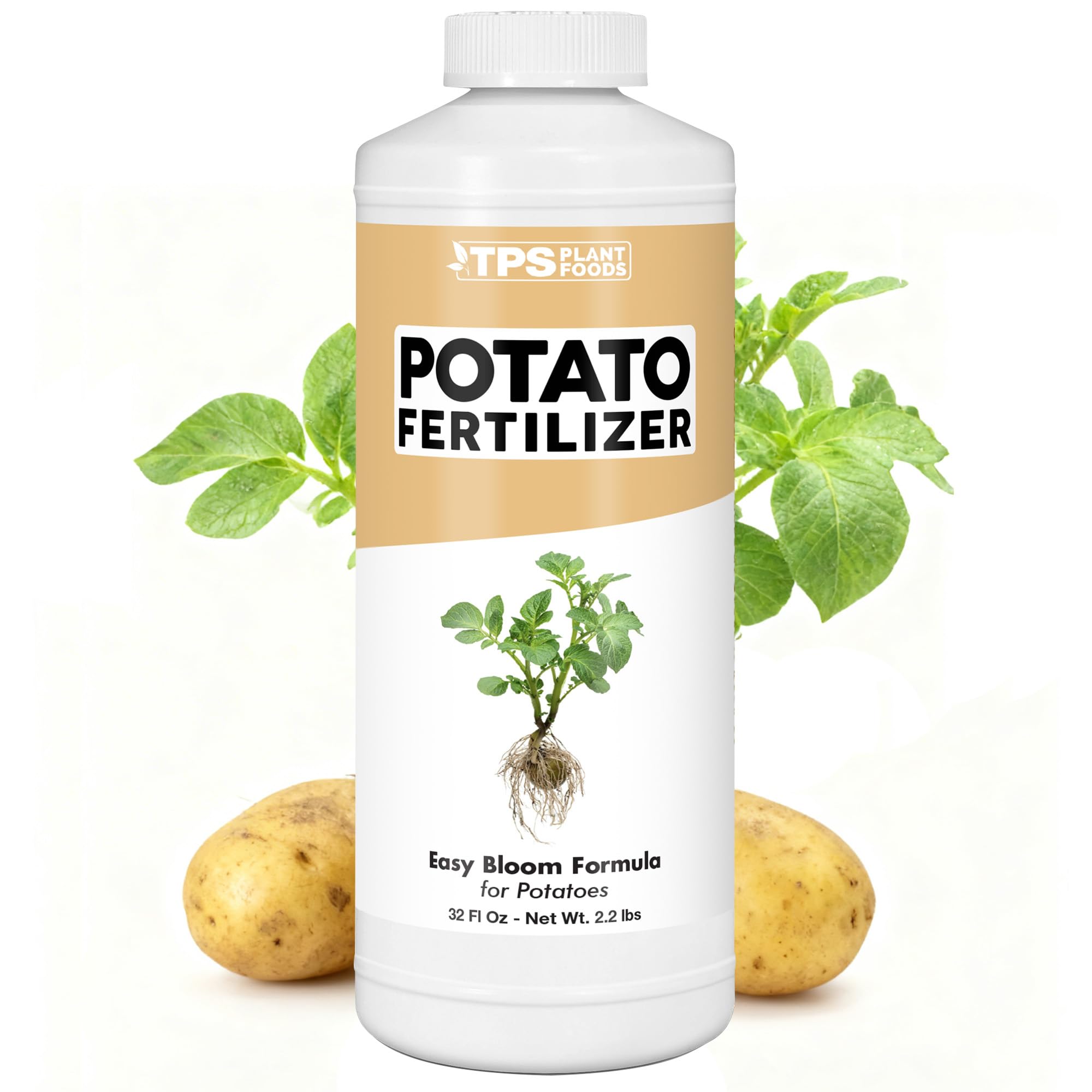
TPS Nutrients formulated this liquid specifically for tuber development, and it stands out as the only potato-specific liquid concentrate in this roundup. The nutrients are chelated and immediately available to the root system, making it the go-to choice for a mid-season boost when tubers are actively swelling. A 32-ounce bottle dilutes into several gallons of feed, and the liquid format allows for both soil drench and foliar application.
Growers in Zone 8B reported visible tuber growth — golf ball-sized red potatoes — after 9 weeks with only two applications. The liquid formula is especially valuable for container and grow-bag setups where granular fertilizers can concentrate unevenly. The precise formulation targets root development and yield rather than trying to serve as a general-purpose feed.
Measure and mix with water according to the label — no guesswork. The liquid form works faster than any granular, but it also requires more frequent applications (typically every 1-2 weeks during active bulking). Best used as a complement to a baseline granular feed, or as a standalone for small-scale container growers who want immediate results.
What works
- Specifically formulated for potato tuber development
- Fast-acting liquid for immediate nutrient correction
- Easy to apply in grow bags and containers
What doesn’t
- Requires frequent reapplication every 1-2 weeks
- Bottle size adequate for small gardens only
6. Espoma Potash 0-0-60

Espoma’s Potash is a straight 0-0-60 potassium supplement, not a complete fertilizer. It is designed for a specific purpose: delivering a massive potassium boost late in the season when potatoes are shifting all available energy into tuber dry matter accumulation. The 60% potash content is water-soluble and moves quickly into the root zone after watering.
This is an advanced tool for experienced growers who have already managed nitrogen and phosphorus levels with a base fertilizer. If your soil test shows adequate nitrogen and phosphorus but low potassium — or if you want to push tuber size and disease resistance in the final weeks — this granular supplement scratches that itch. For use on sweet potatoes, gourds, and general vegetables as well, it is a versatile shelf addition.
The 6-pound resealable bag lasts multiple seasons. Some users report a mild fishy smell, and one reviewer noted no visible difference after a year, which likely reflects improper baseline nutrition rather than a product fault. Not suitable as a standalone feed — pair with a balanced base fertilizer.
What works
- Concentrated 0-0-60 for targeted potassium push
- Water-soluble granules for quick root access
- Resealable bag for multi-season storage
What doesn’t
- Contains zero nitrogen or phosphorus
- Not a standalone fertilizer; requires base feeding
7. BuildASoil Craft Blend 3-5-2

BuildASoil’s Craft Blend is a hand-crafted organic mix with 15 premium ingredients including rock dust, calcium sources, and a 3-5-2 NPK profile. The low nitrogen and elevated phosphorus encourage early root establishment and flower/tuber set without forcing excessive leaf growth. This is especially valuable for living-soil gardeners who want to feed the biology rather than just the plant.
Gardeners using this blend report explosive growth in outdoor vegetable gardens, with the mineral diversity improving brix levels and flavor density in harvested crops. The formula is odorless compared to traditional organic meals, and the small 3-pound bag is designed for top-dressing containers or small raised beds. One bag can last multiple grow cycles if used sparingly as a top-dress amendment.
The slow-release nature of the ingredients means results develop over days, not hours. For growers committed to regenerative soil practices who want a complete organic amendment that supports tuber flavor as much as tuber size, this is a niche but highly effective option. The small bag size limits its use for large in-ground potato patches.
What works
- 15-ingredient blend supports soil microbiology
- Low nitrogen prevents excessive top growth
- Odorless and easy to store indoors
What doesn’t
- Small 3-pound bag is limited for large gardens
- Slow release; not for quick nutrient corrections
Hardware & Specs Guide
NPK Ratio & Potato Growth Phases
Potatoes require a balanced to potassium-heavy NPK. Early growth benefits from moderate phosphorus (middle number) for root initiation. After plants reach 6-8 inches tall, shift focus to potassium (last number) to promote tuber bulking and disease resistance. Avoid ratios where nitrogen exceeds 5 during the first 8 weeks to prevent excessive foliage at the expense of tubers.
Calcium & Tuber Quality
Calcium is often overlooked in potato fertilization but directly impacts tuber firmness and storage life. Deficiencies lead to internal brown spot, hollow heart, and cracked tubers. Look for fertilizers with at least 3-5% calcium, or supplement with gypsum at planting time. Liquid calcium additives can also be used mid-season if granular options lack this mineral.
FAQ
What NPK ratio is best for potato plants?
Should I use liquid or granular fertilizer for potatoes?
Can I use tomato fertilizer on potato plants?
Final Thoughts: The Verdict
For most gardeners, the fertilizer for potato plants winner is the Espoma Organic Garden-tone 3-4-4 (2-Pack) because its calcium-fortified, potassium-balanced formula supports the entire growth cycle without burning roots. If you want a mycorrhizae-enhanced feed that expands root efficiency, grab the FoxFarm Happy Frog Tomato & Vegetable. And for a fast-acting liquid boost during peak bulking, nothing beats the TPS Nutrients Potato Fertilizer.