
Specs are compiled from manufacturer listings and verified buyer reviews and can change over time — please confirm the key details on the product page before buying.
Feeding outdoor ferns doesn’t need to be a puzzle. The right fertilizer turns those pale, slow-growing fronds into a lush, deep-green backdrop that fills your garden beds and containers with texture. But with granular slow-release blends, hose-end feeders, and specialty formulas on the shelf, the choice can quickly feel overwhelming — especially when one wrong ratio can leave your ferns hungry or, worse, scorched.
I’m Rikta — the founder and writer behind Lawn Gear Lab. This guide is built by comparing the manufacturers’ published specifications and the patterns across verified customer reviews, so you get each pick’s real strengths and trade-offs instead of marketing spin.
The picks below cover every feeding style, from a low-maintenance granular feed that lasts half a year to a water-soluble feeder for quick, targeted meals — so whatever your fern setup looks like, you will find the perfect fertilizer for outdoor ferns.
Our Picks at a Glance


How To Choose The Best Fertilizer For Outdoor Ferns
Ferns are light feeders by nature — they thrive on steady, gentle nutrition rather than sudden heavy doses. The fertilizer you pick needs to match that pace, so the fronds grow lush without the leaf tips browning from a chemical burn. Start with the release type, then the ingredient profile.
Release Method: Slow-Release vs. Water-Soluble
Slow-release granular fertilizers, often coated with a resin, meter out nutrients over weeks or months with each watering. This is the easiest route for ferns — a single application in spring can carry them through the entire growing season. Water-soluble formulas (mixed into a watering can or hose-end sprayer) deliver an immediate boost, which is useful for a quick green-up but demands more frequent reapplications, sometimes every 1-2 weeks.
The NPK Ratio: What Ferns Actually Need
The three numbers on the bag (Nitrogen-Phosphorus-Potassium) tell you the nutrient balance. Ferns are grown for their foliage, so a formula with a higher first number (nitrogen) supports those deep green fronds. A balanced ratio like 14-14-14 works well for all-purpose feeding, but avoid any mix that is extremely high in phosphorus unless a soil test shows a deficiency — ferns rarely need it.
Organic vs. Synthetic: Biology Over Blast
Organic fertilizers feed the soil microbes alongside the plant, releasing nutrients more gradually as the biology breaks them down. This aligns perfectly with how ferns eat. Synthetic options are more immediately available and predictable, but require careful measuring to avoid burn. For container ferns, a gentle synthetic slow-release is often simpler; for in-ground garden beds, an organic granular feed builds long-term soil health.
Quick Comparison
| Model | Best For | NPK Ratio | Weight | Coverage | Amazon |
|---|---|---|---|---|---|
| Osmocote Smart-Release 8 lb★ Best Overall | Best Overall — set-and-forget feeding | Balanced (11 essential nutrients) | 8 lbs | 300 sq. ft. | Amazon |
| Miracle-Gro Garden FeederTop Performer | Quick liquid feeding for large areas | Water Soluble All Purpose | 1 lb (16 oz) | 500 sq. ft. | Amazon |
| BGI PALMGAIN 2 lb | Ferns & palms in the same bed | 8:2:12 | 2 lbs | Resealable bag | Amazon |
| Organic Plant Magic 4 lb | Organic & biology-focused gardens | All-purpose + 55+ trace minerals | 4 lbs | 1,000 sq. ft. | Amazon |
| Osmocote Classic 14-14-14 50 lb | Large-scale, long-term feeding | 14-14-14 | 50 lbs | 50 lb bag | Amazon |
In‑Depth Reviews
1. Osmocote Smart-Release Plant Food Plus Outdoor & Indoor1, 8 lb
Our pick — over 4.5★ from 4,500+ verified ratings; the strongest balance of quality and price.
The crowd-pleaser that feeds ferns for half a year with zero guesswork.
This pick lets you apply the granules once in spring and walk away — the resin coating on each grain releases 11 essential nutrients only when the soil is warm and moist, matching exactly when your ferns are hungry. One 8 lb container covers 300 sq. ft. of bed or container space, and the company backs it with a no-burn pledge when used as directed. Buyers report seeing greener, faster growth in potted ferns, seedlings, and grafted trees without the scorch marks that come from overly aggressive synthetic feeds. A local nursery even recommended it to one buyer, who is now on their third bag.
The catch is weight — at 8 lbs, it is a good bit heavier than compact bags, and the price reflects the premium slow-release technology. But given that one application handles an entire season, the cost-per-month is actually lean.
The thing owners rave about most is the zero-burn safety — even ferns in small containers come through fine as long as you follow the simple scoop-and-sprinkle instructions. The only recurring note is that the 300 sq. ft. coverage is smaller than, say, the Miracle-Gro hose-end feeder (which covers 500 sq. ft.), so if you have very large fern beds, you may need a second container. For the typical home garden with a handful of fern clumps and planters, this is the easiest, most reliable feed available.
Season-long simplicity: Sprinkle once and forget about feeding for six months — your ferns get steady nutrition without any measuring or mixing.
Mind the coverage: 300 sq. ft. is plenty for most fern gardens, but if you are covering a large shaded border you will want a second bag.
Reach for this if: you want one simple spring application that carries your ferns through the entire warm season without any weekly chore.
Look elsewhere if: you need to cover more than 300 sq. ft. or prefer a hose-end sprayer for spot-feeding individual pots.
2. Miracle-Gro Garden Feeder with Water Soluble All Purpose Plant Food, 1 lb
The hose-attach feeder that waters and feeds at the same time.
This all-in-one system comes prefilled with 1 lb of water-soluble plant food. You attach the jar to your garden hose, fill it to the marked line, turn on the water, and squeeze the trigger. The sprayer includes three nozzle patterns: Shower, Jet, and Flat, which let you target the base of ferns without blasting the delicate fronds.
An 8-year basement gardener who now runs a small indoor garden uses two feeders — one for greens and one for fruiting plants — and reports that hose watering and fertilizing happen at the same time, saving 3-4 hours of hauling watering cans. A caveat from the review pages: the all-plastic construction can crack if left out in freezing winter temperatures, and the nozzle may leak if not seated perfectly. This is a seasonal tool, not one you leave on the spigot year-round. The feeder only works with Miracle-Gro brand plant food, so you are tied to that ecosystem.
The big draw here is speed — you can feed an entire shade garden in minutes by walking the hose along the beds. For fern owners who want a quick green-up between granular applications, or who have a large area and little patience for scooping, this is the obvious companion.
What saves you time
- Waters and fertilizes simultaneously — no separate step
- Large 500 sq. ft. coverage from one 1 lb fill
- Three spray patterns (Shower, Jet, Flat) for gentle feeding
What to watch for
- Plastic housing cracks if left out in freezing weather
- Only accepts Miracle-Gro plant food — not universal
- Nozzle can leak if the alignment is off
Perfect for: fern beds that are so large that scooping granules would take forever — just hook it up and walk the hose line.
Skip if: you prefer an organic feed or want a set-and-forget solution that requires zero attention in between.
3. BGI Fertilizers PALMGAIN, Palm Tree Fertilizer, Ferns, Cycads, Ixora, 2lb Bag

The targeted formula that does double duty for ferns and palm trees.
This 2 lb bag is purpose-made for palms, ferns, cycads, and ixora, and it is even the recommended palm formula by the University of Florida IFAS Extension. The 8:2:12 NPK ratio is a distinct profile — lower in phosphorus and higher in potassium than a general-purpose feed, which matches the needs of ferns that share soil with palms or other tropical ornamentals. It includes a complete minor nutrient package and slow-release nitrogen, so a single application feeds over an extended period.
The resealable top on the bag is a practical touch for a 2 lb size — you can dip into it as needed without the contents spilling. Effectiveness is the aspect owners praise most (37 mentions), and quality ranks a close second (32 mentions). A buyer notes that their Foxtail palm became the envy of the neighborhood after switching to this, and they have shared it with others who saw the same results. The main trade-off reported is an odor that some find unpleasant when first applied, though it fades quickly. At 2 lbs it is also a compact bag — about a quarter of the weight of the Osmocote 8 lb bag — so it is best for smaller fern collections or mixed tropical plantings rather than sprawling beds.
This is the right choice when your fern garden shares space with palms, cycads, or ixora, and you want a single bag that covers them all with the right nutrient balance.
Species-specific strength: The 8:2:12 ratio is calibrated for palms and ferns, with slow-release nitrogen and a full minor nutrient package for deep green growth.
Small-bag limitation: At 2 lbs, you will need more than one bag for a large fern border — and the odor, though temporary, can be noticeable at application.
Grab this if: your outdoor ferns are planted alongside palms or tropical ornamentals and you want one targeted feed for the whole bed.
Pass if: you need to cover a large area (500+ sq. ft.) or you are sensitive to fertilizer odors during application.
4. Organic Plant Magic – Truly Organic™ Slow Release Granular Fertilizer, 4 lb

The biology-first feed that builds soil life while feeding your ferns.
This organic granular blend is packed with every essential plant nutrient plus 55+ trace minerals, amino acids, humic acids, kelp, and beneficial GroBiotics (including mycorrhizae). The idea is simple: feed the soil, and the soil feeds the ferns. A single 4 lb bag covers 1,000 sq. ft. — more than triple the coverage of the Osmocote 8 lb bag — so it is an economical option for large shaded garden areas. The recommended application is once per month, sprinkled onto the soil and watered in.
Plant performance is the aspect owners mention most (14 mentions), followed closely by plant benefits (13 mentions). A buyer who used it on languishing raised-bed vegetables reports that the plants revived overnight and have been growing steadily since. Another notes that it is forgiving in terms of amount applied — you do not have to be precise to get good results. The main caution on the review pages is the smell: while one buyer says it has no terrible odor, another describes an initial off-putting scent that dissipates quickly, and a third warns that using it indoors produced a persistent smell lasting months. For outdoor ferns, this is far less of a concern — the garden air clears it fast.
If you are trying to move away from synthetic chemicals and want a feed that improves your soil microbiology long-term, this is the most complete organic granular option at this coverage level.
Organic advantages
- Covers 1,000 sq. ft. from a single 4 lb bag — great value per square foot
- Contains mycorrhizae, humic acids, and 55+ trace minerals for deep soil health
- Forgiving application — no burn risk if you overshoot a little
What to note
- Has a noticeable earthy odor when first applied (fades outdoors quickly)
- Requires monthly reapplication rather than a single season-long dose
- More expensive upfront than a basic synthetic granular
Best for: gardeners who prioritize soil biology and want an organic, all-purpose granular that covers a very large fern bed while staying affordable per square foot.
Think twice if: you want a single spring application that lasts the whole season — this needs monthly follow-up.
5. Osmocote 14-14-14 Classic Slow Release Fertilizer, 50 Lbs
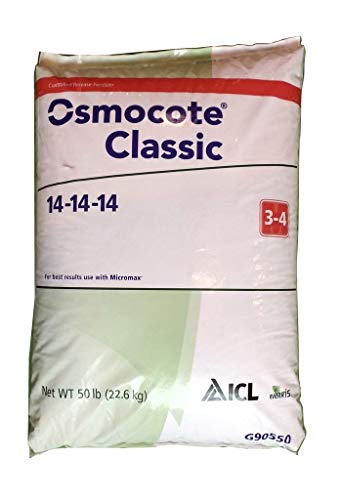
The big bag that keeps feeding for years on a single buy.
This is Osmocote’s classic 14-14-14 formula in a 50 lb bag — the kind of bulk purchase that makes sense if you have a large fern garden, multiple beds, or a landscaping routine that involves feeding dozens of container plants. The slow-release technology feeds for 3-4 months per application, which means two applications per growing season cover you from spring through fall. The 14-14-14 ratio is a balanced all-purpose profile that supports foliage growth (the nitrogen for fronds), root development (the phosphorus), and overall plant health (the potassium).
Reviewers who have used this for years call it “the absolute BEST all-purpose fertilizer,” noting that everything they plant — tomatoes, peppers, flowers, shrubs, and yes, ferns — explodes with growth. A landscaper-recommended review adds that “a little goes a long way.” The main feedback is the upfront cost: at this size, it is a significant purchase, and several owners wish it were cheaper. But because the granules are concentrated and slow-release, a 50 lb bag can last the average home gardener several seasons. The bag is also heavy — 50 lbs — so be prepared for a heavy lift or a wheelbarrow trip from the garage.
For the dedicated fern enthusiast with a large property, this is the most cost-effective way to keep every fern frond deep green all year without buying a new bag every month.
Season-spanning bulk: The 14-14-14 balanced ratio feeds ferns for 3-4 months per application, with enough granule density to cover a large garden for multiple seasons.
Two real hurdles: the 50 lb weight demands some muscle to move, and the upfront investment is steep relative to smaller bags — though the per-serving cost is much lower.
Choose this if: you are feeding a large fern border, multiple raised beds, or a landscaping operation where a single 50 lb bag saves you multiple trips to the garden center.
Opt for a smaller bag if: you have a small fern collection or limited storage space — 50 lbs takes up real room in a shed.
Understanding the Specs
The NPK Ratio: What Those Three Numbers Mean
Every fertilizer bag displays three hyphenated numbers (like 14-14-14 or 8-2-12). They stand for Nitrogen-Phosphorus-Potassium — the three primary nutrients plants need in the largest amounts. For ferns, grown for their lush green fronds, the first number (nitrogen) is the most important. A balanced ratio around 14-14-14 works well for all-purpose feeding, while a specialty blend like 8-2-12 is formulated for plants like palms and ferns that benefit from lower phosphorus and a potassium boost for overall vigor.
Slow-Release vs. Water-Soluble: Which Is Right for You
Slow-release granules are coated with a resin that breaks down gradually with warmth and moisture, releasing nutrients over months. This is the lowest-effort option — apply once and forget about feeding for a whole season. Water-soluble fertilizers mix into water and deliver nutrients immediately, but require more frequent application (often every 1-2 weeks). A hose-end feeder like the Miracle-Gro system makes this step fast, but the trade-off is the ongoing chore of refilling and reapplying.
FAQ
Can I use a general-purpose fertilizer on outdoor ferns?
How often should I fertilize my outdoor ferns?
Will fertilizer burn my ferns if I use too much?
What is the best NPK ratio for outdoor ferns?
Should I use organic or synthetic fertilizer for ferns?
Can I use a hose-end feeder for ferns?
Do ferns in containers need different fertilizer than in-ground ferns?
How do I apply granular fertilizer to ferns without damaging the fronds?
Will fertilizing ferns attract pests or animals?
Is the BGI PALMGAIN fertilizer suitable for ferns only?
Final Thoughts: The Verdict
For most buyers, the fertilizer for outdoor ferns winner is the Osmocote Smart-Release 8 lb because it delivers 6 months of steady, burn-free nutrition from a single spring application — the lowest-maintenance path to lush, deep-green ferns. If you want a hose-end sprayer to feed a large shade garden in minutes, grab the Miracle-Gro Garden Feeder. And for an organic, biology-building option with huge coverage per bag, the Organic Plant Magic 4 lb is the one to reach for. Whichever you choose, your ferns will thank you with a season of vigorous, vibrant growth.
How We Picked
We do not accept paid placement. Every pick is matched to a real buyer and a real use-case; we do not hands-on test units.
Sources & Methodology
Specifications: manufacturer listings and product documentation. Review insights: verified customer reviews, as of July 2026. Pricing: not shown on this page (it changes often); check the current price via the retailer link.
As an Amazon Associate, Lawn Gear Lab earns from qualifying purchases. This does not affect which products we feature.