
Nothing stings quite like watching a patch of bare soil you carefully seeded turn yellow, stall out, or get overtaken by weeds. A standard all-purpose fertilizer blasts tender seedlings with fast-release nitrogen, often burning the delicate new growth before it can establish. The difference between a thin, struggling lawn and a thick green carpet comes down to one thing: feeding new grass seed with a formula designed specifically for root-first development.
I’m Rikta — the co-founder and writer behind Lawn Gear Lab. I spend hours cross-referencing NPK ratios, analyzing soil biology additives like mycorrhizae, and studying real germination feedback across hundreds of owner reports to separate the formulas that truly deliver deep root systems from those that just green up the surface.
Whether you are starting a bare patch from scratch or overseeding thin spots in an existing lawn, choosing the right fertilizer for new grass seed determines how fast the seed germinates and how resilient the turf becomes through its first growing season.
How To Choose The Best Fertilizer For New Grass Seed
The wrong fertilizer can stunt germination or chemically burn the seedling before it breaks the soil surface. New grass seed demands a formula with controlled nutrient release, a higher phosphorus ratio, and soil-supporting biology. Here are the key factors to weigh before you spread a single granule.
NPK Ratio — Focus on the Middle Number
Fertilizer bags display three hyphenated numbers: nitrogen (N), phosphorus (P), and potassium (K). For new grass seed, the phosphorus figure is the most important because it directly drives root establishment and cell development. Look for a ratio where the middle number is at least 18 or higher, such as 12-18-8 or 20-27-5. A high-phosphorus starter formula gives seedlings the structural boost they need to anchor deep before the top growth accelerates.
Nitrogen Release Profile — Slow vs. Fast
Fast-release nitrogen pushes rapid greening but can scorch the tender roots of a newly germinated seedling if applied too heavily. Slow-release or controlled-release nitrogen, like XCU or polymer-coated prills, feeds the grass gradually over six to eight weeks. This sustained feeding pattern supports consistent growth without the surge-and-crash cycle that stresses young turf. For spring or fall seeding, a blend of quick- and slow-release nitrogen provides an initial kick plus lingering nutrition.
Soil Biology Additives — Mycorrhizae and Microbes
Some starter fertilizers include beneficial soil microbes and mycorrhizal fungi. These organisms expand the root zone’s ability to uptake water and nutrients, reduce transplant shock, and improve the seedling’s tolerance to heat and drought. If you are seeding into poor or compacted soil, a formula with a mix of endo and ecto mycorrhizae can dramatically change the establishment speed and long-term health of the lawn.
Quick Comparison
On smaller screens, swipe sideways to see the full table.
| Model | Category | Best For | Key Spec | Amazon |
|---|---|---|---|---|
| The Andersons Premium New Lawn Starter | Granular Synthetic | Fast root establishment | 20-27-5 NPK | Amazon |
| Lawn Synergy Starter Fertilizer 15-20-10 | Professional Grade | Professional-grade seeding | 15-20-10 NPK | Amazon |
| Jonathan Green Green-Up 12-18-8 | Starter Blend | Shaded or tricky sites | 12-18-8 NPK | Amazon |
| Jonathan Green Veri-Green 12-18-8 | Starter Fertilizer | Sod and seeding combo | 5,000 sq. ft. coverage | Amazon |
| Yard Mastery 12-12-12 | Balanced Maintenance | Year-round feeding plus iron | 3% iron content | Amazon |
| Espoma Organic Bio-Tone Starter Plus | Organic Granules | Organic planting and transplants | 4-3-3 with mycorrhizae | Amazon |
| Dr. Earth 701P Organic Starter | Organic All-Purpose | Seedlings and transplants | Probiotic soil microbes | Amazon |
In‑Depth Reviews
1. The Andersons Premium New Lawn Starter 20-27-5
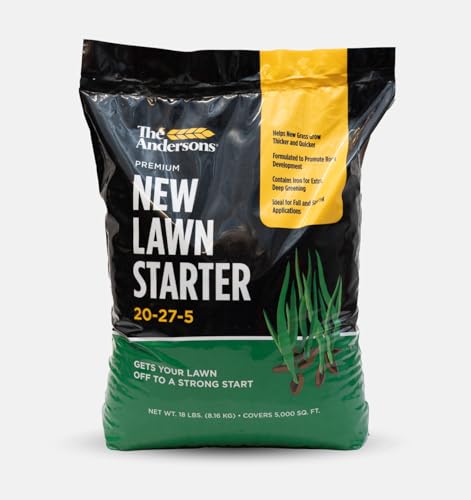
The Andersons Premium New Lawn Starter packs an aggressive 20-27-5 NPK ratio that delivers the highest phosphorus concentration in this lineup. That middle number means the formula is laser-focused on pushing root mass deep into the soil profile before the top growth accelerates. It also contains quick- and slow-release nitrogen, so the seedling gets an immediate energy boost without the risk of a nitrogen overdose that could burn tender root hairs.
The 1 percent iron inclusion adds a deep greening effect that becomes visible around the second mowing. The 18-pound bag covers up to 5,000 square feet, which makes it a practical choice for a medium-to-large lawn renovation. Multiple owner reports note germination visible in just over a week when combined with proper watering, and the sustained feeding keeps the grass filling in through the critical first month.
This formula is safe on all turf types and performs well in both spring and fall applications. The only real friction point is that the bag size is not available in a larger bulk option — some users with very large properties would prefer a 40-pound coverange to avoid buying two bags. But for the price-per-pound of phosphorus delivered, this is the most potent starter option here.
What works
- Highest phosphorus ratio in the group for deep root push
- Blend of quick- and slow-release nitrogen prevents burn
- Iron additive provides early visible greening
What doesn’t
- No larger bulk bag option for very large lawns
- Pricing is at the top end of the starter category
2. Lawn Synergy Starter Fertilizer 15-20-10
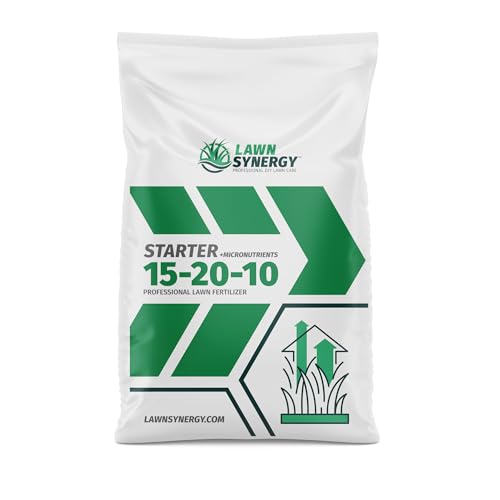
Lawn Synergy’s 15-20-10 starter blend is a professional-grade formula that prioritizes germination speed and early root strength. The 20 percent phosphorus is flanked by a modest 15 percent nitrogen and 10 percent potassium, which keeps the early green-up moderate while the root system develops. The inclusion of slow-release XCU nitrogen means you get a steady six-to-eight-week feed window rather than a quick spike that fades.
Ammonium sulfate and added iron contribute to a deeper green color that owners report seeing within three weeks of seeding with tall fescue. The granule size is consistent and flows smoothly through broadcast and drop spreaders, which reduces the chance of overlapping streaks that create uneven growth patches.
Owners consistently highlight the “professional-grade” feel of the prill quality and the lack of filler material. The main trade-off is the price-per-bag, which sits above household-name brands. But for someone doing a full lawn renovation and wanting nursery-level results, the cost maps directly to the concentration of active ingredients.
What works
- XCU slow-release nitrogen provides long feeding window
- High-quality prills spread evenly without clumping
- Ammonium sulfate plus iron for early color
What doesn’t
- Coverage area is smaller than some competitors
- Premium pricing compared to big-box starter blends
3. Jonathan Green Green-Up 12-18-8
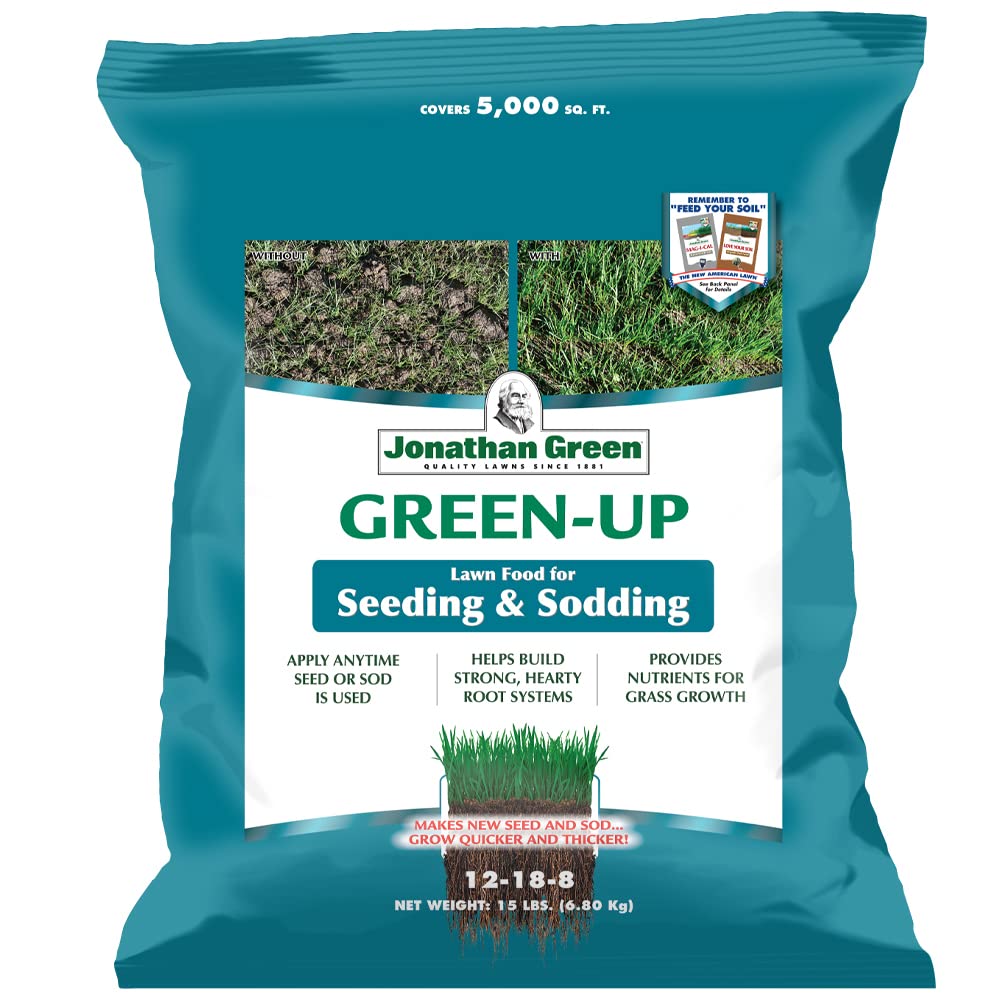
Jonathan Green’s Green-Up formula with a 12-18-8 analysis is a refined starter fertilizer that includes humates — organic compounds that improve nutrient exchange between the soil and the root zone. The phosphorus content at 18 percent is still robust enough to drive solid root formation, while the lower nitrogen figure makes it a safer choice for shaded areas where grass grows slower and is more prone to burn.
The 5,000-square-foot coverage from a 15-pound bag puts it in the same practical range as the Andersons product, but the Green-Up formula also includes iron for deep greening. Owner reports from Minnesota and Kansas show that it performs well in both full-shade and variable weather conditions. The humate component seems to help in clay or poor soils where nutrient lock-up is common.
A small subset of users note that the greening effect is not as dramatic as high-nitrogen summer fertilizers — but that is by design for a starter product. The real story is the root-mass development visible when pulling up a seedling after three weeks. If you are seeding under trees or on a north-facing slope, this is the formula that balances safety with establishment speed.
What works
- Humates improve nutrient uptake in poor or clay soils
- Lower nitrogen ratio reduces burn risk in shade
- Iron additive supports green color without overfeeding
What doesn’t
- Greening effect is moderate compared to high-N formulas
- Some users expect faster top-growth results
4. Jonathan Green Veri-Green 12-18-8
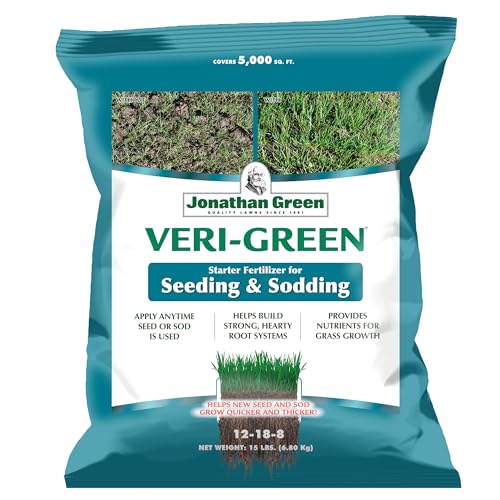
The Veri-Green starter from Jonathan Green uses the same 12-18-8 NPK base as the Green-Up line but is positioned specifically for the seeding and sodding window. The package directs you to apply it the same day as seeding or laying sod, which aligns with the agronomic recommendation of placing phosphorus in the root zone from day one.
Users report that the granular size is fine enough to pass through handheld spreaders without clogging, and the coverage per bag matches the 5,000-square-foot mark. The humate enrichment improves soil cation exchange, which helps the phosphorus stay available longer rather than locking up in alkaline or calcium-heavy soils.
Owners who combined this with Jonathan Green’s Black Beauty seed line report some of the thickest fill-in results in the review pool, with mowable turf in four weeks. The Veri-Green bag is slightly cheaper than the Green-Up bag, making it the better value if you are doing a single seeding event rather than a multi-year program. The drawback is the absence of added iron, so the initial green color depends more on nitrogen availability than on a colorant.
What works
- Designed for day-one application with seed or sod
- Humates improve phosphorus availability in tough soil
- Fine granules work well in handheld spreaders
What doesn’t
- No iron additive for rapid greening
- Nitrogen content is moderate — needs follow-up feeding
5. Yard Mastery 12-12-12
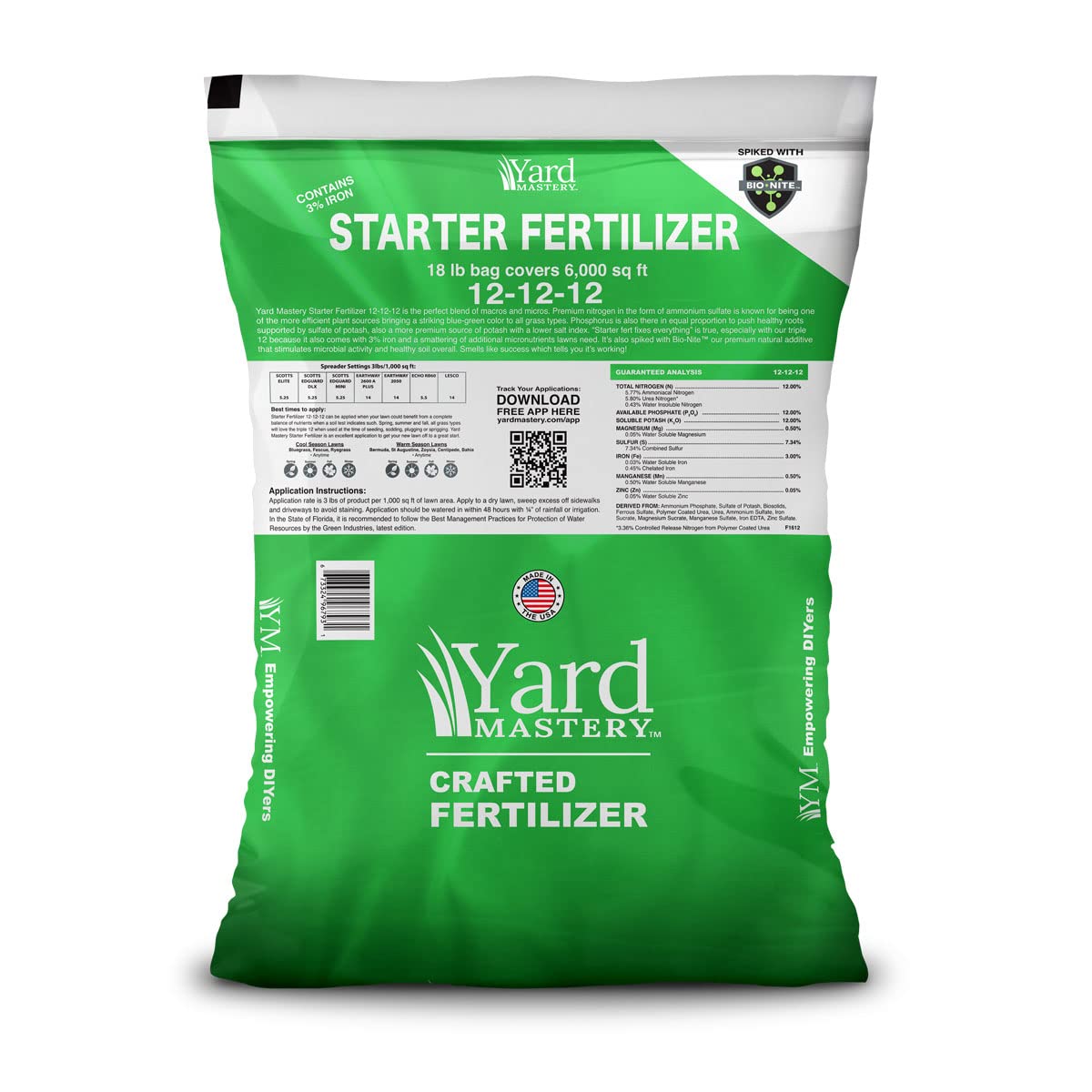
Yard Mastery’s 12-12-12 formula breaks from the high-phosphorus starter convention by offering a perfectly balanced NPK ratio. While the phosphorus number is lower than specialist starter blends, the inclusion of 12 percent ammonium sulfate and 3 percent iron makes this a strong all-season maintenance fertilizer that also works for overseeding if your soil already has decent phosphorus levels.
The slow-release formulation feeds for weeks rather than days, and the 18-pound bag stretches to cover 6,000 square feet — the largest coverage area in this lineup. That makes it an economical choice for big lawns where you want to overseed and then keep feeding through the growing season without switching products. Owner reports confirm that new rye grass germinated in one week and reached three inches in 15 days when used with seed.
The balanced ratio means this is not the ideal choice for seeding into known phosphorus-deficient soil or for a full bare-dirt renovation where you need maximum root push. But for overseeding an existing lawn that just needs a nutrient top-up, the 12-12-12 profile plus the high iron content delivers a rich dark green that most starter blends cannot match without a follow-up application.
What works
- 6,000 sq. ft. coverage reduces number of bags needed
- 3 percent iron for deep greening
- Slow-release nitrogen supports sustained growth
What doesn’t
- Phosphorus is lower than specialist starter formulas
- Not ideal for phosphorus-deficient soil renovation
6. Espoma Organic Bio-Tone Starter Plus 4-3-3

Espoma Bio-Tone Starter Plus takes a completely different approach from synthetic high-phosphorus blends. Its 4-3-3 NPK ratio looks low on paper, but the real driver here is the biological component: both endo and ecto mycorrhizal fungi plus beneficial soil bacteria. These organisms colonize the root zone and dramatically increase the seedling’s ability to mine water and nutrients from the soil.
The 18-pound bag is designed for transplanting and direct seeding of all plants, not just turf. The granules are OMRI-listed for organic production, so there is zero risk of chemical burn even if you apply it generously around tender seedlings. The added 5 percent calcium supports cell wall development in the young grass, reducing transplant shock during hot or dry weather.
Owners describe it as “can’t live without it” for establishing trees and shrubs, but it works equally well for grass seed if you are willing to accept a slower initial green-up in exchange for a deeper, more resilient root system. The trade-off is that the low NPK numbers mean you will need a follow-up nitrogen boost about four weeks after germination for visible top-growth acceleration.
What works
- Dual endo/ecto mycorrhizae for superior root colonization
- OMRI-listed — completely safe for organic gardening
- Calcium content strengthens cell walls against transplant shock
What doesn’t
- Low NPK requires follow-up nitrogen feeding
- Slower visible greening compared to synthetic starters
7. Dr. Earth 701P Organic Starter 4-Pound

Dr. Earth’s 701P Organic Starter is a concentrated 4-pound poly bag that punches above its weight through a sophisticated biological profile. It contains seven champion strains of beneficial soil microbes plus eight select strains of ecto and endo mycorrhizae — a diversity of soil biology that exceeds most products in this roundup regardless of price tier.
The formula is explicitly free of GMOs, chicken manure, and sewage sludge, which matters if you are establishing grass near edible garden beds or water features. The organic ingredients release nutrients quickly once activated by soil moisture, so seedlings get a fast biological boost without the synthetic salt content that can desiccate root tips. Coverage at the 2:1000 mixing ratio stretches the bag further than the physical 4-pound size suggests.
Owners report that this fertilizer eliminates transplant shock in hot July planting conditions and produces visible new growth on shrubs within days of application. For grass seed, the bag size is best suited to small patch repair or container seeding rather than a full lawn renovation. The smaller bag also means the cost per square foot is higher than bulk granular options, but the biological diversity is unmatched at this entry-level price point.
What works
- Highly diverse microbial and mycorrhizal profile
- No GMOs, chicken manure, or sewage sludge
- Fast biological release once soil-activated
What doesn’t
- Small 4-pound bag limits coverage area
- Higher per-square-foot cost than granular bulk bags
Hardware & Specs Guide
Phosphorus Content (Middle NPK Number)
The phosphorus figure is the single most important spec for new grass seed. A ratio of 20-27-5 delivers the highest phosphorus concentration here, ideal for bare-soil renovations where root mass must establish quickly before winter or summer stress. Lower numbers like 12-18-8 still provide adequate phosphorus but are better suited to overseeding into existing turf where the soil already has some phosphorus reserve. Organic formulas with 4-3-3 rely on mycorrhizae to unlock existing soil phosphorus rather than adding it directly.
Nitrogen Release Type
Starter fertilizers fall into quick-release, slow-release, or blended categories. Blended products like The Andersons 20-27-5 combine ammonium sulfate for immediate feeding with polymer-coated slow-release nitrogen for sustained nutrition across 6-8 weeks. Pure slow-release formulas like Lawn Synergy’s XCU-based blend reduce burn risk but delay the initial green surge. Organic starters release nitrogen only as soil microbes break down the material, which aligns with natural growth rhythms but requires warmer soil temperatures for activation.
FAQ
Can I use regular lawn fertilizer on new grass seed?
How soon after seeding should I apply starter fertilizer?
What NPK ratio is best for new grass seed in clay soil?
Final Thoughts: The Verdict
For most gardeners, the fertilizer for new grass seed winner is the The Andersons Premium New Lawn Starter because its 20-27-5 NPK ratio delivers the highest phosphorus concentration for rapid root establishment plus dual-release nitrogen for sustained feeding. If you want professional-grade slow-release nutrition with proven germination speed, grab the Lawn Synergy Starter Fertilizer 15-20-10. And for organic gardeners who prioritize soil biology and mycorrhizal colonization over raw NPK numbers, nothing beats the Espoma Organic Bio-Tone Starter Plus.