
Specs are compiled from manufacturer listings and verified buyer reviews and can change over time — please confirm the key details on the product page before buying.
A Meyer lemon tree rewards you with glossy leaves, fragrant blossoms, and fruit that tastes sweeter and less acidic than a standard lemon. But it only delivers that bounty if you feed it the right nutrients. I’m Rikta, founder of Lawn Gear Lab, and this guide cuts through marketing hype by comparing published NPK (nitrogen-phosphorus-potassium) ratios and patterns from verified buyer reviews. The result is a clear answer on which best fertilizer for meyer lemon tree gives you the most fruit with the least effort.
The trick is matching the NPK numbers and release type — fast or slow — to your tree’s growing stage. A potted tree on a patio needs a different feed than one planted in the ground. This guide names each pick’s real strengths and trade-offs so you can choose the fertilizer for meyer lemon tree that fits your situation.
Quick Picks
- GARDENWISE Professional Citrus Fertilizer + Vital Micronutrients — Top Performer
- FoxFarm Happy Frog Citrus and Avocado Fertilizer — Premium Organic
- Jobe’s Organics Fruit & Citrus Tree Fertilizer Spikes (3-5-5) — Best Value
- Espoma Organic Citrus-tone 5-2-6 — Classic Choice
- TPS Nutrients Citrus Fertilizer – Liquid Plant Food (32 oz) — Fast Liquid
- Farmer’s Secret Citrus Tree Booster (32 oz) — Super Concentrate
- Nelson NutriStar Citrus Fruit & Avocado Tree Plant Food (12-10-10) — High Potassium
How To Choose The Best Fertilizer For Meyer Lemon Tree
Picking the right plant food for your Meyer lemon tree depends on three things: the NPK numbers on the bag, whether the nitrogen is released fast or slow, and the presence of secondary nutrients that prevent leaves from yellowing. Ignore the pretty packaging and look at these specs.
Understand the NPK Ratio
The three numbers on a fertilizer label stand for nitrogen (N), phosphorus (P), and potassium (K). Nitrogen keeps leaves green and drives growth. Phosphorus supports root development and flowering. Potassium strengthens the fruit and helps the tree handle cold weather. A Meyer lemon tree does best with a slightly higher nitrogen and potassium ratio, like a 5-2-6 or 3-5-5, to balance foliage with fruit.
Slow-Release vs. Liquid Feed
Granular, slow-release fertilizers feed the tree over several weeks with a single application, making them the low-maintenance choice for in-ground trees and large pots. Liquid fertilizers, on the other hand, are absorbed quickly and give a rapid green-up and bloom boost, but require mixing and more frequent application, sometimes every week. Potted trees often benefit from a liquid feed during the active growing season because nutrients wash out faster with regular watering.
Don’t Overlook Micronutrients
Meyer lemon trees are notorious for developing yellow leaves (chlorosis) when they lack iron, zinc, or magnesium. A fertilizer that includes these micronutrients — often listed on the label as chelated iron, zinc sulfate, or magnesium — prevents that problem and keeps the leaves dark green and photosynthesizing. If your product lacks micronutrients, you may need a separate supplement.
Quick Comparison
On smaller screens, swipe sideways to see the full table.
| Model | Best For | NPK Ratio | Item Form | Size | Amazon |
|---|---|---|---|---|---|
| GARDENWISE Professional Citrus Fertilizer | Fast bloom boost | 6-4-6 | Granules | 2 lbs | Amazon |
| FoxFarm Happy Frog Citrus & Avocado | Premium organic care | 7-3-3 | Granules | 4 lbs | Amazon |
| Jobe’s Organics Fruit & Citrus Spikes | Set-and-forget feeding | 3-5-5 | Spikes | 6 spikes | Amazon |
| Espoma Organic Citrus-tone | Reliable organic granules | 5-2-6 | Powder | 64 oz | Amazon |
| TPS Nutrients Citrus Fertilizer | Quick liquid absorption | — | Liquid | 32 fl oz | Amazon |
| Farmer’s Secret Citrus Tree Booster | Super-concentrated liquid | — | Liquid | 32 fl oz | Amazon |
| Nelson NutriStar Citrus Fruit & Avocado | High-potassium winter care | 12-10-10 | Granules | 4 lbs | Amazon |
In‑Depth Reviews
1. GARDENWISE Professional Citrus Fertilizer + Vital Micronutrients
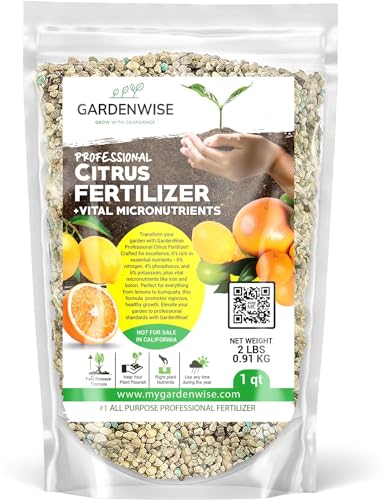
The slow-release granule that pushed a Meyer lemon into full bloom in one week, according to buyers.
You get visible bloom results fast with this one. The GARDENWISE formula uses coated granules that melt with each watering, releasing a 6-4-6 NPK (nitrogen-phosphorus-potassium) ratio for up to two months. That balance — 6% nitrogen for leaf growth, 4% phosphorus for flowers, 6% potassium for fruit quality — is almost ideally matched to what a Meyer lemon tree needs during its active season. Buyers report the product caused “tons of new growth on lime tree within 1 week,” and another noted a Meyer lemon tree was “in full bloom within 1 week of applying.” Its balanced NPK is sharper for flowering and fruiting than the FoxFarm Happy Frog’s 7-3-3, which leans heavier on nitrogen.
The micronutrient lineup is what separates it from basic citrus feeds. It includes magnesium (drives chlorophyll production for greener leaves), zinc (strengthens plant defenses), and iron (keeps foliage rich and vibrant). One reviewer whose lemon and orange trees had dull winter leaves and blossom drop saw color return and more blossoms form after just three waterings. At 2 pounds versus the Espoma 64-ounce bag, the concentrated slow-release format means a single bag lasts up to two months per application for a single tree.
For potted Meyer lemons, the up-to-two-month schedule is a practical advantage — you do not have to remember to feed every week. One reviewer feeds weekly fish emulsion alongside a half-cup of this fertilizer and reports increased flowers and fruit on a 4-year-old Cara Cara orange tree. Just follow the feeding schedule; over-fertilization harms potted trees.
What the label delivers
- Balanced 6-4-6 NPK covers growth, flowers, and fruit
- Added iron, zinc, magnesium, copper, and boron
- Slow-release granules last up to two months per application
The fine print
- Bag weighs only 2 pounds; a 4-pound bag would last longer
- Granules have a mild odor until watered in
Reach for this if: you want a single-bag solution that feeds for weeks and delivers visible bloom results fast — backed by reviewers who saw blossoms within a week.
Look elsewhere if: your tree is already stressed or you prefer a fully organic OMRI-listed product.
2. FoxFarm Happy Frog Citrus and Avocado Fertilizer

The slow-release organic formula with mycorrhizal fungi that revived yellowing citrus in days, owners mention.
This gives young trees the nitrogen boost they need. The FoxFarm Happy Frog line carries a 7-3-3 NPK ratio, which is heavier on nitrogen than the GARDENWISE 6-4-6 or any other pick here. That extra nitrogen makes it a strong option for a Meyer lemon tree coming out of winter dormancy or for a young tree that needs to build leafy structure before it can support heavy fruiting. The 4-pound bag is heavier than the GARDENWISE 2-pound bag, so you get more product for a similar price point if you have multiple trees.
What makes this product unusual is the inclusion of mycorrhizal fungi — a soil microbe that helps roots absorb more water and nutrients. One reviewer noted that yellow leaves “vanished and new growth emerged within days” on struggling citrus trees, and that the tree produced more limes than ever. That rapid response is likely a combination of the nitrogen boost and the fungi improving root efficiency. Another reviewer (a 10-year user with four avocados and ten citrus trees) says this fertilizer can be hard to find locally and was glad to see it on Amazon.
There is one honest catch. The 7-3-3 ratio is noticeably lower in phosphorus and potassium than the citrus-specific blends like GARDENWISE 6-4-6 or Espoma 5-2-6. That means it is better for leaf growth and less targeted at flower and fruit development. For a mature Meyer lemon that is already blooming, you might get better fruit set from a more balanced feed. One buyer mentioned that a single use yielded a good harvest but leaves still yellowed later in the season, suggesting it may need more frequent application during active growth.
What the label delivers
- Mycorrhizal fungi improve root efficiency and nutrient uptake
- OMRI listed for certified organic gardening
- Slow-release nitrogen for sustained vegetative growth
The fine print
- NPK is nitrogen-heavy, may need supplementary phosphorus/potassium for fruit
- Dogs are attracted to the alfalfa-meal smell; water in after use
Perfect for: organic growers with young or recovering trees that need a fast green-up and improved root health.
skip it if: your Meyer lemon is mature and flowering and you want a balanced fruit-focused feed — this one leans too heavy on nitrogen.
3. Jobe’s Organics Fruit & Citrus Tree Fertilizer Spikes (3-5-5)

The no-mess spike that customers note delivers “an abundance of juicy, sweet lemons every year.”
If you want the absolute simplest feeding routine for a Meyer lemon tree, this is it. Jobe’s spikes are pre-measured, OMRI-listed (Organic Materials Review Institute, a certification for organic use) organic sticks you push into the soil around the drip line (the area directly under the outermost branches). The 3-5-5 NPK ratio is lower in nitrogen but heavier in phosphorus and potassium — exactly what a flowering and fruiting tree needs during its productive season. One buyer who uses these on three potted Meyer lemon trees reports: “I get an abundance of juicy, sweet lemons every year! I highly recommend!”
The magic here is Jobe’s Biozome — a proprietary microorganism archaea that breaks down material faster than standard organic spikes, improving soil conditions and helping the tree resist disease, insects, and drought. Each package contains six spikes, and timing matters: reviewers point out spacing them too close to the trunk or using them at the wrong time of year (late fall/early spring is correct) can cause issues. When placed correctly, they deliver time-release nourishment straight to the roots with no mixing, no measuring, and no runoff.
For potted Meyer lemons, these spikes are a perfect fit because they eliminate the guesswork of liquid mixing ratios. One zone 6 gardener uses them to revive indoor citrus plants and says they “perk up plants and promote flowering.” Note that the manufacturer states these are designed for in-ground trees, but verified buyers successfully use them in large containers by following the package spacing instructions.
What makes it easy
- Zero measuring or mixing — push into soil and water
- OMRI organic with Biozome for faster nutrient breakdown
- 5% potassium supports cold hardiness and fruit quality
Watch out for
- Only 6 spikes per box; larger trees need multiple packages
- Improper placement (too close to trunk) can harm the tree
Best for: anyone who wants a “set it and water it” routine with proven results — shoppers say consistent, juicy harvests year after year.
Not ideal if: you have a very young or small Meyer lemon tree; spikes may deliver too much nutrition in a concentrated area.
4. Espoma Organic Citrus-tone 5-2-6

The 64-ounce organic powder with a 5-2-6 ratio and 5% calcium for stronger trunks and limbs.
You get a large bag that builds structural strength in your tree. Espoma has been making organic fertilizer since 1929, and the Citrus-tone formula is a direct match for Meyer lemon trees. The 5-2-6 NPK is heavier on potassium than the GARDENWISE 6-4-6, which helps fruit quality and cold tolerance — useful if your Meyer lemon tree faces a chilly winter. It also includes 5% calcium, which strengthens the tree’s trunk and branches. The 64-ounce bag is larger than the GARDENWISE 2-pound bag, so you get more product for the same price.
The powder form requires no mixing — you simply apply it to the soil around the drip line and water it in. Espoma recommends using it late winter pre-bloom, spring post-bloom, and in fall, which gives you a simple three-feed schedule per year. The product is approved for organic production (registered Organic Input Material) and contains no sludges or toxic ingredients. One reviewer calls it “the best I’ve found for citrus.”
The trade-off is the smell. Several verified buyers mention the strong odor, with one saying it is “very smelly” and recommends outdoor use only and keeping dogs away — adding that the smell wears off after about a week. Another reviewer used it on strawberries and raspberries with good results, noting it works beyond just citrus trees. If you are sensitive to earthy, organic fertilizer odors, this one will be noticeable until it is watered in.
What it brings
- 5% calcium builds stronger trunk and limb structure
- Approved for organic production; Bio-tone formula included
- 64 ounces is the largest bag on this list
The catch
- Strong odor for the first week after application
- Powder form can be dusty during application
Grab this if: you want a large bag of organic citrus feed with added calcium for structural strength and a proven three-feed schedule.
Pass if: you have a dog that investigates every garden smell or you want a zero-odor solution.
5. TPS Nutrients Citrus Fertilizer – Liquid Plant Food (32 oz)
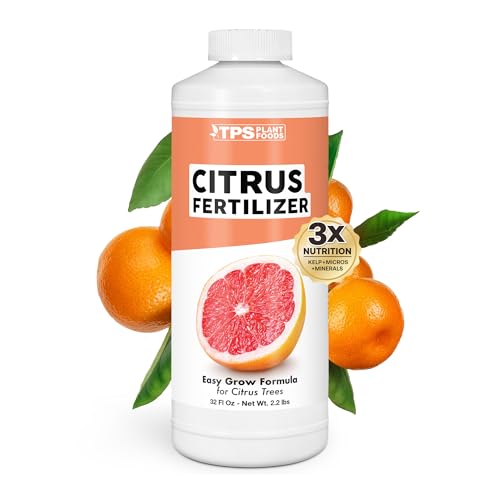
The liquid concentrate that buyers report is “easy to apply” and “significantly improved leaf greenness” within weeks.
When your Meyer lemon tree needs a quick boost — yellow leaves, slow growth, or weak flowering — a liquid feed delivers nutrients straight to the roots without waiting for granules to break down. TPS Nutrients markets this as a citrus-specific liquid that supports flowering, fruit set, and overall tree performance. The mixing ratio is 2 tablespoons per gallon of water, and the bottle yields 32 gallons of mixed feed. That is far less concentrated than the Farmer’s Secret option, where just one teaspoon per gallon gives hundreds of feedings.
One reviewer points out an important detail: the fertilizer includes beneficial micronutrients like magnesium, calcium, and iron but is “slightly low in nitrogen.” The same reviewer says it is best used with a higher-nitrogen supplement for optimal growth. That matters because a Meyer lemon tree needs adequate nitrogen to support its foliage, which in turn feeds the fruit. Another buyer uses it for outdoor potted citrus and likes that there is “nothing to mix up” — just add to the watering can.
On the value side, the math works out to roughly the same as the granular options. The liquid format is ideal for potted trees where salts from slow-release granules can build up over time, and for anyone who already uses a liquid feeding schedule. Owners mention it is “safe, gentle, and effective for citrus and fruiting trees.” Just plan on pairing it with a nitrogen supplement if your tree shows signs of leaf yellowing beyond the typical micronutrient deficiency.
Liquid advantage
- Fast-acting formula shows results in days to weeks
- Easy mixing: 2 tbsp per gallon with no dusty granules
- Includes magnesium, calcium, and iron
Nitrogen note
- Low nitrogen content may require a separate supplement
- 32 gallons per bottle means it runs out faster than a granular bag
Good for: potted citrus owners who prefer a liquid schedule and want fast absorption with built-in micronutrients.
Skip if: you want a complete balanced feed without needing to buy a second nitrogen supplement.
6. Farmer’s Secret Citrus Tree Booster (32 oz)

The super-concentrated liquid where one teaspoon per gallon made “unhappy” potted lemon trees look their best in years, customers note.
This is the longest-lasting liquid per bottle. Farmer’s Secret brings a farmer-grade, super-concentrated approach to home citrus care. The mixing ratio is incredibly lean — just one teaspoon of liquid per gallon of water for young trees, up to two teaspoons for mature trees. With a 32-ounce bottle, that is hundreds of gallons of feed, making it one of the longest-lasting options per dollar. The product is made in Kentucky and uses a “scientifically backed formula development process” originally designed for commercial growers.
Buyer reports are strong. One reviewer with a “sick indoor lemon tree” revived it with this fertilizer after 2-3 applications, reporting “lots of new flowers” and bigger existing fruit. Another said their “unhappy potted lemon and lime trees loved this product” and produced “new nice green leaves, more flowers and fruit” — better results than the fertilizer spikes they had used before. For indoor or container trees, the manufacturer recommends cutting the dosage in half or applying every other week, which prevents salt buildup in potted soil.
The biggest advantage here is the concentration. You carry a single small bottle and it lasts the entire growing season, even for multiple trees. On the flip side, it is the lowest-volume liquid in terms of bottle size (32 ounces), but the teaspoon-per-gallon ratio means it goes further than TPS’s 2-tablespoon-per-gallon mix. One curiosity is that a reviewer mentioned using it on a vegetable garden and flowers with great results, suggesting it is versatile despite being marketed specifically for citrus.
Why it stands out
- Extreme concentration: 1 tsp per gallon, hundreds of feedings per bottle
- Works for both outdoor and indoor container trees
- Reviewers point out fast recovery of sick trees with new flowers and fruit
Minor drawbacks
- No NPK ratio printed on the label — you don’t know the exact nutrient breakdown
- Higher upfront cost for a single bottle
Ideal for: container growers with multiple trees who want a single bottle that lasts all season and produces visible revival results.
Not for: anyone who wants a clear NPK label to track exact nutrient ratios.
7. Nelson NutriStar Citrus Fruit & Avocado Tree Plant Food (12-10-10)
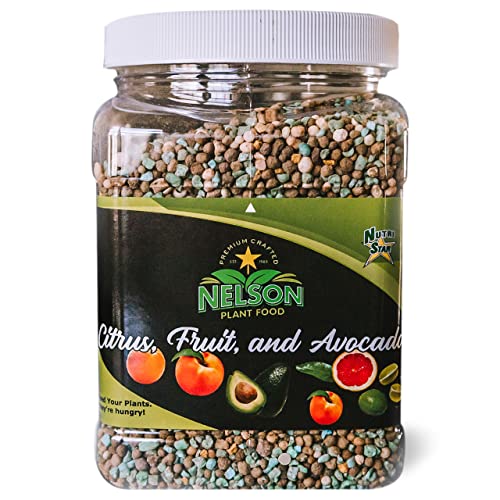
The high-potassium 12-10-10 granular feed that shoppers say makes trees “grow a full batch of new leaves” within two months.
This pick delivers the strongest fast-growth punch. Nelson NutriStar takes a different approach from the organic picks above. The 12-10-10 NPK ratio is significantly higher in total nutrients — 12% nitrogen, 10% phosphate, and 10% soluble potash. The high potassium content is specifically noted for helping trees survive colder weather, and the included calcium strengthens trunks and limbs. This is a synthetic granular fertilizer designed for “immediate results” that work with the soil’s biology to feed at the right time. It is the most expensive option here by price per bag.
One buyer reports their orange tree “taken off and grown a full batch of new leaves” within two months of switching to this feed, even after moving the tree indoors. Another says they “clearly see a difference in the growth and size of my plants since using.” The manufacturer recommends applying every 30 days during the growing season, which is a more frequent schedule than the slow-release organics. The 4-pound bag at a premium price point makes it the most expensive option on this list.
The trade-off is straightforward: this is a high-analysis synthetic feed rather than a gentle organic option. The 12-10-10 ratio is much stronger than the 5-2-6 or 6-4-6 ratios of the organic picks. That means it can push rapid growth, but you need to follow the label rate carefully — over-application can burn roots, especially in containers. It is better suited for established in-ground trees than for young or potted Meyer lemons, where a gentler organic feed reduces the risk of salt buildup.
Strength points
- High 12-10-10 analysis drives fast visible growth
- Potassium content helps trees survive cold weather
- Added calcium for trunk and limb strength
Considerations
- Synthetic formula can burn roots if over-applied
- Requires monthly reapplication during growing season
Best for: experienced gardeners with large, established in-ground Meyer lemon trees who want fast, visible growth and cold-weather protection.
Avoid for: potted or young Meyer lemon trees where the high nutrient concentration risks root burn.
Understanding the Specs
NPK Ratio
This is the three-number code on every fertilizer label — nitrogen (N), phosphorus (P), and potassium (K). Nitrogen drives leaf and stem growth, which is essential for a young Meyer lemon tree building its canopy. Phosphorus supports root development and flower formation. Potassium strengthens the fruit and helps the tree resist drought and cold. For a Meyer lemon, a ratio with slightly higher potassium than phosphorus, like 5-2-6 or 6-4-6, encourages fruit quality without sacrificing foliage.
Slow-Release vs. Liquid
Slow-release granular fertilizers (like the Espoma, FoxFarm, and GARDENWISE picks) break down gradually over weeks or months with each watering, providing steady nutrition with fewer applications. Liquid fertilizers (like TPS Nutrients and Farmer’s Secret) are absorbed immediately, making them ideal for a quick green-up or for potted trees where slow-release salts can accumulate. The trade-off is that liquids require more frequent mixing and application — sometimes weekly during the growing season.
FAQ
What NPK ratio is best for a Meyer lemon tree?
Should I use liquid or granular fertilizer for my Meyer lemon tree?
Can I use a general fruit tree fertilizer on a Meyer lemon tree?
How often should I fertilize a potted Meyer lemon tree?
Why are my Meyer lemon tree leaves turning yellow?
Is organic or synthetic fertilizer better for Meyer lemon trees?
Can I use Miracle-Gro on my Meyer lemon tree?
When is the best time of year to fertilize a Meyer lemon tree?
How much fertilizer does a Meyer lemon tree need per application?
Final Thoughts: The Verdict
For most buyers, the fertilizer for meyer lemon tree winner is the GARDENWISE Professional Citrus Fertilizer because its balanced 6-4-6 NPK ratio, slow-release granules that feed for up to two months, and full micronutrient package (including iron, zinc, and magnesium) deliver visible blooms within a week and sustained fruit production with minimal effort. If you want a completely hands-off organic routine, grab the Jobe’s Organics Fruit & Citrus Spikes — buyers report “an abundance of juicy, sweet lemons every year” with no measuring required. And for a fast liquid option that revives struggling trees quickly, the Farmer’s Secret Citrus Tree Booster is the super-concentrated pick where one teaspoon per gallon lasts all season.
How We Picked
We do not accept paid placement, and we did not hands-on test every unit. Instead, we match each pick to a real buyer and use-case by comparing the manufacturers’ published specifications against the patterns in verified customer reviews — so you get each pick’s real strengths and trade-offs instead of marketing copy.
Sources & Methodology
Specifications: manufacturer listings and product documentation. Review insights: verified customer reviews, as of July 2026. Pricing: not shown on this page (it changes often); check the current price via the retailer link.
As an Amazon Associate, Lawn Gear Lab earns from qualifying purchases. This does not affect which products we feature.