
Specs are compiled from manufacturer listings and verified buyer reviews and can change over time — please confirm the key details on the product page before buying.
Your loropetalum’s deep burgundy leaves and fringe-like pink flowers only show off when the soil is acidic enough. Without the right pH and nutrients, the leaves turn a sickly yellow (a condition called chlorosis, where iron gets locked out) and the blooms stay sparse. You are not just feeding a plant — you are controlling the acidity that open up its color.
I’m Rikta, the writer behind Lawn Gear Lab. This guide compares manufacturer specifications and patterns from verified customer reviews so you see each pick’s real strengths and trade-offs, not marketing spin.
Every fertilizer below delivers the acidic punch loropetalum demands. They differ in feeding speed, organic content, and how often you apply them. Read on to find the one that fits your schedule, your gardening philosophy, and your soil’s starting condition — this is your practical roadmap through the best fertilizer for loropetalum on the market today.
Our Picks at a Glance


How To Choose The Best Fertilizer For Loropetalum
Loropetalum is an acid-loving shrub. Standard 10-10-10 all-purpose fertilizer will slowly starve it by raising the soil pH beyond its comfort zone. The right fertilizer delivers three things: a low (or acidifying) pH effect, a nitrogen source for green-up, and sulfur or iron to prevent chlorosis. Here is what you need to evaluate.
N-P-K Ratio — The Three Numbers That Matter
Every bag lists three numbers: nitrogen (N), phosphorus (P), and potassium (K). For acid-loving plants like loropetalum, look for the first number (nitrogen) to be the highest or second-highest — nitrogen drives leaf color and overall vigor. A ratio like 17-6-6 or 9-15-13 signals a formulation designed for this category, with enough phosphorus to support root health and blooms without overdoing it.
Water-Soluble vs. Granular — Speed vs. Convenience
Water-soluble powders, like Jack’s Classic or Miracle-Gro’s acid formula, dissolve instantly and deliver nutrients directly to the roots within hours. You mix them with water every 7-14 days during the growing season. Granular products, like Espoma Holly-Tone or Dr. Earth, you sprinkle around the drip line once or twice a year — they break down slowly via soil microbes and rain. Choose the schedule that suits your gardening habits.
Organic vs. Synthetic — Philosophy and Soil Health
Organic fertilizers (Dr. Earth, Espoma Holly-Tone, GARDENWISE) feed the soil food web — they add humic acids, beneficial microbes, and micronutrients over time. They are slower to show results but build long-term soil structure. Synthetics (Jack’s Classic, Miracle-Gro, NutriStar) deliver precise, fast-acting nutrients. Both work; the choice depends on whether you prioritize speed or long-term biological richness.
Quick Comparison
| Model | Best For | N-P-K Ratio | Item Form | Weight | Amazon |
|---|---|---|---|---|---|
| Miracle-Gro Water Soluble Azalea Food★ Best Overall | Fast greening with minimal effort | — | Powder | 5 lb | Amazon |
| Jack’s Classic Acid SpecialTop Performer | Precise water-soluble feeding | 17-6-6 | Powder | 1.5 lb | Amazon |
| Espoma Organic Holly-Tone | Organic slow-release for large beds | 4-3-4 | Granules | 4 lb per bag (2-pack) | Amazon |
| Dr. Earth Acid Lovers | Non-GMO verified organic feeder | — | Granules | 1 lb | Amazon |
| GARDENWISE 8-4-8 Acidic Fertilizer | Iron-rich granular, 3 feeds a year | 8-4-8 | Granules | 0.96 kg | Amazon |
| NutriStar 9-13-11 Acid Loving | Bloom boost with iron for leaf color | 9-13-11 | Granules | 2 lb | Amazon |
| Fertilome Azalea, Camellia, Rhododendron Food | High-budget heavy feeding for large plants | 9-15-13 | Granules | 10 lb | Amazon |
In‑Depth Reviews
1. Miracle-Gro Water Soluble Azalea, Camellia, Rhododendron Plant Food, 5 lb.
Our pick — over 4.5★ from 600+ verified ratings; the strongest balance of quality and price.
A 5 lb powder that gives your loropetalum an instant green-up boost — visible within a week, buyers report.
Got a shrub that looks pale and needs results fast? This water-soluble powder feeds your plants the moment it hits the roots. You mix it at a ratio of 1:144 for indoor plants or 1:18 for outdoor use — a little goes a long way. Apply it every 7-14 days with a watering can or a Miracle-Gro Garden Feeder, and you will see deeper green leaves and more blooms within a couple of weeks. It weighs 5 pounds (80 ounces), so the bag lasts for several seasons of regular feeding.
The formulation is designed specifically for acid-loving plants like azaleas, camellias, rhododendrons, gardenias, hibiscus, hollies, hydrangeas, and orchids — and that makes it a perfect match for loropetalum. It won’t burn foliage when used as directed, which takes the guesswork out of mixing. Compared to the granular Espoma Holly-Tone, this delivers a faster, more direct hit of nutrients, though you will need to feed more frequently.
Owners mention seeing a visible difference in leaf color within the first week of use. One note: at 5 pounds, this is a mid-tier volume — if you have a large hedge or multiple beds, the 10 lb Fertilome bag below may stretch further.
Why It Works Fast
- Water-soluble powder feeds plants instantly through roots or leaves
- 5 lb bag (80 oz) gives good value for frequent feeding schedules
- Won’t burn foliage when mixed as directed — safe for beginners
The Feed-Frequency Tradeoff
- Requires mixing every 7-14 days — not a set-and-forget product
- Not organic — synthetic formulation, no OMRI or Non-GMO certification
Best for fast green-up: If your loropetalum is looking washed out and you want visible improvement within a week, this powder is the fastest option here.
Look elsewhere for organic: If you avoid synthetic chemicals, skip this and head to Dr. Earth or Espoma Holly-Tone below.
2. Jack’s Classic 17-6-6 Acid Special Water-Soluble Fertilizer with Micronutrients, 1.5 lbs
A high-nitrogen 17-6-6 acid special that pushes lush leaf growth and bigger blooms — 17% nitrogen is the highest in this guide.
This water-soluble powder is built for acid-loving plants that need a strong nitrogen boost. The 17-6-6 analysis means 17% nitrogen — notably higher than the 4% in Espoma Holly-Tone — which drives deep green foliage and vigorous vegetative growth. The added iron and sulfur help prevent the yellowing leaves (chlorosis) that loropetalum is prone to in alkaline soil. You mix 1 teaspoon per gallon of water, and the included measuring spoon makes it simple to use.
Unlike the Miracle-Gro option above, this one works as both a root drench and a foliar spray. Spraying directly on the leaves gives an extra-fast uptake when your shrub is looking stressed. Its 24-ounce unit count (1.5 lb) is smaller than the 80-ounce Miracle-Gro bag — a 5.3x gap — but the concentrate goes further per feeding because the mixing ratio is leaner. Customers note that the increased iron content keeps new growth from turning yellow even in poor soil.
One honest note: the high nitrogen content means you need to be careful not to over-apply, especially on young plants. Stick to the 1 teaspoon per gallon rule, and you will avoid root burn while getting spectacular results.
High-Value Concentrate
- 17% nitrogen drives fast leaf color and growth — highest N in this guide
- Works as a foliar spray for near-instant absorption when plants are stressed
- Comes with a measuring spoon for precise mixing every time
Needs Careful Measuring
- High nitrogen can burn plants if over-mixed — follow the 1 tsp/gal rule
- Smaller bag (24 oz) vs. 80 oz Miracle-Gro — buy in bulk if you have many shrubs
Reach for this if you want targeted root + leaf feeding: The dual-use as a spray and drench makes it the most flexible water-soluble option here, especially for shrubs showing early chlorosis.
Not ideal if you forget measuring: If you want a low-maintenance granular, skip this and grab Espoma Holly-Tone.
3. Dr. Earth Acid Lovers Azalea, Camellia, Rhododendron & Maple Fertilizer 4 lb

A Non-GMO Project Verified organic granular that feeds the soil, not just the plant — the only Non-GMO verified fertilizer in the U.S.A.
If you are committed to organic gardening, this is the cleanest option. Dr. Earth is the only Non-GMO Project Verified fertilizer in the U.S.A. — it contains no synthetic chemicals, no GMO-infested chicken manure, and no toxic ingredients, according to the brand. It is handcrafted from human and feed-grade ingredients, enriched with multi-minerals, proteins, carbohydrates, humic acids, and trace elements that build healthy soil biology. You sprinkle the granules (one 1 lb bag) around the drip line once in spring and once in fall, then water it in.
The 1-pound bag is noticeably smaller than the 5-pound Miracle-Gro — a 5.0x weight gap — but organic formulas are more concentrated by volume and require less material per feeding. It also carries OMRI (Organic Material Review Institute), OIM (Organic Input Materials), CCOF (California Certified Organic Farmers), and NOP (National Organic Program) certifications, so you have clear documentation of its purity. Buyers with sensitive pets appreciate that it is labeled people and pet safe.
The catch: organic granules work slower than synthetic powders. You will not see overnight green-up. The payoff is a richer soil microbiome over time, which means healthier plants with deeper root systems in the long run.
Cleanest Organic Profile
- Non-GMO Project Verified — the brand claims it is the only fertilizer in the U.S.A. with this certification
- Pet and people safe — no toxic synthetic chemicals or GMO manure
- Includes humic acids, carbohydrates, and trace minerals for soil biodiversity
Slower Results
- 1 lb bag is the smallest weight here — buy multiple for large hedges
- Organic granules take weeks to fully break down — not for emergency green-up
Best for eco-conscious gardeners: If you want a certified organic, pet-safe, non-GMO product that builds soil health, this is your pick.
Not for quick results: If your loropetalum is already yellow and stressed, reach for Jack’s Classic or Miracle-Gro for faster correction.
4. Espoma Organic Holly-Tone 4-3-4 Evergreen & Azalea Plant Food, 4 lb (Pack of 2)
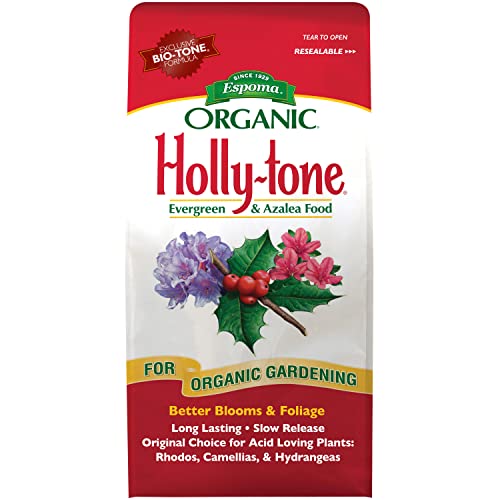
The original organic acid-lover formula since 1929 — now in a 2-pack totaling 8 lb, the largest organic volume here.
Espoma Holly-Tone is a classic in the gardening world — in production since 1929. This pack contains two 4-pound bags (128 ounces total), making it the largest organic option in this guide. The 4-3-4 analysis is designed for all acid-loving plants: azaleas, hydrangeas, rhododendrons, blueberries, evergreens, camellias, and of course loropetalum. It contains 5% sulfur to lower soil pH, and it is enhanced with Espoma’s exclusive Bio-tone formula — a blend of beneficial microbes that help break down nutrients into plant-available forms.
Unlike Dr. Earth’s 1-pound bag (a 4.0x weight difference in Espoma’s favor), this gives you enough volume to feed multiple bushes or a hedge row through the entire growing season. You do not need to mix anything — just sprinkle the granules around the drip line in spring and fall, then water thoroughly. It is registered as an Organic Input Material, so it meets the National Organic Program standards.
Reviewers point out that the gradual release keeps loropetalum consistently deep purple-red throughout summer, with fewer applications needed compared to synthetic liquid feeds. The one trade-off: the 4-3-4 ratio is lower in nitrogen than some synthetics, so you may want a supplemental foliar feed if your soil is severely nitrogen-deficient.
Set-and-Forget Organic
- 128 oz (8 lb total) — the largest organic volume here, great for hedges
- No mixing required — apply dry granules twice a year, then water
- Includes Bio-tone microbes and 5% sulfur for soil acidification
Lower Nitrogen Ratio
- 4-3-4 N-P-K is modest — may need supplemental feeding for quick green-up
- Organic breakdown is temperature-dependent — slower in cool spring soil
Best for large gardens and organic consistency: If you want low-maintenance organic feeding across multiple loropetalums, the 2-pack is the best value per pound.
Not for immediate fixing of yellow leaves: Pair with a fast-acting water-soluble (like Jack’s Classic) if your shrubs are currently stressed.
5. GARDENWISE 8-4-8 Acidic Fertilizer for Azaleas, Camellias, Hydrangeas, Blueberries, 1 Quart
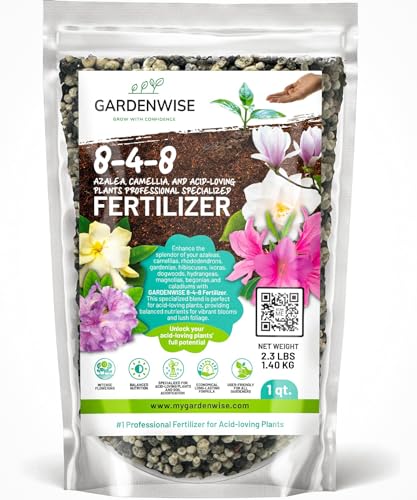
A slow-release granular with iron and microbes — the manufacturer says it only needs 3 feeds a year.
This granular option brings something distinct: it is enriched with live bacterial microbes that come from a bio-solid production process. The bio-solids are heated, dried, and prilled to remove toxins and heavy metals, leaving behind a safe soil conditioner that feeds microbial life. The 8-4-8 analysis includes magnesium, manganese, and iron — the key micronutrients that prevent chlorosis in acid-loving plants. The manufacturer claims only three feedings per year are needed.
At 32 ounces (0.96 kg) per bag, it sits between the 24-ounce Jack’s Classic and the 80-ounce Miracle-Gro in size. The iron content is specifically aimed at preventing the yellowing that signals iron deficiency in high-pH soils — a common problem for loropetalum grown near concrete foundations or in heavy clay. Shoppers say that the scent is mild compared to some organic fertilizers, which is a plus for container gardening near patios.
The real selling point: the microbial component means this product actively builds soil structure as it feeds, similar to an organic but with a more predictable slow-release schedule. If you want a middle ground between synthetic fast-acting and fully organic, this is it.
Low-Maintenance Schedule
- Only 3 feedings per year — less hassle than every-2-week liquid mixes
- Contains live bacterial microbes to boost soil biodiversity
- Iron and magnesium content directly targets chlorosis prevention
Smaller Bag
- 32 oz bag is mid-size — may need multiple bags for large hedges
- Bio-solid process may not appeal to purist organic gardeners
Best for the “set three times per year” schedule: If you want granular convenience with microbial benefits and do not want to mix liquids every week.
Not for you if you prefer certified organic: The bio-solid process does not carry the same OMRI/Non-GMO labels as Dr. Earth or Espoma.
6. Nelson Acid Loving Plant Food NutriStar 9-13-11 (2 lb.)

A 9-13-11 granular with three sources of iron for deeper leaf color — 3.2% total iron, more than any other pick here.
If your loropetalum’s foliage has faded to a pale green or bronze, this NutriStar formula targets that exact problem. It contains 9% nitrogen, 13% phosphate, and 11% soluble potash (the K in N-P-K), with four acidifying sources to lower soil pH. what separates it is the three separate sources of iron (totaling 3.2%) — iron is the key micronutrient that deepens the purple-red tones in loropetalum leaves. It also contains 20% cottonseed meal, which feeds plants slowly and consistently.
The 2-pound bag (32 oz) is compact, but you only need to apply it in the beginning of spring and every other month during the growing season. That means one bag can cover several medium-sized shrubs for the whole year. It is designed for in-ground and container plants alike. The manufacturer, Nelson Plant Food, claims it has been the leading landscapers’ choice for flowering plants for over 30 years.
One reviewer noted that the granular form is easy to apply but needs watering-in quickly if rain is not expected — unlike slow-release organics, the nutrients work best when dissolved into the root zone within a day of application.
Iron-Rich Formula
- 3.2% total iron from three sources — directly prevents leaf yellowing
- Four acidifying ingredients help lower stubborn alkaline soil pH
- Cottonseed meal provides slow, consistent nutrient release
Requires Good Watering
- Needs immediate watering after application to activate nutrients
- 2 lb bag covers fewer plants than larger 10 lb options
Best for restoring leaf color on established shrubs: If your loropetalum leaves have gone pale and you want a targeted iron boost, this is your formula.
Not for single-bush small gardens: If you only have one potted loropetalum, a smaller bag like Dr. Earth (1 lb) may suffice.
7. Fertilome (13695) Azalea, Camellia, Rhododendron Food 9-15-13 (10 lbs.)
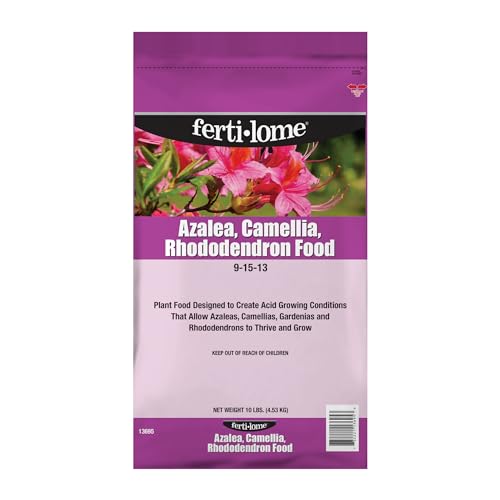
A 10 lb bag of 9-15-13 granular that feeds a hedge row for an entire season — the largest unit count in this guide by 5x over the smallest.
When you have multiple loropetalums — or a long hedge — this is the high-volume workhorse. The 10-pound bag (160 ounces) is the largest unit count in this guide by a wide margin: compare it to the 32-ounce GARDENWISE or the 24-ounce Jack’s Classic. The 9-15-13 analysis is phosphate-rich (15% phosphorus), which supports strong root development and flower production. It creates an acid growing condition that allows azaleas, camellias, and gardenias to thrive — and loropetalum is right in that group.
Application is straightforward: feed existing plants in very early spring, again after blooming, and again in fall. The dosage chart is plant-size based: 1/4 to 1/2 cup for plants 1 to 5 feet tall, and 3/4 to 1 1/4 cups for plants 6 to 12 feet tall. That means one 10-pound bag could cover a dozen 3-foot loropetalums or four large 8-foot specimens across all three feedings. Buyers report that the granular form is dust-free and easy to broadcast by hand.
The trade-off: the 9-15-13 ratio is heavier on phosphorus than many alternatives. That is fine for flowering shrubs, but it is not ideal if your soil already tests high in phosphorus (common in gardens that have been heavily fertilized in the past).
Best Volume Per Dollar
- 10 lb bag (160 oz) is the largest in this guide — covers hedges all season
- Clear dosage chart based on plant height (1/4 cup to 1 1/4 cups)
- Creates acidic soil conditions, tested on azaleas, camellias, rhododendrons
Phosphate-Heavy Ratio
- 15% phosphate may build up in already phosphorus-rich soils
- Granular — slower to show results compared to water-soluble powders
Best for large hedges and volume buyers: If you are feeding a row of 10 or more loropetalums, the 10 lb bag is the most cost-effective choice per feeding.
Not for low-phosphorus-sensitive soil: If your soil test shows adequate to high phosphorus, look at a more balanced ratio like the 8-4-8 GARDENWISE or 4-3-4 Espoma.
Understanding the Specs
N-P-K Ratio
Every bag of fertilizer prints three hyphenated numbers — that is nitrogen (N), phosphorus (P), and potassium (K) by percentage weight. For loropetalum, the first number (nitrogen) should be moderate to high (4 up to 17) because nitrogen drives leaf color and shoot growth. Phosphorus (the middle number) supports root and bloom development; a ratio like 9-15-13 gives more phosphorus than a 4-3-4. Potassium (the last number) helps overall plant resilience. Look for any ratio where the first and third numbers are at least equal to or higher than the second number.
Water-Soluble vs. Granular
Water-soluble powders (like Jack’s Classic or Miracle-Gro) dissolve in water and feed your plant immediately — great for fast correction of yellow leaves. You typically apply them every 7-14 days. Granular products (like Espoma, Dr. Earth, Fertilome) are sprinkled around the base and break down slowly via rain and soil bacteria. They are applied 2 to 4 times per year, making them lower maintenance but slower to show results.
FAQ
Can I use a general-purpose 10-10-10 fertilizer on loropetalum?
Should I use water-soluble or granular fertilizer for loropetalum?
How often should I fertilize loropetalum during the growing season?
What is chlorosis and how do I stop it on my loropetalum?
Can I use a fertilizer labeled for azaleas on loropetalum?
Do I need to test my soil pH before buying fertilizer?
Will an acidic fertilizer harm my other plants near loropetalum?
How much fertilizer does one loropetalum shrub need per feeding?
Can I use Epsom salt as a substitute for acidic fertilizer on loropetalum?
What time of day should I apply fertilizer to loropetalum?
Final Thoughts: The Verdict
If you want one dependable pick, the fertilizer for loropetalum winner is the Miracle-Gro Water Soluble Azalea Food because it delivers fast, reliable results with minimal risk of burn and a generous 5 lb bag that covers regular summer feeding. If you want an organic slow-release approach with soil health benefits, grab the Espoma Organic Holly-Tone 2-pack. And for the high-volume hedging project, the standout is the Fertilome 10 lb bag for sheer coverage per feeding.
How We Picked
We do not accept paid placement. Every pick is matched to a real buyer and a real use-case; we do not hands-on test units.
Sources & Methodology
Specifications: manufacturer listings and product documentation. Review insights: verified customer reviews, as of July 2026. Pricing: not shown on this page (it changes often); check the current price via the retailer link.
As an Amazon Associate, Lawn Gear Lab earns from qualifying purchases. This does not affect which products we feature.