
A live oak canopy that turns pale yellow instead of deep green signals a tree locked in a silent fight for nutrients. Texas Hill Country clay, coastal Florida sand, and urban fill dirt each bind essential minerals differently, turning a routine feeding into a chemistry puzzle. Matching the right nitrogen ratio, iron availability, and soil pH correction to your specific oak’s stress is the only way to reverse chlorosis and push dense, dark foliage through a long dry summer.
I’m Rikta — the co-founder and writer behind Lawn Gear Lab. I have spent hundreds of hours comparing granular formulations, systemic implants, and liquid concentrates against the specific nutrient demands of mature oaks, poring over soil science publications and thousands of verified owner reports to isolate what actually reverses leaf yellowing and supports root mass in slow-growing hardwoods.
This guide cuts through the marketing to deliver the best nitrogen delivery system, iron correction method, and organic amendment for your specific soil challenge, whether you are treating a single specimen or a dozen trees along a driveway. After evaluating dozens of products, I selected the fertilizer for live oak trees that delivers measurable results without risking root burn or contaminating nearby beds.
How To Choose The Best Fertilizer For Live Oak Trees
Live oaks demand a different feeding approach than fast-growing shade trees. Their dense, evergreen canopy, deep taproot, and tolerance for poor soil mean you must match the nutrient source to the specific deficiency symptom you observe — not guess a one-size-fits-all bag.
Understand the Soil pH and Iron Availability
Alkaline soil (pH above 7.0) locks iron into an insoluble form no root can absorb. If your live oak shows interveinal yellowing on new growth, you are likely fighting iron chlorosis. A granular acidifying feed like Espoma Holly-Tone (4-3-4 with 5% sulfur) slowly lowers pH, while systemic MediCap iron implants deliver chelated iron directly into the sap stream — bypassing the soil chemistry problem entirely.
Choose Between Spikes, Granules, Liquid, and Implants
Spikes (such as Jobe’s 16-4-4) deposit nutrients at the dripline where feeder roots are active, eliminating runoff and measuring error. Granules like Hi-Yield 12-6-6 work well for surface broadcasting under a wide canopy, but require watering in. Liquid concentrates (TPS Nutrients) act fast on container-grown or young oaks but wash through sandy soil quickly. Systemic implants are the only option when the tree already shows advanced chlorosis and surface applications have failed.
Match the NPK Ratio to the Growth Stage
A nitrogen-rich 16-4-4 spike drives foliage density in established oaks that simply look thin. If you want balanced root and shoot growth without forcing excessive flushes, a 12-6-6 or 4-3-4 moderate ratio is safer. The high first number in Jobe’s spikes can push too much leaf growth on young trees, making them vulnerable to wind damage — reserve high-nitrogen formulas for specimens with a trunk diameter over eight inches.
Quick Comparison
On smaller screens, swipe sideways to see the full table.
| Model | Category | Best For | Key Spec | Amazon |
|---|---|---|---|---|
| Jobe’s 16-4-4 Spikes | Spike | Slow‑release deep feeding | 16-4-4 NPK, 15 spikes | Amazon |
| Espoma Holly‑Tone 4‑lb | Granular | Acid‑loving oaks & shrubs | 4-3-4 NPK, 5% sulfur | Amazon |
| TPS Liquid Tree Food | Liquid | Fast green‑up on young oaks | 32 oz concentrate | Amazon |
| Hi‑Yield 12‑6‑6 | Granular | General feeding, large canopies | 12-6-6 NPK, 10 lbs | Amazon |
| MediCap Iron Implants | Implant | Stubborn iron chlorosis | 25 implants, ½‑inch | Amazon |
| Nelson NutriStar | Granular | Flowering oak relatives | 4 lb bag | Amazon |
| Espoma Holly‑Tone 36‑lb | Granular | Large properties, budget | 36 lb, 4-3-4 NPK | Amazon |
In‑Depth Reviews
1. Jobe’s Slow Release Tree and Shrub Fertilizer Spikes

Jobe’s 16-4-4 spike bypasses the two biggest headaches of granular feeding: measuring error and surface runoff. Each pre-measured spike is hammered into the soil at the dripline, placing a continuous nitrogen supply directly where feeder roots are active. A 20-year field comparison shared by a verified buyer showed oak trees on Jobe’s spikes had visibly thicker trunks and fuller canopies than untreated neighbors — a real-world endorsement no marketing claim can match.
The NPK ratio is deliberately nitrogen-heavy to push green foliage density, making this ideal for established live oaks that look thin or have lost color after drought stress. The included plastic driving cap prevents the spikes from crumbling under a hammer, so you get full depth penetration even in compacted clay. With only two applications per year (early spring and late fall), you maintain steady nutrient flow without returning to the tree every few weeks.
On very young or newly transplanted oaks, the 16-percent nitrogen content can stimulate soft growth that wind may shred. Reserve these spikes for trees with a trunk diameter of at least three inches. Also, the 15-count box covers only three to four medium-sized oaks, so owners with a long driveway of live oaks will need multiple boxes for a single spring feeding session.
What works
- Zero measuring or mixing required — drive in and walk away.
- Slow-release formulation prevents nitrogen burn even on sensitive root zones.
- Cap protects spike integrity during installation in hard soil.
What doesn’t
- Too nitrogen-rich for young trees under three inches trunk diameter.
- Does not address iron chlorosis caused by high soil pH.
2. Espoma Organic Holly-Tone 4-3-4 (4-lb. Pack of 2)
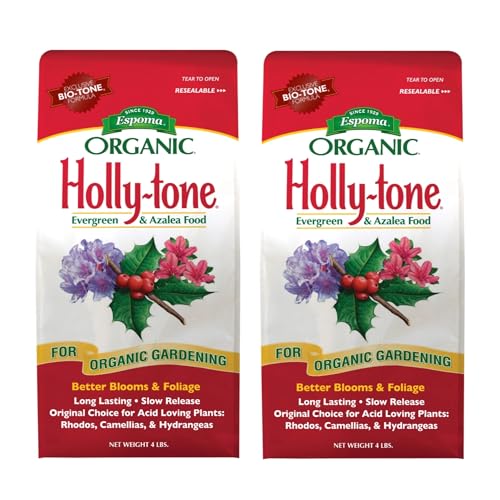
Holly-Tone is the standard acidifying feed for landscapes with alkaline soil, and live oaks growing in limestone-rich dirt benefit directly from its 5-percent sulfur content. The 4-3-4 ratio is balanced enough to support root mass and foliage without triggering a soft-growth flush. Multiple verified owners reported that a single spring application transformed struggling rhododendrons and magnolias, and the same mechanism works on live oaks that show pale new leaves from high pH lock-up.
Because this is a granular formula, you must broadcast it evenly under the full canopy spread and water it in thoroughly to push the nutrients below the thatch layer. The Bio-tone microbiome booster accelerates organic matter breakdown, which improves nutrient cycling over the long term — a benefit spikes cannot replicate. The two-pack provides 8 pounds total, enough for two feeding rounds on a half-dozen medium oaks.
Holly-Tone is not a rapid green-up product. The organic breakdown takes four to six weeks before visible color change occurs, whereas liquid feeds show results in days. Additionally, the 4-3-4 ratio is too mild for an oak that is seriously nitrogen-starved; those trees need a higher first number like Jobe’s 16-4-4 before switching to a maintenance dose of Holly-Tone.
What works
- Sulfur content gradually lowers soil pH to unlock iron availability.
- OMRI-listed for organic production — safe around edible landscaping.
- Bio-tone beneficial microbes improve long-term soil structure.
What doesn’t
- Slow-release organics take weeks to produce visible results.
- Nitrogen level (4-4-3) is too low for severely nitrogen-deficient oaks.
3. TPS Nutrients Liquid Tree Fertilizer
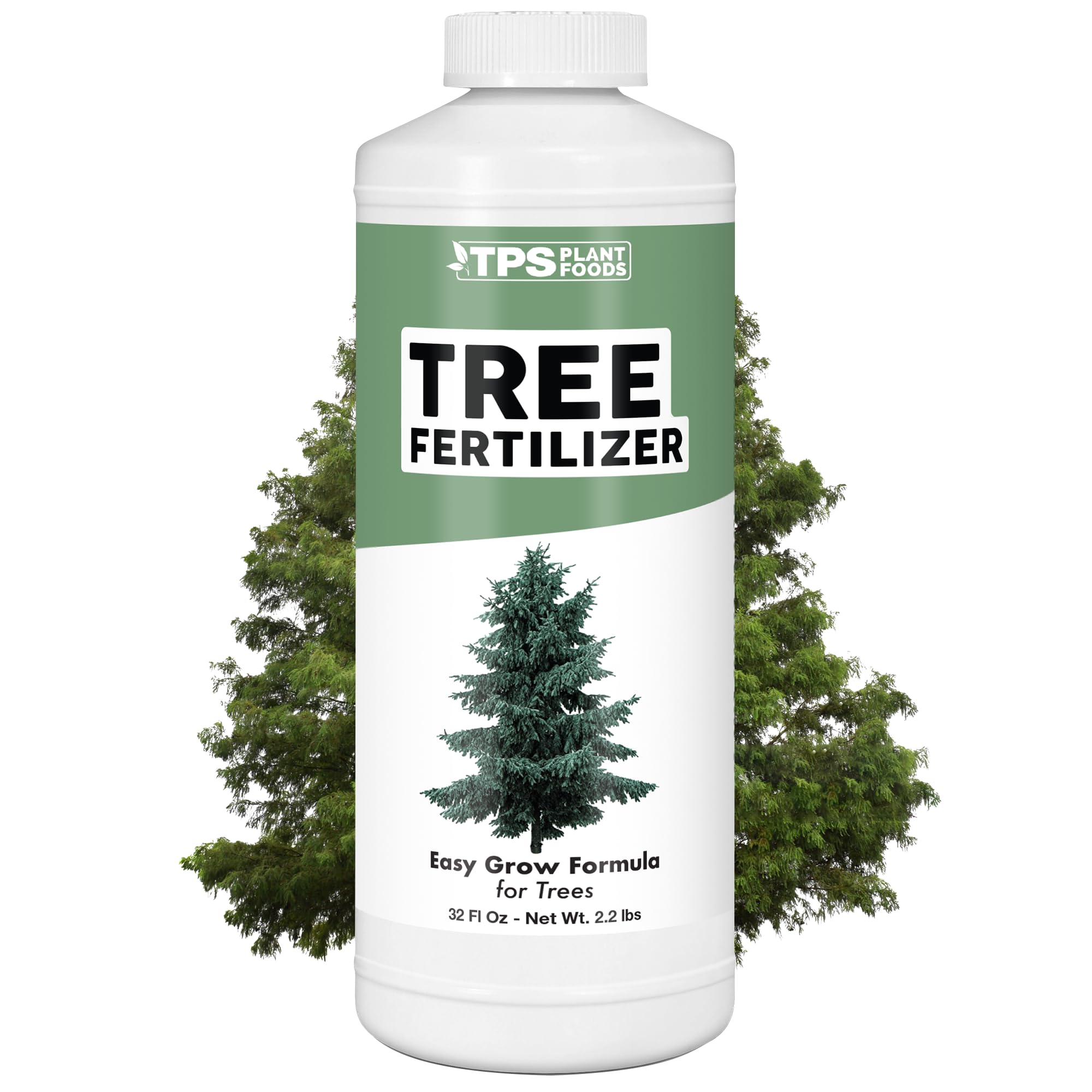
When a live oak needs immediate color correction — perhaps after transplant shock or a summer drought — a liquid drench moves nutrients into the root zone within hours rather than weeks. TPS Nutrients’ 32-ounce concentrate mixes with water and is poured around the base, making it especially useful for small ornamental oaks or container-grown specimens where granular product would wash out before dissolving. One verified owner watched a nearly dead pine recover full green color over a season with biweekly liquid applications.
The bottle is compact and easy to store, and the measuring cap eliminates guesswork. Because liquid feeds are immediately available, you see leaf darkening in three to seven days if nitrogen was the limiting factor. For live oaks in sandy coastal soil, the fast absorption also reduces the risk of nutrient runoff into nearby garden beds.
Liquid fertilizer demands consistent reapplication every two to three weeks during the growing season — it does not provide the sustained release that a spike or granule offers. The 32-ounce bottle treats roughly 30 gallons of mixed solution, which may cover only two to three mature oaks per season when applied at the recommended rate. Owners with large acreage will find this approach labor-intensive compared to a once-per-season spike.
What works
- Visible green-up in under a week for nitrogen-deficient leaves.
- Simple measuring and pouring — no hammering or drilling.
- Excellent for container-grown or newly transplanted live oaks.
What doesn’t
- Requires biweekly reapplication throughout the growing season.
- 32-ounce bottle runs out quickly on multiple mature trees.
4. Hi-Yield Grower’s Special Fertilizer 12-6-6
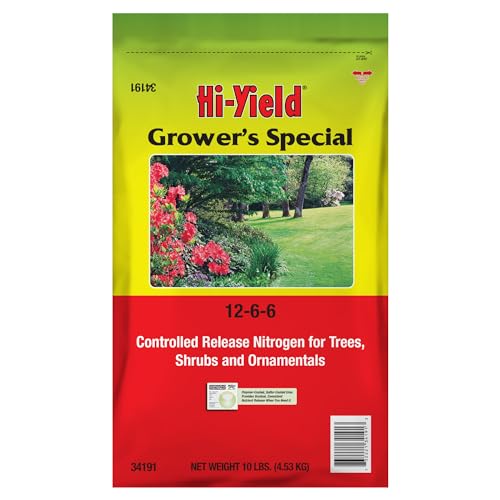
Hi-Yield’s 12-6-6 granular is the workhorse product that a nursery professional with 50 years of experience recommended to one verified buyer — and that buyer saw strong results on magnolias and crepe myrtles. The 12-percent nitrogen is high enough to push green growth but moderate enough to avoid the soft-tissue issues that 16-percent spikes can cause on younger oaks. Slow-release nitrogen is built into the formulation specifically to reduce burn risk on shallow-rooted ornamentals.
The 10-pound bag offers the lowest cost per pound of any product in this lineup, making it the smart buy for owners feeding a long row of mature oaks. Application is simple: broadcast evenly under the canopy in early spring and again in late fall, then water in. For container-grown live oaks, a single teaspoon per six-inch pot is all you need — the granular format allows precise dosing that spikes cannot match.
Because it is an all-purpose formulation rather than an acidifying feed, it may not solve iron chlorosis caused by alkaline soil. If your live oak shows yellowing between the veins, pair this product with a separate sulfur amendment or switch to a species-specific acid feed. Also, surface broadcasting on windy days results in uneven distribution that leaves some root zones underfed.
What works
- Lowest cost per pound for feeding multiple large trees.
- Moderate 12-6-6 ratio works safely on young and established oaks.
- Slow-release nitrogen minimizes risk of root burn.
What doesn’t
- Does not lower soil pH — ineffective against iron chlorosis alone.
- Granules can drift off-target in windy conditions during broadcast.
5. MediCap FE SUPER Systemic Iron Tree Implants

This product exists for one reason: surface-applied iron does not work when soil pH is above 7.5. MediCap implants are ½-inch capsules filled with ferric ammonium citrate that you drill directly into the trunk at chest height. One verified owner in Austin, Texas, watched a live oak with severe interveinal chlorosis turn fully green by mid-summer after a single spring installation — a result liquid iron sprays had failed to produce for years. The systemic action moves iron upward through the transpiration stream, bypassing the root zone entirely.
Installation takes about 30 minutes for a standard oak: drill holes 1½ inches deep around the trunk at four-inch intervals, tap the implants in with a hammer, and seal the hole with the included caps. Each implant releases iron gradually for up to two years, so you only need to repeat the treatment every other year. For river birches and aspen owners battling the same chlorosis, results appeared in three to six weeks with improved leaf color and reduced dieback.
This is a targeted therapy, not a general fertilizer. It provides zero nitrogen, phosphorus, or potassium — it corrects only iron deficiency. If your oak is pale from low nitrogen rather than iron lock-up, these implants will not green it up. Drilling wounds into the trunk, while small, still creates entry points for pathogens if you do not sterilize the drill bit between trees.
What works
- Delivers iron systemically, completely overcoming alkaline soil lock-up.
- Single treatment provides two years of correction with no reapplication.
- Proven on stubborn live oak chlorosis cases in central Texas alkaline clay.
What doesn’t
- Contains zero macronutrients — not a complete fertilizer.
- Drilling creates small trunk wounds that require proper sterilization.
6. Nelson Plant Food NutriStar Crape Myrtle & Flowering Trees

Live oaks are not grown for flowers, but the same nutrient balance that forces crepe myrtles and orchid trees into heavy bloom also promotes dense, disease-resistant foliage on hardwood oaks. Nelson NutriStar uses a slow-release granular formulation that a master gardener recommended to one verified owner for a 25-foot crepe myrtle — the tree produced full foliage in two weeks and budded within a month. The same phosphorus and potassium profile supports root vigor and cellular strength in live oaks stressed by urban soil compaction.
The four-pound bag is compact and easy to store, and the pre-measured granules spread evenly under a small to medium canopy. Unlike spikes that concentrate nutrients in a few spots, the granular spread creates a uniform feeding zone that encourages even root exploration. Owners of desert willow and mimosa trees reported first-time blooms within two weeks — evidence that the micronutrient package is well-balanced for woody ornamentals.
The bag is small for the price point; one verified buyer noted they lightly fertilized only five small trees before emptying the container. Owners with multiple mature oaks will need two or three bags for a single spring feeding. Additionally, this product is labeled specifically for flowering trees — large specimens benefit more from a higher-volume option like Hi-Yield or the 36-pound Holly-Tone.
What works
- Balanced micronutrients push rapid foliage and root response.
- Easy broadcast application with no mixing or drilling.
- Proven on a wide range of ornamentals including oak relatives.
What doesn’t
- Small 4-pound bag covers very few mature trees per feeding.
- Premium price per pound compared to bulk granular options.
7. Espoma Organic Holly-Tone 4-3-4 (36-lb. Bag)

The 36-pound bag of Holly-Tone is the same premium acidifying formula as the smaller two-pack but at a bulk price that makes it the economical choice for anyone feeding a dozen or more live oaks. The 4-3-4 NPK plus 5-percent sulfur gradually lowers soil pH over successive applications, which is exactly what alkaline-soil oaks need to access the iron and manganese already present in the ground. Verified owners who buy this every spring report that magnolias and azaleas in the same beds also respond with deeper green leaves and heavier blooms.
Because the granules are organic-based, they feed soil microbes alongside the tree roots — a long-term soil-building effect that synthetic salts cannot provide. A single bag covers hundreds of square feet of dripline area, enough for both a spring and fall feeding across a substantial property. The ready-to-use format requires no mixing; just measure, spread, and water in.
This is a maintenance feed, not a rescue product. If your oak is already showing severe chlorosis or stunted growth, the 4-percent nitrogen will be too gentle to drive a rapid recovery. You are better off correcting the immediate deficiency with a systemic iron implant or a liquid feed first, then switching to Holly-Tone for ongoing health. Also, the 36-pound bag is heavy and bulky — storing it in a damp garage can cause granules to clump before the next season.
What works
- Bulk 36-pound bag provides the lowest cost per feeding for large properties.
- Organic Bio-tone formula builds long-term soil biology and structure.
- Sulfur content gradually corrects high pH over repeated applications.
What doesn’t
- Too mild for rapid correction of severe nitrogen or iron deficiency.
- Heavy bag requires dry storage to prevent granule clumping.
Hardware & Specs Guide
NPK Ratio
The three-number code on every fertilizer bag tells you the percentage of nitrogen (leaf growth), phosphorus (root and flower development), and potassium (overall health and stress tolerance). For live oaks in maintenance mode, a balanced ratio like 4-3-4 or 12-6-6 works best. If your tree looks thin and pale, a higher first number — 16-4-4 — will push green foliage quickly but may encourage soft growth on young specimens. Never apply a ratio where any number exceeds 20 without a soil test, because excessive nitrogen burns feeder roots on slow-growing hardwoods.
Slow-Release vs. Fast-Release
Slow-release fertilizers (spikes, coated granules, organic meals) feed over weeks or months with one application, making them ideal for busy homeowners who cannot reapply every two weeks. Fast-release liquid concentrates green up a tree in days but wash through sandy soil quickly, requiring repeat applications throughout the growing season. Live oaks respond best to a slow-release base feed in early spring, with a fast-acting liquid only used as a spot rescue when a specific tree shows sudden yellowing after a stress event.
Systemic Iron Delivery
When soil pH is above 7.0, iron becomes chemically locked and no amount of surface-applied iron fertilizer will reach the leaves. Systemic trunk implants (½-inch capsules drilled into the sapwood) bypass the root zone entirely, moving chelated iron upward through the tree’s vascular system. Color improvement appears in three to six weeks and lasts up to two years. This method is the only reliable fix for mature live oaks showing chlorosis in alkaline clay soils common across Texas, Oklahoma, and coastal California.
Sulfur Content and pH Correction
Elemental sulfur (listed as 5% sulfur on labels like Espoma Holly-Tone) gradually lowers soil pH as microbes oxidize it into sulfuric acid. One application can shift pH by 0.5 to 1.0 units over three to six months, unlocking iron, manganese, and zinc that were previously unavailable. This is a slow process — do not expect immediate leaf greening. For a tree that is actively chlorotic, combine a sulfur-based feed in the soil with a systemic iron implant in the trunk for both immediate and long-term correction.
FAQ
How often should I fertilize a mature live oak?
Can I use a regular lawn fertilizer on my live oak trees?
Why are my live oak leaves yellow even after I fertilized?
Should I fertilize a newly planted live oak in its first year?
Final Thoughts: The Verdict
For most gardeners, the fertilizer for live oak trees winner is the Jobe’s 16-4-4 Spikes because it eliminates measuring error, delivers nitrogen exactly at the feeder root zone, and requires only two applications per year for dense green canopies. If you are fighting iron chlorosis from alkaline soil, grab the MediCap FE SUPER Implants for a guaranteed systemic fix that works in weeks. And for the budget-conscious owner feeding a long row of oaks, nothing beats the Espoma Holly-Tone 36-lb bag for improving long-term soil health at the lowest cost per feeding.