
Specs are compiled from manufacturer listings and verified buyer reviews and can change over time — please confirm the key details on the product page before buying.
If your irises grow tall green leaves but produce few or no flower stalks, the problem is often what you feed them — not sunlight or water. A fertilizer made for iris plants has a different job than a general all-purpose feed: it needs less nitrogen (to avoid pushing leafy growth instead of blooms) and more phosphorus and potassium (to strengthen roots and drive flower development). The wrong bag can make the problem worse, giving you lush fans with zero stalks.
I’m Rikta — the founder and writer behind Lawn Gear Lab. This guide is built by comparing the manufacturers’ published specifications and the patterns across verified customer reviews, so you get each pick’s real strengths and trade-offs instead of marketing spin.
We’ll break down nine options that genuinely improve bloom count and rhizome health, from a fast-acting liquid rescue to a slow-release granular gold standard. Whether you have a single raised bed or a long iris border, this roundup of the best fertilizer for iris plants will help you match the right formula to your growing style and soil.
Our Picks at a Glance


How To Choose The Best Fertilizer For Iris Plants
Irises have specific nutritional needs that set them apart from your average garden flower. They store energy in their rhizomes (thick underground stems that spread horizontally just beneath the soil surface), which means they need a feed that supports future growth without forcing too much top-heavy foliage. The first thing to check is the NPK ratio — the three numbers on the bag.
The NPK ratio
Nitrogen (the first number) fuels leaf and stem growth. Too much produces a sea of green fans and very few stalks. Phosphorus (the second number) is what drives flower formation and root health. Potassium (the third) helps with overall plant hardiness and disease resistance. For irises, look for a second number (phosphorus) that is higher than the first (nitrogen) — ratio patterns like 6-10-10, 3-9-4, or a low first number with a middle boost are what the data shows works best.
Liquid vs. granular form
Liquid fertilizers get absorbed almost immediately, making them great for rescuing struggling plants or giving a mid-season bloom push. Granular options release nutrients slowly over weeks or months, which suits established beds where you want steady feeding without reapplying constantly. Your choice depends on how much hands-on time you want to invest.
Organic content and soil conditioning
Many owners prefer a feed that also improves the soil biology. Ingredients like bone meal, seaweed, humic acids, and mycorrhizae (beneficial fungi that attach to roots and help them absorb water and nutrients) add long-term value beyond the NPK numbers. An OMRI-listed (Organic Materials Review Institute) or organic-certified product is worth considering if you want to avoid synthetic chemicals.
Quick Comparison
| Model | Best For | NPK Ratio | Form | Size | Amazon |
|---|---|---|---|---|---|
| Burpee Bone Meal★ Best Overall | Phosphorus boost & root setup | — | Powder | 3 lb | Amazon |
| Dr. Earth 707PPremium Pick | Organic bloom boost | 3-9-4 | Granules | 4 lb | Amazon |
| TPS Iris FertilizerBest Value | Liquid rescue for irises | — | Liquid | 32 oz | Amazon |
| TPS Bulb Fertilizer | Season-long bulb support | — | Liquid | 32 oz | Amazon |
| Nelson ColorStar | 4-5 months of feeding | — | Granules | 2 lb | Amazon |
| Great Big Roses | Soil activation & mineral delivery | — | Liquid | 32 oz | Amazon |
| OceanSolution | Mineral-rich, odorless feeding | 2-0-3 | Liquid | 32 oz | Amazon |
| GreenGro Pride Lands Veg | Living-soil vegetative stage | 6-3-3.5 | Powder | 5 lb | Amazon |
| 6-10-10 Premium Iris Food | Gold-standard iris nutrition | 6-10-10 | Granules | 4 lb | Amazon |
In‑Depth Reviews
1. Burpee Bone Meal Fertilizer
Our pick — over 4.5★ from 7,500+ verified ratings; the strongest balance of quality and price.
The phosphorus powerhouse that turns shy bloomers into consistent performers.
If your irises are producing plenty of foliage but few flower stalks, a bone meal feed is often the fastest fix. Bone meal delivers natural phosphorus and calcium in a form that plants can access gradually, which is exactly what irises need for strong root systems and bulb development. This particular bag from Burpee covers 240 square feet — enough for a substantial iris border — and breaks down slowly, so you get season-long release without worrying about burning tender rhizomes. The powder is easy to work into soil at planting time or side-dress around established clumps in early spring.
What wins over buyers is the reliability: effectiveness is praised most, with quality coming close behind. People report that it helps tomatoes, peppers, and bulbs produce noticeably better yields and more flowers. Some note that the smell after application can linger, especially if rain follows — the review pages sum it up: “stinky but effective.” The odor fades within a week. At 3 lb, it is heavier than the liquid options here, but the 4.7-star crowd favorite speaks to its consistency across thousands of gardens. The trade-off is that it is a single-nutrient booster, not a complete NPK feed, so irises may still need a balanced fertilizer alongside it during the active growing period.
The Root-Building Win
- OMRI listed for organic gardening — safe for edibles
- Gradual nutrient release prevents burning and lasts the season
- Naturally deters rabbits from garden beds
The Honest Trade-Off
- Noticeable odor after application, especially in wet weather
- Not a complete fertilizer — irises need supplemental nutrition
Who this hits hardest: Gardeners seeking a natural phosphorus boost for stronger roots and blooms, especially when planting bulbs in fall.
The reality check: If you can’t tolerate a smell for the first week after application, pick a liquid feed instead.
2. Dr. Earth 707P Bud and Bloom Fertilizer
The granular formula that makes even shy crepe myrtles put on a show.
This bag uses a 3-9-4 NPK ratio (nitrogen-phosphorus-potassium), with phosphorus at three times the nitrogen level — exactly what irises need to bloom instead of just leaf out. The granular form feeds slowly, avoiding the growth spikes that push leaves instead of stalks. what separates it is the inclusion of eight select strains of ecto and endo mycorrhizae — beneficial fungi that latch onto roots and help them pull more moisture and nutrients from the soil. That means healthier plants even in less-than-ideal soil conditions. The 4.1-pound bag is heavier than the liquid alternatives listed below, but it covers many more applications per season.
Buyers uniformly call it the most effective bloom booster they have used, with a crape myrtle owner saying the plant went from years of no blooms to “showing OFF”. The strong odor from fish and feather meal is a recurring note: some find it unpleasant, and it can attract curious pets. But the results speak loudly — the bloom scores and plant growth scores are some of the highest in this entire roundup. At 86% heavier than the liquid iris feeds here (4.1 lb vs 2.2 lb), it also gives you more product for the cost.
What Makes It Stand Out
- Mycorrhizae boost drought tolerance and nutrient uptake
- 100% natural and organic with no growth spikes
- Powerful bloom promotion across multiple flower types
What to Expect
- Strong organic smell that lingers after application
- Not ideal for those who need a precise liquid application
Reach for this if: You want a rich, organic granular feed that supports soil biology and produces noticeable bloom increases within weeks.
Look elsewhere if: You need a low-odor option or prefer the control of liquid feeding.
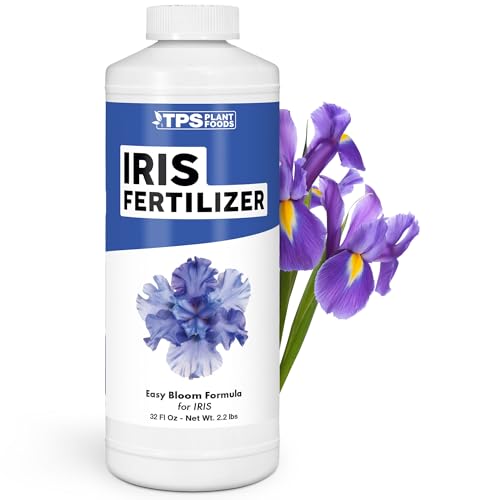
3. TPS Iris Fertilizer
A liquid lifeline that rescued struggling irises after a landscaping disaster.
This is the only product in the lineup purpose-built for irises by name. As a liquid formula, it goes to work immediately — no waiting for granules to break down. The 32-ounce bottle mixes fast and penetrates even where digging is impossible, such as through gopher-wire netting or into hard clay soil. One owner had irises that were “never healthier” after a poor planting location and upheaval, producing two thick, sturdy flower stalks that stood up in the wind without staking. The fast absorption means you see results in days, not weeks.
The crowd favorite story is a gardener who skipped it one year and got foliage with almost no blooms. Using it again brought the flowers back. That pattern — a direct cause-and-effect — is exactly what makes this feed a targeted choice. The bottle is 2.2 lb, making it 86% lighter than the Dr. Earth above for those who prefer hauling a small bottle to the garden. A few owners mention it costs more than some alternatives, but they find the results worth the premium. The only potential mismatch is for large iris beds where a granular bag would require fewer repeat applications.
Why It Works
- Liquid formula delivers nutrients straight to the root zone
- Specifically formulated for iris bulb and root development
- Easy to mix and apply, even through barriers like netting
One Trade-Off
- Higher cost per application than some granular options
- Needs more frequent reapplication for season-long feeding
Ideal for: Gardeners with struggling irises or small beds who want a fast-acting rescue that targets bloom production.
Not ideal for: Those who prefer a low-maintenance granular feed for large borders.
4. TPS Bulb Fertilizer
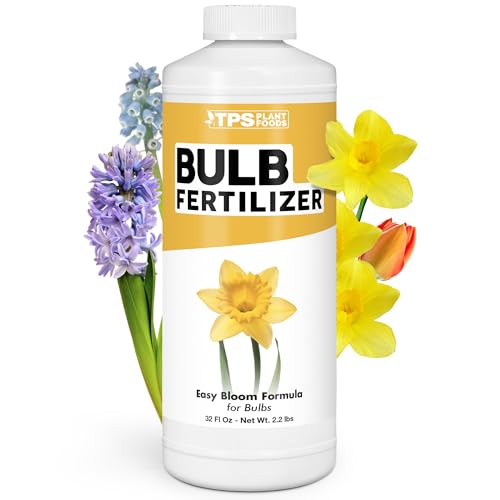
The liquid feed that revived unhappy lilies in a single week.
If you have a mix of irises, lilies, tulips, and other bulb plants, this fertilizer covers them all with one bottle. The liquid form means you can feed even in hard clay soil where digging is a chore — just mix and pour. One owner had unhappy lilies that put out “a TON of new greenery” within a week of the first application. The balanced nutrition is designed to support rooting and spring bloom without overstimulating during dormancy, making it a solid choice for fall planting seasons.
The downsides are worth sizing honestly: a few owners found the bottle small for large quantities of bulbs, and some found the chemical NPK approach less appealing than fully organic options. The seaweed-based micronutrients work best as a regular supplement rather than a one-time fix. For the price, you get 32 ounces of concentrated feed that mixes into 8-16 gallons of solution, depending on your dilution. If your iris bed is modest in size, this is a convenient and effective choice that keeps rhizomes fed without the heavy labor of incorporating granular feed.
What Works
- Fast liquid absorption for immediate plant response
- Formulated to avoid overstimulation during bulb dormancy
- Ideal for hard-to-dig soils and container planting
The Catch
- Not as cost-effective for large garden beds
- Some owners find it less practical than granular feeds
Best fit for: Home gardeners with small to medium bulb beds who want the convenience of a pour-and-go liquid feed.
skip it if: You manage a large iris border and need a more economical, long-lasting granular option.
5. Nelson ColorStar Outdoor & Indoor Fertilizer
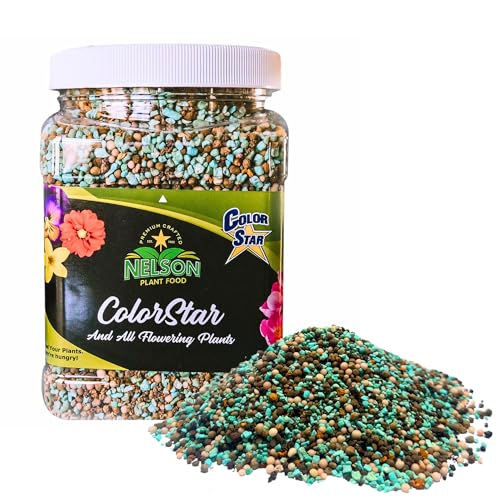
A four-month feed window that keeps flowers coming with a single application.
This 3-in-1 flower food uses 25% bone and blood meal plus a range of micronutrients (potassium nitrate, iron sulfate, zinc sulfate, and more) to support blooms across the entire season. For irises, the big appeal is the 4-5 months of feeding from one application — apply in early spring and let the granules slowly release everything the plant needs. The micronutrient blend addresses deficiencies that sometimes cause pale foliage or weak stalks. Owners consistently report that their hydrangeas and azaleas show more blooms than usual after using this.
Plant health is the aspect owners praise most, with effectiveness close behind. The one honest note is value for money: while the results are strong, a few buyers found the jar smaller than expected for the price. At 2 lb, this is a compact bag that covers less ground than the larger granular options here, so large iris borders will need multiple bags. It is a premium convenience product for the gardener who wants one good granular feed and doesn’t want to measure or reapply all season.
The Big Strength
- Single application feeds irises for 4-5 months
- Contains 25% bone and blood meal for rich organic nutrition
- Works on both indoor and outdoor flowering plants
The Honest Note
- Smaller jar than some granular options; pricier per ounce
- Not designed specifically for bulb-feeding schedules
Who should choose this: Gardeners who want a single, easy spring application that keeps feeding through summer.
Who should pass: Anyone with a very large iris planting who needs a bulk-size granular option.
6. Great Big Roses Fertilizer Booster
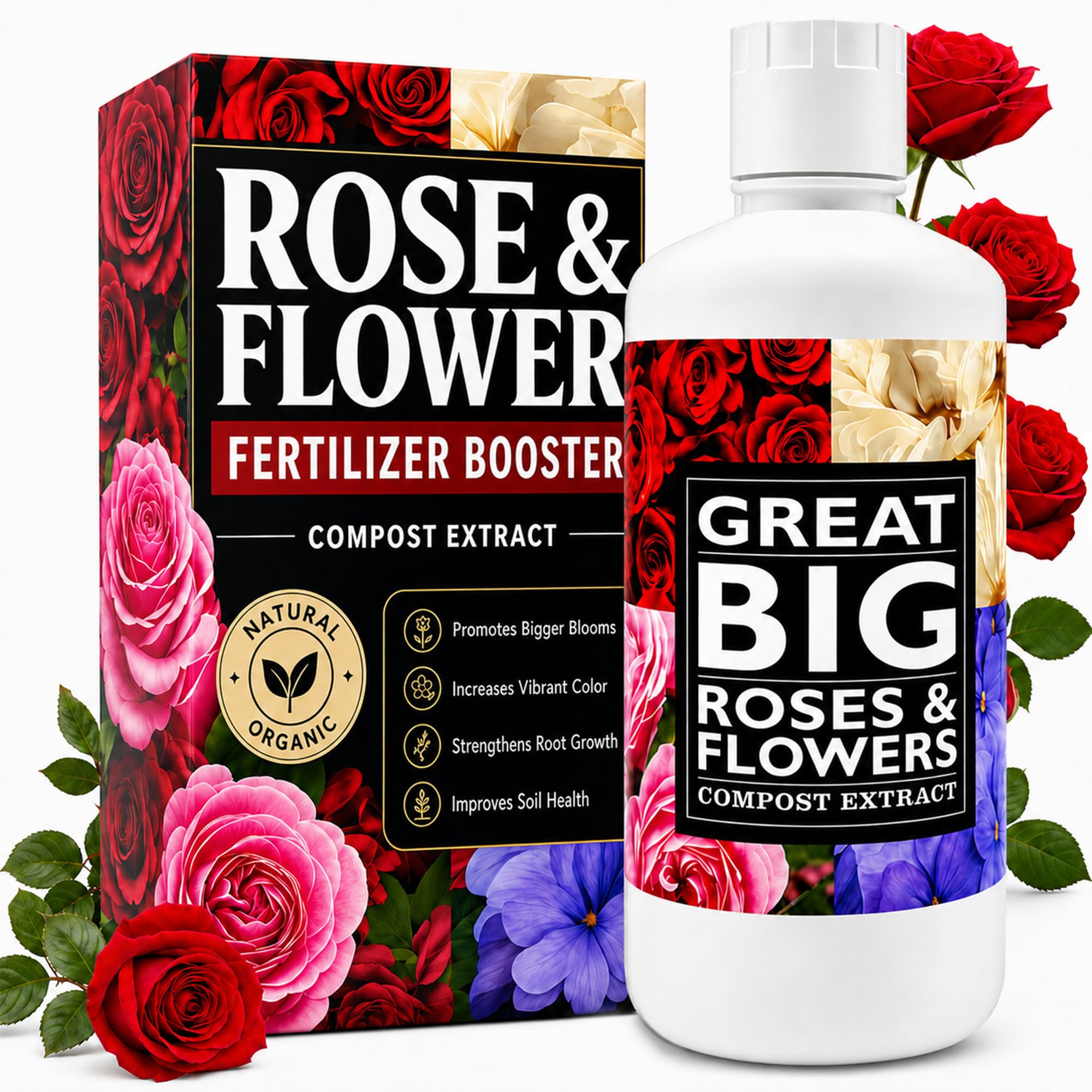
The mineral-rich soil activator that made roses bloom after years of nothing.
This isn’t a traditional NPK fertilizer — it is a soil conditioner and activator that delivers humic acids, seaweed, and over 70 chelated trace minerals into the root zone. For irises planted in tired or depleted soil, this can be transformative. The formula works alongside any existing fertilizer you use (bone meal, fish emulsion, worm castings) to open up nutrients already present in the soil. Buyers report rose bushes that had not bloomed in years producing large flowers within weeks of application.
Buyers praise this liquid feed for its effectiveness across roses, hydrangeas, citrus, and flowering shrubs. The 32-ounce bottle makes 8 gallons of feed, covering a full growing season for most gardens. The notable negatives are the jug design (a wide mouth that makes measuring messy) and the price, which several owners call “bloody expensive.” For irises, this is a complement rather than a primary feed, but for anyone whose soil feels exhausted, it can be the difference between a few blooms and a spectacular display.
Why It Shines
- open up existing soil nutrients with humic acids and trace minerals
- Works alongside any organic fertilizer to amplify results
- One bottle covers an entire growing season
The Trade-Off
- High price and messy jug design frustrate some buyers
- Not a standalone feed — best used as a booster with other fertilizers
Reach for this if: Your irises are planted in old or depleted soil and need a mineral overhaul to start producing again.
Look elsewhere if: You want a complete NPK feed without needing a second product.
7. OceanSolution 2-0-3 All Natural Liquid Fertilizer
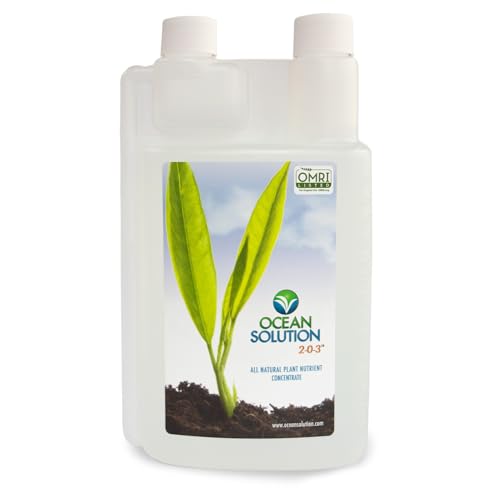
The ocean-mineral concentrate that feeds plants without any smell.
If the smell of bone meal or fish emulsion bothers you, this is the cleanest alternative in the lineup. OceanSolution uses over 90 natural ocean minerals in a liquid concentrate that is odorless and won’t stain or clog irrigation systems. With a 2-0-3 NPK ratio, it is very low in phosphorus (the second number), so it works best as a general mineral supplement rather than a primary bloom booster. The ionic liquid formula allows plants to absorb it immediately without waiting for breakdown, which is useful for quick green-ups or for feeding through drip lines.
Buyers with microgreens and hydroponic setups love it, praising its effectiveness and long-lasting supply. The concentrate mixes at just 1 oz per gallon, so a 32-ounce bottle goes a long way. A few owners wished it had some phosphorus to round out the profile, which is a fair observation for iris growers looking specifically for bloom support. This is a high-quality mineral tonic that keeps foliage healthy and plants resilient, but it won’t single-handedly trigger a bloom explosion like a phosphorus-rich feed would.
What Is Great
- Completely odorless — perfect for indoor or patio use
- Ultra-concentrated: 1 oz per gallon for cost-effective feeding
- OMRI listed and all-natural for organic gardening
The Limitation
- Very low phosphorus (2-0-3) won’t drive heavy iris blooms alone
- Best used as a supplement, not a standalone iris fertilizer
Perfect for: Anyone who wants to feed irises without the smell or staining that comes with organic meals and fish-based products.
Not right for: Gardeners who need a phosphorus-heavy feed to boost iris flower production.
8. GreenGro Pride Lands Veg 6-3-3.5 Fertilizer
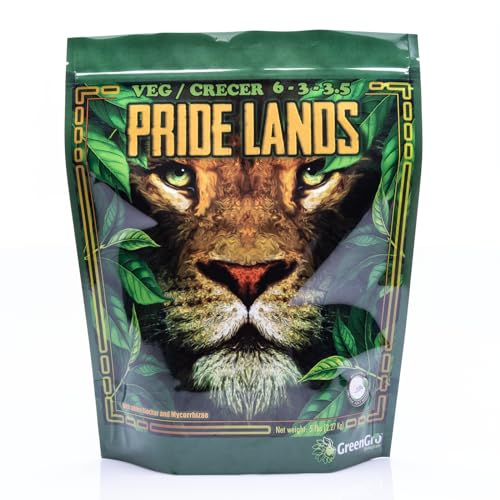
A living-soil blend that grows the soil itself while it feeds the plants.
This is an unusual entry in the iris category because it combines beneficial microbes, biochar, mycorrhizae, and premium dry amendments into one top-dress. The 6-3-3.5 NPK ratio is higher in nitrogen to support vegetative growth — not ideal for a standard iris feed, but useful if you are building soil for a full growing system. The powder mix includes all the biology that makes organic growing work: the microbes and fungi continue cycling nutrients long after the initial application. Owners call it “dummy-proof” and “simple to use.”
The honest catch is that the powder is very fine, and reviewers warn you must wear an N95 dust mask when handling it to avoid inhaling airborne particles. The nitrogen-heavy ratio also means it is better suited as a soil-builder before bloom season or for companion plants around irises rather than a direct rhizome feed. If you are building a living-soil bed for irises and other perennials, this is an excellent foundation. But if you need a quick bloom boost for this year’s flowers, a phosphorus-focused product is a better match.
The Strength
- Four-part organic system: microbes, biochar, mycorrhizae, amendments
- Safe for edibles, non-GMO, US-sourced ingredients
- Multiple application methods: top dress, soil mix, or compost tea
The Practical Note
- Very fine powder requires a dust mask during handling
- High nitrogen may encourage foliage over iris blooms
Best for: Growers building a living-soil ecosystem who want long-term soil health alongside plant nutrition.
pass on it if: You need a phosphorus-dominant feed for this season’s iris bloom production.
9. 6-10-10 Premium Iris Food
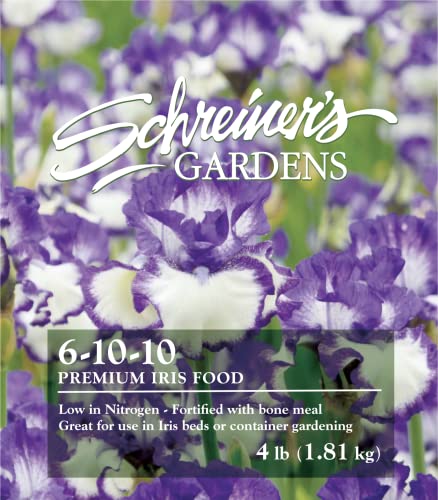
The iris specialist’s gold standard, with a phosphorus ratio that guarantees flower power.
This is the only product in the lineup with a 6-10-10 NPK ratio — the textbook profile for iris plants: moderate nitrogen to avoid excessive leaf growth, doubled phosphorus for bloom production, and equally high potassium for overall plant hardiness. The generic branding hides the fact that this is the same formula used by Schreiner’s Iris Gardens, among the most respected iris growers in the country. Owners who have tried many fertilizers over the years call this one “amazing,” with one reporting “killer blooms” and another saying the quantity of blooms was unbelievable.
The blooms and quality scores are the highest praised aspects, and the 4.6-star rating across nearly a hundred reviews confirms the consistency. The honest note is the price, which has gone up significantly since some owners first purchased it. At 4 lb, it is a solid bag for the season, and you apply it by scattering around the base of the leaves. A few caution that you follow the instructions to avoid burning rhizomes. For iris enthusiasts who want the gold-standard formula, this is as close to a no-brainer as it gets — but the cost makes it a dedicated iris purchase rather than a general garden feed.
Why It Is The Gold Standard
- Perfect 6-10-10 NPK ratio for iris bloom and root development
- Trusted formula from Schreiner’s Iris Gardens
- Produces noticeably larger and more abundant blooms
What Holds It Back
- Price has increased significantly, making it a premium buy
- Must be applied carefully to avoid burning rhizomes
Reach for this if: You have a serious iris collection and want the exact NPK ratio that iris specialists recommend for maximum bloom performance.
Think twice if: Budget is a primary concern, or you need a multi-purpose fertilizer for your entire garden.
Understanding the Specs
NPK Ratio
This is the three-number code on every fertilizer bag (like 6-10-10 or 3-9-4). The first number is nitrogen, which drives leaf and stem growth. The second is phosphorus, which fuels flower production and root development. The third is potassium, which supports overall plant health and disease resistance. For irises, you want the second number to be the highest or at least equal to the first. A ratio like 6-10-10 means the plant gets more phosphorus and potassium than nitrogen, which tells the plant “grow flowers, not just leaves.” A high-first-number ratio like 20-10-10 will push big green fans with very few stalks.
Liquid vs. Granular Form
The form determines how fast the plant can use the nutrients. Liquid fertilizers mix with water and get absorbed through the roots within hours or days, which is useful for a quick rescue or mid-season boost. Granular fertilizers are spread on the soil and break down slowly, feeding the plant over weeks or months with a single application. Granular is less work over time but takes longer to show results. For irises, many owners use a granular feed in early spring and supplement with a liquid feed just before blooming season starts.
Mycorrhizae and Soil Biology
Mycorrhizae are beneficial fungi that attach to plant roots and create a network that helps the plant absorb more water and nutrients from the soil. Some fertilizers include these as an extra ingredient. They are especially useful in poor or compacted soil where roots struggle. For irises growing in heavy clay or sandy soil, a product with mycorrhizae can help the plant thrive without requiring constant amendments. The fungi also contribute to drought tolerance, which is useful during summer dry spells.
Organic vs. Synthetic
Organic fertilizers (like bone meal, blood meal, fish emulsion, or seaweed) come from natural sources and release nutrients slowly as microbes in the soil break them down. Synthetic fertilizers are manufactured and often deliver nutrients in a form the plant can absorb immediately. For irises, organic options tend to be safer because they are less likely to burn the shallow rhizomes. An OMRI listing (Organic Materials Review Institute) means the product has been certified for use in organic gardening. The trade-off with organic is that it often has a noticeable smell, especially fish- and bone-based products.
FAQ
What is the best NPK ratio for iris plants?
When should I fertilize my irises?
Can I use a general all-purpose fertilizer on irises?
Is liquid or granular fertilizer better for irises?
Will bone meal help my irises bloom?
How often should I feed my irises during the growing season?
Can I use a rose fertilizer on irises?
What happens if I use a high-nitrogen fertilizer on irises?
Is it safe to fertilize irises in containers?
Should I stop fertilizing irises after they bloom?
Final Thoughts: The Verdict
For most gardeners, the fertilizer for iris plants that offers the best balance of effectiveness, organic certification, and value is the Burpee Bone Meal — its phosphorus boost is the simplest way to strengthen roots and increase blooms. If you want a purpose-made bloom booster with a perfect NPK ratio and mycorrhizae for soil health, grab the Dr. Earth 707P. And for iris enthusiasts who want the gold-standard 6-10-10 formula trusted by hybridizers, the Premium Iris Food is the one to reach for. Whichever you choose, remember that timing and nitrogen balance matter more than the brand — feed early, feed after bloom, and keep the phosphorus high.
How We Picked
We do not accept paid placement. Every pick is matched to a real buyer and a real use-case; we do not hands-on test units.
Sources & Methodology
Specifications: manufacturer listings and product documentation. Review insights: verified customer reviews, as of July 2026. Pricing: not shown on this page (it changes often); check the current price via the retailer link.
As an Amazon Associate, Lawn Gear Lab earns from qualifying purchases. This does not affect which products we feature.