
Specs are compiled from manufacturer listings and verified buyer reviews and can change over time — please confirm the key details on the product page before buying.
Getting a pile of green leaves from your pepper plant is easy—getting the table to sweat is the real trick. The secret to a ghost pepper that haunts or a habanero that hits is not just water and sun; it is the balance of nitrogen, phosphorus, and potassium you feed it, especially the extra potassium that pushes capsaicin (the compound that makes peppers hot) production over the edge. Focus on the phosphorus and potassium numbers on the bag, and your harvest will burn, not just look pretty.
I’m Rikta — the founder and writer behind Lawn Gear Lab. This guide is built by comparing the manufacturers’ published specifications and the patterns across verified customer reviews, so you get each pick’s real strengths and trade-offs instead of marketing spin.
After digging through the labels, mixing ratios, and feed schedules of five very different formulas, the conclusion is clear: the best fertilizer for hot peppers depends on if you want explosive heat, steady organic growth, or a no-fuss all-rounder.
Quick Picks
- Greenway Biotech, Inc. Pepper & Herb Fertilizer 11-11-40 Powder — Maximum Heat
- Cz Garden Supply 4-18-38 Fertilizer Made in USA — Fruiting Powerhouse
- Espoma Organic Tomato-Tone 3-4-6 with 8% Calcium — Best Overall
- Espoma Organic Garden-Tone 3-4-4 (2-Pack) — Value Organic
- Burpee Bone Meal Fertilizer 3 lb — Root Builder
How To Choose The Best Fertilizer For Hot Peppers
Picking the wrong fertilizer is the fastest way to end up with a bushy green plant that barely flowers. Hot peppers are heavy feeders during flowering and fruiting, and they need a specific N-P-K ratio to prioritize pods over leaves. Here is what to check on the label.
Look for a High Potassium Number
The third number on the bag (potassium or K) is what drives capsaicin production—the compound that makes a pepper hot. Standard vegetable fertilizers often have a potassium level around 4-8%, but a formula designed for heat will push that into the 30-40% range. That potassium is the difference between a mild salsa and a jar that makes you sweat.
Granular vs. Water Soluble: Choose Your Feeding Style
Granular organic fertilizers (like the 3-4-6 or 3-4-4 blends in this list) are slow-release; you sprinkle them on the soil every two to four weeks and let the microbes do the work. Water-soluble powders dissolve in water and hit the plant immediately, making them much better for a precise “bloom booster” schedule where you control exactly when the plant gets its potassium spike.
Check for Chelated Micronutrients
If you are gardening in containers or a hydroponic system, the pH of your nutrient solution can lock out iron, zinc, and manganese. Look for “EDTA-chelated” on the label—those micronutrients stay available to the plant across a pH range of 4 to 9, preventing yellowing leaves and weak growth.
Quick Comparison
| Model | Best For | N-P-K Ratio | Form | Unit Count | Amazon |
|---|---|---|---|---|---|
| Greenway Biotech 11-11-40 | Maximum Heat | 11-11-40 | Water Soluble Powder | 16 oz | Amazon |
| Cz Garden 4-18-38 | Fruiting Stage | 4-18-38 | Water Soluble Powder | 5 lb | Amazon |
| Espoma Tomato-Tone 3-4-6 | Organic All-Rounder | 3-4-6 | Granules | 4 lb | Amazon |
| Espoma Garden-Tone 3-4-4 | Value Organic 2-Pack | 3-4-4 | Granules | 64 oz (2 bags) | Amazon |
| Burpee Bone Meal | Root Establishment | — | Powder | 3 lb | Amazon |
In‑Depth Reviews
1. Greenway Biotech, Inc. Pepper & Herb Fertilizer 11-11-40 Powder
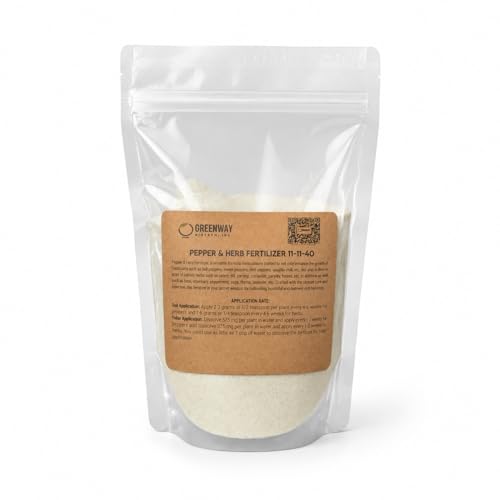
The potassium bomb that turns a bell pepper into a beast.
If you want the kind of heat that hangs in the back of your throat, this is the one. Greenway Biotech engineered this specifically for capsaicin production, and that 40% potassium (the “K” in the 11-11-40 ratio) is the highest on this list by a huge margin—it absolutely crushes the 4-6% you see on standard organic blends. The 11% nitrogen and 11% phosphorus keep the plant healthy and flowering, but the potassium is what forces the fruit to concentrate its oils and burn.
It comes as a 100% water-soluble powder, so you mix it into your watering can or reservoir. The manufacturer says a half-pound makes 100 gallons of feed, which is an incredibly concentrated dose compared to the 4:18:38 mix from Cz Garden (where you also need a 5-pound bag to get 1000 gallons). It also contains chelated micronutrients like iron, manganese, zinc, and copper in EDTA-chelated form, meaning they stay available to the plant even if your tap water pH is off.
Reviewers specifically growing jalapeño, habanero, and ghost pepper plants report significantly hotter pods when switching to this formula during the fruiting stage. The catch is the price per pound is higher than the bulk options, and the 16-ounce bag is best for a single season of a few plants rather than a large garden.
Heat driver
- Ultra-high 40% potassium directly boosts capsaicin levels
- Completely dissolves—no sediment in sprayers or drippers
- Contains chelated EDTA micronutrients for pH stability
Small bag
- 16 oz unit is the smallest by weight on the list
- Needs regular mixing—not a set-and-forget granular feed
Reach for this if: you grow super-hots and want every last Scoville unit the genetics allow.
Look elsewhere if: you prefer an organic, slow-release sprinkle you apply once and forget for a week.
2. Cz Garden Supply 4-18-38 Fertilizer Made in USA

High phosphorus and potassium at a bulk price that is tough to top.
This is the bulk water-soluble option for the serious grower with ten or more plants. The 4-18-38 ratio is nearly identical to the popular “MasterBlend” formula that hydroponic pepper growers swear by, but Cz Garden markets it as an economical alternative. The 18% phosphorus supports aggressive flowering, and the 38% potassium rivals the Greenway formula for pushing heat.
The 5-pound bag here makes 1000 gallons of feed—that is a 4.0x weight advantage over the Greenway 16-ounce bag and offers a far bigger unit count for the money. Unlike the granular organic options (Espoma Tomato-Tone and Garden-Tone) that are 3-4-6 and 3-4-4 respectively (the three numbers are nitrogen-phosphorus-potassium ratios), this Cz Garden mix is a 33% higher ratio of phosphorus to potassium, making it more specialized for the fruiting and flowering stage rather than general vegetative growth.
It includes chelated EDTA micronutrients (boron, copper, iron, manganese, zinc, molybdenum) and is designed for both soil and hydroponics (DWC, NFT, drip irrigation). The bag comes in a heavy-duty resealable pouch, which is convenient. The low nitrogen (4%) means it is strictly a bloom formula—if you use it on young seedlings, they will stay small, so you need a separate grow fertilizer for the first few weeks.
Bulk performer
- 5-pound bag makes up to 1000 gallons of nutrient solution
- 38% potassium pushes heavy flowering and fruit development
- Quality packaging with a resealable pouch
Needs separate veg feed
- Very low nitrogen (4%)—not suitable for the early growth stage
- Requires mixing and measuring every feeding
Grab this for: a large hydroponic or soil garden where you want cheap, concentrated bloom feed.
Avoid if: you only have a few plants and prefer the simplicity of a single granular application every two weeks.
3. Espoma Organic Tomato-Tone 3-4-6 with 8% Calcium

The organic staple that finally gives your pepper plant the right N-P-K.
The majority of “all-purpose” garden fertilizers have a nitrogen number that is double the potassium, which is great for lettuce but terrible for peppers. This Espoma blend flips the balance: a 3-4-6 analysis with an extra 8% calcium specifically to prevent blossom end rot (the brown spot on the bottom of the fruit that ruins the pod). The higher potassium (6%) compared to the Garden-Tone (4%) is an important distinction—it gives the plant the fuel it needs to ripen and spice up the fruit.
It comes as ready-to-use granules—no mixing, no measuring. You just sprinkle it around the drip line of the plant every two weeks through the growing season and water it in. The Bio-tone formula includes beneficial microbes that help break down the organic matter, so it improves soil health over time rather than just feeding the plant. Unlike the water-soluble powders (Greenway and Cz Garden), this is much harder to overdo; many organic fertilizers are forgiving if you accidentally apply a little extra.
The item weight is 16 ounces (a 4 lb bag), which is heavier than the Garden-Tone 2-pack at 64 ounces for two bags, but this formula is better targeted for peppers due to the lower nitrogen to potassium ratio plus the calcium.
Versatile organic
- 3-4-6 ratio with 8% calcium prevents blossom end rot
- Approved for organic gardening—no synthetic chemicals
- Apply every two weeks with no mixing required
Slower release
- Works slower than water-soluble powders—feed must sit in soil
- The 4 lb bag covers a modest garden; a 2-pack is better for larger patches
Best for: any gardener who wants organic, low-maintenance feeding with a calcium boost thrown in.
skip it if: you are aiming for psychoactive-level heat and need a 40% potassium bloom booster.
4. Espoma Organic Garden-Tone 3-4-4 (2-Pack)

Two bags of consistent organic feed at a price that makes sense for the whole vegetable patch.
If you have a mixed garden of tomatoes, peppers, squash, and leafy greens, the 3-4-4 formula is a good middle ground. The 3-4-4 ratio is slightly lower potassium than the Tomato-Tone (3-4-6) above, but it still prioritizes blooms and roots over foliage. Buyers report that “Espoma fertilizers significantly improved garden growth, blooms, and health,” with one reviewer in zone 10b noting strong veg yields through late summer.
This is a 2-pack, giving you a total of 64 ounces of granules—the biggest unit count on this list. That is roughly double the weight of the single Tomato-Tone bag. It is also the cheapest per-ounce option for organic feeding. You apply it once a month (instead of every two weeks for the Tomato-Tone), which is less maintenance.
The big trade-off: if you are specifically growing super-hot peppers for that intense capsaicin punch, the 4% potassium in Garden-Tone is noticeably lower than the Tomato-Tone’s 6% and miles behind the 38-40% water-soluble powders. You will get healthy plants and decent pods, but the heat ceiling is lower.
Two for the money
- 64 oz total (two 4-lb bags) = biggest organic volume
- Monthly application is very low maintenance
- Works for both cool and warm season vegetables
Lower heat
- 4% potassium is the lowest of the pepper-specific picks
- Contains 5% calcium vs the Tomato-Tone’s 8%
Perfect for: the gardener who wants one bag for all their veggies and is not chasing Scoville records.
Not ideal for: dedicated hot pepper growers who need the highest potassium ratio available.
5. Burpee Bone Meal Fertilizer 3 lb

A single-purpose root tonic that plays a supporting role, not the lead.
Bone meal is not a complete fertilizer for hot peppers. It is a natural source of nitrogen, phosphorus, and calcium, but it lacks the high potassium that capsaicin production demands. Its job is to build a strong root system during transplanting and the early vegetative stage, so the plant can later absorb the bloom booster you feed it. If you use bone meal as your only fertilizer, you will get good leaves and okay flowers, but disappointing fruit set and very little heat.
This Burpee product is OMRI listed (Organic Materials Review Institute, meaning it is approved for certified organic gardening), and it also serves as a natural rabbit deterrent. It comes in a powder form that breaks down slowly over the season, releasing nutrients as the soil microbes work. At 3 pounds with a coverage of 240 square feet, it is a good supplement if you mix it into the soil at planting and then follow up with a bloom-specific formula like the Cz Garden or Greenway water-soluble powder during the fruiting stage.
The catch: it is 3 pounds, versus the 4-18-38 Cz Garden powder at 5 pounds. And the lack of any potassium number on the label means you cannot rely on it for the heat stage. Reviewers use it to get sprouts established, not to finish the crop.
Great starter
- Builds strong root systems for transplants and seedlings
- OMRI listed for organic gardening
- Slow-release—feeds for weeks after one application
Incomplete feed
- No potassium number on the label—cannot drive capsaicin alone
- Not a standalone fertilizer for the fruiting stage
Use this for: giving new pepper seedlings a strong start before switching to a high-K bloom formula.
Do not use as: your only fertilizer if you expect a harvest of hot peppers in late summer.
Understanding the Specs
N-P-K Ratio
The three numbers on the bag stand for Nitrogen (leaf growth), Phosphorus (flowering and root development), and Potassium (fruit quality and capsaicin). For hot peppers, you want the last number (K) to be the highest of the three. A 3-4-6 or 11-11-40 ratio tells you the plant will focus energy on ripening fruit rather than growing a giant bush. A 4-18-38 ratio has even more phosphorus for heavy flowering, plus high potassium for heat.
Water Soluble vs. Granular
Water soluble powders dissolve instantly and feed the plant within hours. They are ideal for a precise bloom schedule where you control the ratio week by week. Granular fertilizers (organic blends like the Espoma products) release slowly as microbes break them down in the soil. They require less frequent application and are more forgiving if you miss a feeding, but they cannot give the same immediate potassium punch that a super-hot pepper craves during its peak fruiting phase.
Chelated Micronutrients
EDTA-chelated micronutrients (iron, zinc, manganese, copper) are bonded to a molecule that keeps them soluble in water across a wide pH range (4 to 9). Without chelation, these micronutrients can precipitate out of solution in hard water or high-pH soil, causing deficiencies that show up as yellowing leaves and poor growth. The Greenway and Cz Garden formulas both include these chelated elements, making them reliable for hydroponics and potted plants where pH tends to drift.
Calcium Content for Blossom End Rot
Blossom end rot is that dark, leathery spot on the bottom of the pepper caused by a calcium deficiency during fruit development. The Espoma Tomato-Tone contains 8% calcium specifically to address this. The Garden-Tone has 5%, which is still helpful. Water-soluble bloom boosters often lack calcium, so if you use a pure potassium feed like 11-11-40 or 4-18-38, you may need a separate calcium supplement (or add a calcium nitrate source) to keep your fruit blemish-free.
FAQ
How often should I fertilize my hot pepper plants?
What does the N-P-K ratio on the bag actually mean for pepper heat?
Can I use a tomato fertilizer for hot peppers?
What is the difference between the Espoma Garden-Tone and Tomato-Tone for peppers?
Is bone meal a good fertilizer for hot peppers?
Should I use water soluble or granular fertilizer for peppers?
What are chelated micronutrients and why do they matter?
How much fertilizer does one pepper plant need per season?
Can I use these fertilizers in a hydroponic system?
Will high-potassium fertilizer burn my pepper plants?
Final Thoughts: The Verdict
For the majority of shoppers, the best fertilizer for hot peppers is the Espoma Tomato-Tone 3-4-6 because it balances organic simplicity, a good 6% potassium ratio, and an 8% calcium defense against blossom end rot, making it a forgiving all-rounder. If you want the absolute maximum capsaicin punch from super-hot varieties like Carolina Reaper or Ghost Pepper, grab the Greenway Biotech 11-11-40 powder for its industry-leading 40% potassium. And for large hydroponic or soil gardens where cost per gallon matters, the Cz Garden 4-18-38 powder offers nearly identical nutrients to the premium greenway formula in a 5-pound bulk bag.
How We Picked
We do not accept paid placement. Every pick is matched to a real buyer and a real use-case; we do not hands-on test units.
Sources & Methodology
Specifications: manufacturer listings and product documentation. Review insights: verified customer reviews, as of July 2026. Pricing: not shown on this page (it changes often); check the current price via the retailer link.
As an Amazon Associate, Lawn Gear Lab earns from qualifying purchases. This does not affect which products we feature.