
Specs are compiled from manufacturer listings and verified buyer reviews and can change over time — please confirm the key details on the product page before buying.
If your spinach, kale, lettuce, or broccoli looks pale, yellow, or just refuses to take off, the problem is almost always nitrogen. Nitrogen is the nutrient that drives leaf production and gives vegetables that deep, healthy green color. The right fertilizer puts that nitrogen back into the soil in a form your plants can actually use — without burning them or washing away before they get a chance.
I’m Rikta — the founder and writer behind Lawn Gear Lab. This guide is built by comparing the manufacturers’ published specifications and the patterns across verified customer reviews, so you get each pick’s real strengths and trade-offs instead of marketing spin.
Whether you grow in raised beds, containers, or a full backyard plot, this breakdown of the best fertilizer for green vegetables covers organic options like blood meal, fast-acting synthetics, and high-powered blends that deliver real results without guesswork.
Our Picks at a Glance


How To Choose The Best Fertilizer For Green Vegetables
Green vegetables need one thing most: a steady supply of nitrogen. Here is what to look for before you buy.
Understand the N-P-K Ratio First
The three numbers on any fertilizer bag (for example, 12-0-0) stand for nitrogen, phosphorus, and potassium — in that order. For green vegetables, the first number should be the highest because nitrogen drives leaf growth. A ratio like 46-0-0 or 30-10-10 means the product is built for foliage, not flowers or fruit.
Organic vs. Synthetic Nitrogen Sources
Organic options like blood meal (typically 12-0-0 or 13-0-0) release nitrogen slowly as soil microbes break them down. Synthetic fertilizers like ammonium sulfate or urea deliver nitrogen immediately. Organic is gentler on soil life, but synthetic gives you faster control when plants need a quick green-up — like mid-season spinach or lettuce.
Form Matters: Granules vs. Water-Soluble
Dry granules are spread on the soil and watered in; they are easy for a whole garden bed. Water-soluble powders are mixed into a watering can or hose sprayer, giving each plant an exact dose. For vegetables that you harvest frequently, water-soluble lets you feed every time you water without overdoing it.
Quick Comparison
| Model | Best For | N-P-K Ratio | Item Weight | Item Form | Amazon |
|---|---|---|---|---|---|
| Down To Earth Blood Meal★ Best Overall | Small organic vegetable beds | 12-0-0 | 4 lb | Granules | Amazon |
| Espoma Organic Blood MealAlso Great | Large organic gardens | 12-0-0 | 17 lb | Granules | Amazon |
| Grow More 30-10-10 | Water-soluble precision feeding | 30-10-10 | 25 lb | Bag | Amazon |
| Greenway Biotech Blood Meal | Quick organic nitrogen boost | 13-0-0 | 5 lb | Powder | Amazon |
| Urea Fertilizer 46-0-0 | Maximum nitrogen for rapid growth | 46-0-0 | 5 lb | Granules | Amazon |
| Cz Garden Ammonium Sulfate | Acid-loving vegetables and pH control | 21-0-0 | 4 lb | Granules | Amazon |
In‑Depth Reviews
1. Down To Earth Organic Blood Meal 12-0-0
Our pick — over 4.5★ from 600+ verified ratings; the strongest balance of quality and price.
A small-bag organic that punches well above its size for home vegetable patches.
Down To Earth uses a 12-0-0 blood meal formula (12% nitrogen, 0% phosphorus, 0% potassium) that is OMRI-certified organic, meaning it meets strict organic growing standards. The 4-pound bag suits a few raised beds or a container garden, and the granules sprinkle directly onto soil. Reviewers point out that leafy greens greened up and grew robustly in just two weeks after application.
While the bag is smaller, the nitrogen density is the same 12-0-0 found in larger, pricier organic alternatives. One reviewer has used it for years on tomato plants during the vegetative stage. The strong smell can attract raccoons or squirrels, and some users mention the risk of nitrogen burn if you overapply — but applied correctly, it is among the most reliable organic nitrogen sources on the market.
The strengths
- OMRI-certified organic for strict organic gardening
- Granules are easy to sprinkle and water in
- Shoppers say greens respond within two weeks
The limitations
- At 4 lb, it goes quickly on larger gardens
- Strong smell can attract animals
Perfect for: small-scale organic growing where you want a trusted blood meal that works without overcommitting to a huge bag.
Not ideal if: you need to cover a large area — the 17 lb Espoma bag above is a better value per application.
2. Espoma Organic Blood Meal Fertilizer 12-0-0
The largest organic bag on this list that keeps a full season of greens fed with one purchase.
At 17 pounds and a 12-0-0 ratio, Espoma gives you serious coverage — the label says 425-850 square feet, which means one bag handles a sizable vegetable garden plus your flower beds. The granules are 100% all-natural domestic blood meal with no fillers or additives, and buyers report it works as a rabbit deterrent too, since the scent makes animals avoid treated areas.
Reviewers mention that broccoli and Brussels sprouts respond especially well during the early vegetative stage, and one reviewer noted great results on veggie greens grown indoors under LED lighting. The catch is the size — at 17 lb it is heavy, and the strong smell can attract curious pets or wildlife if not watered in thoroughly.
Why it leads the list
- OMRI-certified organic — meets strict organic gardening standards
- One 17 lb bag covers up to 850 sq ft
- Encourages vigorous leaf growth and deep green color
The trade-offs to know
- Strong smell that can attract animals if not watered in
- 12-0-0 ratio is lower nitrogen than synthetic options
Stick with this if: you want a proven organic blood meal in a large enough quantity to feed a whole garden without buying single-use bags all season.
Think twice if: you need an instant nitrogen fix — this works slower than synthetic, so look at the urea or ammonium sulfate picks below for same-day results.
3. Grow More 30-10-10 All Purpose Plant Food

The water-soluble powerhouse that feeds green vegetables with every watering can.
Your leafy greens get a fast nitrogen boost because this fertilizer dissolves in water and reaches roots almost immediately — it has a 30-10-10 N-P-K ratio (30% nitrogen, 10% phosphorus, 10% potassium by weight). The phosphorus and potassium also support overall plant health, making it more balanced than a straight nitrogen source like urea or ammonium sulfate.
Owners mention it dissolves easily without clumping and makes a noticeable difference in plant vigor. One reviewer uses it to feed trees and even mixes it with pesticides for pest control on ash trees. At 25 pounds in a bag, this is a serious quantity for gardeners who feed frequently through spring and early summer. The catch: at 30-10-10, the phosphorus and potassium levels are not zero, so it is slightly less targeted than a pure nitrogen product for leafy greens that do not need flower stimulation.
What makes it special
- Water-soluble — exact dosing per plant through hose or watering can
- Includes micronutrients beyond the main N-P-K
- Made in the USA
One thing to note
- Contains phosphorus and potassium, so not a pure nitrogen source
- Some customers note it is on the expensive side for the bag size
Reach for this if: you want precise control over feeding with a water-soluble mix, especially for container gardens or raised beds where you water daily.
skip it if: you strictly want an organic product — this is a synthetic formulation.
4. Dark Matter 21-0-0 Ammonium Sulfate Fertilizer
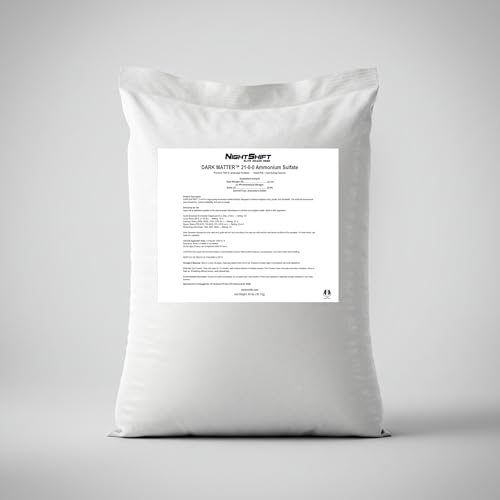
A 40-pound bag of ultra-fine prills built for large gardens and serious greening.
Dark Matter delivers a 21-0-0 ratio in an ultra-fine prill form — small granules that spread evenly through a broadcast spreader and absorb quickly into the soil. The bag is the heaviest on this list at 40 pounds, and the coverage is designed for large areas. Reviewers report that the fine prill dissolves faster than standard box-store ammonium sulfate, and that it produces deeper greening with noticeable results.
One buyer mentioned the green-up earned compliments from neighbors after just one application. The 21-0-0 ratio is powerful but still leaves room for other nutrients you might add later. Being a synthetic ammonium sulfate, it also helps lower soil pH, which is useful for alkaline soils where green vegetables often struggle to take up iron.
Why it stands out
- Ultra-fine prill for even coverage and quick absorption
- At 21-0-0, it is a high-nitrogen synthetic without extra phosphorus or potassium
- Big 40 lb bag covers large gardens without reordering
Consider this
- Not organic — synthetic ammonium sulfate
- Needs to be watered in well to avoid burn
Best for: gardeners with large plots who want a professional-grade synthetic that works fast and covers more ground than any organic option here.
Look elsewhere if: you need an organic-certified product for a small bed — the weight and bag size are overkill for a few containers.
5. Greenway Biotech Blood Meal 13-0-0
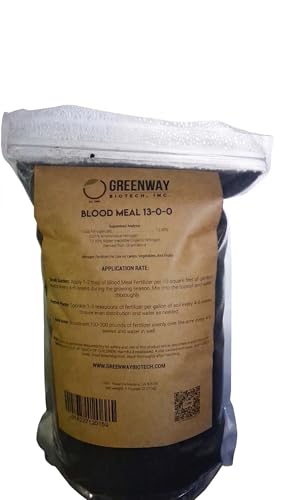
A fine powder that mixes into the soil fast when your greens look nitrogen-starved.
Greenway Biotech offers a 13-0-0 blood meal in a 5-pound bag with a powder form rather than granules. Powder breaks down faster in the soil, which gives your plants a more immediate nitrogen boost compared to the granular blood meal options. It is also a natural and sustainable byproduct of the meat industry, so it keeps waste out of landfills while feeding your vegetables.
One reviewer who grows cannabis said plants picked up really fast after applying Greenway, and another buyer used it after a soil test showed extremely low nitrogen levels. At 13% nitrogen, it is slightly more concentrated than the 12-0-0 blood meals from Down To Earth and Espoma, giving you a small edge in potency per pound. The bag is resealable, which helps keep the powder dry and contained between uses.
What works
- Powder form breaks down faster than granules
- 13-0-0 — slightly more nitrogen than typical 12-0-0 blood meals
- Resealable bag keeps the powder fresh
What to watch
- Powder can be dusty during application
- Still a blood meal — strong smell and may attract animals
Grab this if: you know your soil is low on nitrogen and you want a fast-acting organic option that works more quickly than standard granular blood meals.
Choose something else if: you dislike powdery fertilizers — granules are much less messy to spread dry.
6. The Grow Co. Urea Fertilizer 46-0-0
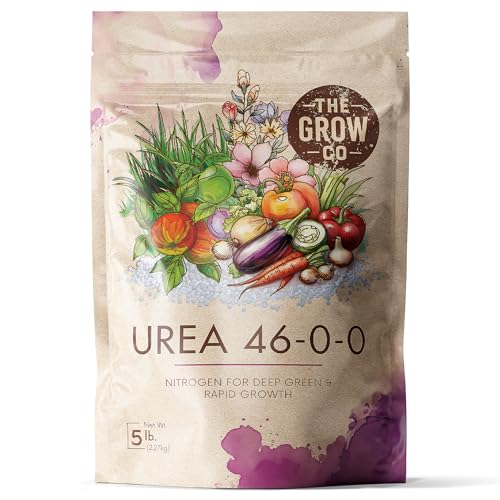
The highest nitrogen concentration on this list — a 46-0-0 formula that greens up leaves within days.
At a 46-0-0 ratio, the urea from The Grow Co. is nearly pure nitrogen. It is derived from premium urea, which is highly soluble and absorbed quickly by plant roots. The 5-pound bag goes a long way because you use very little per application — for vegetables, the label says to apply just half a teaspoon near the drip line. That means this single bag can last a whole season for a medium-sized garden.
One buyer applied it to sweet corn at 6 inches and again at 12 inches tall, and reported the largest, healthiest corn they had ever grown, with stalks as big around as an arm. Another reviewer said the leaves on their plants got bigger and greener almost immediately. The risk is that 46-0-0 is extremely potent: overapply it and you will burn plants quickly, so accurate measuring is non-negotiable.
Why it wins for speed
- 46% nitrogen — the highest concentration of any pick here
- Highly soluble for rapid plant uptake
- Very small application rate means one bag lasts a long time
The serious caution
- Extremely easy to overapply and burn your vegetables
- Not organic or organic-friendly
- No phosphorus or potassium for overall plant health
Only for experienced gardeners who: want maximum nitrogen per pound and can measure precisely — this is not a beginner-friendly fertilizer.
Avoid if: you want organic or you do not feel confident measuring half-teaspoon doses every time.
7. Cz Garden Ammonium Sulfate 21-0-0

A budget-friendly synthetic that feeds greens and lowers soil pH at the same time.
Cz Garden supplies a 21-0-0 ammonium sulfate in a 4-pound resealable pouch. On top of the 21% nitrogen, it contains 24% sulfur — which helps lower pH in alkaline soil and makes iron more available to your green vegetables. The mixing ratio is simple: one cup per five gallons of water. Buyers report that using it on onions every two weeks during the growing stage resulted in very large bulbs, and one gardener used it early in the season for quick success.
Because it is synthetic, the nitrogen is immediately available and you see results fast. That said, ammonium sulfate is acidic over the long term, so you may need to monitor your soil pH if you use it heavily season after season. The resealable pouch is a nice touch for keeping the dry granules from clumping in humid weather.
What you get
- 21-0-0 with 24% sulfur — low cost per pound of nitrogen
- Resealable package keeps the product dry
- Helps acidify alkaline soil for better nutrient uptake
What you trade
- Not organic — synthetic formulation
- Can make soil too acidic with repeated heavy use
- 4 lb bag is small for large gardens
Pick this if: you need an affordable, fast-acting nitrogen boost for a small vegetable plot or container garden and you grow acid-loving vegetables like onions or greens.
Think twice if: you have naturally acidic soil already — the added sulfur could push pH too low.
Understanding the Specs
N-P-K Ratio
The three hyphen-separated numbers on any fertilizer bag stand for nitrogen, phosphorus, and potassium, in that order. For green vegetables, the first number (nitrogen) is the most important because it drives leaf production and green color. A ratio like 46-0-0 means the product contains 46% nitrogen and no phosphorus or potassium — a pure nitrogen fertilizer. Organic options like blood meal typically show 12-0-0, while synthetic options can go higher.
Organic vs. Synthetic Nitrogen
Organic nitrogen sources like blood meal release nitrogen as soil microbes break down the material — slower but gentler on soil life. Synthetic sources like urea and ammonium sulfate are water-soluble and available to plants immediately, which makes them better for correcting a sudden nitrogen deficiency. Organic products are typically OMRI-certified, meaning they meet standards for organic growing, while synthetics do not qualify for organic certification.
FAQ
What is the best N-P-K ratio for leafy green vegetables?
Will blood meal burn my vegetable plants?
How often should I fertilize green vegetables with nitrogen?
Can I use lawn fertilizer on my vegetable garden?
Does ammonium sulfate lower soil pH?
What is the difference between urea and ammonium sulfate?
Is blood meal safe for organic vegetable gardens?
How do I apply dry granules to my vegetable plants?
Final Thoughts: The Verdict
For most gardeners, the best fertilizer for green vegetables is the Espoma Organic Blood Meal 12-0-0 because it delivers a reliable, organic nitrogen source in a 17-pound bag that covers a full garden season. If you want water-soluble precision for container gardening, grab the Grow More 30-10-10. And if you need maximum nitrogen for rapid green-up without worrying about organic certification, the The Grow Co. Urea Fertilizer 46-0-0 delivers the highest nitrogen concentration at 46% by weight.
How We Picked
We do not accept paid placement. Every pick is matched to a real buyer and a real use-case; we do not hands-on test units.
Sources & Methodology
Specifications: manufacturer listings and product documentation. Review insights: verified customer reviews, as of July 2026. Pricing: not shown on this page (it changes often); check the current price via the retailer link.
As an Amazon Associate, Lawn Gear Lab earns from qualifying purchases. This does not affect which products we feature.