
Specs are compiled from manufacturer listings and verified buyer reviews and can change over time — please confirm the key details on the product page before buying.
Planting grass seed is only half the battle. The real secret to a thick, envy-inducing lawn is what you feed those seeds the moment they hit the soil. A true starter fertilizer supplies the specific nutrients new grass craves to build roots before it even thinks about growing tall — and picking the wrong one is the fastest way to waste a season of effort.
I’m Rikta — the founder and writer behind Lawn Gear Lab. This guide is built by comparing the manufacturers’ published specifications and the patterns across verified customer reviews, so you get each pick’s real strengths and trade-offs instead of marketing spin.
The best fertilizer for grass seed puts phosphorus front and center, the nutrient that drives root growth, and balances it with just enough nitrogen for steady top growth without burning tender seedlings. fertilizer for grass seed is all about getting that ratio right for your specific lawn project.
Our Picks at a Glance
How To Choose The Best Fertilizer For Grass Seed
The single most important detail on any bag is the NPK ratio — three numbers that tell you the percentage of Nitrogen (leaf growth), Phosphorus (root growth), and Potassium (overall plant health). For new grass seed, you want the middle number (phosphorus) to be the highest or at least very prominent. A ratio like 20-27-5 or 12-18-8 is a classic starter mix.
Granules vs. Liquids — What’s the Difference?
Granular fertilizers are the most common for new lawns. They release nutrients slowly as they break down, which means a single application can feed seedlings for weeks. Liquid fertilizers, on the other hand, are absorbed immediately through the leaves and roots. They are great for a fast green-up, but you will need to reapply them every two to four weeks, as noted in the data from the 3-18-18 product specifications. Choose granules for a low-maintenance approach, and liquids if you want to see a quick response.
Coverage Area Matters More Than Bag Size
A 50-pound bag sounds impressive, but what really counts is how many square feet it covers. A super-dense, high-nitrogen formula might cover 5,000 square feet, while a milder one could cover 15,000 square feet at the same weight. Always check the “covers up to” number in the specs. For a typical quarter-acre lawn (roughly 10,000 sq ft), you might need multiple bags of a smaller-coverage product or just one large bag of a high-coverage one.
Quick Comparison
| Model | Best For | NPK Ratio | Coverage | Form | Amazon |
|---|---|---|---|---|---|
| The Andersons 20-27-5★ Best Overall | Overall starter | 20:27:5 | 5,000 sq ft | Granules | Amazon |
| Fertilome 9-13-7Budget Champion | Small yards / value | 9:13:7 | 2,500 sq ft | Granules | Amazon |
| Liquid Lawn Fertilizer 3-18-18Fast-Acting Pick | Fast liquid feed | 3:18:18 | 3,250 sq ft | Liquid | Amazon |
| Jonathan Green 12-18-8 | Seed & sod standard | 12:18:8 | 5,000 sq ft | Granules | Amazon |
| Southland Sod 15-15-15 | Balanced feeding | 15:15:15 | 18 lb bag | Granules | Amazon |
| Jonathan Green Veri-Green 12-18-8 | Large lawn value | 12:18:8 | 15,000 sq ft | Granules | Amazon |
| The Andersons 18-24-12 | Professional-grade | 18:24:12 | 12,500 sq ft | Granules | Amazon |
| Lesco 18-24-12 | Bulk pro jobs | 18:24:12 | 50 lb bag | Granules | Amazon |
In‑Depth Reviews
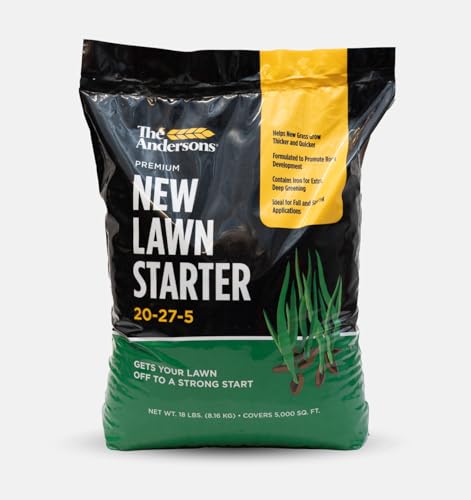
1. The Andersons Premium New Lawn Starter 20-27-5 Fertilizer
Our pick — over 4.5★ from 550+ verified ratings; the strongest balance of quality and price.
The crowd favorite that makes grass pop in just over a week.
This is the pick that earns the highest praise from the most owners, and for good reason. Its 20-27-5 ratio contains 27% phosphorus, while the Fertilome 9-13-7 contains 13%, which means it delivers a heavy, targeted punch directly to root development. The formula combines quick- and slow-release nitrogen, so you get a visible green-up in days while the soil continues feeding the seedlings for weeks after. The 18-pound bag covers a full 5,000 square feet, which is a practical amount for a medium-sized lawn project without leftovers going stale in the garage.
The real-world results back up the spec sheet. Buyers report that grass began to show in just over a week, with one owner specifically noting he “was able to get grass in just over a week” after application. The consensus is that this fertilizer “really works” and is a “very good starter” for any new lawn, overseeding, or patch repair. The biggest wish? A larger bag option, since people who love it want to keep applying it across bigger areas without buying multiple smaller bags.
What seals the deal
- Highest phosphorus ratio (20-27-5) in its price tier, delivering fast root establishment.
- Contains 1% iron for deep greening you can see within a week.
- Dual-release nitrogen means one application feeds immediately and long-term.
The only drawback
- Only available in an 18-pound bag — heavy users wish for a bigger economic size.
The fit: Reach for this if you want a proven, crowd-vetted starter that gets grass growing fast on a typical suburban lawn. It is the safest bet for first-time seeders and seasoned lawn care veterans alike.
Who should look elsewhere: Skip this if you need to cover more than 5,000 square feet in one go; you would be better off with the Jonathan Green Veri-Green (15,000 sq ft) or the Andersons 18-24-12 (12,500 sq ft) for bigger jobs.
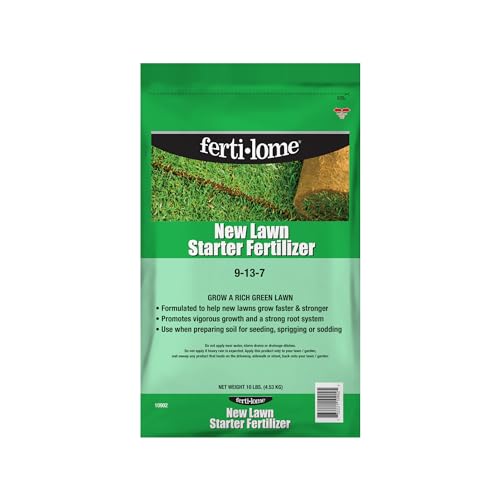
2. Fertilome (10902) New Lawn Starter Fertilizer 9-13-7
A classic starter that develops roots before throwing up top growth.
This 9-13-7 blend is a traditionalist’s choice, designed to prioritize root and stem maturity over rapid leaf development. The 13% phosphorus (the middle number) is the highest component in the ratio, which is exactly what you want for anchoring new seed or sod. This 10-pound bag covers 2,500 square feet, making it a practical pick for smaller lawns, patch repairs, or layered applications. The granules are noticeably larger than some competitors, which owners mention means they feed longer and carry a lower risk of burning tender new grass.
Customer results back up the design. One buyer used it when laying zoysia sod and confirmed it “helped establish root growth” in both the fall and the following spring. Another owner saw their lawn turn a “dark rich green” that covered up weak spots. The data from the review pages show root growth as the single most praised aspect, with effectiveness right behind it. The only complaint is that for a very large lawn, you will need multiple bags to get full coverage.
Bottom line: A no-nonsense, budget-friendly starter that does exactly what it promises for small to medium seeding or sodding jobs. Buy it if you value root development and a gentle feed over instant, flashy green-up.
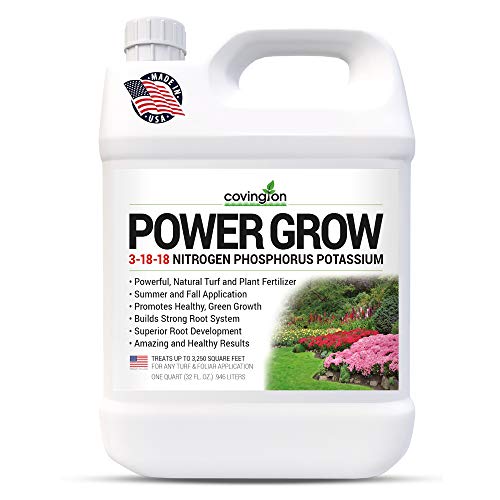
3. Liquid Lawn Fertilizer, 3-18-18 NPK Grass Fertilizer
A liquid concentrate that gets into the root zone almost instantly.
When you want to see results fast, this liquid formula delivers. The 3-18-18 ratio is built around a massive dose of phosphorus and potassium, with just enough nitrogen to support leaf growth without overwhelming new seedlings. Because it is a liquid, you mix it with water and apply it directly — the plant absorbs it through both the roots and the leaf blades immediately. One 32-ounce bottle covers 3,250 square feet when mixed at the recommended rate (2 to 4 ounces per gallon of water).
The speed is the headline. Customers note that grass seed germinated in just four days, and by day eleven the lawn was “lush green and filling in.” The data backs up the claim that it stimulates green growth and is “effective lawn care product” for giving a tired lawn life again without harsh chemicals. The trade-off is that you will need to repeat the application every 2 to 4 weeks, as the instructions note, because liquids break down faster than granules. Also, a few owners note the 3% nitrogen leaves the grass looking a bit pale compared to higher-nitrogen formulas, so it works best when used as a root-builder alongside a more nitrogen-rich program.
Best for: Homeowners who want a fast-acting, easy-to-mix solution for giving new seed a quick phosphorus boost. Ideal if you prefer to control application frequency rather than relying on a single granular dose.
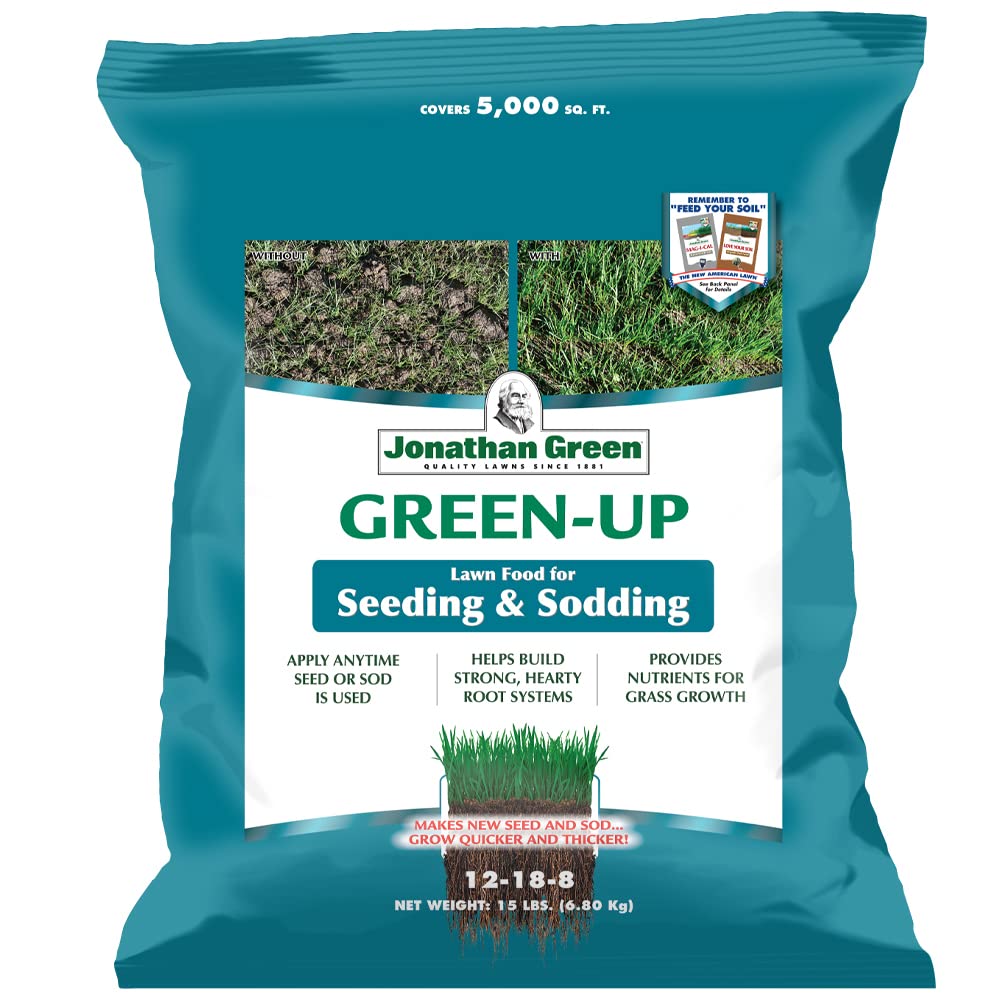
4. Jonathan Green (11541) Green-Up Lawn Food for Seeding & Sodding 12-18-8
The brand that lawn professionals reach for first.
Jonathan Green is a name that carries weight with serious lawn caretakers, and this 12-18-8 formula is the reason why. The phosphorus is rich enough to drive “deep and dense roots,” as the spec sheet states, but the real edge is the addition of humates. These organic compounds improve the soil’s ability to hold and exchange nutrients, which means your fertilizer works harder and stays available to the grass longer — up to two months per application. The 15-pound bag covers 5,000 square feet, and it is meant to be applied the same day you seed or lay sod.
Real-world tests are impressive. One owner in Kansas noted the fertilizer “really strengthens my grass to handle all conditions,” from heavy rain to drought. Another reported 90% new lawn coverage in four weeks on a shaded Minnesota lawn, with grass visible in just one week. The 12-18-8 ratio is a perfect middle ground: high enough phosphorus for roots, but with enough nitrogen (12%) to keep the top looking lush without the pale look that low-nitrogen liquids give. The only downside in the data is a minority opinion that it is nothing “spectacular” compared to cheaper iron supplements, but the vast majority of feedback disagrees.
Reach for it if: You are seeding or sodding a new lawn and want a premium product from a trusted brand that includes soil-conditioning humates for long-term feeding. It is especially strong in lawns that face temperature stress.
Look elsewhere if: You are on a very tight budget; this is a mid-range product that costs more than the Fertilome or the liquid option.
5. Southland Sod Farms 21 Sod and Seed Starter 15-15-15

An equal-parts formula that nurtures the whole plant.
Most starter fertilizers lean heavily on phosphorus, but the Southland 15-15-15 takes a different approach: equal parts nitrogen, phosphorus, and potassium. This is a “balanced” fertilizer, meaning it feeds every part of the grass plant simultaneously — roots, blades, and overall resilience. It is designed specifically to “reduce the risk of transplant shock,” which makes it a strong candidate if you are laying sod or transplanting plugs rather than starting from bare seed. The 18-pound bag covers a significant area, though the exact square footage is given as the bag weight in the specs.
Owner experiences are consistently positive. One reviewer noted “100% seed germination” and plans to order again the next year. Another owner, who used it in the fall with three waterings a week, said the grass “sprouted, to create a plush lawn look.” The simplicity of the application is a recurring theme — you can just toss it out and water it daily with minimal prep. The only rough edge is that some batches arrive a bit clumpy, so breaking up the granules before spreading helps ensure even coverage.
The verdict: This is the go-to if you want a true all-in-one feed that covers seed, sod, and plugs without having to guess which nutrient is most important. The equal ratio makes it forgiving for new lawn owners who just want to see green.
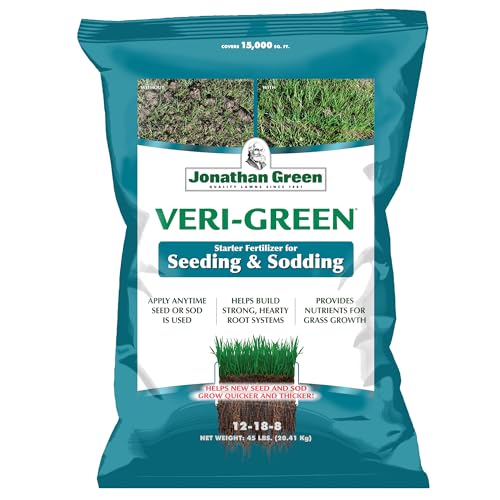
6. Jonathan Green (16008) Veri-Green Starter Fertilizer 12-18-8
The same trusted formula, scaled up for serious acreage.
If you loved the Jonathan Green 12-18-8 but need more coverage, this Veri-Green version is the answer. The NPK ratio is identical — 12-18-8 with humates for soil conditioning — but the bag is a hefty 45 pounds that covers 15,000 square feet. That is 15,000 sq ft of coverage, compared to the standard Green-Up 12-18-8’s 5,000 sq ft, which means you can handle a third of an acre with a single purchase. Like its smaller sibling, it is meant to be applied the same day you seed or lay sod and feeds for up to two months.
The reviews reflect strong satisfaction. One owner combined it with Jonathan Green summer grass seed and saw their yard look “10x better” in just one month. Another said the grass “came up in good time” and was green and full within two weeks. The effectiveness is the most-discussed aspect, with germination and greenness also earning specific praise. The only sentiment that is mixed is value for money — while many consider it a great deal for the coverage, some find the upfront cost higher than they expected for a single bag.
Buy this if: You have a large lawn (over 10,000 sq ft) and want to avoid buying multiple smaller bags. It is the most economical route to getting premium Jonathan Green starter coverage across a big property.
skip it if: Your budget is tight upfront; this is a premium-priced bag, even though the per-square-foot cost is actually quite good.
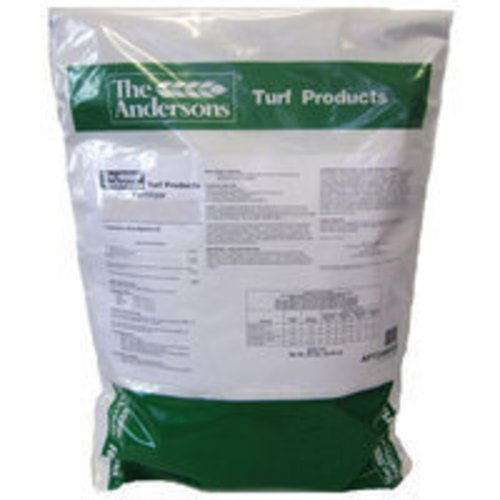
7. The Andersons 18-24-12 Starter Turf Fertilizer, 50lb Bag
The heavy hitter when only the best root development will do.
This is the most potent starter in The Andersons lineup, with an 18-24-12 ratio that puts phosphorus at a commanding 24%. That is the highest middle number in this entire review, and it is designed for one purpose: “vigorous seedling development and root establishment.” It also enhances spring green-up and corrects phosphorus deficiencies in established turf, so it is not just for new lawns. A single 50-pound bag covers 12,500 square feet at a medium application rate, which puts it in the same league as the Lesco for bulk jobs but with slightly more phosphorus per square foot.
The owner feedback is enthusiastic. One person using it on Bermuda grass called it “best fertilizer for Bermuda Grass,” better than what their lawn service was using. Another said it “really greened up my lawn” quickly and made grass liven up fast. The reviews also note it works well on dwarf fruit trees, which shows the versatility of the high phosphorus content. The only caution from the data is that this is a concentrated professional-grade product, so you must follow the application rate carefully to avoid overfeeding — though actual burn reports are absent from the reviews.
Who it is for: Serious lawn caretakers who want the highest possible phosphorus kick for establishing new seed, especially for warm-season grasses like Bermuda. It is also excellent for correcting soil phosphorus deficiencies.
8. Lesco 50LB Starter Fertilizer 18-24-12

The workhorse bag for contractors and the biggest lawns.
Lesco is a staple at professional landscape supply houses, and this 18-24-12 starter is exactly the kind of product that earns that reputation. The ratio mirrors The Andersons 18-24-12, making them direct competitors, but the Lesco is sold as a no-frills 50-pound bag designed for efficiency. As a granular formula, it is easy to apply with a broadcast spreader and is described as “forgiving” and “non-burning” in the reviews, which is crucial when you are covering large areas with young grass.
The owner reports are consistently positive. One buyer mentioned that it boosts grass growth and “deep green color within a week.” Another said it “worked perfectly for my newly seeded grass right before fall” and is already planning a spring reorder. The product is noted as being “powerful” but safe, with one owner unable to “keep up with my grass anymore” because it grows so fast. The only limitation mentioned is that it does not control weeds, so you need a separate weed preventer if that is a concern. Overall, it is a straightforward, high-performance bulk starter for those who know exactly what they want.
Reach for it if: You are covering a very large lawn or a professional project and want the most bag-for-your-buck in terms of pure phosphorus content. It is a reliable, time-tested formula that landscape pros trust.
Consider another if: You prefer a brand with added soil conditioners (like the humates in Jonathan Green) rather than just straight nutrient granules.
Understanding the Specs
NPK Ratio — The Three Magic Numbers
Every fertilizer bag shows three numbers, like 20-27-5 or 12-18-8. They stand for Nitrogen (leaf growth), Phosphorus (root growth), and Potassium (overall health). For grass seed, the middle number (phosphorus) is the most critical because new seedlings need to build a strong root system before they can support rapid leaf growth. A high phosphorus number like 24 or 27 is the hallmark of a true starter formula.
Granular vs. Liquid — Slow Feed vs. Quick Boost
Granular fertilizers are solid pellets that break down slowly in the soil, feeding the grass over weeks. They are ideal for a single application at seeding time. Liquid fertilizers are concentrates you mix with water and spray; they are absorbed almost immediately but wash away or break down faster. Liquids require reapplication every 2 to 4 weeks but give you faster, more visible results. Your choice depends on how much hands-on lawn care you want to do.
Coverage Area — The Real Measure of a Bag
The most practical spec on any bag is the “covers up to X square feet” number. A 50-pound bag could cover 5,000 sq ft or 15,000 sq ft depending on how concentrated the formula is. Always check this before buying, not just the weight. If you have a 10,000 sq ft lawn, you may need two bags of a high-concentration starter or just one bag of a low-concentration bulk blend.
Humates and Iron — The Hidden Boosters
Some premium starters add humates (organic compounds that help the soil hold and exchange nutrients) and iron (which deepens the green color). Humates are a sign that the fertilizer is designed for long-term soil health, not just a quick green-up. Iron is a nice bonus if you want that dark, rich lawn look without extra nitrogen that could burn seedlings.
FAQ
Should I use a starter fertilizer or a regular lawn food for grass seed?
What NPK ratio is best for grass seed?
Can I use a liquid fertilizer instead of granules for new seed?
When should I apply starter fertilizer for grass seed?
How long does starter fertilizer feed new grass?
What is the difference between 9-13-7 and 20-27-5?
Will starter fertilizer burn my grass seed?
How much area does a 50-pound bag of starter fertilizer cover?
Can I use these fertilizers on established grass?
Is the Jonathan Green 12-18-8 the same as the Veri-Green 12-18-8?
Final Thoughts: The Verdict
For most people, the fertilizer for grass seed winner is the The Andersons Premium New Lawn Starter 20-27-5 because it delivers the highest phosphorus ratio in its tier, visible results in just over a week, and proven customer satisfaction from nearly 600 owners. If you want a liquid fast-booster for smaller patches or controlled feeding, grab the Liquid Lawn Fertilizer 3-18-18. And for large lawn projects covering over 10,000 square feet, the Jonathan Green Veri-Green 12-18-8 is the most sensible single-bag solution on the market.
How We Picked
We do not accept paid placement. Every pick is matched to a real buyer and a real use-case; we do not hands-on test units.
Sources & Methodology
Specifications: manufacturer listings and product documentation. Review insights: verified customer reviews, as of July 2026. Pricing: not shown on this page (it changes often); check the current price via the retailer link.
As an Amazon Associate, Lawn Gear Lab earns from qualifying purchases. This does not affect which products we feature.