
Specs are compiled from manufacturer listings and verified buyer reviews and can change over time — please confirm the key details on the product page before buying.
Picking the wrong plant food for your grapevines can leave you with a jungle of leaves and almost no fruit. The right fertilizer for grape vines shifts the plant’s energy from leafy growth into sweet, heavy clusters. This guide compares four real options — liquid and granular — so you can match one to your vine’s age, your soil, and how much effort you want to spend feeding it.
I’m Rikta, the writer behind Lawn Gear Lab. I built this guide by comparing each product’s published specs and the patterns I see in verified customer reviews, so you get honest strengths and real trade-offs, not marketing.
Your choice depends on your soil’s pH, if you want a quick liquid boost or slow-release granules, and if your vine is a young plant or a mature one that needs a revival.
Quick Picks
- TPS Nutrients Grape Fertilizer — Best Overall
- EB Stone Organic Fruit, Berry & Vine Food — pH Fixer
- Soil Seed & Water Bacchus Organic Fertilizer — Vine Revival
- Bloom City Acid-Loving Plant Fertilizer — Acid Adjuster
How To Choose The Best Fertilizer For Grape Vines
Picking a grapevine fertilizer is not as simple as grabbing a bag of all-purpose plant food. Vines have a specific appetite: they need enough nitrogen (N) for leaf growth, phosphorus (P) for strong roots and flowers, and potassium (K) for ripening fruit. Too much nitrogen and you get a leafy vine with few grapes. The right product balances these elements, often with a ratio like 7-3-3, and delivers them in a form your vine can use.
Liquid vs Granular: Which Feeding Style Fits You?
Liquid fertilizers, like the TPS Nutrients Grape Fertilizer, are mixed with water and applied directly to the soil around the vine. They work fast because the nutrients are immediately available to the roots, making them a great choice for a quick pick-me-up during the growing season. Granular options, such as the EB Stone Organic Fruit, Berry & Vine Food, are worked into the top layer of soil and release nutrients slowly over time. Granules feed the soil microbes as well as the plant, which improves long-term soil health, but they take longer to show results. Your choice depends on if you need speed or sustained release.
Check the Target Species on the Label
Not every plant food is created equal, and some are formulated specifically for acid-loving plants like blueberries and azaleas. While the Bloom City Acid-Loving Plant Fertilizer lists grapes as a target species, you should only use it if your soil pH is too high for grapes. Most grapes prefer a slightly acidic to neutral pH. Always read the product’s “Target Species” or “Specific Uses” section to confirm your vine is included. A fertilizer designed for general fruit trees might not have the right micronutrient profile for vines.
Quick Comparison
| Model | Best For | Form | NPK Ratio | Unit Size | Amazon |
|---|---|---|---|---|---|
| TPS Nutrients Grape Fertilizer | Quick liquid boost | Liquid | — | 32 fl oz | Amazon |
| Bloom City Acid-Loving Fertilizer | Lowering soil pH | Liquid | — | 32 fl oz | Amazon |
| EB Stone Organic Fruit, Berry & Vine Food | Sustained granular feeding | Granules | 7-3-3 | 4 lbs | Amazon |
| Soil Seed & Water Bacchus | Reviving struggling vines | Granules | — | 9 lbs | Amazon |
In‑Depth Reviews
1. TPS Nutrients Grape Fertilizer
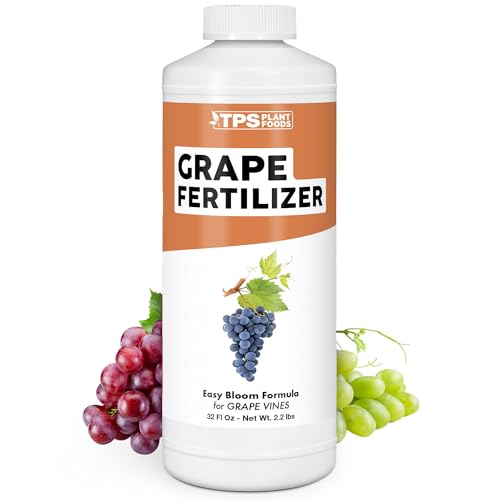
A purpose-built liquid that pushes fruit ripeness, not just leaf growth.
You need a fertilizer that helps your grapes sweeten and ripen, and this one’s potassium-rich formula is built for that job. The key is the potassium, which is higher than the nitrogen — that extra potassium helps the fruit develop sugars. That covers a small home vineyard or a few backyard vines. Because it is liquid, the nutrients reach the roots instantly, and buyers back this up by reporting vines growing “better than ever” and producing fruit.
The real trade-off is cost: this liquid is more expensive per dose than the granular EB Stone option. If you have a large vineyard, the price adds up fast. The mixing ratio is listed as 1:1:1, which is unusual for a concentrate — shake the bottle well before each use. Still, for a fast-acting liquid that is made in the USA and formulated only for grapes, this is the most direct choice here.
Why it stands out
- Potassium-rich ratio directs energy into fruit ripening, not leaves.
- A 32-ounce bottle makes up to 8 gallons of mixed feed.
- Buyers report immediate improvements in vine growth and fruit set.
The real trade-off
- Liquid feeding is more expensive per application than the EB Stone granules.
- The 1:1:1 mixing ratio means you need to shake the bottle thoroughly before each pour.
Fit for the job: Reach for this when your established vine needs a quick, measurable boost in fruit production — the higher potassium in its NPK ratio handles ripening better than general plant food.
Not your match if: You have a large vineyard or a tight budget, because the per-gallon cost of liquid feeding will eat into your wallet fast.
2. EB Stone Organic Fruit, Berry & Vine Food 7-3-3
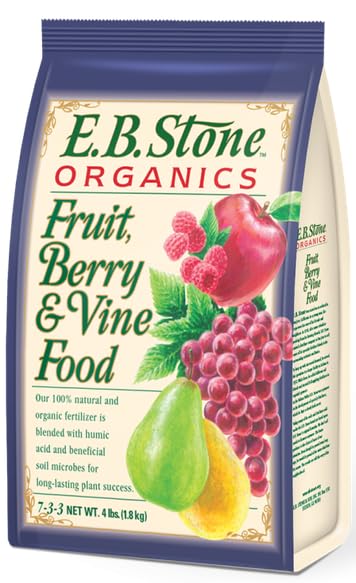
Organic granules that improve the soil while feeding the vine for weeks.
If you want to feed your vine and improve the dirt it grows in, this granular 7-3-3 blend does both. The nitrogen (7) here is higher than in the TPS liquid, which supports strong leaf growth early in the season. The phosphorus and potassium in the ratio handle roots and fruit set. One reviewer noted it “promotes healthy growth, stronger leaves, and better fruit production in berries and vines.” Unlike liquid feeds that wash through quickly, these granules break down slowly, feeding the vine and soil microbes over several weeks. That means fewer applications across the season.
The 4-pound bag is small — one buyer mentioned it is compact for large gardens. For a single mature vine, the bag lasts a full season. But if you have multiple vines, you will need to buy several bags for full coverage. It has a slight natural smell from the organic ingredients, though nobody reports it being offensive. The lack of harsh chemicals makes it a safe choice for organic gardens where you plan to eat or make wine from the grapes. Compared to the TPS liquid, this offers a slower but much cheaper per-season feed.
Slow-release benefits
- Organic granular formula feeds soil microbes along with the vine.
- NPK of 7-3-3 supports early leaf growth and later fruit production.
- Owners mention passion fruit vines “went wild” with this product.
Where it falls short
- 4-pound bag is small for multiple vines or a large vineyard.
- Granules release slower than liquid, so you need to plan ahead for results.
A hands-off choice: Pick this when you want to improve overall soil health and feed your vine slowly over weeks — the organic granules work without mixing bottles every week.
Skip if: You have a large garden or need a quick rescue for a stressed vine, since granules take time to break down and the bag is small.
3. Soil Seed & Water Bacchus Organic Fertilizer for Grapevines
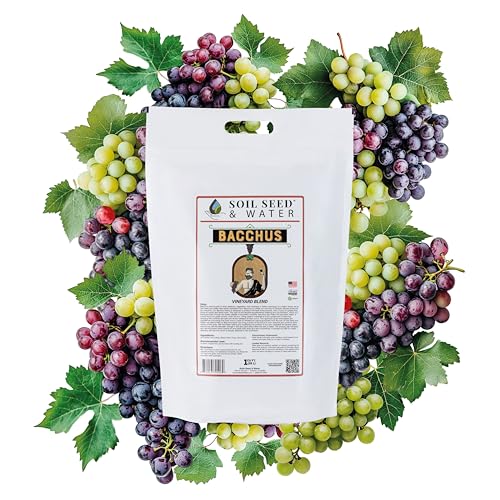
The declared rescue option for vines that look like they have no hope left.
This concentrated organic granular from Soil Seed & Water is made only for grapevines and vineyards, and the customer stories are remarkable. One verified buyer described how this fertilizer “rescued near-dead Victoria Red grape vine; after using this fertilizer, produced many grapes last year and more expected this year.” That turn-around is what makes this the revival specialist. It is OMRI-listed (Organic Materials Review Institute certified), meaning it meets organic standards. The formula improves soil aeration and water retention, building a healthier root environment. The mix ratio is 1:4, meaning you use one part fertilizer to four parts soil or water, making it a strong concentrate that stretches far.
The catch: it has a powdery, dirt-like consistency that can be messy on a windy day. One owner reported they were “initially skeptical of dirt-like texture,” but the results changed their mind. Because it is a concentrate, you must measure carefully to avoid overfeeding. The 9-pound bag is the biggest here, giving you better value per pound than the 4-pound EB Stone bag. If the TPS liquid is too expensive for your budget or your vine looks truly sick, this is the focused organic fix.
Why it wins
- OMRI-listed organic formula designed specifically for grapevines.
- Customers note dramatic results, including reviving near-dead vines into heavy producers.
- The 9-pound bag offers better value for multiple vines than the smaller EB Stone bag.
Heads up
- Powdery, dirt-like texture can be messy during application, especially in wind.
- Strong concentrate needs careful measurement to avoid burning the roots.
The revival specialist: Reach for this when you have one or two struggling vines that need a complete soil and root renovation — the ORI-listed organic matter does not just feed the vine, it rebuilds the soil.
Look elsewhere if: You want a quick liquid boost or dislike messy granular application, because the powdery texture is not neat.
4. Bloom City Acid-Loving Plant Fertilizer

A liquid that lowers soil pH and feeds your vine, but only if the soil is too alkaline.
This product is not a dedicated grape fertilizer — its main job is to lower soil pH for acid-loving plants like blueberries and azaleas, but it does list grapes as a target species. If your soil test shows a pH above 7.0, this can bring it down to the 5.5-6.5 range that grapes prefer. One customer observed: “it was very easy to add to a gallon of water 2-4 tsp and give my grapes a nice watering!” The liquid is dark brown and pours easily. The 32-ounce bottle is compact but makes a lot of diluted feed since you only need a few teaspoons per gallon.
The risk: using it when your soil pH is already fine. Applying an acidifier to neutral or acidic soil can drop the pH too low, locking up nutrients and stressing the vine. Unlike the TPS Grape Fertilizer, which focuses on fruit development, this one focuses on soil chemistry. It is a niche tool, not an everyday feed. Use it only if you know your soil is too alkaline. If your soil is already in range, stick with the EB Stone or TPS for a more balanced feed.
What it does well
- Lowers soil pH for grapes that show iron deficiency signs in alkaline soil (yellowing leaves).
- Easy liquid application — a few teaspoons per gallon does the job.
- Works on blueberries and azaleas too, so one bottle serves multiple garden spots.
The niche limitation
- Only useful if your soil pH is above 7.0 — using it on neutral soil can harm the vine by making it too acidic.
- Not designed specifically for fruit production, so it lacks the high potassium that grapes need for ripening — the TPS has more potassium.
Best for alkaline soil: Grab this when a soil test shows your pH is above 7.0 and your vine shows yellowing leaves (a sign of iron deficiency) — it feeds and acidifies in one step.
Not for you if: Your soil pH is already in the 5.5-6.5 range, because you risk over-acidifying and should pick a balanced grape-fertilizer instead.
Understanding the Specs
NPK Ratio
NPK stands for Nitrogen (N), Phosphorus (P), and Potassium (K) — the three main nutrients every plant needs. For grapevines, you generally want the potassium number to be the same or higher than the nitrogen number to encourage fruit ripening over leaf growth. A ratio like 7-3-3 has high nitrogen for leafy growth, while a potassium-rich formula is better for fruit. The right choice depends on your vine’s age and the season.
Liquid vs Granular Form
Liquid fertilizers deliver nutrients directly to the roots within hours, making them a good choice for a quick boost during the growing season. Granular fertilizers release nutrients slowly as the soil microbes break them down, which feeds the soil life as well as the plant. Granules are less work per application and last longer, but they take a few weeks to show results. The form you choose affects how often you need to feed and how quickly you see a change.
FAQ
When is the best time of year to fertilize grape vines?
Can I use a general plant food instead of a grape-specific fertilizer?
How do I know if my soil needs a pH-lowering fertilizer like the Bloom City one?
How often should I apply a liquid grape fertilizer?
Is organic or synthetic fertilizer better for grape vines?
Will these fertilizers work on a single grape vine in a pot or container?
How much fertilizer does a mature grape vine need per season?
What does the “mixing ratio” like 1:4 mean on a fertilizer label?
Final Thoughts: The Verdict
For most people, the fertilizer for grape vines winner is the EB Stone Organic Fruit, Berry & Vine Food because it delivers a balanced 7-3-3 NPK ratio in a slow-release organic form that builds soil health and keeps your vine fed for weeks. If you want a quick liquid boost that targets fruit development, grab the TPS Nutrients Grape Fertilizer. And for reviving a struggling vine or fixing poor soil, the standout is the Soil Seed & Water Bacchus Organic Fertilizer.
How We Picked
We do not accept paid placement. Every pick is matched to a real buyer and a real use-case; we do not hands-on test units.
Sources & Methodology
Specifications: manufacturer listings and product documentation. Review insights: verified customer reviews, as of July 2026. Pricing: not shown on this page (it changes often); check the current price via the retailer link.
As an Amazon Associate, Lawn Gear Lab earns from qualifying purchases. This does not affect which products we feature.