
Specs are compiled from manufacturer listings and verified buyer reviews and can change over time — please confirm the key details on the product page before buying.
Garlic is famously patient — you plant a clove in fall and wait months for a fat, papery bulb. But if the soil lacks the right phosphorus and potassium, you end up with undersized heads that are frustrating to peel. The trick is picking a fertilizer that targets bulb development without pushing all its energy into leafy top growth.
I’m Rikta — the founder and writer behind Lawn Gear Lab. This guide is built by comparing the manufacturers’ published specifications and the patterns across verified customer reviews, so you get each pick’s real strengths and trade-offs instead of marketing spin.
Whether you grow hardneck or softneck varieties, the right fertilizer for garlic makes the difference between a modest harvest and a season of plump, flavorful bulbs you’re proud to share.
Quick Picks
- Espoma Organic Bulb-Tone 3-5-3 — Best Overall
- Lilly Miller Bulb & Bloom Food 4-10-10 — High Phosphorus
- Earth Science Natural Bone Meal 4 lb — Budget Pick
- Plantonix Kelp Bliss Kelp Meal 2 lb — Soil Builder
- TPS Nutrients Garlic Fertilizer 32 oz — Liquid Boost
- Espoma Organic Bone Meal 4-12-0 10 lb — Premium Bone
- Down To Earth Tomato & Vegetable Mix 4-6-2 — All-Rounder
How To Choose The Best Fertilizer For Garlic
Garlic is a heavy feeder that needs a specific nutrient balance at different growth stages. Picking a fertilizer blindly often leads to lush greens but disappointingly small bulbs. Focus on the middle number in the NPK ratio — that’s phosphorus, the nutrient that drives root and bulb formation.
Understand the NPK Ratio
Every fertilizer label shows three numbers — nitrogen (N), phosphorus (P), and potassium (K). For garlic, you want a higher phosphorus number, usually in the 8–12 range, and a potassium number around 8–10. Too much nitrogen forces the plant to grow tall leaves at the expense of bulb size, which is exactly what you don’t want.
Granular vs. Liquid
Granular fertilizers like bone meal release nutrients slowly over weeks, making them perfect for planting time when you work them into the soil. Liquid fertilizers act fast and are ideal for a mid-season side-dress when the garlic is actively sizing up its bulb. Many growers use both: a granular feed at planting and a liquid boost in early spring.
Organic vs. Synthetic
Organic options such as bone meal, kelp meal, and fish emulsion feed the soil microbiome, which in turn feeds the garlic. They are slower-acting but build long-term soil health. Synthetic fertilizers deliver nutrients immediately but can burn roots if over-applied and do little for soil structure. Most home garlic growers lean organic for better flavor and sustainable soil.
Quick Comparison
| Model | Best For | NPK Ratio | Item Form | Item Weight | Amazon |
|---|---|---|---|---|---|
| Espoma Bulb-Tone 3-5-3 | Best Overall Garlic Feed | 3-5-3 | Granules | 4 lb | Amazon |
| Lilly Miller Bulb & Bloom Food 4-10-10 | High-Phosphorus Bulb Booster | 4-10-10 | Powder | 4 lb | Amazon |
| Earth Science Natural Bone Meal | Budget Phosphorus Source | Steamed Bone Meal | Granules | 4 lb | Amazon |
| Plantonix Kelp Bliss | Soil Health & Trace Minerals | Organic Kelp Meal | Kelp Meal | 2 lb | Amazon |
| TPS Garlic Fertilizer | Liquid Mid-Season Boost | Liquid Blend | Liquid | 32 fl oz | Amazon |
| Espoma Organic Bone Meal 4-12-0 | Premium Phosphorus & Calcium | 4-12-0 | Powder | 10 lb | Amazon |
| Down To Earth Tomato & Vegetable 4-6-2 | Versatile Organic All-Rounder | 4-6-2 | Granules | 15 lb | Amazon |
In‑Depth Reviews
1. Espoma Organic Bulb-Tone 3-5-3

A time-tested granular feed that targets the root zone right where garlic needs it.
Espoma Bulb-Tone is formulated with an NPK of 3-5-3, meaning it delivers a moderate nitrogen level but puts the emphasis on phosphorus — the key nutrient for bulb formation. It also includes 6% calcium, which helps prevent common issues like tip burn and strengthens cell walls. The granules are ready to use straight from the bag with no mixing required; buyers report they simply place it in the planting hole for new cloves or sprinkle it on the soil surface for established plants.
Unlike the Lilly Miller 4-10-10 below, which has a higher phosphorus punch for a quick boost, Bulb-Tone provides a more balanced slow-release approach that works across the entire growing season. One reviewer noted that their “bulbs were newly planted and are thriving,” which matches the general pattern of reliable, steady growth rather than a sudden flush. The Bio-tone formula, a proprietary blend of beneficial microbes, also helps open up nutrients already in the soil.
Trusted organic choice: Approved for organic gardening and made by a company that has been in the natural organics space since 1929. A solid, fuss-free option for anyone who wants to plant and forget until harvest.
The catch: The 3-5-3 ratio is lower in phosphorus than some dedicated bulb foods, so heavy-feeding garlic varieties may benefit from an extra mid-season liquid boost.
Reach for this if: you want a single, simple granular feed that supports both spring and fall bulbs with minimal effort.
Look elsewhere if: you need a high-phosphorus formula to push maximum bulb size in poor soil — a dedicated bone meal will give more phosphorus per pound.
2. Lilly Miller Bulb & Bloom Food 4-10-10

A powerhouse blend that pours phosphorus and potassium into bulb development.
Lilly Miller’s 4-10-10 formula has a phosphorus content that is roughly double that of the Espoma Bulb-Tone 3-5-3, and its potassium level is also improve — both are exactly what garlic needs to size up its cloves. The slow-release feeding means you apply it once and it keeps working over time, which is ideal for the long wait between fall planting and summer harvest. One buyer described it as “excellent for amaryllis and other bulbs; promotes strong growth.”
The 2.0x phosphorus gap versus a general-purpose 10-10-10 or the Bulb-Tone 3-5-3 makes this a go-to for growers who have tested their soil and know it is low in phosphorus. It comes as a powder that you work into the soil, and it is particularly hard to find in local garden centers — many buyers specifically order it online because, as one buyer mentioned, “some fertilizers are not available in stores.”
Targeted bulb nutrition: The high phosphorus and potassium combo is purpose-built to trigger bright, vigorous blooms and, in garlic’s case, dense bulb formation. A strong middle-of-the-road option for dedicated garlic patches.
The trade-off: If you are growing in rich, already-amended soil, the extra phosphorus may be unnecessary — you could end up spending on nutrients your ground does not lack.
Best for: growers with sandy or depleted soil who need a measurable phosphorus boost to kick-start bulb development.
skip it if: you prefer a fully organic-certified product — Lilly Miller is not marketed as OMRI listed, unlike the Espoma options.
3. Earth Science Natural Bone Meal 4 lb

A straightforward, old-school phosphorus source that garlic roots absolutely love.
Bone meal is one of the oldest organic fertilizers, and Earth Science’s 4-pound bag delivers it in a fine granular form that mixes easily into the soil. The primary benefit is phosphorus for root and bulb growth, but it also contributes calcium, which is critical for cell structure and disease resistance. The bag covers roughly 100 square feet, and the recommended application for trees and shrubs is 1 to 2 lbs under the canopy — for garlic, you use far less, working a tablespoon or two into each planting row.
One gardener who bought it reported that they “couldn’t be more pleased with the results,” especially noting how it helped establish strong root systems. Note that the Earth Science bag is the same 4-pound weight as the Espoma Bulb-Tone (a 1.0x gap in bag size), but the bone meal is a single-ingredient phosphorus supplement rather than a complete NPK mix. This makes it ideal if you already have a nitrogen source like compost and just need to push phosphorus.
Simple and effective: No mixing ratio to figure out — just sprinkle, rake in, and water. Great for gardeners who already use a balanced fertilizer and want a targeted phosphorus top-up.
The downside: Bone meal has almost no nitrogen or potassium, so it should not be your only fertilizer. You will need a separate source of nitrogen for leafy growth and potassium for overall plant health.
Best for: budget-conscious organic growers who want a pure phosphorus and calcium supplement to boost bulb size.
Not ideal for: anyone looking for a complete all-in-one feed — you will need to pair it with another product.
4. Plantonix Kelp Bliss Kelp Meal 2 lb

A trace-mineral powerhouse that improves soil structure while feeding the microbes.
Kelp meal is not a high-NPK fertilizer in the traditional sense, but it is one of the best things you can add to a garlic bed. Kelp Bliss is a 100% natural kelp meal harvested from sea kelp, providing essential minerals, vitamins, and trace elements that improve nutrient uptake. It also helps the soil hold water — the organic matter in the kelp improves water retention, which is a real advantage during dry spring spells when garlic is sizing up.
Owners mention that plants “seem to be thriving, especially the sweet peas,” and one owner reported noticeable improvement in trees after just one application. Compared to the Earth Science bone meal (a 2.0x weight gap — 2 lbs vs 4 lbs), Kelp Bliss is lighter in the bag but denser in micronutrient diversity. The recommended coverage is 1–2 lbs per 100 square feet, which means this 2-pound bag covers a modest garlic bed nicely. You mix it into the top 3 inches of soil, and it works as both a fertilizer and a soil amendment.
Beyond NPK: Kelp meal provides a broad spectrum of nutrients that synthetic fertilizers simply cannot match. It also encourages beneficial soil microbes, which in turn make existing nutrients more available to the garlic.
The catch: Kelp meal is low in nitrogen, phosphorus, and potassium. It is a supplement, not a primary feed. You will still need a phosphorus-rich source like bone meal or a balanced granular fertilizer for the main nutrient demands.
Reach for this if: you are building long-term soil fertility and want trace minerals, better water retention, and stronger microbial life in your garlic bed.
pass on it if: you need a complete NPK solution — this is a complementary amendment, not a standalone garlic fertilizer.
5. TPS Nutrients Garlic Fertilizer 32 oz
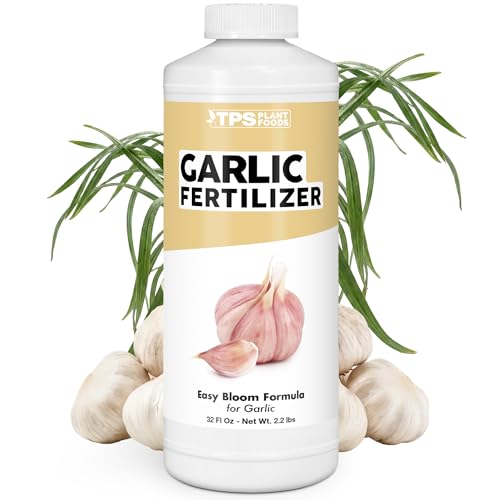
A liquid garlic-specific feed designed for a precise mid-season size push.
While most garlic fertilizers are granular and applied at planting, TPS Nutrients offers a liquid formulation that you mix with water and apply as a side-dress during the active growing phase. The 32-ounce bottle is concentrated — you dilute it with water and feed every couple of weeks through spring. The benefit of liquid is that nutrients go directly to the root zone without needing soil microbes to break them down, so the effect is faster.
One buyer specifically mentioned that it “increases garlic bulb size and enhances flavor,” and another growing elephant garlic noted their bulbs were getting “bigger and greener.” The formula is designed to support bulb development without overstimulating leafy growth, which is the exact balance garlic needs. It is safe for constant use without causing root burn, according to the same reviewer, which is a real concern with liquid synthetic feeds.
Timed nutrition: Because you control when and how often you apply it, this liquid feed is perfect for reacting to weather and growth stage. A rainy spring that leaches nutrients from the soil? A quick liquid boost sets things right.
The downside: It requires mixing and more frequent application than a single granular feed. If you want a low-maintenance approach, stick with granules at planting time.
Best for: experienced garlic growers who want to fine-tune nutrition through the season and boost bulb size with precision.
Not for: casual gardeners who prefer a single application at planting — this demands regular attention.
6. Espoma Organic Bone Meal 4-12-0 10 lb

The highest phosphorus concentration on this list, packed into a huge 10-pound bag.
Espoma’s 4-12-0 bone meal is pure phosphorus and calcium, with an NPK ratio that is heavily weighted toward the middle number. At 12% phosphorus, it outpaces the Lilly Miller 4-10-10 and absolutely dwarfs the Earth Science bone meal in terms of phosphorus density per pound. It also provides long-lasting nitrogen (4%) and calcium, both of which support strong cell walls and disease resistance in garlic.
The 10-pound bag is the largest on this list by weight — more than double the 4-pound bags of Espoma Bulb-Tone and Earth Science bone meal. This makes it economical for larger garlic patches or communal garden plots. Customers note using it not just on bulbs but on tomatoes and dahlias, with one reviewer saying their “plants grow like crazy” when they mixed it with a granular all-purpose feed. It is OMRI listed and approved for organic production.
High-efficiency phosphorus: A little goes a long way — the recommended mixing ratio is just 1 teaspoon per bulb. The 10-pound bag will last multiple seasons unless you are planting on a commercial scale.
The catch: It is a single-nutrient supplement (phosphorus + calcium). Like the Earth Science bone meal, it needs to be paired with a nitrogen and potassium source for a complete feeding program.
Reach for this if: you have a large garlic bed and want the most cost-effective, organic phosphorus source available per pound.
Look elsewhere if: you need a balanced NPK fertilizer — this is a targeted supplement, not a standalone feed.
7. Down To Earth Tomato & Vegetable Mix 4-6-2 15 lb
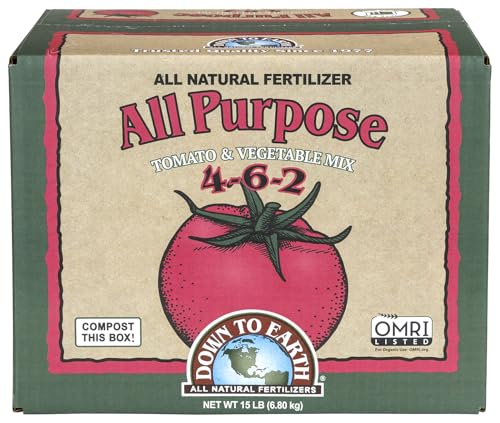
A versatile organic blend that supports garlic without requiring a separate nitrogen source.
Down To Earth’s 4-6-2 formula is designed for tomatoes and vegetables, but its balanced NPK ratio works well for garlic too. The phosphorus (6%) is moderate compared to the dedicated bulb foods above, but the nitrogen (4%) and potassium (2%) mean you get a complete feed in one bag — no need to mix in separate bone meal or kelp. The granules are OMRI listed for organic gardening, and the 15-pound bag is the heaviest on this list, making it the best value for those with large gardens.
One buyer shared a transformation story: their tomato plants were “pale and flimsy” but after applying Down To Earth, they “transformed” within two weeks. Another reviewer who switched to organic gardening praised the product for its “very good ingredients” and simplicity. While it is not garlic-specific, its 4-6-2 ratio provides enough phosphorus to support decent bulb formation while also feeding the soil microbes that improve long-term fertility.
Compared to the Espoma Bulb-Tone 3-5-3, the Down To Earth mix has a slightly higher phosphorus number (6 vs 5) and comes in a bag that is nearly four times heavier (15 lbs vs 4 lbs). If you are planting multiple crops beyond garlic — tomatoes, peppers, herbs — this one bag covers everything.
Single-bag convenience: You do not have to mix multiple amendments. Just work this into the soil at planting and again as a side-dress mid-season. Great for mixed vegetable gardens.
The trade-off: The phosphorus level (6%) is lower than dedicated bulb foods like Lilly Miller 4-10-10 (10%) or Espoma bone meal 4-12-0 (12%). If maximum bulb size is your only goal, you may want a higher-phosphorus supplement alongside this.
Best for: vegetable gardeners who grow garlic alongside other crops and want one organic fertilizer that works for everything.
Not ideal for: garlic-only growers who prioritize maximum bulb size — a dedicated high-phosphorus feed will outperform this in bulb density.
Understanding the Specs
NPK Ratio — The Three Numbers
Every fertilizer label shows three numbers separated by dashes, like 3-5-3. The first is nitrogen (N), which drives leafy green growth. The second is phosphorus (P), which is critical for root development and bulb formation — this is the number you want to be high for garlic. The third is potassium (K), which supports overall plant health, disease resistance, and water regulation. For garlic, a ratio with the middle and last numbers at least equal to or higher than the first is ideal.
Granules vs. Liquid vs. Powder
Granular fertilizers are dry pellets that you work into the soil at planting. They release nutrients slowly over weeks as soil microbes break them down. Powders are similar but finer, often used for smaller applications. Liquid fertilizers come concentrated in a bottle and are mixed with water, then applied as a drink to the soil. Liquids act immediately but need reapplication every few weeks. For garlic, many growers use a granular feed at planting and switch to a liquid boost mid-season for best results.
FAQ
What is the best NPK ratio for garlic?
Can I use bone meal for garlic?
When should I fertilize garlic for the biggest bulbs?
How much fertilizer does a garlic plant need per season?
Is liquid or granular fertilizer better for garlic?
Can I use tomato fertilizer on garlic?
What happens if I use too much nitrogen on garlic?
Should I add kelp meal to my garlic fertilizer routine?
Can I make my own organic fertilizer for garlic?
Do I need to fertilize garlic differently in raised beds vs. ground soil?
Final Thoughts: The Verdict
For most people, the fertilizer for garlic winner is the Espoma Bulb-Tone 3-5-3 because it provides a balanced, organic feed that targets root and bulb development without needing a second product. If you want a high-phosphorus boost for max bulb size, grab the Lilly Miller Bulb & Bloom Food 4-10-10. And for a versatile all-purpose organic that feeds your whole vegetable garden including garlic, the standout is the Down To Earth Tomato & Vegetable Mix 4-6-2.
How We Picked
We do not accept paid placement. Every pick is matched to a real buyer and a real use-case; we do not hands-on test units.
Sources & Methodology
Specifications: manufacturer listings and product documentation. Review insights: verified customer reviews, as of July 2026. Pricing: not shown on this page (it changes often); check the current price via the retailer link.
As an Amazon Associate, Lawn Gear Lab earns from qualifying purchases. This does not affect which products we feature.